
The first time I noticed a carpet beetle on one of our windows, I had the same thought a lot of people do.
“Wait…that thing flies?”
Until then, I’d only thought about carpet beetles as tiny insects crawling around carpets or closets.
It turns out the adults are actually capable of flying, and understanding that one fact explains a lot of the strange places people end up finding them.
If you’ve been wondering why carpet beetles suddenly appear upstairs, gather on windows, or seem to show up in different rooms, their ability to fly is a big part of the answer.
Yes, Adult Carpet Beetles Can Fly
The simple answer is yes.
Adult carpet beetles have fully developed wings and are capable of flying both outdoors and indoors.
They’re surprisingly good flyers for such small insects, although they usually aren’t buzzing around the house the way a fly or bee would.
Most of the time you’ll notice them crawling.
It’s only when they’re disturbed or trying to move somewhere else that you may actually see them take flight.

The Larvae Can’t Fly
This is an important distinction because the life stage matters.
Only the adults have wings.
The fuzzy little larvae that damage clothing, rugs, furniture, and other natural materials never fly.
They spend their entire time crawling while feeding and growing.
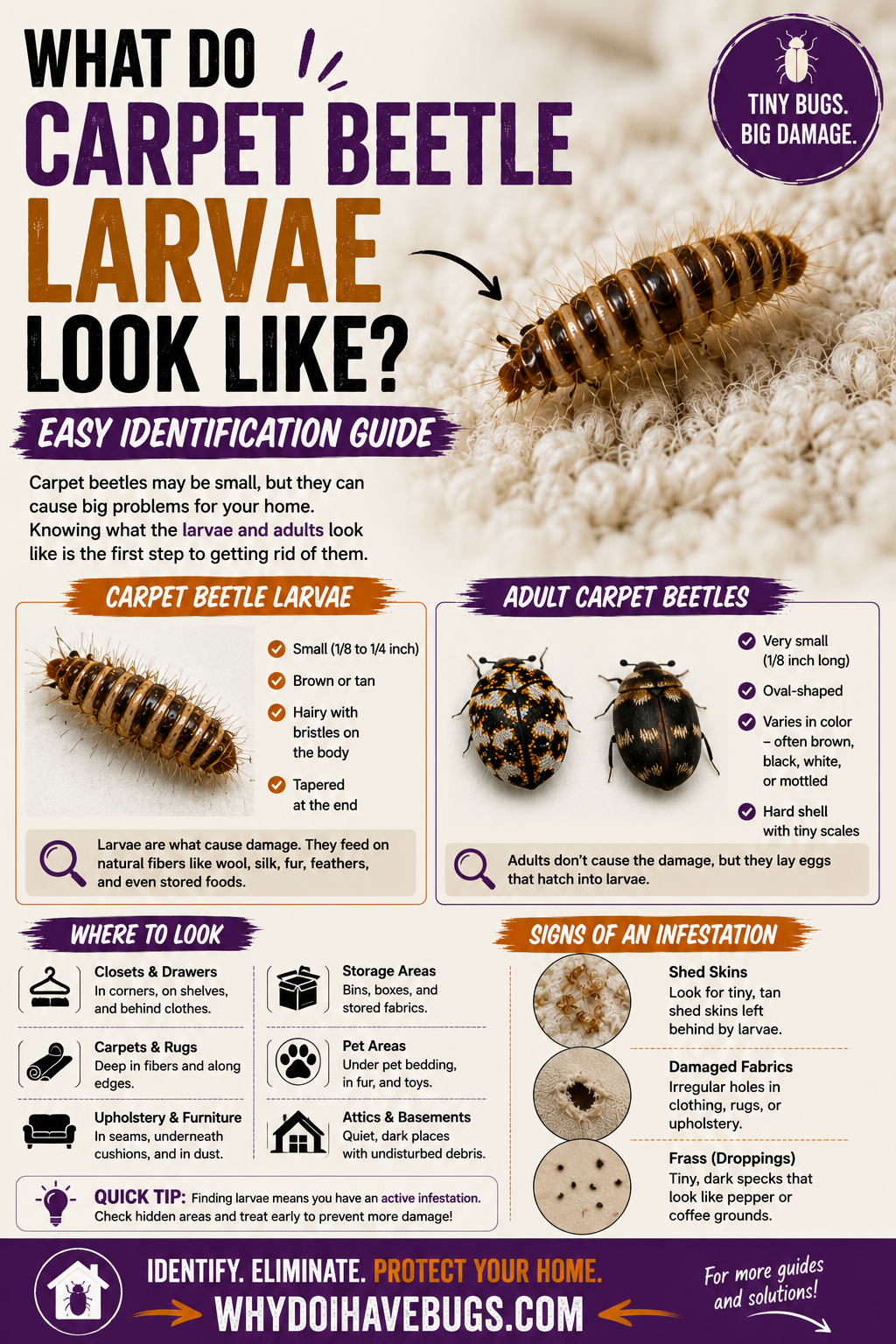
If you’re not sure which stage you’ve found, my guide showing what carpet beetle larvae look like makes it much easier to tell the difference.
Flying Helps Them Find Your House
One reason carpet beetles become household pests is because the adults naturally live outdoors.
They feed on pollen and nectar before looking for places to lay eggs.
Being able to fly makes it easy for them to explore nearby homes.
An open door.
A damaged window screen.
An open garage.
Even a few minutes with the patio door open can give a curious adult beetle an opportunity to wander inside.

I cover those entry points in more detail in How Do Carpet Beetles Get Into Your House? Common Ways They Sneak Inside.
Why They End Up on Windows
This is one of the easiest ways to tell you’re looking at an adult.
After flying indoors, carpet beetles are often drawn toward natural light.
That’s why people frequently find them:
- Crawling across windows.
- Sitting on windowsills.
- Flying near patio doors.
- Gathering around bright rooms.
They’re usually trying to get back outside.

If you’ve been seeing that happen, my article about why carpet beetles gather on windows explains why it’s so common.
Flying Doesn’t Mean the Infestation Is Spreading Everywhere
This is something I misunderstood at first.
Seeing an adult beetle fly from one room to another makes it feel like the infestation is exploding.
That isn’t necessarily what’s happening.
The adults may simply be moving around the house after emerging from the places where they developed as larvae.
In many cases, the larvae are still concentrated in one or two hidden locations.
That’s why finding the source matters much more than chasing the adults.
They’re Better at Finding Light Than Finding You
Some homeowners worry that carpet beetles are going to fly toward them.
I’ve never found that to be the case.
Adult carpet beetles aren’t interested in people.
They’re much more interested in:
- Sunlight.
- Flowers.
- Places to lay eggs.
- Ways back outdoors.
If one lands on you, it’s almost certainly by accident rather than because it was attracted to you.


Seeing One Flying Doesn’t Tell You How Big the Problem Is
I think this is where a lot of people jump to conclusions.
One flying carpet beetle doesn’t automatically mean your house is full of them.
It could simply be a single adult that wandered inside.
On the other hand, if you’re seeing adult carpet beetles flying around your home week after week, that’s a different story.
Repeated sightings usually mean more adults are emerging somewhere inside the house.
That’s when I’d start looking for signs of larvae instead of focusing on the flying adults.
Flying Adults Usually Mean the Next Stage Has Already Happened
Here’s something that surprised me while learning about carpet beetles.
By the time you see a flying adult, the most destructive part of its life is already over.
Before it had wings, it spent weeks or even months as a larva feeding on natural materials around your home.
That’s why I don’t look at a flying adult as the beginning of the problem.
I look at it as a clue that tells me where I should start searching.

If you’re curious about how long that process takes, I explain it in How Long Do Carpet Beetles Live? Understanding Their Life Cycle.
They Don’t Fly Around All Day
Another misconception is that carpet beetles spend their entire lives flying.
They don’t.
Most of the time they’ll crawl across walls, windows, furniture, or other surfaces.
Flying is simply one way they move from place to place when they need to.
That’s why many homeowners never actually witness them flying even though they’re perfectly capable of doing it.
Should You Chase the Flying Adults?
If I saw one flying around my living room, I’d probably catch it if I could.
But I wouldn’t stop there.
Getting rid of the adult doesn’t solve the reason it was there.
Instead, I’d ask myself:
- Where did it develop?
- Is there a closet nearby?
- Have I checked under the furniture?
- Is there pet hair collecting somewhere?
- Are there stored blankets or seasonal clothes that haven’t been inspected?
Those questions are much more important than catching a single beetle in midair.



What I’d Do If I Started Seeing Flying Carpet Beetles
If I suddenly noticed flying carpet beetles in my house, I’d take it as a reminder to inspect before the problem has a chance to grow.
I’d vacuum thoroughly.
I’d check closets and stored clothing.
I’d inspect furniture and rugs.
I’d keep an eye out for larvae or shed skins instead of focusing only on the adults.
The sooner you find where they’re developing, the easier they usually are to control.
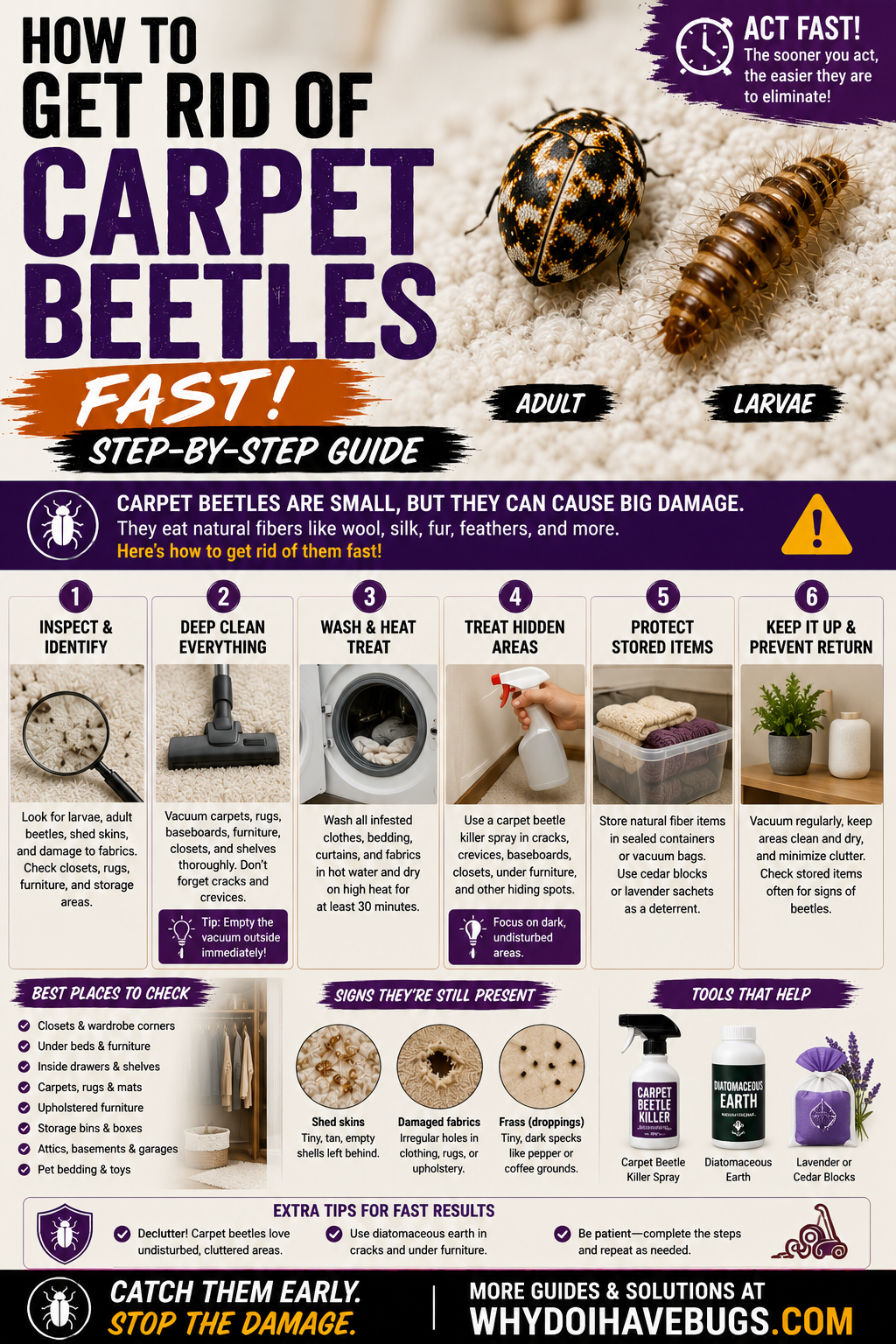
If you’re ready to deal with an infestation from start to finish, my step-by-step guide to getting rid of carpet beetles fastwalks through the same approach I’d take in my own home.
You can also browse our growing Carpet Beetles category for more guides on identifying, treating, and preventing carpet beetles.
Frequently Asked Questions
Do all carpet beetles fly?
Only adult carpet beetles can fly. The larvae don’t have wings and spend their entire lives crawling while they feed and grow.
Why do I only see carpet beetles flying near my windows?
Adult carpet beetles are naturally attracted to light and often gather around windows because they’re trying to get back outside after ending up indoors.
Can carpet beetles fly from room to room?
Yes. Adult carpet beetles can fly between rooms, although they often spend just as much time crawling across surfaces as they do flying.
Do flying carpet beetles bite people?
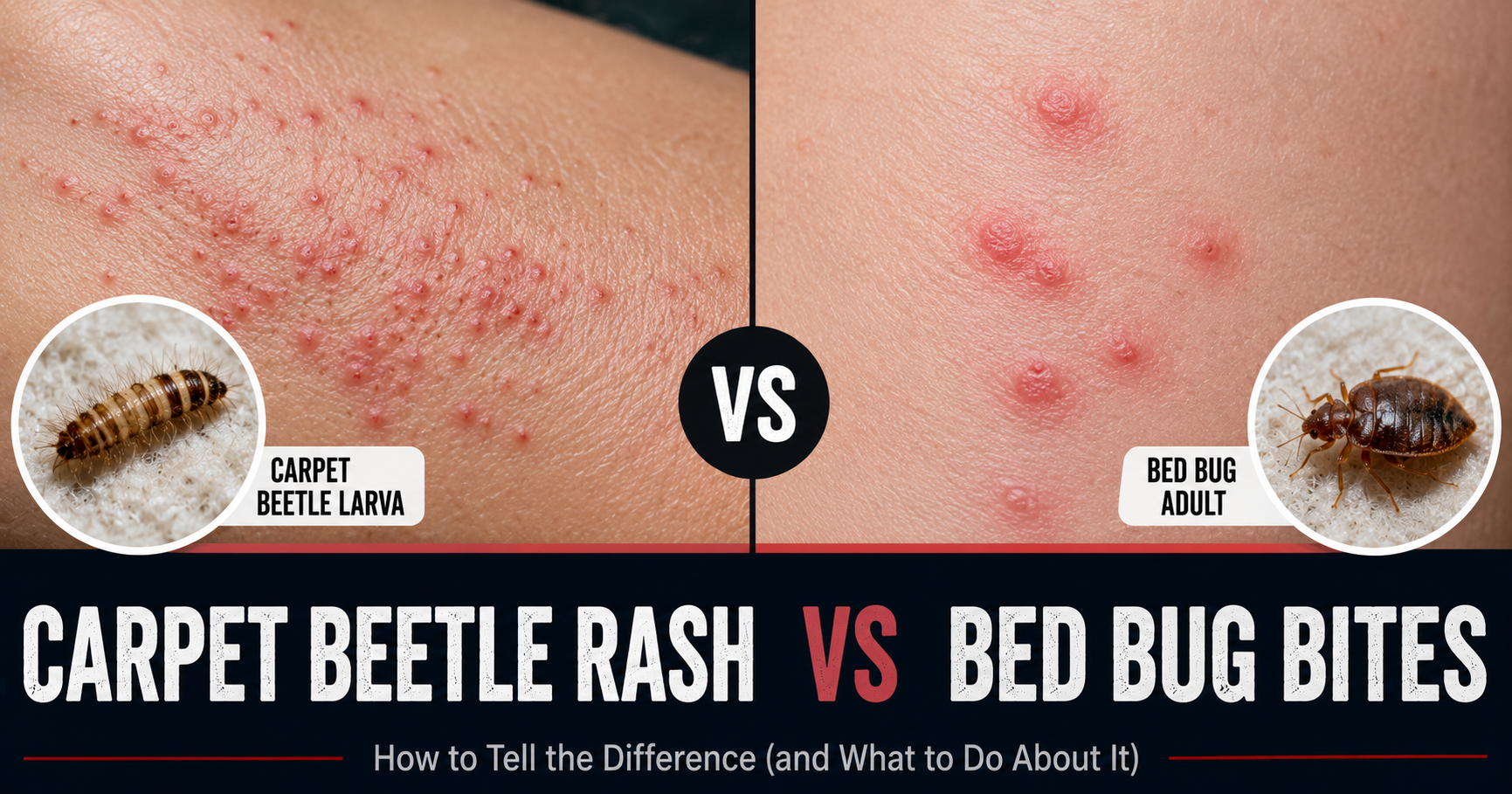
No. Carpet beetles don’t bite people, and the adults aren’t interested in feeding on humans or pets. If you’re dealing with an itchy rash, it’s usually caused by contact with the tiny hairs on carpet beetle larvae rather than bites. If you’d like to learn more about that reaction, see Carpet Beetle Rash vs Bed Bug Bites: How to Tell the Difference.
Does seeing a flying carpet beetle mean I have an infestation?
Not always. A single adult may have simply flown inside from outdoors. However, seeing multiple adult carpet beetles over several days or weeks is a good reason to inspect your home for larvae, shed skins, and other signs that they’re developing indoors.
About the Author
Ryan Mitchell researches household pests and enjoys helping homeowners understand what insects are doing, why they’re showing up, and how to solve the problem without unnecessary guesswork. His goal is to turn confusing pest questions into practical advice that’s easy to put into action.