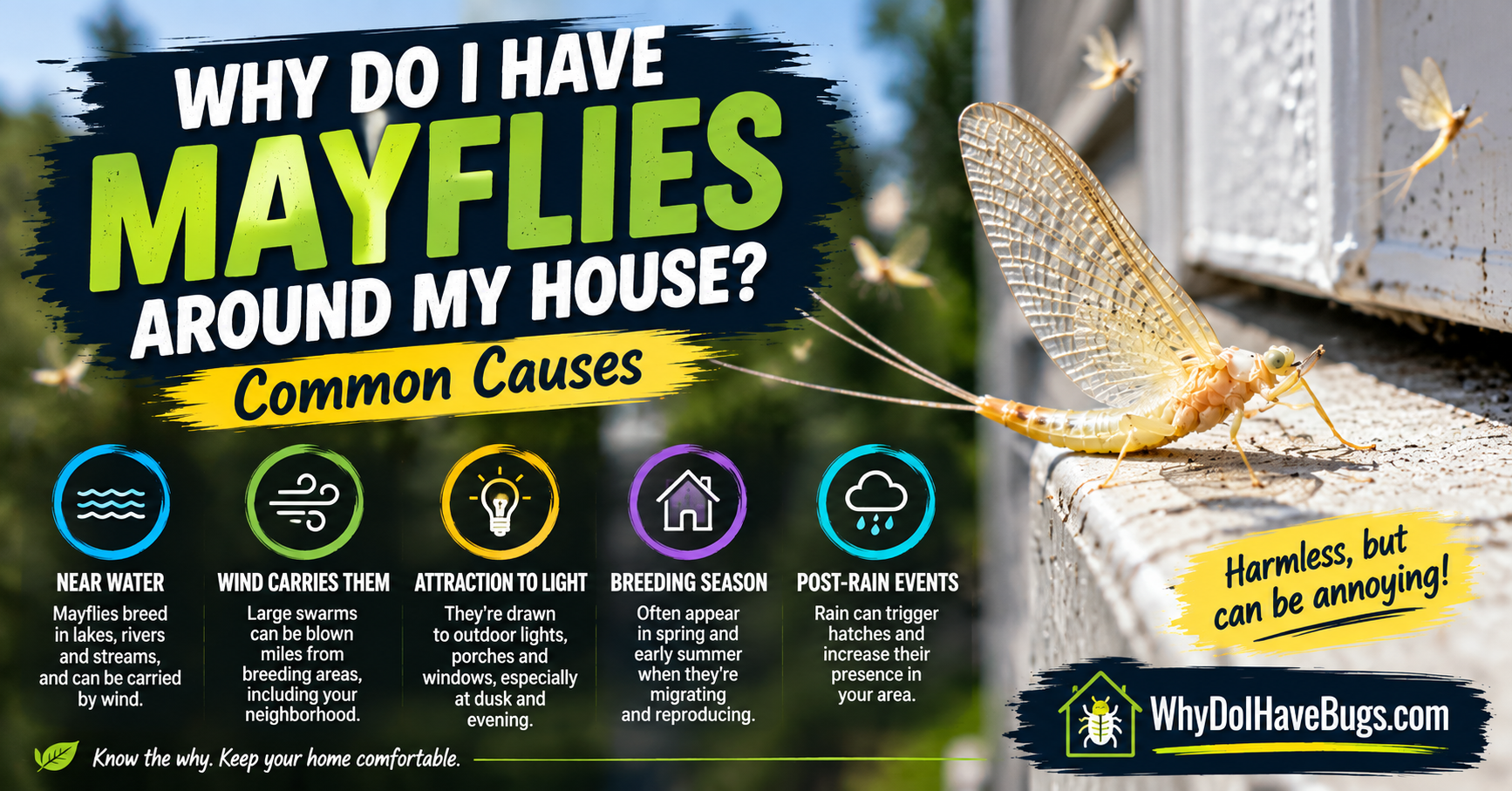
Walking outside one evening and suddenly finding dozens, hundreds, or even thousands of mayflies covering your porch can be alarming.
One day your house looks perfectly normal.
The next day your siding, windows, deck, and porch lights seem to be covered with delicate winged insects.
If that happened to you, you’re probably wondering what changed.
The good news is that mayflies aren’t invading your home because it’s dirty, and they aren’t trying to infest your house.
In almost every case, your home simply happens to be in the right place at the right time during one of nature’s most fascinating insect events.
Once I learned why mayflies gather around houses, their behavior made much more sense.
The Short Answer
If you’re looking for the quick explanation, here it is.
Mayflies are usually around your house because:
- You live near a lake, river, pond, stream, or other freshwater source.
- They’re attracted to outdoor lighting.
- A large hatch recently occurred nearby.
- They’re resting after emerging from the water.
- Your house happens to be along their flight path.
Unlike many household pests, mayflies aren’t trying to move indoors.
They’re simply completing the final stage of their remarkably short lives.



Living Near Water Is the Biggest Reason
The number one factor I look at is location.
Mayflies spend nearly their entire lives underwater as aquatic nymphs.
Only after months or even years beneath the surface do they emerge as winged adults.
Because of that, homes located near:
- Lakes
- Rivers
- Streams
- Creeks
- Ponds
- Reservoirs
are much more likely to experience seasonal mayfly activity.
The closer your house is to freshwater, the more adults you’re likely to see during a hatch.


They Didn’t Suddenly Move Into Your Yard
One of the biggest misconceptions is that mayflies “moved in.”
That’s almost never what happened.
Instead, thousands of immature mayflies were already living underwater nearby.
When water temperatures and environmental conditions become favorable, enormous numbers emerge over a very short period.
To homeowners, it looks like they appeared overnight.

In reality, those insects may have been developing underwater for many months before you ever noticed them. Understanding the full mayfly lifespan underwater helps explain why adults can appear suddenly and disappear within days.
Outdoor Lights Are Like Magnets
If I had to name the second biggest reason homeowners see mayflies, it would be lighting.
Adult mayflies are strongly attracted to artificial lights.
Common attractions include:
- Porch lights.
- Garage lights.
- Security lights.
- Dock lights.
- Floodlights.
- Bright windows after dark.
I’ve seen homes with bright white LED lights attract dramatically more mayflies than neighboring houses with minimal outdoor lighting.
That’s why two houses sitting next to each other can have completely different experiences during the same hatch.


Bright-Colored Homes Can Sometimes Attract More Mayflies
This is something many people never think about.
Research and homeowner observations suggest that bright surfaces, especially light-colored siding and reflective surfaces, may draw more mayflies because they reflect light and can resemble water under certain conditions.
That doesn’t mean you need to repaint your house.
It simply helps explain why one home in a neighborhood sometimes attracts noticeably more insects than another.
Warm, Calm Evenings Often Produce the Biggest Swarms
If you’ve noticed mayflies appearing on still summer evenings, that’s no coincidence.
Many species emerge when conditions are:
- Warm.
- Humid.
- Calm.
- Free from strong winds.
Since mayflies are relatively weak fliers, calm weather allows them to gather, mate, and disperse much more successfully than windy conditions.

Your House Is Simply in the Wrong Place at the Right Time
One thing that helped me stop worrying about mayflies was realizing they weren’t choosing my house specifically.
They were choosing my location.
If your property sits close to a river, lake, pond, or creek, it’s simply part of the landscape the adults fly through after emerging.
Your neighbor a mile farther away may hardly notice them.
Meanwhile, homes closer to the shoreline can experience thousands during a single hatch.
That doesn’t mean your property has a pest problem.

It usually means you’re close to healthy freshwater habitat where mayflies have been living underwater for months or even years. A closer look at what mayflies are and where they live explains why nearby freshwater plays such an important role in their life cycle.
They Aren’t Trying to Live Inside Your House
This is probably the biggest misunderstanding I hear.
People assume that because mayflies are covering their porch or windows, they’re trying to infest the home.
They’re not.
Unlike ants, cockroaches, or beetles, mayflies don’t establish colonies indoors.
They don’t reproduce inside houses.
They don’t chew wood.
They don’t damage insulation.
They don’t build nests.

If one flies inside through an open door, it’s there by accident and will usually die within a day or two because adult mayflies have extremely short lives. For other fly species, checking fly entry routes around your home can explain why insects repeatedly get indoors.


Why They Cover Walls, Doors, and Windows
When homeowners send me pictures of mayflies, they’re almost always clustered around the same places.
- Porch lights.
- Front doors.
- Garage doors.
- Window frames.
- Light-colored siding.
- Deck railings.
There’s a simple reason for that.
After emerging, adult mayflies are attracted to light and often land on nearby vertical surfaces to rest before continuing their brief search for mates.

Windows can make the attraction even stronger because light shines through the glass from inside the house. For a different explanation of insects gathering at glass, see why flies gather on window glass.
To the insects, those bright areas become gathering points.
Why Your Neighbor May Not Have the Same Problem
This is something that surprises a lot of people.
Two houses sitting side by side can have very different numbers of mayflies.
Some of the reasons include:
- One home uses brighter exterior lights.
- One has cool white or blue-toned LEDs while the other uses warm-colored bulbs.
- One has lighter-colored siding or more reflective surfaces.
- One sits slightly closer to the water.
- One leaves outdoor lights on much longer after sunset.
Even small differences like these can noticeably change how many mayflies gather around a particular home during a hatch.


Why They Suddenly Disappear
The good news is that mayfly problems are almost always temporary.
Unlike many household insects that continue breeding around your property, mayfly swarms usually fade as quickly as they appeared.
After mating, adults die naturally.
Since most species live only a very short time as adults, the swarm often disappears within a few days.
That’s one reason I rarely recommend insecticides.
By the time a treatment begins working, nature has often solved the problem on its own.
How I Reduce Mayflies Around My House
If I know a hatch is underway, I make a few simple adjustments instead of reaching for bug spray.
I try to:
- Turn off unnecessary outdoor lights.
- Switch bright white bulbs to warm yellow or amber “bug lights.”
- Keep doors closed after dark.
- Close blinds or curtains so indoor lights are less visible.
- Repair torn window screens.
- Sweep away dead mayflies after the hatch instead of letting them accumulate.
Those simple steps usually make a much bigger difference than spraying because they reduce what attracts the insects in the first place. Warm-colored lighting is consistently recommended over bright white or blue-spectrum lighting because it’s less attractive to mayflies.
Should You Be Worried?
In almost every case…
No.
Mayflies may be annoying when they appear in large numbers, but they’re actually one of the least concerning insects you can find around your home.
They don’t:
- Bite people.
- Sting.
- Spread diseases.
- Damage your house.
- Reproduce indoors.

In fact, seeing mayflies often means you’re living near relatively healthy freshwater because many species are sensitive to pollution. That’s a much more encouraging sign than finding insects that thrive in poor environmental conditions. For another look at these freshwater indicators, see healthy-water mayfly and stonefly indicators for key differences between mayflies and stoneflies.
Frequently Asked Questions
Why are mayflies suddenly all over my house?
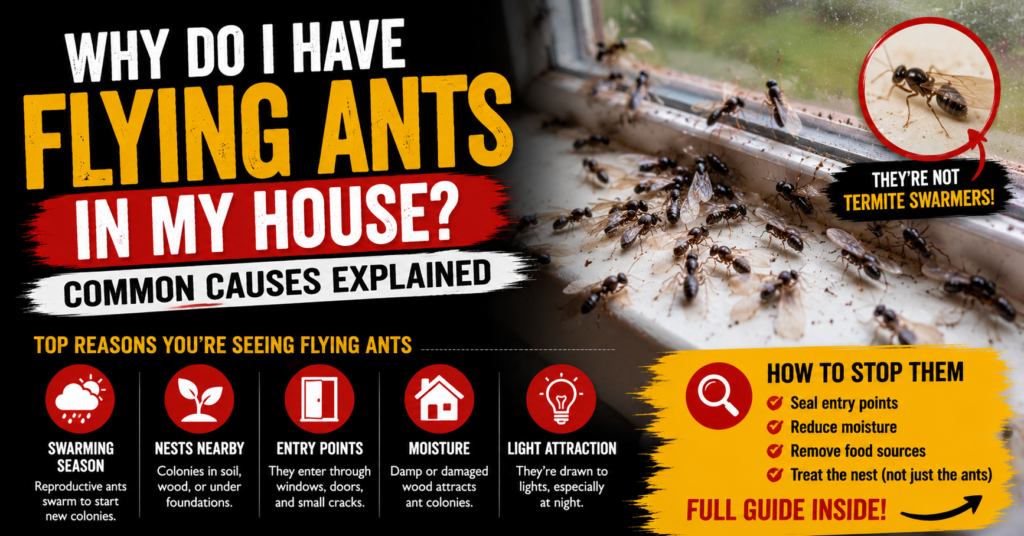
Large numbers usually appear after a mass hatch from a nearby lake, river, pond, or stream. They’re attracted to lights and often rest on nearby buildings before mating. If the insects around your home have clearly visible wings and resemble ants rather than mayflies, compare them with flying ants around your house before deciding how concerning the swarm may be.
Why do mayflies gather around my porch light?
Artificial lights disrupt the way adult mayflies navigate after emerging. Bright white and blue-toned lights are especially attractive, which is why porch lights often become gathering points.
Does having mayflies mean my house has an infestation?
No. Mayflies don’t infest homes or reproduce indoors. They simply gather outside during their brief adult stage before dying naturally.
Why do mayflies keep landing on my windows?
Windows glow with indoor lighting after dark, making them attractive resting spots. Reflections from the glass may also contribute to their behavior.
How long will mayflies stay around my house?
Most swarms last only a few days because adult mayflies have very short lifespans. Once mating is complete, the insects die naturally and the activity quickly declines.
About the Author
Dr. Emily Carter is a freshwater ecologist who studies aquatic insects and stream ecosystems. Her work focuses on the ecology of mayflies, stoneflies, and other freshwater invertebrates, helping homeowners understand why these insects appear around their homes and the important role they play in healthy aquatic environments.