
A large green insect lands on your porch one summer evening.
It has wings that look like leaves.
Its antennae seem impossibly long.
Before long, you’re wondering the same thing most homeowners do:
Should I be worried?
Fortunately, the answer is almost always no.
Although katydids can look intimidating because of their size, they’re among the least troublesome insects you’ll find around your home. They don’t spread diseases, don’t infest houses, and rarely cause more than minor nibbling on garden plants. Most simply spend their lives hidden in trees and shrubs before disappearing when cooler weather arrives.
The Short Answer
No.
Katydids are not considered dangerous to people, pets, or homes.
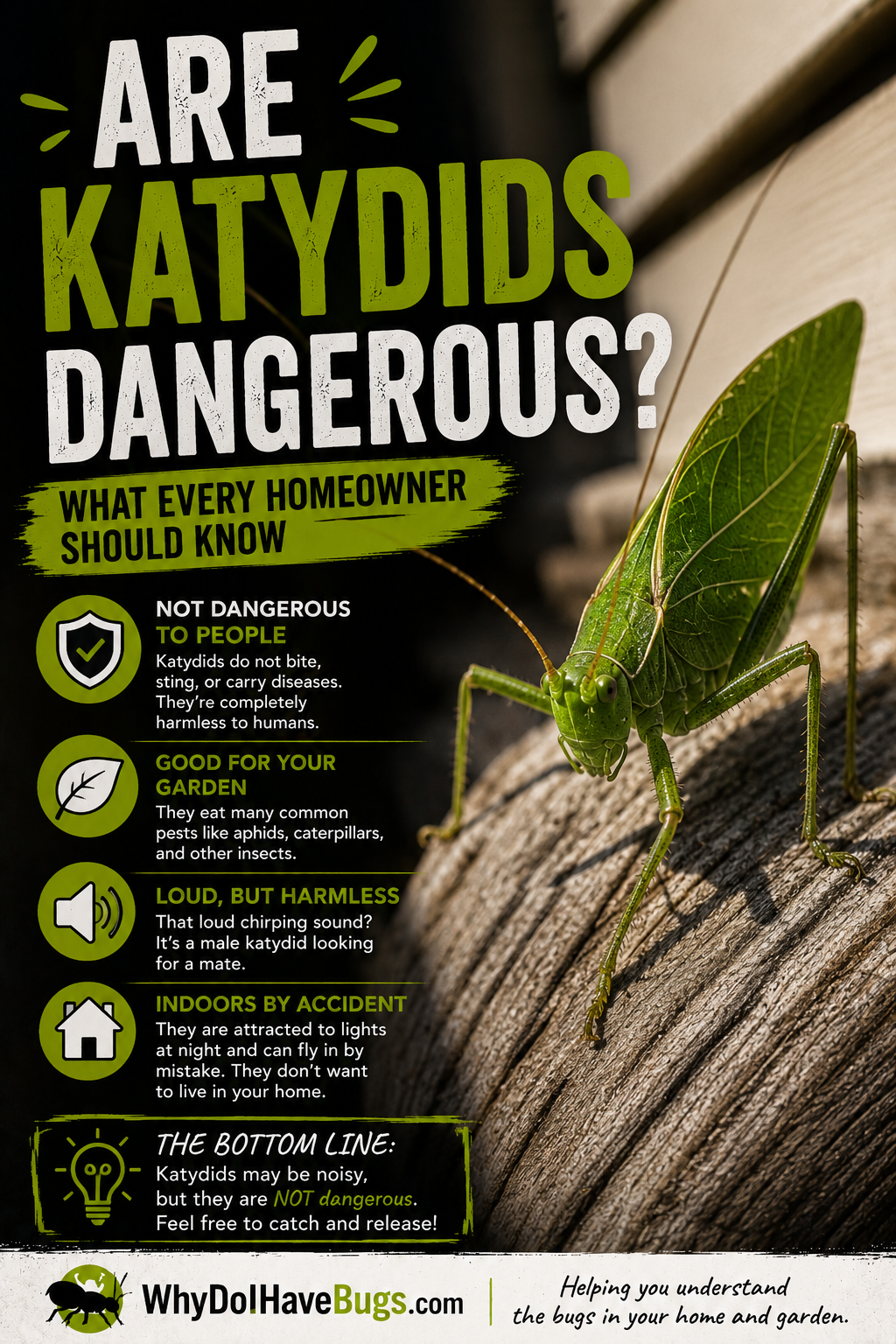
They don’t:
- Spread diseases.
- Damage your home’s structure.
- Infest kitchens or pantries.
- Destroy furniture.
- Attack people.
- Carry venom.
In the rare event one feels trapped, it may give a defensive pinch with its chewing mouthparts, but this is uncommon and usually causes nothing more than brief discomfort.
Why Do Katydids Look So Scary?
Much of their reputation comes from their appearance.
Adult katydids are much larger than many insects homeowners normally encounter.

They also have:
- Extremely long antennae.
- Powerful back legs.
- Large leaf-like wings.
- Strong chewing mouthparts.
When one suddenly lands on a porch light or window screen, it’s easy to assume it’s something dangerous.
In reality, those features evolved to help them survive outdoors, not to defend themselves against people.

Do Katydids Bite?
Technically, yes.
But it’s probably not what you’re imagining.
Katydids have strong jaws because they’re designed to chew leaves, flowers, and other plant material.
If one is grabbed tightly or feels trapped, it may give a defensive pinch.
Most homeowners will never experience this because katydids almost always prefer to jump or fly away instead of standing their ground. Even when a pinch does occur, it’s generally minor and rarely breaks the skin.
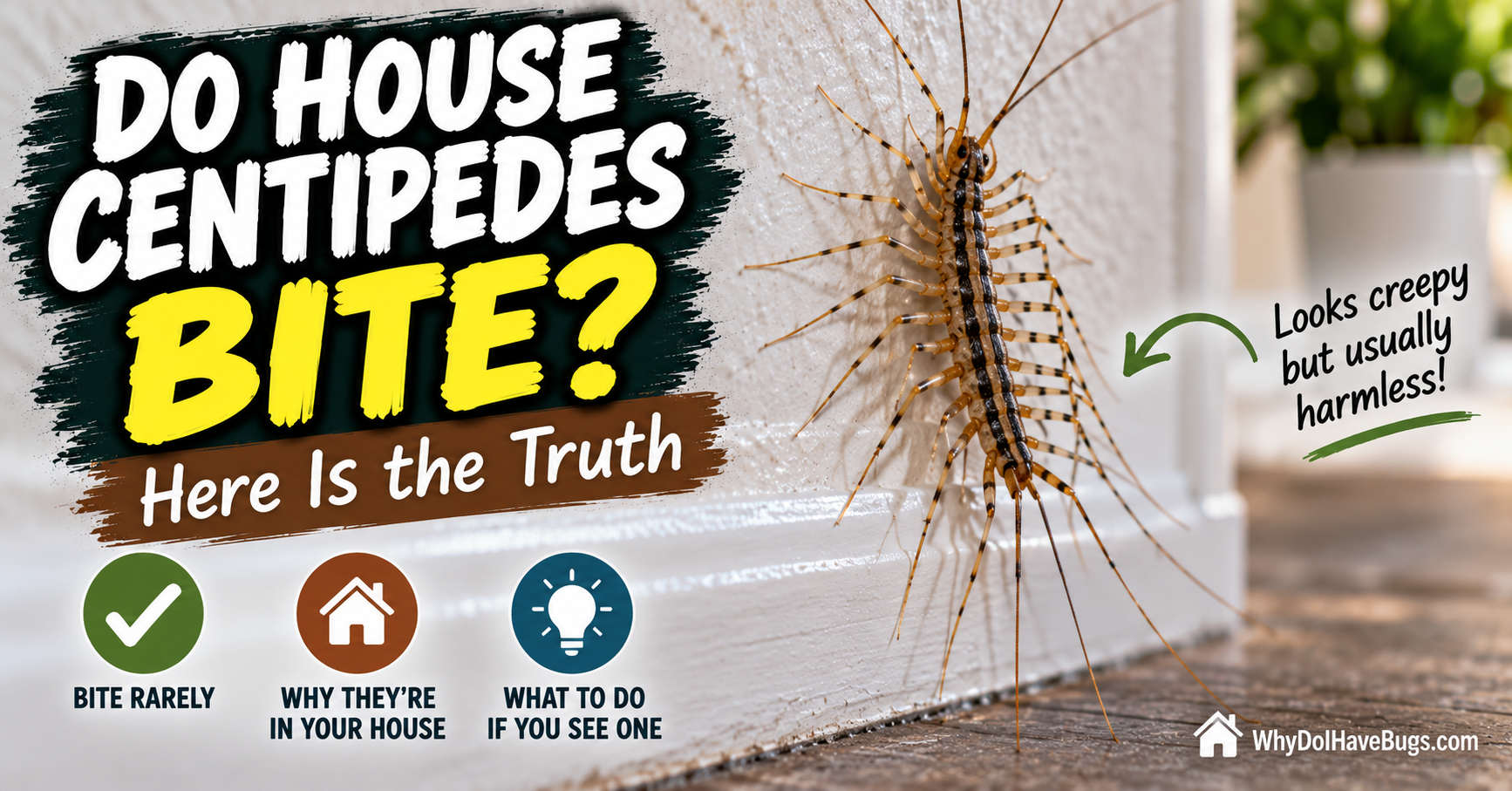
If you’d like to learn more, I cover this in much greater detail in my Do Katydids Bite? Here’s the Truth guide.
Are Katydids Dangerous to Pets?
No.
Katydids aren’t interested in dogs or cats.
If your curious pet sniffs one in the yard, the insect will usually jump away long before anything else happens.
A defensive pinch is possible if a pet repeatedly mouths or traps the insect, but katydids aren’t venomous and aren’t considered poisonous to household pets.
Can Katydids Damage Your House?
Not at all.
Unlike termites or carpenter ants, katydids don’t chew wood.
They don’t tunnel through walls.
They don’t damage insulation.
They don’t chew electrical wiring.
And they don’t establish indoor infestations.
If one accidentally flies inside through an open door or window, it’s simply lost.
Releasing it back outdoors is usually all that’s needed.
What About Gardens?
This is where the answer becomes a little more balanced.
Katydids are primarily plant feeders.
They commonly eat:
- Leaves.
- Flowers.
- Tender shoots.
- Fruits.
- Seeds.
Most homeowners never notice enough feeding to worry about.
However, if katydid populations become unusually high, they can leave small holes in leaves or chew on flowers and vegetables. Fortunately, serious damage is uncommon because their numbers are usually low.

Why Are Katydids Good for the Environment?
Katydids are much more than just interesting-looking insects.
They’re also an important part of the food chain.
Many animals rely on them for food, including:
- Songbirds.
- Bats.
- Frogs.
- Lizards.
- Spiders.
- Small mammals.

Some katydid species also eat small insects in addition to plants, making them part of the natural balance in gardens and wooded areas. Their diet is more varied than many people realize; what katydids eat explains which plant materials and small prey they may consume.
Should You Get Rid of Katydids?
For most homeowners, I wouldn’t.
Unlike many insects featured on this website, katydids rarely create ongoing problems.
If one is resting on your porch or window screen, it’ll usually move on by the following day.
If they’re spending time around your house because of nearby trees and landscaping, that’s simply part of sharing your yard with local wildlife.

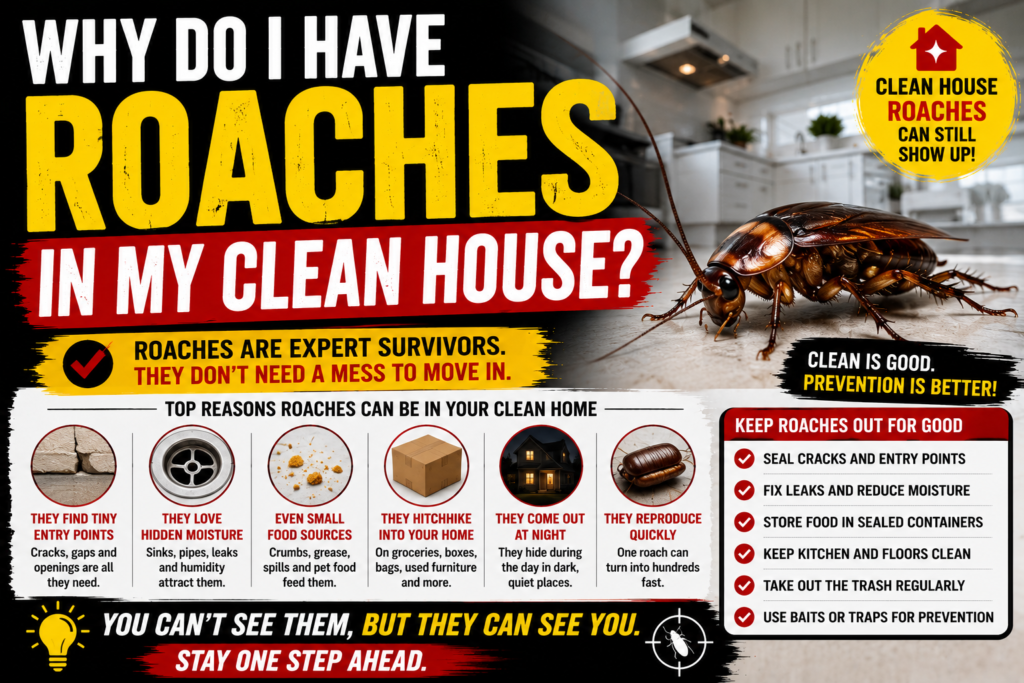
If you’re seeing them frequently, my Why Do I Have Katydids Around My House? article explains exactly what attracts them and why they’re visiting your property.
My Take
Katydids are one of those insects that look much scarier than they really are.
Their size, long antennae, and nighttime activity can make them seem intimidating, but they’re actually gentle insects that spend most of their lives avoiding predators and blending into leaves.
If I find one on my porch, I simply leave it alone and enjoy seeing one of nature’s best camouflage artists up close.
Frequently Asked Questions
Are katydids dangerous to humans?
No. Katydids aren’t considered dangerous to people. They don’t spread disease or attack humans, and they’ll usually avoid contact whenever possible.
Can a katydid bite you?
A katydid can give a defensive pinch if it’s handled roughly or feels trapped, but this is uncommon and usually causes only minor, temporary discomfort.
Are katydids poisonous?
No. Katydids are neither venomous nor poisonous to people or pets.
Should I remove katydids from my yard?
Usually not. They’re a normal part of the outdoor ecosystem and rarely cause enough plant damage to justify removing them.
Why do katydids come near my house?
Katydids are attracted to yards with plenty of trees, shrubs, and other vegetation. Outdoor lights may also bring them closer during the evening.
Why Katydids Rarely Stay Around One House for Long
Unlike ants, cockroaches, or other household pests, katydids don’t establish colonies around a particular home.
They’re constantly moving through the landscape as they search for food, mates, and suitable places to rest.
A katydid you see on your porch tonight may be several houses away tomorrow evening.
That’s one reason homeowners often think they’ve “gotten rid of” katydids when, in reality, the insect simply continued its normal movements through the neighborhood.
Do Certain Homes Attract More Katydids?
Yes.
Some properties naturally provide much better habitat than others.
Your yard is more likely to attract katydids if it has:
- Mature shade trees.
- Dense ornamental shrubs.
- Native grasses.
- Flower gardens.
- Vegetable gardens.
- Thick landscaping around the house.
These areas provide both food and excellent camouflage from birds and other predators.
Homes surrounded by large expanses of concrete or closely mowed lawns usually see far fewer katydids because there’s simply less suitable habitat.
Why Do Katydids Sometimes Fly Toward Lights?
Although katydids aren’t as strongly attracted to lights as moths or many beetles, they do occasionally end up around porch lights and illuminated windows.
Scientists believe this happens for several reasons.
Artificial lighting can interfere with their normal navigation, and illuminated areas often attract other insects that become potential food for some katydid species.
Bright windows can also appear like open sky, causing katydids to land on screens or nearby walls before eventually moving on.
This is especially common during warm, humid summer evenings.
What Time of Year Are Katydids Most Active?
Most homeowners only notice katydids during a relatively short part of the year.
Young katydids hatch in the spring and spend several months growing through multiple stages before reaching adulthood.
By late summer, adults are fully developed.
That’s when you begin hearing their loud nighttime calls and seeing them around porches, decks, patios, and gardens.
After the first hard frost, nearly all adult katydids die naturally, leaving behind eggs that remain protected until the following spring.
This annual cycle explains why they seem to disappear almost overnight once colder weather arrives.
Why Do They Sometimes Land on People?
It can certainly be startling when a large green insect suddenly lands on your shoulder.
Fortunately, it isn’t intentional.
Katydids have fairly simple vision compared to humans and often make quick flights from one perch to another.
Sometimes a person simply happens to be in the way.
If a katydid lands on you, it usually stays only for a moment before jumping or flying away again.
It’s not trying to bite you or attack you.
Are Katydids Actually Beneficial?
Most people think of katydids as insects to avoid.
In reality, they’re an important part of a healthy outdoor ecosystem.
Their feeding helps recycle plant material, while they also serve as food for countless animals.
Birds feed them to their young.
Bats catch them during nighttime flights.
Spiders, praying mantises, frogs, and many reptiles also rely on katydids as a food source.
Without insects like katydids, many backyard wildlife species would have a much harder time finding enough to eat.