
The first time I was bitten by a deer fly, I assumed it was a small horse fly.
After taking a closer look, I realized there were several differences that made identifying it much easier.
That’s something I see homeowners struggle with all the time.
Deer flies and horse flies belong to the same insect family, so they’re closely related.
Because of that, they’re often mistaken for one another.
The good news is that once you know what features to look for, telling them apart becomes much easier.
Whenever I’m trying to identify a deer fly, I never rely on just one characteristic.
Instead, I combine several clues before deciding what I’m looking at.

They’re Smaller Than Horse Flies
The first thing I notice is size.
While deer flies are still noticeably larger than a house fly, they’re generally much smaller than horse flies.
Most adults measure around 1/4 to 3/8 inch long.
That makes them easier to overlook until they start flying around your head.
If the fly is exceptionally large and heavy-bodied, I usually start leaning toward horse fly instead.
Their Wings Often Have Dark Bands
This is one of my favorite identification features because it’s so distinctive.
Many deer flies have dark markings or bands across their wings.
When they land, those patterned wings stand out immediately.
Horse flies usually have clear wings without the same obvious dark bands.
Whenever I can clearly see wing patterns, deer fly quickly moves to the top of my list.
Their Eyes Are Large and Colorful
Like horse flies, deer flies have oversized compound eyes.
Depending on the species, those eyes may appear:
- Green.
- Gold.
- Purple.
- Brown.
- Iridescent.
They’re one of the first things I notice if I get a close look.
The eyes often seem almost too large for the insect’s head.
Their Bodies Are Compact
Compared to horse flies, deer flies have a slightly shorter, more compact appearance.
They’re still strong fliers, but they don’t have the same thick, heavy build that horse flies do.
It’s a subtle difference, but after seeing both species, I find it becomes fairly easy to recognize.


Where I Usually Find Deer Flies
Location helps me narrow things down.
I most often encounter deer flies:
- Along wooded trails.
- Near ponds.
- Around marshes.
- Beside creeks.
- In forest clearings.
- While hiking.
- While fishing.
- Around deer and other wildlife.
If I’m walking through the woods and a small biting fly keeps circling my head, deer fly is one of the first insects I consider.
Deer Flies vs. Horse Flies
This is easily the comparison I’m asked about the most.
The two flies are close relatives, and at a quick glance they can look almost identical.
When I slow down and compare them, the differences become much easier to see.
Deer flies usually:
- Are smaller.
- Have dark bands or patterns on their wings.
- Have a more compact body.
- Frequently circle around your head.
- Are extremely persistent.
Horse flies usually:
- Are much larger.
- Have broader, heavier bodies.
- Usually have clear wings.
- Tend to fly directly toward larger animals.
- Deliver a much more powerful bite.
If I’m dealing with a fly that’s relentlessly buzzing around my face while hiking through the woods, deer fly immediately becomes my first guess.


Deer Flies vs. House Flies
These two are much easier to tell apart.
House flies don’t bite.
They’re usually found around homes, garbage, pet food, and other organic materials.
Deer flies are outdoor insects.
I almost never expect to find them flying around my kitchen or garage.
Instead, they’re usually waiting near wooded areas, lakes, ponds, or trails where people and wildlife frequently pass by.

If you’re trying to identify a fly inside your home, I’d first compare it with my What Do House Flies Look Like? Easy Identification Guide because it’s much more likely you’re dealing with a common house fly than a deer fly.
They Seem to Love Circling Your Head
One behavior has always stood out to me.
Deer flies rarely make one quick pass and leave.
Instead, they often circle.
Again.
And again.
And again.
I’ve had them follow me while mowing, hiking, fishing, and walking through wooded areas.
They seem especially interested in your head and shoulders, constantly looking for an opportunity to land.
That behavior alone often gives them away before I even get a good look.

You Usually Find Them Near Water and Woods
Location plays a huge role in my identification.
Whenever I encounter deer flies, I’m usually somewhere like:
- Forest trails.
- Campgrounds.
- Lakes.
- Rivers.
- Swamps.
- Marshes.
- Rural roads.
- Open fields bordering woods.

If someone tells me they found a biting fly inside their living room, deer fly is actually pretty far down my list. That distinction matters because which flies actually bite people can prevent you from mistaking another species for a house fly.
These insects spend most of their lives outdoors.
Don’t Assume Every Biting Fly Is a Deer Fly
I’ve seen plenty of people call every painful fly bite a deer fly bite.
Sometimes they’re right.
Sometimes it’s a horse fly.
Sometimes it’s another biting insect altogether.
That’s why I never identify a fly based only on the bite.
I always combine several observations.
I look at:
- Body size.
- Wing markings.
- Eye size.
- Flight behavior.
- Where I found it.
- Whether it keeps circling.
Putting all of those clues together gives me a much more reliable identification.


Here’s How I Identify Deer Flies
If I were walking along a wooded trail and a small fly started making repeated circles around my head, I’d immediately start paying attention.
I’d estimate its size.
I’d watch how it flew.
If it landed, I’d look for the dark bands across the wings and those oversized compound eyes.
Then I’d think about where I was.
Being near woods, wetlands, or a lake makes deer flies much more likely than many other fly species.
Those observations usually tell me everything I need to know.
Once I know it’s a deer fly, I stop wondering what it is and start thinking about how to avoid getting bitten again.
If you’ve confirmed you’re dealing with deer flies, the next article I’d recommend is Horse Fly vs. Deer Fly because I’ll break down the similarities and differences side by side, making it much easier to tell these two biting flies apart.
You can also browse our growing Flies category for more identification guides, product reviews, and practical advice covering the most common flies homeowners and outdoor enthusiasts encounter.
Frequently Asked Questions
How big are deer flies?
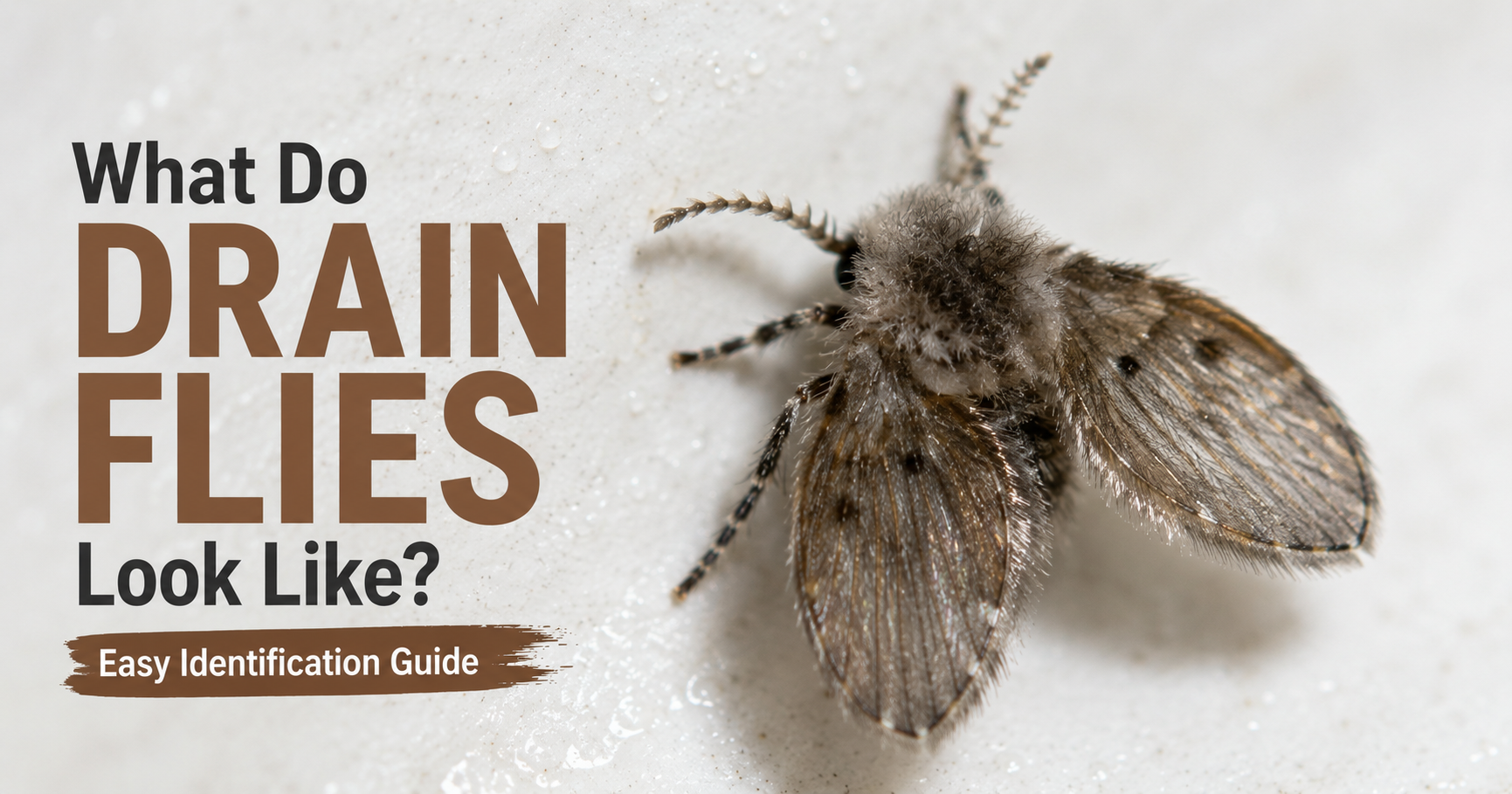
Most adult deer flies measure about 1/4 to 3/8 inch long, making them noticeably smaller than horse flies but larger than many common household flies. When a fly is much smaller and appears around sinks or bathrooms instead, use this guide to identify smaller household flies.
Do deer flies have striped wings?
Many species do. Dark bands or patches across the wings are one of the easiest features I use to identify deer flies.
How can I tell a deer fly from a horse fly?
I usually compare their size, wing patterns, and behavior. Deer flies are smaller, often have patterned wings, and commonly circle around a person’s head, while horse flies are larger, heavier, and tend to fly in more direct paths.
Are deer flies found indoors?
It’s uncommon. Deer flies are outdoor insects that are most often found near forests, wetlands, lakes, and other areas where wildlife is common.
Why is identifying a deer fly important?

Correct identification helps explain why you’re encountering the insect and guides you toward the best prevention methods. Deer flies behave very differently from house flies, fruit flies, and other common flies found indoors. If you're comparing a small indoor fly with a deer fly, these fruit fly appearance clues can help you separate the two species.
About the Author
Mark Sullivan has spent years working and hiking around farms, forests, lakes, and rural properties where biting flies are a regular summertime nuisance. He enjoys helping people identify outdoor insects correctly so they can understand their behavior and choose practical ways to avoid unwanted encounters.