
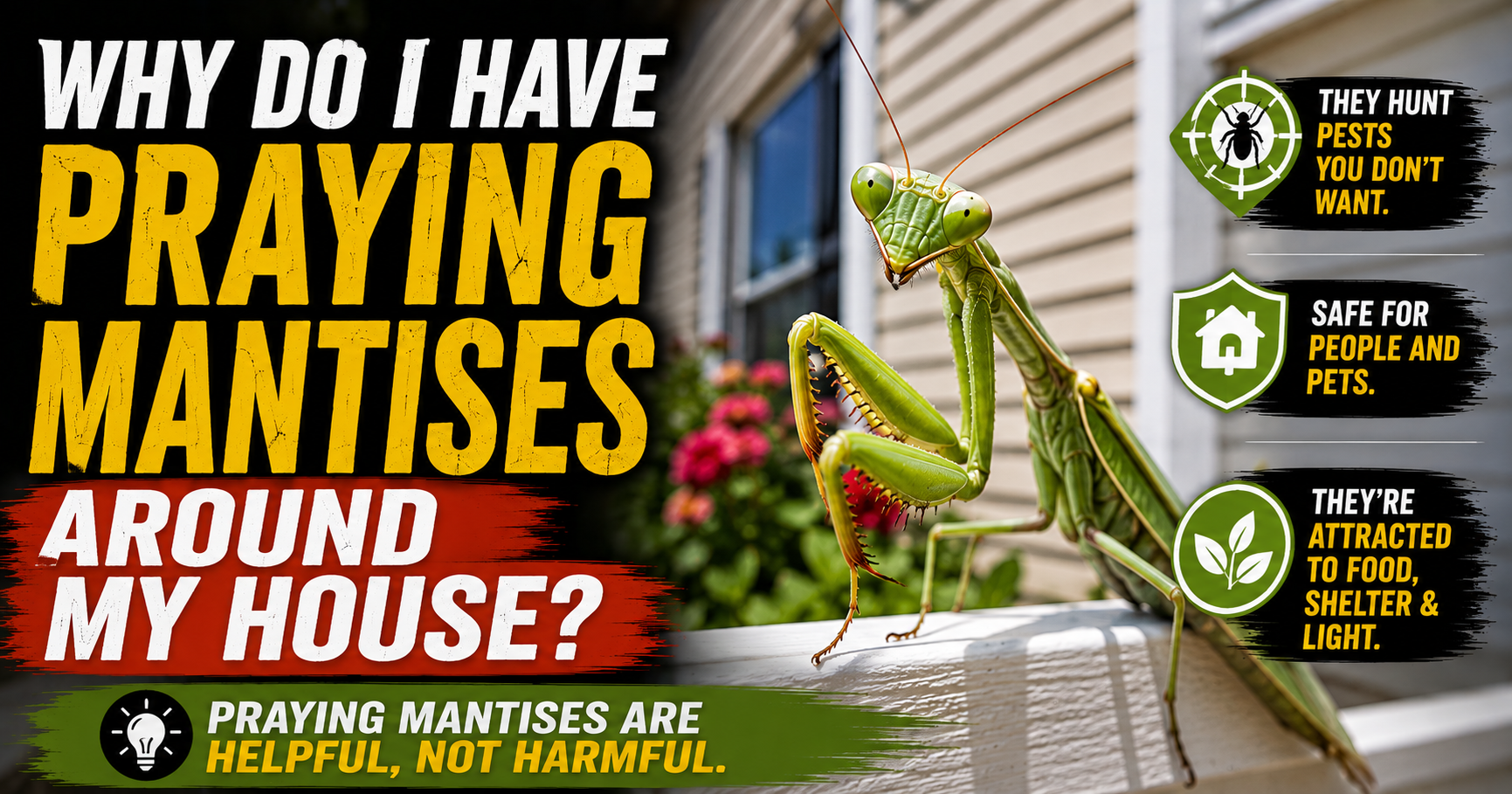
You probably have praying mantises around your house because your property provides plenty of insects to hunt, vegetation to hide in, and safe places to rest or lay eggs. Outdoor lights may also attract moths and other flying insects, turning your porch or siding into an easy hunting area.
Finding a praying mantis near your home does not mean you have an infestation. Mantises are solitary outdoor predators. They do not build colonies inside walls, eat wood, damage siding, or reproduce throughout a house like common household pests.

In most cases, a praying mantis around your house is simply taking advantage of a yard that provides food and shelter.
The Most Common Reason Is Other Insects
A praying mantis goes where it can find prey. If your yard has flies, moths, crickets, beetles, grasshoppers, caterpillars, spiders, or other insects, a mantis has a reason to stay nearby.
Mantises are ambush predators. Instead of constantly chasing food, they select a promising location and wait for another insect to move within reach. A garden, shrub, flower bed, porch light, or woodland edge can provide an ideal hunting position.
Your property does not necessarily have an unusual bug problem. Even a healthy yard contains thousands of insects, many of which remain hidden from people. A praying mantis only needs enough regular hunting opportunities to make the area worthwhile.
Seeing one can actually indicate that your yard supports an active food web. Plants attract plant-eating insects, those insects attract predators, and the predators become food for birds, frogs, spiders, and other wildlife.



Your Plants Give Mantises Places to Hunt
Praying mantises commonly wait on flowers, shrubs, tall grass, vegetable plants, tree branches, and weeds. Vegetation gives them both camouflage and access to prey.
Their green, brown, tan, or gray coloring allows them to disappear among leaves, stems, bark, and dried plant material. A mantis can remain motionless on a plant while waiting for a bee, fly, moth, or other insect to approach.
Properties with the following features may be especially attractive:
- Flower beds
- Vegetable gardens
- Tall ornamental grasses
- Dense shrubs
- Fruit trees
- Native wildflowers
- Overgrown fence rows
- Woodland edges
- Unmowed patches
- Plants growing close to the house
The plants themselves are not the mantis’s food. Praying mantises eat other animals rather than chewing leaves or roots. The vegetation provides hunting platforms, concealment, and access to insects.
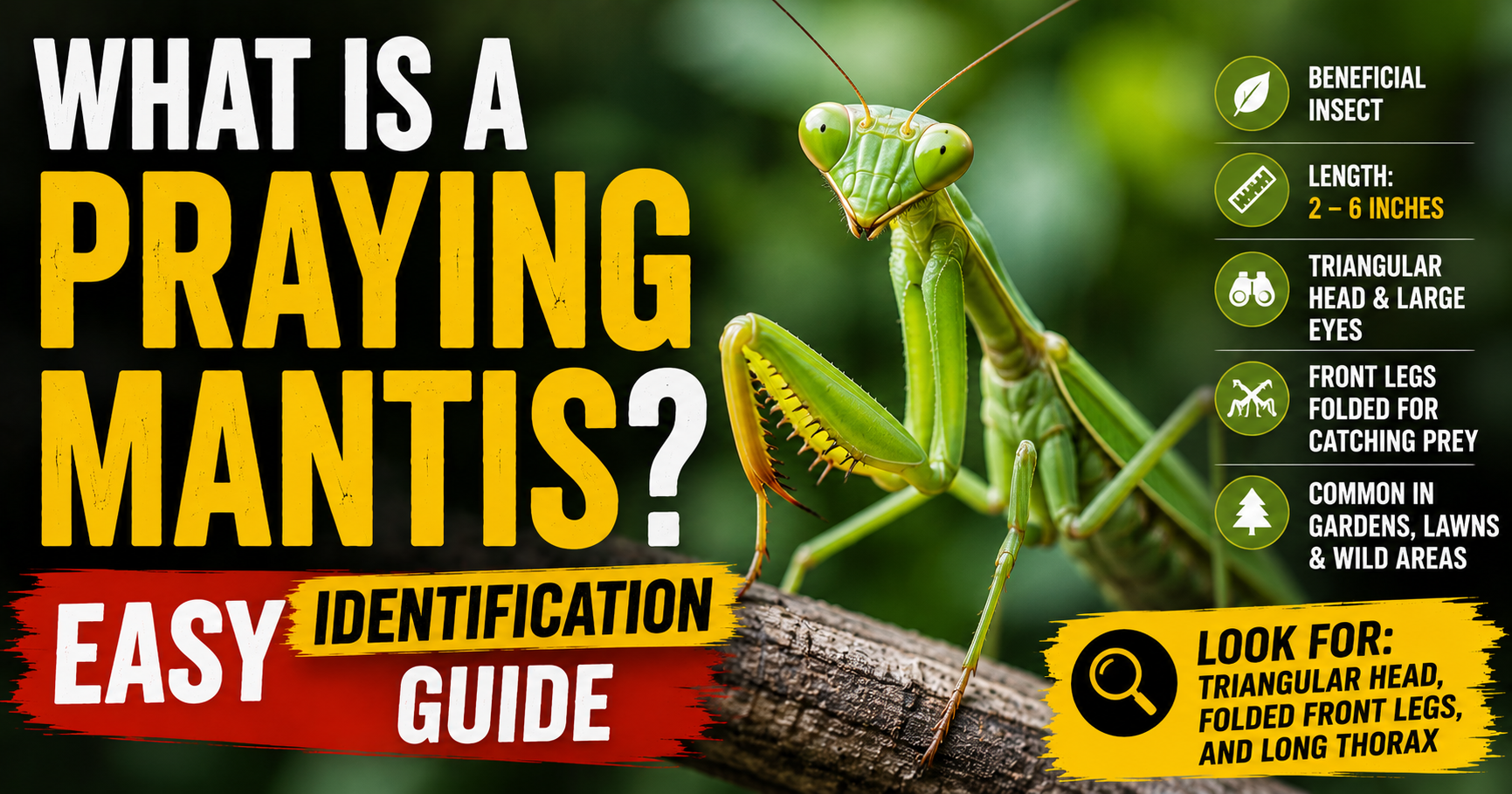
If you are unsure whether the insect you found is actually a mantis, my guide explaining how to identify a praying mantiscovers its triangular head, folded front legs, body shape, colors, and other recognizable features.

Outdoor Lights Can Draw Them Toward the House
Porch lights, garage lights, security lights, and illuminated windows attract many nocturnal insects. Moths, flies, beetles, and other flying insects gather around these bright areas after dark.
Praying mantises may follow that food supply.
An exterior wall beneath a porch light gives a mantis an open hunting surface where flying insects repeatedly land. Screens, window frames, railings, and nearby shrubs can also provide convenient places to wait.
Some adult mantises, particularly males, fly after dark and may be attracted to lights themselves. A mantis on your door or window may have flown toward the light or followed other insects gathering there.
This activity is usually temporary. The mantis may stay for a few hours or several days before moving to another hunting area.
Why Praying Mantises Appear on Porches
A porch combines several things a praying mantis needs.
It may provide:
- Light that attracts prey insects
- Plants or hanging baskets for cover
- Railings and furniture that offer perches
- Protection from heavy rain
- Warm surfaces after sunset
- Open areas where moving prey is easy to detect
A mantis found on a porch is usually hunting or resting. It is not trying to damage the structure or find a way into the house.
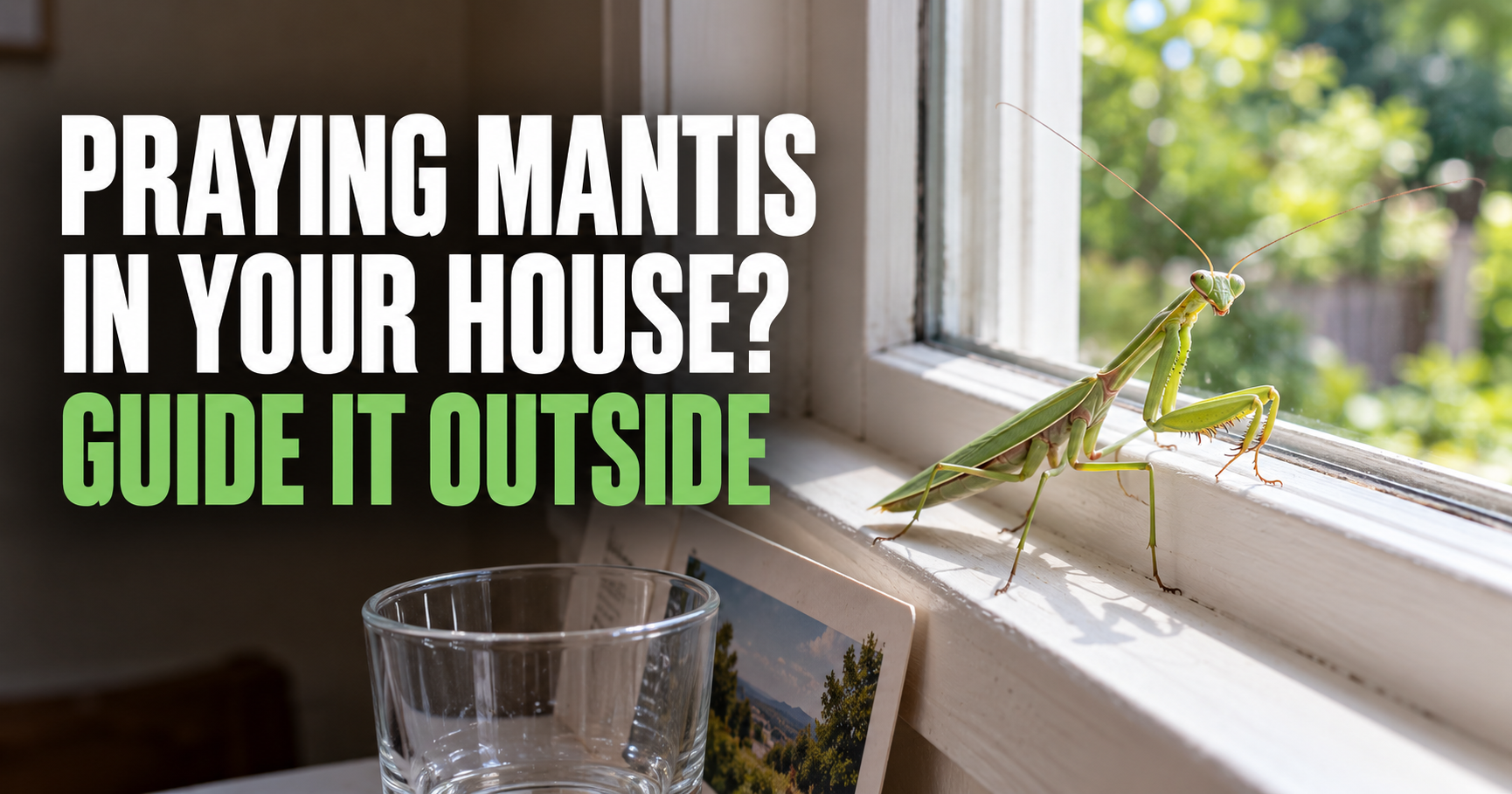
If it is sitting near a doorway, you can leave it alone or gently move it to a shrub. Avoid grabbing its abdomen or wings. A cup and a stiff piece of paper provide a safer way to relocate it.



Why One Might Be Sitting on Your Siding
House siding can be a useful hunting surface, especially near lights, plants, and windows.
A green mantis is easy to see against light-colored siding, while a brown mantis may blend into wood, brick, or darker exterior surfaces. The insect may remain still for long periods and move only when prey approaches.
Warm siding can also retain heat during cool evenings. Because mantises rely on outside temperatures to regulate their activity, a sun-warmed wall may provide a comfortable resting place.
Finding one on the siding does not mean it came from inside the wall. Praying mantises do not establish nests behind siding or chew through construction materials.
Why Praying Mantises Show Up Near Windows
Windows can attract mantises because indoor light shines through the glass and draws insects toward the house.
A mantis may sit:
- On the window screen
- Along the window frame
- On the sill
- On nearby siding
- In a shrub beneath the window
- Around a light mounted above the window
The mantis may appear to be watching you through the glass. Its large compound eyes and movable head allow it to track movement, so it may genuinely turn toward you when you approach.
However, it is not trying to get inside or showing aggressive behavior. It is probably responding to your movement while remaining near a productive hunting location.



Why You May Find One Near a Door
Doors create accidental entry opportunities. A praying mantis resting on the frame, screen, or nearby wall may slip indoors when the door opens.
Exterior lights near doors also attract prey insects. If you regularly leave a porch light on, a mantis may learn that the area offers repeated hunting opportunities.
Door wreaths, potted plants, seasonal decorations, and climbing vines provide additional places for mantises to hide. An egg case can occasionally be attached to one of these items and brought indoors without anyone noticing.
A single mantis near a door is not trying to invade the house. It is using the structure as a perch or following the insects gathered around it.
Can Praying Mantises Live Inside a House?
Praying mantises are not adapted to live permanently inside an ordinary house. They need live prey, appropriate temperatures, vegetation or climbing surfaces, and enough moisture to survive.
One may remain alive indoors temporarily if it can find small insects, but most houses do not provide the right conditions for long-term survival.
A mantis indoors usually entered through:
- An open door
- A damaged window screen
- A gap around a door or window
- A houseplant brought inside
- Cut flowers from the garden
- Firewood or branches
- Holiday decorations
- An attached garage
Finding one indoors does not mean more are hidden in the walls. It is normally a single accidental visitor.


Why Several Baby Mantises May Suddenly Appear Indoors
Finding one adult praying mantis inside is usually accidental. Finding dozens or hundreds of tiny mantises is different.
A female mantis lays eggs inside a hardened protective case called an ootheca. The case may be attached to branches, plant stems, outdoor decorations, firewood, garden equipment, or other surfaces.
If an egg case is unknowingly brought inside, the warmth of the home can trigger the eggs to hatch earlier than they would outdoors. Numerous tiny mantis nymphs may then appear within a short period.
This can happen with:
- Christmas trees
- Decorative branches
- Firewood
- Potted outdoor plants
- Wreaths
- Garden decorations
- Cut plant stems
The young mantises did not reproduce inside the house. They emerged from one egg case that was carried indoors.
If this happens during suitable outdoor weather, carefully collect and move them outside. When freezing temperatures make immediate release unsafe, the situation becomes more difficult because tiny mantises need appropriate live prey and humidity to survive.
Why Praying Mantises Lay Egg Cases Around Homes
Praying mantises attach egg cases to firm surfaces that can remain in place through winter.
Around a house, those surfaces may include:
- Shrub branches
- Tree bark
- Fence posts
- Deck railings
- Plant stems
- Outdoor furniture
- Siding
- Garden stakes
- Stored equipment
- Decorations
The female surrounds her eggs with a foamy material that hardens into a protective case. The case helps shield the eggs from cold weather and physical damage.
An egg case does not mean the mantis is building a nest or creating a permanent infestation. The eggs usually hatch during warm weather, and the young disperse into the surrounding vegetation.
Why You See More Praying Mantises in Late Summer
Praying mantises are easiest to notice during late summer and early fall because they have reached their adult size.

Nymphs hatch during spring and spend the growing season eating, molting, and becoming larger. They are present earlier in the year, but their small size and lack of developed wings make them much harder to find. A visual guide to baby praying mantis features can help distinguish these small, wingless nymphs from unrelated insects.
By late summer:
- Adults have reached full size
- Males may fly while searching for females
- Females have heavier abdomens containing eggs
- Mantises move through gardens looking for prey and mates
- Brown individuals become easier to see as vegetation dries
- Cooler nights may draw them toward warm structures
The large brown mantis I photographed on a tree in Missouri was much easier to notice because it had reached adult size. Even then, its body blended remarkably well into the bark.
Does Seeing a Praying Mantis Mean Your Yard Has Too Many Bugs?
Not necessarily. Every outdoor property has insects, even when homeowners rarely notice them.
A mantis does not require a severe pest population. It may eat a fly, moth, cricket, grasshopper, caterpillar, beetle, spider, bee, or almost any other animal it can capture.
A yard with flowers and vegetation can support plenty of potential prey without having a harmful infestation. The mantis may also move between neighboring properties rather than depend entirely on insects from your yard.
If you are seeing both mantises and obvious plant damage, inspect the affected plants directly. Do not assume the mantis caused the damage. It does not eat leaves, and it may be waiting to capture the insect that is responsible.
Do Praying Mantises Damage Plants?
Praying mantises do not feed on plants. Their mouthparts are used to eat captured prey rather than chew leaves, stems, flowers, roots, or fruit.
A mantis may bend a delicate stem while climbing, but it does not create the feeding holes associated with caterpillars, beetles, grasshoppers, slugs, or other garden pests.
If you find a mantis on a damaged plant, look for other clues:
- Fresh holes in leaves
- Missing leaf edges
- Caterpillar droppings
- Slime trails
- Beetles beneath leaves
- Insect eggs
- Aphid colonies
- Damage to fruit or stems
The mantis may be there because the actual plant-eating insects have attracted it.
Are Praying Mantises Good to Have Around the House?
A praying mantis around the yard is usually harmless and may eat some unwanted insects. However, its value should not be exaggerated.
Mantises do not selectively hunt only pests. They also capture pollinators, butterflies, spiders, native insects, and other predators. A mantis waiting on a flower may eat a moth one day and a bee the next.
I view them as interesting parts of the outdoor ecosystem rather than dependable pest-control workers. They can reduce a few insects, but they will not eliminate mosquitoes, flies, roaches, or garden pests from an entire property.
There is usually no reason to disturb an individual mantis that is outdoors and behaving normally.
Will a Praying Mantis Keep Mosquitoes Away?
Praying mantises may occasionally catch mosquitoes, but they are not effective mosquito control.
Mosquitoes are small, mobile, and often active in areas where a large mantis is not positioned to capture them. A mantis eats whatever manageable prey comes close rather than actively searching for one particular insect.
Seeing a mantis near your home does not mean the mosquito population will noticeably decrease. Removing standing water and addressing mosquito breeding areas will have a much greater effect.
Are Praying Mantises Attracted to People?
Praying mantises are not attracted to people, blood, sweat, food smells, or human homes.
A mantis may turn its head and watch you because it responds to movement. This can feel surprisingly personal because few insects appear to make direct eye contact.
If one lands on you, it probably mistook you for a stable surface or arrived accidentally while flying. It is not attempting to bite or feed.
Remain calm and allow it to walk onto a branch, container, or another object. Trying to swat it may cause the insect to raise its front legs defensively.
Should You Be Worried About a Praying Mantis Near Children?
A praying mantis is not considered dangerous to children. It is not venomous and does not sting.
Children should still be taught to observe rather than squeeze or grab it. A large mantis has spiny front legs and chewing mouthparts. If trapped in a hand, it may defend itself with a pinch or bite.
The greater risk is usually to the mantis. Its legs, wings, and abdomen can be injured by rough handling.
Watching one hunt, turn its head, or blend into a plant can be a good opportunity to teach children about backyard insects without encouraging them to pick it up.
Can a Praying Mantis Hurt Dogs or Cats?
A praying mantis is unlikely to cause a serious problem for a dog or cat.
A curious pet may paw at or try to eat the insect. The mantis may respond by spreading its wings, raising its front legs, striking defensively, or attempting to pinch.
It is not poisonous or venomous, but swallowing any insect can occasionally cause minor stomach upset. The mantis could also be injured by the encounter.
If possible, move the mantis to a shrub before a pet reaches it. Veterinary advice is appropriate if a pet develops unusual symptoms after eating any unknown insect.
Are Praying Mantises Attracted to Certain House Colors?
There is no strong reason to believe that a particular house color attracts praying mantises in the same way that food, vegetation, lights, and prey insects do.
Color can affect how easily you notice them. A green mantis stands out against white siding but disappears in a shrub. A brown mantis may be difficult to see on wood or brick but obvious on a pale wall.
The surface may also provide warmth, shelter, or a useful hunting position. Those factors are generally more important than the color itself.
Why Does the Same Praying Mantis Keep Returning?
What appears to be the same mantis may remain in one small area for several days if hunting is productive.
Mantises conserve energy by waiting for prey. A porch light, flower bed, or shrub filled with insects gives one little reason to leave.
It may move between a few nearby perches and return to the most successful location. This does not mean it has bonded with the homeowner or claimed the house permanently.
It may also be more than one mantis. Individuals of the same species and color can look almost identical unless you compare body size, markings, or an injury.
Should You Turn Off Outdoor Lights?
You do not need to turn off every outdoor light because you saw one praying mantis. However, reducing unnecessary nighttime lighting can decrease the number of insects gathering against your house.
If bugs around doors and windows are becoming bothersome, consider:
- Turning lights off when they are not needed
- Moving lights farther from entry doors
- Closing curtains or blinds after dark
- Repairing damaged screens
- Using warmer-colored exterior bulbs
- Sealing gaps around windows and doors
These changes may reduce moths, beetles, flies, and other insects around the structure. With less prey available, mantises may spend more time in the yard instead of on the house.
Should You Remove a Praying Mantis From Your Yard?
In most situations, no removal is necessary.
A praying mantis outdoors is not damaging the house, plants, lawn, or furniture. It will usually move on when food becomes scarce or weather conditions change.
If it is in an unsafe location, move it carefully to:
- A sturdy shrub
- A garden plant
- Tall grass
- A low tree branch
- A vegetated area away from doors
Place a cup or container over the mantis and slide a piece of cardboard underneath. Carry it to the new location and allow it to climb out on its own.
Avoid spraying it with insecticide simply because it looks intimidating.
What If the Mantis Is a Nonnative Species?
The Chinese mantis and European mantis are established nonnative species in many parts of the United States. The smaller Carolina mantis is native.
Large nonnative mantises may compete with or prey upon native mantises. This has led some people to remove confirmed Chinese or European mantises and their egg cases.
The difficulty is accurate identification. Color alone is unreliable because native and nonnative mantises can all be green or brown.
Body size, wing length, facial markings, front-leg markings, and egg-case shape provide better clues. I would not kill a mantis based only on a quick glance or a photograph that does not show the important identifying features.
I also would not purchase mantis egg cases for garden pest control. Commercially sold cases are often from nonnative Chinese mantises, and mantises do not selectively eat only harmful insects.
How to Keep Praying Mantises Outside
Praying mantises do not normally try to invade homes, so extensive pest-proofing is unnecessary. Basic exclusion is usually enough.
Check:
- Door sweeps
- Window screens
- Gaps around doors
- Open garage doors
- Plants before bringing them inside
- Firewood and branches
- Wreaths and seasonal decorations
- Christmas trees
The most important step is inspecting outdoor items for an egg case before bringing them into a heated building. One overlooked ootheca can release many tiny nymphs indoors.
An adult mantis found inside can simply be captured and returned outdoors.
Why You Usually Do Not Need Pest Control
Praying mantises are not household pests. Spraying a house or yard because you saw one would provide little benefit and could kill many other insects. For guidance on when treatment is actually warranted, consult these household pest treatment answers.
Pesticides may affect:
- Bees
- Butterflies
- Lady beetles
- Spiders
- Native mantises
- Predatory beetles
- Other useful backyard animals
If mantises repeatedly gather around one exterior light, address the lighting and prey insects instead of treating the mantis.
The presence of one outdoor predator is not evidence that your home needs professional pest control.
What a Praying Mantis Around Your House Really Means
A praying mantis around your house usually means your property offers vegetation, insects, and suitable hunting locations. Porch lights and illuminated windows may make the structure especially attractive after dark.
It does not mean the house is dirty, damaged, or infested. The mantis is not eating the building or attempting to reproduce inside the walls.
Unless it enters the home or sits somewhere unsafe, you can normally leave it alone and watch one of the most unusual predators in the backyard do what it does naturally.
Frequently Asked Questions
Why is a praying mantis sitting by my front door?
The area may have a light that attracts moths, flies, and other prey insects. The door frame also provides a convenient perch. The mantis is usually hunting or resting rather than trying to enter.
Does a praying mantis mean my house has bugs?
It means insects are available somewhere nearby, but every outdoor property has insects. One mantis does not prove that your house has an indoor infestation.
Why is a praying mantis on my window screen?
Light shining through the window may attract small flying insects to the screen. The mantis can wait there and capture prey that comes within reach.
Will a praying mantis damage my house?
No. Praying mantises do not eat wood, insulation, siding, fabric, wiring, or other building materials.
Can praying mantises infest a house?
No. They do not establish household colonies. An adult usually enters accidentally, while numerous baby mantises may emerge from an egg case brought indoors.
Why do praying mantises come out in late summer?
They hatch as small nymphs in spring and grow throughout the summer. They become much easier to notice after reaching full adult size in late summer and early fall.
Should I move a praying mantis away from my porch?
You can leave it alone unless it is near a busy doorway or at risk from children or pets. If necessary, move it carefully to sturdy vegetation.
Does a praying mantis eat plants?
No. Praying mantises are predators that eat insects, spiders, and other animals. A mantis found on a damaged plant may be hunting the insect responsible.
Why does a praying mantis keep looking at me?
Its movable head and large compound eyes allow it to track motion. It may turn toward you because you are the largest moving object nearby, not because it intends to attack.
Are praying mantises attracted to porch lights?
Adult mantises may fly toward lights, and porch lights also attract the insects they eat. Both factors can bring mantises close to a house after dark.
Caleb Warren is a longtime gardener and backyard insect researcher who writes practical identification guides for WhyDoIHaveBugs.com, helping homeowners understand the insects they find before deciding whether any action is needed.