One of the questions I hear most often during the summer is whether ordinary house flies can bite people.
I understand why people ask.
A fly lands on your arm, crawls across your skin, and refuses to leave you alone.
It certainly feels like it might bite.
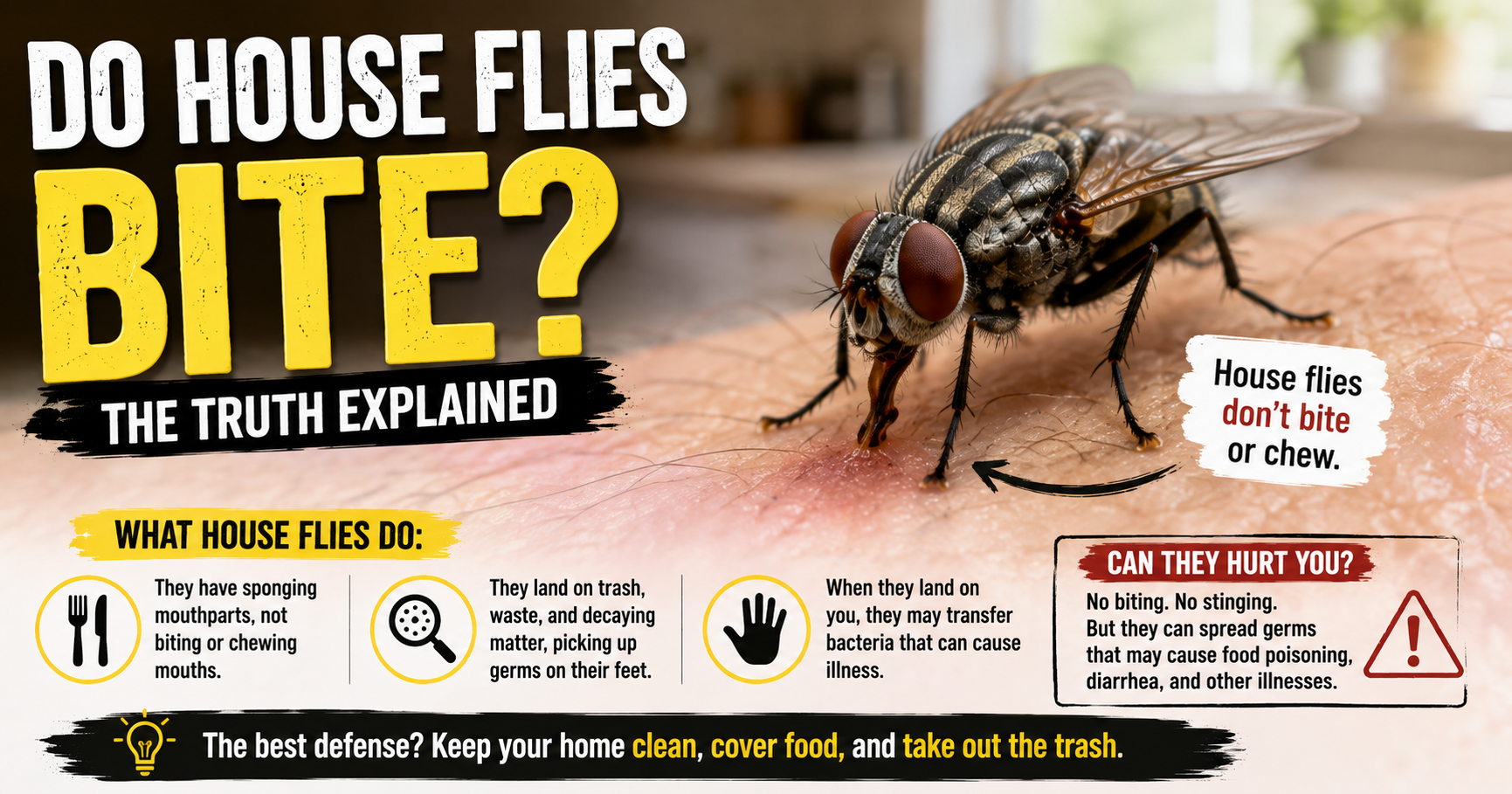
The good news is that ordinary house flies do not bite people.
They simply aren’t built for it.
Instead, they have mouthparts designed for soaking up liquids rather than piercing skin.
Knowing that can save you from chasing the wrong pest because several other flies do bite, and they often get mistaken for common house flies.
If you’re not completely sure what type of fly you’re dealing with, I recommend starting with What Do House Flies Look Like? Easy Identification Guide before assuming it’s a house fly.
Why House Flies Can’t Bite
The easiest way to understand this is by looking at how house flies eat.
Unlike mosquitoes or horse flies, house flies don’t have sharp mouthparts capable of puncturing your skin.
Instead, they have a soft, sponge-like structure called a proboscis.
When they land on food, they release saliva that helps dissolve it before soaking up the liquid.
That system works well for feeding on spilled drinks, decaying organic material, and other moist foods.
Human skin is simply too tough for them to bite through.
That’s why you may feel a house fly walking across your arm without ever feeling an actual bite.

Then Why Do They Keep Landing on Me?
This is something I’ve wondered myself while working outside.
House flies aren’t landing because they want to bite you.
Usually they’re interested in something else.
Some of the things that attract them include:
- Sweat.
- Salt on your skin.
- Body oils.
- Food residue on your hands.
- Moisture.
- Strong odors.
If you’ve just finished mowing the lawn, grilling, gardening, or exercising, you may become much more attractive simply because of the sweat and moisture on your skin.
That doesn’t mean they’re trying to bite.
They’re investigating potential food sources.


If It Hurts, It’s Probably Not a House Fly
Whenever someone tells me a fly actually hurt when it landed, I immediately start questioning whether it was a house fly at all.
Several flies commonly bite people, including:
- Horse flies.
- Deer flies.
- Stable flies.
All three have mouthparts designed for cutting or piercing skin so they can feed on blood.
That’s a completely different feeding strategy than a house fly.
If the fly caused immediate pain, there’s a good chance you’re dealing with another species.
You can compare them with:
- What Do Horse Flies Look Like? Easy Identification Guide
- What Do Deer Flies Look Like? Easy Identification Guide
House Flies Can Still Be a Health Concern
Just because house flies don’t bite doesn’t mean I ignore them.
They’re still capable of spreading bacteria and other germs.
House flies frequently land on things like:
- Garbage.
- Animal waste.
- Compost.
- Dead animals.
- Rotting food.
Afterward, they may land on your kitchen counter, fruit bowl, pet food, or even prepared meals.
That’s one reason I never want large numbers of house flies inside my home.
Keeping their population low isn’t just about comfort.
It’s also about reducing contamination.

If you’re wondering why they’re showing up in the first place, Why Do I Have House Flies? Common Causes Explained walks through the first places I inspect.
Why House Flies Rub Their Front Legs Together
Another question I get from homeowners is why house flies seem to stand still and constantly rub their front legs together.
It almost looks like they’re plotting something.
In reality, they’re grooming themselves.
House flies have tiny sensory hairs covering their legs that help them taste and detect chemicals in their environment.
As they walk across different surfaces, those sensory organs become coated with dust, food particles, and other debris.
By rubbing their legs together, they’re cleaning them so they continue working properly.
It’s a perfectly normal behavior and one you’ll often notice after a fly lands on a windowsill or countertop.
Why They Almost Always End Up on Windows
One behavior that confuses homeowners is why flies keep buzzing against windows instead of flying back outside.
House flies are strongly attracted to light.
Once they’re inside, the brightest area in the room is usually a window.
The fly continues trying to reach the daylight, not realizing the glass is blocking its path.
That’s why you’ll often find several flies gathered on the same window during the day.

If that’s exactly what you’re seeing, my article Why Are Flies on My Windows? Here’s What It Means explains what that behavior usually tells me during an inspection.
How I Reduce House Flies Without Filling My House With Spray
When people ask me how to deal with house flies, they often expect me to recommend spraying everything in sight.
That’s usually not where I start.
First, I remove whatever is attracting them.
Next, I make it harder for new flies to get inside by repairing damaged screens and keeping doors closed whenever possible.
Only then do I focus on reducing the adult flies that are already present.

For outdoor fly pressure around garbage cans, compost piles, dog kennels, or barns, I’ve had excellent results with the Rescue! Outdoor Disposable Fly Trap because it attracts flies away from areas where people spend time.
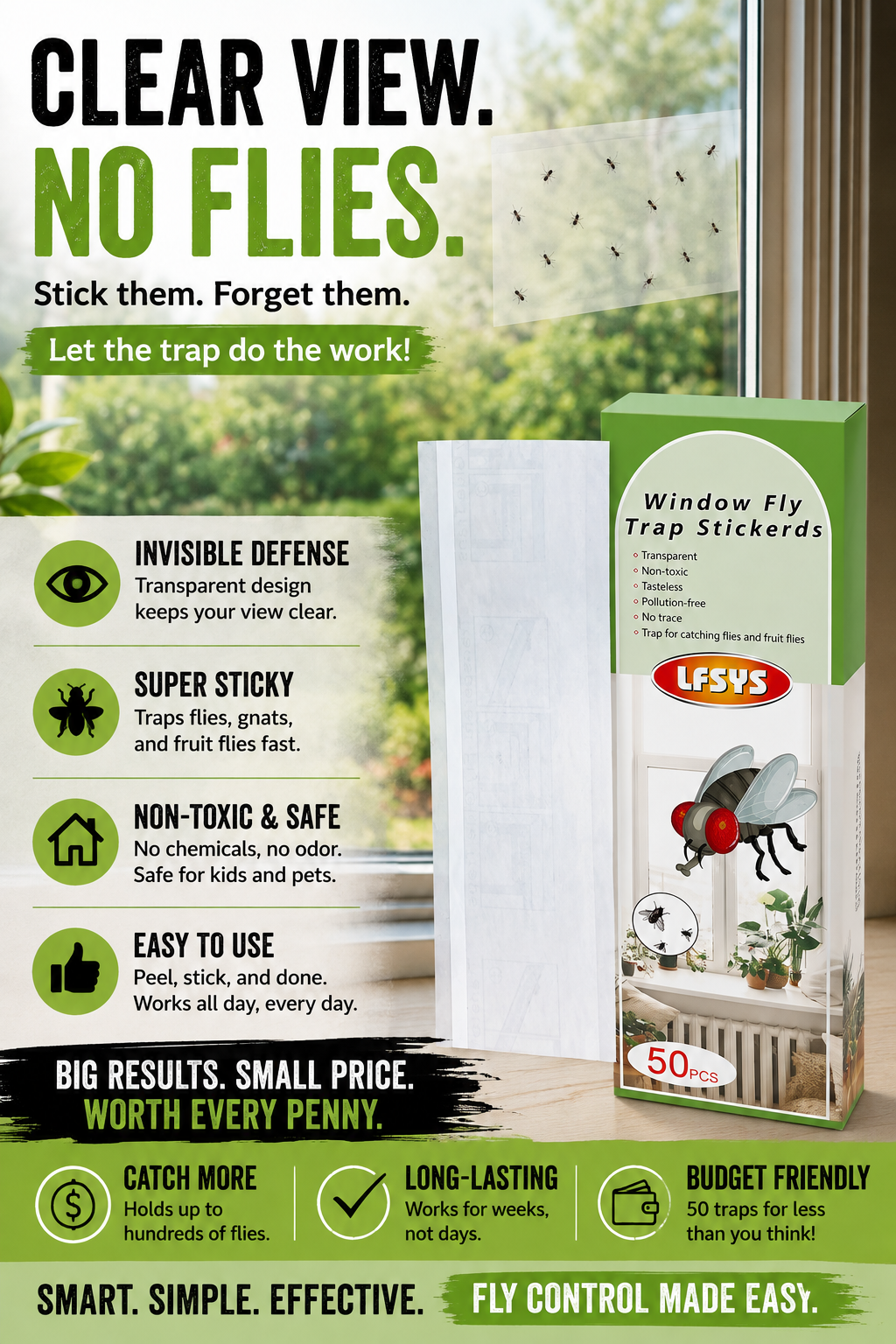
Inside the home, if flies continue gathering on sunny windows, I often recommend the methods I cover in Window Fly Traps That Actually Work since they quietly reduce adult flies without filling the room with insecticides.

If you’re trying to decide which type of trap is best for your situation, I compare all of my favorites in Best Fly Traps That Actually Work for Every Situation.
Don’t Assume Every Fly That Lands on You Is Dangerous
I’ve watched plenty of people panic the moment a fly lands on their arm.
Most of the time, it’s nothing more than an ordinary house fly looking for moisture or investigating a scent.
While I still don’t want house flies crawling across my food or kitchen surfaces, I also know they’re very different from biting flies.
Learning to identify the species helps me respond appropriately instead of worrying every time a fly lands nearby.
The more I understand about the insect, the easier it becomes to solve the real problem instead of guessing.

Frequently Asked Questions
Can a house fly bite me?
No. Ordinary house flies don’t have mouthparts capable of piercing human skin. They feed by soaking up liquids with a sponge-like mouthpart.
Why do house flies keep landing on me?
House flies are often attracted to sweat, salt, body oils, moisture, and food residue on your skin. They’re investigating potential food sources, not trying to bite.
Which flies do bite people?
Horse flies, deer flies, and stable flies are among the most common biting flies in North America. They have specialized mouthparts that can cut or pierce skin.
Can house flies spread diseases even if they don’t bite?
Yes. House flies can pick up bacteria and other germs from garbage, animal waste, and decaying organic material before transferring them to food preparation surfaces or other areas around your home.
Should I worry if a house fly lands on my food?
It’s generally best to avoid eating food that a house fly has repeatedly landed on because flies often travel between unsanitary materials and food, potentially carrying bacteria on their bodies and feet.
About the Author
Mark Sullivan has spent years helping homeowners identify common household pests and understand their behavior. He believes knowing what house flies can and can’t do helps people focus on effective prevention instead of common misconceptions.