
Most people think they know what a house fly looks like.
Then they start seeing flies around their home and realize something.
Not every fly is a house fly.
I’ve had people call blow flies, cluster flies, fruit flies, and even drain flies “house flies” simply because they were flying around the house.
The problem is that each of those insects behaves differently and often comes from a completely different source.
That’s why the first thing I try to do isn’t get rid of the fly.
It’s figure out exactly what I’m looking at.
A couple of minutes spent identifying the insect can save hours of chasing the wrong solution.

House Flies Are Larger Than Most People Expect
One of the easiest ways I identify a house fly is by its size.
An adult house fly usually measures about 1/4 inch long, making it noticeably larger than tiny fruit flies or fungus gnats but smaller than some blow flies.
If the insect looks tiny enough to hover around a banana without immediately catching your attention, it’s probably not a house fly.
On the other hand, if it lands on your kitchen counter and is easy to see from across the room, there’s a good chance you’re looking at one.
Size alone isn’t enough to make a positive identification, but it’s always one of the first things I notice.

Their Color Is Usually Gray
When people imagine a house fly, they often picture a shiny black insect.
That’s usually not accurate.
Most common house flies have:
- Gray bodies.
- Slightly darker markings.
- Transparent wings.
- Dark red eyes.
- Black legs.
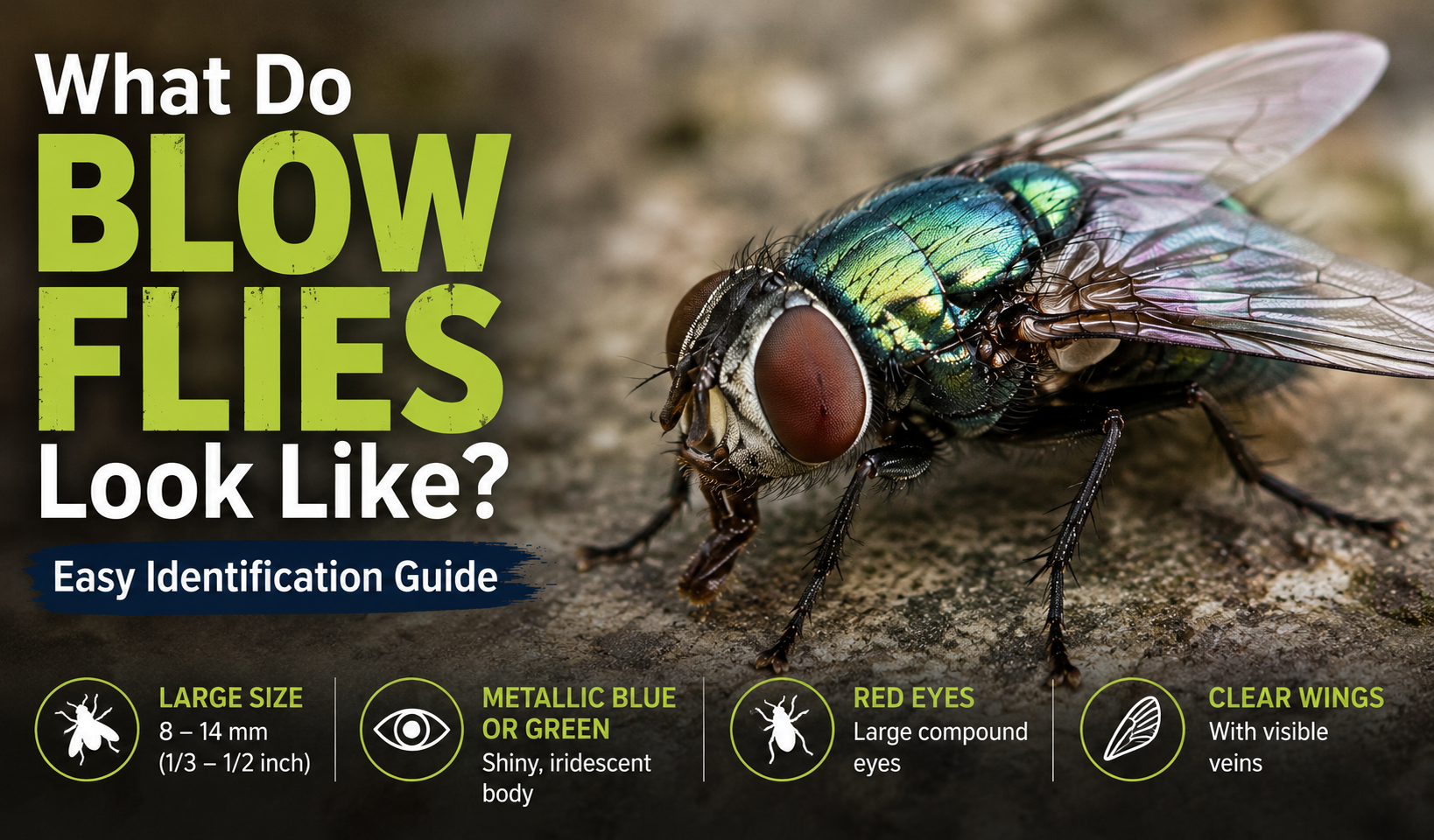
They’re generally much duller in color than metallic blue or green blow flies, which makes color another useful clue during identification. You can compare those color differences with metallic blow fly identification to confirm whether a shiny blue or green insect is a blow fly.

Look Closely at the Thorax
If you can safely get a close look at a house fly, one of the easiest features to recognize is the thorax.
That’s the section directly behind the head.
Most house flies have four narrow dark stripes running lengthwise across this area.
You probably won’t notice them while the fly is buzzing around your kitchen.
But if one lands on a window or becomes trapped, those stripes become much easier to see.
Whenever I’m trying to tell the difference between a house fly and another species, this is one of the features I look for.
House Flies Move With Purpose
Behavior helps me just as much as appearance.
House flies don’t usually hover in one small spot the way fruit flies often do.
Instead, they fly quickly from one surface to another.
You’ll often see them land briefly, clean their legs, and then take off again.
They’re constantly exploring.
Kitchen counters.
Trash cans.
Windows.
Tables.
Pet food bowls.
Watching how an insect moves can sometimes tell me what it is before I ever get close enough to examine it.

Where I Usually Find House Flies
Location is another clue I never ignore.
When I think I’m looking at house flies, I ask myself where they’re spending most of their time.
The places I find them most often include:
- Kitchens.
- Garages.
- Trash cans.
- Recycling bins.
- Windows.
- Pet feeding areas.
- Utility rooms.
- Near exterior doors.
If you’re finding larger flies throughout several rooms instead of just around fruit or houseplants, house flies move much higher on my list of possibilities.
House Flies vs. Blow Flies
This is one of the comparisons I make most often.
At first glance, they can look similar.
Once you’ve seen both, the differences become much easier to spot.
House flies are usually:
- Gray.
- About 1/4 inch long.
- Dull in appearance.
- Covered with four dark stripes on the thorax.
Blow flies are often:
- Metallic blue.
- Metallic green.
- Larger.
- Much shinier.
If a fly almost looks like it’s made of polished metal, you’re probably looking at a blow fly instead of a house fly.
House Flies vs. Fruit Flies
These two insects are rarely confused once you compare them side by side.

Fruit flies are tiny.
House flies are much larger.
Fruit flies usually stay close to fruit, sugary drinks, recycling, and kitchen sinks.
House flies wander throughout the home and aren’t nearly as tied to one small area.

If the insects are hovering around a fruit bowl, I’d start by reading What Do Fruit Flies Look Like? Easy Identification Guide because they may not be house flies at all.
House Flies vs. Cluster Flies
Cluster flies confuse a lot of homeowners because they’re close in size to ordinary house flies.
The biggest differences I notice are behavior and the time of year.
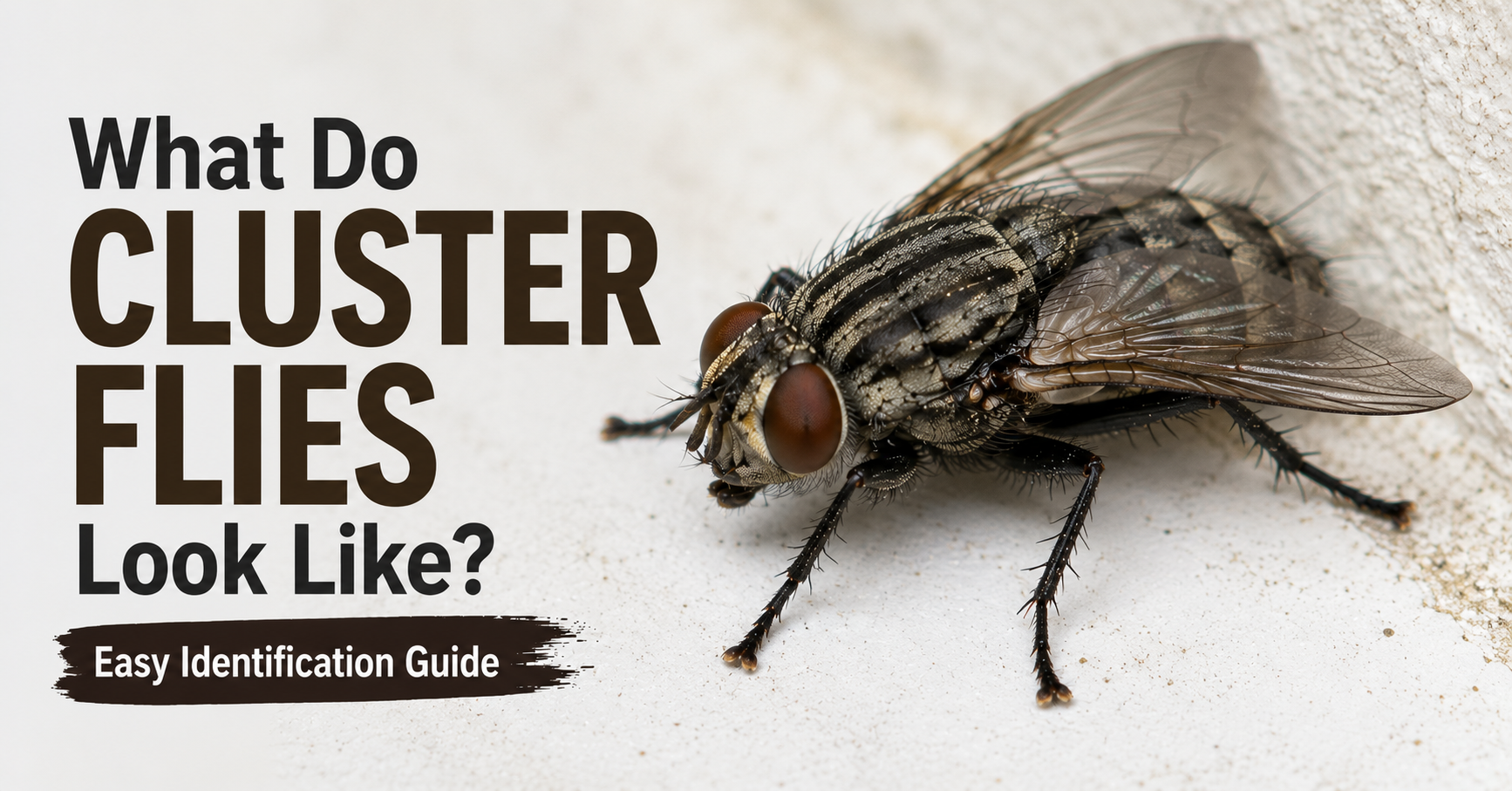
Cluster flies often gather around sunny windows, especially during the fall and winter when they’re trying to overwinter inside homes. When those seasonal window visitors appear, identify cluster flies by appearance can help confirm that they are not ordinary house flies.
House flies are much more active throughout the warmer months and spend more time searching for food than gathering in large numbers on windows.
We’ll dive much deeper into this comparison in a dedicated cluster fly guide.


House Flies Don’t Stay in One Spot
One thing I’ve always noticed is that house flies are constantly moving.
They don’t spend several minutes hovering over one banana the way fruit flies often do.
Instead, they seem to patrol.
They’ll land on a countertop.
Then a window.
Then the trash can.
Then the dog food bowl.
Then the kitchen table.
Watching that behavior helps me distinguish them from smaller flies that tend to stay close to one food source.
Their Eyes Are Larger Than Most People Notice
If you ever get a close look at a house fly, the eyes are hard to miss.
They’re large compared to the rest of the head and usually appear dark reddish-brown.
Those oversized compound eyes are one reason flies are so difficult to swat.
They can detect movement from many different angles, making it much easier for them to react before your hand reaches them.
It’s one of those little details most people never notice until they examine one up close.



Don’t Rely on Color Alone
I’ve seen flies look almost black in one room and gray in another simply because the lighting changed.
That’s why I never identify a fly based on color alone.
Instead, I combine several clues.
I look at:
- Size.
- Body shape.
- Thorax stripes.
- Flight behavior.
- Where it’s spending its time.
- Whether it’s alone or part of a larger group.
Looking at all of those characteristics together usually leads to a much more accurate identification than focusing on a single feature.
Here’s How I Identify House Flies
If I walked into my kitchen tomorrow and saw a fly buzzing around, here’s what I’d do.
First, I’d estimate its size.
Then I’d watch how it flies.
Next, I’d see where it keeps landing.
If I had the chance, I’d look for the gray body and the four dark stripes behind the head.
Finally, I’d think about where I found it.
All of those observations together usually tell me whether I’m dealing with an ordinary house fly or another species that needs a different approach.
Once I know what I’m looking at, solving the problem becomes much easier.

If you determine you’re dealing with house flies, I’d continue with Why Do I Have Flies in My House? Common Reasons Explained. It walks through the most common reasons I find house flies inside and the first places I inspect.
You can also browse our growing Flies category for more identification guides, product reviews, and practical advice.
Frequently Asked Questions
How big is a house fly?
Most adult house flies are about 1/4 inch long, making them noticeably larger than fruit flies and fungus gnats but generally smaller than many blow flies.
What color are house flies?
House flies are usually gray with darker markings. They aren’t metallic like blow flies or light tan like fruit flies.
Do all house flies have stripes?
Most common house flies have four narrow dark stripes on the thorax, just behind the head. These are one of the easiest identifying features when you can get a close look.
How can I tell if I have house flies or fruit flies?
House flies are much larger and fly throughout the home, while fruit flies are tiny and usually stay close to ripening fruit, recycling, garbage, and other fermenting organic material.
Why is identifying the fly important?
Different fly species come from different sources. Identifying the insect first helps you focus on the real cause instead of using treatments designed for the wrong type of fly.
About the Author
Mark Sullivan has spent years tracking down pest problems in homes, garages, barns, and workshops. He enjoys helping homeowners identify insects correctly before choosing a solution because solving the right problem is always easier than guessing.