
One of the biggest mistakes I see homeowners make is assuming every fly buzzing around the house is exactly the same.
From across the room, that’s an easy mistake to make.
Most flies are small.
Most fly.
Most end up bouncing against windows.
But once I take a closer look, the differences become surprisingly obvious.
Those differences matter because each species usually points me toward a different problem.
Some flies are attracted to garbage.
Others indicate standing water, overwatered houseplants, or even a dead animal hidden somewhere around the property.
That’s why I always identify the fly before I decide where to start looking.
Over the years, I’ve learned that the species itself is often my biggest clue.
Why Correct Identification Saves Time
Whenever someone tells me they suddenly have flies, one of the first questions I ask is simple.
“What kind of fly is it?”
That answer immediately changes my investigation.
If it’s a house fly, I begin checking garbage, pet waste, food spills, and compost.
If it’s a blow fly, I start thinking about dead rodents or other decaying animal material.
If it’s a drain fly, my attention shifts toward plumbing and organic buildup inside drains.
Instead of treating every infestation exactly the same, I let the fly point me toward the most likely source.
That approach has saved me countless hours over the years.
House Flies
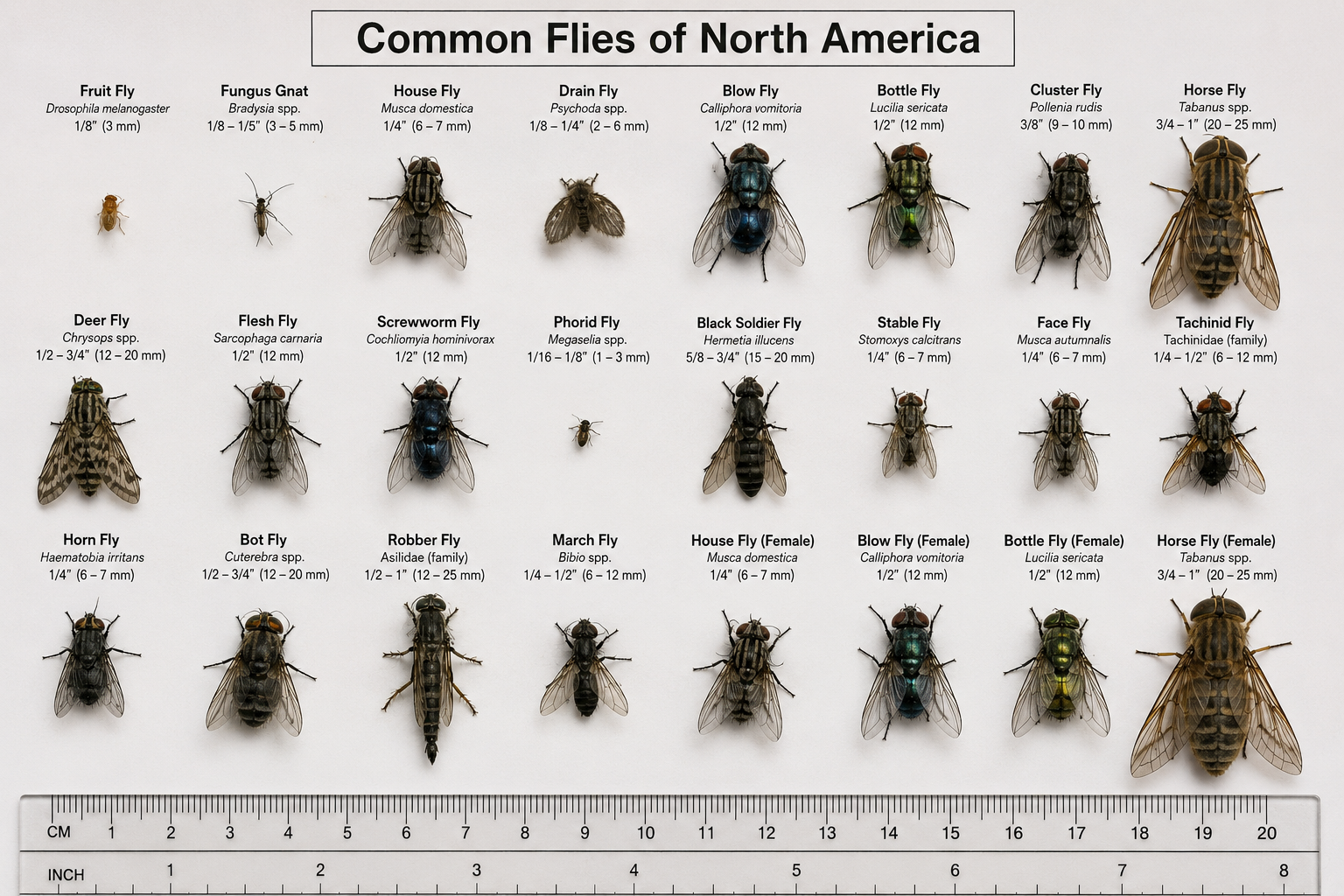
House flies are probably the species most people picture when they think about flies.
They’re medium-sized with gray bodies, bright red eyes, and four dark stripes running down the back behind the head.
I usually find them around kitchens, garages, trash cans, pet areas, and anywhere food or organic waste is available.
Because they’re so common, people often assume every fly they see is a house fly when that’s far from the truth.

If you’d like a closer look at the identifying features, my guide on what house flies actually look like walks through the details I use during my own inspections.
Blow Flies
Whenever I notice a metallic blue, green, or bronze fly, I immediately think blow fly.
Their shiny bodies make them one of the easiest species to recognize.
Instead of focusing on garbage like I would with house flies, blow flies usually have me looking for dead rodents, birds, squirrels, or other decaying animal material nearby.
I’ve solved more than one mystery simply because I correctly identified a metallic blow fly before starting my search.

If you’re unsure whether that’s what you’re seeing, compare your insect with these close-up photos showing how to identify a blow fly.
Fruit Flies
Fruit flies are much smaller than house flies.
Most homeowners notice them hovering around fruit bowls, overripe produce, recycling bins, empty drink cans, and kitchen sinks.
Although tiny, they reproduce incredibly quickly once they find a suitable food source.
When someone tells me they’re seeing dozens of tiny tan flies in the kitchen, fruit flies immediately move near the top of my list.

I explain the easiest ways to recognize them in my article about identifying fruit flies correctly.
Drain Flies
Drain flies look completely different from most other flies.
Instead of shiny bodies, they appear fuzzy and almost moth-like.
They’re weak fliers and usually stay close to the drains where they developed.
Whenever I see several tiny fuzzy flies resting on bathroom walls or around sink drains, I begin inspecting plumbing before anything else.
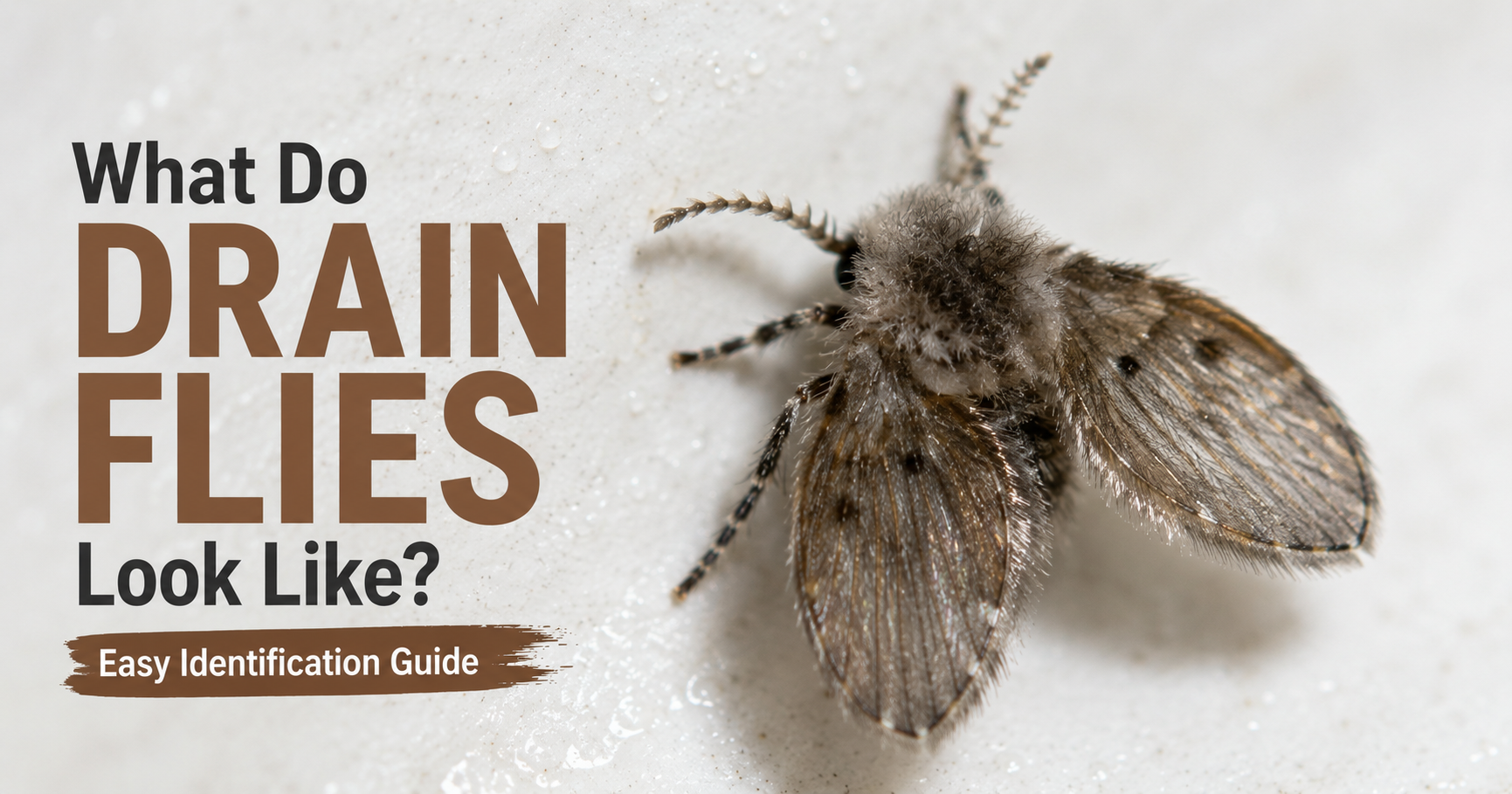
If you’ve noticed those fuzzy little flies around your sinks, compare them with my guide explaining what drain flies look like.
Cluster Flies
Cluster flies confuse homeowners all the time because they look surprisingly similar to ordinary house flies.
The biggest difference isn’t necessarily their appearance.
It’s their behavior.
Instead of breeding in garbage or decaying food, cluster flies spend much of their lives outdoors before trying to overwinter inside homes.
That’s why I usually start thinking about cluster flies when someone tells me dozens of flies suddenly appeared around upstairs windows during the fall or on the first warm days of winter.
Rather than immediately searching the kitchen, I begin inspecting attic spaces, wall voids, and areas where flies may have been hiding during colder weather.
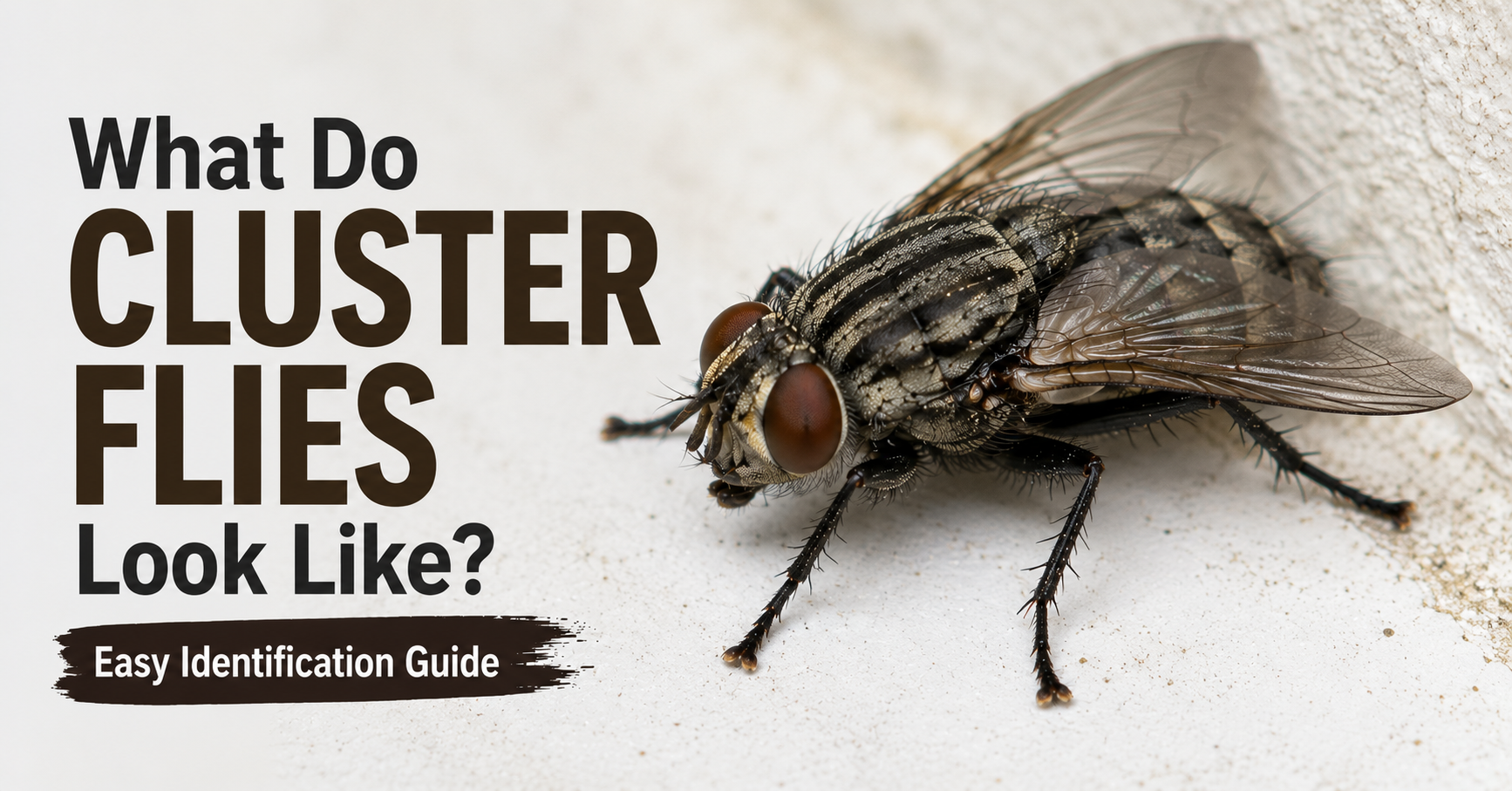
If you’d like to compare the features more closely, my guide on how to recognize cluster flies explains the characteristics I rely on most.
Fungus Gnats
Fungus gnats are another insect that gets blamed for fly infestations, even though they’re much smaller than a typical house fly.
Whenever I hear someone mention tiny black flies hovering around houseplants, fungus gnats immediately come to mind.
The adults are usually weak fliers that stay close to potted plants because that’s where their larvae develop.
Overwatered soil and constantly damp potting mix create ideal conditions for them.
I’ve seen homeowners spend weeks trying to eliminate them from the kitchen when the real source was a neglected plant sitting in the corner of the living room.

If that sounds familiar, compare what you’re seeing with my guide to identifying fungus gnats before treating the wrong pest.
Horse Flies
Horse flies are much larger than the flies most people find indoors.
They’re powerful fliers with large eyes and stout bodies, and unlike house flies, they can bite.
Most of the calls I receive about horse flies come from people spending time outdoors near ponds, livestock, wooded areas, or pastures.
If someone tells me the fly actually hurt when it landed, horse flies move near the top of my list.
They’re not usually indoor pests, but homeowners often want to know whether the large fly they found in the garage or mudroom could be one.

I put together a detailed guide on what horse flies look like to help make that distinction easier.
Deer Flies
Deer flies are closely related to horse flies, but they’re generally smaller and often have striking patterned wings.
Like horse flies, they’re blood-feeding insects capable of delivering a painful bite.
Fortunately, they rarely become household pests.
I usually encounter them around lakes, wooded trails, hiking areas, and rural properties during the warmer months.

Because people often confuse them with horse flies, I recommend taking a close look at my guide on identifying deer flies if you’ve found a biting fly outdoors and aren’t sure which one it is.
Crane Flies
Crane flies probably cause more unnecessary panic than almost any other fly I see.
They’re incredibly long-legged and often mistaken for giant mosquitoes.
Despite their intimidating appearance, crane flies don’t bite people.
In fact, adult crane flies are harmless.
They occasionally wander into homes because they’re attracted to lights, but they don’t breed indoors or create infestations like house flies or drain flies.

If you’ve found one and immediately thought it was an oversized mosquito, you’ll probably find my guide on how to identify crane flies reassuring.
The Location Usually Gives Me My Biggest Clue
Whenever I’m trying to identify a fly, I don’t rely only on what it looks like.
I also pay attention to where I found it.
Flies hovering around fruit almost always send me in a different direction than flies resting on bathroom walls.
Metallic flies around an attic window tell a completely different story than tiny black flies circling houseplants.
Over the years, I’ve learned that combining appearance with location leads to much faster and much more accurate identification than relying on color or size alone.
That’s why I always encourage homeowners to slow down and observe the fly for a minute before trying to treat it.
The more clues you gather, the easier it becomes to identify the species and solve the real problem behind it.
How I Narrow Down the Species in Just a Few Minutes
When I’m helping someone identify a fly, I don’t start by grabbing insect spray.
I start asking questions.
How big is the fly?
Is it metallic or dull gray?
Does it seem fuzzy?
Where is it spending most of its time?
Has it been biting people or simply flying around the house?
Those simple observations usually eliminate several possibilities before I even pick up an identification guide.
For example, tiny flies hovering around bananas immediately make me think fruit flies, while fuzzy flies resting near sink drains almost always point me toward drain flies. A large metallic fly around an attic window sends me in a completely different direction than a tiny black fly circling a potted plant.
Why I Don’t Treat Every Fly Problem the Same Way
One of the biggest mistakes I see is homeowners assuming every fly infestation has the same solution.
In reality, the correct treatment depends almost entirely on the species.
If I’m dealing with house flies, I’m looking for garbage, pet waste, or food sources.
If it’s a blow fly problem, I immediately begin searching for a dead animal or other decaying meat.
Drain flies send me toward plumbing, while fungus gnats have me checking houseplants before anything else.
That’s why I always recommend identifying the fly first.
It saves time, avoids unnecessary treatments, and usually leads me to the real source much faster.
What I Do After Identifying the Fly
Once I know which species I’m dealing with, my next step is finding out why it’s there.
That’s where the individual guides become much more useful because they walk through the causes, breeding sites, and solutions for each fly.

For example, if you’ve identified a house fly, you’ll probably want to read why house flies suddenly appear inside homes next.
If you’ve confirmed you’re dealing with blow flies, I recommend learning where blow flies usually come from because that article explains the first places I investigate.
The goal isn’t just putting a name on the insect.
It’s understanding what that insect is trying to tell you about your home.
My Favorite Tools for Reducing Fly Problems
After identifying the fly and removing the source, I usually focus on reducing the remaining adult population.

For outdoor fly activity around garbage cans, compost piles, barns, or dog kennels, I’ve consistently had good results with the Rescue! Outdoor Disposable Fly Trap because it attracts flies away from areas where people spend time.

Inside the house, many fly species eventually collect on bright windows once they become trapped indoors. In those situations, I’ve found that the products I discussed in my window fly trap review continue working long after I’ve finished my inspection.
If you’re not sure which style is best for your particular situation, I also compared my favorites in my complete guide to the best fly traps and explain where each one performs best.
Learning the Species Makes Every Fly Problem Easier
One thing I’ve learned after years of helping homeowners is that flies aren’t random.
Every species has its own habits, preferred breeding sites, favorite food sources, and behaviors.
Once I identify the fly, the investigation becomes much easier because I know where to start looking instead of searching the entire property.
That’s why I always spend a few extra minutes identifying the insect before reaching for traps or sprays.
In almost every case, the fly itself ends up pointing me toward the solution.
Frequently Asked Questions
What is the most common fly found inside homes?
The house fly is the most common household fly in North America. It’s frequently found around kitchens, garbage cans, pet areas, garages, and anywhere food or organic waste is present.
Which fly is metallic blue or green?
Metallic blue, green, or bronze flies are usually blow flies. They often indicate a nearby dead animal, decaying meat, or another protein-rich breeding source.
What are the tiny flies around my houseplants?
Tiny black flies hovering around potted plants are commonly fungus gnats. Their larvae develop in consistently moist potting soil, especially when plants are overwatered.
Which flies bite people?
Horse flies and deer flies are among the most common biting flies. Ordinary house flies, fruit flies, drain flies, cluster flies, and fungus gnats do not bite people.
Why is identifying the type of fly important?
Correct identification helps you locate the real source of the problem. Different fly species breed in different places, so knowing which fly you’re dealing with often tells you exactly where to begin looking.
About the Author
Mark Sullivan has spent years helping homeowners identify common household pests and trace infestations back to their source. He believes that correctly identifying a fly is often the fastest step toward solving the problem because each species leaves its own unique set of clues.