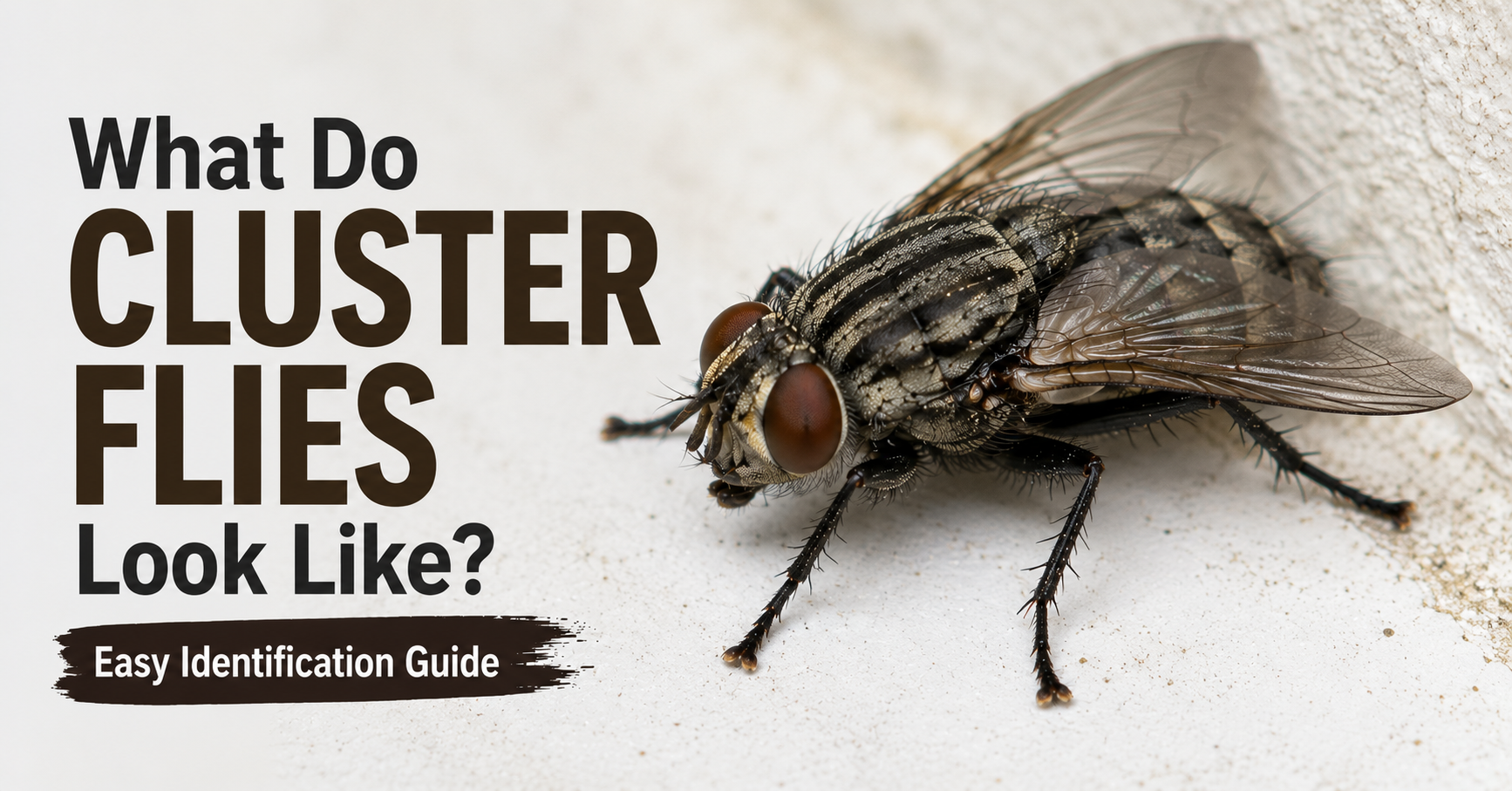
If someone handed me a dead fly and asked me whether it was a house fly or a cluster fly, I probably wouldn’t answer right away.
I’d want to take a closer look.
That’s because cluster flies are one of the most commonly misidentified flies I run across.
At first glance, they look a lot like ordinary house flies.
They’re similar in size.
They’re both gray.
They both end up on windows.
But once you know what to look for, there are several differences that make identifying cluster flies much easier.
I’ve found that proper identification matters because cluster flies usually point to a completely different situation than house flies or blow flies. Seeing how to identify common flies in homes can clarify why the source of a cluster fly problem differs from other infestations.
Understanding that difference can save you a lot of frustration later.

They’re Slightly Larger Than House Flies
The first thing I usually notice is the size.
Cluster flies tend to be just a little larger than common house flies.
Not dramatically larger.
Just enough that they often look a bit heavier when they land on a window or wall.
If I have both species sitting side by side, the cluster fly almost always appears stockier.
Size alone isn’t enough to identify them, but it gives me my first clue.


Their Bodies Look More Golden Than Gray
This is where I think most people miss an important detail.
House flies usually have a smooth gray appearance.
Cluster flies often look slightly golden or olive-gray.
The biggest reason is the fine hairs covering their thorax.
Those tiny golden hairs give the body a softer, almost fuzzy appearance when light hits it.
You won’t always notice this from across the room.
But once you’ve seen it up close, it’s surprisingly easy to recognize.
They’re Not Metallic Like Blow Flies
One thing I immediately rule out is blow flies.

Cluster flies never have the bright metallic blue or green coloring that blow flies are famous for. For a direct comparison between the common gray house fly and a metallic blow fly, see compare house flies with blow flies.
If the fly sparkles in the sunlight, I’m almost certainly looking at a blow fly instead.
Cluster flies stay much more muted in color.
That’s one reason they’re often mistaken for house flies instead of blow flies.
The Wings Rest Flat Over the Body
When a cluster fly lands, I like watching how it rests.
Its wings typically fold neatly across the back, creating a narrow profile.
Combined with the fuzzy-looking thorax, this gives the insect a slightly different appearance than a house fly once you know what to look for.
It’s a subtle difference, but one I’ve learned to pay attention to.


Where I Usually Find Cluster Flies
Location is one of my biggest clues.
I don’t just identify the fly.
I identify where it’s choosing to spend its time.
The places I most often expect to find cluster flies include:
- Sunny windows.
- Window sills.
- Attics.
- Upstairs bedrooms.
- Spare rooms.
- Garages.
- Rooms that stay warm during winter.
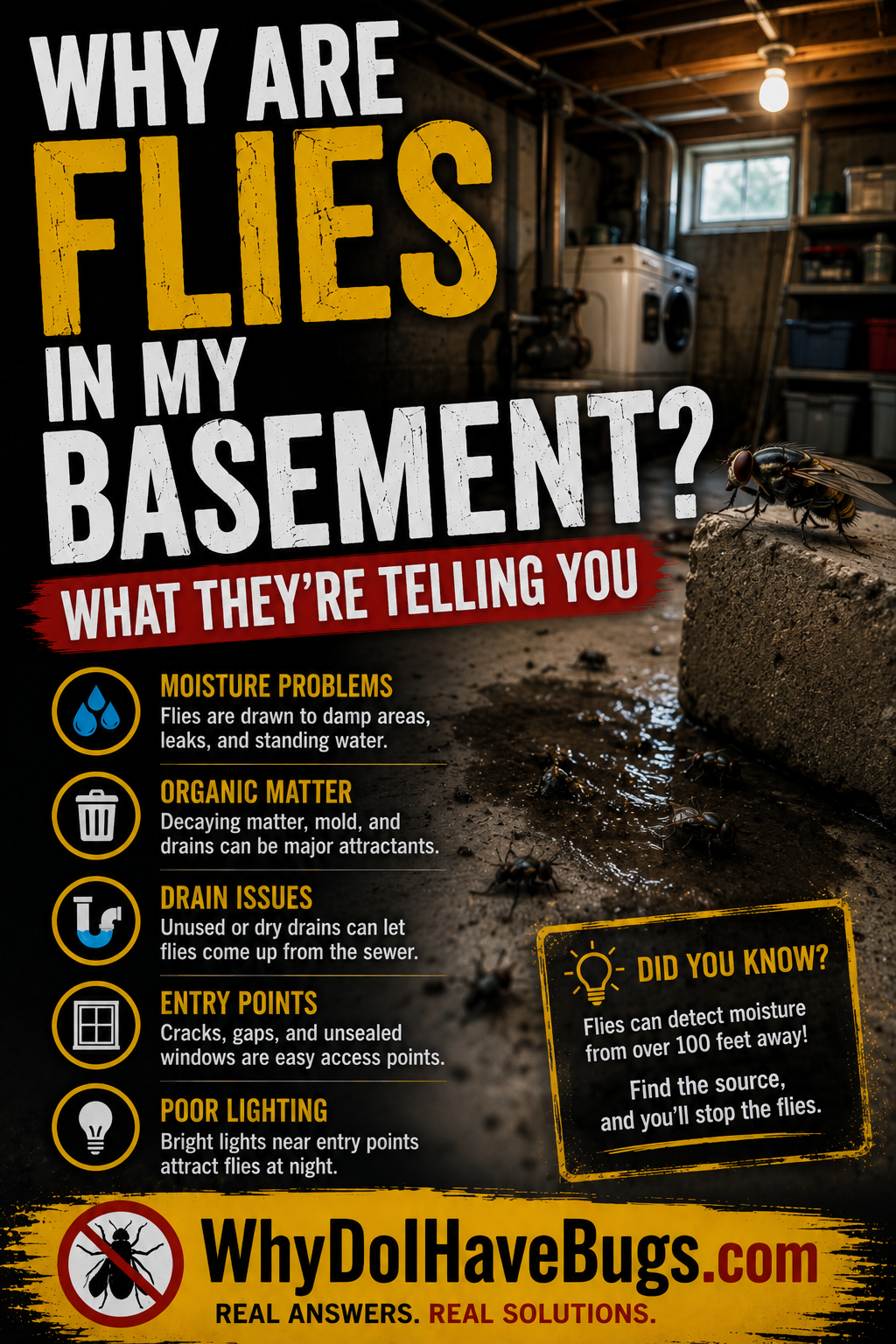
If someone tells me they’re seeing dozens of flies gathering on sunny windows in late fall or winter, cluster flies immediately move near the top of my list. When those gathering spots are downstairs, flies gathering on basement windows can help you investigate whether the basement is simply trapping flies or revealing a nearby source.
Cluster Flies vs. House Flies
This is the comparison that confuses homeowners the most.
Honestly, if you only glance at them, it’s easy to see why.
They’re close in size.
They’re both gray.
They both end up inside homes.
The differences become much clearer when you slow down and pay attention.
House flies usually:
- Have a smooth gray body.
- Show four dark stripes behind the head.
- Stay active throughout spring and summer.
- Fly all over the house looking for food.
Cluster flies usually:
- Look slightly larger and stockier.
- Have tiny golden hairs that give them a fuzzy appearance.
- Gather in groups on warm, sunny windows.
- Become much more noticeable during the fall and winter.
One fly isn’t enough for me to confidently call it a cluster fly.
When I start seeing several flies slowly moving around sunny windows during colder months, that’s when I really start leaning toward cluster flies.



The Time of Year Is One of My Biggest Clues
If I had to pick one thing that separates cluster flies from almost every other common household fly, it would be timing.
House flies usually become the biggest nuisance during warm weather.
Cluster flies tend to become noticeable when the weather starts cooling off.
Every fall, they’re looking for protected places to spend the winter.
That’s why people often discover them:
- On warm winter afternoons.
- During the first cool weeks of fall.
- In upstairs rooms that get afternoon sun.
- Around attic windows.
If someone tells me they’re suddenly seeing flies in January after not seeing any for weeks, cluster flies immediately become one of my first suspects.
They Like Light Just as Much as Warmth

One thing I’ve noticed every time I’ve dealt with cluster flies is how much they love sunny windows. When flies repeatedly gather in sunny glass areas, traps for flies around windows explains how a clear trap can take advantage of that behavior.

Even in the middle of winter, they’ll gather on the brightest window they can find. For flies gathering on bright glass, clear fly traps for sunny windows can help monitor and catch them.
That’s because the sunlight warms the glass and tricks them into thinking it’s time to become active again.
Many homeowners assume the flies are coming through the window.
I’ve almost never found that to be true.
They’re usually already inside the house.
They’re simply trying to reach the light.

If you’re constantly finding flies around sunny windows, my guide Why Are Flies on My Windows? Here’s What It Means explains why that happens and what I usually inspect next.


Cluster Flies Usually Move More Slowly
Another thing I pay attention to is how the fly behaves.
House flies often seem restless.
They dart across the room, land for a few seconds, then take off again.
Cluster flies usually appear much calmer.
I’ve watched them crawl slowly across windows, walls, and ceilings before making another short flight.
That slower pace doesn’t identify them by itself, but when I combine it with the season, their appearance, and where I found them, it becomes another useful clue.
Don’t Focus on Just One Feature
I’ve learned not to identify any fly based on a single characteristic.
Color can change depending on the lighting.
Size varies a little from one fly to another.
Even behavior changes with temperature.
Instead, I put several clues together.
I look at:
- Time of year.
- Body size.
- Hairy appearance.
- Color.
- Flight behavior.
- Where the fly is gathering.
When all of those clues point in the same direction, I’m much more confident in my identification.

Here’s How I Identify Cluster Flies
If I walked into an upstairs bedroom in late November and found several flies crawling across a sunny window, here’s what I’d do.
First, I’d look at the time of year.
Then I’d examine the body for those fine golden hairs.
I’d compare the size to an ordinary house fly.
I’d watch how they move.
Finally, I’d think about where they were gathering.
Those observations usually tell me much more than trying to identify the insect from a single blurry photo.
Once I know they’re cluster flies, the next question I ask isn’t “How do I kill them?”
It’s “How did they get inside?”
That’s usually where the real solution begins.
If you’ve confirmed you’re dealing with cluster flies, the next article I’d recommend is Why Do I Have Cluster Flies?because it explains how they get into homes, why they seem to appear out of nowhere, and what I inspect first before reaching for insecticides.
You can also browse our growing Flies category for more identification guides, product reviews, and practical advice covering the most common flies homeowners encounter.
Frequently Asked Questions
Are cluster flies bigger than house flies?
Usually, yes. Cluster flies are often slightly larger and stockier than common house flies, although the difference isn’t always obvious without seeing them side by side.
What color are cluster flies?
Cluster flies are generally gray with an olive or golden tint caused by fine hairs covering the thorax. They don’t have the metallic coloring seen on blow flies.
Why do cluster flies gather on windows?
They’re attracted to warmth and light. Sunny windows often become gathering spots, especially during the fall and winter when cluster flies become active inside homes.
How can I tell a cluster fly from a house fly?
I look at several things together, including the season, body size, golden hairs on the thorax, slower movement, and whether multiple flies are gathering around sunny windows.
Why is identifying cluster flies important?
Cluster flies usually enter homes to overwinter, while house flies are typically attracted by food and breeding sites. Knowing which one you’re dealing with helps you focus on the real source of the problem instead of treating the wrong pest.
About the Author
Mark Sullivan has spent years helping homeowners solve pest problems in homes, garages, barns, and workshops. He enjoys teaching people how to identify insects correctly because the right identification is often the key to finding the right solution.