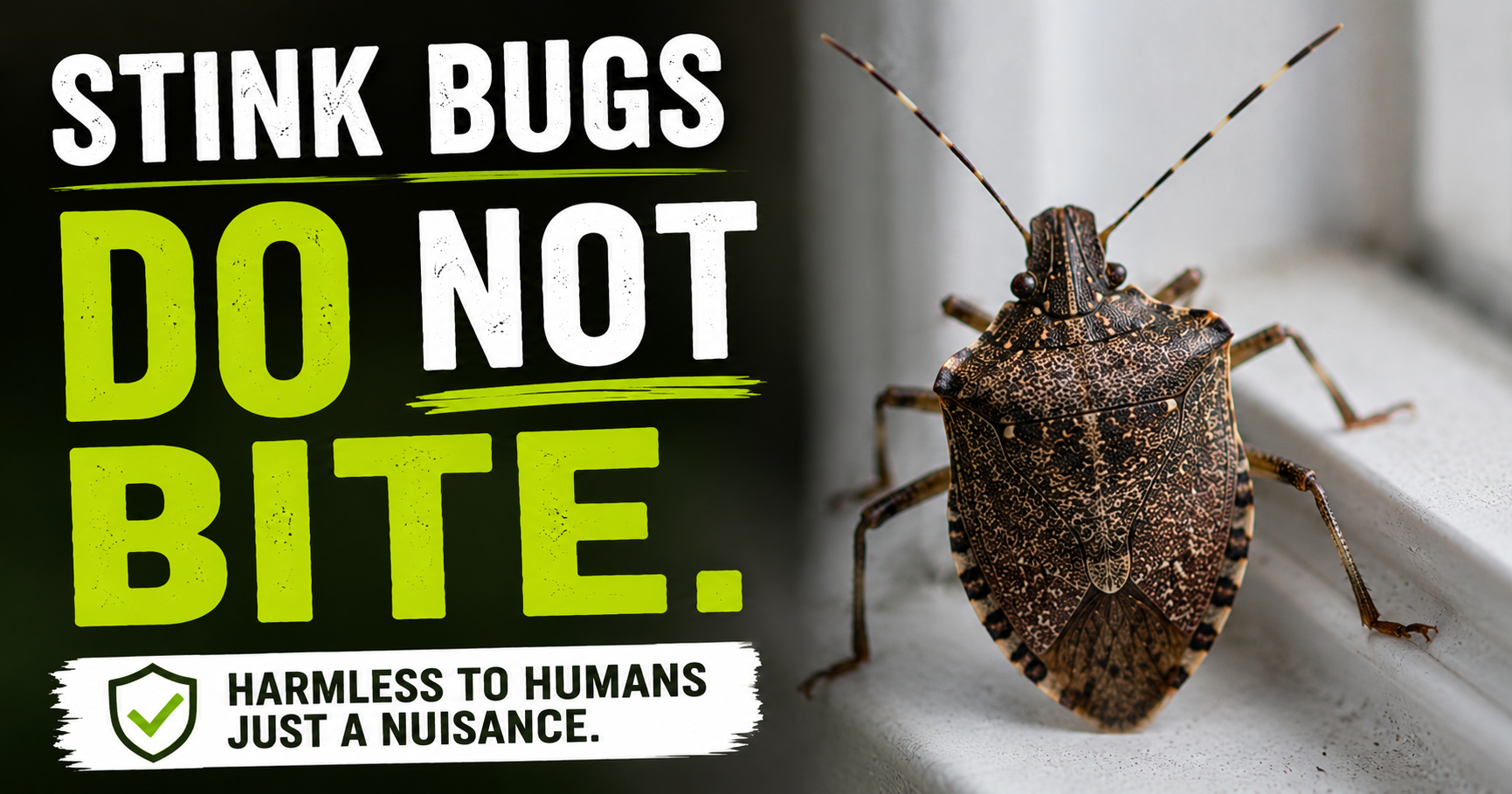
Common stink bugs do not normally bite people or pets. Brown marmorated stink bugs, which are the ones most often found inside American homes, feed on plants rather than blood.
Stink bugs do have a pointed piercing mouthpart underneath their bodies. That can make them look capable of biting, but the mouthpart is normally used to puncture fruit, vegetables, seeds, leaves, and other plant tissue.
If you felt a painful jab from an insect you thought was a stink bug, it may have been a predatory stink bug, an assassin bug, a wheel bug, or another similar-looking true bug.
Can a Stink Bug Bite You?
The brown marmorated stink bug does not normally bite humans.
These insects are not interested in blood and do not treat people as a food source. A stink bug crawling across your skin is usually trying to find a place to land, hide, or escape.
The U.S. Environmental Protection Agency states that brown marmorated stink bugs do not bite people or animals. They are considered nuisance insects inside houses rather than biting pests.
When threatened, a common stink bug is more likely to:
- Remain still
- Crawl away
- Drop from the surface
- Fly away
- Release its defensive odor
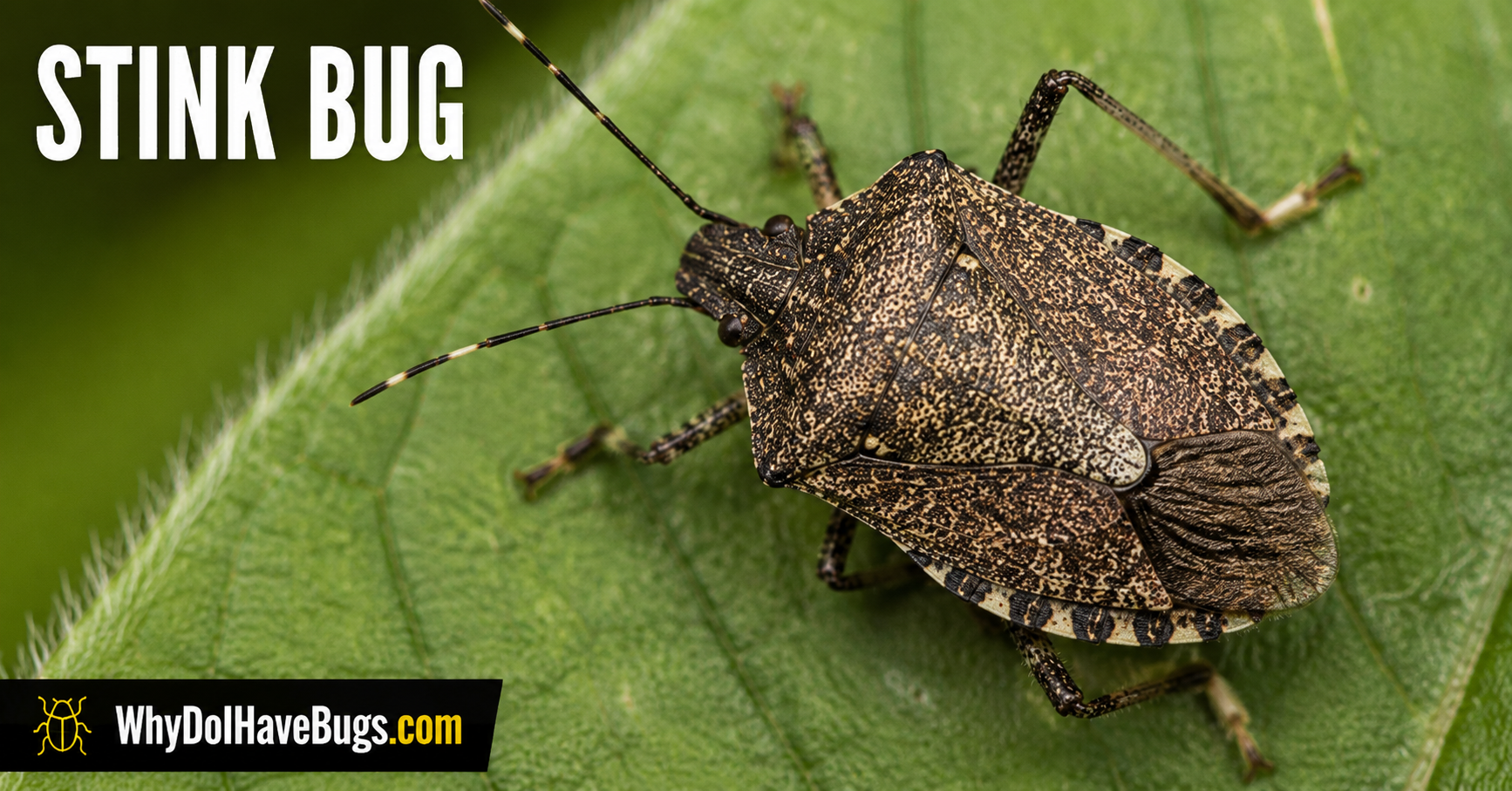
If the insect you found does not have the familiar shield-shaped body, use my complete stink bug identification guidebefore assuming it was responsible for a bite.
Why Do People Think Stink Bugs Bite?
People sometimes assume stink bugs bite because the insects have a visible pointed mouthpart.
This mouthpart is called a beak or rostrum. When it is not being used, it rests beneath the stink bug’s body.
A plant-feeding stink bug inserts the mouthpart into plant tissue and removes fluids. It may feed on tomatoes, peppers, beans, apples, peaches, seeds, and many other plants.
The mouthpart is sharp enough to penetrate plant tissue, but that does not mean the insect normally uses it on people.
A mosquito also has a piercing mouthpart, but mosquitoes are specifically adapted to feed on blood. Common stink bugs are not.


Do Brown Marmorated Stink Bugs Bite?
Brown marmorated stink bugs do not normally bite people or pets.
This invasive species is responsible for many of the stink bugs found crawling across walls, windows, ceilings, and curtains during fall and winter.
An adult is mottled brown and roughly the size of a dime. It has alternating light and dark markings around the edge of its abdomen and pale bands on its antennae.
These stink bugs enter buildings to find winter shelter. They are not searching for a blood meal.
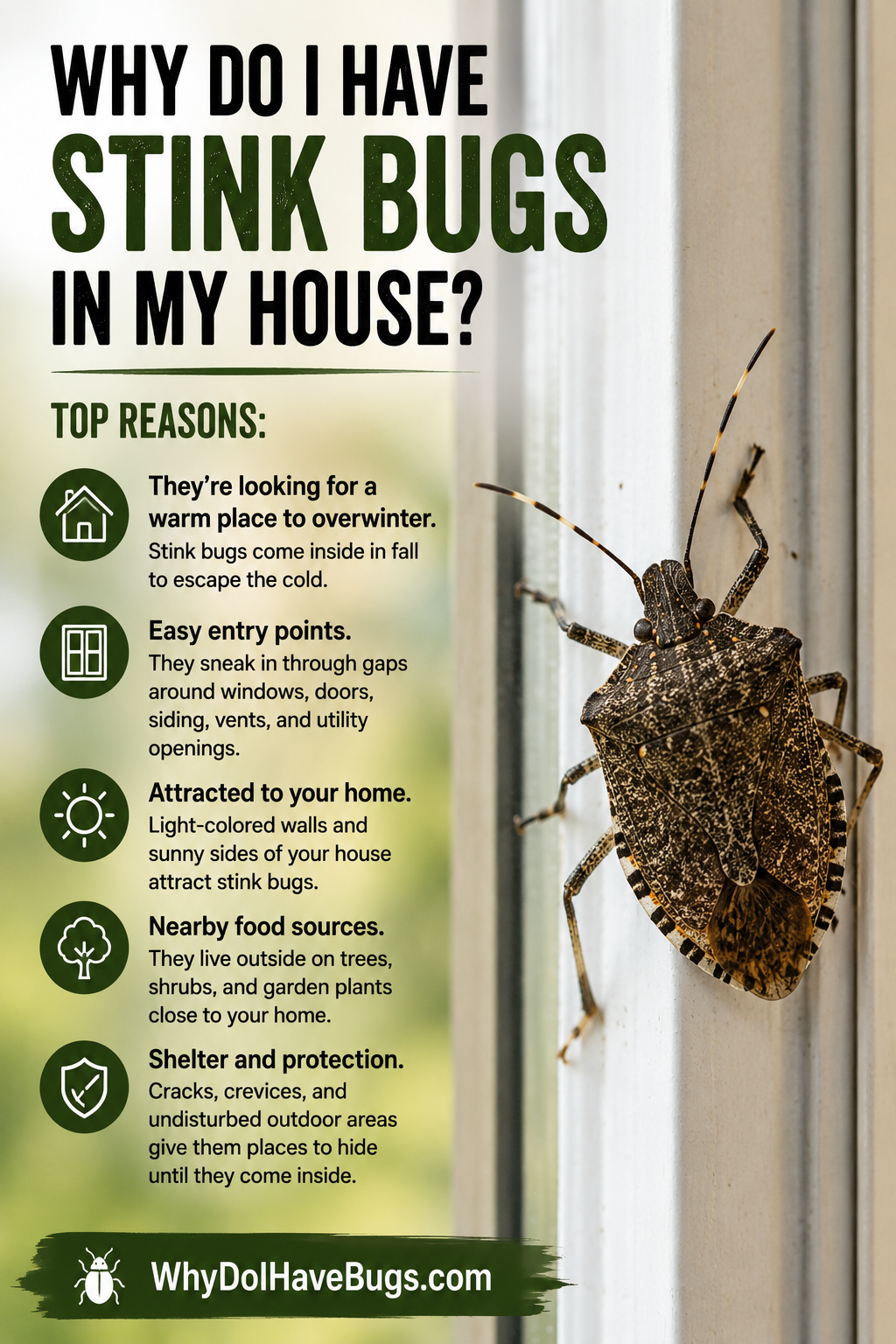
The reason brown stink bugs move indoors is connected to seasonal temperature changes and available openings around the exterior.
Do Green Stink Bugs Bite?
Green stink bugs do not normally bite people.
They are plant feeders that use their piercing mouthparts on developing fruit, vegetables, seeds, and other plant tissue.
A green stink bug may release odor if it is grabbed or squeezed. That defensive response is much more likely than a bite.
Several stink bug species can appear green, so exact identification may require looking at the body shape, colored borders, shoulders, and other markings.

Can Predatory Stink Bugs Bite?
Predatory stink bugs are different from the plant-feeding species most commonly found inside homes.
They use strong piercing mouthparts to attack caterpillars, beetle larvae, and other insects. A predatory stink bug may jab defensively if it is trapped against the skin or handled roughly.
This is not normal feeding behavior toward people. The insect does not want human blood and will not chase someone to bite them.
The spined soldier bug is one beneficial predatory stink bug. It has pointed shoulders and feeds on several garden pests.
I avoid picking up any unidentified true bug with bare fingers. A cup and piece of paper make handling safer for both the insect and the person.
What Does a Stink Bug Bite Look Like?
There is no typical brown marmorated stink bug bite because these insects do not normally bite people.
A red, itchy, swollen, or painful mark should not automatically be blamed on a stink bug found nearby.
Possible explanations include:
- A mosquito bite
- A flea bite
- A bed bug bite
- A tick bite
- A spider bite
- An ant sting
- Contact with an irritating plant
- Skin irritation from a stink bug’s defensive secretion
- A defensive jab from another true bug
- An unrelated rash or skin condition
The appearance of a skin mark alone usually cannot identify the exact cause. Many bites, stings, and rashes look similar.
If a stink bug was crushed directly against the skin, its defensive chemicals may cause localized irritation that could be mistaken for a bite.



Can Stink Bug Odor Cause a Skin Reaction?
A stink bug’s defensive secretion can irritate sensitive skin.
Penn State Extension notes that crushed brown marmorated stink bugs have been associated with dermatitis at the point of contact in a small percentage of people.
The reaction may involve:
- Redness
- Itching
- Burning
- Localized irritation
- Mild swelling
This does not mean the stink bug bit you. The skin may be reacting to chemicals released when the insect was squeezed or crushed.
Wash the affected area gently with soap and water. Avoid scratching, and seek medical advice if the reaction spreads, blisters, becomes painful, or does not improve.
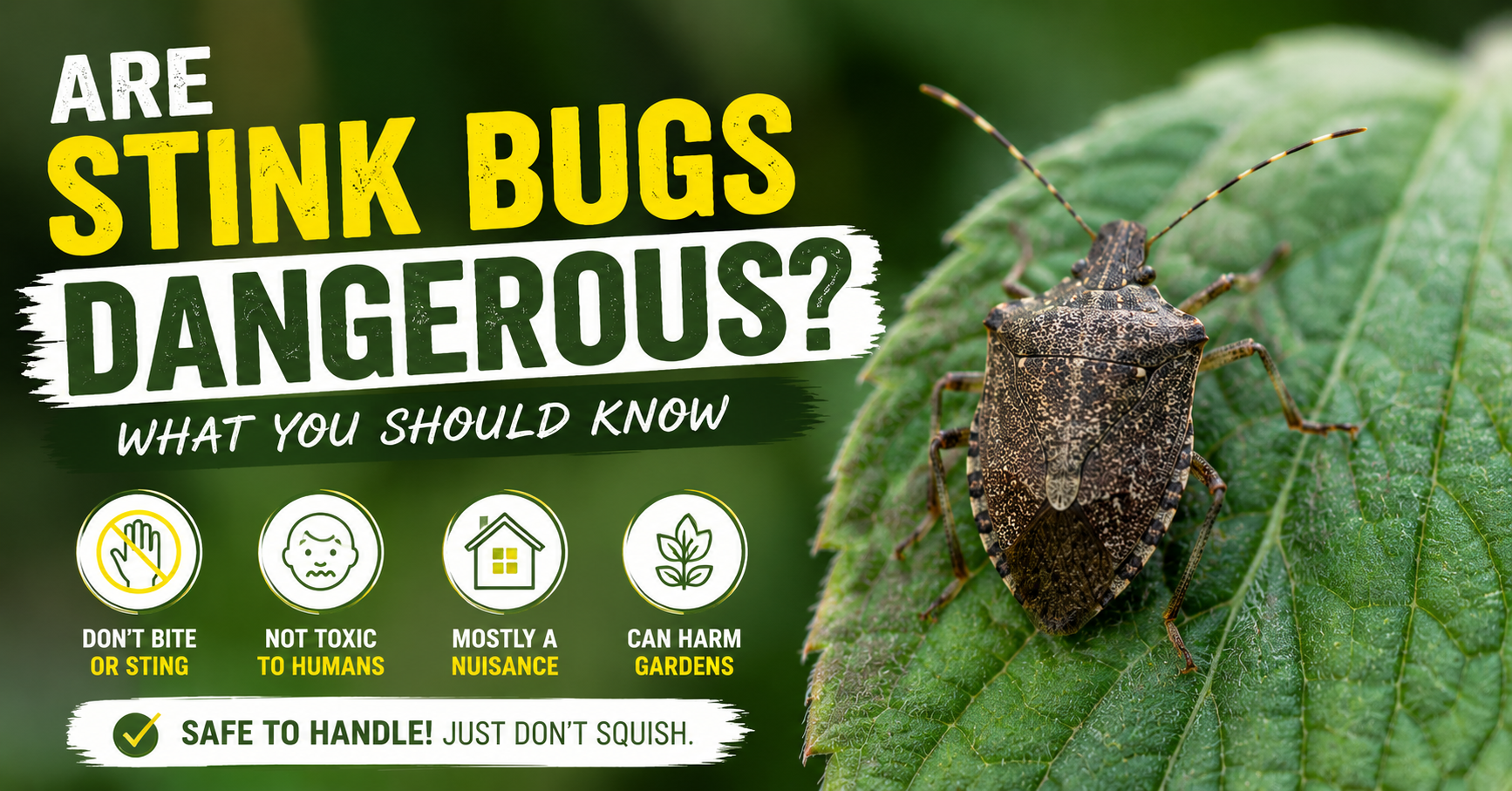
My guide covering whether stink bugs are dangerous explains odor sensitivity, skin contact, eye irritation, and allergy concerns in more detail.
Do Stink Bugs Bite While You Sleep?
Stink bugs do not normally bite sleeping people.
They are not attracted to body heat, breathing, sweat, or blood in the same way certain biting pests are. They also do not live in mattresses or gather around beds to feed.
A stink bug may accidentally crawl across a bed after emerging from a wall, ceiling fixture, attic, or window frame. It may also land on bedding during its clumsy indoor flight.
Finding one in the bedroom does not mean it bit you.
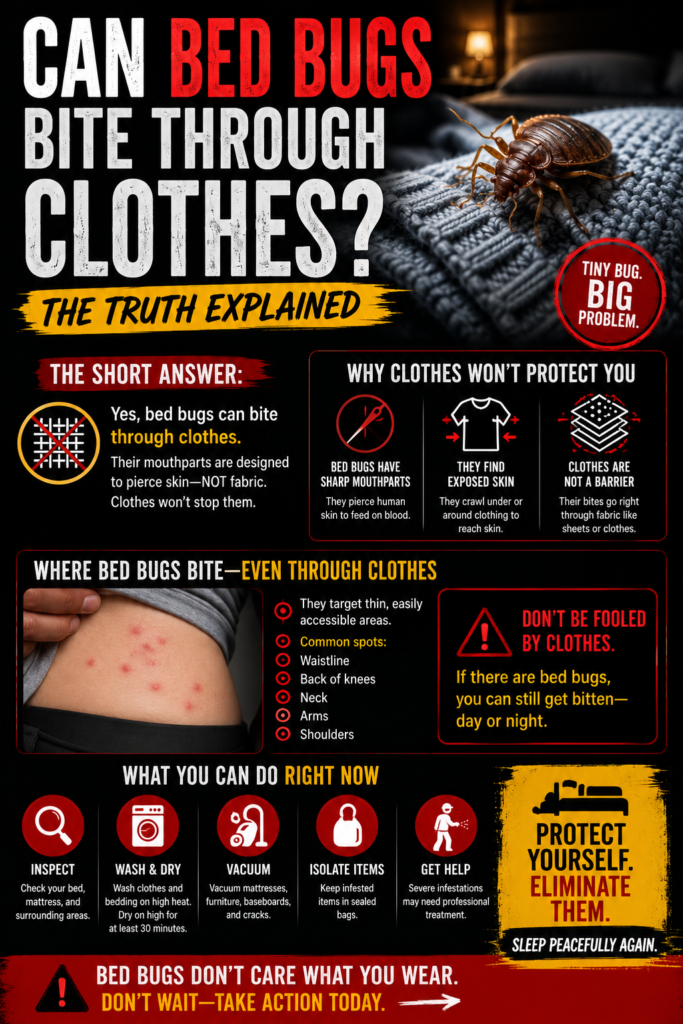
If unexplained skin marks repeatedly appear after sleeping, inspect for other causes instead of assuming a stink bug is responsible. When those marks appear after sleeping, bed bug feeding behavior can help you compare a possible bed bug explanation with the stink bug behavior described here.

Do Stink Bugs Live in Beds?
Stink bugs do not establish themselves in beds.
They may temporarily crawl onto a blanket, pillow, mattress, or headboard, but these items do not provide the food they need.
The stink bug is probably moving toward light or searching for a route outside.
It does not lay eggs in mattresses, feed on sleeping people, or form a bedroom colony.
Capture the insect without crushing it and inspect nearby windows, ceiling lights, vents, and trim for the place where it may have emerged.
Do Baby Stink Bugs Bite?
Baby stink bugs are called nymphs. Plant-feeding nymphs use their mouthparts to feed on plants, not people.
Nymphs do not have fully developed wings, but they have the same basic piercing and sucking feeding method as adults.
Young predatory stink bugs may use their mouthparts to capture small insects. As with adults, rough handling could potentially result in a defensive jab.
A baby stink bug will not seek out a person for blood.


Do Stink Bugs Bite Dogs?
Brown marmorated stink bugs do not normally bite dogs.
A dog may chase or mouth one, causing the insect to release its bad-tasting defensive chemicals. The dog may then drool, gag, lick its lips, or vomit.
This reaction is caused by the insect’s taste and defensive secretions rather than a bite.
Remove any remaining stink bugs and offer fresh water. Contact a veterinarian if the dog develops repeated vomiting, facial swelling, trouble breathing, weakness, or persistent distress.
Do Stink Bugs Bite Cats?
Common stink bugs do not normally bite cats.
Cats may chase them because they move slowly, buzz during flight, and crawl across walls or floors. A stink bug that is swatted or bitten may release its defensive odor.
The cat may drool, gag, paw at its mouth, or vomit after tasting one.
These symptoms do not mean the cat was bitten. They are more likely caused by the unpleasant defensive chemicals.
Do Stink Bugs Bite Plants?
People often say stink bugs bite plants, although feeding is the more accurate term.
A plant-feeding stink bug inserts its mouthpart into plant tissue and removes fluids. Digestive material may also be introduced during feeding, which damages tissue around the puncture.
Feeding injury may leave:
- Tiny puncture marks
- Pale or cloudy spots
- Pitted fruit
- Corky tissue beneath the skin
- Misshapen fruit
- Shriveled seeds
- Uneven ripening
- Discolored areas
Tomatoes, peppers, beans, corn, apples, peaches, pears, grapes, and many other plants can be affected.
A stink bug is much more likely to puncture a tomato than a person’s skin.
What Bug Looks Like a Stink Bug and Bites?
Several true bugs can be confused with stink bugs. Some are capable of delivering a painful defensive jab.
Assassin Bugs
Assassin bugs are predators that use a strong beak to pierce other insects.
They often have narrower heads and a more noticeable neck than stink bugs. Their bodies may also appear longer and less shield-shaped.
An assassin bug may bite defensively if it is trapped against the skin or picked up.
Wheel Bugs
Wheel bugs are large assassin bugs. Adults have a distinctive raised crest on the back that resembles part of a gear or wheel.
They prey on other insects and can deliver a painful defensive bite when handled.
A wheel bug should not be picked up with bare fingers.
Kissing Bugs
Kissing bugs are blood-feeding relatives of assassin bugs. Some species can transmit the parasite associated with Chagas disease, although the risk and distribution vary across the United States.
They generally have a longer, narrower body than a typical stink bug. Some have colored markings along the exposed edges of the abdomen.
Suspected kissing bugs should be photographed and submitted to a local extension office or health department for proper identification rather than crushed with bare hands.
Western Conifer Seed Bugs
Western conifer seed bugs are long, brown true bugs that sometimes enter homes for winter.
Their hind legs may have widened, leaf-like sections. They feed primarily on conifer seeds and do not generally bite people, although an extremely rare probing incident has been documented.
Their elongated body separates them from the broad shield shape of a stink bug.
Leaf-Footed Bugs
Leaf-footed bugs have long bodies and often have flattened sections on their hind legs.
They feed on plants and are not normally aggressive toward people. They can still be confused with stink bugs because both may occur on tomatoes and other garden plants.
Using body shape and leg structure is more dependable than color alone.
How Can I Tell If It Was Really a Stink Bug?
Look at the insect before connecting it with a skin mark.
A common adult stink bug typically has:
- A broad shield-shaped body
- Six slender legs
- Long segmented antennae
- Overlapping wings
- A small head compared with its body
- A triangular plate in the center of its back
- A brown, green, gray, or patterned appearance
The brown marmorated stink bug also has pale bands on its antennae and alternating light and dark markings along the abdomen edges.
You can compare these features with the identification marks of a true stink bug before blaming it for a painful bite.
What Should You Do If a Stink Bug Lands on You?
Remain calm and avoid slapping or crushing it against your skin.
Allow the bug to crawl onto a piece of paper, cup, or another object. You can then move it away without triggering as much defensive odor.
If you handle it directly, wash your hands afterward. Avoid touching your eyes, mouth, food, or contact lenses until your hands are clean.
A stink bug landing on you is accidental. It is not preparing to bite.
What Should You Do After a Suspected Stink Bug Bite?
Because common stink bugs do not normally bite, first consider whether the mark came from another source.
Wash the affected area with soap and water. Apply a clean cold compress if there is mild swelling or discomfort.
Avoid scratching the area because broken skin can become infected.
Seek medical attention if you develop:
- Difficulty breathing
- Facial or throat swelling
- Severe or increasing pain
- Widespread hives
- Blistering
- Signs of infection
- Fever
- Symptoms that continue worsening
If possible, take a clear photograph of the insect from above and below. Do not handle an unknown true bug with bare fingers just to collect it.
A university extension office may be able to identify the insect from a good photograph or specimen.
Should You Kill a Stink Bug Because It Might Bite?
There is no need to kill a common stink bug because you are afraid it will bite.
Inside a house, it can be captured with a cup or removed with a vacuum. Avoid smashing it because that can release its odor.
If stink bugs appear repeatedly, sealing entry points is more useful than treating them like biting insects.
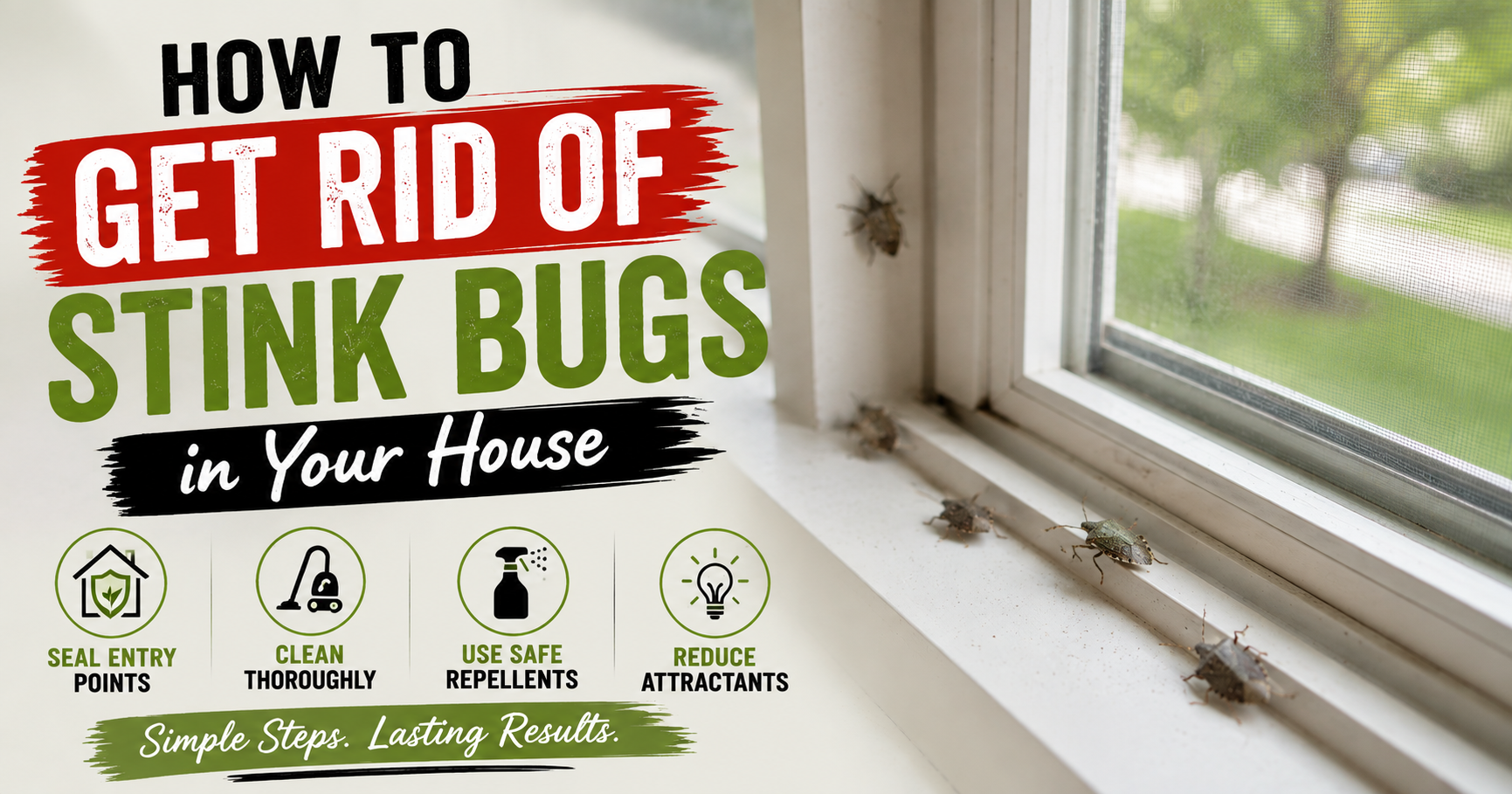
My step-by-step guide for getting stink bugs out of a house covers vacuuming, soapy water, limited spray use, exterior inspection, and prevention.
Can Stink Bugs Bite Through Clothing?
Common brown marmorated stink bugs do not attempt to feed through clothing.
One crawling beneath a shirt or inside a sleeve may feel scratchy because of its legs. If it becomes trapped or squeezed, it may release odor onto the skin or fabric.
That irritation can feel unpleasant, but it is not the same as a blood-feeding bite.
Remove the insect gently and wash any area exposed to its defensive secretion.
Do Stink Bugs Leave Bite Marks in a Line?
Stink bugs do not normally leave bite marks in lines, clusters, or any other pattern.
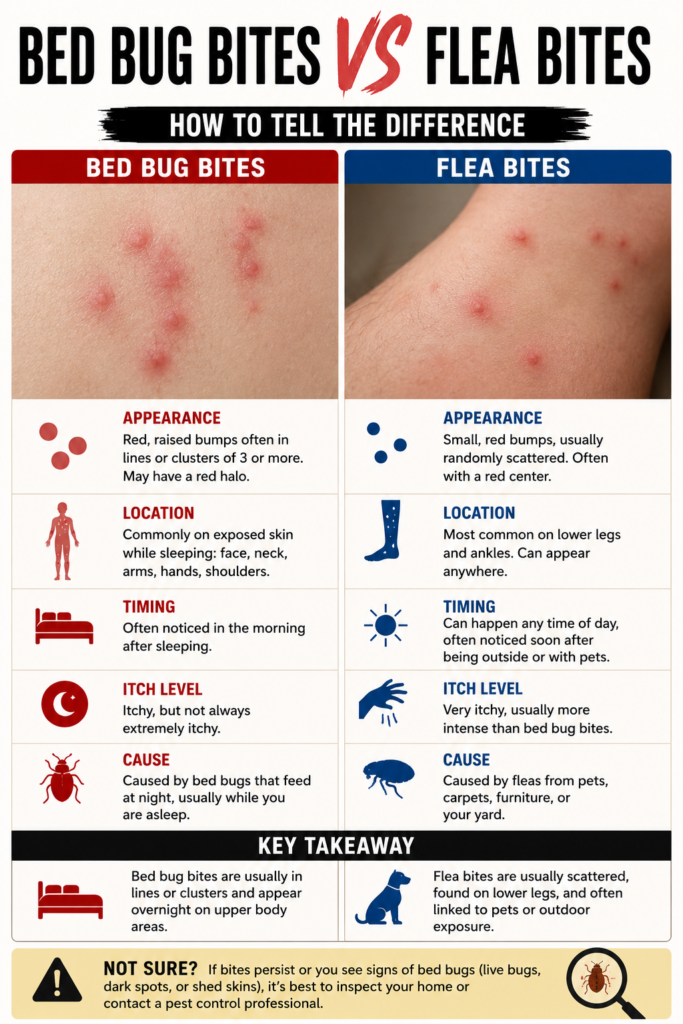
Several red marks appearing together are more likely to have another cause. Fleas, bed bugs, mosquitoes, mites, skin irritation, and allergic reactions can all create grouped marks. If fleas or bed bugs are among the possibilities, distinguish flea bites from bed bug bites outlines the inspection clues that can help narrow them down.
Bite patterns alone are not dependable enough to identify a pest.
Inspect the sleeping area, pets, clothing, and surrounding room for additional evidence before deciding which insect is responsible.
Do Stink Bugs Suck Blood?
Stink bugs do not suck human or animal blood.
Plant-feeding species use their mouthparts to take fluids from plant tissue. Predatory species use them to feed on other insects.
The word sucking describes how the mouthpart works, not a preference for blood.
Brown marmorated stink bugs entering homes during fall remain mostly inactive and survive on stored energy while sheltering through winter.
Can a Stink Bug Bite Cause Disease?
Brown marmorated stink bugs are not known to transmit disease through bites because they do not normally bite people.
They are not considered disease vectors like mosquitoes, ticks, or certain kissing bugs.
A skin reaction after contact may come from defensive chemicals rather than an infectious organism.
Any broken skin can potentially become infected if scratched or contaminated, so keep irritated areas clean and monitor them for worsening redness, warmth, swelling, drainage, or pain.
Are Stink Bugs Aggressive?
Stink bugs are not aggressive toward people.
They do not chase, swarm, or deliberately fly at humans. Their indoor flight can be noisy and awkward, which may make their behavior appear more threatening than it is.
When disturbed, they rely primarily on camouflage, escape, and odor.
Even large groups on the outside of a house are gathering for seasonal shelter, not preparing to attack.
Frequently Asked Questions
Do stink bugs bite humans?
Common stink bugs, including brown marmorated stink bugs, do not normally bite humans. They feed on plants rather than blood.
Does a stink bug bite hurt?
A typical plant-feeding stink bug does not bite people. A defensive jab from a predatory stink bug or similar-looking true bug could be painful.
What does a stink bug bite look like?
There is no standard stink bug bite mark. Redness after direct contact may be skin irritation from defensive chemicals rather than a bite.
Why did a stink bug land on me?
The insect probably landed accidentally while flying or crawling toward light. It was not trying to feed on you.
Can stink bugs bite through clothes?
Common stink bugs do not try to bite through clothing. One trapped beneath clothing may release odor or cause a scratchy sensation with its legs.
Do stink bugs bite at night?
Stink bugs do not seek sleeping people at night. Indoor warmth or light may make them active after dark, but they are not looking for blood.
Do stink bugs bite dogs and cats?
Brown marmorated stink bugs do not normally bite pets. A pet that mouths one may drool, gag, or vomit because of its defensive chemicals.
Are stink bug bites poisonous?
Common stink bugs are not venomous, and they do not normally bite people. Their defensive secretion can irritate sensitive skin but is not injected as venom.
Should I go to a doctor for a suspected stink bug bite?
Most minor skin irritation can be cleaned and monitored. Seek medical care for trouble breathing, facial swelling, severe pain, blistering, infection, or worsening symptoms.
What should I do with a stink bug inside my house?
Capture it with a cup or remove it with a vacuum. Avoid crushing it, then inspect and seal exterior entry points if stink bugs keep appearing.
For a broader look at health risks, odor reactions, pets, and household safety, read what every homeowner should know about stink bug danger.
Caleb Warren is a longtime gardener and backyard insect researcher who writes practical identification and safety guides for WhyDoIHaveBugs.com, helping homeowners understand the insects they find without unnecessary fear.