
Praying mantises can bite, but they rarely bite people unless they are being grabbed, squeezed, or prevented from escaping. A praying mantis bite is not venomous and usually feels like a quick pinch. A large mantis may occasionally break the skin, but serious injuries are extremely unlikely.
Most people can stand near, photograph, or observe a praying mantis without any risk of being bitten. The insect does not feed on blood, hunt people, or attack without a reason.
The easiest way to avoid a bite is simple: do not restrain the mantis or place your fingers directly in front of its mouth.
Why Would a Praying Mantis Bite a Person?
A praying mantis bites only when it believes biting may help it escape.

Common situations that can trigger a defensive bite include:
- Squeezing the mantis in your hand
- Grabbing it around the abdomen
- Holding its legs or wings
- Placing a finger near its mouth
- Preventing it from walking away
- Repeatedly poking or touching it
- Trying to pull it from a branch
- Letting a pet trap it against a surface
A mantis does not understand that someone is only curious. From the insect’s perspective, a hand reaching down and wrapping around its body resembles an attack from a much larger predator.

Biting is not normally its first response. A mantis may remain motionless, walk away, fly, spread its wings, or raise its front legs before using its mouthparts defensively.
What Does a Praying Mantis Bite Feel Like?
Most praying mantis bites feel like a brief pinch or sharp nip.
The amount of discomfort depends on:
- The size of the mantis
- Where it bites
- Whether it catches loose skin
- How long it holds on
- How sensitive your skin is
- Whether the skin is broken
A small mantis may not be able to cause noticeable pain. A large adult, such as a Chinese mantis, has stronger chewing mouthparts and may produce a more noticeable pinch.
Even a large mantis is not equipped to cause the deep puncture wound associated with a dog, snake, or large spider. Its jaws are designed to chew through the relatively soft bodies of insects.

Can a Praying Mantis Bite Break the Skin?
A large praying mantis may break human skin, but this is uncommon.
Human skin is much tougher than the insects a mantis normally eats. In many encounters, the person feels a pinch without finding any visible wound afterward.
If the skin does break, the injury will usually be small and superficial. You may notice:
- A tiny cut
- A red mark
- Mild soreness
- Minor swelling
- A small spot of blood
Any bite that causes significant bleeding, severe swelling, or worsening pain would be unusual and deserves medical attention.
Do Praying Mantis Bites Hurt?
A bite may hurt briefly, especially if it comes from a large adult mantis. However, the discomfort is normally mild and short-lived.
People sometimes confuse a bite with the feeling of the mantis grabbing them with its front legs. Those legs have stiff spines that can press into the skin and feel surprisingly sharp.
During a defensive encounter, the mantis may grab with its front legs and then attempt to bite. This can make the contact feel more dramatic than the small mouth wound actually is.
The insect’s frightening appearance also affects how a bite feels. Being unexpectedly grabbed by a large mantis can be startling even when the physical injury is minor.


Do Praying Mantises Have Teeth?
Praying mantises do not have teeth like people or mammals. They have strong chewing mouthparts called mandibles.
The mandibles move from side to side and allow the mantis to cut and chew captured prey. This is different from the up-and-down jaw movement people are accustomed to seeing.
A mantis normally uses these mouthparts to eat:
- Flies
- Moths
- Crickets
- Grasshoppers
- Beetles
- Caterpillars
- Spiders
- Other mantises
The mouthparts are capable of pinching human skin, but a person is far too large to be mistaken for ordinary prey.
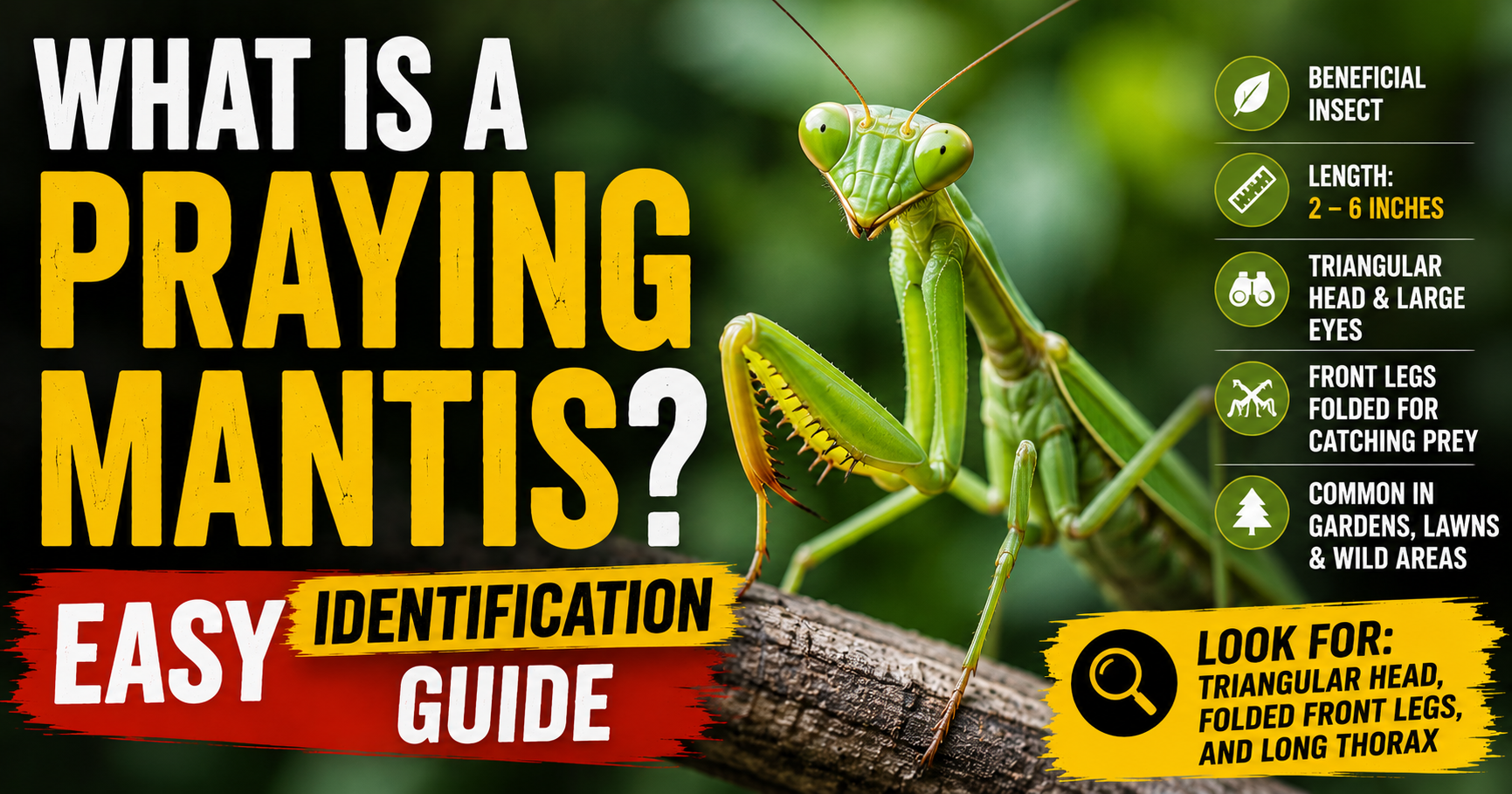
If you are still identifying the insect, my complete guide to recognizing a praying mantis explains its triangular head, grasping front legs, long body, wings, and common colors.
Is a Praying Mantis Bite Venomous?
No. A praying mantis bite does not contain venom.
Mantises subdue prey by grabbing it with their spiny front legs and physically holding it in place. They do not need venom to immobilize an insect.
There are no venom glands connected to the mouthparts and no stinger hidden elsewhere on the body.
A mantis bite may produce minor pain because of physical pressure from the mandibles. It does not inject a toxin beneath the skin.



Is a Praying Mantis Bite Poisonous?
A praying mantis bite is not poisonous.
The words poisonous and venomous are often used interchangeably, but they describe different ways a toxin can cause harm. Venom is injected through a bite or sting, while poison causes harm when touched or swallowed.
Praying mantises are not known for producing a dangerous toxin through either method. The bite is a mechanical pinch rather than a toxic exposure.
Can a Praying Mantis Sting You?
Praying mantises cannot sting.
A person may mistake the insect’s spiny front legs for stingers. The mantis folds these legs together and extends them rapidly when capturing prey or defending itself.
Those spines can scratch or pinch, but they do not inject venom.
The tip of a female mantis’s abdomen may also look pointed. It is associated with reproduction and egg laying, not stinging people.



Does a Praying Mantis Bite Spread Disease?
Praying mantises are not considered important carriers of human disease. They do not feed on blood or live as parasites on people and animals.
Any small break in the skin can potentially become irritated or infected if it is contaminated, but that is a general wound-care issue rather than a disease specifically associated with mantises.
If a bite breaks the skin, washing the area thoroughly with soap and water is normally the most important first step.
What Should You Do After a Praying Mantis Bite?
Most praying mantis bites require only basic care.
If you are bitten:
- Allow the mantis to release rather than pulling suddenly.
- Wash the area with soap and running water.
- Remove any visible dirt or plant material.
- Apply a clean bandage if the skin is broken.
- Use a cold compress if there is mild swelling.
- Watch the area for worsening redness or discomfort.
Avoid repeatedly squeezing or scratching the spot. Minor redness should gradually improve rather than spread.
Contact a healthcare professional if the wound becomes increasingly painful, warm, swollen, or red, or if you notice drainage, fever, trouble breathing, or another unusual reaction.
Those symptoms would not be expected from a normal mantis bite.


Can You Be Allergic to a Praying Mantis Bite?
Severe allergic reactions to praying mantis bites are not commonly reported. Because a mantis does not inject venom, the type of reaction associated with bee or wasp venom would not be expected.
However, people can react differently to insect contact, contaminants, or any wound that breaks the skin.
Seek emergency assistance if someone develops:
- Trouble breathing
- Swelling of the lips, mouth, or throat
- Widespread hives
- Dizziness or fainting
- Rapidly worsening symptoms
These would be unusual, but serious symptoms should never be ignored simply because the original injury looked small.
Will a Praying Mantis Bite Without Being Provoked?
An unprovoked praying mantis bite is extremely unlikely.
A mantis sitting on a plant, wall, porch, or tree has no reason to bite a person who is simply standing nearby. It does not defend a nest, swarm, or colony.
A bite almost always involves direct physical contact. The mantis usually feels trapped or mistakes a moving finger near its mouth for something it needs to grab.
If you leave it enough room to walk or fly away, the chance of being bitten is very low.
Will a Praying Mantis Chase You?
No. Praying mantises do not chase people to bite them.
A mantis may turn its head and track your movement because it relies heavily on vision. This can create the impression that the insect is focused on you.
It may also move toward a nearby branch, wall, light, or plant that happens to be in your direction. That movement is not a pursuit.
The mantis’s defensive strategy is to remain hidden, look intimidating, or escape. Chasing an animal as large as a person would provide no benefit.
Can a Praying Mantis Jump at You?
A praying mantis can jump, and an adult may fly, but it does not normally leap at people as an attack.
One may unexpectedly land on a person when:
- Disturbed from vegetation
- Flying near an outdoor light
- Escaping a predator
- Searching for a landing surface
- Blown off course
- Accidentally brushed from a plant
If a mantis lands on you, remain calm. Place a branch, container, or other sturdy object in front of it and allow it to step off.
Swatting or squeezing it increases the chance of a defensive response.
Can a Baby Praying Mantis Bite?
A baby praying mantis can use its mouthparts defensively, but it is generally too small to cause a meaningful injury to a person.
Young mantises, called nymphs, hatch as miniature wingless versions of adults. They begin hunting tiny prey shortly after emerging from the egg case.
Their jaws become stronger as they grow and molt. A nearly mature nymph may give a noticeable pinch, while a newly hatched mantis is unlikely to break human skin.
Small size does not mean the nymph should be handled roughly. Its legs and body are delicate and easily damaged.
Do Large Praying Mantises Bite Harder?
Larger praying mantises can bite more forcefully than smaller ones.
The Chinese mantis is one of the largest mantises commonly found in the United States. A mature individual may exceed four inches, giving it stronger legs and mouthparts than the smaller native Carolina mantis.
That does not make large mantises aggressive. It means rough handling has a greater chance of producing a noticeable pinch.
Size is one reason I prefer moving any large mantis with a cup or branch instead of using bare fingers.
Do Brown and Green Praying Mantises Bite Differently?
Color does not determine whether a praying mantis will bite.
Green, brown, tan, gray, and mottled mantises all use similar defensive behaviors. Their color primarily helps them blend into vegetation, bark, and other surroundings.
Species and body size matter more than color. A large brown mantis may produce a stronger bite than a small green one, but the reverse could also be true.
Never assume a green mantis is harmless or a brown one is aggressive based on color alone.
Can a Praying Mantis Bite a Child?
A praying mantis can bite a child if it is grabbed or squeezed, but a serious injury is unlikely.
Children may be more likely to get bitten because they are curious and may place their fingers close to the insect’s mouth. Their skin may also be more sensitive to the spines on its front legs.
Teach children to:
- Watch without grabbing
- Keep fingers away from the mouth
- Avoid touching a mantis that has raised its legs
- Ask an adult to move the insect
- Wash their hands after outdoor insect encounters
A praying mantis is generally safe to observe. The goal is protecting both the child and the insect from a stressful handling attempt.
Can a Praying Mantis Bite a Dog?
A praying mantis may bite or pinch a dog that tries to sniff, paw at, or eat it.
The dog’s nose, lips, and tongue are sensitive, so even a minor defensive pinch could cause a quick reaction. The mantis is not capable of seriously attacking a normal-sized dog.
A dog that swallows the insect may experience temporary drooling, gagging, vomiting, or stomach irritation. Contact a veterinarian if symptoms are severe or do not improve.
Moving the mantis before a curious dog reaches it is the easiest way to prevent the encounter.
Can a Praying Mantis Bite a Cat?
A mantis may strike at a cat’s nose or paw when cornered, but the cat poses far more danger to the mantis than the mantis poses to the cat.
Cats naturally chase moving insects. A large mantis may spread its wings and raise its front legs, which can make the interaction even more interesting to a playful cat.
Separate them if possible. This protects the mantis and reduces the small chance of a scratch near the cat’s eye or mouth.
Can Praying Mantises Bite Through Gloves?
A normal gardening glove should provide adequate protection from a praying mantis bite or pinch.
Thin disposable gloves may not prevent you from feeling pressure from the front-leg spines, but the insect is unlikely to bite through a sturdy fabric or leather glove.
Gloves are useful when a mantis is in a location where a cup cannot easily be placed over it. Move slowly and allow the insect to step onto the glove rather than closing your hand around its body.
Why Does a Praying Mantis Grab Your Finger?
A praying mantis may grab a finger because it feels threatened or because the finger moved within striking range.
The mantis’s hunting response is strongly connected to movement. A wiggling fingertip may trigger the front legs before the insect fully determines what it is grabbing.
Once it realizes your finger is not normal prey, it will usually release if it does not feel trapped.
Do not yank your hand away while the mantis is holding on. Sudden pulling can drive the spines into the skin and may tear the insect’s legs.
Hold still and offer it another surface to step onto.
How to Tell a Bite From a Front-Leg Pinch
Many people who believe a praying mantis bit them may have felt its front-leg spines instead.
A front-leg pinch usually feels like several sharp points pressing into the skin. It may leave multiple tiny red marks arranged close together.
A bite comes from the mouth and is more likely to leave:
- One concentrated sore spot
- A small cut
- A tiny spot of blood
- A brief pinching sensation near the head
The mantis can grab and bite during the same encounter, so both types of marks may occasionally be present.
Neither injury contains venom.
What Does a Defensive Praying Mantis Look Like?
A mantis often gives clear warnings before contact.
A defensive praying mantis may:
- Raise its front legs
- Stand taller
- Lean toward the threat
- Open its wings
- Display hidden colors
- Rock from side to side
- Open its mouth
- Strike without making contact
If you see these behaviors, stop reaching toward the insect. Give it a path to leave and wait for it to calm down.
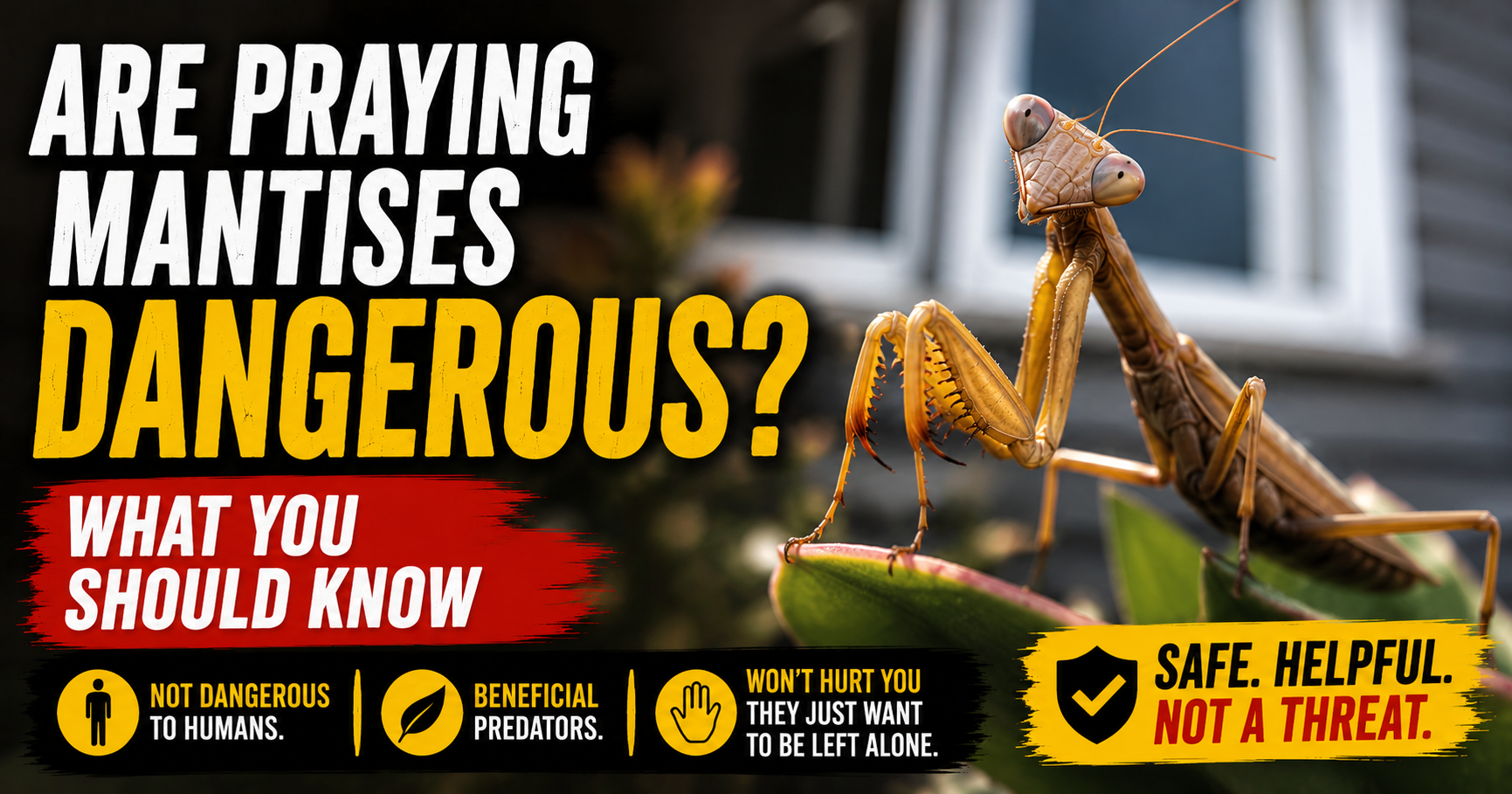
My broader guide covering whether praying mantises are dangerous explains their defensive displays, venom myths, risks to children and pets, and why their appearance is more frightening than their actual danger.
Is It Safe to Hold a Praying Mantis?
It can be safe to allow a calm mantis to walk onto an open hand, but there is rarely a good reason to hold it.
The safest type of contact allows the mantis to choose where it moves. Keep your hand flat and avoid closing your fingers around its body.
Do not hold a mantis by:
- Its wings
- Its abdomen
- Its front legs
- One rear leg
- Its neck-like thorax
Its body is lightweight and more fragile than it appears. Rough handling can damage a leg, tear a wing, or injure the abdomen.
Using a container or branch eliminates nearly all risk to both you and the mantis.
How to Move a Praying Mantis Without Being Bitten
The safest relocation method does not require touching the insect.
Place a cup or clear container over the mantis. Slowly slide stiff paper or thin cardboard beneath the opening, then carry the covered container outside.
Release it onto a sturdy shrub, tree branch, tall grass, or garden plant.
If the mantis is already outdoors but sitting in a busy doorway, place a branch in front of its walking legs. Many mantises will step onto the branch when gently encouraged from behind.
Do not push near its head or mouth.
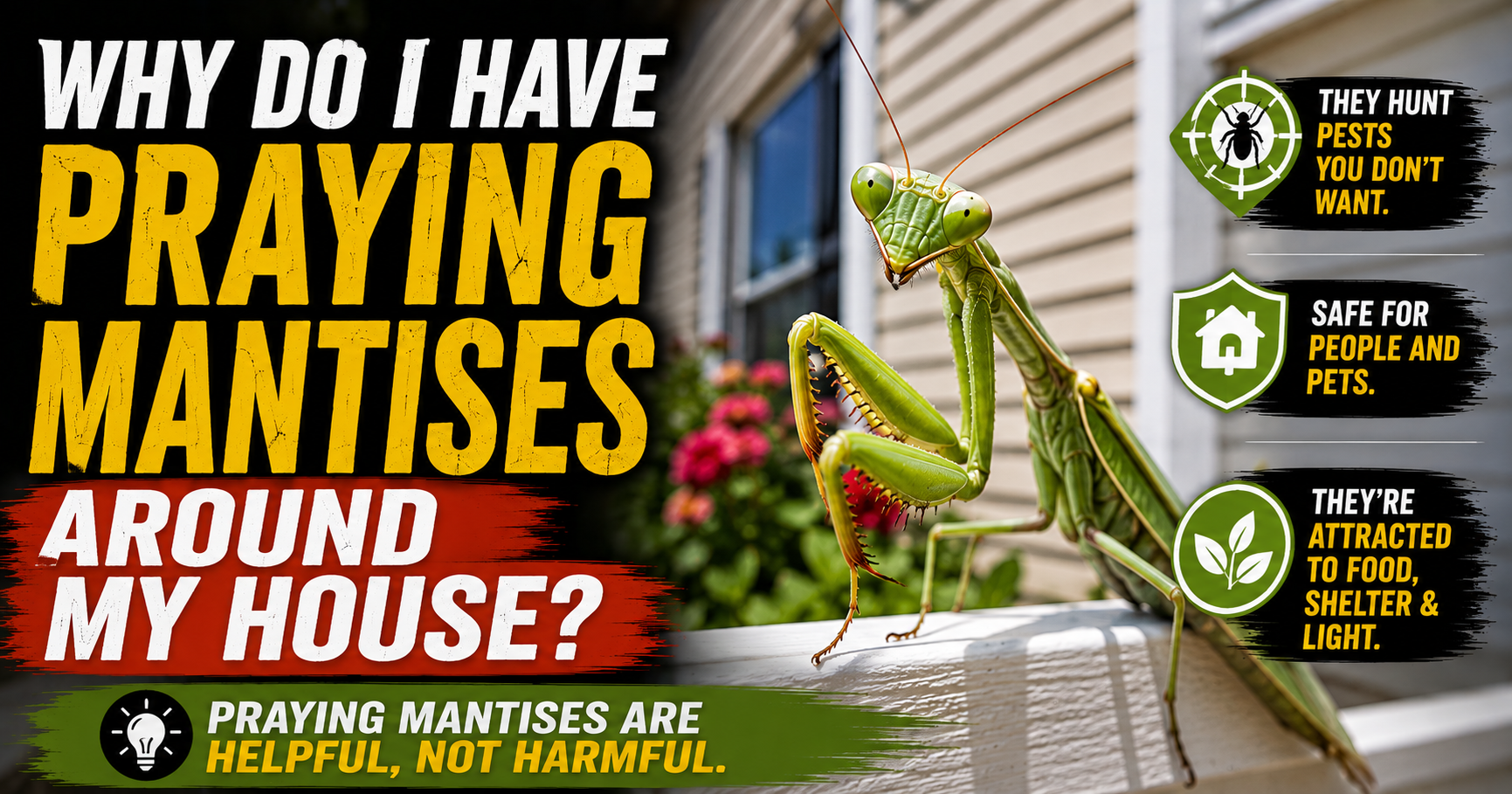
If mantises repeatedly appear around your doors, screens, porch lights, or siding, this explanation of why praying mantises come around houses can help you identify what is attracting them.
Should You Kill a Praying Mantis That Tried to Bite?
No. A defensive bite does not mean the mantis has become aggressive or dangerous.
The insect was most likely restrained, startled, or protecting itself from what it believed was a predator. Once released outdoors, it has no reason to continue the encounter.
Praying mantises do not remember a person and return later to attack. They do not communicate danger to other mantises or form aggressive groups.
Move it away from children, pets, or a busy doorway and leave it alone.
Do You Need Pest Control After Finding a Praying Mantis?
A praying mantis does not require pest control.
Finding one indoors usually means it entered through an open door, window, damaged screen, houseplant, or outdoor item. It will not establish a colony in the walls or begin biting people while they sleep.
Capture the insect and release it outside. Check screens and doors if mantises or other outdoor insects frequently enter.
Spraying insecticide because of one mantis creates unnecessary exposure and may kill many harmless or beneficial insects around the property.
How Likely Is a Praying Mantis to Bite You?
The chance of being bitten is extremely low if you do not handle the insect.
You can safely:
- Stand near it
- Photograph it
- Watch it hunt
- Walk past it
- Leave it in the garden
- Allow it to move away
The risk increases mainly when you grab or trap it against your skin.
A praying mantis is a capable predator, but its size and hunting behavior are suited to insects. To the mantis, a person is an enormous potential threat rather than a meal.
Frequently Asked Questions
Do praying mantises bite humans?
Yes, but bites are rare and usually occur when a mantis is grabbed, squeezed, or restrained.
Does a praying mantis bite hurt?
It may feel like a quick pinch. A large adult can produce a more noticeable bite, but pain is usually mild and temporary.
Can a praying mantis bite break skin?
A large mantis may occasionally break the skin, although most encounters leave little more than a red mark or brief soreness.
Is a praying mantis bite venomous?
No. Praying mantises do not inject venom when they bite.
Can a praying mantis sting?
No. A mantis has spiny front legs but no stinger.
What should I do if a praying mantis bites me?
Wash the area with soap and water. Apply a clean bandage if the skin is broken and watch for worsening redness, pain, or swelling.
Will a praying mantis bite a child?
It may bite defensively if a child grabs it. Children should observe mantises without squeezing or placing fingers near their mouths.
Do praying mantises bite dogs?
A mantis may pinch a dog’s nose or mouth if the dog tries to eat it, but serious injury is unlikely.
Can a praying mantis bite through clothing?
A mantis is unlikely to bite through normal clothing. Thin fabric may not completely prevent pressure from its spiny front legs.
Why did a praying mantis try to bite me?
It probably felt trapped or threatened. Biting is a defensive response, not an attempt to feed on you.
Can I safely pick up a praying mantis?
It is safer to let the mantis walk onto a branch or move it with a container. Avoid closing your fingers around its body.
Caleb Warren is a longtime gardener and backyard insect researcher who writes practical identification guides for WhyDoIHaveBugs.com, helping homeowners understand the insects they find before deciding whether any action is needed.