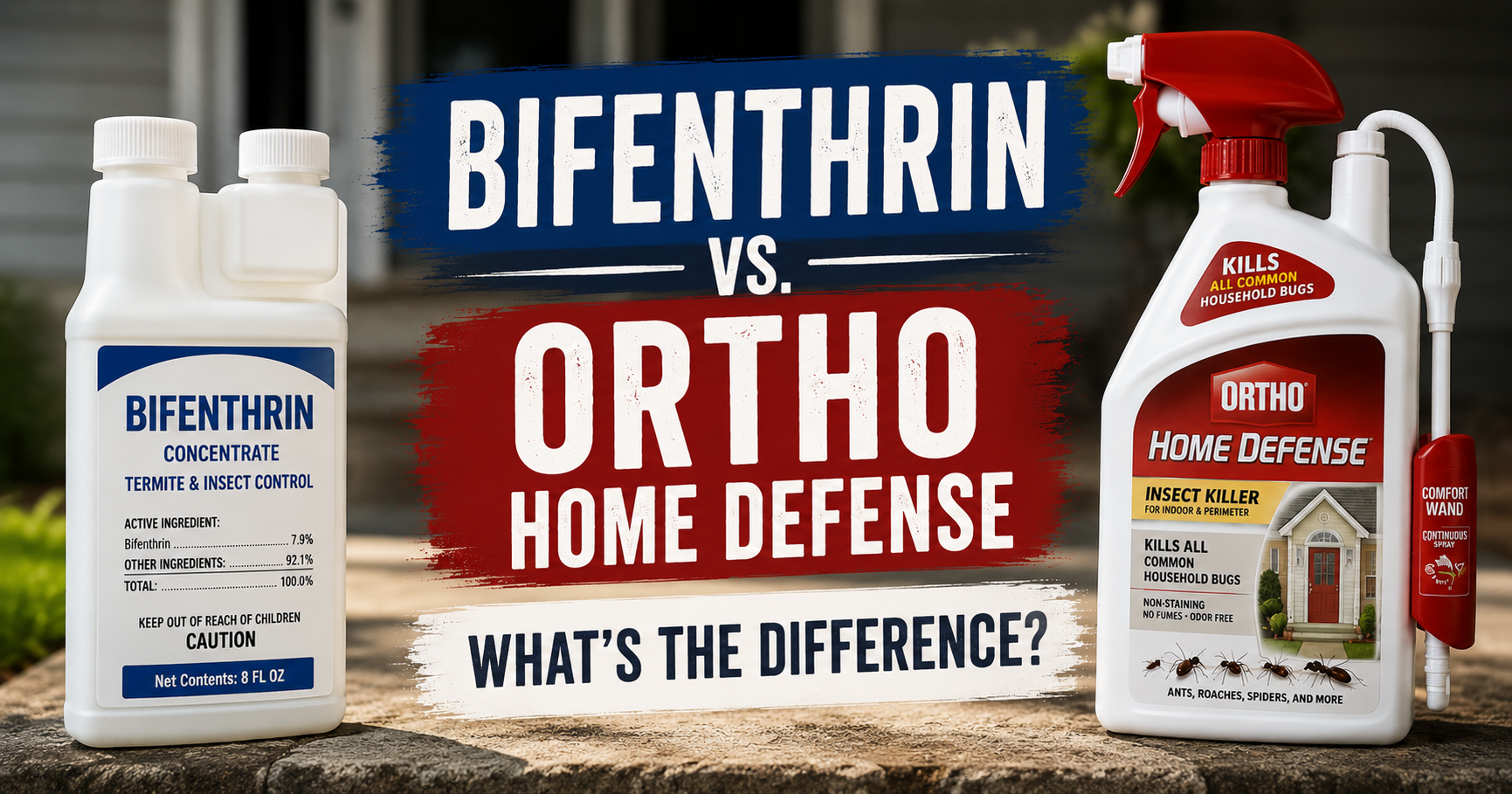
Bifenthrin and Ortho Home Defense are often compared like they are two competing bug sprays, but that is not really accurate. Bifenthrin is an insecticide ingredient. Ortho Home Defense is a finished consumer product with its own active ingredient, label directions, application method, and pest list.
That difference matters because homeowners sometimes buy a bottle of concentrated bifenthrin expecting it to work exactly like Ortho Home Defense, or they assume every perimeter spray has the same strength and purpose. They do not.
The better choice depends on whether you want a simple ready-to-use treatment or you are comfortable mixing and applying a concentrate exactly according to its label.
Bifenthrin vs. Ortho Home Defense: The Quick Answer
Choose Ortho Home Defense if you want a simple, ready-to-use perimeter treatment for common crawling bugs around your home.
Consider a bifenthrin-based concentrate only if you understand the label, have the proper equipment, and need a more flexible treatment for areas and pests the product specifically allows.
For most homeowners, Ortho Home Defense is the easier choice. It is ready to apply, widely available, and designed for normal household perimeter use.
Bifenthrin is not automatically stronger, safer, or better. It is simply a different active ingredient used in many different products.

What Is Bifenthrin?
Bifenthrin is a synthetic pyrethroid insecticide. It is used in many pest-control products, including some concentrates, granules, ready-to-use sprays, lawn treatments, and products made for specific outdoor pest problems.
It works by affecting an insect’s nervous system after the insect contacts or consumes a labeled treatment.
The word “bifenthrin” on a product label does not tell you everything you need to know. Different products can contain different concentrations, be approved for different pests, and have very different rules for mixing, indoor use, lawn use, food areas, pollinator protection, and reapplication.
That is why the actual label matters more than the active ingredient alone.
What Is Ortho Home Defense?
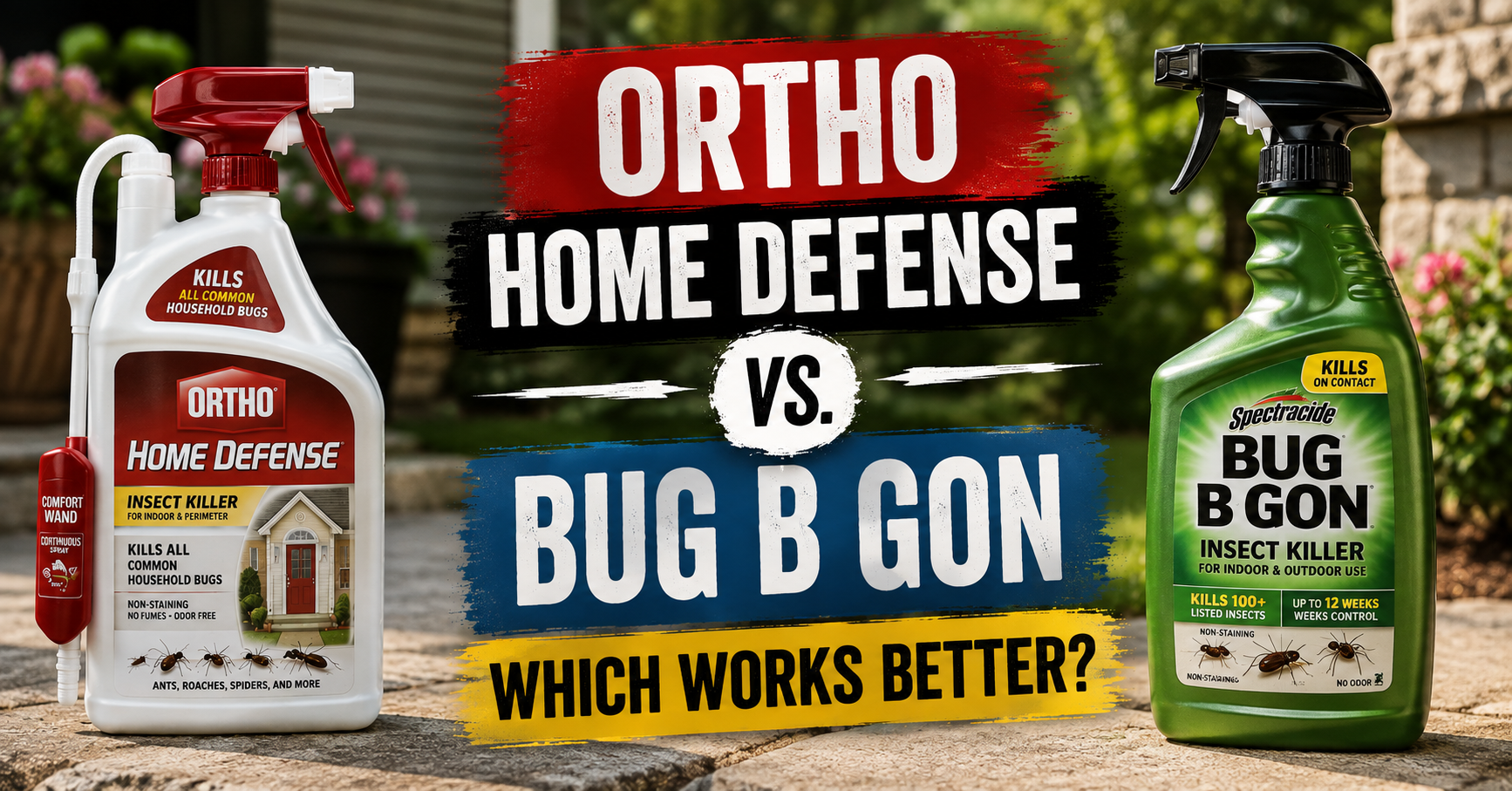
Ortho Home Defense is a consumer pest-control product line designed for indoor and perimeter insect treatment. Depending on the specific version, it is commonly sold as a ready-to-use spray with a trigger or Comfort Wand. Readers comparing ready-to-use options can also review this Ortho Home Defense product comparison against another widely known treatment line.
The advantage is convenience. You do not need to calculate a dilution rate, buy a separate pump sprayer, or measure concentrate. You use the product exactly as the bottle directs.
Ortho Home Defense products use a different active ingredient from bifenthrin in many current formulations. That is why comparing the two is not a simple strength contest.
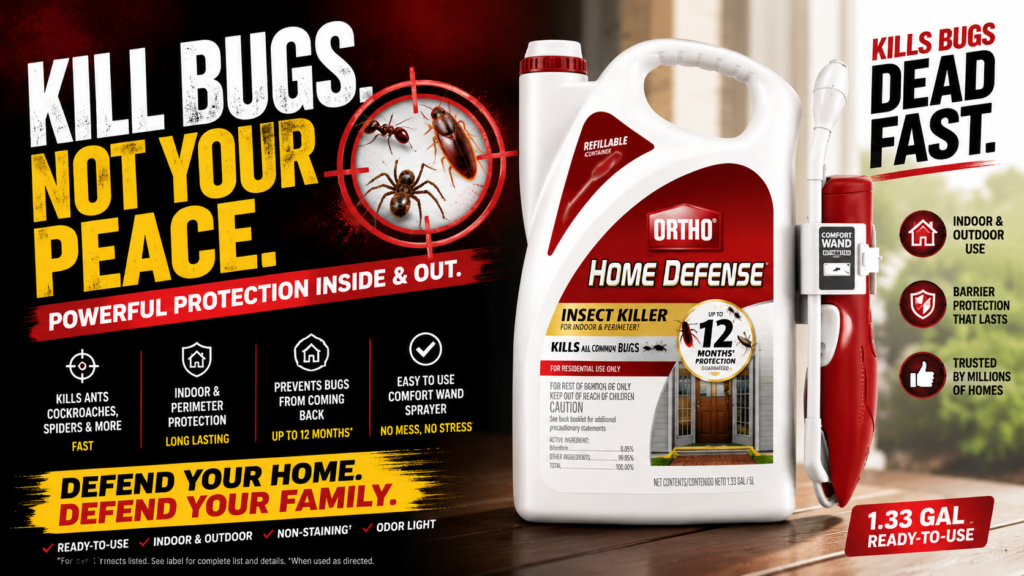
For the practical homeowner answer on where it works well and where it does not, see my full Ortho Home Defense review.
The Biggest Difference: Ingredient vs. Finished Product
Bifenthrin is one ingredient.
Ortho Home Defense is a complete product.
That means an Ortho bottle gives you:
- A specific active ingredient and concentration.
- Exact instructions for the surfaces and areas you can treat.
- A defined list of target pests.
- A ready-to-use application method.
- Safety instructions and reapplication timing.
A bifenthrin product may also give you all of those things, but you have to compare the individual product label. One bifenthrin concentrate may be intended for exterior foundation treatment, while another may be labeled for lawns, ornamentals, or a more limited list of pests.
Never assume a bifenthrin product is approved for the same places as Ortho Home Defense.


Is Bifenthrin Stronger Than Ortho Home Defense?
Not necessarily.
“Stronger” can mean several different things:
- A higher percentage of active ingredient.
- Better control of a certain insect.
- A longer residual on a particular surface.
- Better performance outdoors in weather.
- A broader labeled pest list.
- A product that is easier to apply correctly.
A concentrated bifenthrin product may look stronger on paper because you mix it yourself, but that does not guarantee better results around a typical house. Applying too much can create safety problems, waste product, and still fail to fix the reason bugs are coming inside.
A ready-to-use product applied thoroughly in the correct locations can work better than a concentrate mixed or placed poorly.
Which Is Easier for a Homeowner to Use?
Ortho Home Defense is easier for most people.
The ready-to-use bottle is one of its biggest benefits. You can treat the outdoor foundation, doors, windows, garage edges, and other label-approved spots without calculating ratios or handling a concentrated pesticide.
Bifenthrin concentrates require more care. You need to measure the product accurately, add the right amount of water, use an appropriate sprayer, apply it only in approved locations, and clean the equipment afterward.
There is nothing wrong with using a concentrate if you are comfortable doing that. But I would not recommend it to someone who only needs occasional perimeter protection against ants, earwigs, crickets, spiders, and similar crawling insects.

Which Is Better for Ants?
Either type of treatment can help reduce ants crossing exterior entry routes, but neither one should be your whole plan for indoor ants.
A perimeter spray can kill ants that walk across treated surfaces. It may reduce traffic near doors, utility lines, windows, and foundation cracks. But it usually does not eliminate the colony if the nest is already established nearby.
For ants actively trailing inside, bait is often more useful because workers carry it back toward the colony. Then use a barrier treatment to reduce new ants entering from outside.
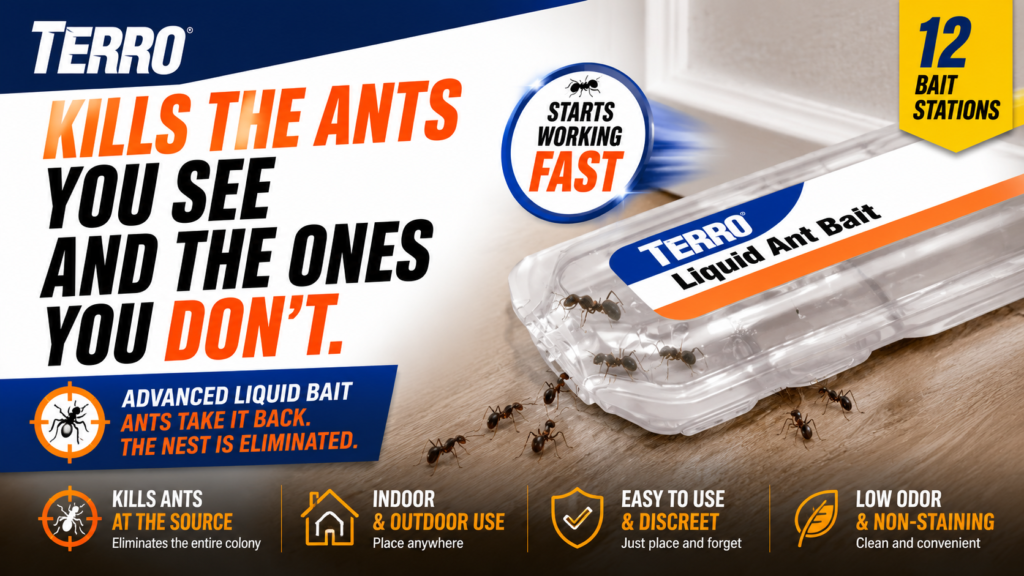
If you are dealing with an indoor trail, this Terro Liquid Ant Baits review explains why bait works differently than direct spray and why the ants may gather around it at first.
Which Is Better for Roaches?
For occasional outdoor roaches entering through garages, basements, or doors, either a properly labeled bifenthrin product or Ortho Home Defense may help reduce activity around the exterior entry points.
For German roaches living inside the home, neither one should be your main answer.
German roaches hide near heat, food, moisture, appliances, cabinets, and tight wall gaps. A perimeter treatment does not reach the breeding areas well enough to stop a real indoor infestation.
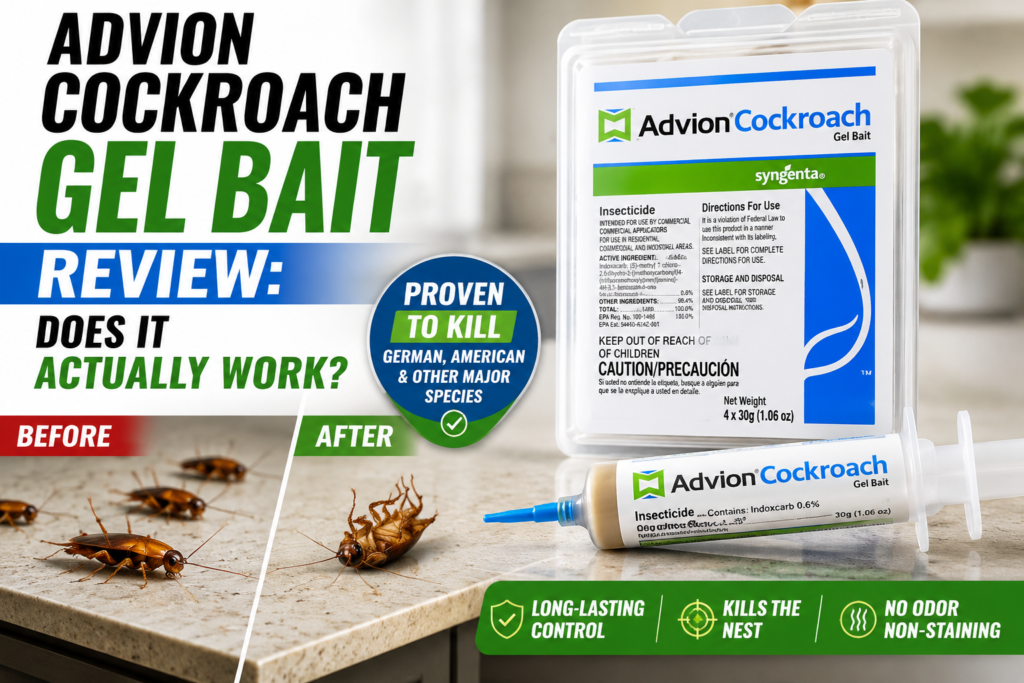
Use gel bait near harborages, clean up food and water sources, and inspect likely hiding areas. My guide on whether Advion gel bait works for roaches explains why bait placement matters more than spraying every surface.


Which Is Better for Spiders, Earwigs, and Crickets?
Both options can be useful for these occasional invaders if the product label lists the pest.
Spiders, earwigs, and crickets often enter through the same low exterior routes: door thresholds, foundation gaps, garage edges, window wells, vents, and cracks around pipes or wiring.
For a simple seasonal barrier, Ortho Home Defense is usually enough for the average homeowner.
A bifenthrin product may be useful when you have a larger property, many exterior structures, or a product label that specifically covers the outdoor treatment you need. Just do not use it as an excuse to spray every inch of the yard and house.
Is Bifenthrin Safe Around Kids and Pets?
Any pesticide product needs to be used carefully around children and pets.
Bifenthrin is not “safe” just because it is available to homeowners, and Ortho Home Defense should not be used casually either. Both need to be applied only where the label allows, stored securely, and kept away from food, pet dishes, toys, and aquariums.
Keep children and pets out of the treatment area while applying the product and until treated surfaces have dried, unless the label gives different instructions.
Do not let pets walk through wet treatment areas or lick surfaces that were just sprayed.


Does Bifenthrin Kill Beneficial Insects?
It can. Bifenthrin is broad-spectrum, meaning it can affect insects you want around the property as well as pests.
That is why I do not recommend spraying flowering plants, garden blooms, or broad lawn areas unless the exact product label allows it and there is a real pest reason to do so. Pollinators and beneficial predators can contact treated surfaces too.
The most responsible approach is targeted treatment. Apply only where crawling pests are traveling and where the product label says you can apply it.
Can You Use Bifenthrin and Ortho Home Defense Together?
Usually, there is no reason to use both as full perimeter treatments at the same time.
Putting two broad-spectrum insecticides around the same foundation does not automatically give you twice the protection. It can waste money, add unnecessary pesticide exposure, and make it hard to tell what is actually helping.
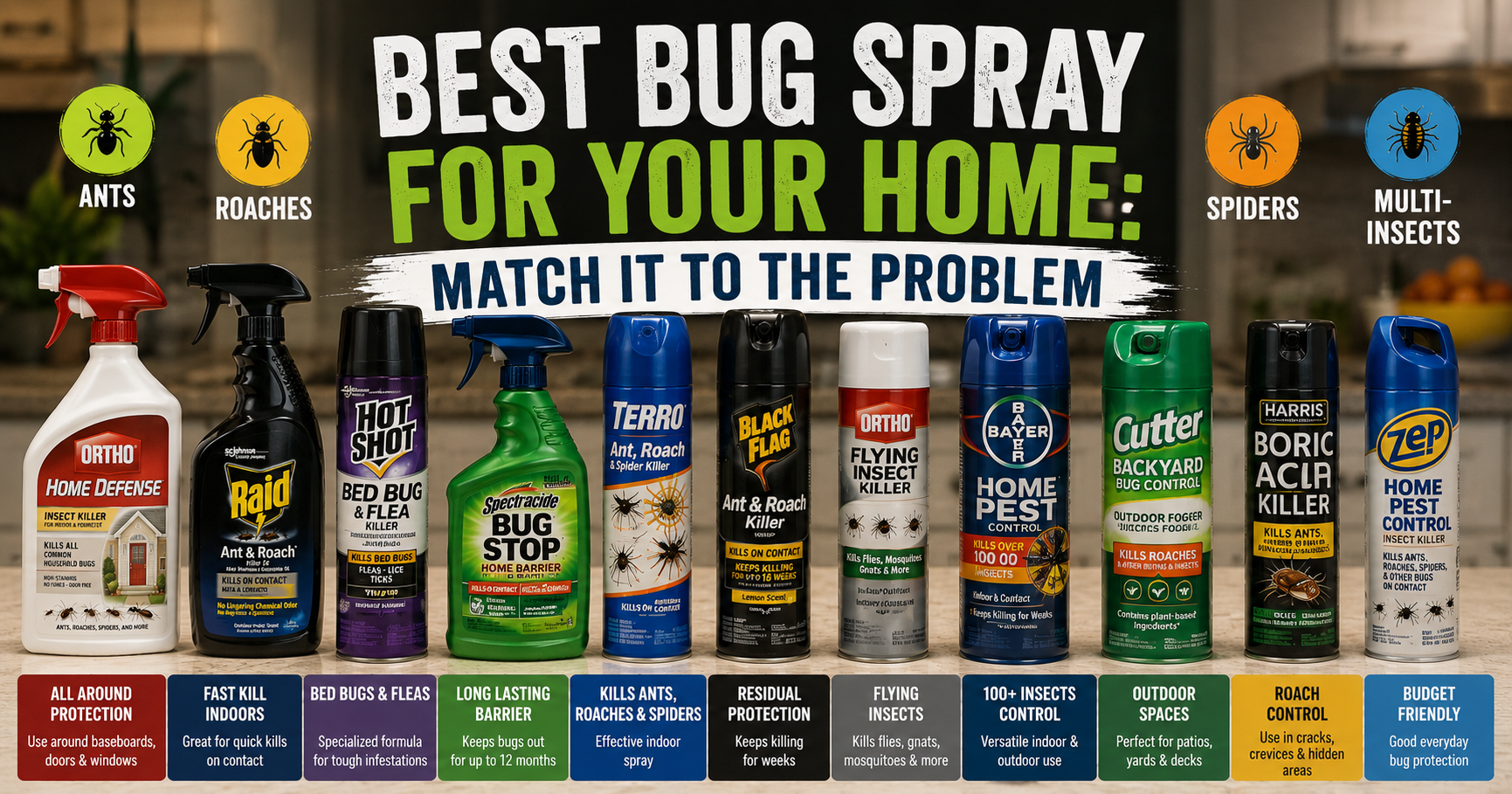
Pick one perimeter product and use it correctly. Then use specific tools for specific pest problems, such as bait for ants or roaches, glue traps for monitoring, or moisture control for damp-area pests.
A good pest-control plan is targeted. It is not about using the most products possible.
When Bifenthrin May Make Sense
A bifenthrin product may be worth considering when:
- You are comfortable mixing and applying a concentrate.
- You have read the exact label and know it is approved for your target pest and treatment area.
- You need coverage for a larger exterior area or several structures.
- You already own and know how to use a proper sprayer.
- You are willing to measure accurately and follow all safety instructions.
When Ortho Home Defense Makes More Sense
Ortho Home Defense is usually the better fit when:
- You want a ready-to-use product.
- You only need a normal home perimeter treatment.
- You want to treat common bug entry routes without mixing concentrates.
- You need a product today from a local store.
- You are newer to DIY pest control.
My Honest Pick
For most homes, I would start with Ortho Home Defense.
It is straightforward, convenient, and easier to apply correctly. A simple treatment used in the right locations is better than a stronger-looking concentrate used too heavily or in the wrong places.
I would choose a bifenthrin-based product only when I had a clear reason for it, had checked the label carefully, and was comfortable mixing and applying it responsibly.
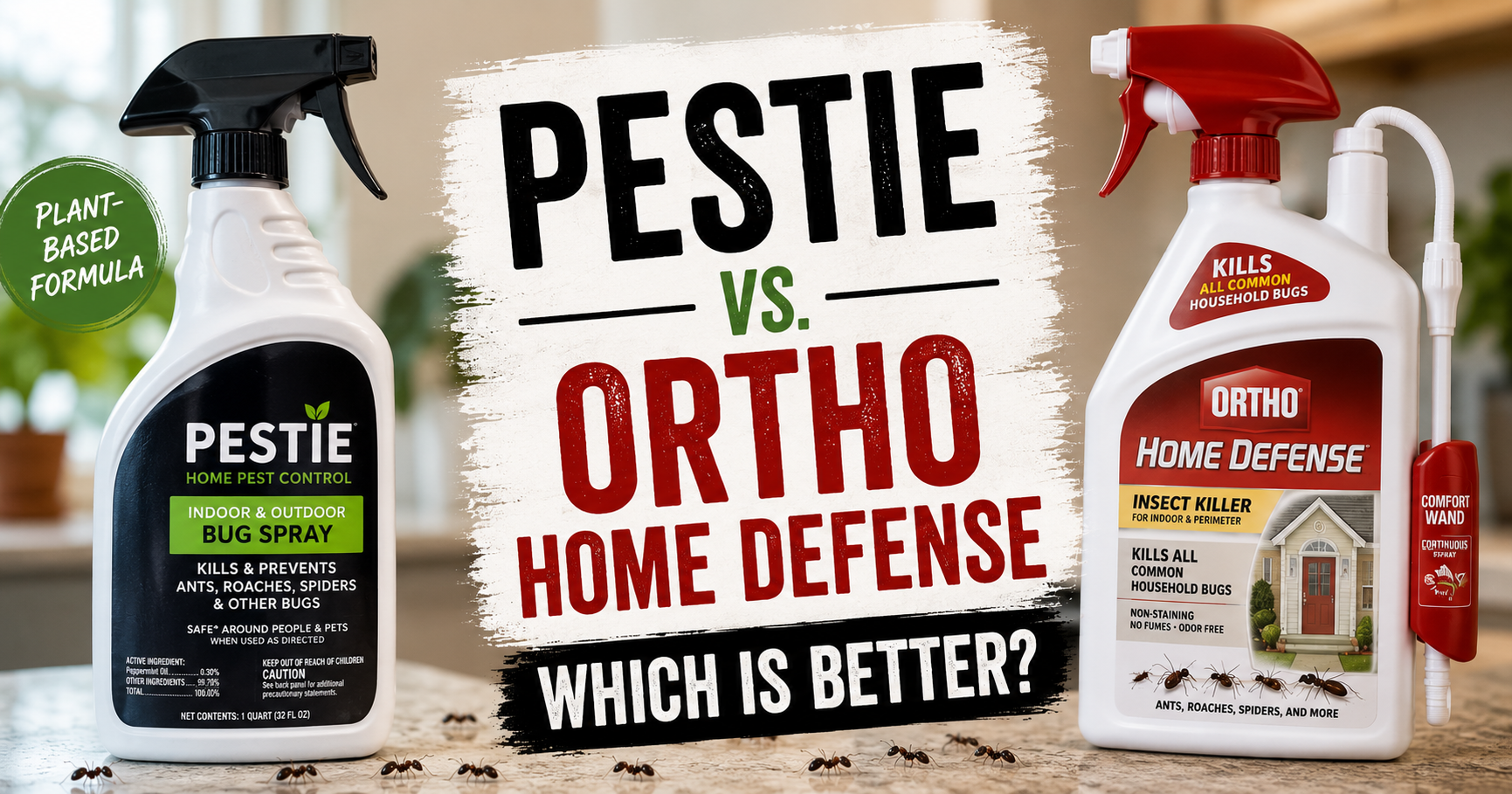
If you are comparing Ortho with another ready-to-use perimeter option, see my breakdown of Pestie versus Ortho Home Defense to decide whether a subscription-style DIY system is actually worth it for your home.
Frequently Asked Questions
Is Ortho Home Defense made with bifenthrin?
Many current Ortho Home Defense products use a different active ingredient. Check your exact bottle label because formulas can change and product versions vary.
Does bifenthrin kill roaches?
Bifenthrin products may kill listed roaches when used according to their labels. For an active German-roach infestation, gel bait and targeted placement are usually more important than a perimeter spray.
Is bifenthrin better than Ortho Home Defense for ants?
Not automatically. Both can help with ants traveling through treated areas, but bait is often more useful for reaching an established colony.
Can I spray bifenthrin indoors?
Only if the exact product label specifically allows indoor use. Many bifenthrin products have restrictions that differ from ready-to-use indoor-and-perimeter products.
How often should I reapply bifenthrin?
Follow the exact product label. Reapplication timing varies by formulation, target pest, surface, weather exposure, and treatment location.
Will a perimeter spray keep all bugs out?
No. A perimeter spray can reduce crawling insects, but it cannot seal gaps, fix moisture problems, remove nests, or stop every insect from entering through an open door or garage.
Caleb Warren is a longtime gardener and backyard insect researcher who writes practical pest guides for WhyDoIHaveBugs.com, helping homeowners choose treatments that fit the pest and the problem instead of relying on one spray for everything.