
When I first realized the beetle crawling across my floor wasn’t a carpet beetle but a larder beetle, my next question was exactly the same one you’re probably asking now. If you are still unsure which beetle you found, how to tell carpet beetles apart offers the broader identification details you need.
Why is it here?
Unlike many household insects that simply wander indoors by accident, larder beetles almost always have a reason for being there.
They’re searching for food.
Or they’ve already found it.
Once I understood what larder beetles actually eat, the mystery started making much more sense.
Instead of randomly spraying insecticide throughout my house, I started looking for the source that was attracting them in the first place.
That’s the approach I recommend to every homeowner because removing the attraction is almost always more important than killing the beetles you happen to see.
If you haven’t positively identified the beetle yet, compare it with my guide on what larder beetles look like before assuming you’re dealing with this particular species.
Larder Beetles Usually Mean There’s Something They’re Feeding On
One of the biggest misconceptions I see is people thinking larder beetles simply decide to move into a house.
That’s rarely what happens.
Larder beetles are attracted by food sources that are high in animal protein.
If they’re living inside your home, something is providing enough food for the larvae to develop.
The adults you see crawling around are usually just the visible part of a problem that started much earlier.
That’s why I never begin with insecticide.
I begin by asking one question.
What are they eating?
Once I answer that, solving the infestation becomes much easier.
Dry Pet Food Is One of the First Things I Check
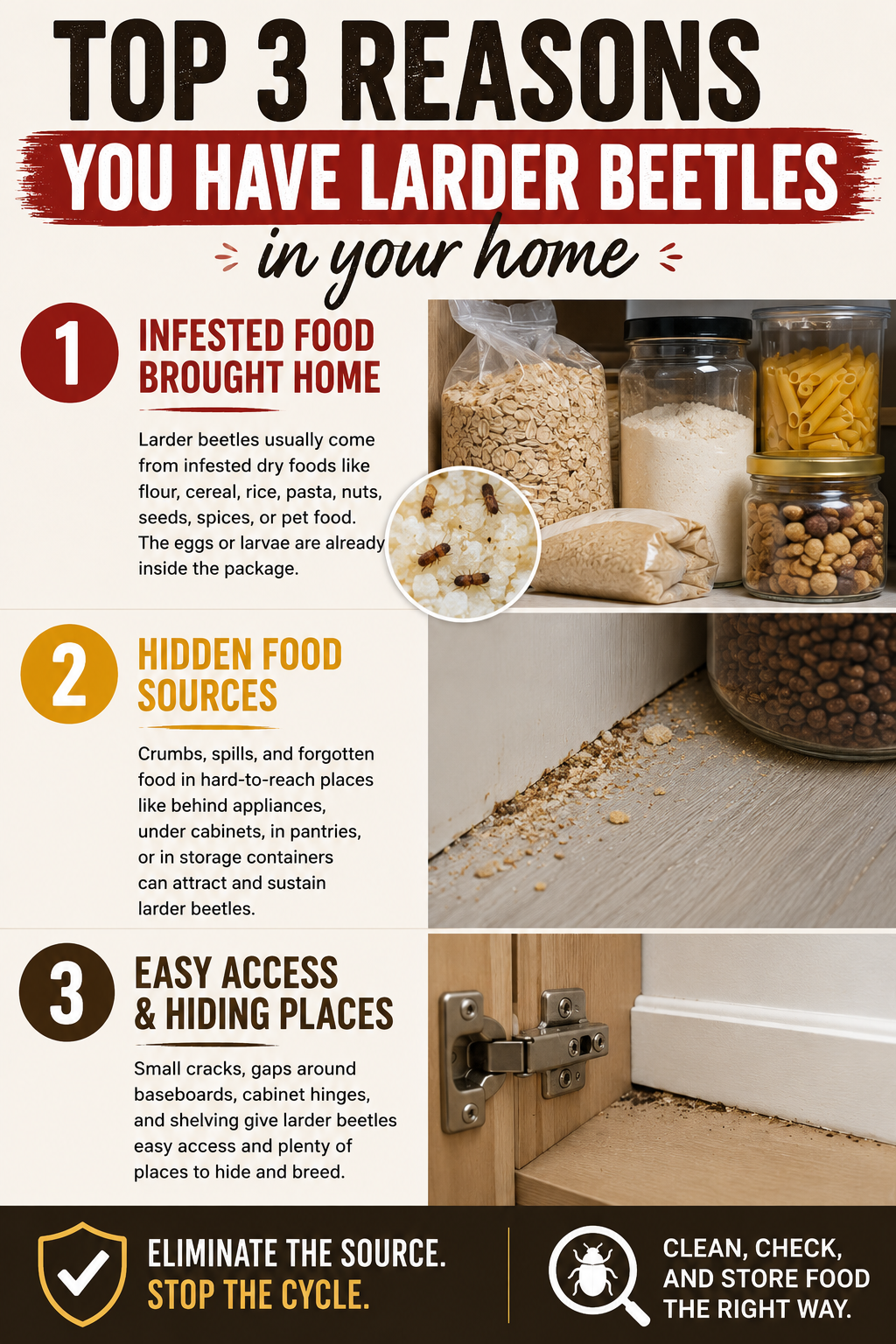
Whenever someone tells me they’ve found larder beetles in the garage, pantry, mudroom, or laundry room, one of my first questions is whether they store dry pet food nearby.
Dog food and cat food are some of the most common household food sources for larder beetles.
A forgotten bag sitting on the floor for months.
Loose kibble behind a storage shelf.
Even spilled food under a pet feeding station.
Those are exactly the kinds of places I inspect first because they’re easy to overlook.
If the food has become infested, I throw it away instead of trying to save it.
Once the source is gone, the beetle population usually starts declining.

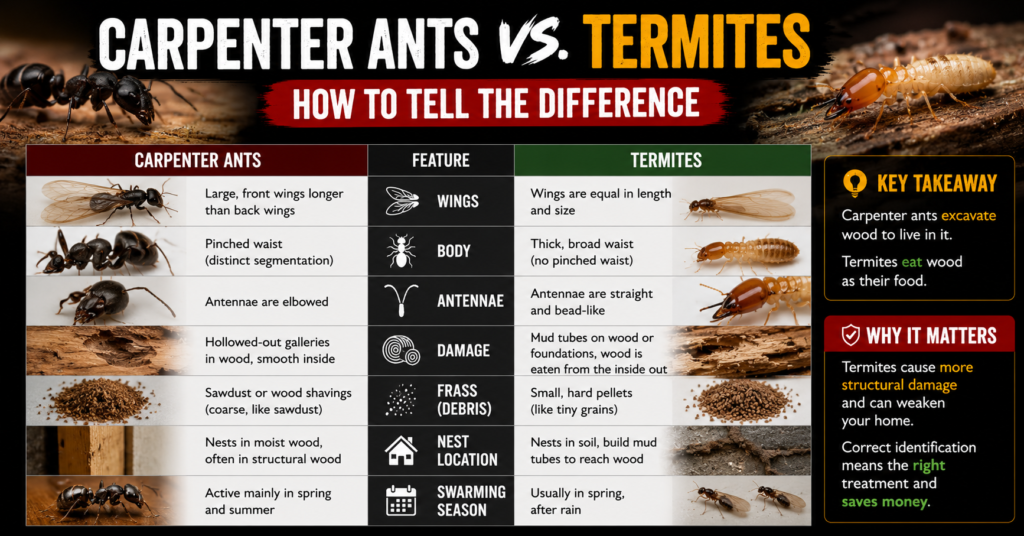

Dead Insects Can Attract Hundreds of Larder Beetles
This was one of the biggest surprises for me.
Most homeowners think about pet food or pantry items.
Very few think about dead insects.
Extension specialists consistently mention that accumulations of dead flies, stink bugs, lady beetles, boxelder bugs, and wasps inside attics or wall voids are one of the most common hidden food sources for larder beetles.
Think about what happens every fall.
Thousands of insects try to overwinter inside homes.
Many never make it.
Those dead insects remain inside wall voids and attics where larder beetles eventually discover them.
That’s one reason people often have no idea why beetles suddenly begin appearing months later.
The food source has been hidden the entire time.
A Dead Mouse or Bird Can Be the Real Cause
Another possibility I never ignore is a dead animal.
If a mouse dies inside a wall, crawl space, basement ceiling, attic, or garage, it creates an ideal food source for larder beetles.
The same thing can happen with birds trapped in chimneys or attics.
The beetles aren’t interested in your house.
They’re interested in the animal remains.
Once the larvae finish feeding, the new adults begin wandering through the home looking for light, which is why they’re often discovered on windowsills or crawling across walls.


Bird Nests Can Bring Larder Beetles Closer to Your Home
One source that often surprises homeowners is bird nests.
Bird nests contain feathers, dried organic material, dead insects, and sometimes even dead nestlings or eggs that failed to hatch.
All of those materials can attract larder beetles.

If a nest is built inside an attic vent, soffit, chimney, or another part of the house, beetles may eventually wander indoors after completing their development. A similar hidden route can explain carpet beetles appearing indoors, and this article covers carpet beetles entering from nests.
That’s one reason I always look around the outside of the house when I can’t immediately find a source indoors.
The Garage Is One of My First Places to Inspect
Whenever someone tells me they’re finding larder beetles, I almost always ask whether they’ve checked the garage.
Garages often contain exactly the kinds of materials these beetles like.
For example:
- Bags of dog food.
- Bags of bird seed.
- Animal feed.
- Rodent activity.
- Dead insects collecting near windows.
- Old taxidermy.
- Hunting gear.
- Pet treats stored for long periods.
Most homeowners don’t think of the garage as a pantry, but to a larder beetle it can be full of food.



Sometimes the Problem Started Months Earlier
One thing I’ve learned is that the source of a larder beetle infestation may have appeared long before the beetles themselves.
For example, insects often move into attics and wall voids during the fall to spend the winter.
Many of those insects die before spring.
The dead insects remain hidden where homeowners never see them.
Eventually, larder beetles locate those dead insects, lay eggs, and the larvae begin feeding.
By the time adult beetles start wandering into living areas, the original source may have been sitting there for months.
Finding One Beetle Doesn’t Always Mean You Have an Infestation
I also don’t want homeowners to panic after finding a single adult.
Adult larder beetles can fly and occasionally wander indoors from outside.
One beetle doesn’t necessarily mean there’s an active breeding site inside your home.
What gets my attention is when I begin finding:
- Multiple adults over several days.
- Hairy larvae.
- Shed larval skins.
- Beetles in the same room repeatedly.
Those clues tell me it’s time to start searching much more carefully for a food source.


How I Figure Out What’s Attracting Them
Whenever I’m investigating a larder beetle problem, I work through the house systematically instead of guessing.
I usually check in this order:
- Dry pet food and pet treats.
- Pantry shelves containing animal-based foods.
- Garage storage.
- Basement storage.
- Utility rooms.
- Rodent activity.
- Bird nests around the home.
- Attic spaces containing dead overwintering insects.
Almost every larder beetle infestation I’ve researched eventually traces back to one of those areas.
Once I Find the Source, Everything Gets Easier
This is the point where many homeowners finally start making progress.
Once the food source disappears, the beetles lose the reason they were living inside your home.

I thoroughly vacuum the affected area, dispose of infested materials whenever practical, and then treat beetle travel routes with a residual insecticide if needed. A suitable vacuum for beetle-infested areas can help remove adults, larvae, and debris from affected spaces.

I explain the product I personally recommend in my review of the best larder beetle killer, but I always consider that the second step.
Finding the food source is what actually solves the infestation.



What I Do If I Can’t Find the Source
Occasionally, I can’t locate anything obvious.
When that happens, I start thinking about hidden areas.
Wall voids.
Attics.
Crawl spaces.
Dead rodents.
Dead insects.
Unfortunately, those are also the hardest places to inspect.
Sometimes the beetles simply have to finish consuming the hidden food source before the activity naturally declines.

In the meantime, vacuuming adults as I find them and treating their travel routes can help reduce the number I see inside the house. A closer look at vacuuming beetles and hidden debris can help make this routine more thorough, especially around concealed areas.
Frequently Asked Questions
Why did I suddenly start seeing larder beetles?
In many cases, the food source has been present for weeks or months before you ever notice the beetles. Adults often become visible only after the larvae have finished developing and begin wandering through the house.
Are larder beetles attracted to dog food?
Yes. Dry dog food is one of the most common household food sources for larder beetles. They can also infest dry cat food, animal treats, and other stored products containing animal proteins.
Can dead bugs attract larder beetles?
Absolutely. Dead flies, lady beetles, stink bugs, wasps, and other insects trapped in attics or wall voids are one of the most overlooked causes of larder beetle infestations.
Will larder beetles go away after I remove the source?

Usually, yes. Once the food source is removed, the existing beetles gradually die off and no new larvae can develop. Depending on the stage of the infestation, it may still take several weeks before you stop seeing adults altogether. A similar delay can occur with carpet beetle recurrence when hidden eggs or larvae remain in the home.
Should I spray first or look for the source first?
I always recommend finding the source first. Insecticides can help reduce wandering adults, but they’ll never completely solve the problem if larvae are still feeding somewhere inside the home.
About the Author
Mark Sullivan has spent years researching household beetles and helping homeowners identify the real cause of infestations. After discovering larder beetles in his own home and initially mistaking them for carpet beetles, he learned firsthand that finding the food source is the key to eliminating them for good.