
You notice tiny bugs hopping across your bathroom floor.
Your first thought is usually fleas.
After all, what else jumps?
Then you realize something doesn’t add up.
Nobody in the house has bites.
Your pets aren’t scratching.
The bugs are gathering around the sink, basement, or houseplants instead of carpets or furniture.
There’s a good chance you’re looking at springtails.
Although they’re one of the most common moisture-loving pests found around homes, most people have never heard of them until they suddenly appear by the dozens or even hundreds. Fortunately, springtails are far more of a nuisance than a danger. They don’t bite people or pets, don’t spread diseases, and don’t damage household furnishings. Their presence almost always points to one underlying issue: excess moisture.
The Short Answer
Springtails are tiny, wingless, insect-like arthropods that thrive in damp environments.
Homeowners usually find them:
- Bathrooms.
- Basements.
- Crawl spaces.
- Laundry rooms.
- Around sinks.
- Houseplant soil.
- Near windows.
- Around foundation walls.

Unlike fleas, springtails don’t bite or feed on blood. Instead, they survive by feeding on mold, fungi, algae, decaying plant material, and other organic matter.
What Exactly Are Springtails?
Despite looking like tiny insects, springtails actually belong to a separate group of six-legged arthropods known as Collembola.
They’ve been around for hundreds of millions of years and play an important role in nature by helping break down dead organic material.
Outdoors, they’re actually beneficial.
Millions of them may be living in the soil beneath your lawn without you ever noticing.
The problem only begins when moisture conditions encourage them to wander into your home.

Why Are They Called Springtails?
The name comes from one remarkable body part.
Beneath the abdomen is a forked appendage called a furcula.
Most of the time it’s folded underneath the body where you can’t see it.
When a springtail feels threatened, the furcula snaps downward against the ground like a spring.
That launches the tiny animal several inches into the air in a split second.
It’s one of the fastest escape mechanisms found in the tiny arthropod world and the reason homeowners often mistake springtails for fleas.
What Do Springtails Look Like?
Most household springtails are incredibly small.
Many measure only about 1⁄16 of an inch long, although some species are even smaller.
Depending on the species, they may appear:
- Black.
- Dark gray.
- Brown.
- Bluish gray.
- White.
- Cream colored.
Most have:
- Six legs.
- Long antennae.
- No wings.
- A soft body.
- A rounded or elongated shape.
One thing almost all springtails have in common is that they jump when disturbed.
If you’re trying to identify one you’ve found, my upcoming What Do Springtails Look Like? Easy Identification Guidewill walk through the key features that separate them from fleas, booklice, and other tiny household pests.


Where Do Springtails Live?
Springtails are found almost everywhere moisture exists.
Outdoors they commonly live in:
- Garden soil.
- Compost.
- Leaf litter.
- Mulch.
- Moss.
- Beneath logs.
- Under loose bark.
- Around ponds.
Inside homes they’re usually found where humidity remains high.
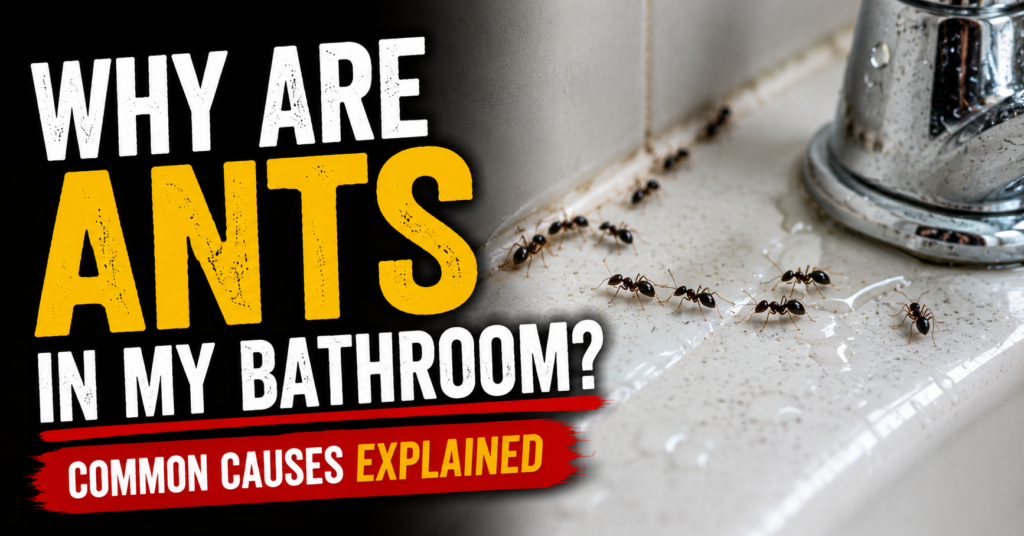
Bathrooms, basements, crawl spaces, kitchens with plumbing leaks, and the soil of overwatered houseplants are among the most common indoor locations.
Why Are Springtails Suddenly in My House?
This is the question almost everyone asks first.
Springtails don’t randomly invade clean homes.
They’re almost always following moisture.
Common reasons include:
- Plumbing leaks.
- High indoor humidity.
- Overwatered houseplants.
- Damp basements.
- Crawl space moisture.
- Water intrusion after heavy rain.
- Mold growth.
- Poor ventilation.

In other words, springtails are often a symptom of a moisture problem rather than the problem itself. Silverfish can point to similar indoor conditions, as explained in this silverfish and moisture guide.

Why Moisture Matters So Much
Unlike many household pests, springtails dry out very easily.
Their bodies lose moisture rapidly, which is why they rarely survive in dry environments.
When indoor humidity stays high, they can remain active much longer.
That’s also why fixing the moisture problem almost always works better than repeatedly spraying insecticides.

If you’re dealing with persistent humidity issues, I recommend reading my Does a Dehumidifier Help Get Rid of Bugs? Here’s the Truth guide. Lowering humidity is often one of the most effective long-term ways to make your home less attractive to springtails and many other moisture-loving pests.
Are Springtails Dangerous?
This is probably the first question most homeowners ask after finding dozens of tiny jumping bugs inside their house.
Fortunately, the answer is reassuring.
Springtails are considered one of the least harmful household pests you’ll encounter.
Unlike fleas, they don’t feed on blood.
Unlike bed bugs, they don’t bite while you sleep.
Unlike termites, they don’t damage the structure of your home.
In fact, springtails are mostly accidental indoor visitors that wandered inside because conditions were damp enough to support them.
Do Springtails Bite People or Pets?
No.
This is one of the biggest myths surrounding springtails.
Because they jump like fleas, many homeowners assume they’ll also bite.
They don’t.
Springtails have no interest in feeding on humans or pets.
Instead, they spend their time feeding on:
- Mold.
- Fungi.
- Algae.
- Decaying leaves.
- Organic debris.
- Bacteria.

If you’ve found tiny jumping bugs but nobody in your home has mysterious bites, that’s another clue you’re probably dealing with springtails instead of fleas. When those bugs are concentrated in a bathroom, tiny jumping bugs in bathrooms can help you compare springtails with fleas and other look-alikes.
What Do Springtails Eat?
Outdoors, springtails are actually beneficial.
They’re part of nature’s cleanup crew.
They constantly break down:
- Dead leaves.
- Rotting wood.
- Compost.
- Fungi.
- Mold.
- Organic matter.
This helps recycle nutrients back into the soil.
Inside a home, however, that same diet often leads them toward damp areas where mold or mildew is beginning to develop.
Their presence is frequently a warning sign that moisture is accumulating somewhere it shouldn’t.
Can Springtails Damage Your House?
For the average homeowner, no.
Springtails don’t:
- Eat wood framing.
- Damage drywall.
- Chew electrical wiring.
- Destroy furniture.
- Feed on clothing.
- Damage stored food.
That’s one of the biggest differences between springtails and many other household pests.
They’re far more interested in moisture than in your belongings.
Why Are There Suddenly Hundreds of Them?
This is what catches most homeowners off guard.
Springtails rarely appear one at a time.
Instead, people often notice dozens or even hundreds gathered:
- Around sinks.
- Near basement walls.
- Inside window tracks.
- Around floor drains.
- Near houseplants.
- On damp concrete.
- Around crawl space entrances.
That’s because favorable moisture conditions allow large populations to develop outdoors before some begin wandering inside.
When you see large numbers, it’s usually telling you something about your home’s moisture rather than indicating a dangerous infestation.
Where Do Springtails Usually Hide?
During the day, springtails stay wherever moisture remains highest.
Common indoor hiding places include:
- Beneath sinks.
- Behind toilets.
- Around plumbing.
- Damp basements.
- Crawl spaces.
- Window sills with condensation.
- Houseplant soil.
- Utility rooms.
Outside they’re commonly found beneath mulch, leaf litter, compost, moss, loose bark, and other damp organic material.
Why Moisture Control Works Better Than Insecticides
One reason springtails frustrate homeowners is because spraying them often produces disappointing results.
You may kill the ones you see today.
Tomorrow, more appear.
That’s because the moisture problem remains.
Until excess humidity, leaks, or damp organic matter are corrected, new springtails can continue moving into the same areas.
That’s why reducing moisture is consistently recommended as the most effective long-term control strategy.

If your home stays humid year-round, I recommend reading my Does a Dehumidifier Help Get Rid of Bugs? Here’s the Truth guide. Lowering indoor humidity often has a much bigger impact than repeatedly treating the insects themselves.
What Should You Do If You Find Springtails?
Don’t panic.
Instead, treat them as a clue.
Whenever I hear someone say they’re finding springtails, my first thought isn’t, “You have a bug problem.”
It’s, “You probably have a moisture problem.”
Start by checking for:
- Plumbing leaks.
- Overwatered houseplants.
- High basement humidity.
- Condensation on pipes.
- Poor ventilation.
- Damp crawl spaces.
- Standing water near the foundation.
Correcting those issues often causes springtail populations to decline naturally over time.
My Advice
Of all the household pests I write about, springtails are one of the least concerning.
They’re certainly annoying when they appear in large numbers, but they’re also one of the easiest pests to understand.
If you focus only on killing the bugs, they’ll often come back.
If you solve the moisture problem that’s attracting them, you’ve usually solved the springtail problem too.
That’s why I always tell homeowners to think of springtails as tiny moisture indicators instead of dangerous pests.
Frequently Asked Questions
Are springtails harmful to humans?
No. Springtails don’t bite, sting, spread diseases, or damage household belongings. They’re considered nuisance pests that mainly indicate excess moisture.
Why do springtails jump?
Springtails use a forked structure called a furcula to launch themselves into the air when disturbed. It’s an escape mechanism that helps them avoid predators.
Can springtails infest a house?
They can gather in large numbers where moisture is present, but they usually don’t establish permanent infestations in dry areas. Once the moisture problem is corrected, their numbers typically decline.
Should I call an exterminator for springtails?
Usually not as a first step. In most cases, fixing leaks, lowering humidity, and removing excess moisture are more effective than relying on insecticides alone.
Are springtails a sign of mold?
Not always, but they can be. Because springtails feed on fungi, mold, and decaying organic matter, finding them indoors often suggests there’s excess moisture that deserves closer inspection.
About the Author
Emily Carter is a home pest prevention specialist with more than 14 years of experience helping homeowners identify moisture-related pest problems. She focuses on practical, science-backed solutions that address the conditions attracting insects instead of relying on unnecessary pesticide treatments.