
The first time I found one of these beetles inside my house, I was convinced it was a carpet beetle. If that confusion also involves unexplained skin irritation, carpet beetle rash clues can help separate a carpet beetle reaction from bed bug bites.
After all, they’re both members of the dermestid beetle family, and at first glance they can look surprisingly similar.
But the more closely I examined it, the more obvious the differences became.
Once I compared the markings and body shape, I realized I wasn’t looking at a carpet beetle at all.
It was a larder beetle.
If you’ve found a beetle in your home and aren’t quite sure what it is, here’s exactly what I look for to identify a larder beetle and tell it apart from other common household beetles.
My Own Larder Beetle Photos
The photos below show an adult larder beetle I found inside my own home.
Unlike many identification guides that rely entirely on stock images, I wanted to include real-world examples because that’s what most homeowners actually encounter.

The Easiest Way I Identify a Larder Beetle
When I first look at a beetle, I don’t worry about scientific names.
I look for a few simple characteristics.
A typical adult larder beetle has:
- A body that’s longer than it is wide.
- Dark brown to black coloration on the front and rear.
- A wide tan or cream-colored band across the middle of its wing covers.
- Several small dark spots within that light-colored band.
- Six legs and a pair of hardened wing covers.
- A body that’s usually about 1/4 to 3/8 inch long, making it noticeably larger than most carpet beetles.

That light-colored band is usually the first thing that catches my attention because very few common household beetles have that distinctive pattern.
Larder Beetles Are Larger Than Most Carpet Beetles
One of the reasons I originally questioned my identification was the size.
Most carpet beetles I encounter are fairly small and almost round when viewed from above.
Larder beetles are different.
They’re noticeably larger and have a much more elongated body.
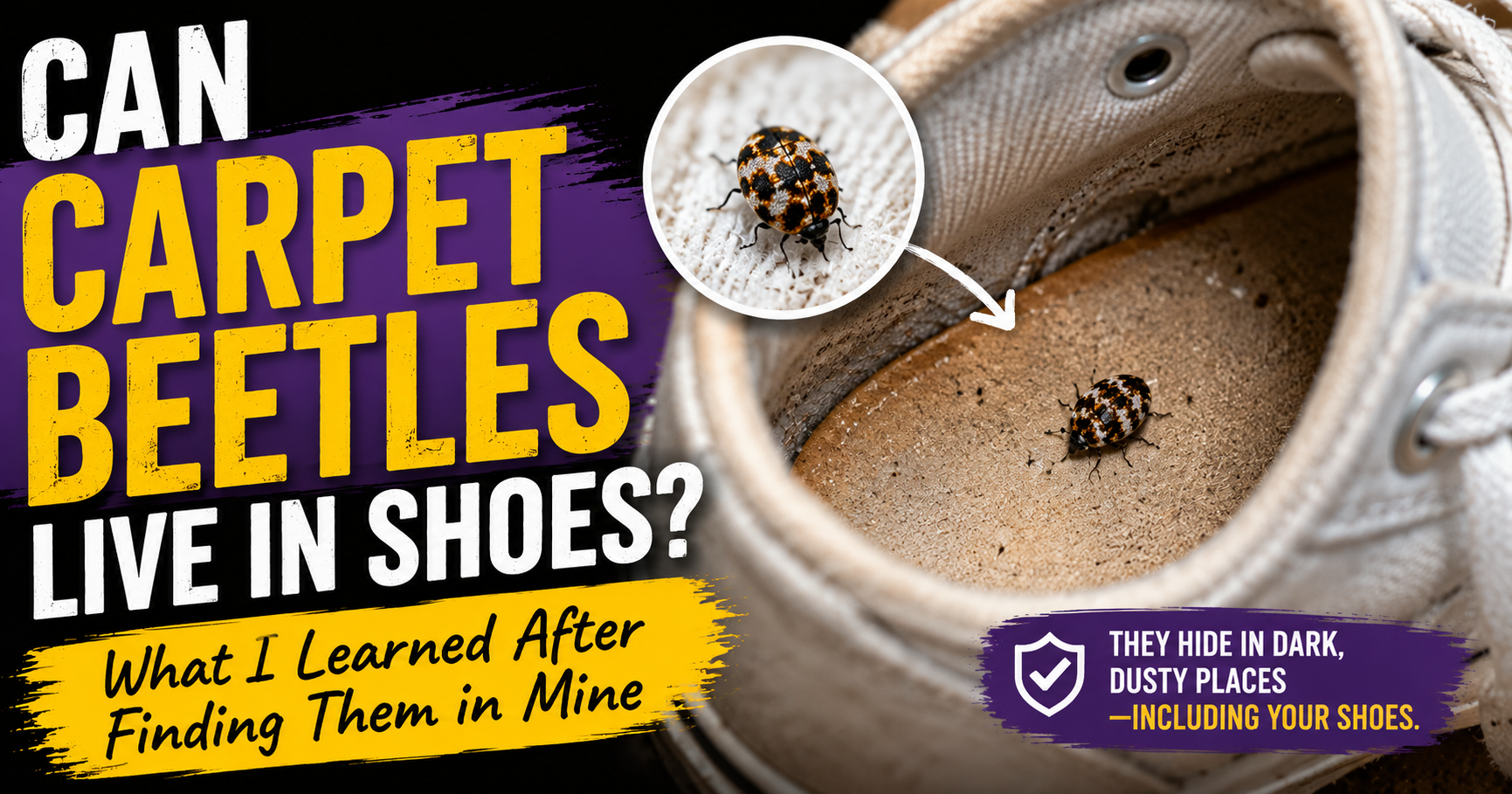
If you’ve already looked through my guide on identifying carpet beetles, you’ll notice that carpet beetles often have a mottled pattern made up of white, brown, and black scales rather than one broad tan band.
That simple difference helps me separate the two much faster.
Don’t Confuse the Adults With the Larvae
Another thing that causes confusion is the larvae.
Adult larder beetles look nothing like their young.

The larvae are elongated, segmented, and covered with stiff hairs.
They’re often brown and somewhat fuzzy in appearance, which is why many people mistake them for carpet beetle larvae.
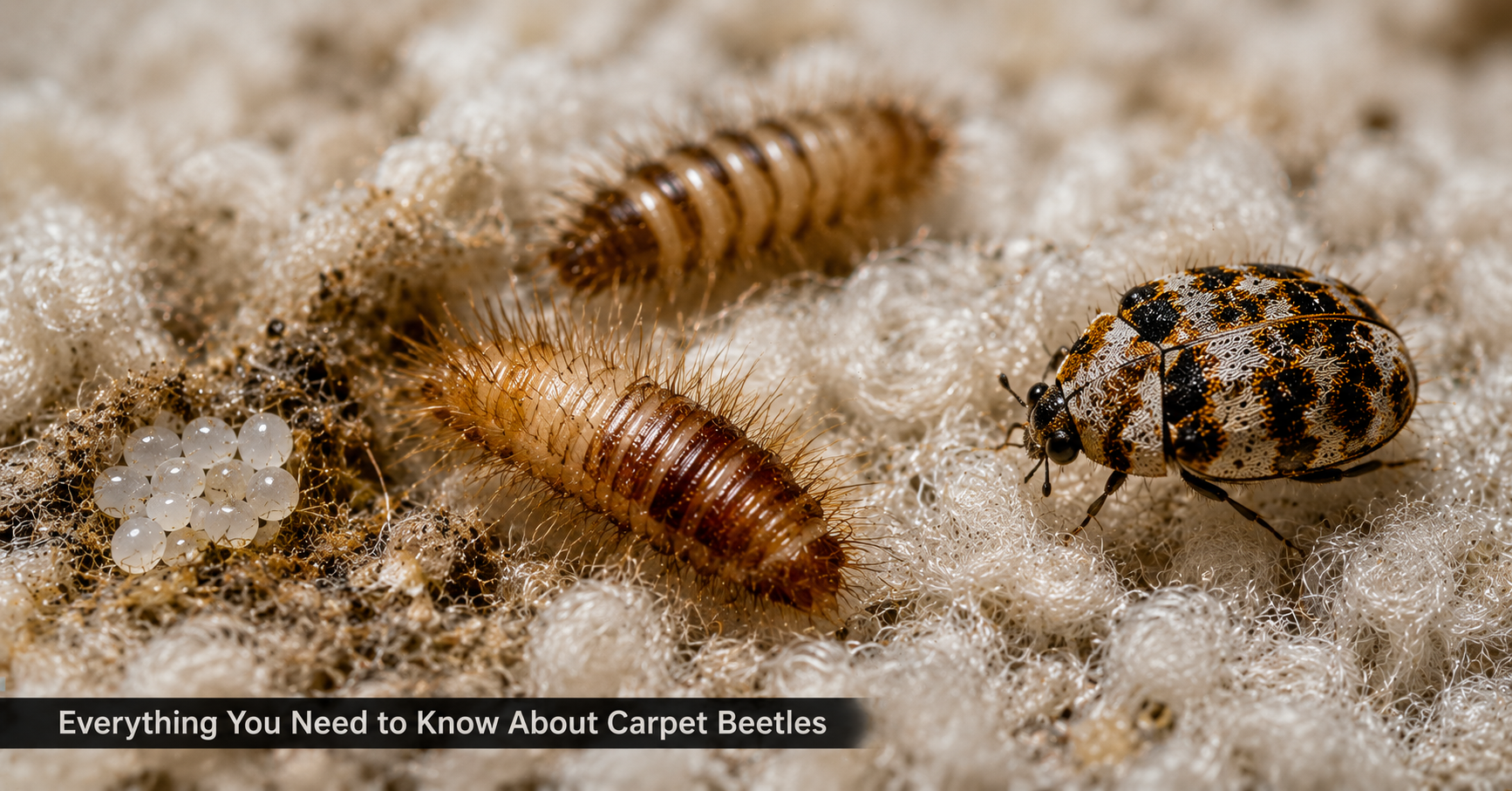
In fact, before I identified the adult beetle in my own home, I initially wondered whether I was dealing with carpet beetles because the larvae of both species share several similarities. You can compare those similarities with carpet beetle identification guide before deciding which species is in your home.
Later in this larder beetle series, I’ll cover those differences in detail because it’s one of the most common identification mistakes homeowners make.
Where I Usually Find Adult Larder Beetles
Unlike many insects that stay hidden, adult larder beetles often wander through homes looking for new food sources or places to lay eggs.
I’ve found them:
- Along windowsills.
- Crawling across walls.
- Inside garages.
- In basements.
- Near pet food storage.
- Around utility rooms.
- Close to stored animal products.
Finding a single adult doesn’t always mean you have a major infestation.
However, if I begin finding several adults over a short period, I start looking much more carefully for whatever attracted them in the first place.
Why Larder Beetles Are So Often Mistaken for Carpet Beetles
When I first found the beetle pictured above, I honestly thought I had found another carpet beetle.
That assumption made sense because the two insects are closely related.
Both belong to the Dermestidae family, both have hairy larvae, and both are common household pests.
The difference is that they usually prefer different food sources.
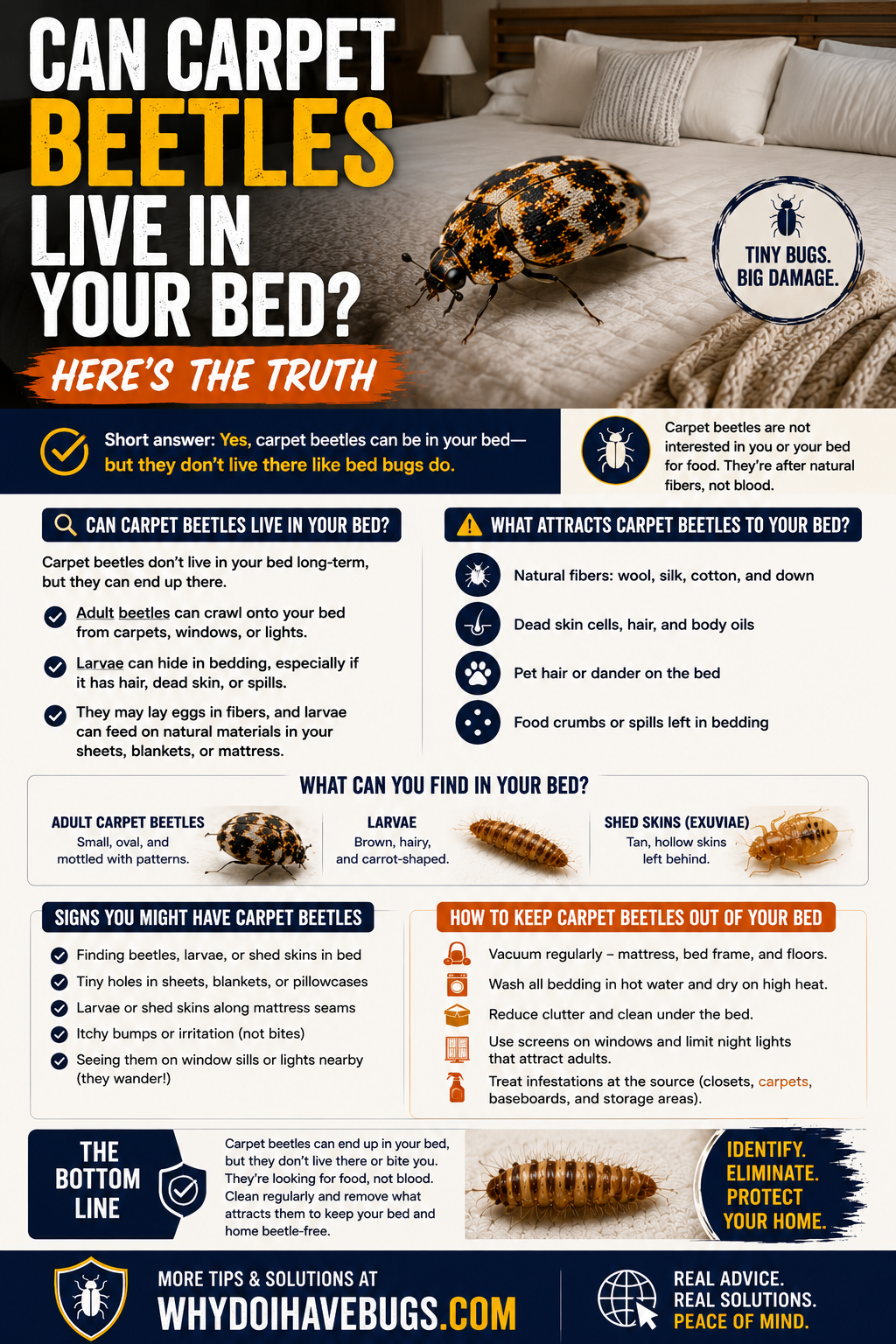
Carpet beetles are much more likely to damage wool carpets, clothing, blankets, natural fibers, feathers, and upholstered furniture. If these materials are located in or around a bedroom, carpet beetles near your bed clarifies what it means when carpet beetles are found near a bed.
Larder beetles, on the other hand, are usually associated with animal-based materials like dry pet food, dead rodents, dried meat, animal hides, feathers, and even dead insects.
That’s why I don’t rely on family relationships when identifying them.
Instead, I look at the body shape, markings, size, and where I found the beetle.
If your beetle is much smaller, almost round, and has a mottled mixture of white, brown, and black scales instead of one broad tan band, compare it with my guide to identifying carpet beetles before deciding which insect you’ve found.



What I Check Before Confirming It’s a Larder Beetle
Whenever I’m trying to identify one, I ask myself a few simple questions.
- Is the beetle longer than it is wide?
- Does it have a broad tan or cream-colored band across the middle?
- Is the head and rear of the beetle dark brown or black?
- Is it noticeably larger than the typical carpet beetles I usually find?
- Did I find it near pet food, a garage, basement, utility room, or another place where animal-based materials might be present?
If I answer yes to most of those questions, I’m usually dealing with a larder beetle.
Looking at several characteristics together is much more reliable than relying on color alone.
Finding One Doesn’t Always Mean You Have an Infestation

One thing I remind homeowners is not to panic after finding a single larder beetle. For a lone beetle, a safe catch-and-release bug catcher can help you examine it without immediately resorting to treatment.
Adult beetles sometimes wander indoors while searching for food or a place to lay eggs.
Finding one doesn’t automatically mean your home is heavily infested.
What gets my attention is when I begin finding multiple adults over several days or I start discovering larvae.
At that point, I begin looking much more carefully for the food source that’s supporting them.
Later in this series, I’ll explain why larder beetles show up inside homes, since understanding what attracted them is usually the biggest step toward solving the problem.


My Next Step After Identifying One
Once I’ve confirmed I’m dealing with a larder beetle, I stop worrying about identification and start looking for the reason it’s there.
Unlike many insects, larder beetles are almost always responding to a food source.
That might be a forgotten bag of dry dog food, a dead mouse in the garage, stored bird seed containing dead insects, or another overlooked source of animal protein.
The sooner I locate that attraction, the easier the beetles become to control.
Simply removing the adults without addressing the source usually leads to more beetles appearing later.
That’s why identification is only the first step.
Finding the cause is what actually solves the problem.
Frequently Asked Questions
Are larder beetles the same as carpet beetles?
No. Although they’re closely related and both belong to the dermestid beetle family, they’re different species with different preferred food sources. Carpet beetles are much more likely to damage natural fabrics, while larder beetles are more commonly associated with animal-based materials and stored pet food.
How big are larder beetles?
Adult larder beetles are usually about 1/4 to 3/8 inch long, making them noticeably larger than most carpet beetles.
Can larder beetles fly?
Yes. Adult larder beetles have fully developed wings beneath their hardened wing covers and are capable of flying, although they’re more commonly seen crawling across walls, floors, or windows.
What do baby larder beetles look like?
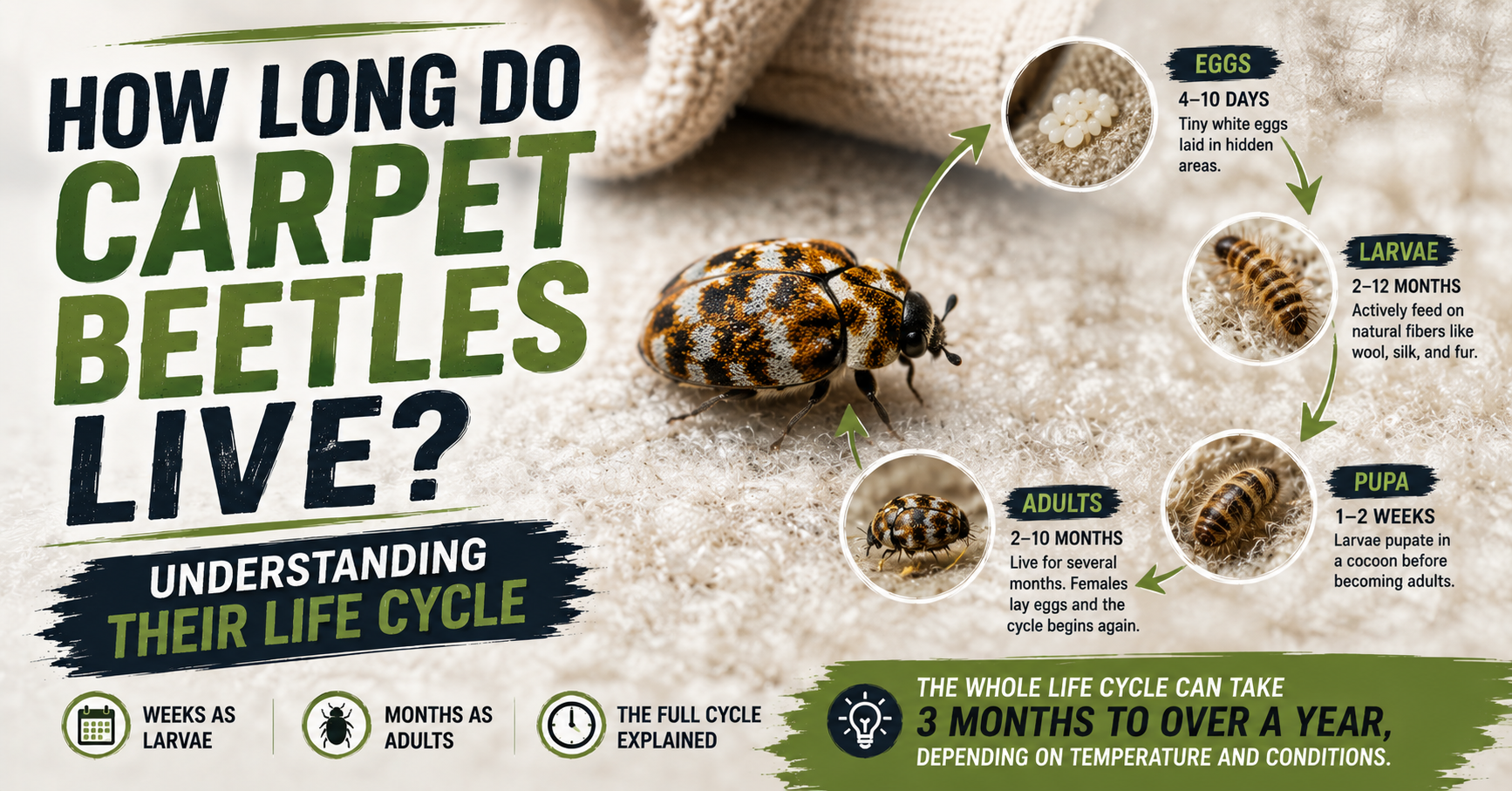
The young stage is actually called a larva. Larder beetle larvae are brown, elongated, segmented, and covered with stiff hairs. They look completely different from the adult beetles. Comparing those stages with carpet beetle development stages can help explain why carpet beetle larvae and adults are often noticed at different times.
Should I be worried if I find one larder beetle?

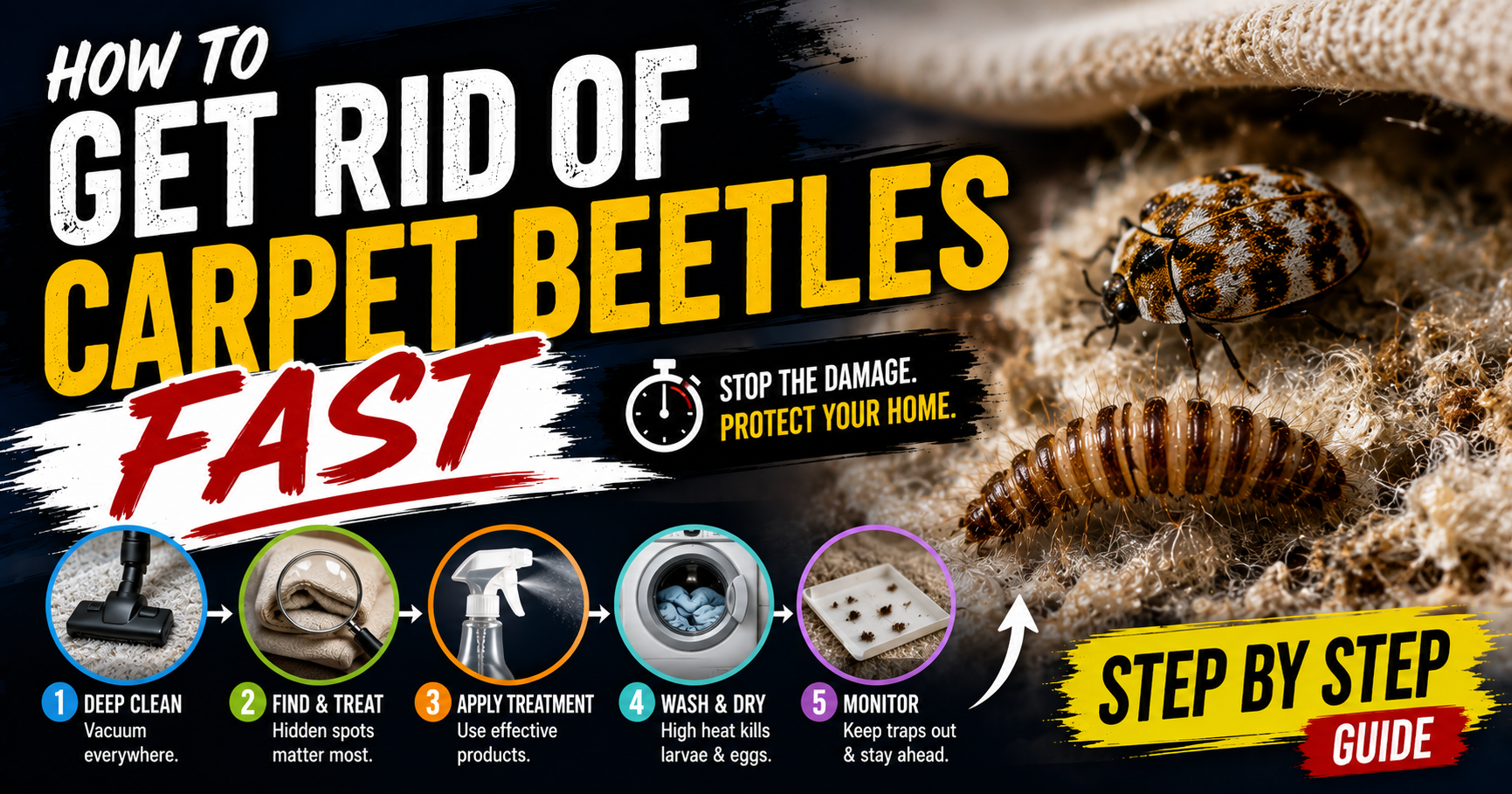
Not necessarily. A single beetle may have simply wandered indoors. However, if you continue finding adults or begin seeing larvae, it’s a good idea to inspect your home for potential food sources before the population grows. That source-first approach is also useful when investigating the reasons carpet beetles return after an initial treatment.
About the Author
Mark Sullivan has spent years identifying household beetles and helping homeowners trace infestations back to their source. After initially mistaking a larder beetle for a carpet beetle in his own home, he learned just how easily these closely related insects can be confused and now uses firsthand observations to help others identify them with confidence.