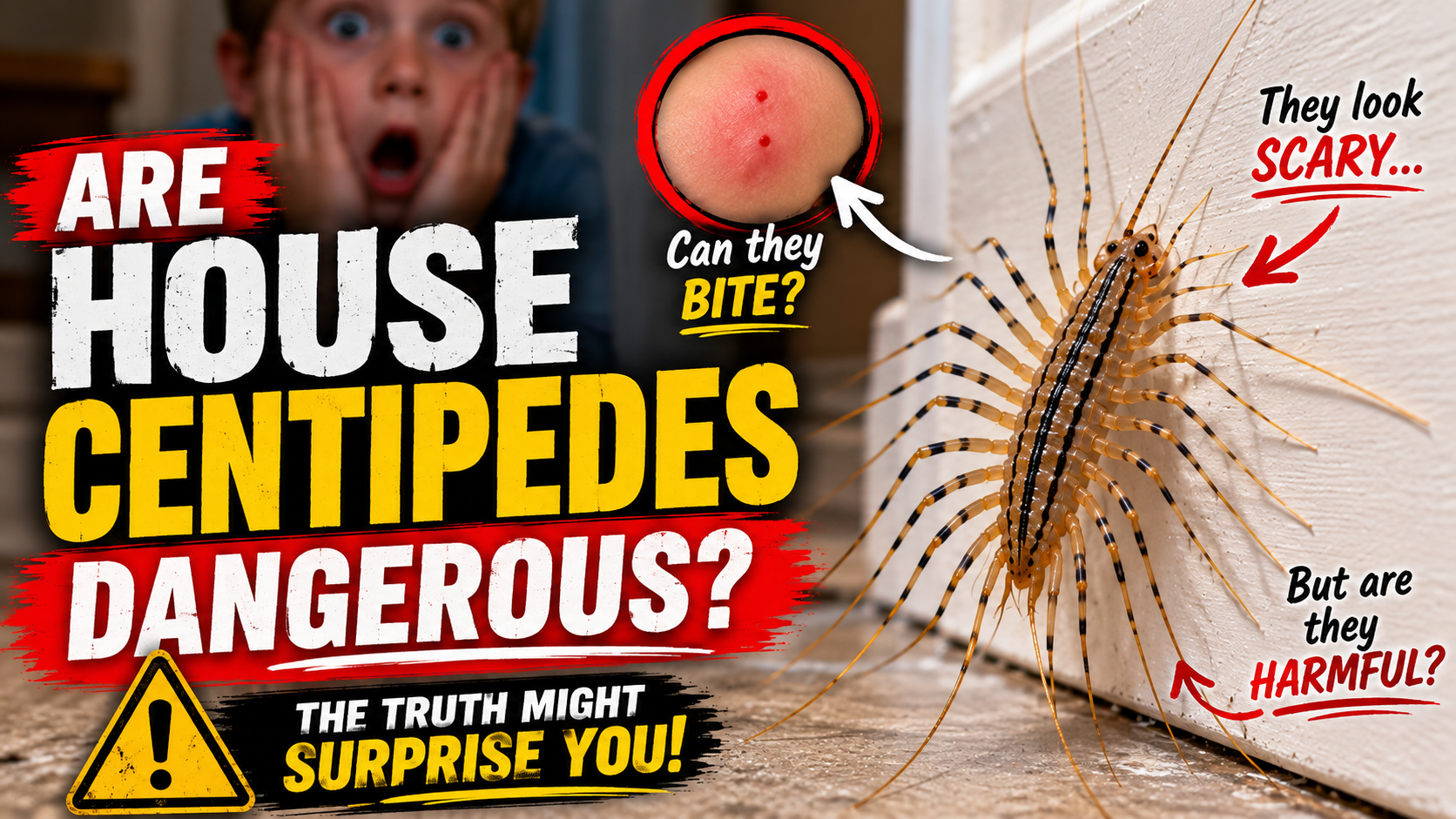
House centipedes look dangerous because they are fast, have long legs, and seem to appear out of nowhere. I understand why many people do not want one in the bathroom or running across a bedroom wall. The good news is that house centipedes are not dangerous to your home, they are not trying to bite people, and they are not known for spreading disease.
They are predators that spend their time hunting smaller bugs. A house centipede may be unpleasant to find indoors, but it is not feeding on your carpet, furniture, food, pets, or family. The bigger question is why it found enough moisture, shelter, and prey insects to stay nearby.
Are House Centipedes Dangerous to People?
House centipedes are not considered dangerous to people. They do have venom, but it is made for subduing very small prey such as ants, roaches, silverfish, spiders, and flies.
They would rather run away than confront a person. Their speed is their main defense. When disturbed, they look for the nearest crack, drain area, dark corner, or gap under trim.
A house centipede can bite if it is trapped, handled roughly, or pressed against skin, but this is uncommon. Most people will never be bitten by one because house centipedes avoid contact.



Can a House Centipede Bite You?
Yes, a house centipede is physically capable of biting. It has modified front legs called forcipules that act like pincers and deliver venom to prey.
That does not mean it is likely to bite you. A house centipede is not interested in people, and it does not feed on blood. Bites are generally defensive accidents when someone tries to pick one up with bare fingers or accidentally presses it against their skin.
For most healthy adults, a bite may cause short-term pain, redness, swelling, or a burning sensation similar to a small sting. Reactions vary, so anyone with trouble breathing, widespread hives, severe swelling, dizziness, or another serious reaction should seek urgent medical care.
The practical move is simple: do not handle house centipedes bare-handed. Trap one under a cup, vacuum it, or use a tissue or tool if you want it out of the house. If vacuuming is your preferred removal method, this vacuum for insect larvae is relevant for handling insects and small pest debris around the home.
Do House Centipedes Crawl on People While They Sleep?
House centipedes do not seek out people or beds. They are looking for prey and protected places to hide, not human skin.
A centipede could wander through a bedroom at night because it is following the room’s edges or hunting another small bug, but that is very different from actively crawling onto a sleeping person. They generally avoid disturbance, movement, and open exposure.
If you find one in a bedroom, look near the floor edges, closet, attached bathroom, windows, and furniture. The sighting is usually more about an entry point, moisture nearby, or other insects than it is about the bed itself.
Are House Centipedes Dangerous to Pets?
House centipedes are not normally dangerous to dogs or cats. A curious pet may chase, paw at, or eat one, but a single house centipede is not generally a serious threat.
A pet could potentially be bitten if it mouths or repeatedly paws at a centipede, especially a smaller pet with sensitive skin. Watch for signs of pain, swelling, unusual drooling, vomiting, or behavior that seems out of character. Call your veterinarian if those symptoms develop or you are concerned about what your pet was exposed to.
The more common issue is that pets find centipedes in the same places they find other pests: basements, bathrooms, laundry rooms, garages, and under-sink spaces. Keeping those areas drier and less cluttered helps reduce the chance of encounters.


Are House Centipedes Dangerous to Your Home?
No. House centipedes do not eat wood, damage drywall, chew wiring, ruin insulation, feed on clothing, or infest pantry food.
They can hide in cracks, behind stored items, and in damp spaces, but they are not damaging the materials there. Unlike termites, carpenter ants, or rodents, they are not a structural pest.
That is one reason I would not panic over a single house centipede. It may look like a problem, but it is often simply a hunter passing through an area that offers shelter and insects.
Do House Centipedes Spread Disease?
House centipedes are not known to spread disease to people the way some pests can contaminate food or surfaces. They do not live on people, feed on blood, or reproduce in food.
That does not mean you need to leave them in your home if they make you uncomfortable. It simply means that they are not a health emergency.
The reason to take repeated sightings seriously is not because the centipedes are dangerous. It is because they can point to a moisture issue or another hidden pest population that deserves attention.

Are House Centipedes Bad to Have Around?
They are unpleasant to many homeowners, but they are not all bad. House centipedes eat insects that are much more likely to become a nuisance indoors.
Their prey can include ants, cockroaches, silverfish, small spiders, carpet beetle larvae, and flies. In that sense, one centipede may be helping reduce small pest activity.
Still, you do not have to accept regular centipede sightings just because they eat other bugs. A home should not need indoor predators to control an underlying moisture or insect problem.
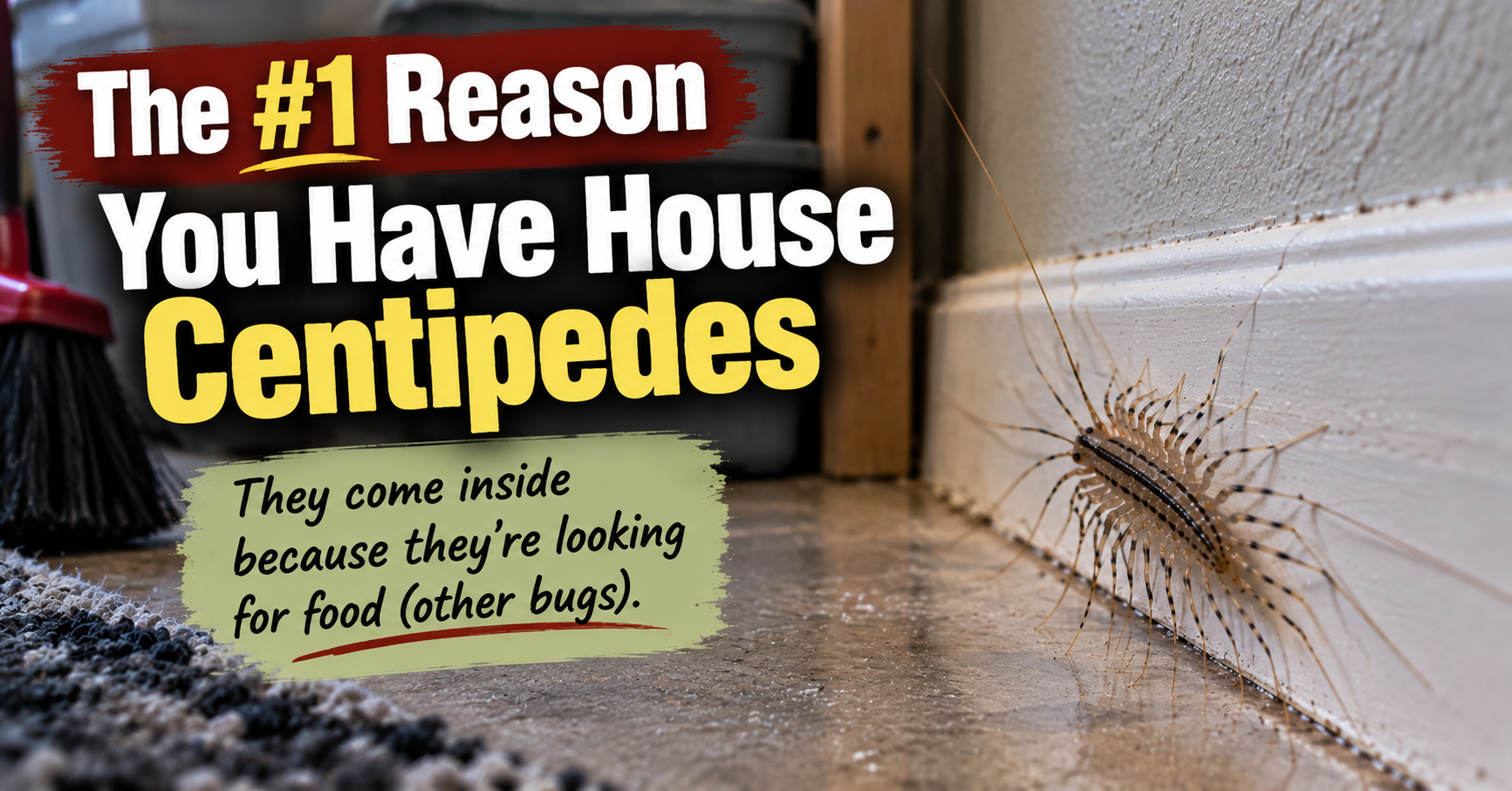
Learn what a house centipede is actually telling you about your home if you keep finding them in the same bathroom, basement, or utility area. Repeated sightings are often a reason to inspect for humidity, leaks, cracks, and prey insects.
Why Their Appearance Is So Alarming
House centipedes have long, banded legs extending from both sides of their body. Their final pair of legs is especially long, which makes them look even larger when they run.
They can move rapidly across walls, ceilings, and floors, which triggers a strong reaction for many people. But speed and appearance are not the same as danger.
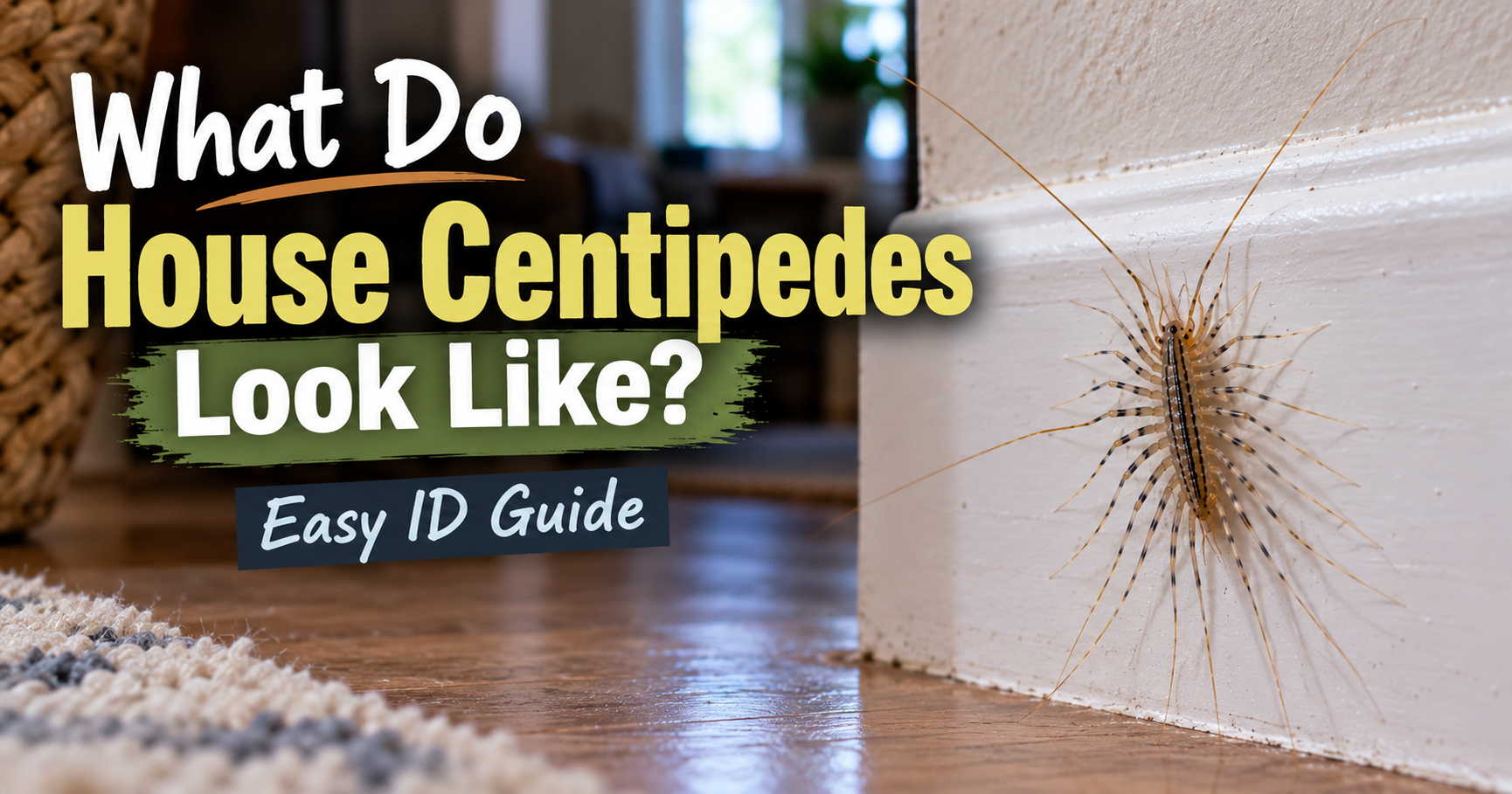
A true house centipede has a narrow striped body and 15 pairs of legs as an adult. This house centipede identification guide can help you make sure that is what you found before assuming the worst.

When House Centipedes May Point to a Bigger Issue
One centipede can be an occasional visitor. Several sightings each week, especially in one room, are more useful information.
Check for excess moisture first. Look for a dripping pipe, damp cabinet, clogged gutter, wet basement wall, condensation, poor ventilation, or water collecting beside the foundation.
Then inspect for other bugs. House centipedes need prey. Their presence does not prove you have roaches, but it can be a reason to look under appliances, around pipes, in dark cabinets, and along baseboards.

House centipedes and silverfish both prefer damp, protected areas. Use this close silverfish comparison if the bug you found has a shiny, fish-shaped body instead of long legs extending from its sides.
How to Remove House Centipedes Safely
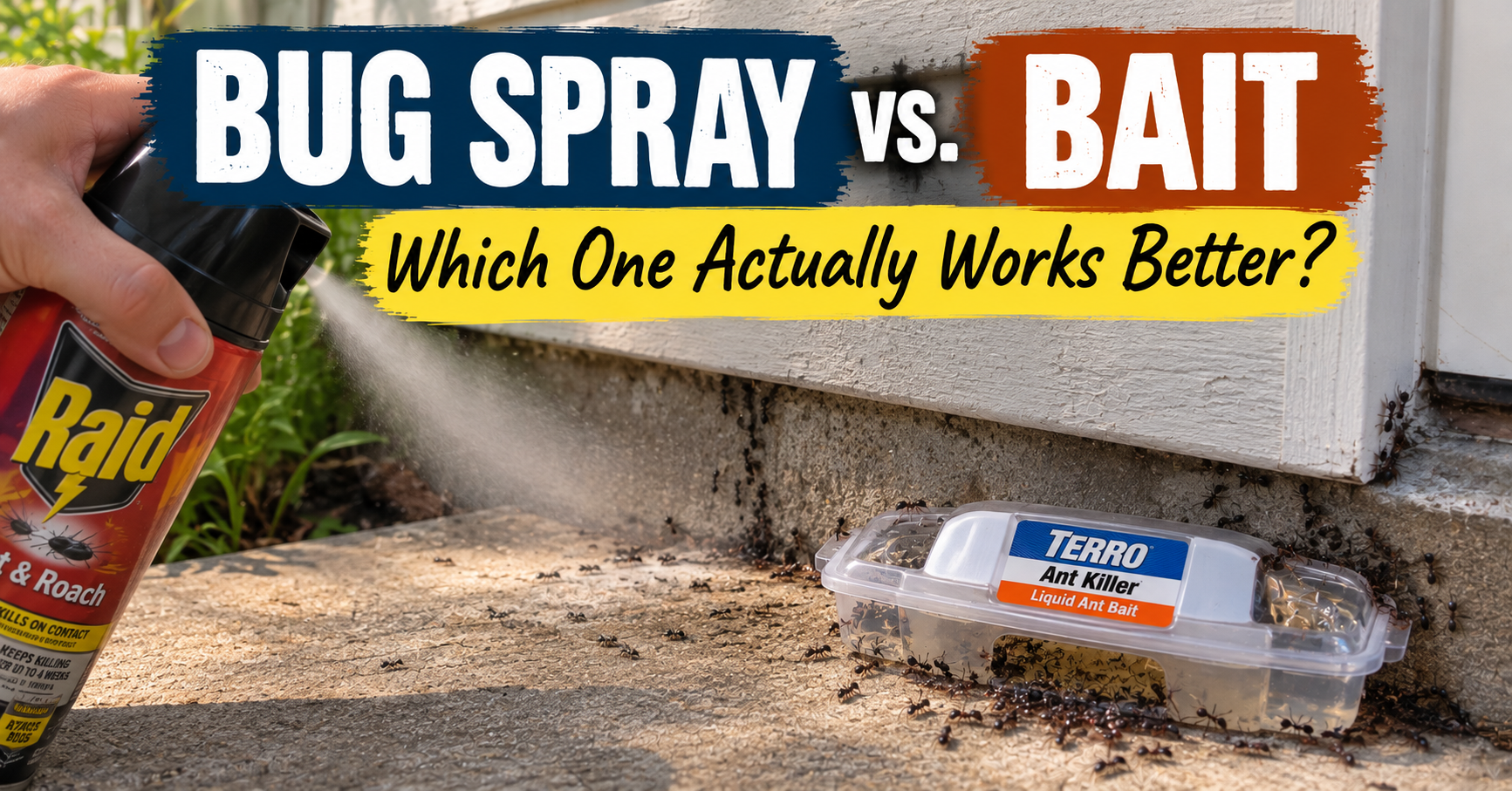
For one house centipede, the simplest options are trapping it under a glass, removing it with a tissue, or vacuuming it. There is usually no need to spray an entire room.
If you keep seeing them, use sticky traps to monitor where they travel. Place traps flat against walls in quiet areas such as behind toilets, under sinks, along basement walls, behind appliances, and near storage corners.

Catchmaster indoor sticky traps are a practical way to monitor centipedes and the other crawling insects that may be attracting them. If the traps catch silverfish, ants, roaches, or several centipedes, you have a much clearer idea of where to focus your cleanup and inspection.
The Best Way to Prevent More House Centipedes
The best prevention is not killing every centipede you see. It is making the home less useful to them.

Fix leaks and reduce humidity in damp rooms. Run bathroom fans, clean up wet cardboard, store basement items in plastic containers instead of directly on the floor, and improve drainage around the foundation. For persistent humidity, a dehumidifier for excess bathroom humidity may be one practical tool alongside ventilation and leak repairs.
Seal gaps around pipes, doors, windows, foundation cracks, and utility lines. Vacuum along baseboards and behind stored items. Then deal with any insects you find during the inspection.
When there is less moisture, fewer hiding places, and less prey, house centipedes have much less reason to remain indoors.
Frequently Asked Questions
Are house centipedes poisonous?
House centipedes use venom to subdue small prey. They are venomous rather than poisonous, but they are not considered dangerous to people in normal household situations.
Should I kill house centipedes?
That is up to you. One house centipede is not harmful to your home and may eat other small bugs. If you do not want it indoors, remove it, then work on moisture, entry gaps, and the insects it may be hunting.
Can house centipedes hurt a dog or cat?
They are not normally dangerous to pets. A pet may be irritated if it is bitten after trying to mouth or paw at one, but serious problems are uncommon. Contact a veterinarian if your pet has concerning symptoms after an encounter.
Are house centipedes a sign of mold?
Not by themselves. They are attracted to moisture, so repeated sightings can be a reason to inspect for leaks, humidity, and damp materials. They do not prove that mold is present.
Can house centipedes infest a home?
They can live and reproduce indoors when conditions suit them, but they do not infest homes in the same destructive way as termites or large roach populations. Repeated sightings usually point to moisture, shelter, and prey that need attention.
Daniel Brooks writes practical household pest guides for WhyDoIHaveBugs.com, helping homeowners understand what indoor pests can really do and what their presence may be telling you.