
The first time I found a larder beetle in my own home, I was convinced it was another carpet beetle.
Looking back, that mistake makes perfect sense.
Both insects belong to the same beetle family.
Both have hairy larvae.
Both are common household pests.
Both feed on materials of animal origin.
It’s no surprise they’re confused so often.
In fact, that’s exactly why I decided to write this guide.
After comparing them side by side, I realized there are several easy ways to tell them apart once you know what to look for.
If you’ve found a beetle and aren’t completely sure which one you’re dealing with, here’s how I identify them.
They’re Close Relatives, Not the Same Beetle
One thing that surprised me was learning that carpet beetles and larder beetles are actually members of the same beetle family, Dermestidae.
That family contains numerous species commonly known as skin beetles or dermestid beetles.
Because they’re related, they share several characteristics.
Both undergo complete metamorphosis.
Both produce hairy larvae.
Both feed on materials containing animal proteins or other organic matter.
Both commonly find their way into homes.
The important thing to remember is that being related doesn’t make them the same pest.
Just like cousins in the same family can have very different personalities, carpet beetles and larder beetles often behave quite differently once they’re inside a home.


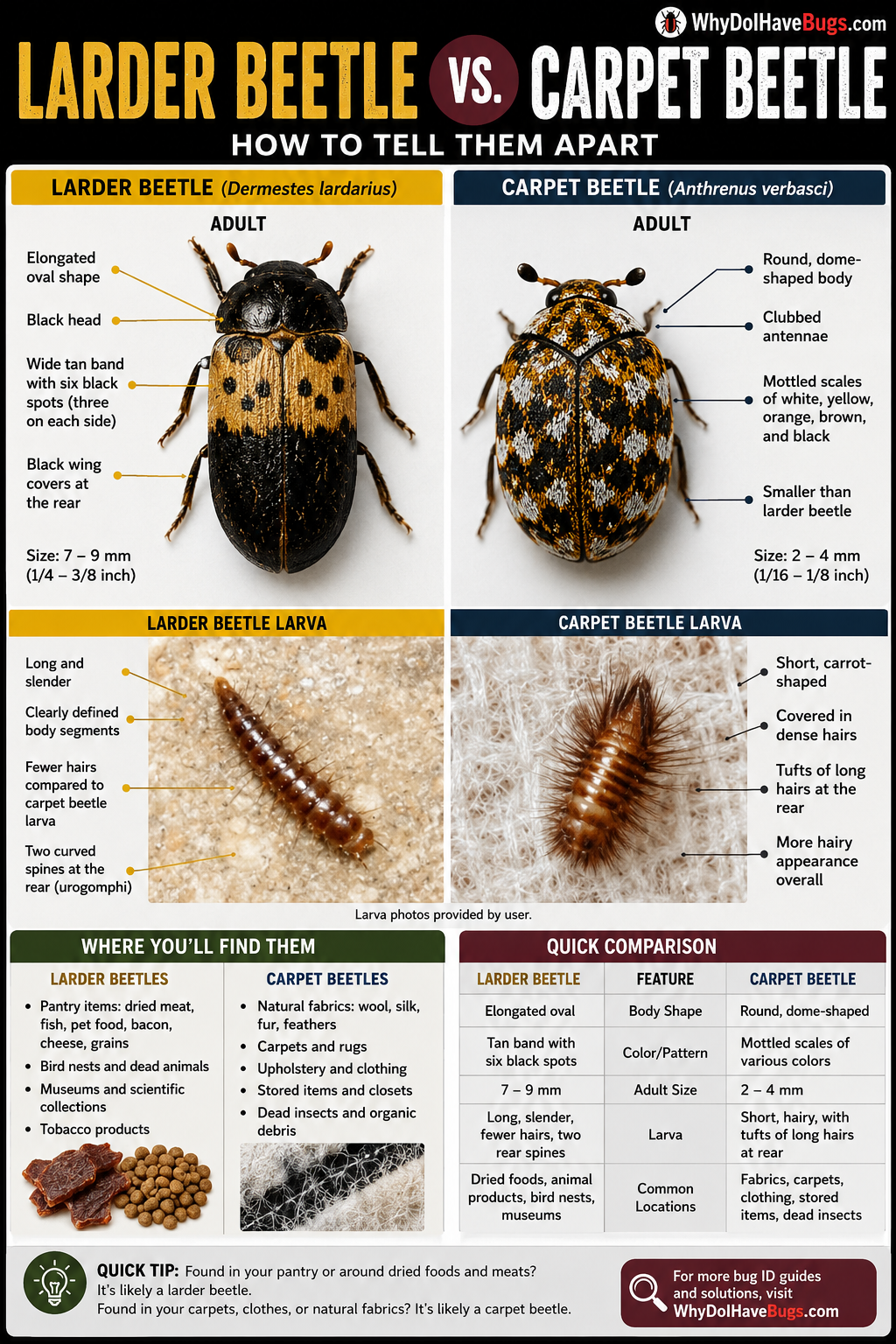
Adult Larder Beetles Are Much Easier for Me to Recognize
After finding my own larder beetle, I realized it looked quite different from the carpet beetles I was used to seeing.
The biggest clues I noticed were:
- A body that’s noticeably longer than it is wide.
- A broad tan or cream-colored band across the front half of the wing covers.
- Several dark spots inside that pale band.
- A much larger overall size.
Those markings are so distinctive that once you’ve seen one, they’re surprisingly easy to recognize.

I used photographs from my own home in my guide showing what larder beetles look like because I wanted readers to see what they actually look like in a real home rather than only in textbook photos.


Carpet Beetles Usually Look Smaller and Rounder
When I picture a carpet beetle, I think of a much smaller insect.
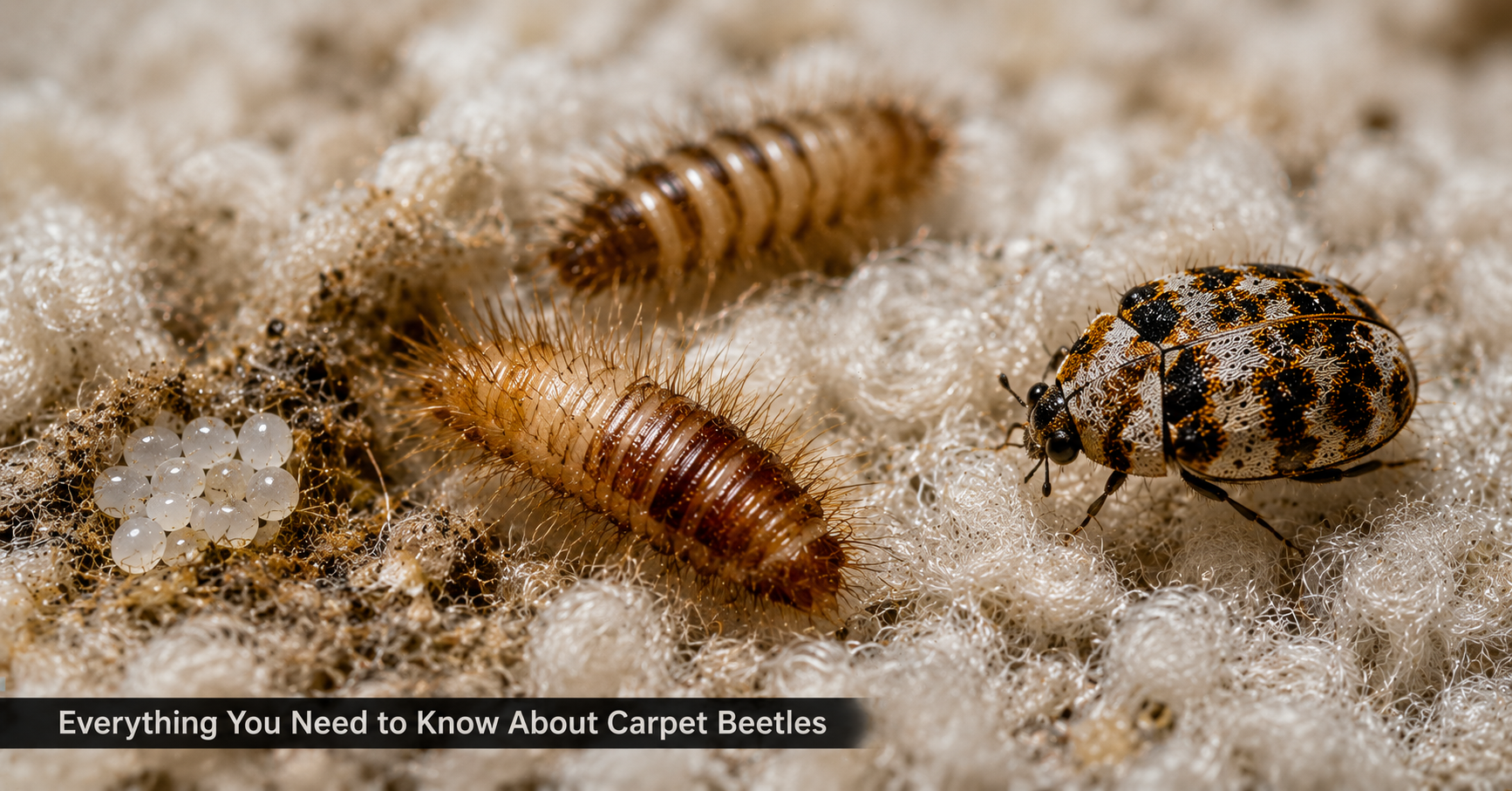
Instead of one broad tan band, most carpet beetles have a mottled pattern made up of tiny white, brown, yellow, and black scales.
They’re also much rounder when viewed from above.
That rounded shape is one of the first things I notice when trying to separate the two species.
If you’re still unsure, compare your beetle with the photos in my carpet beetle identification guide before deciding which insect you’ve found.
Unlike the elongated body of a larder beetle, carpet beetles tend to have a compact, oval appearance that reminds many people of a tiny ladybug without the bright red color.
The Larvae Look More Similar Than the Adults
If the adult beetles confuse homeowners, the larvae create even more confusion.
Both carpet beetle larvae and larder beetle larvae are:
- Brown.
- Covered with stiff hairs.
- Elongated rather than round.
- Slow-moving.
- Often found in hidden areas of the home.
That’s why many homeowners simply call them “hairy worms.”
The biggest difference I pay attention to isn’t always the larva itself.
It’s where I found it.
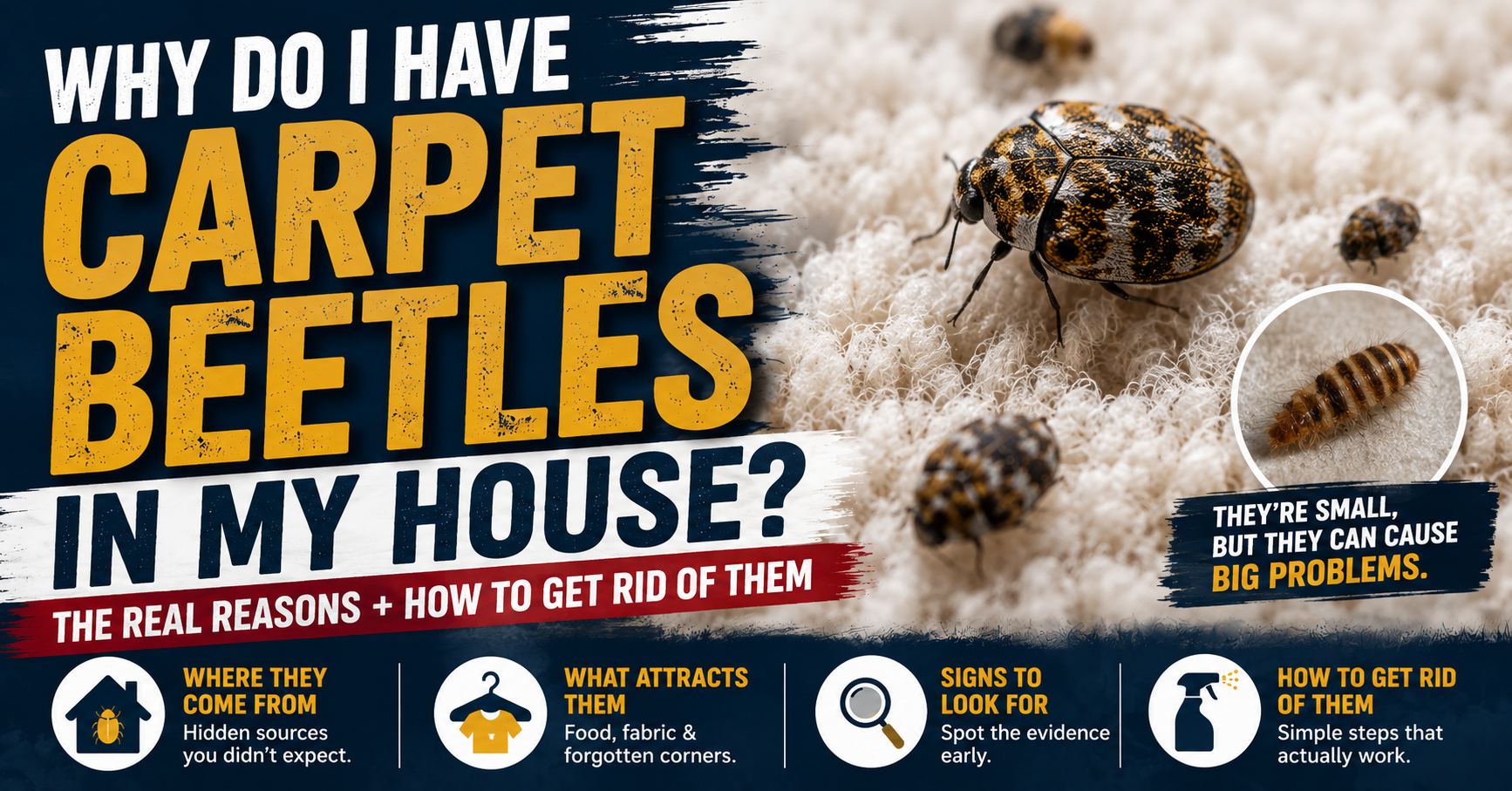
Carpet beetle larvae are much more likely to be feeding on natural fibers such as wool rugs, clothing, blankets, upholstery, lint, pet hair, and feathers. These feeding materials also help explain what attracts carpet beetles indoors and why they may appear even in a clean home.
Larder beetle larvae usually point me toward something richer in animal protein, such as dry pet food, dead rodents, dried meat, dead insects, bird nests, or other animal remains.
As I continue building this section of the site, I’ll also publish a detailed guide comparing larder beetle larvae with carpet beetle larvae because they’re easily mistaken for one another.
The Damage They Cause Is Different
This is where these two beetles really begin to separate.
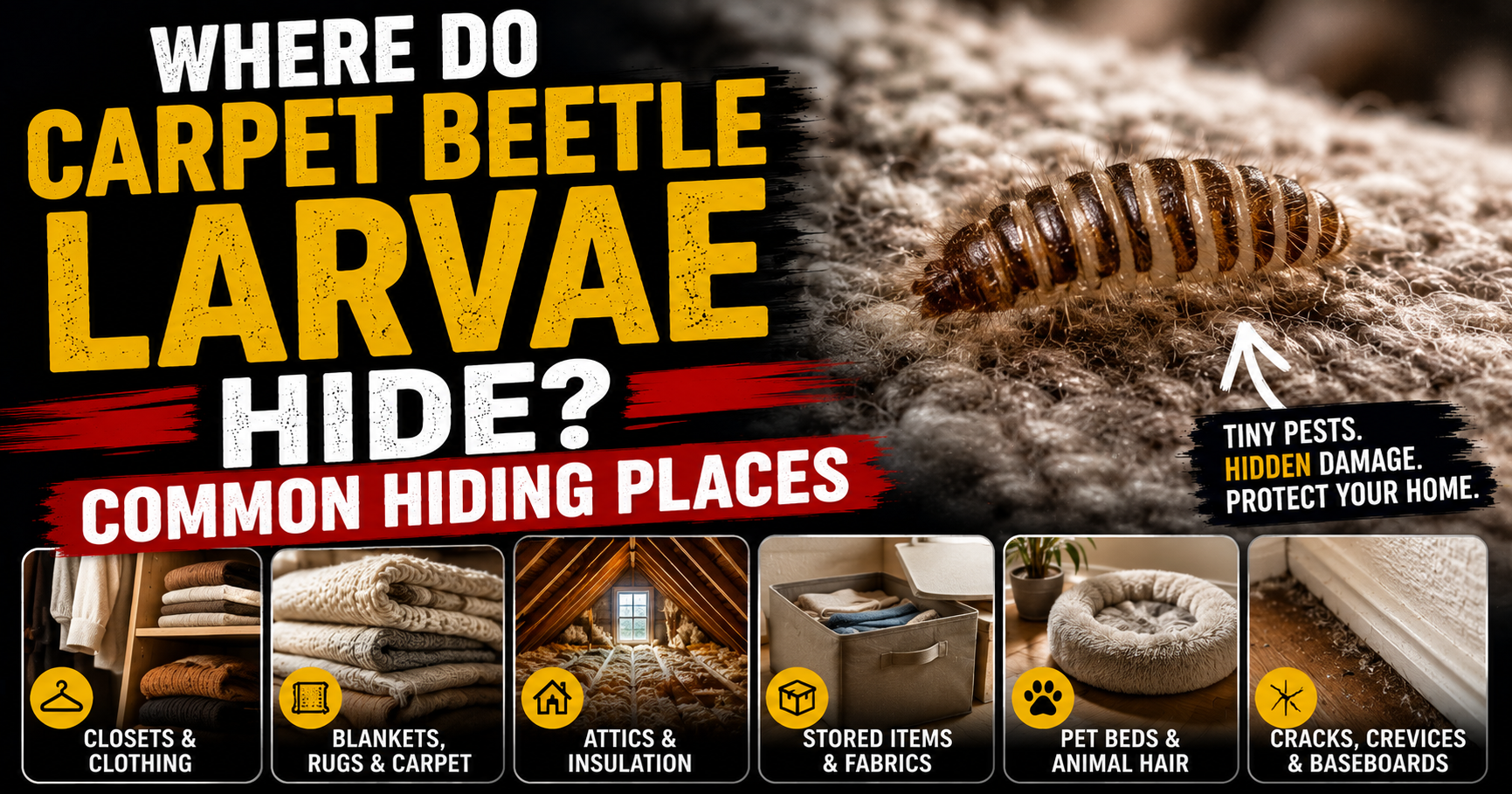
When I’m dealing with carpet beetles, I’m usually inspecting closets, wool rugs, stored clothing, blankets, upholstered furniture, and other natural fabrics. Those materials and locations are among the first places worth checking, and closets and stored fabrics explains what makes them attractive hiding spots.
When I suspect larder beetles, my inspection changes completely.
Instead of checking sweaters, I’m looking at:
- Bags of dry dog food.
- Dry cat food.
- Bird seed.
- Hunting trophies.
- Taxidermy.
- Animal hides.
- Dead insects.
- Garages.
- Basements.
- Crawl spaces.
- Utility rooms.
That’s one reason identifying the beetle correctly matters so much.
The food source often tells me more than the beetle itself.
Both Beetles Can Be Found Near Windows
One thing that surprises homeowners is that both carpet beetles and larder beetles frequently end up on windowsills.
That doesn’t necessarily mean the window is where they came from.
Adult dermestid beetles are naturally attracted to light after becoming trapped indoors.
I’ve found both species repeatedly gathering on sunny windows while trying to escape.
Because of that, I never assume the infestation started near the window.
Instead, I treat the windowsill as a clue that tells me adults are already somewhere inside the house.
Which Beetle Is More Common?
Overall, carpet beetles are much more common household pests than larder beetles.
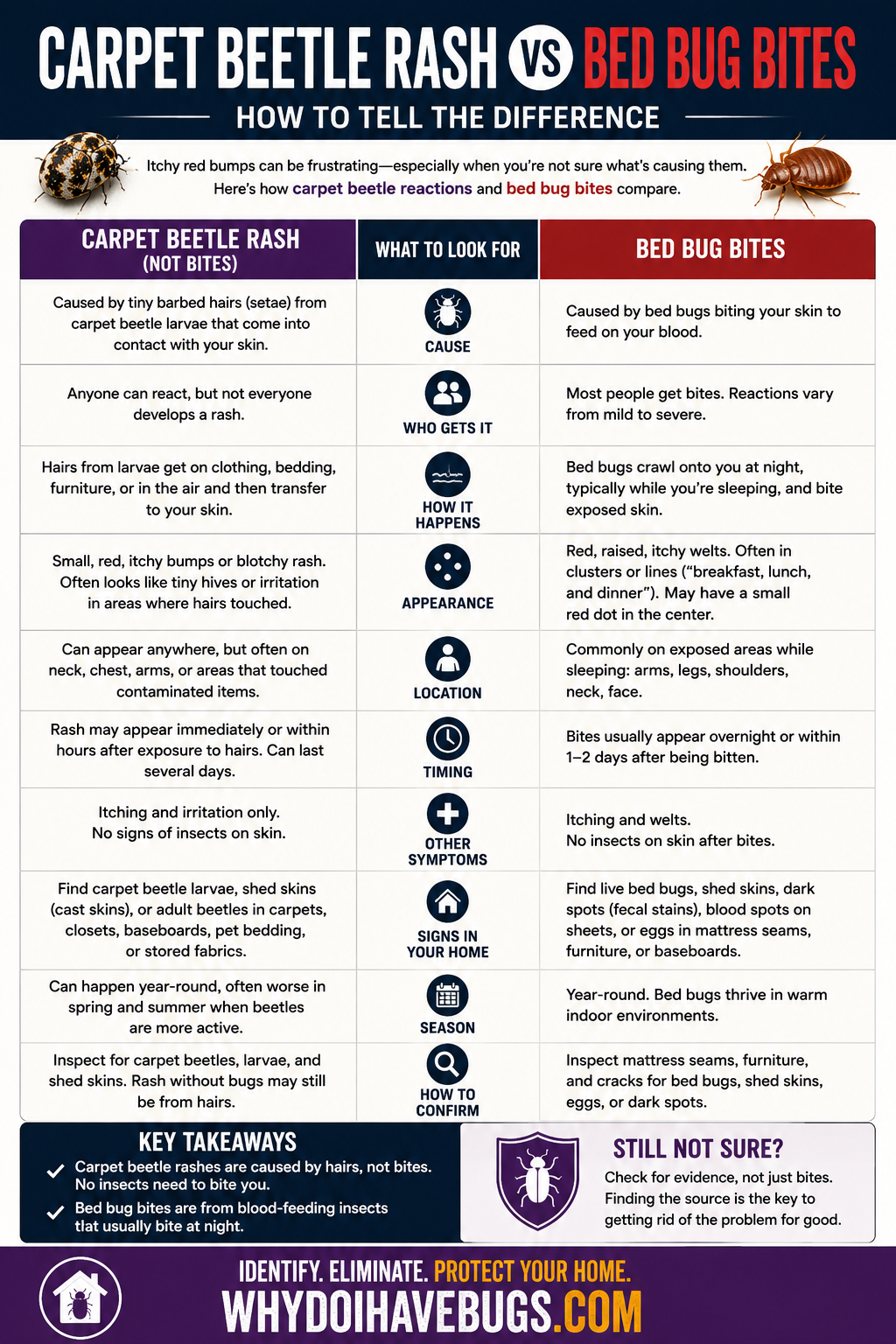
That’s one reason so many people, including me, immediately assume every small dermestid beetle is a carpet beetle. When that identification mistake is paired with itchy bumps, carpet beetle skin reactions explains why the skin symptoms may not mean bed bugs.
Larder beetles are certainly widespread, but they’re generally associated with more specific food sources than carpet beetles and tend to be encountered less frequently in homes.
How I Tell Them Apart in Just a Few Seconds
Whenever I find one of these beetles, I ask myself a few simple questions.
Is it small, rounded, and covered with a mottled pattern of white, brown, and black scales?
Or is it noticeably larger with a broad tan band running across the middle of otherwise dark wing covers?
Was it found near damaged carpet or natural fabrics?
Or was it near pet food, a garage, basement, pantry, or another place where animal products might be stored?
Answering those questions usually tells me which beetle I’m dealing with before I even need a magnifying glass.
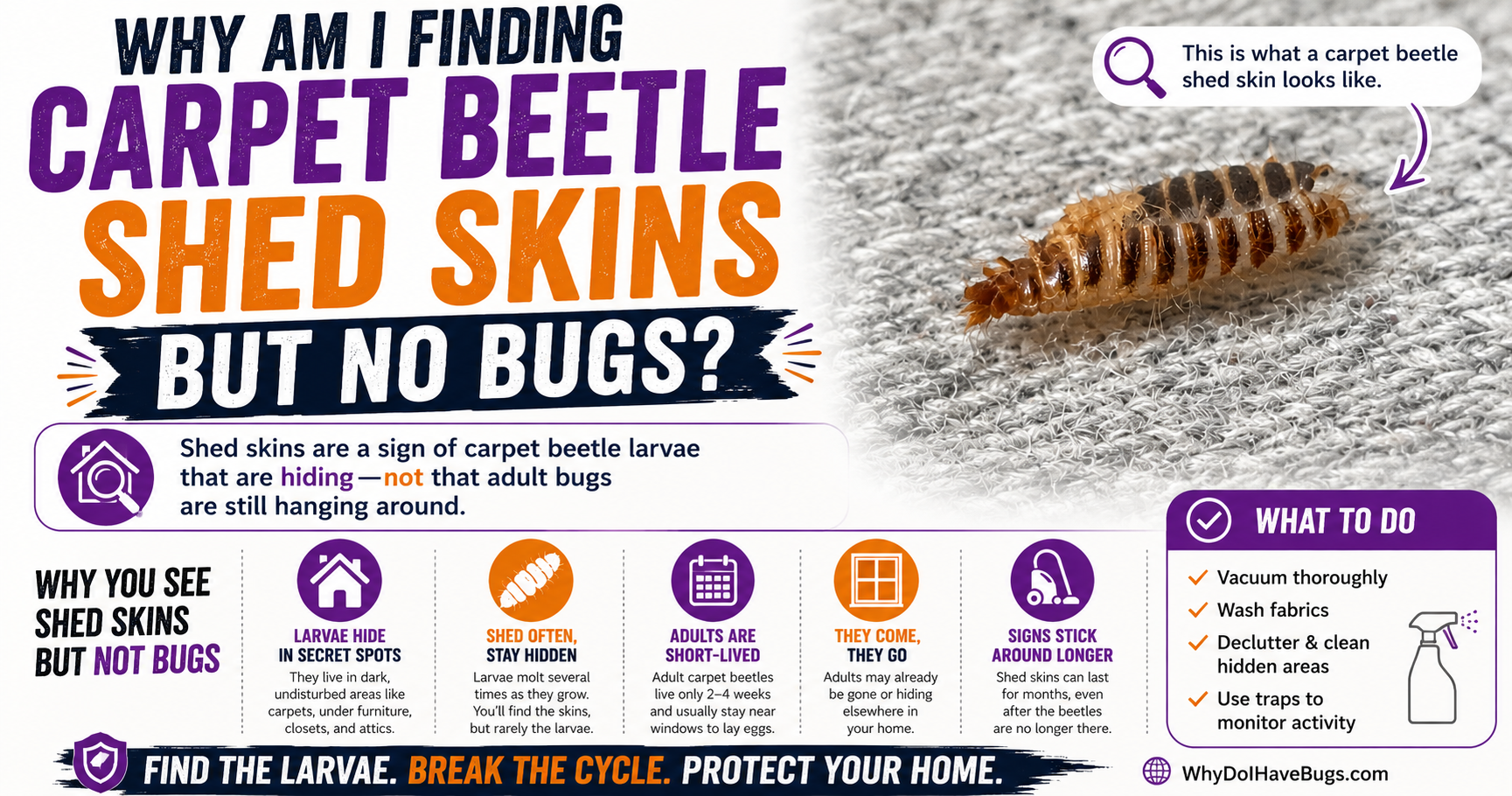
For me, proper identification is always the first step because once I know which beetle I’m looking at, I know where to begin searching for the source. When the insect itself is missing, what carpet beetle shed skins mean offers another way to interpret the evidence before searching for its source.

Which Beetle Causes More Damage?
This is one of the biggest differences between the two.
When I think about carpet beetles, I immediately think about damage to natural fabrics.
They’re well known for damaging:
- Wool rugs.
- Clothing.
- Blankets.
- Upholstered furniture.
- Feathers.
- Taxidermy.
- Stored fabrics.
In fact, I documented carpet-like damage under furniture in my own home, which led me down the rabbit hole of trying to identify exactly which dermestid beetle I was dealing with.
Larder beetles can damage some of those same materials, but they’re much more likely to be feeding on dried animal products, dead insects, pet food, or even the carcass of a dead rodent hidden somewhere in the home. They’re considered pests of dried animal products first and fabric pests second.
Where I Usually Find Each Beetle
Another thing that helps me separate these beetles is where I actually find them.
Carpet Beetles
When I’m dealing with carpet beetles, I usually inspect:
- Closets.
- Bedrooms.
- Under beds.
- Under furniture.
- Along baseboards.
- Wool rugs.
- Stored blankets.
- Pet bedding.
Larder Beetles
When I suspect larder beetles, my inspection changes.
Instead, I begin checking:
- Bags of dry dog food.
- Bags of dry cat food.
- Pantries.
- Garages.
- Basements.
- Utility rooms.
- Bird nests around the house.
- Dead insects in light fixtures.
- Areas where a mouse may have died.
That change in search pattern alone has helped me identify the correct beetle more than once.


Which One Is More Common?
Overall, I still think carpet beetles are the insect most homeowners encounter.
That’s exactly why I assumed my beetle was another carpet beetle at first.
They’re incredibly common in homes throughout North America.
Larder beetles are also widespread, but they usually need a more specific food source to establish themselves, such as dried animal material, pet food, or carrion.
Can You Have Both at the Same Time?
Yes.
This was actually one of the first questions I asked myself after finding the beetle in my own home.
Because both insects belong to the dermestid beetle family, it’s entirely possible for both species to exist in the same house if suitable food sources are available.

For example, carpet beetles may be feeding on pet hair, lint, feathers, or natural fabrics while larder beetles develop in a forgotten bag of dog food or from a dead mouse in an attic or wall void. If carpet beetles are turning up around stored clothing or fabrics, carpet beetle closet causes can help you identify what may be attracting them.
That’s one reason I don’t stop searching after identifying one species.
I want to know why it’s there.
Which One Is Easier to Get Rid Of?
Neither insect disappears by simply killing the adults you happen to see crawling around.
With both pests, success comes from removing the food source.

For carpet beetles, that often means thoroughly vacuuming, cleaning hidden lint accumulations, washing infested fabrics, and locating damaged natural materials. The guide to vacuuming hidden carpet beetle areas offers practical context for carrying out that cleanup more effectively.
For larder beetles, I focus much more on locating dried animal products, checking pet food, inspecting garages and basements, and making sure there isn’t a dead rodent, bird, or other animal hidden somewhere nearby.
Once the food source is gone, the beetle population usually begins declining on its own because there’s nothing left to support the developing larvae.
How I Tell the Difference in Less Than a Minute
When I pick up a beetle or look closely at one on the floor, here’s my mental checklist.
If it’s:
- Small.
- Rounded.
- Covered with a mottled pattern of white, brown, and black scales.
…I’m probably looking at a carpet beetle.
If it’s:
- Larger.
- More elongated.
- Mostly black with a broad tan band across the wing covers.
- Marked with several dark spots inside that band.
…I’m immediately thinking larder beetle.
That quick visual comparison has saved me a tremendous amount of time because it tells me where to begin looking before I ever start searching the house.
Frequently Asked Questions
Are carpet beetles and larder beetles the same thing?
No. They’re different species, but they’re closely related because both belong to the dermestid beetle family. That relationship is one reason homeowners confuse them so often.
Which beetle is larger?
Larder beetles are usually much larger. Adult larder beetles are commonly around 1/4 to 3/8 inch long, while many of the carpet beetles found in homes measure only about 1/8 inch or less.
Which one damages carpets?
Carpet beetles are much more likely to damage carpets, clothing, blankets, and other natural fibers. Larder beetles generally prefer dried animal products and stored pet foods, although they can occasionally feed on other animal-based materials. A fuller explanation of what carpet beetles damage can help you investigate the right materials first.
Can I have both carpet beetles and larder beetles?
Yes. Since they rely on different food sources, it’s entirely possible for both species to be present in the same home at the same time if conditions are right.
What’s the easiest way to tell them apart?
The fastest clue is the adult beetle’s appearance. Carpet beetles are typically much smaller and more rounded with mottled scales, while larder beetles are larger, more elongated, and have a distinctive tan band with dark spots across the wing covers.
About the Author
Mark Sullivan has spent years identifying household beetles and helping homeowners trace infestations back to their source. After finding what he originally believed was another carpet beetle in his own home, a closer inspection revealed it was actually a larder beetle. That firsthand experience inspired him to create this comparison guide so others can avoid the same common misidentification.