The first time I realized I had larder beetles, my mind immediately went to the worst-case scenario.
Could they bite?
Would they damage my house?
Were they dangerous to my family?
If you’re asking those same questions, you’re definitely not alone.
Fortunately, the answer is reassuring.
Larder beetles aren’t considered dangerous to people in the same way that termites, bed bugs, fleas, or disease-carrying insects can be.
That doesn’t mean you should ignore them.
While they rarely threaten your health directly, they can contaminate stored products, damage valuable belongings, and signal that something else inside your home deserves attention.
Understanding the difference can help you respond appropriately instead of panicking over every beetle you find.
The Short Answer
If you’re looking for the quick answer, here it is.
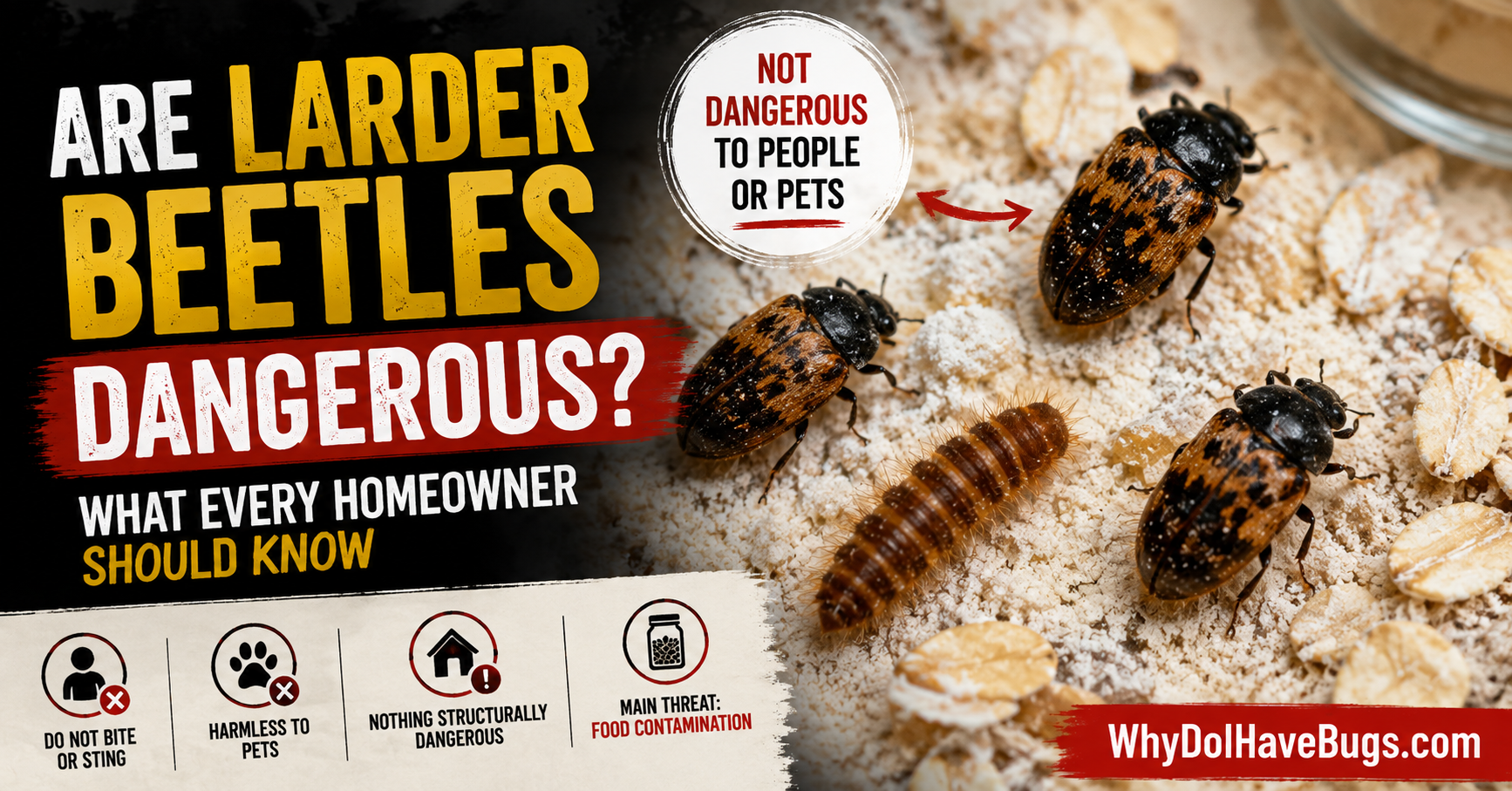
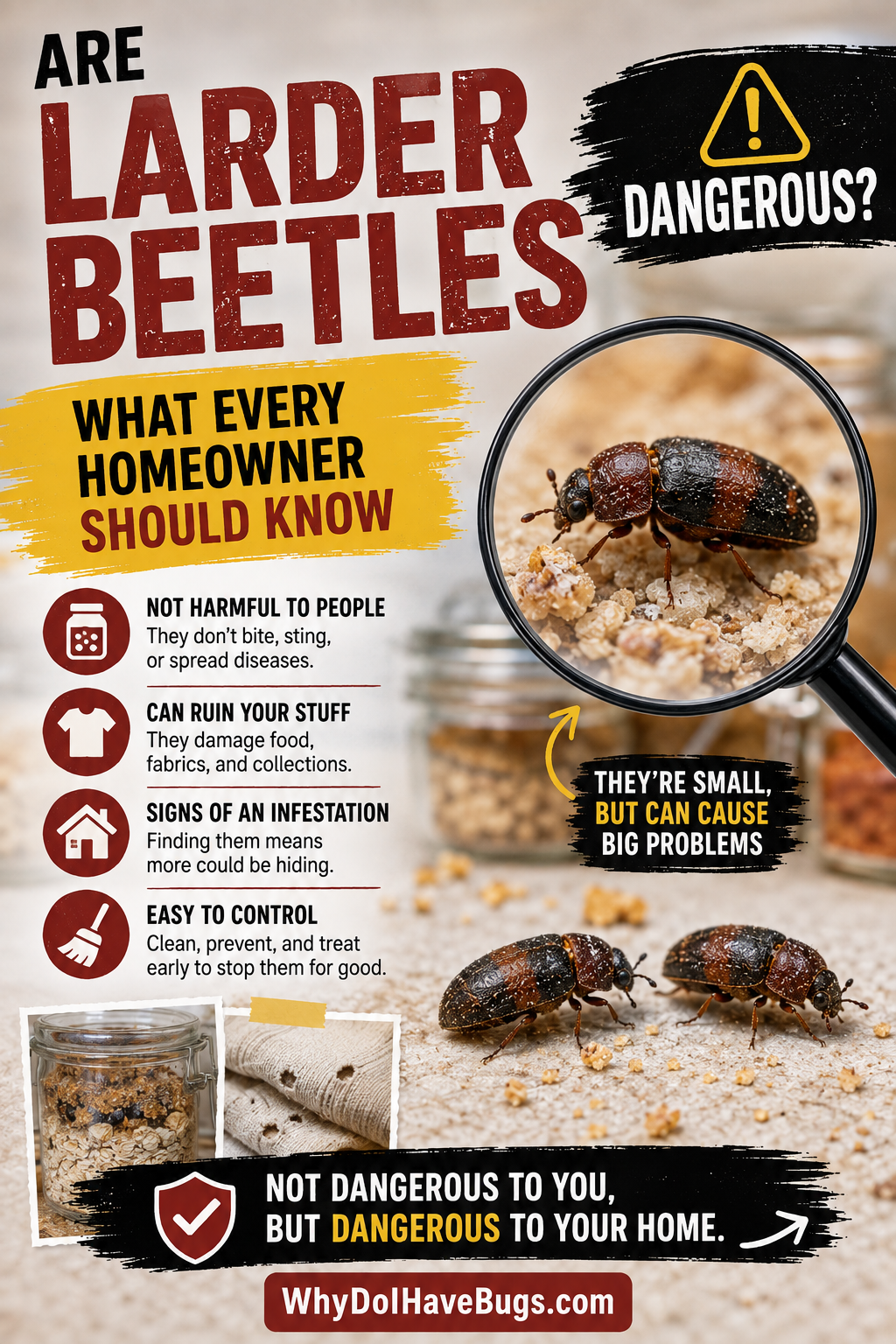
Larder beetles are not dangerous to most people.
They don’t feed on human blood.
They don’t tunnel into your skin.
They don’t infest your body.
They don’t attack pets.
However, they can become a significant household pest when they locate a suitable food source inside your home.
That’s why I treat them seriously even though I don’t consider them dangerous in the traditional sense. University extension programs note that the primary concern is damage to stored products and animal-based materials rather than direct harm to people.
Do Larder Beetles Bite?
This is probably the question I see more than any other.
The good news is simple.
No, larder beetles do not bite people.

Their mouthparts are designed for chewing dried animal materials such as pet food, dead insects, feathers, leather, and similar protein-rich items.
They aren’t capable of feeding on human skin the way bed bugs, fleas, or mosquitoes do.
If you’ve found one crawling on your arm, it may startle you, but it isn’t trying to bite you.

Can Larder Beetle Larvae Hurt You?
The larvae aren’t aggressive either.
They spend nearly all of their time feeding on protein-rich materials or searching for a place to pupate.
Some people with sensitive skin may notice mild irritation after handling the larvae because the stiff body hairs can be irritating, but this is very different from being bitten or stung.

I simply avoid handling them directly and vacuum them up whenever I find one. A a dedicated insect-larvae vacuum can help remove larvae without requiring direct handling.
They Can Still Damage Your Home
This is where I think many homeowners underestimate them.
Even though they aren’t dangerous to people, they absolutely can become expensive if ignored.
Larder beetles may damage:
- Dry dog food.
- Dry cat food.
- Pet treats.
- Taxidermy.
- Leather items.
- Animal hides.
- Feathers.
- Fur products.
- Stored meat products.
Mature larvae can also bore into soft wood, cork, cardboard, books, and insulation while creating protected chambers for pupation.
They’re not eating those materials, but repeated infestations can leave noticeable damage over time.


Finding Them Usually Means Something Else Needs Attention
One reason I never ignore larder beetles is that they often point to another hidden problem.
For example, they may indicate:
- A forgotten bag of pet food.
- Dead insects inside the attic.
- A dead mouse in a wall.
- An abandoned bird nest.
- Animal-based materials that have been stored for years.
When I discovered this, it completely changed how I approached infestations.
Instead of asking, “How do I kill these beetles?” I started asking, “What are they trying to tell me?”
That mindset almost always leads me to the real source of the problem.
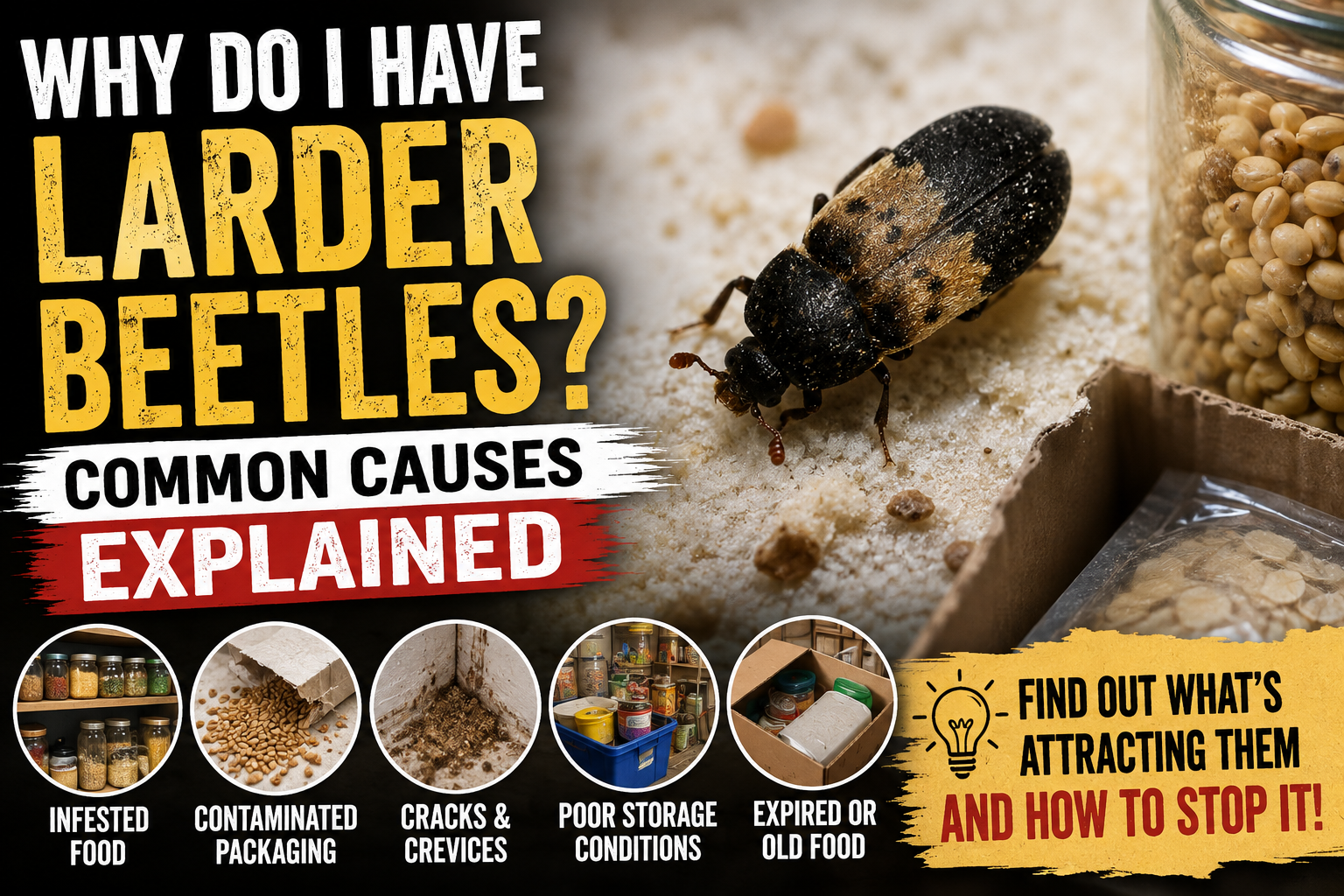
If you’re still trying to figure out what’s attracting them, my guide explaining why you have larder beetles walks through the most common hidden causes.
Can They Contaminate Food?
Yes.
Although larder beetles don’t make food poisonous, they can contaminate stored products by feeding, laying eggs, and leaving behind shed skins and waste.
If I discover larvae or multiple beetles inside a bag of pet food or another stored product, I don’t try to save it.
I throw it away, clean the storage area thoroughly, and inspect nearby items before replacing them.


Can Larder Beetles Make You Sick?
This is another question I hear quite a bit.
Fortunately, larder beetles are not known to spread diseases directly to people the way flies, mosquitoes, or rodents can.
That said, I still don’t want them living in my home.
Why?
Because they feed on dead animal material, stored food products, and other decaying organic matter. If they get into a bag of pet food or another stored product, they can contaminate it with shed skins, waste, and insect parts.
For that reason, I always throw away heavily infested food rather than trying to save it.
Can They Hurt Dogs or Cats?
This is something pet owners naturally worry about.
The good news is that larder beetles don’t attack pets.
They aren’t parasites.
They don’t live on dogs or cats like fleas.
They don’t bite pets while they’re sleeping.
However, if they infest a bag of pet food, I replace the food immediately instead of continuing to feed it to my animals.
Fresh food costs far less than dealing with digestive issues or allowing the infestation to continue.



Should You Be Worried If You Find One?
Usually, no.
One adult larder beetle isn’t a reason to panic.
Adults can occasionally fly into homes from outside, especially during warmer months.
What gets my attention is when I begin finding:
- Multiple adults over several days.
- Hairy larvae.
- Shed larval skins.
- Beetles appearing in the same room repeatedly.
- Damage to stored pet food or animal products.
Those clues tell me I’m probably dealing with an active breeding source instead of a beetle that simply wandered indoors.
When Should You Take Action?
I recommend taking action as soon as you know you’re dealing with larder beetles.
That doesn’t necessarily mean calling an exterminator the same day.
Instead, I focus on finding the source before the population grows.
The sooner you remove whatever they’re feeding on, the easier the infestation usually is to eliminate.
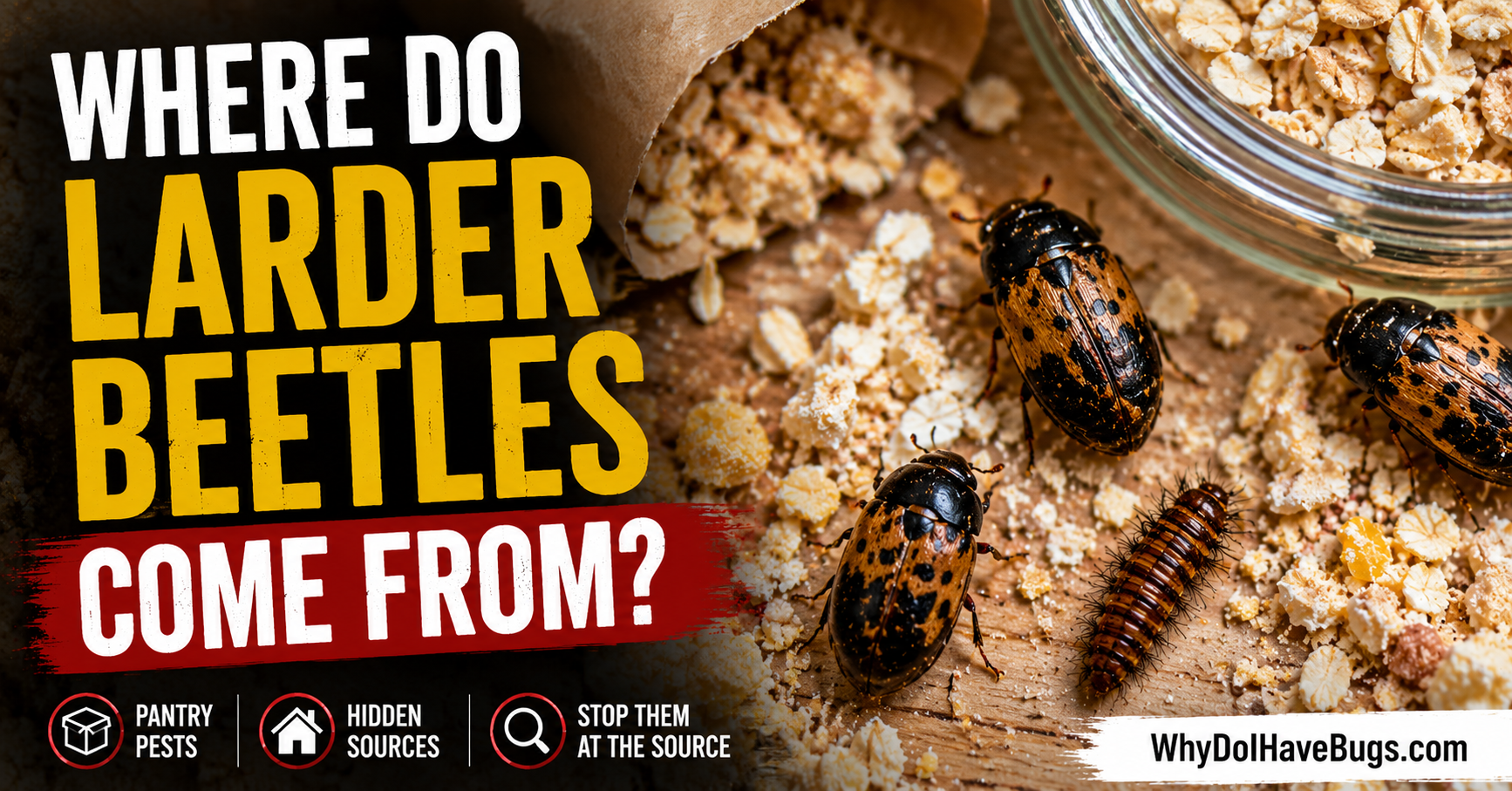
If you’re still trying to figure out how they got started, my guide explaining where larder beetles come from walks through the hidden sources I check first.
How I Handle a Larder Beetle Infestation
Once I know I’m dealing with larder beetles, I follow the same process every time.
First, I locate and remove the food source.
Next, I vacuum thoroughly around the affected area to remove larvae, shed skins, and food debris.

Finally, I treat likely beetle travel routes such as baseboards, cracks, and crevices with Ortho Home Defense Insect Killer for Indoor & Perimeter² to help eliminate wandering adults while the infestation comes to an end.

That combination has consistently been much more effective for me than simply spraying every beetle I see. If treatment is still needed after those steps, this review covers a targeted larder beetle spray.
Frequently Asked Questions
Are larder beetles dangerous to humans?
No. Larder beetles aren’t considered dangerous to people. They don’t bite, sting, or feed on humans. Their main impact is damaging stored products and other animal-based materials.
Can larder beetles make you sick?
They’re not known to transmit diseases directly to humans, but they can contaminate stored foods with insect parts, shed skins, and waste if an infestation develops.
Can larder beetle larvae cause a rash?
Sometimes. The stiff hairs on dermestid beetle larvae, including larder beetle larvae, can cause skin irritation or an allergic reaction in sensitive individuals after contact.
Are larder beetles dangerous to dogs or cats?

No. They don’t bite or live on pets. However, if they infest your pet’s food, you should discard the contaminated food and thoroughly clean the storage area.
Should I worry if I find one larder beetle?
Not necessarily. A single adult may have wandered in from outside. If you repeatedly find adults, larvae, or shed skins, it’s time to start looking for a hidden food source because an infestation is much more likely.
About the Author
Mark Sullivan has spent years researching household beetles and helping homeowners identify hidden infestations before they become major problems. After initially mistaking larder beetles for carpet beetles in his own home, he learned firsthand how understanding their behavior and food sources makes accurate identification and long-term control much easier.