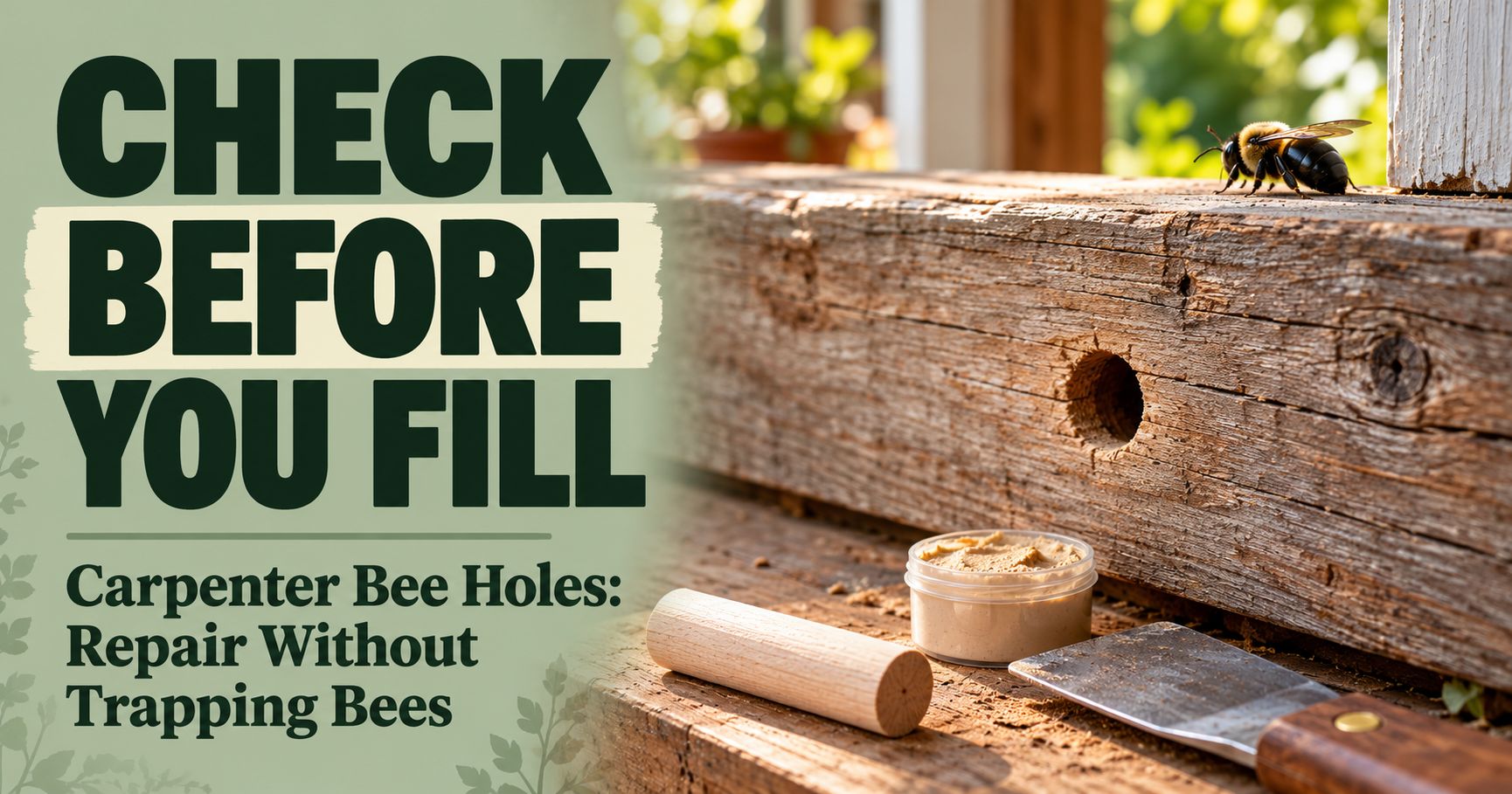
You find a perfectly round hole in your porch railing, grab a tube of wood filler, and figure you’ll have the whole thing patched in five minutes.
But there’s one thing worth checking before you fill it.
Carpenter bees can still be living inside a hole even when you don’t see anything coming or going. Depending on the time of year, that tunnel could contain a female nesting bee, developing young, or adults using the wood for shelter.
If you seal an occupied tunnel, you could trap the bees inside, cause additional damage when they try to escape, or kill beneficial pollinators unnecessarily.
Fortunately, repairing carpenter bee holes isn’t particularly complicated once you know the gallery is empty.
The real trick is understanding when to fill the holes, what materials to use, and how to keep carpenter bees from drilling into the same wood again.
Should You Fill Carpenter Bee Holes?
Yes, repairing old carpenter bee holes is generally a good idea when they’re located in wooden structures you want to protect.
Carpenter bees can reuse old nesting galleries. Some may also enlarge existing tunnels or create new nesting chambers nearby.
That means an untreated hole in your porch, deck, or wooden siding could remain attractive in future nesting seasons.
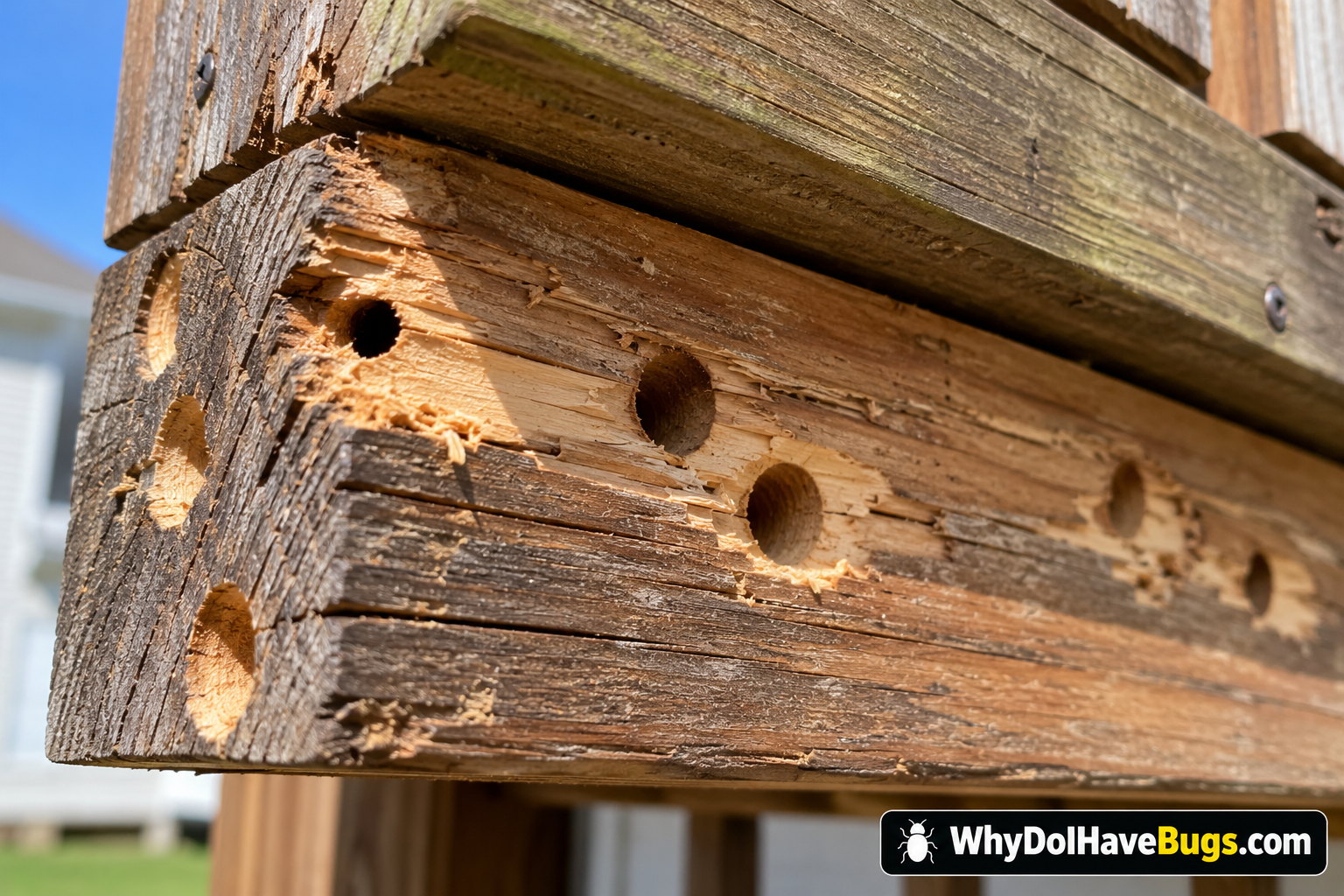
However, there’s an important distinction between repairing an empty hole and sealing an active nest.
If carpenter bees are nesting in a dead stump away from buildings, you may not need to do anything.
These insects are valuable native pollinators, and allowing them to nest somewhere harmless is often the better choice.
But when they’re excavating important structural wood, it’s reasonable to repair the damage once it can be done safely.
When Is the Best Time to Fill Carpenter Bee Holes?
Timing is one of the most important parts of the job.
Carpenter bees follow a seasonal life cycle. In much of the eastern United States, adults emerge in spring, mate, and establish nesting galleries.
Females lay eggs inside individual chambers provisioned with pollen and nectar.
New adults generally emerge during late summer. Some return to existing galleries to spend the winter.
That’s why a hole that looks abandoned may still be occupied.
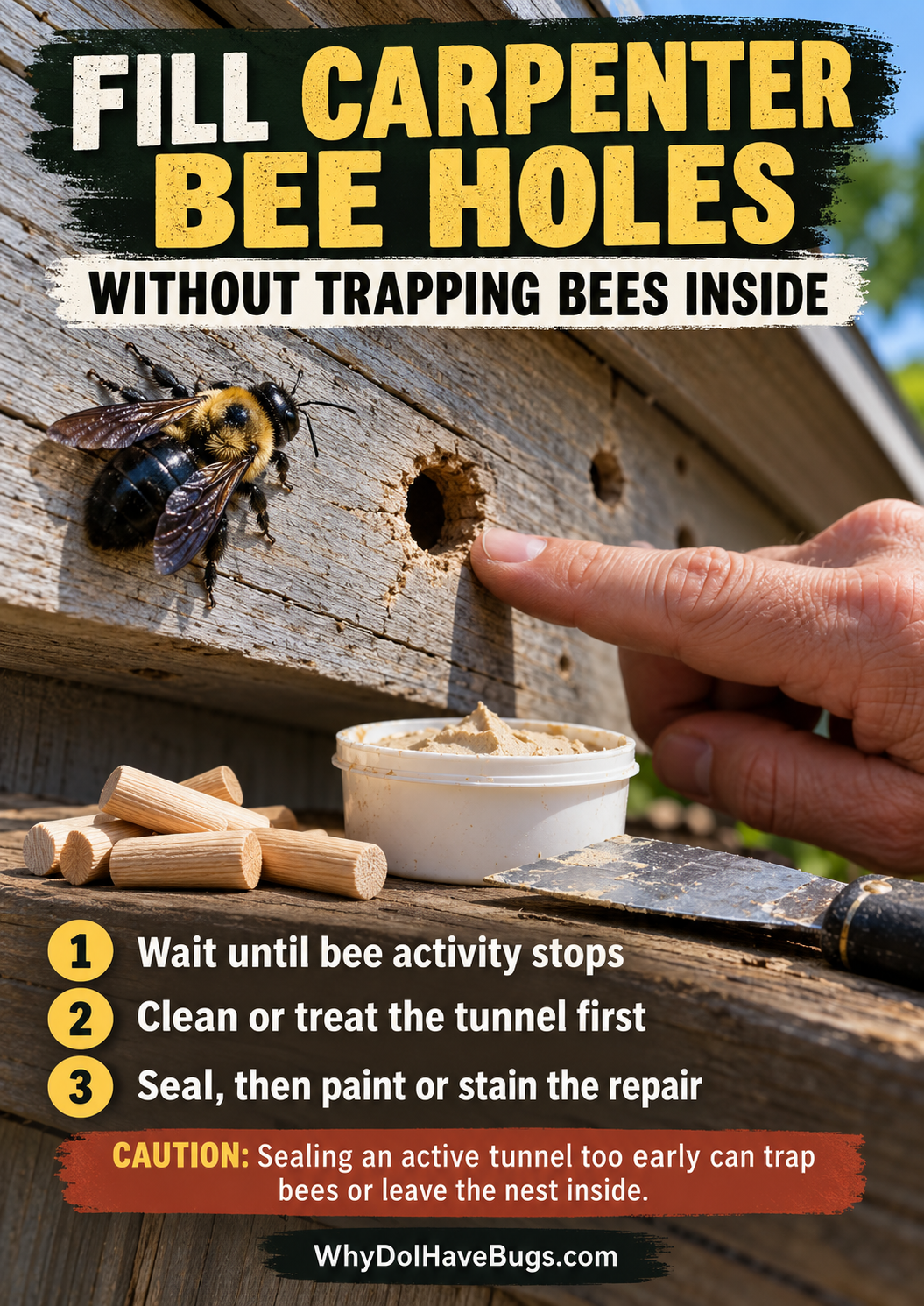
Spring: Watch for New Nesting Activity
Spring is when carpenter bees frequently begin investigating exposed wood.
You may see males hovering near porch railings while females enter existing holes or begin excavating new ones.
If you’re finding fresh sawdust underneath a hole, assume the gallery could be active.
Don’t immediately plug it.
Instead, observe the area from a safe distance and determine whether bees are using the opening.
Summer: Developing Bees May Still Be Inside
During summer, carpenter bee tunnels may contain eggs, larvae, or pupae.
You might see very little activity at the entrance even though the gallery isn’t empty.
This makes summer a particularly poor time to assume an old-looking hole is abandoned.
Sealing the entrance without verifying occupancy could trap developing insects inside.
Late Summer and Fall: A Possible Repair Window
University extension guidance often identifies late summer as a useful period for addressing carpenter bee damage, particularly after the new adults have emerged.
However, that doesn’t mean every gallery will be empty.
New adults may return to the wood for shelter, including overwintering.
Before permanently sealing a hole, you still need to establish that it isn’t occupied.
If you’re uncertain, a qualified pest-control professional familiar with carpenter bees can help determine the appropriate approach.
Winter: Don’t Assume They’re Gone
This is another common mistake.
You might think the bees have died or left for the winter.
In reality, adult carpenter bees can overwinter inside existing nesting galleries.
A hole with no visible activity during December or January may still contain living bees.
The calendar alone isn’t enough to determine whether a carpenter bee hole is safe to seal.

How to Tell if a Carpenter Bee Hole Is Empty
Unfortunately, there isn’t a perfect at-home test that guarantees a gallery is unoccupied.
Carpenter bee tunnels can extend several inches into the wood, with nesting chambers hidden from view.
Still, there are clues that can help you decide whether to investigate further.
Look for Fresh Sawdust
Fresh, light-colored sawdust beneath an opening suggests recent excavation.
If you clean the area and find new wood particles appearing, the gallery may still be active.
An old hole without fresh sawdust is less suspicious, but the absence of sawdust doesn’t prove it’s vacant.
Watch for Bees Entering or Leaving
Observe the entrance from a safe distance during periods when carpenter bees are active.
If you see bees repeatedly entering or leaving, don’t seal the hole.
Remember that activity may vary with the weather, temperature, and time of day.
A lack of visible movement during a short observation isn’t proof that the gallery is empty.
Look for Other Signs of Recent Activity
Fresh wood exposed around the opening, new staining, and repeated bee activity nearby may indicate an active nesting area.
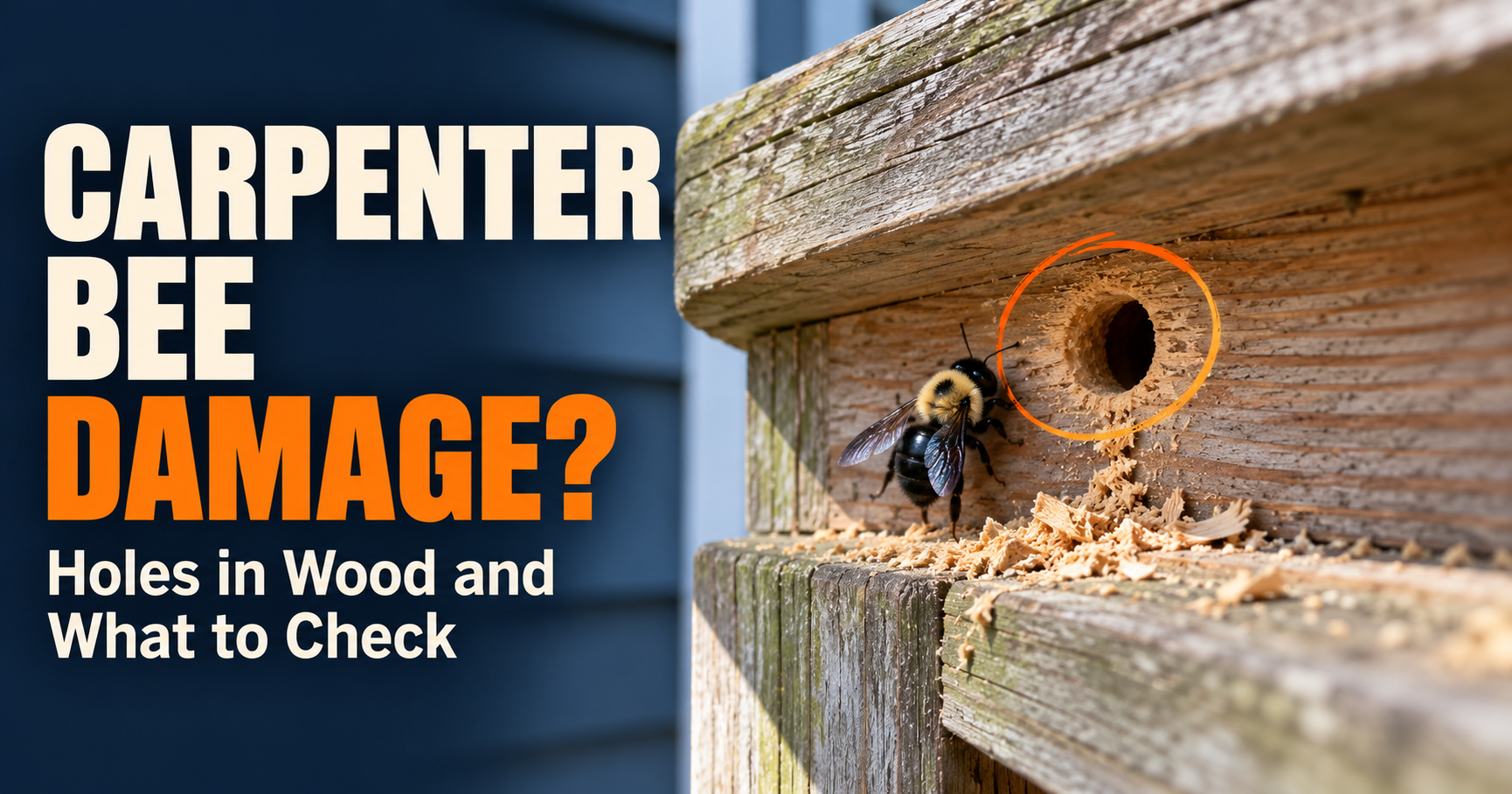
Our guide to recognizing carpenter bee holes and damage explains these identification clues in more detail.
What if You Can’t Tell Whether It’s Occupied?
Don’t guess.
If the repair isn’t urgent, leave the opening alone until its status can be determined.
For holes in important structural components or difficult-to-access locations, a pest-control professional experienced with carpenter bees may be able to recommend an appropriate approach.
This is particularly worthwhile if you want to avoid harming the bees.
What Should You Use to Fill Carpenter Bee Holes?
Once you’ve confirmed the gallery is empty, several common wood-repair materials may work.
The right choice depends on the size of the opening, wood condition, location, and whether the repair is cosmetic or structural.
Wooden Dowels
For an ordinary carpenter bee entrance hole in sound wood, a properly sized wooden dowel can be a practical repair material.
Large carpenter bees commonly create entrance holes around half an inch in diameter, although sizes vary.
A dowel can close the opening more securely than simply smearing filler over the surface.
Choose a dowel that fits the hole, along with an exterior-rated wood adhesive appropriate for the application.
The goal is to create a sound repair without splitting the surrounding wood.
Exterior Wood Filler
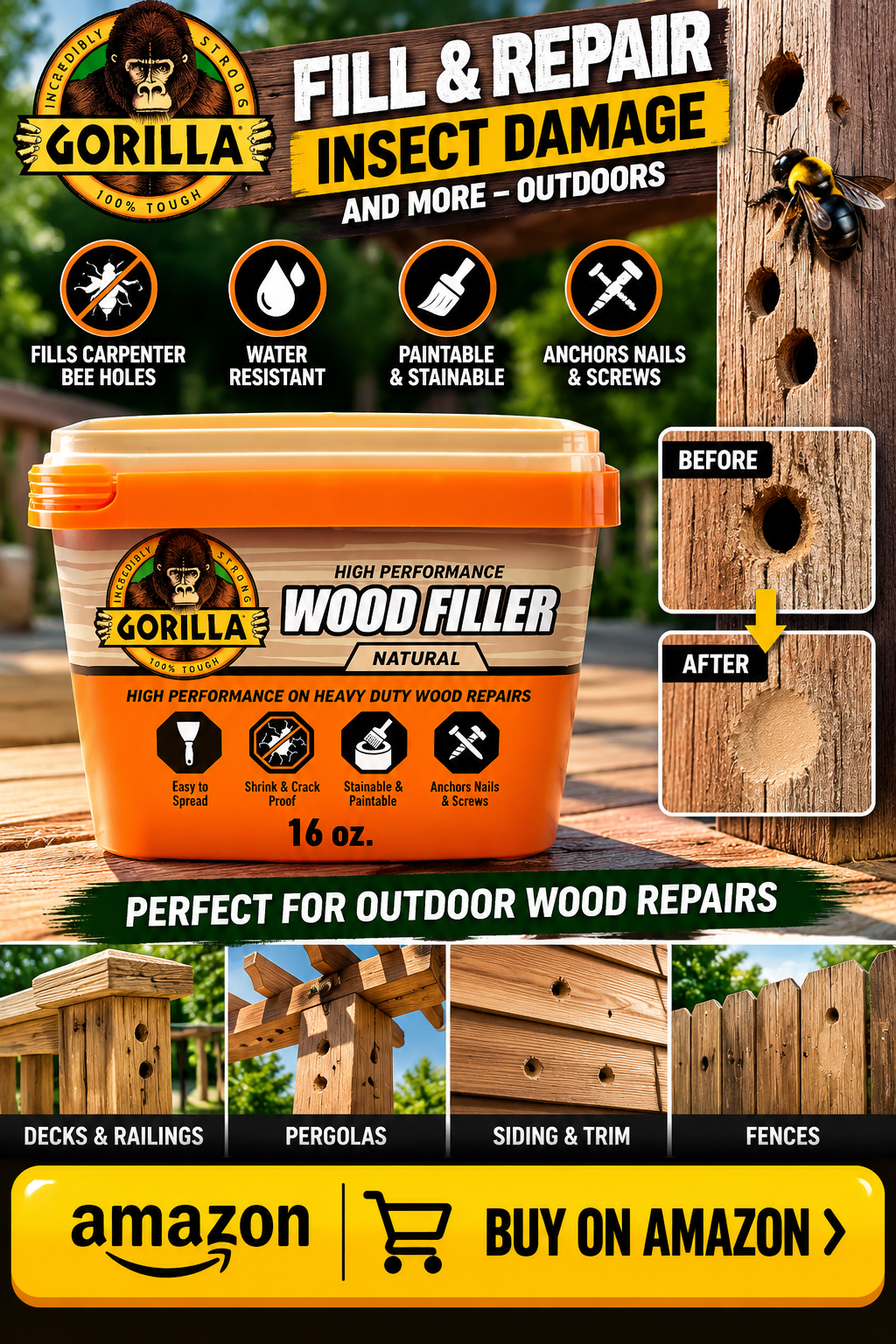
Exterior-rated wood filler can be useful for cosmetic repairs.
It can help smooth damaged edges, fill smaller defects, and create a surface suitable for painting.
Make sure the product is compatible with the wood and intended for outdoor exposure.
Some fillers shrink, crack, or deteriorate when used improperly, so follow the manufacturer’s directions.
Exterior Caulk
An appropriate exterior caulk may help seal certain gaps or cracks around repaired wood.
However, caulk alone isn’t necessarily the strongest option for repairing a deep carpenter bee entrance.
It’s more useful as part of a weather-resistant finishing process than as a replacement for damaged wood.
Should You Use Expanding Spray Foam?
I wouldn’t make spray foam my first choice.
Expanding foam doesn’t restore the structural strength of wood.
Some formulations can expand unpredictably, leave exposed material vulnerable to weathering, or make future repairs more difficult.
It also shouldn’t be used to seal an occupied nesting gallery.
For a clean, durable repair, appropriately sized wood plugs, exterior wood filler, or replacement lumber are generally more sensible options.
How to Fill Carpenter Bee Holes With Wooden Dowels
If the gallery is confirmed unoccupied and the surrounding wood is sound, here’s a practical repair approach.
Step 1: Inspect the Damage
Before buying anything, check the condition of the board.
Look for cracking, soft wood, multiple nesting openings, and signs of extensive tunneling.
If the wood is badly weakened, a dowel won’t restore its original strength.
A railing or support that has become unsafe may need replacement.
Step 2: Measure the Entrance
Carpenter bee entrances are often around half an inch wide.
Measure the actual opening rather than assuming every hole is identical.
Choose a wooden dowel or plug appropriately sized for the repair.
Avoid forcing an oversized dowel into a narrow opening because it could split the surrounding wood.
Step 3: Prepare the Surface
Remove loose wood particles from around the entrance.
Check for splintering or other damage.
Avoid inserting tools deeply into a gallery unless you’ve established that it’s unoccupied.
Follow the wood adhesive manufacturer’s preparation recommendations.
Step 4: Install the Dowel
Apply a suitable exterior wood adhesive according to the product directions.
Insert the properly sized dowel into the entrance.
The dowel should fit securely without requiring excessive force.
Trim any protruding material carefully using tools appropriate for the repair.
Wear appropriate eye protection and follow tool safety instructions.
Step 5: Finish the Repair
Once the adhesive has cured, smooth the surface if necessary.
Use an appropriate exterior-rated filler for minor surrounding imperfections.
Sand and prepare the surface according to the finish manufacturer’s instructions.
Step 6: Paint or Protect the Wood
Don’t stop after closing the hole.
Carpenter bees generally prefer unfinished or weathered wood.
A properly maintained exterior paint finish helps make the repaired area less attractive for future nesting.
Pay attention to exposed board ends, undersides, and nearby unfinished areas.
Can You Fill Carpenter Bee Holes With Wood Putty?
Yes, some exterior wood fillers and putties can be suitable for closing confirmed unoccupied holes.
However, not every wood putty product is intended for outdoor use.
Some are designed primarily for small cosmetic repairs on interior wood.
Look for a product rated for exterior use and compatible with the existing wood and finish.
If you’re dealing with a deep or enlarged gallery, a plug or replacement board may be more appropriate.
And remember that cosmetic repairs don’t necessarily restore wood strength.

What if the Carpenter Bee Hole Is in a Deck Railing?
Deck railings deserve additional attention because they’re safety-related components.
If the hole is small and the railing remains solid, an appropriate cosmetic repair may be sufficient.
But if there are several tunnels in the same board, visible splitting, or movement when pressure is applied, don’t rely on wood filler alone.
Have a qualified carpenter inspect the component.
Replacing weakened railings or posts is sometimes the safer solution.
The same applies to structural deck framing.
Carpenter bees may create limited damage initially, but repeated nesting can affect wood over time.
What if Carpenter Bees Are Still Using the Hole?
If you’re watching bees enter and leave an opening, it’s an active nesting or shelter site.
Don’t seal it while they’re inside.
If the location isn’t causing meaningful damage, consider leaving the nest undisturbed.
If it’s in important wood, evaluate whether you can protect nearby surfaces while waiting for an appropriate management opportunity.
A pest-control professional may be helpful when active galleries need to be addressed, especially if you’re trying to minimize harm to the bees.
Can You Make Carpenter Bees Leave Naturally?
You can discourage new nesting by maintaining finished wood and protecting vulnerable surfaces.
However, there isn’t a reliably proven household trick that guarantees carpenter bees will voluntarily abandon an occupied gallery.
Repellents are more appropriately considered preventive measures than tools for evacuating established nests.
How to Prevent Carpenter Bees From Drilling More Holes
After repairing an old gallery, the next goal is discouraging new excavation.
Otherwise, bees may simply investigate another bare area of the same porch or deck.
Paint Exposed Wood
This remains one of the best-supported prevention methods.
Carpenter bees generally prefer bare, unfinished, or weathered wood.
Well-maintained painted wood is much less attractive.
Inspect the underside of railings, fascia boards, and other sheltered surfaces.
These areas may remain unfinished even when the visible side has been painted.
Consider a Carpenter Bee Repellent
For appropriate outdoor wooden surfaces, you may also want to consider a purpose-made carpenter bee repellent.
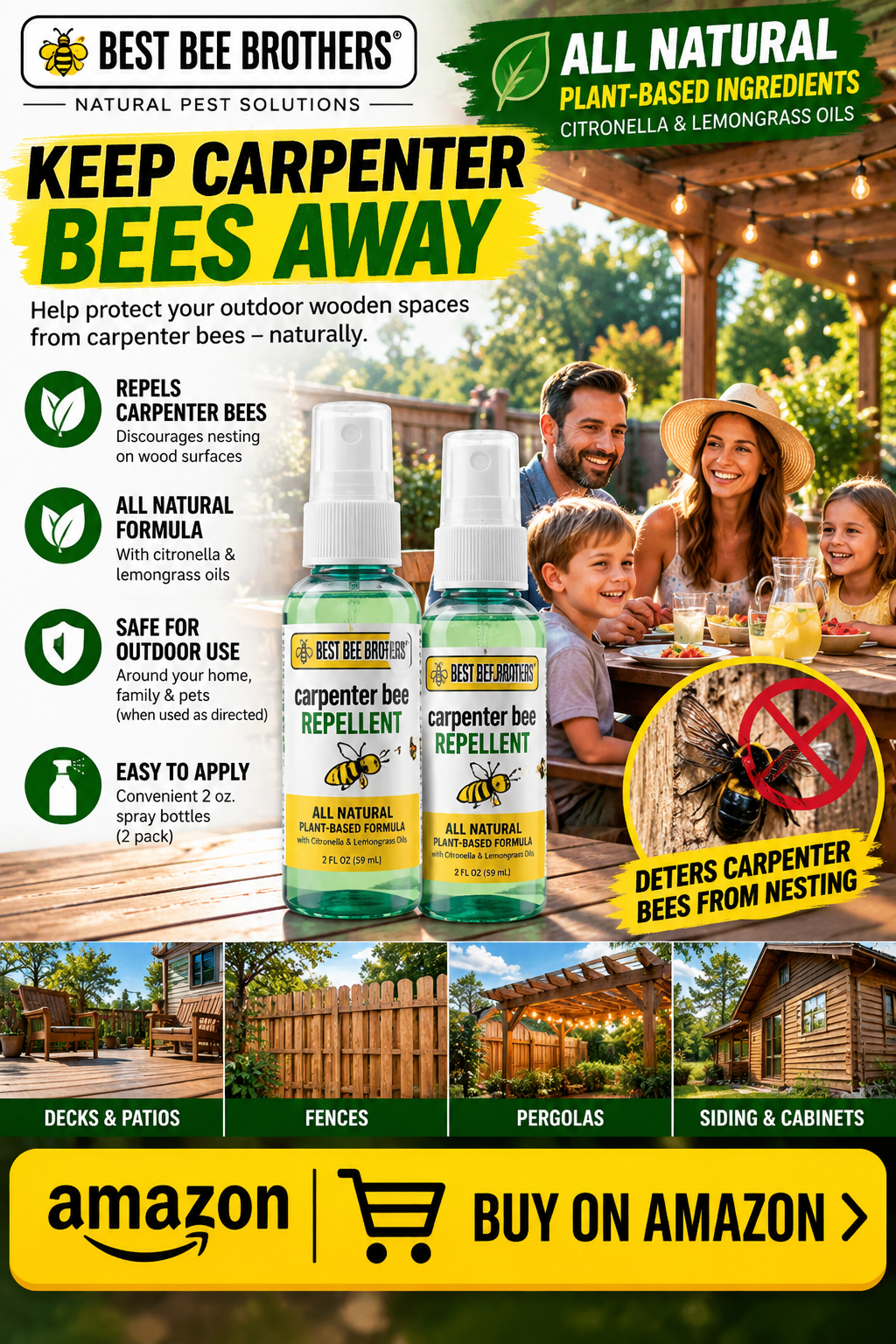
One option is Best Bee Brothers Citrus Carpenter Bee Repellent Spray on Amazon .
The product contains lemongrass and citronella oils and is marketed for discouraging carpenter bees from beginning new nests on treated outdoor wood.
Its effectiveness hasn’t been independently established here, and it shouldn’t be expected to remove bees from occupied tunnels.
Follow the current product directions and check surface compatibility before applying it.
For a broader look at wood protection, deterrents, and pollinator-friendly prevention, see our article about keeping carpenter bees away without killing them.
Replace Vulnerable Wood When Necessary
If one area experiences repeated nesting and damage, replacing the affected material may be worthwhile.
Painted replacement lumber, suitable composites, or metal-protected surfaces can help eliminate access to vulnerable wood.
Use building materials appropriate for the structure and follow applicable construction requirements.
Why It’s Worth Protecting Carpenter Bees
Although carpenter bees can damage wood, they’re also valuable native pollinators.
They collect nectar and pollen from flowers and help pollinate a variety of plants.
Some carpenter bees also perform buzz pollination, which benefits certain flowers that release pollen through vibration.
That includes plants such as tomatoes and eggplants.
If a carpenter bee is nesting in a dead stump away from your home, it usually isn’t creating a problem that needs to be solved.
You don’t have to eliminate beneficial insects simply because they can damage wood under certain circumstances.
Instead, focus on protecting your house and leaving harmless nesting areas undisturbed.

Frequently Asked Questions
When should you fill carpenter bee holes?
Fill them when you’ve confirmed the nesting gallery is unoccupied. Late summer may provide a repair opportunity in some situations, but carpenter bees can return to galleries for overwintering, so timing alone isn’t sufficient.
Can I plug carpenter bee holes in winter?
Be careful. Adult carpenter bees may overwinter inside existing tunnels. The absence of visible winter activity doesn’t prove that a hole is vacant.
Can I fill carpenter bee holes while bees are inside?
It’s not recommended if you’re trying to avoid harming them. Sealing an occupied gallery can trap adults or developing young and may lead to additional damage.
What size dowel should I use for carpenter bee holes?
Large carpenter bee entrances are often about half an inch wide, but measure the actual opening and choose a suitable dowel rather than relying on a standard size.
Is wood filler better than a wooden dowel?
A dowel can provide a solid plug for an appropriately sized entrance. Exterior wood filler is useful for smoothing and cosmetic repairs. The best method depends on the hole and condition of the wood.
Will spray foam keep carpenter bees out?
Spray foam isn’t generally the preferred wood-repair method. It doesn’t restore structural strength, may be unsuitable for exposed exterior wood, and shouldn’t be used to seal occupied nesting galleries.
Do carpenter bees reuse old holes?
Yes. Existing galleries can be reused for nesting and shelter, including overwintering.
Will painting over carpenter bee holes stop them?
Paint helps discourage new nesting, but painting over an open or occupied gallery isn’t a reliable repair. Address the hole appropriately and confirm occupancy before sealing.
Can carpenter bees chew through wood filler?
Carpenter bees can excavate wood and may attack nearby unfinished or vulnerable areas. No cosmetic filler guarantees that new nesting won’t occur. Proper wood maintenance and prevention remain important.
Should I replace wood with several carpenter bee holes?
Consider replacement if the board is cracked, heavily tunneled, or structurally compromised. A qualified carpenter can determine whether repair is sufficient.
Do carpenter bee holes need to be filled if they’re in an old tree stump?
Not necessarily. If the stump is in a safe location and the nesting isn’t causing a problem, leaving carpenter bees undisturbed supports these beneficial pollinators.
About the Author: The team at Why Do I Have Bugs helps homeowners identify insects, understand the damage they can cause, and choose practical solutions that protect both their property and beneficial wildlife whenever possible.