Finding a tiny brown shell in your home can be enough to make your heart skip a beat.
For many homeowners, the first thought is simple.
“I hope this isn’t a bed bug.”
I completely understand that reaction.
When I found what turned out to be a carpet beetle shed skin inside a shoe that had been stored in our attic, I wasn’t sure what I was looking at either. My mind immediately started running through every insect it could possibly be.
Fortunately, after taking a much closer look, I realized it wasn’t a bed bug shell at all.
The problem is that these two pests get confused with each other all the time.
Learning the differences can save you a lot of unnecessary stress and help you choose the right treatment from the beginning.
If you’re just starting to learn about carpet beetles, I recommend reading my Everything You Need to Know About Carpet Beetles guide. It ties together everything I’ve learned about identifying, preventing, and getting rid of carpet beetles in one place.
My First Question
Whenever someone sends me a photo asking whether they’ve found a carpet beetle shed skin or a bed bug shell, I don’t focus on the color first.
I study the shape.
The overall body shape usually tells me far more than the color ever will.
That’s because these two insects have completely different body structures.
Once you know what to look for, they’re much easier to tell apart than most people realize.


What Is a Carpet Beetle Shed Skin?
A carpet beetle shed skin is the empty outer shell left behind after a carpet beetle larva grows and molts.
As the larva develops, it sheds its old skin several times before eventually becoming an adult beetle.
Those empty shells often remain hidden in closets, attics, storage boxes, shoes, or beneath furniture until someone eventually discovers them.
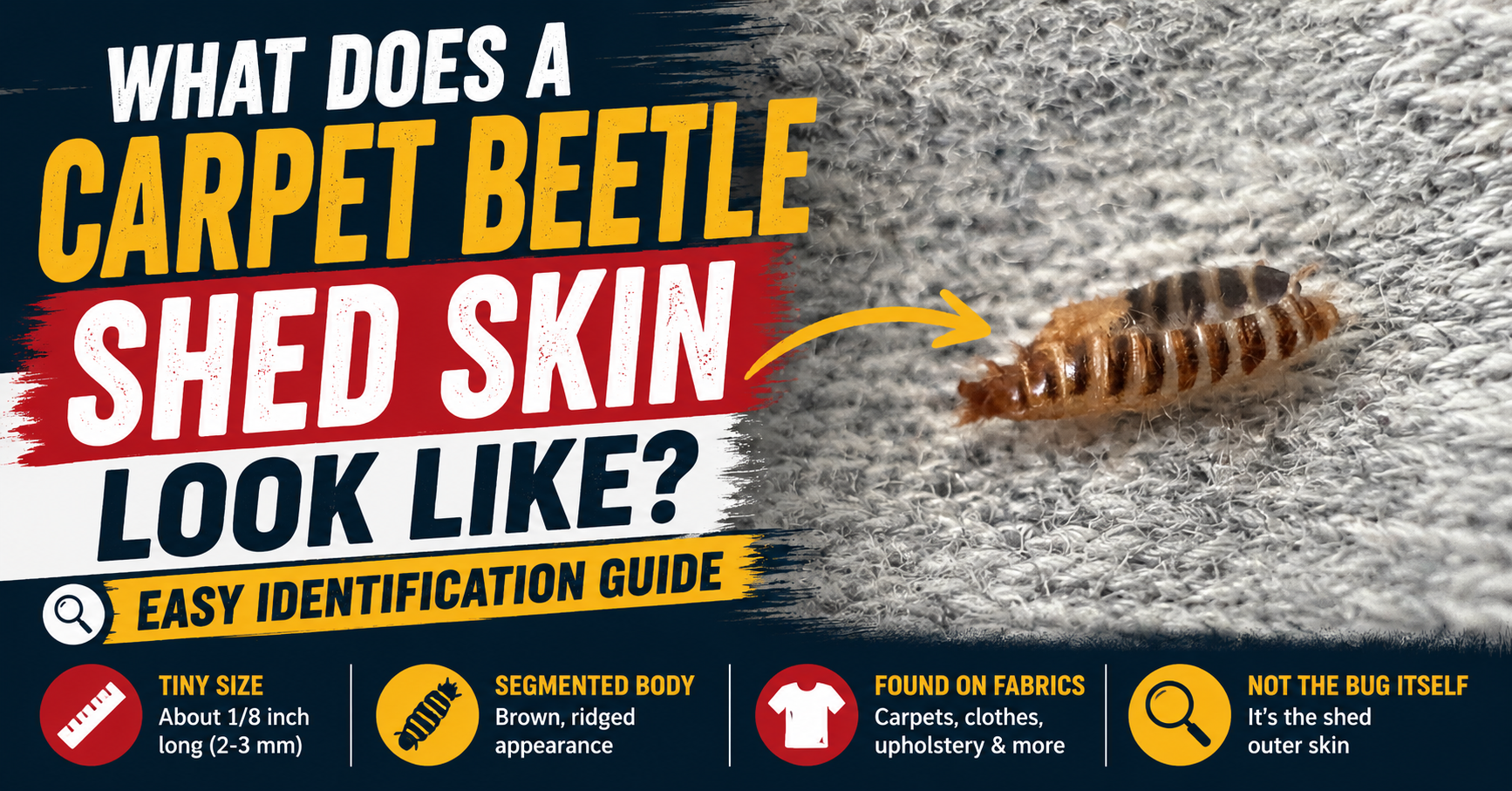
If you’d like a closer look at the characteristics I use to identify them, I put together a detailed guide showing what a carpet beetle shed skin looks like.
What Is a Bed Bug Shell?
A bed bug shell is also an empty exoskeleton, but it comes from a completely different insect.
Bed bugs shed their outer shell several times as they grow from young nymphs into adults.
Unlike carpet beetle larvae, bed bugs feed on blood throughout their development.
That means their shed skins are usually found close to where people sleep.
Mattress seams.
Box springs.
Bed frames.
Headboards.
Furniture near sleeping areas.
Finding one doesn’t automatically confirm an active infestation, but it does tell me a careful inspection is worth doing.
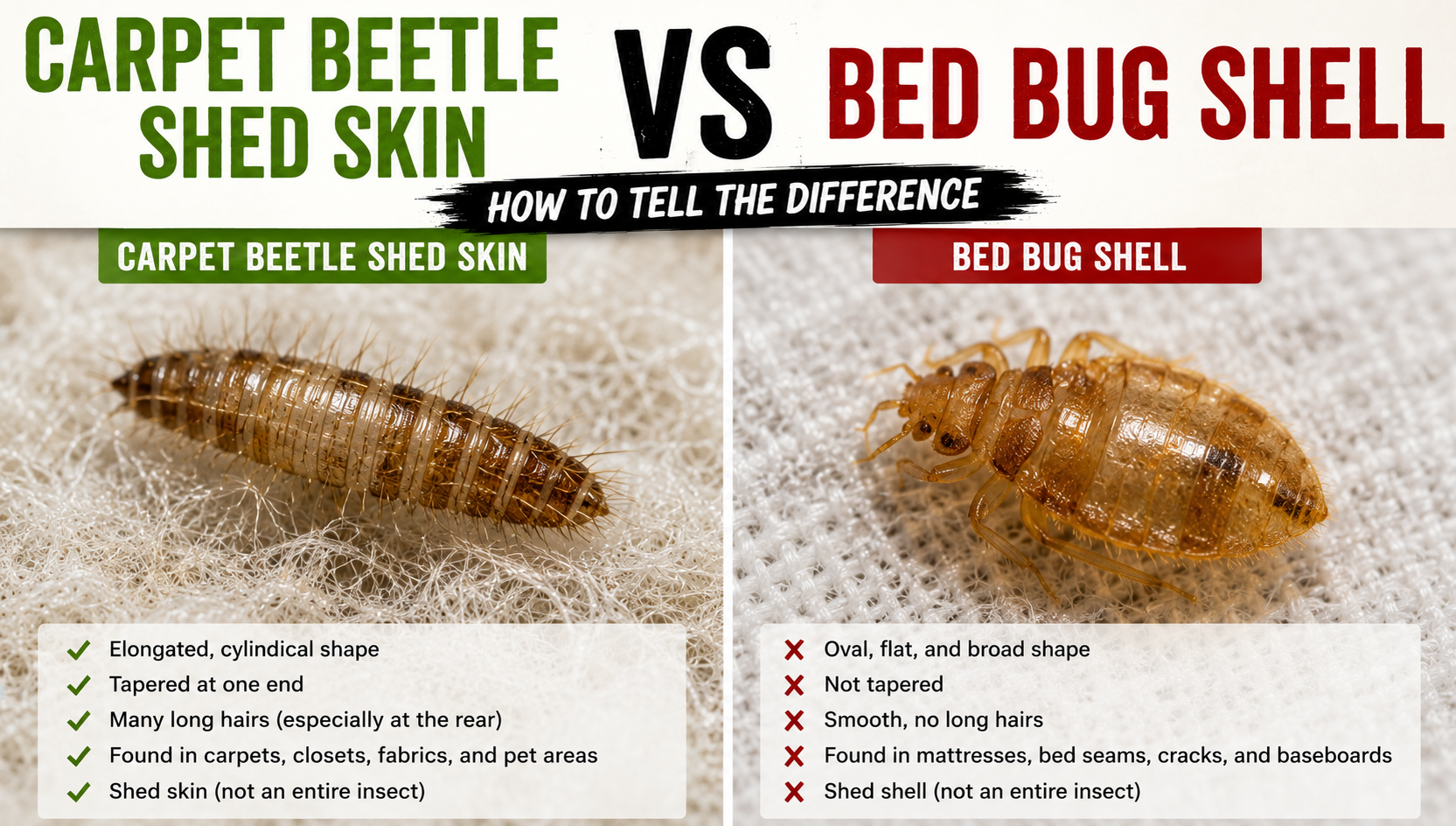
Carpet Beetle Shed Skins Are Hairy
One of the easiest differences to notice is the tiny hairs.
Carpet beetle shed skins almost always have visible hairs or bristles covering parts of the body.
Those hairs give them a fuzzy appearance.
Even after the larva has moved on, those tiny hairs remain attached to the empty shell.
That’s one of the first things I look for.

Bed Bug Shells Are Smooth
Bed bug shells are much smoother.
They don’t have the fuzzy appearance carpet beetle shed skins do.
Instead, they look like a flattened, translucent version of a bed bug.
When viewed closely, they’re usually light tan to amber in color and have a broad oval body.
That smooth appearance is one of the quickest ways I separate them from carpet beetle shed skins.
The Body Shape Is Completely Different
This is probably the easiest way to tell them apart.
Carpet beetle shed skins are:
- Long.
- Narrow.
- Clearly segmented.
- Slightly tapered.
- Hairy.
Bed bug shells are generally:
- Wide.
- Flat.
- Oval.
- Smooth.
- Much broader than carpet beetle shed skins.
Even if the color is similar, the overall shape usually gives the correct answer.

Where You Find Them Matters Too
Location can be just as important as appearance.
If I find a hairy shell inside a storage tote full of wool blankets, I’m immediately thinking about carpet beetles.
If I find several smooth shells tucked into a mattress seam, bed bugs move much higher on my list.
Whenever I inspect a home, I pay just as much attention to where the evidence was found as I do to what it looks like.
What I Found in My Own House
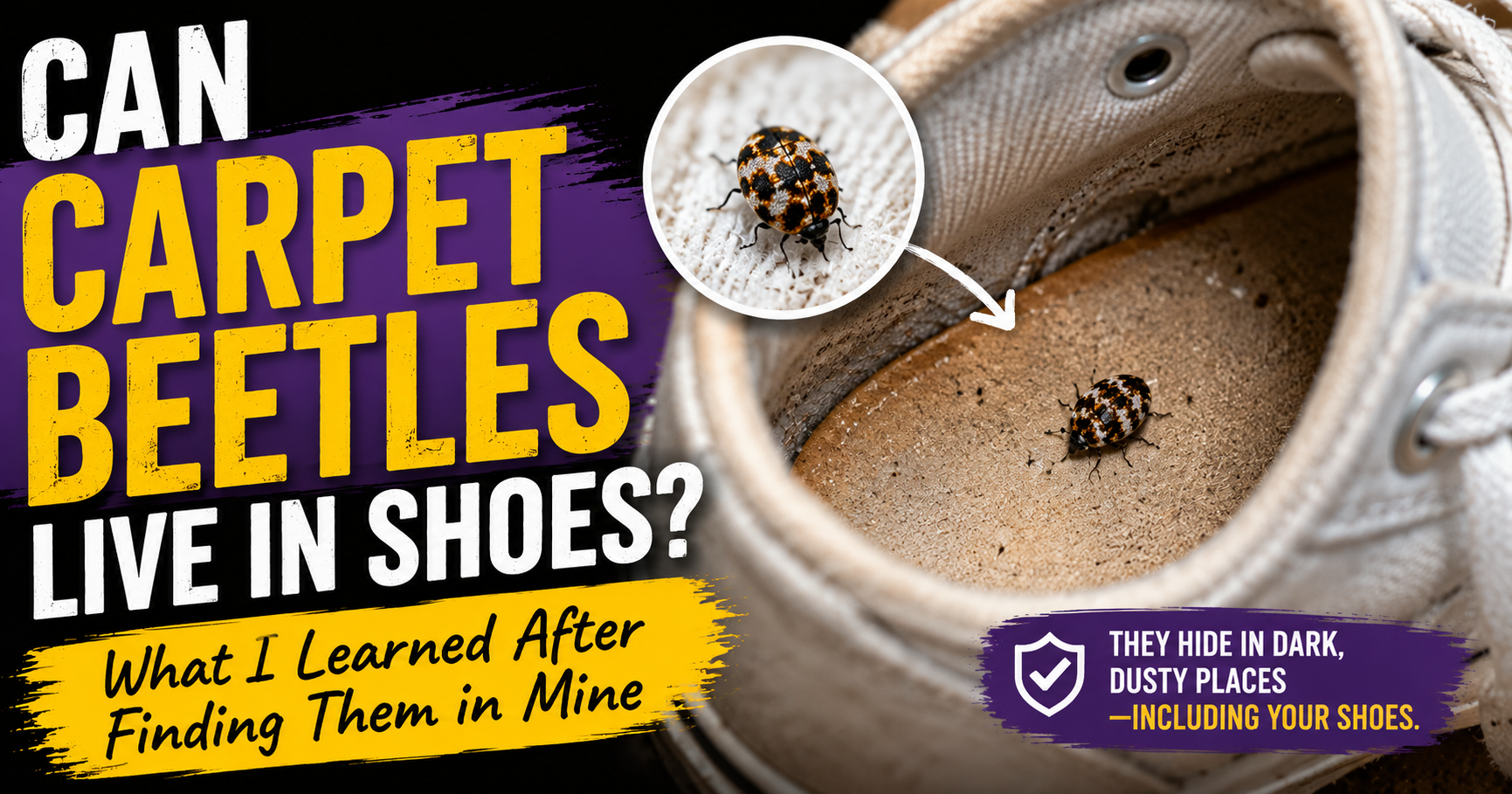
The carpet beetle shed skin I found was tucked inside a shoe that had been sitting in our attic.
That location immediately started making more sense once I learned where carpet beetle larvae prefer to hide.
Quiet.
Dark.
Undisturbed.
Close to natural fibers.
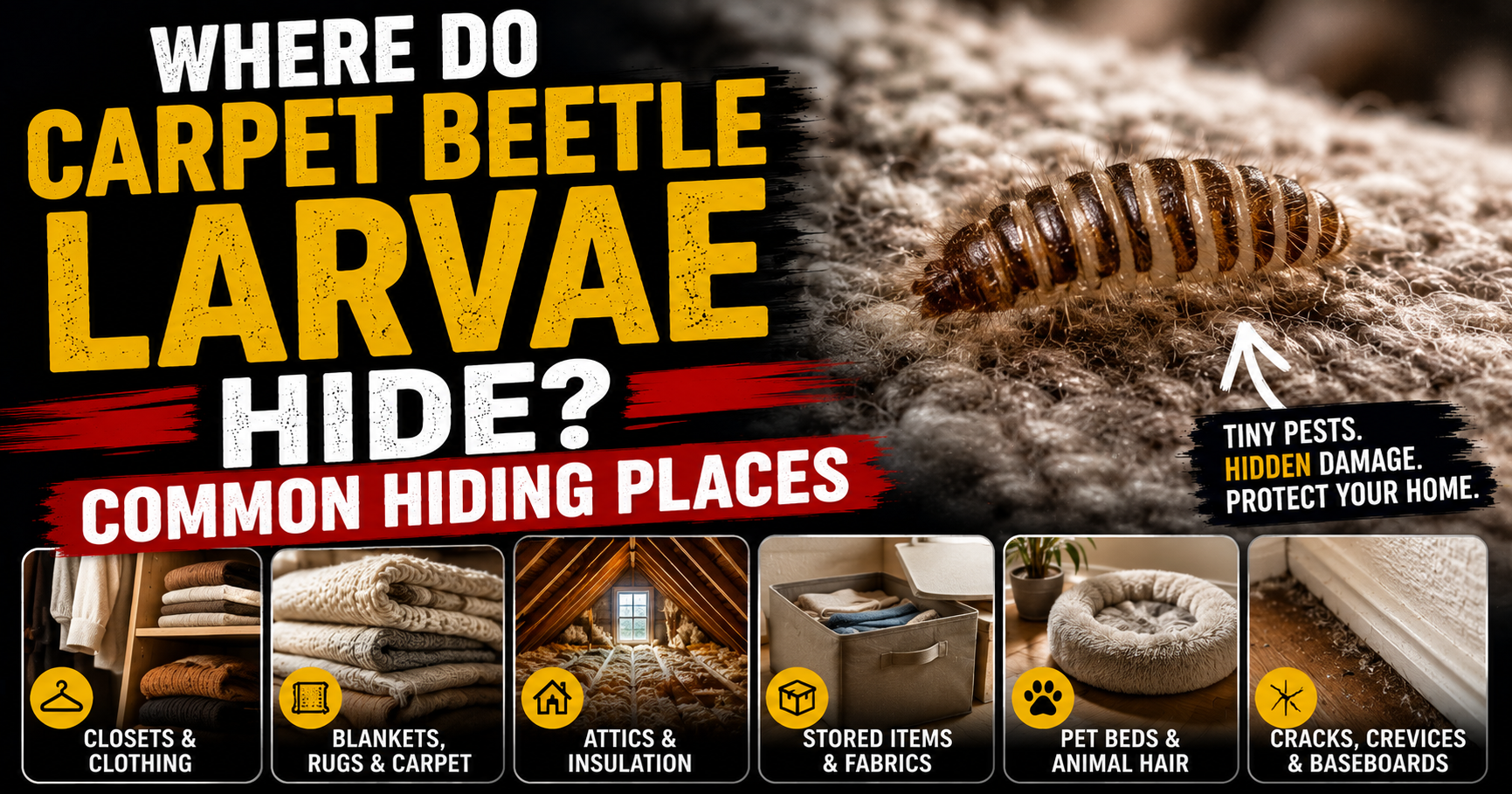
If you’re trying to locate the source of a carpet beetle problem, my guide explaining where carpet beetle larvae hidecovers the first places I’d inspect.
Don’t Panic If You Only Find One
Finding one shell doesn’t necessarily mean you have a major infestation.
It simply means it’s time to investigate further.
Look for additional evidence.
Live insects.
More shed skins.
Damaged fabrics.
Blood spots.
Eggs.
The more evidence you gather, the easier it becomes to identify which pest you’re dealing with.
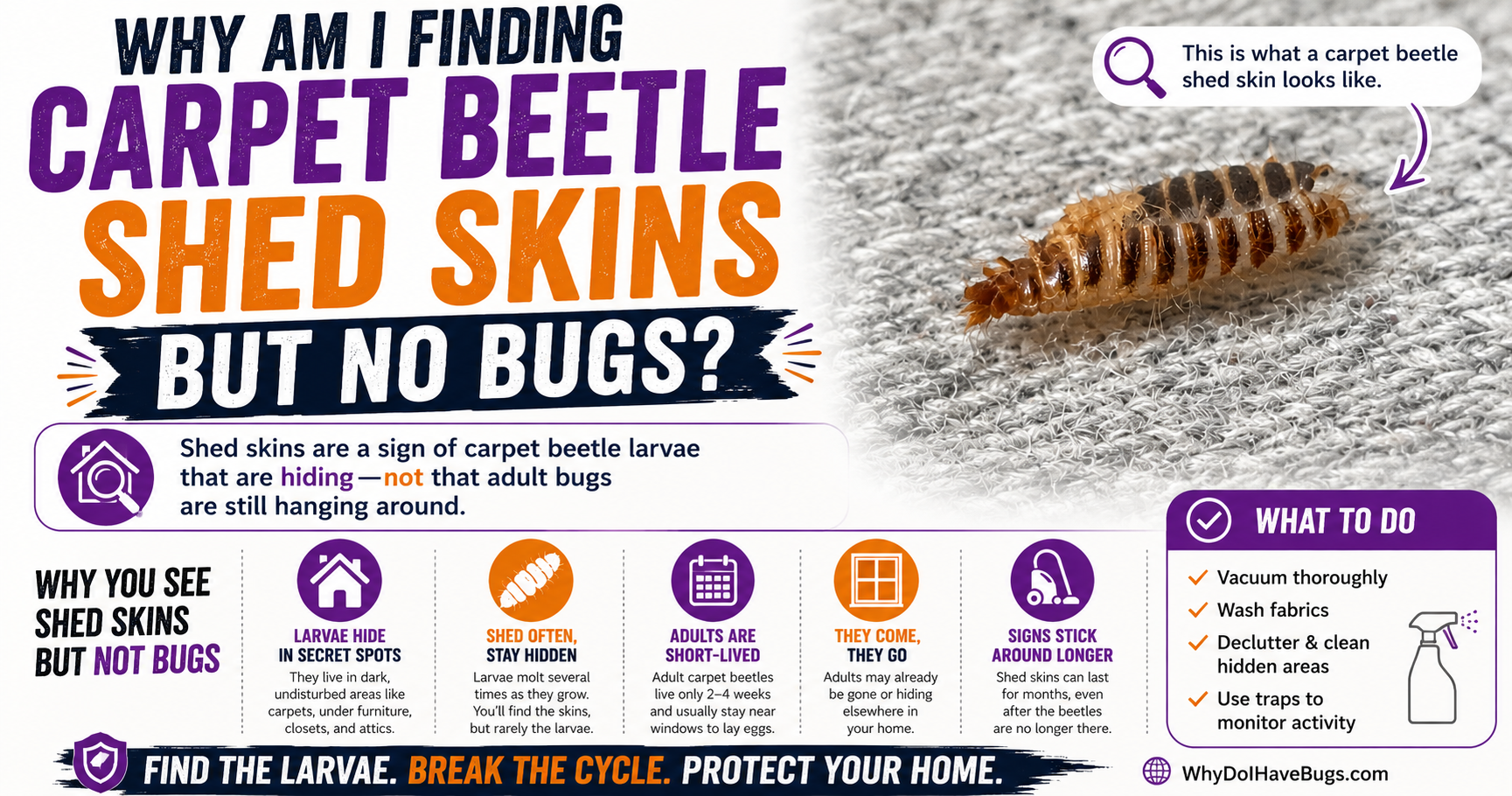
If you’ve been finding carpet beetle shed skins but can’t locate any insects, I explain why that happens in my guide on why you’re finding carpet beetle shed skins but no bugs.
What I Would Do Next
If I found an unknown shell tomorrow, I wouldn’t immediately buy insecticides.
I’d identify it first.
Then I’d inspect the surrounding area carefully.
If it turned out to be a carpet beetle shed skin, I’d look for larvae, damaged fabrics, closets, stored clothing, and other hiding places.
If it turned out to be a bed bug shell, my inspection would shift toward mattresses, furniture, and sleeping areas.
Correct identification always comes before treatment.



How I’d Handle a Carpet Beetle Problem
Once I’ve confirmed the shell belongs to a carpet beetle, my next goal is eliminating the source of the infestation.
That means locating the larvae, cleaning thoroughly, vacuuming, inspecting natural-fiber materials, and removing the food sources that attracted them.
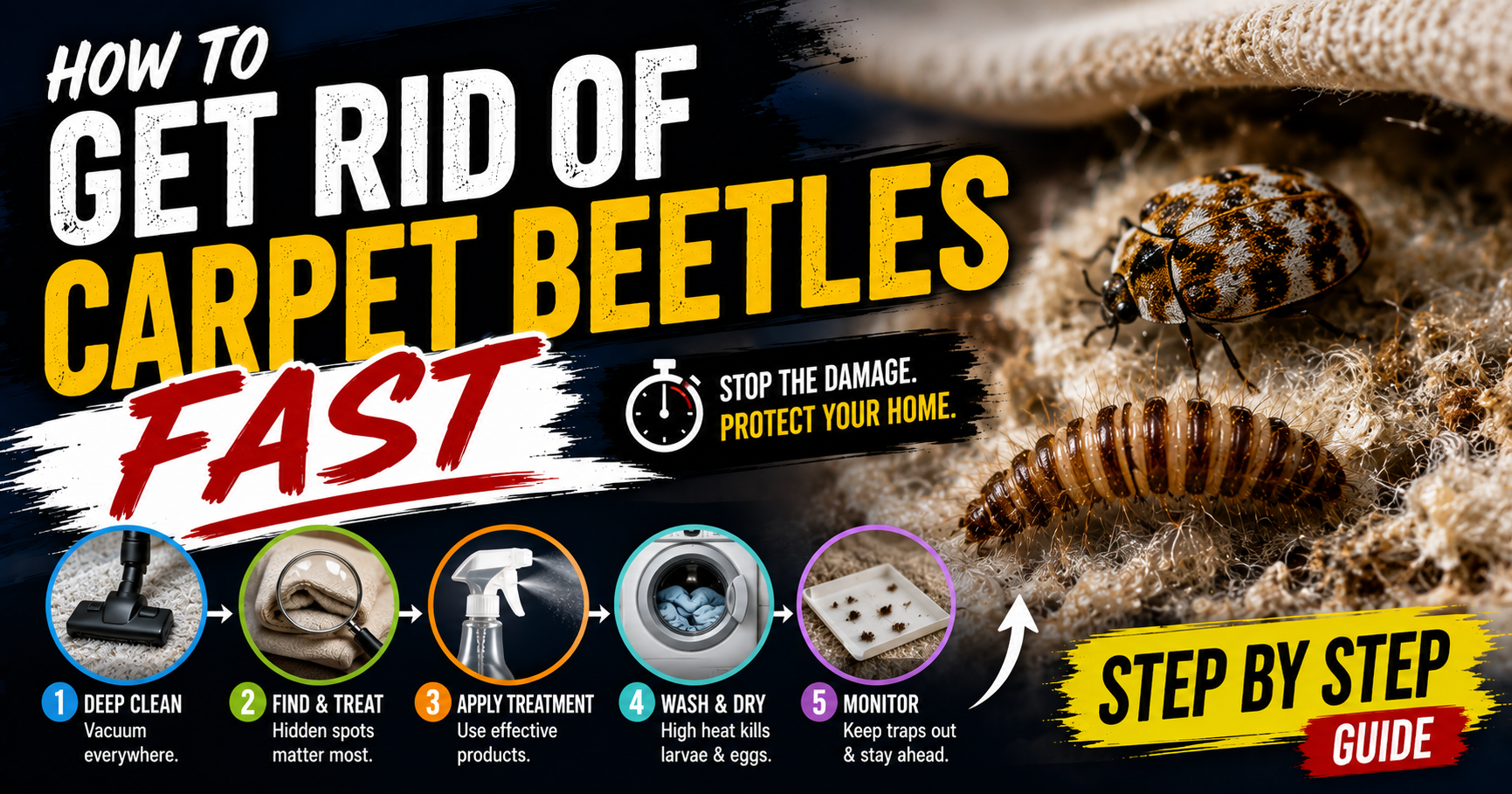
I walk through that entire process in my How to Get Rid of Carpet Beetles Fast Step-by-Step Guide.

If I decide a treatment product makes sense after locating the infestation, I also recommend reading Does Carpet Beetle Killer Spray Actually Work? before buying one. It explains where I think sprays fit into a complete treatment plan and what you should realistically expect. If you choose to use one, the Carpet Beetle Killer Spray for Indoor Use is designed to target both carpet beetles and their larvae when used according to the product label.
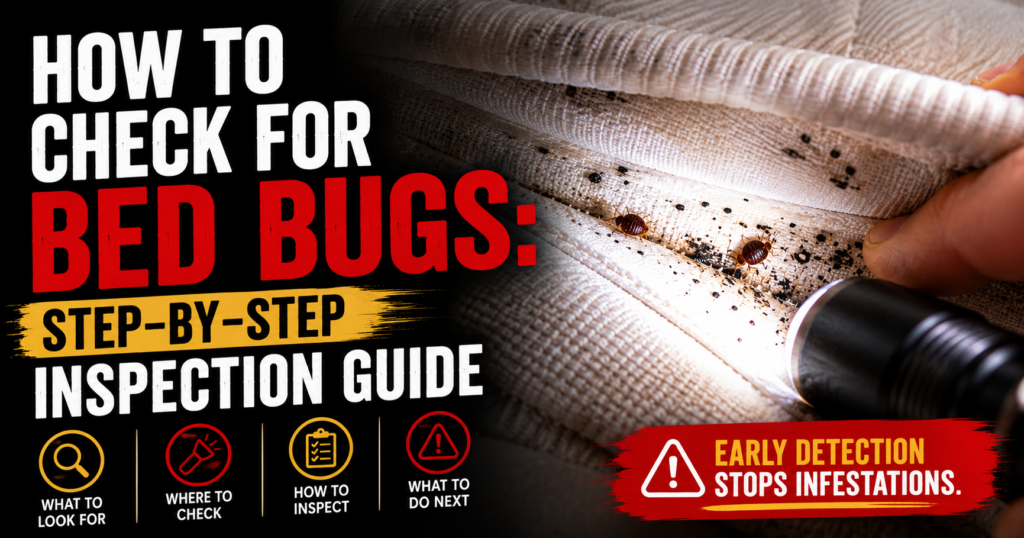
If your inspection points more toward bed bugs instead, I recommend reading my How to Check for Bed Bugs Step-by-Step Inspection Guide before deciding on a treatment plan. You can also browse our growing Bed Bugs resource centerfor more identification guides and inspection tips.
The Biggest Difference
If I had to identify one difference that stands out more than anything else, it’d be this.
Carpet beetle shed skins are usually hairy and elongated.
Bed bug shells are smooth and flattened.
Once you notice those two characteristics, identifying them becomes much easier.
Frequently Asked Questions
Is a carpet beetle shed skin the same as a bed bug shell?
No. Although both are shed exoskeletons, they come from completely different insects and have very different shapes and textures.
Are carpet beetle shed skins hairy?
Yes. Tiny hairs or bristles are one of the easiest ways to recognize a carpet beetle shed skin.
Where are bed bug shells usually found?
They’re most often found around mattresses, bed frames, box springs, headboards, and other areas close to where people sleep.
Can carpet beetle shed skins be mistaken for bed bugs?
Yes. It’s one of the most common identification mistakes homeowners make, especially when they only find a single shell.
Should I treat my home before identifying the shell?
No. Identifying the insect first helps you avoid wasting time and money treating the wrong pest.
About the Author
Daniel Brooks researches common household pests and writes practical identification guides based on real-world inspections and firsthand observations. His goal is to help homeowners correctly identify pests before choosing a treatment, making it easier to solve the problem quickly and confidently.