Finding a tiny white object on your mattress, bed frame, or furniture can make your mind race.
I’ve had countless people describe finding something they thought was a bed bug egg, only to wonder if an infestation was about to explode inside their home.
The truth is that bed bug eggs are small, but they aren’t impossible to identify once you know what you’re looking for.
I’ve also learned that many homeowners mistake lint, paint flecks, dandruff, seeds, or other household debris for bed bug eggs. That’s completely understandable because bed bug eggs are tiny and easy to overlook.
If you’re trying to determine whether you’ve actually found a bed bug egg, here’s what I would look for first.
Michael’s First Impression
When someone tells me they found a single tiny white object on their mattress, I don’t immediately assume it’s a bed bug egg.
Instead, I start asking questions.
Where did you find it?
Did you also find dark spots, shed skins, or live bugs?
Have you been waking up with unexplained bites?
One possible sign by itself rarely tells the whole story.
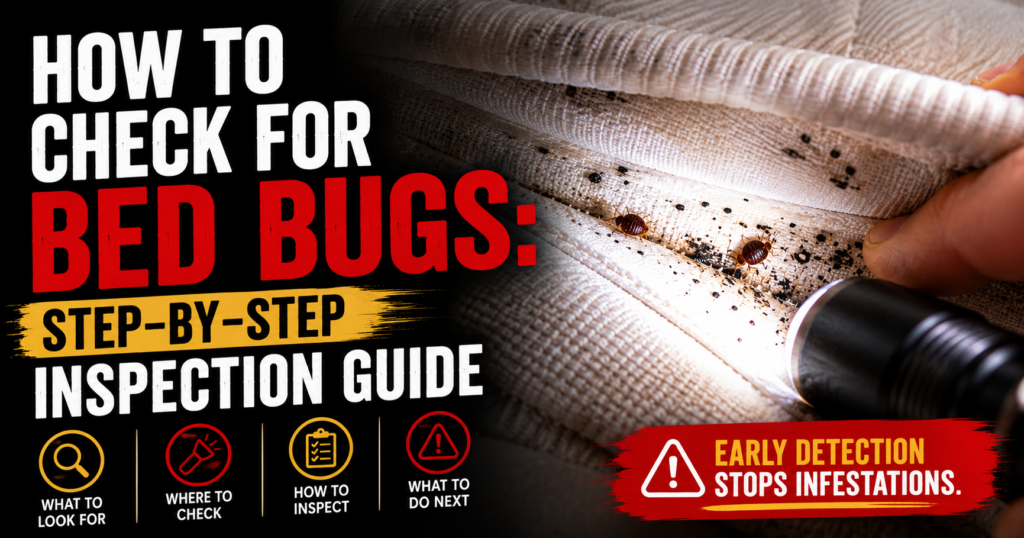
Bed bugs usually leave several clues behind, and putting those clues together gives you a much better idea of what’s actually happening. A systematic search makes it easier to evaluate those clues together, as shown in How to Check for Bed Bugs: Step-by-Step Inspection Guide.


Bed Bug Eggs Are Smaller Than Most People Expect
One thing that surprises homeowners is just how tiny bed bug eggs really are.
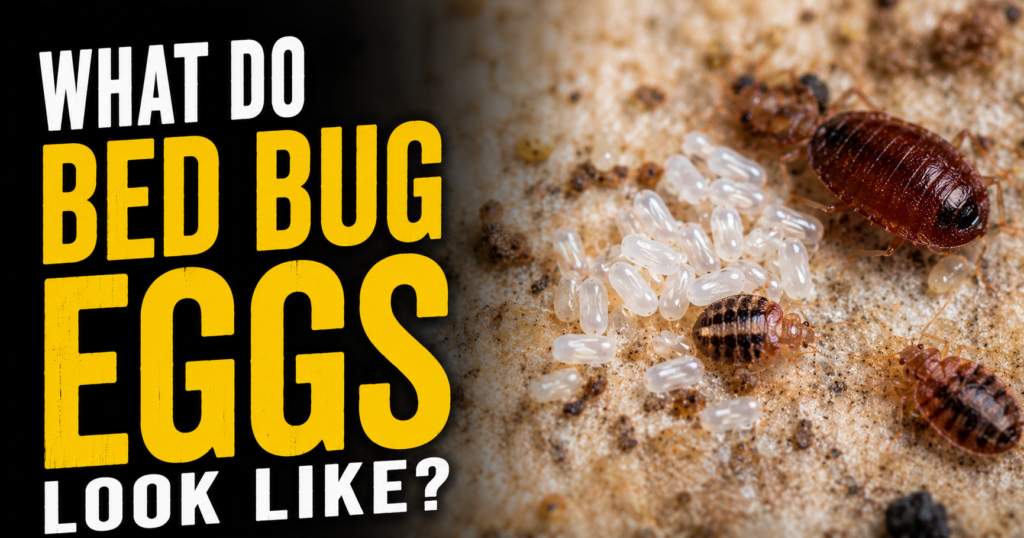
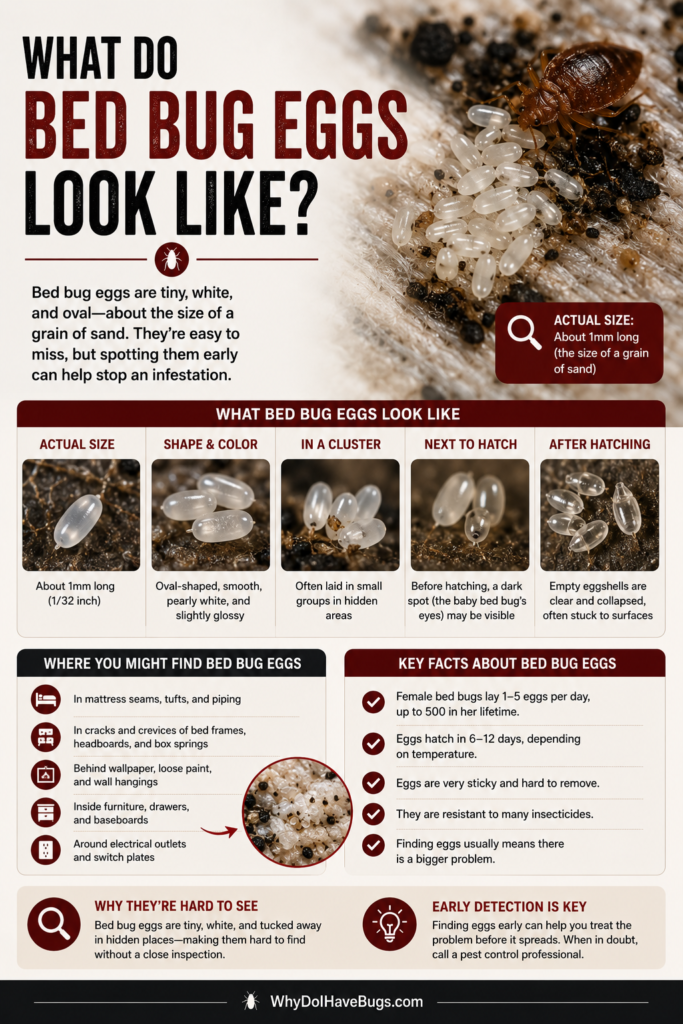
They’re about the size of a grain of salt or even smaller.
Because of their size, many people walk right past them without noticing.
If you can easily see an object from across the room, it’s probably not a bed bug egg.
Most people only discover them while closely inspecting a mattress, headboard, or furniture after already suspecting bed bugs.


What Color Are Bed Bug Eggs?
Fresh bed bug eggs are usually:
- Pearly white
- Cream colored
- Slightly translucent
As they age, they may become a little darker, but they generally remain light in color.
Unlike cockroach egg cases, which are brown and much larger, bed bug eggs are tiny and much harder to spot.

If you’ve also dealt with cockroaches, our guide on what cockroach eggs really look like explains how different the two actually are.
What Shape Are Bed Bug Eggs?
Bed bug eggs are slightly elongated rather than perfectly round.
Many people describe them as looking like:
- Tiny grains of rice
- Small white capsules
- Miniature pearls
One end often has a small cap where the developing bed bug eventually emerges.
Without magnification, however, most homeowners simply notice a tiny white speck.



Where Do Bed Bugs Lay Their Eggs?
This is one of the first things I investigate.
Bed bugs don’t randomly scatter eggs throughout a room.
Instead, females usually lay eggs close to where they hide.
Common locations include:
- Mattress seams
- Box springs
- Headboards
- Bed frames
- Behind wall art
- Inside nightstands
- Furniture joints
- Upholstered furniture
- Baseboards near beds
- Cracks in wooden furniture
If you only inspect the top of your mattress, there’s a good chance you’ll miss the places where eggs are actually being laid.
Do Bed Bug Eggs Stick to Surfaces?
Yes.
Female bed bugs use a sticky substance that helps attach their eggs to surfaces.
That’s one reason eggs often remain firmly attached inside seams, cracks, folds, and crevices.
Simply shaking bedding usually won’t remove them.


What Does Finding Bed Bug Eggs Mean?
If you’ve correctly identified a bed bug egg, I would assume one thing immediately.
There are almost certainly bed bugs nearby.
Eggs don’t appear on their own.
They indicate that at least one adult female bed bug has already been present long enough to begin laying eggs.
That’s why I consider eggs one of the strongest indicators of an active infestation.
Are Bed Bug Eggs Usually Found on Sheets?
Not often.
While it’s possible for an egg to end up on bedding, most females prefer protected locations.
I usually inspect:
- Mattress piping
- Mattress tags
- Box spring seams
- Headboard joints
- Bed frame hardware
before spending much time looking at sheets.



Could It Be Something Else?
Absolutely.
I’ve seen homeowners mistake all kinds of household debris for bed bug eggs.
Common lookalikes include:
- Paint chips
- Lint
- Carpet fibers
- Food crumbs
- Tiny seeds
- Drywall dust
- Fabric pills
That’s why I never recommend making a decision based on one tiny white object alone.
Instead, I always look for additional evidence.
What Other Signs Should You Look For?
When inspecting a home, I rarely rely on one clue.
I look for several.
These include:
- Dark fecal spots
- Shed skins
- Live bed bugs
- Tiny blood spots on bedding
- Sweet or musty odors in larger infestations
- Eggs attached to hiding places
The more signs you find together, the more confident you can be about what’s happening.



What I Would Do If I Found Bed Bug Eggs
If I personally found what appeared to be bed bug eggs, I wouldn’t panic.
I’d slow down and inspect the entire sleeping area.
I’d carefully examine:
- The mattress
- The box spring
- The headboard
- The bed frame
- Nearby furniture
- Baseboards
- Upholstered chairs
Finding one egg without understanding the bigger picture can lead to unnecessary stress.
Finding multiple signs together is much more meaningful.
Products That Can Help
If you’re dealing with a confirmed or suspected bed bug problem, protecting your mattress is one of the first steps I recommend.

Many homeowners choose a SureGuard Mattress Encasement because it completely encloses the mattress and helps trap existing bed bugs while preventing new ones from hiding inside.
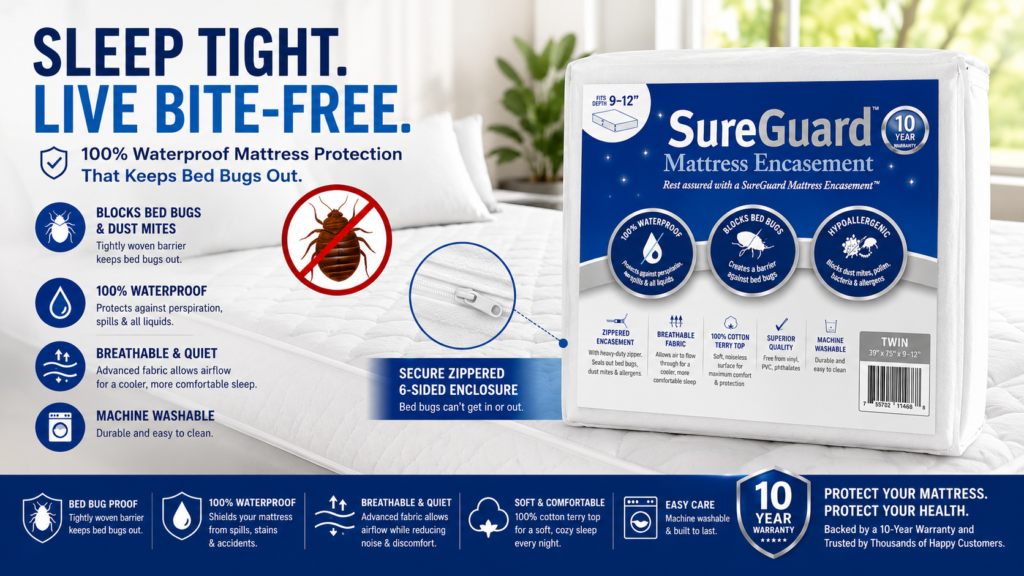
If you’d like a full breakdown, read our guide on whether mattress encasements really work for bed bugs.
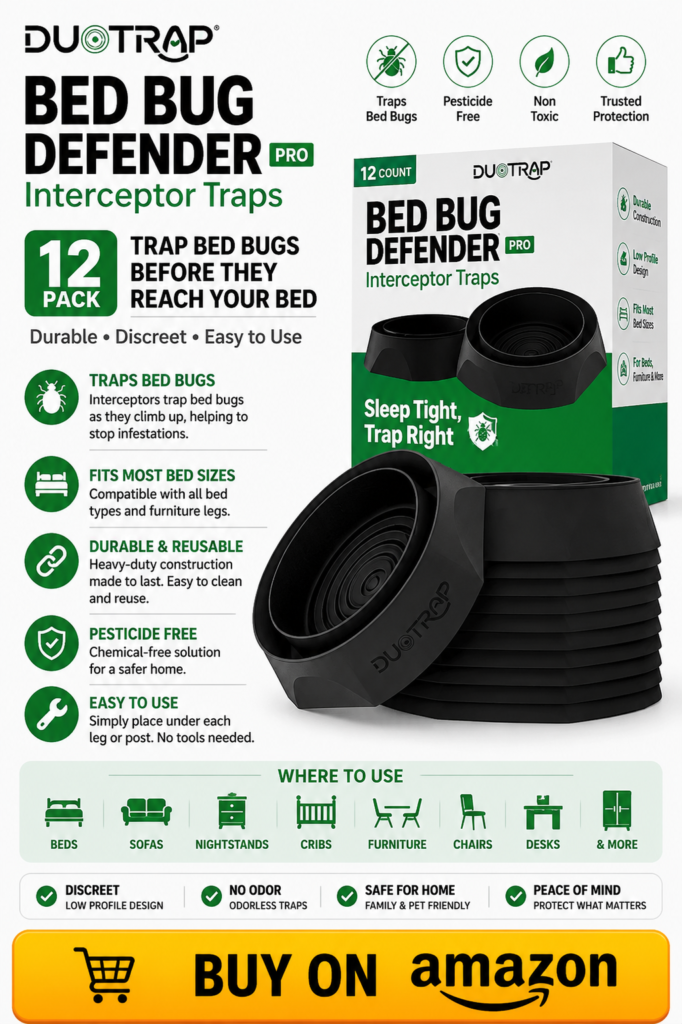
Another product I often recommend for monitoring activity is a set of bed bug interceptor cups. They can help determine whether bed bugs are still climbing onto your bed.
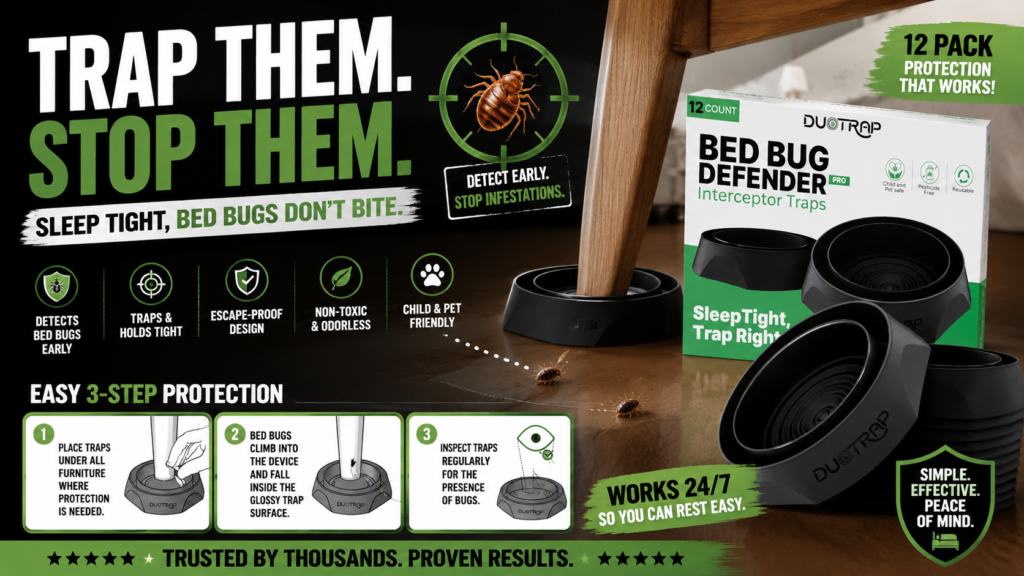
Our review explains how bed bug interceptor cups work and when they’re worth using.

If you’ve confirmed an infestation and need a residual treatment, many homeowners use Harris Toughest Bed Bug Killer. We explain what to expect in our review of Harris Toughest Bed Bug Killer.
Frequently Asked Questions
Can you see bed bug eggs with the naked eye?
Yes, but they’re extremely small and easy to miss without looking closely.
Are bed bug eggs white?
Most fresh bed bug eggs are pearly white or cream colored.
How many eggs does one bed bug lay?
A female bed bug lays eggs over time rather than all at once, which is why infestations can gradually grow if left untreated.
Do bed bug eggs hatch quickly?
They generally hatch within days under favorable conditions, though temperature can affect development.
Should I throw away my mattress if I find bed bug eggs?
Not necessarily. Many infestations can be treated without replacing the mattress, especially when appropriate products and mattress encasements are used.
About the Author
Sarah Bennett is a home pest researcher who specializes in bed bug identification, prevention, and practical treatment strategies. She focuses on helping homeowners separate myths from facts so they can respond quickly and confidently when bed bugs are suspected.