
Katydids mostly eat leaves, flowers, stems, pollen, and other soft plant material. However, their exact diet depends on the species. While most katydids are primarily plant eaters, some will also consume insect eggs, aphids, caterpillars, dead insects, and other small prey.
Finding a large green katydid on a plant can make it look like your garden is about to be eaten overnight. Fortunately, that is rarely what happens. A single katydid may chew a few noticeable holes, but most do not feed heavily enough to seriously damage an established plant.
Understanding what katydids eat can help you decide whether you are looking at a harmless backyard visitor or an insect that is actually affecting your plants.
What Do Katydids Eat Most Often?
Most katydids eat plant material, especially leaves. They have strong chewing mouthparts that allow them to remove small sections from leaf edges or chew irregular holes through softer portions of a leaf.
Their typical diet may include:
- Tree leaves
- Shrub foliage
- Grass
- Flower petals
- Pollen
- Plant stems
- Seeds
- Soft or developing fruit
- Insect eggs
- Small or slow-moving insects
The amount of plant material eaten by one katydid is usually fairly small. Katydids commonly take a few bites before moving to another leaf or plant.
If you are still trying to identify the large green insect you found, my guide explaining what a katydid looks like and how to identify one can help you separate it from a grasshopper, cricket, or leaf-shaped insect.


Do Katydids Eat Leaves?
Leaves are the main food source for many katydid species. This is one reason katydids spend so much time in trees, shrubs, tall weeds, and gardens.
Common true katydids frequently live high in tree canopies, where they eat leaves and remain concealed by their leaf-like wings. Bush katydids are more likely to be found among shrubs, garden plants, and vegetation along woodland edges.
Their feeding damage can appear as:
- Small holes in the middle of a leaf
- Irregular notches along the leaf edge
- Missing pieces of soft foliage
- Light chewing on flower petals
- Minor surface damage on young fruit
Small katydid nymphs may create holes in the center of leaves. Larger nymphs and adults often chew inward from the edges.
Although the damage can look concerning when you inspect an individual leaf, katydids usually move before eating very much from one spot. A handful of damaged leaves does not mean the entire plant is in danger.

What Plants Do Katydids Eat?
Katydids can feed on a wide variety of plants. The exact plants they choose depend on the katydid species, where it lives, and which foods are available.
They may eat foliage from:
- Oaks
- Maples
- Citrus trees
- Fruit trees
- Berry bushes
- Roses
- Garden vegetables
- Ornamental shrubs
- Native wildflowers
- Tall grasses and weeds
This does not mean katydids will seriously damage every one of these plants. In many cases, they take a few small bites and move elsewhere.

Katydids are also excellent at hiding. Their green coloring, visible wing veins, and flattened body shape allow many species to blend into foliage. You may hear several katydids at night without finding more than one during the day. Those camouflage features are explained in this katydid identification guide.
Do Katydids Eat Flowers?
Katydids may eat flower petals, pollen, stamens, and other soft parts of a flower. Flowers are tender and generally easier to chew than mature leaves or woody stems.
A katydid feeding on flowers may leave:
- Ragged petal edges
- Small holes through petals
- Missing portions of a blossom
- Minor damage around the flower’s center
This damage can resemble feeding from grasshoppers, caterpillars, earwigs, beetles, or slugs. Seeing holes in flowers does not automatically prove a katydid caused them.
The best confirmation is catching the insect actively feeding. Since many katydids become more active after dark, inspecting affected flowers with a flashlight at night can help reveal what is actually chewing them.

Do Katydids Eat Fruit?
Some katydids will take small bites from young or developing fruit. Citrus, pears, blueberries, plums, and other soft fruits can occasionally be affected.
A katydid may bite a fruit once and then move to another feeding site. The original wound can expand as the fruit grows, eventually leaving a tan, gray, or brown scar. In some cases, young fruit becomes misshapen or drops prematurely.
Katydid damage to fruit can appear as:
- Shallow round scars
- Slightly sunken patches
- Corky areas on the skin
- Irregular surface blemishes
- Distorted young fruit
This is more important in orchards and commercial fruit production than in an average backyard. A blemished fruit may still be perfectly usable if the damage only affected its surface.
For most homeowners, finding one katydid on a fruit tree does not justify treating the entire tree with an insecticide.
Do Katydids Eat Vegetables?
Katydids can chew vegetable leaves, flowers, and occasionally developing produce. However, they are usually not among the most destructive vegetable garden pests.
You may find them on:
- Beans
- Lettuce
- Peppers
- Tomatoes
- Corn
- Cabbage-family plants
- Cucumbers
- Squash
- Herbs
- Leafy greens
Their presence on a vegetable plant does not necessarily mean they are eating it. A katydid may simply be resting, hiding, or searching for a mate.

I would look for fresh chewing damage and inspect the plant after dark before blaming the katydid. Caterpillars, slugs, beetles, and grasshoppers commonly cause similar damage and may be present on the same plants. The same careful identification process applies when earwigs may be involved; fresh chewing damage describes the plant damage and nighttime clues that can help confirm the culprit.


Do Katydids Eat Other Insects?
Some katydids are omnivorous or predatory. These species supplement their plant-based diets by eating small insects and other animal material.
They may consume:
- Aphids
- Insect eggs
- Small caterpillars
- Slow-moving insects
- Dead insects
- Other soft-bodied invertebrates
Certain tropical katydid species are considerably more predatory than the katydids normally encountered around American homes. Even among familiar backyard species, diet can vary more than their leaf-like appearance suggests.
This insect-eating behavior is another reason I would not automatically consider katydids bad garden bugs. A katydid may nibble a leaf while also eating insect eggs or a small pest living on the same plant.
Do Katydids Eat Mosquitoes?
Katydids are not reliable mosquito predators. Although an opportunistic katydid might eat a very small mosquito or another insect it encounters, mosquitoes are not a major part of the typical katydid diet.
Katydids do not actively patrol a yard and catch flying mosquitoes in meaningful numbers. Bats, dragonflies, spiders, aquatic mosquito predators, and other specialized hunters play a greater role.
You should not expect katydids to control mosquitoes, but you also do not need to remove katydids because mosquitoes are present nearby. The two insects may simply be active in the same warm, vegetated environment.

Do Katydids Eat Spiders?
Most katydids do not regularly hunt spiders. A large predatory or opportunistic species might attack a very small spider, but spiders are more likely to prey on young katydids than the other way around.
Katydids are an important food source for many animals, including spiders, birds, bats, frogs, praying mantises, rodents, and other insect predators.
Their place in the food chain is another reason they are useful members of a healthy backyard ecosystem, even if they occasionally chew a leaf.
Do Katydids Eat Grass?
Some katydids eat grasses, seeds, and tender plant growth, particularly species that live in meadows or low vegetation. Other species prefer trees and shrubs and may rarely descend into a lawn.
Katydids are related to grasshoppers and crickets, but they are not identical in their feeding habits. Many katydids live above ground in leafy plants rather than spending most of their time eating lawn grass.
Seeing a katydid in your yard does not mean it is killing your grass. Brown or thinning patches in a lawn are much more likely to be caused by drought, fungal disease, grubs, armyworms, chinch bugs, soil problems, or improper mowing.
What Do Baby Katydids Eat?
Baby katydids, called nymphs, generally eat many of the same foods as adults. They are smaller, wingless, and unable to travel as far, so they often feed on tender growth near where they hatched.
Katydid nymphs may eat:
- Young leaves
- Flower petals
- Pollen
- Soft stems
- Developing fruit
- Insect eggs
- Tiny soft-bodied insects
Young nymphs typically create smaller holes in foliage. As they grow, their chewing becomes more noticeable and may shift toward leaf edges.
A baby katydid can look like a miniature adult without fully developed wings. Some nymphs also have markings or colors that change considerably as they mature.
What Do Katydids Eat Inside a House?
Katydids are not indoor pests. They do not establish household infestations, feed on furniture, eat clothing, damage wood, or survive by consuming stored pantry food.
A katydid found indoors usually entered accidentally through:
- An open door
- A damaged window screen
- A gap around a window or door
- A houseplant brought indoors
- Clothing or outdoor equipment
- An attached garage
- Attraction to exterior lighting
Once inside, it may chew a houseplant if one is available, but it is more likely to become dehydrated while trying to find a way outdoors.
If katydids frequently appear near your doors, siding, porch, or windows, the explanation in why katydids gather around a house can help you identify what is attracting them.
Will Katydids Eat Houseplants?
A trapped katydid may nibble a houseplant, especially if it cannot find another source of moisture or food. This is usually limited to a few holes or notches.
Houseplants placed outdoors during summer have a greater chance of carrying a katydid or katydid eggs inside. Inspect both sides of the leaves, the stems, the edge of the pot, and the surrounding foliage before bringing plants indoors.
One katydid does not indicate a houseplant infestation. Carefully catch it with a cup and piece of paper, then release it outside on a shrub or leafy plant.
Are Katydids Bad for Gardens?
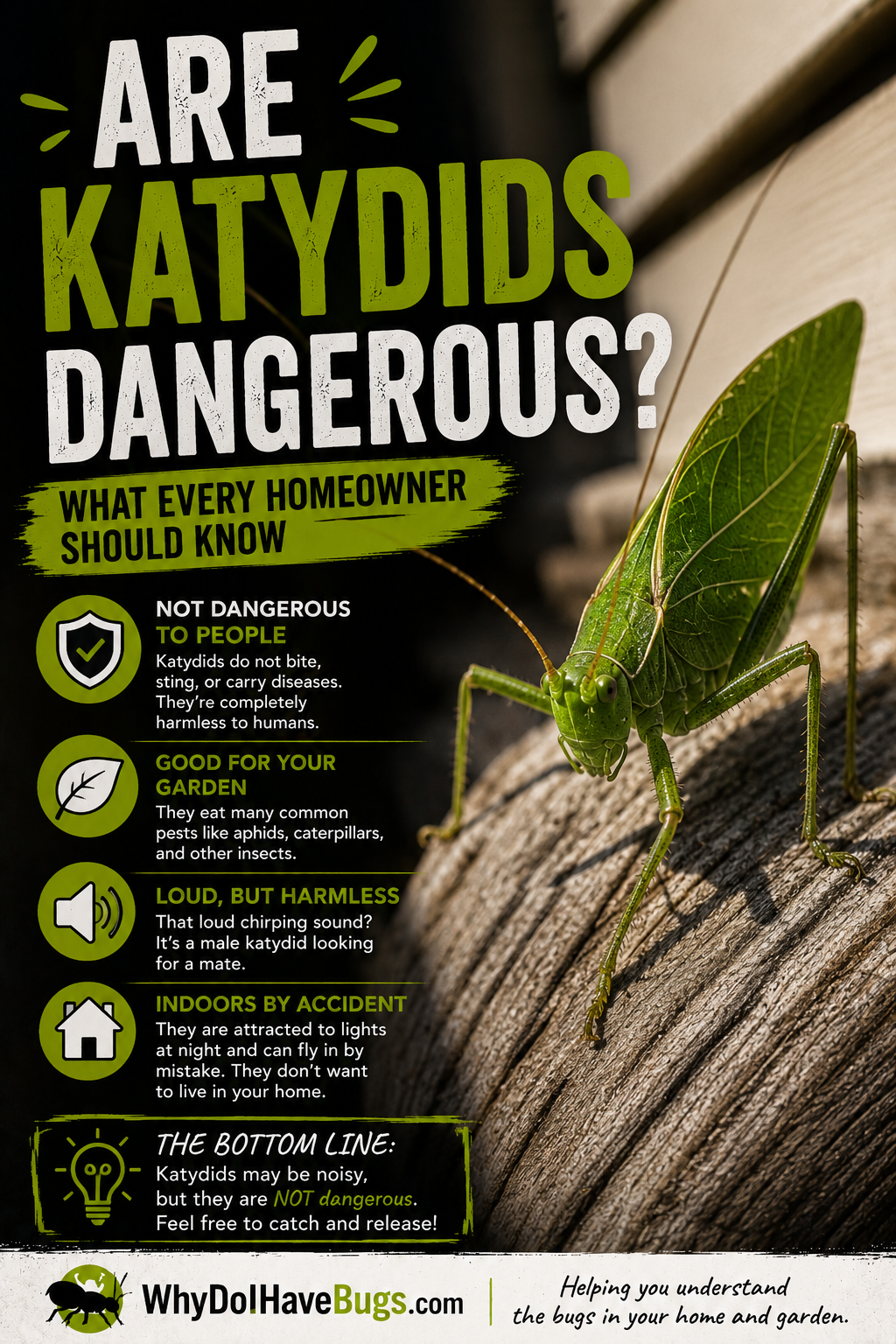
Katydids are usually not bad for home gardens. They can chew leaves, flowers, and fruit, but their feeding normally remains cosmetic rather than threatening the health of an established plant. If you're also wondering whether these insects create risks beyond minor plant feeding, see katydid concerns for homeowners.
A few damaged leaves are part of having a living garden. Plants can tolerate a surprising amount of minor leaf loss without suffering any lasting harm.
Katydids may become a legitimate concern when:
- Numerous katydids are feeding on the same plants
- Young seedlings are losing a large percentage of their leaves
- Developing fruit is receiving repeated feeding scars
- A small or stressed plant is being defoliated
- Commercial-quality fruit is being produced
Even under those circumstances, confirming the culprit matters. Removing katydids will not solve the problem if caterpillars, beetles, earwigs, or grasshoppers are causing most of the damage.
Are Katydids Helpful?
Katydids contribute to the backyard food web. Birds, bats, frogs, spiders, and other wildlife rely on them as prey.
Some katydids also eat aphids, insect eggs, and small insects. Their droppings return nutrients to the soil, and their feeding forms part of the natural balance between plants and insects.
I would not describe katydids as beneficial in exactly the same way as ladybugs or pollinating bees. Their role is more complicated because they can consume both plants and insects. Still, their presence normally reflects an active outdoor ecosystem rather than a dangerous infestation.
They are also not considered dangerous household pests. My guide covering whether katydids are dangerous explains why their size and unusual body shape can make them appear more threatening than they really are.
Should You Remove Katydids From Your Garden?
In most situations, I would leave a katydid alone. Treatment is unnecessary when you only see one or two insects and the plants remain healthy.

If a katydid is sitting on a delicate seedling or valuable fruit, you can move it by placing a container over it and sliding a stiff piece of paper underneath. Release it farther away in tall grass, shrubs, or a wooded area. A safe catch-and-release bug catcher can make this kind of careful relocation easier.
Avoid handling a large katydid with bare fingers. Katydids are not aggressive, but their strong jaws can pinch if they feel trapped. The bite is defensive rather than an attempt to feed on you.
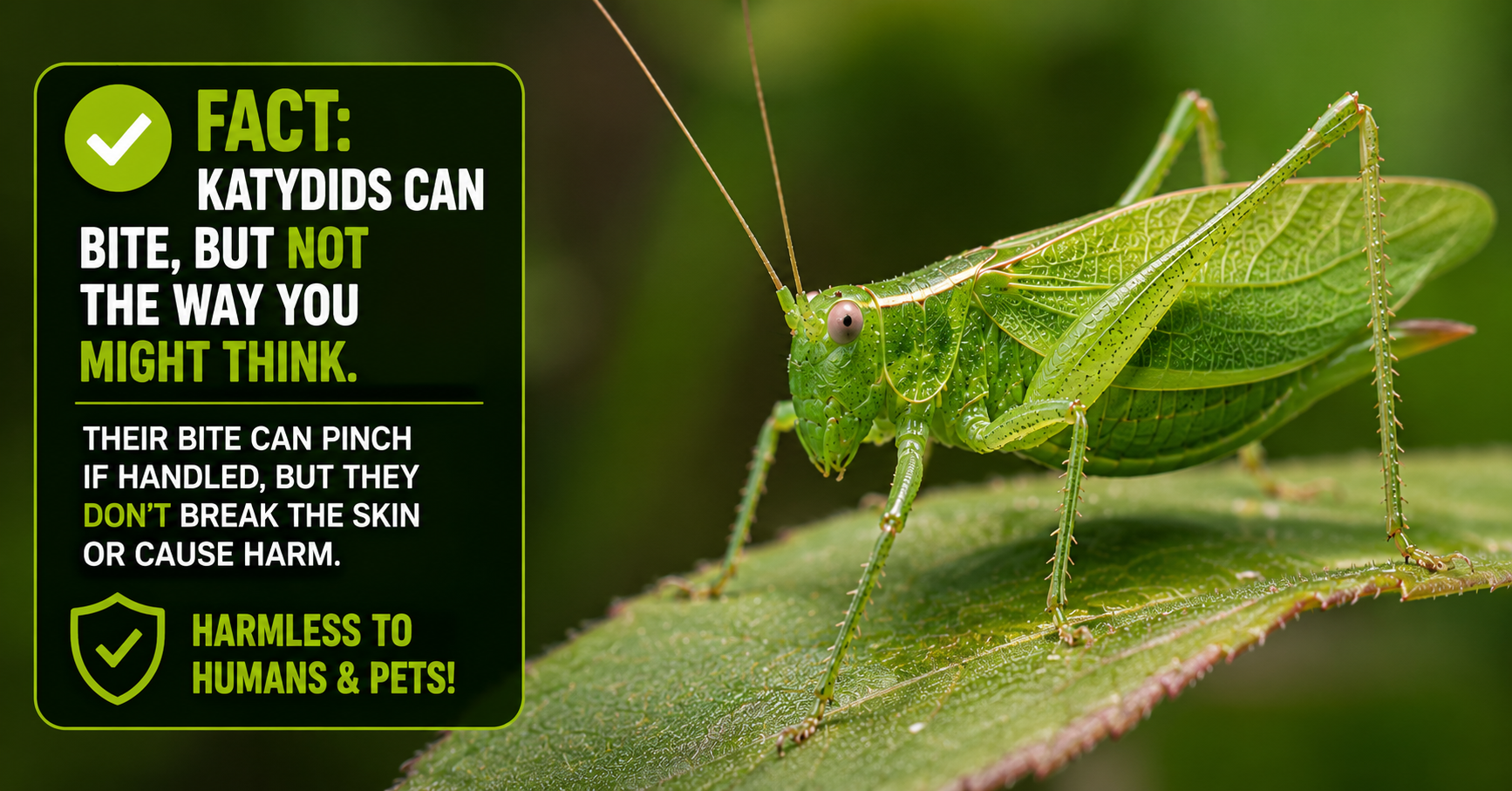
You can read more about that behavior in the truth about whether katydids bite people.
When Katydid Feeding Becomes a Real Problem
Katydid feeding becomes important when the amount of damage exceeds what the plant can easily tolerate. This is more likely with young plants, stressed plants, fruit crops, or an unusually large local population.
Before taking action, inspect the plant at different times of day. Katydids are often most active during the evening and at night. Look for fresh chewing, droppings, nymphs, eggs along leaf edges, and other insects that could be responsible.
If only a few katydids are present, hand removal is generally enough. Physical barriers such as fine insect netting can protect valuable young plants or developing fruit without spraying the entire garden.
Broad insecticide treatments can kill pollinators, predatory insects, and other harmless wildlife. They are difficult to justify for a few cosmetic holes.
Why Katydids Are Often Found Near Plants and Porch Lights
Katydids live where their food and shelter are available. Trees, shrubs, tall grass, gardens, and overgrown vegetation give them leaves to eat and places to hide.
Many species are active at night. Exterior lights can draw them away from vegetation and toward houses, garages, porches, and windows. Once they land near a bright light, their size makes them much easier to notice.
Their nighttime calls can also make it sound like far more katydids are present than you can see. If you are curious about the noise, this katydid sound identification guide explains the rasps, clicks, and repeated calls heard during warm evenings.
What Can You Feed a Katydid Temporarily?
A wild katydid is best released outdoors rather than kept as a pet. If you need to hold one briefly for identification or observation, you can provide fresh, pesticide-free leaves from the same plant where it was found.
A temporary enclosure should have ventilation, climbing surfaces, and enough space for the insect to move without damaging its legs or antennae. Replace wilted foliage promptly.
Avoid offering processed human food, heavily sprayed produce, or a deep open water dish. Katydids can obtain moisture from fresh vegetation, and a light mist on the leaves is safer than standing water.
Release the katydid near its original habitat as soon as possible. Moving it from a leafy yard into an exposed area may leave it without appropriate food or protection.
What Do Katydids Eat During Winter?
In much of the United States, adult katydids do not remain active through winter. Females deposit eggs on plants, bark, twigs, or within leaf tissue. These eggs survive the cold season and hatch when warmer conditions return.
Because of this life cycle, you generally will not see adult katydids searching for winter food inside your home. A large green insect found indoors during cold weather may have entered earlier, emerged from protected vegetation, or been brought inside with a plant.
Katydids do not overwinter by creating hidden colonies inside walls the way some household pests do.
What Eats Katydids?
Katydids are eaten by many predators and provide an important seasonal food source.
Their predators include birds, bats, tree frogs, spiders, praying mantises, wasps, rodents, reptiles, and other insect-eating animals.
Their leaf-like camouflage helps them avoid detection. Many remain motionless during the day and become active after sunset, when their coloring and body shape make them difficult to spot among vegetation.
The loud calling of male katydids can attract mates, but it can also help predators locate them. This balance between feeding, hiding, calling, and avoiding predators is part of their normal role outdoors.
What Do Katydids Eat and Should You Be Concerned?
Most katydids eat leaves, flowers, pollen, stems, and small amounts of fruit. Some species also eat aphids, insect eggs, caterpillars, dead insects, and other small prey.
Their chewing can leave visible holes and notches, but serious plant damage is uncommon in a typical home landscape. Unless several katydids are repeatedly damaging young plants or fruit, there is usually no reason to remove or treat them.
Finding one in your garden, on your porch, or near an outdoor light is normally just a seasonal wildlife encounter. Katydids belong outside, but they are not a sign that your home or yard has developed a dangerous pest problem.
Frequently Asked Questions
Do katydids eat tomato plants?
Katydids can nibble tomato leaves, flowers, or fruit, but they rarely cause extensive damage to an established tomato plant. Look for the insect actively feeding before assuming it caused the holes.
Do katydids eat aphids?
Some omnivorous and predatory katydids eat aphids and other small, soft-bodied insects. However, not every katydid species regularly hunts them.
Do katydids eat fruit?
Some katydids bite young fruit, including citrus, pears, blueberries, and stone fruit. Their feeding may leave a shallow scar that expands as the fruit grows.
Do katydids eat grass?
Certain species eat grass and low-growing vegetation. Tree-dwelling katydids are more likely to feed on leaves in shrubs and tree canopies.
Will a katydid eat my houseplants?
A katydid trapped indoors may chew a houseplant, but it will not create a lasting indoor infestation. Catch it carefully and release it outside.
Are katydids harmful to vegetable gardens?
Katydids are usually only minor feeders in vegetable gardens. A few holes rarely affect the plant, although large numbers can cause more noticeable damage.
Do katydids eat other bugs?
Some species eat insect eggs, aphids, caterpillars, dead insects, and other small prey. Most familiar katydids still consume a considerable amount of plant material.
Should I kill katydids in my garden?
Usually not. Katydids rarely cause enough damage to justify killing them or spraying the garden. Hand removal is a better choice when one is feeding on a delicate plant.
Written by Ethan Caldwell, a backyard pest researcher and longtime gardener who helps homeowners identify insects accurately and respond without using unnecessary treatments. Find more practical identification and pest guidance at WhyDoIHaveBugs.com.