Finding a tiny carpet beetle crawling across your bathroom sink, bathtub, or window can be confusing. Most people associate carpet beetles with closets, rugs, and clothing, not a room filled with tile, porcelain, and running water.
Maybe you’ve spotted one crawling along the bathroom wall. Or perhaps you keep noticing tiny black or spotted beetles around the window, even after cleaning everything.
Carpet beetles can show up in bathrooms, but they’re usually not there because of the water or humidity. Adult carpet beetles may fly into the room, become attracted to sunlight near windows, or wander in from another part of the house. Their larvae may also travel through bathrooms while searching for food or a protected place to develop.
The important thing is figuring out whether those insects are occasional visitors or a sign that carpet beetle larvae are living somewhere nearby.
Here’s what I’d check before buying a spray or tearing apart the bathroom.
Why Are Carpet Beetles in My Bathroom?
There are several reasons carpet beetles might appear in a bathroom, and not all of them indicate an infestation.
Unlike springtails or drain flies, carpet beetles aren’t primarily attracted to damp environments. Their larvae need suitable food materials to survive, while the adults commonly feed on pollen or nectar outdoors.
That distinction is important because simply running your bathroom fan more often isn’t likely to solve an actual carpet beetle infestation.
1. Adult Carpet Beetles Are Attracted to Bathroom Windows
This is one of the first possibilities I’d consider.
Adult carpet beetles can fly, and many are attracted to sunlight.
They commonly gather around windows, including bathroom windows, because they’re attempting to move toward the light or get back outdoors.
If you’ve been finding tiny spotted or dark-colored beetles on the windowsill, they may have entered through an open window, a damaged screen, or another opening.
An occasional adult beetle near a window doesn’t automatically mean carpet beetles are breeding in your bathroom.
In fact, adults often feed outdoors on pollen and nectar rather than feeding on household fabrics.

If most of your sightings happen near glass, our guide explaining why carpet beetles gather around windows covers that behavior in greater detail.
2. Carpet Beetle Larvae May Be Wandering From Another Room
Carpet beetle larvae don’t necessarily stay in the same place throughout their development.
They generally prefer dark, protected locations where they can feed undisturbed.
However, larvae sometimes wander away from their food source, including when they’re looking for a suitable place to pupate.
This means a larva discovered on your bathroom floor may have developed somewhere else.
It could have wandered from a nearby bedroom, hallway, closet, or an area beneath furniture.
If you only find an occasional larva but can’t identify a food source inside the bathroom, expand your inspection beyond that room.
3. Hair and Lint Have Accumulated Behind Bathroom Fixtures
Bathrooms collect quite a bit of hair and lint.
Think about the places you rarely clean thoroughly.
There’s the narrow gap between the vanity and wall, the area behind the toilet, the underside of storage cabinets, and spaces behind removable baseboards or trim.
Human hair and other animal-based debris can provide food for some carpet beetle larvae.
A few loose hairs on the bathroom floor don’t mean you’ve created an infestation. However, a substantial buildup of hair, lint, and dead insects in an undisturbed area could support larvae.
This is particularly worth investigating if you’re finding several larvae in the same location.
4. Towels, Bath Mats, or Stored Fabrics May Be Involved
Not every carpet beetle infestation starts in carpeting.
The larvae commonly feed on animal-based materials, including wool, fur, feathers, and certain other natural fibers.
If you keep wool bath mats, natural-fiber textiles, or stored clothing in the bathroom, inspect those items.
Ordinary clean cotton towels aren’t usually a preferred food source, but heavily soiled fabrics can sometimes support feeding.
The same applies to mixed materials containing susceptible animal fibers.
Check underneath removable bath mats and inside bathroom storage cabinets, particularly if items have been sitting untouched.
5. They’re Coming From a Nearby Closet or Bedroom
Sometimes the bathroom isn’t the source at all.
If your bathroom connects directly to a bedroom or walk-in closet, carpet beetles may be coming from an adjoining space.
The adults can fly or crawl into the bathroom, while larvae can wander through gaps and along floor edges.
This is particularly worth considering if you’ve already noticed carpet beetles elsewhere in your house.
For example, an infestation involving wool clothing or debris beneath bedroom furniture could explain occasional larvae appearing on the bathroom floor.

Our article about why carpet beetles appear in bedrooms can help you investigate that possibility.
Are Carpet Beetles Attracted to Bathroom Moisture?
Not in the same way that many other small bathroom pests are.
Springtails, for example, are strongly associated with moisture and commonly appear around damp surfaces.
Carpet beetles are different.
Their presence is more closely connected to suitable food sources, shelter, and the movement of adult beetles through the home.
Carpet beetle larvae can develop under a range of humidity conditions, but moisture by itself doesn’t provide them with food.
If you’re seeing lots of tiny insects around a leaking pipe or permanently wet bathroom floor, don’t assume they’re carpet beetles.
You could be dealing with springtails or another moisture-associated insect.

Our guide to tiny jumping bugs in bathrooms explains how to recognize some of those common alternatives.
Reducing excessive humidity is still good bathroom maintenance, especially for preventing mold and moisture damage. It just isn’t a substitute for locating a carpet beetle infestation.


What Do Carpet Beetles Look Like in a Bathroom?
Before trying to eliminate anything, make sure you’ve identified the insect correctly.
Several small household insects can look similar when you’re only seeing them for a second or two.
Adult Carpet Beetles
Adult carpet beetles are small, usually measuring somewhere around 1/16 to 1/4 inch, depending on the species.
Their bodies are typically oval or rounded, and they have six legs.
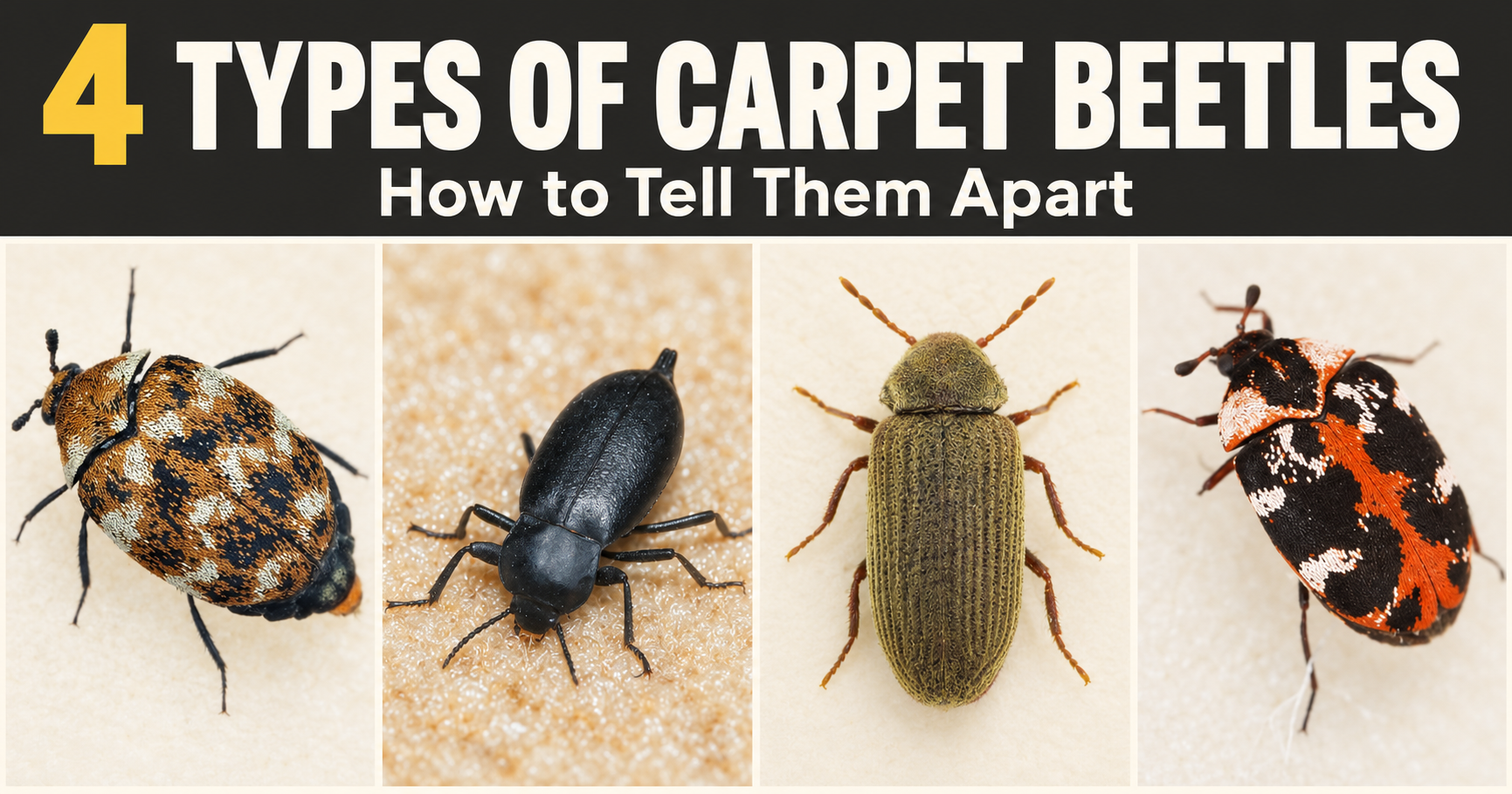
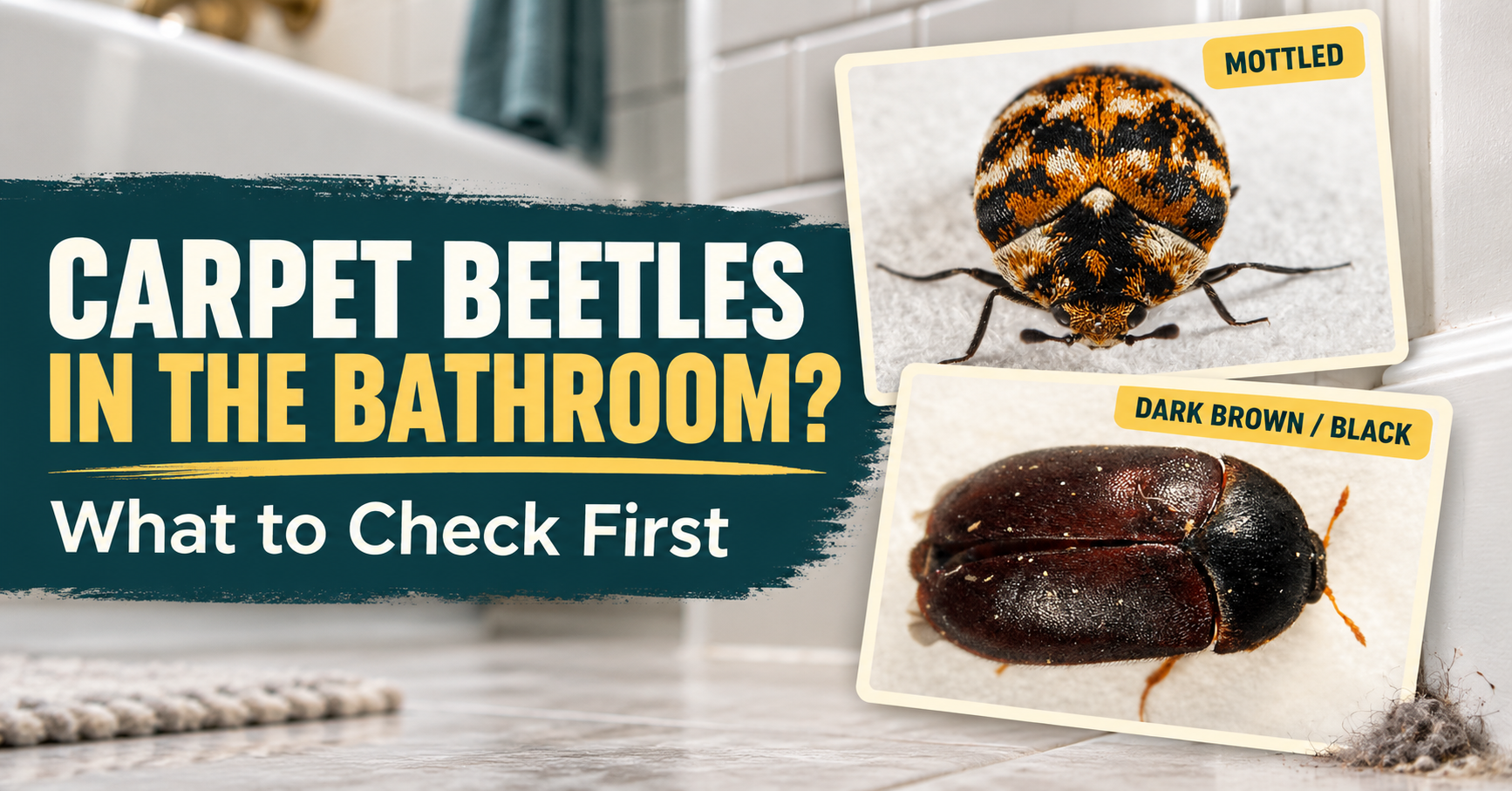
Varied carpet beetles have distinctive mottled patterns of white, yellowish, brown, and dark scales.
Black carpet beetles are generally darker and more elongated.
If you see a small beetle flying near a bathroom window, an adult carpet beetle is one possibility.
However, other small beetles can behave similarly, so appearance still matters.
Carpet Beetle Larvae
The larvae look completely different from the adults.
They are generally elongated, brownish, and covered with noticeable hairs or bristles.
Some have bands of lighter and darker colors. Others have a tuft of longer hairs toward the rear of their bodies.
They can resemble tiny fuzzy caterpillars.
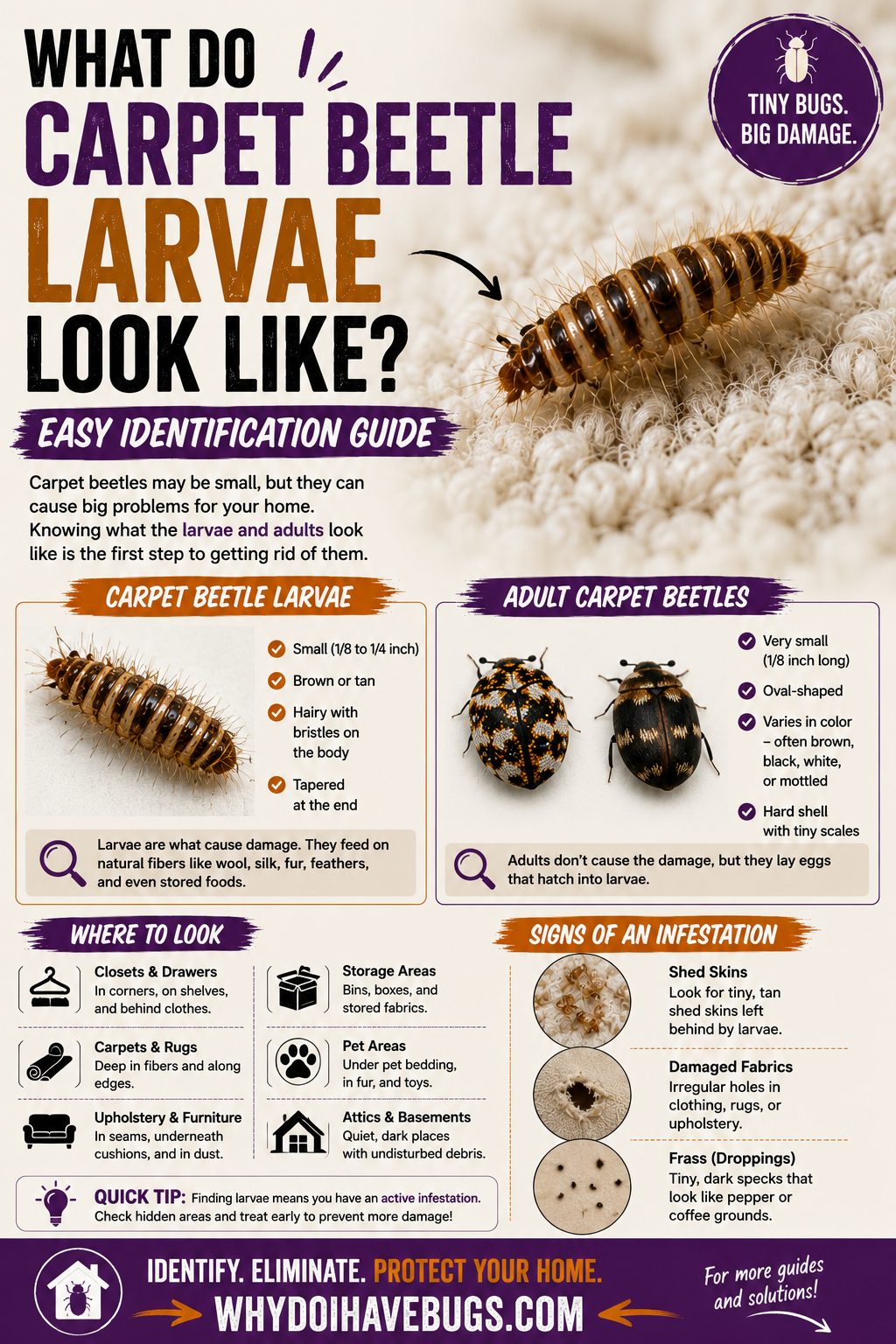
If you’re finding a small brown, hairy insect crawling along the bathroom baseboard, take a close-up picture and compare it with our carpet beetle larvae identification guide.
The larvae are especially important because they’re responsible for most carpet beetle feeding damage.
Where Should You Look for Carpet Beetles in the Bathroom?
I’d start with the areas where you’ve actually been seeing them.
Then I’d work outward to nearby hiding places.
Around the Bathroom Window
Check the windowsill, window frame, and accessible trim.
Look for adult beetles, accumulated dead insects, and any gaps that could allow insects inside.
Inspect the window screen for damage.
If the beetles are concentrated around the window and you aren’t finding larvae elsewhere, occasional outdoor entry becomes a more reasonable possibility.
Behind the Toilet
The space behind a toilet is easy to overlook during routine cleaning.
Dust, hair, and other debris can accumulate near the floor and around plumbing openings.
Use a flashlight to inspect the accessible floor edges and wall junctions.
Look for live larvae, brown shed skins, and concentrated debris.
Avoid pulling on plumbing connections or disturbing the toilet simply to search for insects.
Under the Bathroom Vanity
If your vanity has an open bottom or accessible toe-kick, inspect it carefully.
These sheltered spaces may collect hair, dust, dead insects, and other material.
Check around plumbing penetrations and the floor beneath accessible storage areas.
You don’t need to disassemble the entire vanity.
Start with the spaces you can reach safely using a flashlight and vacuum crevice attachment.
Beneath Bath Mats
Lift removable bath mats and inspect both the mat and the floor underneath.
Look particularly closely at mats made from wool or other susceptible natural fibers.
A damp bath mat isn’t automatically a carpet beetle food source, but stored debris or appropriate textile material may attract larvae.
Wash or clean mats according to their care labels.
Bathroom Cabinets and Linen Storage
If you store blankets, clothing, wool items, or other fabrics inside bathroom cabinets, inspect them.
Look along shelf corners and underneath stored items.
Carpet beetle larvae prefer places where they can feed with little disturbance.
An old textile that hasn’t been moved for months deserves more attention than a clean towel you use every morning.


How to Get Rid of Carpet Beetles in Your Bathroom
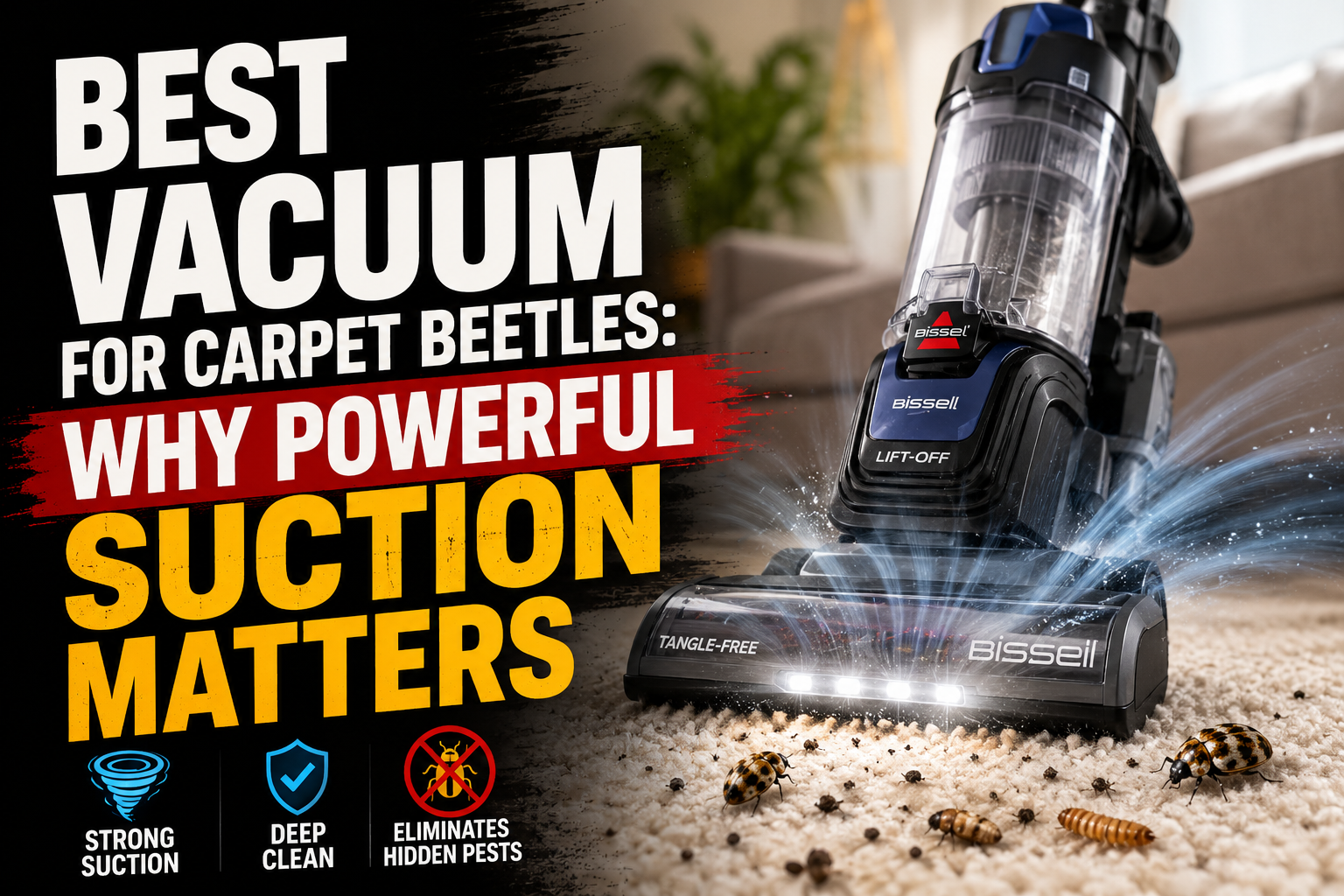
Once you’ve confirmed the insects are carpet beetles, I’d start with cleaning and inspection rather than pesticides.
The goal isn’t simply to kill the beetles you can see.
You want to determine whether larvae are developing somewhere nearby and remove whatever is supporting them.
Step 1: Vacuum Along Baseboards and Hidden Edges
Start with the floor edges, corners, and accessible spaces beneath cabinets.
Use a crevice tool to collect hair, lint, dead insects, and other debris.
Pay attention to the places where you’ve noticed larvae or shed skins.
Vacuuming can remove some insects and eggs while reducing the food available to larvae.
If the bathroom is tiled, you may need to use the crevice attachment around grout edges, trim, and fixture bases.
Empty the vacuum outside afterward, preferably into a sealed trash bag.
Step 2: Inspect and Clean Stored Fabrics
Remove towels, bath mats, clothing, and other fabric items from the areas where you’re finding insects.
Inspect them for live larvae, shed skins, and damage.
Wash washable items according to their care labels.
Use professional cleaning when appropriate for delicate materials.
If you discover a heavily infested item that cannot be adequately cleaned, disposal may be necessary.
Don’t assume every piece of fabric in the bathroom needs to be thrown away.
Identify the affected items first.
Step 3: Remove Accumulated Hair and Lint
Cleaning the visible floor is only part of the job.
Take a closer look behind accessible fixtures and underneath storage cabinets.
Remove collections of hair, lint, and dead insects.

These materials can provide food for carpet beetle larvae, especially when they accumulate in areas that rarely get disturbed. Hidden accumulation in places like furniture-covered flooring can also lead to damage, as explained in areas that rarely get disturbed.
You may also need to clean nearby rooms if you suspect the insects are coming from elsewhere.
Step 4: Check Nearby Rooms for the Source
If you keep finding larvae after cleaning the bathroom, expand your search.
Inspect nearby bedroom closets, carpet edges, upholstered furniture, and stored natural-fiber items.
Look for fresh larvae and concentrated groups of shed skins.
A bathroom sighting might be your first clue to a carpet beetle problem developing in another room.
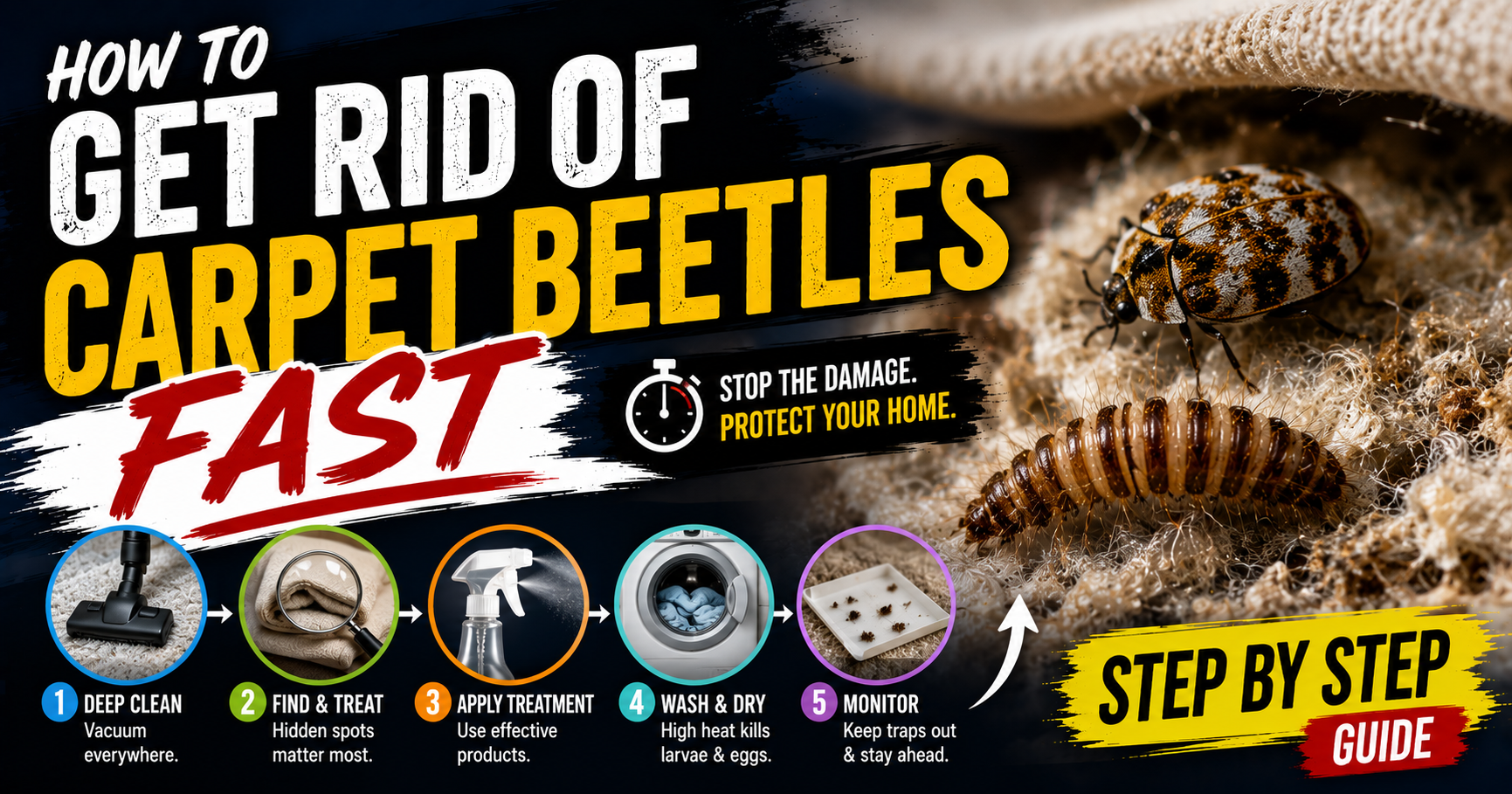
Our complete carpet beetle removal guide covers the broader process of locating food sources and controlling infestations throughout a home.
Step 5: Seal Easy Entry Points
If you’re repeatedly finding adult beetles near the bathroom window, inspect the screen and weatherstripping.
Repair damaged screens and close obvious gaps around accessible window trim.
Carpet beetles can enter homes in several ways, so sealing openings doesn’t guarantee you’ll never see another one.
However, it can reduce opportunities for flying insects to come indoors.
Step 6: Monitor for New Activity
After cleaning, check the same places over the following weeks.
Pay attention to whether you’re finding live larvae or only old shed skins.
A few adult beetles near the window may represent occasional visitors.
Repeatedly finding larvae in one area suggests you should continue investigating for a nearby food source.
If you can’t locate the source and the problem continues, a qualified pest-control professional may be able to help identify the insects and inspect inaccessible areas.
Should You Spray Carpet Beetles in Your Bathroom?
I wouldn’t make spraying the first step.
Carpet beetle problems are often related to hidden food materials. Spraying visible insects without removing those materials can leave the underlying problem untouched.
Bathrooms also contain surfaces that people frequently touch, along with towels, personal-care products, and other belongings.
If you choose to use an insecticide, confirm that the product is labeled for carpet beetles and for the exact application area.
Follow all label directions, including ventilation requirements and restrictions around water, drains, children, and pets.
Never spray insecticides into electrical outlets, plumbing openings, air vents, or drains unless the product’s labeling specifically permits that use.
For most minor situations, thorough cleaning, removing infested materials, and monitoring are sensible first steps.

Do Carpet Beetles Come Out of Bathroom Drains?
Carpet beetles aren’t considered drain-breeding insects.
Their larvae don’t normally develop in the slime inside drains the way drain fly larvae can.
If you keep seeing tiny insects coming directly from a sink, bathtub, or shower drain, consider whether you’re dealing with another insect.
Drain flies, for example, are often associated with organic buildup inside plumbing drains.
Springtails can also appear around wet fixtures, although they aren’t drain-breeding flies.
An adult carpet beetle might happen to crawl near a drain or become trapped in the sink or tub.
That doesn’t mean the drain is its source.
If you’re unsure what you’re seeing, collect or photograph the insect before applying any treatment.
What if You Keep Finding Dead Carpet Beetles in the Bathroom?
Dead carpet beetles can be particularly confusing.
You clean the windowsill, and a few days later you find another tiny dead beetle.
Sometimes adult beetles enter the room, become trapped near the window, and eventually die.
They can also emerge from hidden development sites elsewhere in the house and move toward the light.
That means a few dead adults don’t necessarily identify where the larvae are living.
If this keeps happening, inspect the nearby rooms and look for evidence of larvae.

We’ve explored this situation further in our article explaining why dead carpet beetles keep appearing.
The most important distinction is whether you’re finding occasional adults or ongoing evidence of larval activity.


How Can You Prevent Carpet Beetles From Returning?
You probably can’t prevent every adult carpet beetle from entering your home.
These insects occur naturally outdoors, and adults can fly.
However, you can make your bathroom and surrounding rooms less suitable for larvae.
Clean accumulated hair and lint from hard-to-reach areas, particularly beneath cabinets and around floor edges.
Inspect seldom-used fabrics and keep susceptible clean wool items in suitable sealed storage.
Repair damaged window screens and reduce obvious entry points.
If you have recurring problems, periodically inspect nearby closets, carpeting, and furniture for signs of larvae.
The goal is to make it difficult for carpet beetles to find food and undisturbed places to develop.
Frequently Asked Questions
Why do I keep seeing carpet beetles on my bathroom wall?
Adult carpet beetles may be moving toward a window or another source of light. Larvae can also wander away from their food source. Repeated sightings deserve an inspection of nearby cracks, stored fabrics, and adjoining rooms.
Can carpet beetles live in a bathroom without carpet?
Yes. Carpet beetle larvae don’t require carpeting. They can feed on suitable animal-based materials, such as accumulated hair, dead insects, wool, and other natural fibers.
Are carpet beetles attracted to humidity?
Carpet beetles aren’t primarily moisture pests. They can develop under different humidity conditions, but their presence is more strongly associated with appropriate food sources and shelter.
Can carpet beetles come through bathroom vents?
Small insects may move through accessible openings or building voids, but finding a carpet beetle near a bathroom vent doesn’t establish that the ventilation system is its source. Inspect accessible areas safely and avoid spraying insecticides into the vent.
Should I worry about one carpet beetle in my bathroom?
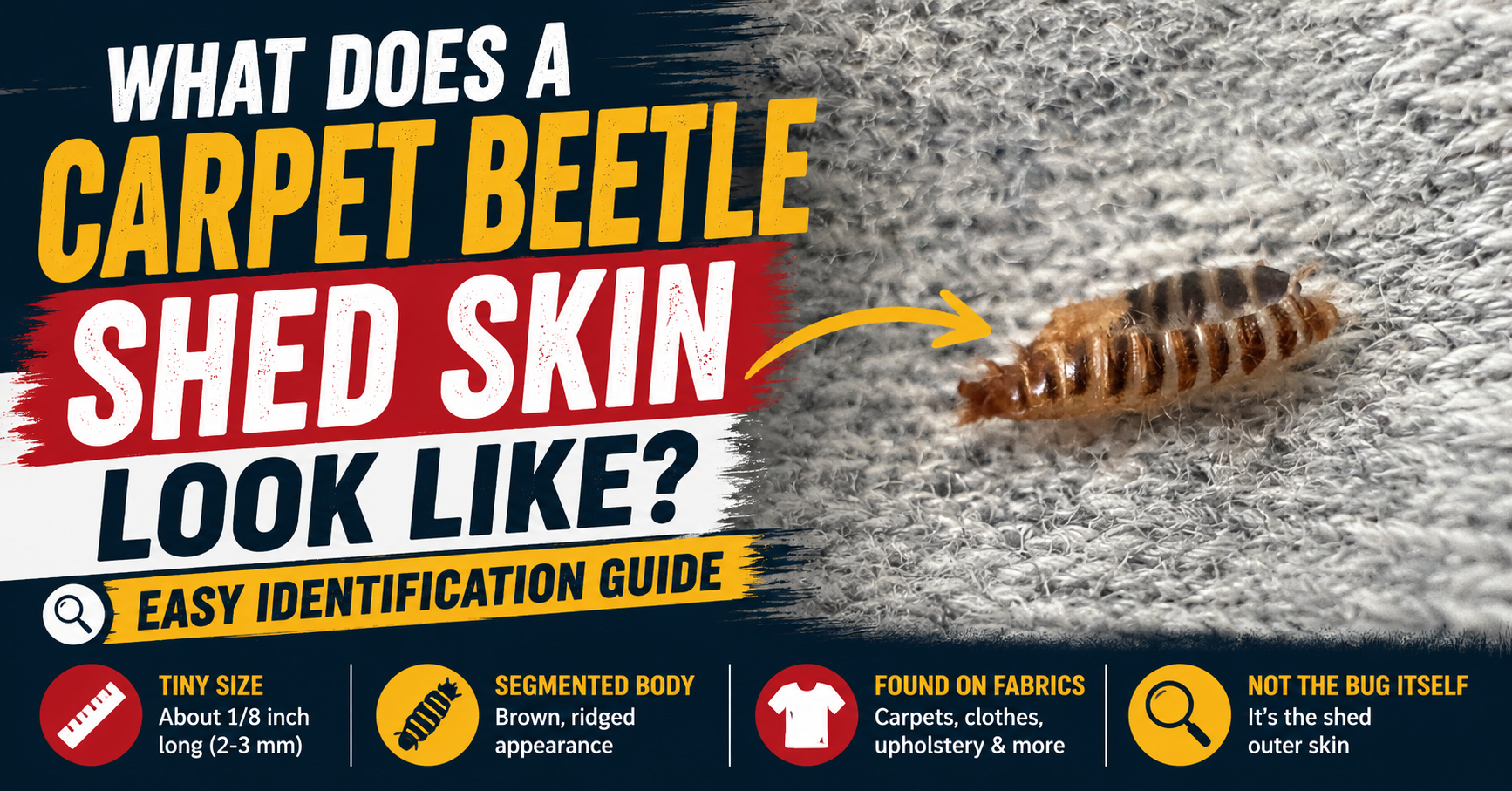
One adult carpet beetle usually isn’t enough to establish an infestation. Remove or identify the insect and monitor for more activity. Finding repeated larvae or fresh shed skins is a stronger reason to investigate. Knowing how to identify recognizing carpet beetle shed skins makes it easier to interpret repeated findings during that inspection.
Do carpet beetles bite people in the shower?
Carpet beetles don’t bite people to feed on blood. However, hairs from carpet beetle larvae or their shed skins can cause skin irritation in sensitive individuals.
Will bleach kill carpet beetles in bathroom drains?
Carpet beetles don’t normally breed in drains, so pouring bleach down a drain isn’t a useful carpet beetle control strategy. It can also create chemical hazards, especially if mixed with other cleaners.
How long will carpet beetles stay in my bathroom?
That depends on why they’re there. An occasional adult may leave or die without establishing an infestation. If larvae have access to suitable food nearby, activity may continue until the source is found and addressed.
Why am I finding carpet beetle larvae but no adult beetles?
The larvae often remain hidden in dark spaces, while adults may fly away or move toward windows. You may discover larvae even when no adults are visible. Finding their food source is more useful than waiting to see adult beetles.
About the Author: The team at Why Do I Have Bugs helps homeowners identify common household pests, understand why they’re appearing, and find practical ways to deal with unwanted insects.