
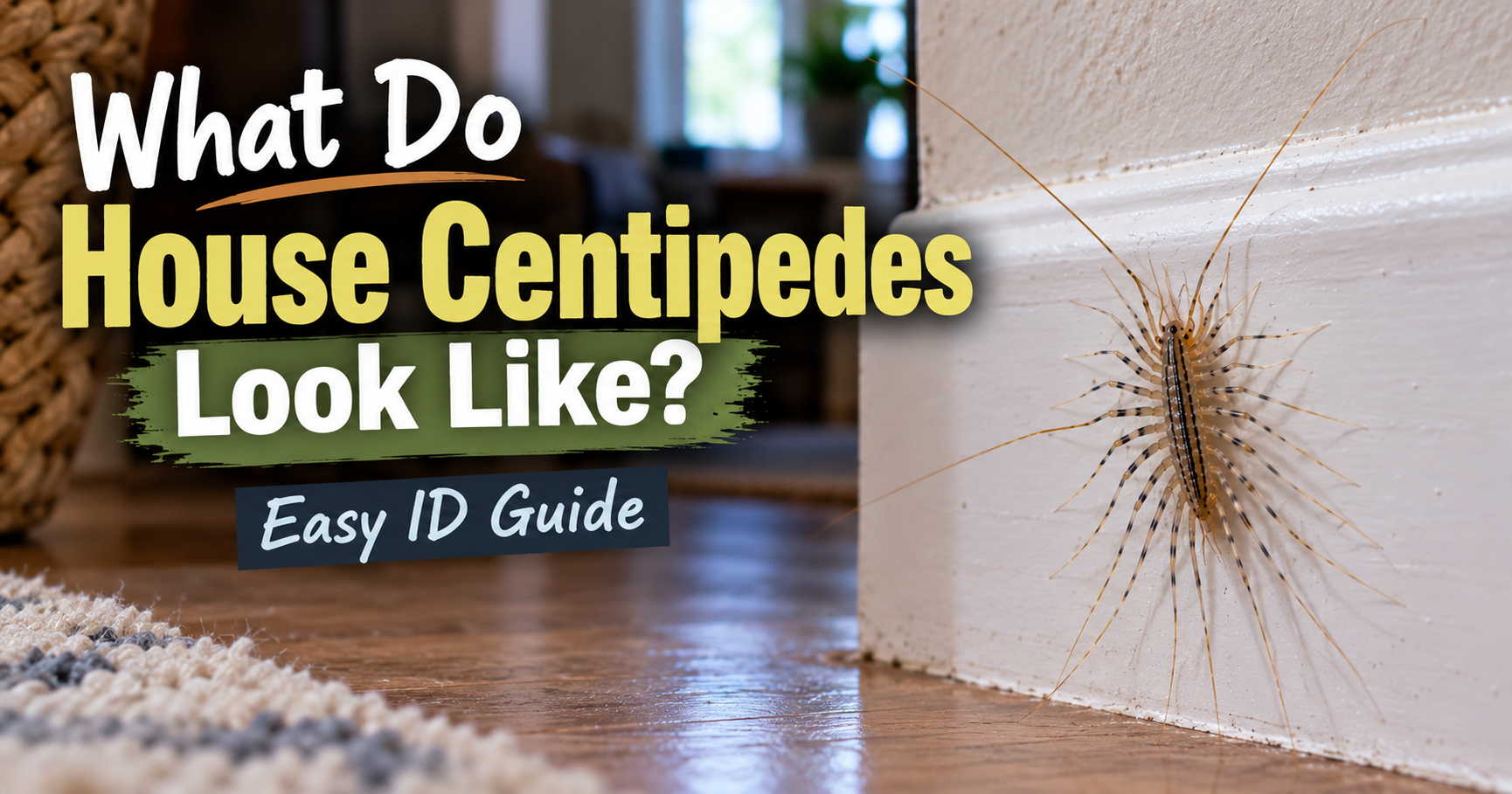
The first time I saw a house centipede run across a wall, I understood why people panic. It has a long striped body, an unbelievable number of thin legs, and it moves much faster than most household bugs. But once you know its few clear identifying features, it is actually one of the easier indoor pests to recognize.
A house centipede is not an insect, a silverfish, a spider, or a baby millipede. It is a centipede, and the long-legged kind found in homes has a very distinct look. The quickest clue is a narrow grayish body with extremely long, delicate legs that make the bug look much bigger than it really is.
What Does a House Centipede Look Like?
A house centipede has a flattened, slender body with about 15 pairs of long legs when it is fully grown. Its body is usually yellowish gray, tan, or muted brown with three darker stripes running lengthwise down its back.
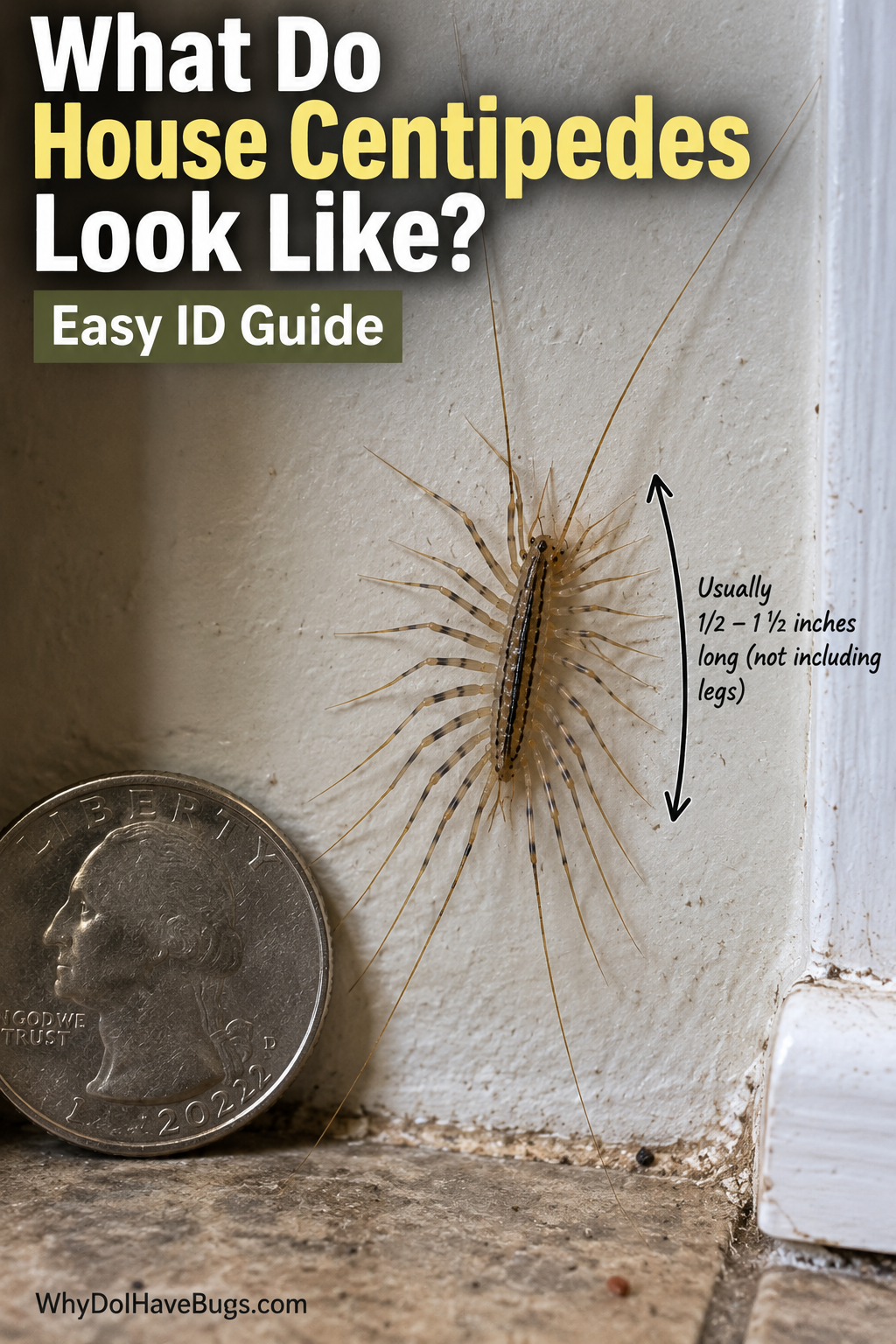
The legs are what get your attention. They are long, thin, and banded with darker and lighter color. The last pair is usually the longest, so the centipede may look as if it has two very long tails trailing behind it.
Most adult house centipedes are around one to one-and-a-half inches long when you measure their body. With the legs included, though, they can look closer to three inches across. That is why people often describe them as much larger than they really are.



The Long Legs Are the Biggest Clue
A house centipede does not have a thick, armored body like many bugs. It looks light and almost feathery because its legs stick far out from both sides.
Those legs help it run across floors, walls, ceilings, tubs, and basement walls at surprising speed. If you have ever turned on a bathroom light and watched a gray, long-legged bug disappear into a crack in less than a second, a house centipede is a likely answer.
Each body segment has one pair of legs. That is one way centipedes differ from millipedes, which generally have two pairs of legs on most body segments and move much more slowly.
What Color Are House Centipedes?
Most house centipedes are yellowish gray to grayish brown. Their body usually has darker blue-gray, brown, or purplish stripes down the back.
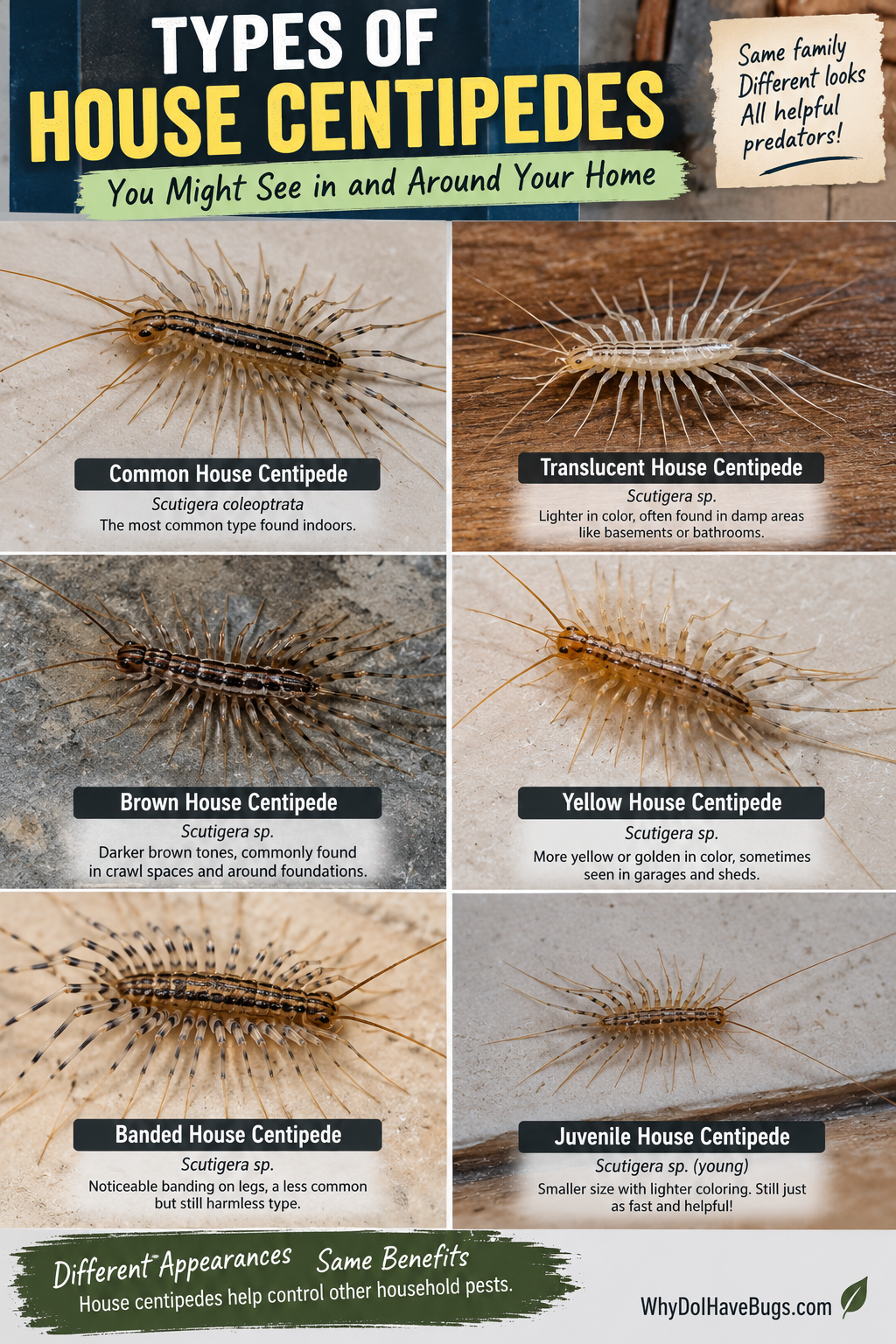
Their legs commonly look pale yellow, gray, or nearly transparent with dark bands. In poor lighting, they may look brown or even black, but a close look usually shows the lighter striped body and thin banded legs.
Color can change a little with age and lighting, so I would not identify one by color alone. The body shape, long legs, speed, and indoor location are more reliable clues.
Do House Centipedes Have 100 Legs?
Not exactly. Despite the name, house centipedes do not have 100 legs.
Adult house centipedes have 15 pairs of legs, which equals 30 legs. Young house centipedes have fewer leg pairs and gain more as they molt and grow.
Thirty legs still looks like a lot when they are moving at full speed across a white wall, especially because each leg is so long. The name “centipede” comes from Latin words meaning “hundred feet,” but it is not a literal leg count.

What Does a Baby House Centipede Look Like?
Baby house centipedes look like smaller, shorter-legged versions of adults. They are usually lighter in color and have fewer body segments and fewer pairs of legs than a mature centipede.
As they grow, they molt several times. With each molt, they develop additional segments and more legs until they reach the adult form with 15 pairs.
A tiny house centipede can be mistaken for a small silverfish or another fast-moving household bug, but it will still have legs extending out from the sides of its body. Silverfish have only six legs and three tail-like bristles at the rear, while a centipede has many long legs running down nearly its entire body.

Compare a house centipede with a real silverfish here if the bug you found is silvery, narrow, and moving quickly in a bathroom or basement.
House Centipede vs. Silverfish
People often confuse house centipedes and silverfish because both can appear in damp parts of the home and move fast when the lights come on.
A silverfish has a smooth, fish-shaped body that tapers toward the back. It has six legs close to the front and three bristle-like appendages at the rear. Its movement is more of a quick wriggle or dart.
A house centipede has long legs extending from both sides of the whole body. It looks much more like a tiny, fast-moving creature with legs than a fish-shaped insect. It also usually runs in a straight, quick burst instead of wiggling its body from side to side.
House Centipede vs. Millipede
Millipedes are much rounder and slower than house centipedes. Their bodies are usually dark brown, black, or reddish brown, and their legs are short enough that you may barely notice them from above.
A house centipede is flatter, lighter colored, and built for speed. Its long legs are obvious from across the room.
Millipedes tend to curl into a tight coil when disturbed. House centipedes do the opposite. They run.
House Centipede vs. Spider
At a quick glance, a house centipede can look like a strange oversized spider. The difference is the number of legs and the body shape.
Spiders have eight legs and two main body sections. House centipedes have many legs, one pair per body segment, and a longer striped body.
Spiders also tend to pause, hide, or move in shorter bursts. House centipedes are fast-running hunters that often keep moving until they disappear into a crack, floor gap, drain opening, or dark corner.



House Centipede vs. Earwig
Earwigs and house centipedes both make people uncomfortable, but they look completely different once you know what to check.
Earwigs have six legs, a longer brown body, and obvious pincers at the rear. Their legs are short and close to their body. A house centipede has many thin legs and no rear pincers.

If the bug has two curved pinchers on its rear end, it is not a house centipede. This earwig identification guide shows the differences clearly if you are seeing brown bugs near bathrooms, laundry rooms, or damp lower-level areas.
Where You Usually Find House Centipedes
House centipedes prefer dark, protected areas with enough moisture for the insects they hunt. That is why people often see them in bathrooms, basements, crawl spaces, laundry rooms, garages, utility rooms, and under-sink cabinets.
They may also appear in bedrooms, closets, kitchens, or living rooms, especially if there are cracks around baseboards or an insect population giving them something to eat.
A sighting does not necessarily mean the room is dirty. House centipedes can enter through small gaps and settle where they find moisture and prey. Still, seeing several in the same area can be a clue that there are other small bugs hiding nearby.
Why House Centipedes Move So Fast
House centipedes are predators. They do not feed on carpet, wood, people, or pantry food. They hunt other small household pests.

Their long legs and quick movement help them catch prey such as ants, roaches, silverfish, spiders, small flies, carpet beetle larvae, and other insects they can overpower. If the insect you found is being confused with carpet beetle larvae, compare its features with larder beetle appearance.
That makes them more useful than their appearance suggests. I still understand not wanting them inside, but a house centipede is usually a sign to look for the bugs and moisture that are supporting it rather than assuming the centipede itself is the main problem.
Do House Centipedes Crawl on Beds?
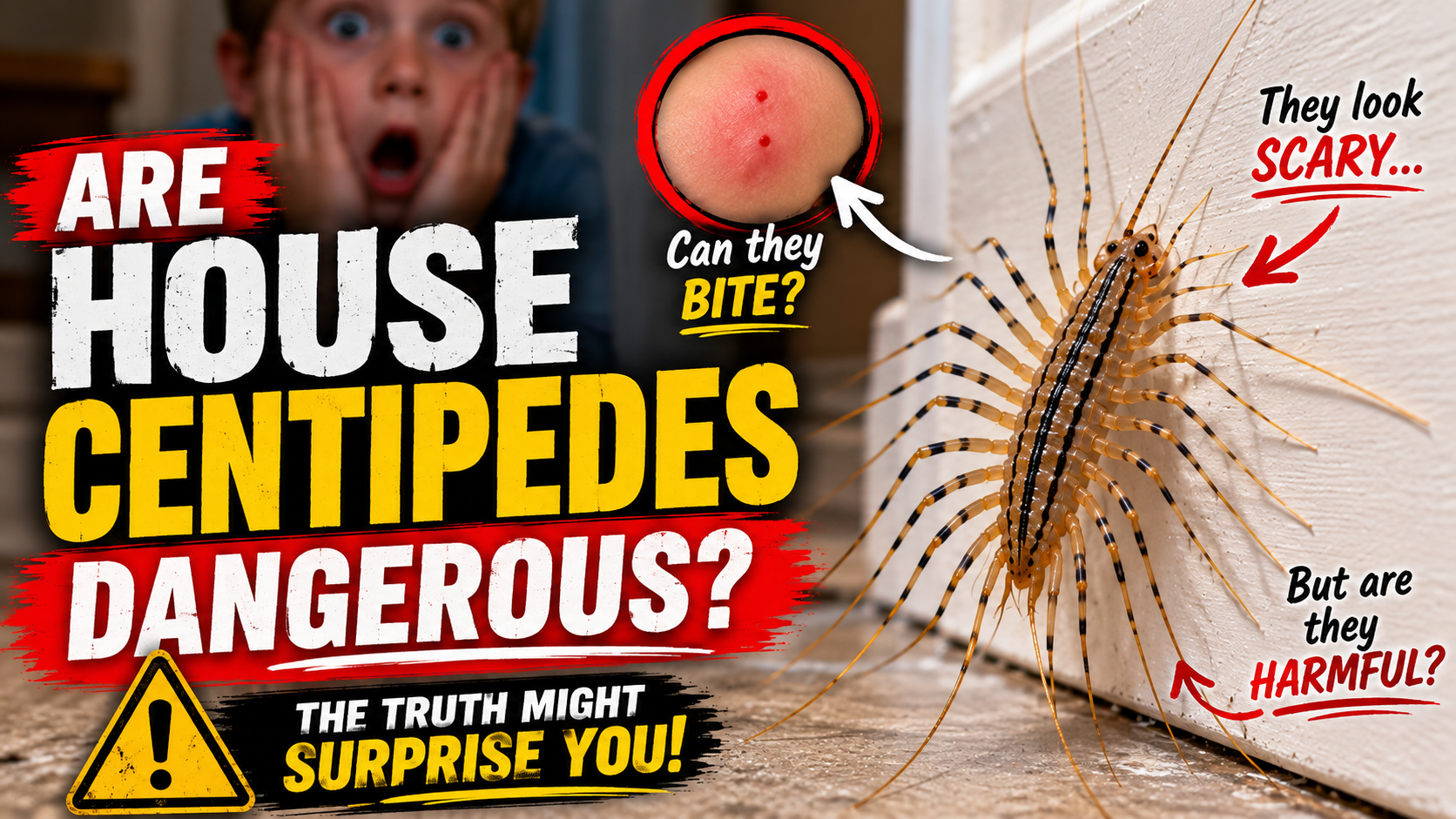
They can wander anywhere in a home, including bedrooms, but they do not seek out people or beds. A house centipede is looking for shelter and prey, not a person to bite. Readers worried about an encounter can also review whether house centipedes bite and what makes a bite more or less likely.
If you find one in a bedroom, check the room’s edges, clutter near the floor, gaps around baseboards, nearby bathrooms, and signs of other insects. One house centipede does not mean there is an infestation in the bed.
If you are seeing several bugs in a bedroom, identify them carefully. Carpet beetles, silverfish, roaches, and bed bugs each leave very different signs and need different treatment plans.
What to Do When You Find a House Centipede

For one house centipede, you can catch it under a cup and release it outside, vacuum it, or remove it with a tissue if you prefer. There is no reason to spray an entire room because of one sighting. A safe catch-and-release bug catcher can make the cup-and-release option easier when you want to remove the centipede without spraying.

If you are seeing them regularly, focus first on moisture and hiding places. Repair leaks, run bathroom exhaust fans, keep basement humidity lower, remove wet cardboard, and seal cracks near pipes, baseboards, windows, and doors. For persistently damp rooms, a dehumidifier for humidity-loving bugs may be one practical way to support the humidity-lowering steps described here.

Sticky monitoring traps can also help you learn where activity is strongest without spraying everywhere. These indoor Catchmaster sticky traps can catch centipedes and other crawling bugs along walls, under sinks, behind toilets, and near basement corners. They are most useful for monitoring the area and showing you whether centipedes are still active after you address moisture and entry points.
Do Not Mistake One House Centipede for an Infestation
A single house centipede is common in many homes, especially in damp weather or older houses with plenty of small entry points. It is not automatically a sign that you have a major pest problem.
Repeated sightings are more meaningful. If you find several house centipedes each week, or keep finding them in the same wet area, check for a leak, poor drainage, excess humidity, or a hidden insect population.
The goal is not just to get rid of the centipede you saw. It is to make the area less comfortable for centipedes and less productive for the small bugs they hunt.
Frequently Asked Questions
Are house centipedes gray with stripes?
Yes. Most house centipedes are yellowish gray, tan, or grayish brown with three darker stripes running down the length of their body.
How many legs does a house centipede have?
A fully grown house centipede has 30 legs, or 15 pairs. Young centipedes have fewer legs and gain more as they grow and molt.
What looks like a house centipede but has fewer legs?
Silverfish, earwigs, spiders, and millipedes can all be mistaken for house centipedes at a glance. A true house centipede has long legs extending from nearly every body segment.
Are house centipedes insects?
No. House centipedes are arthropods, but they are not insects. Insects have six legs, while adult house centipedes have 30 legs.
Why do I keep seeing house centipedes in my bathroom?
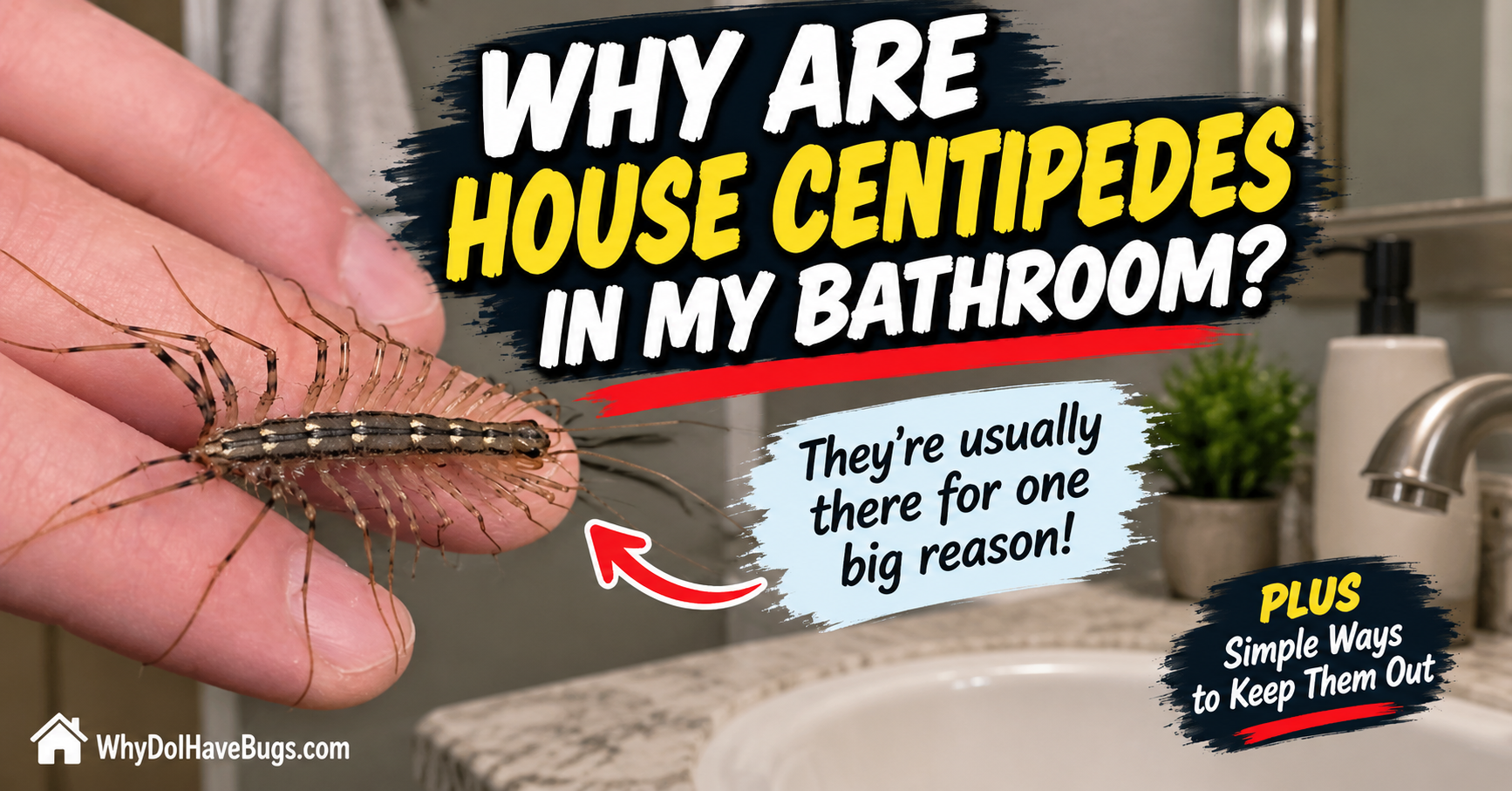
Bathrooms often give house centipedes moisture, darkness, cracks to hide in, and access to small insects. Look for plumbing leaks, condensation, drain issues, and gaps around pipes or baseboards. For a detailed room-by-room checklist, use house centipedes in bathrooms.
Can house centipedes climb walls?
Yes. Their long legs let them climb walls, ceilings, tubs, sinks, and other smooth surfaces surprisingly well.
Do house centipedes mean you have roaches?
Not necessarily, but house centipedes eat roaches and other small household pests. Regular sightings can be a reason to inspect for food sources, water, crumbs, leaks, and hidden insect activity.