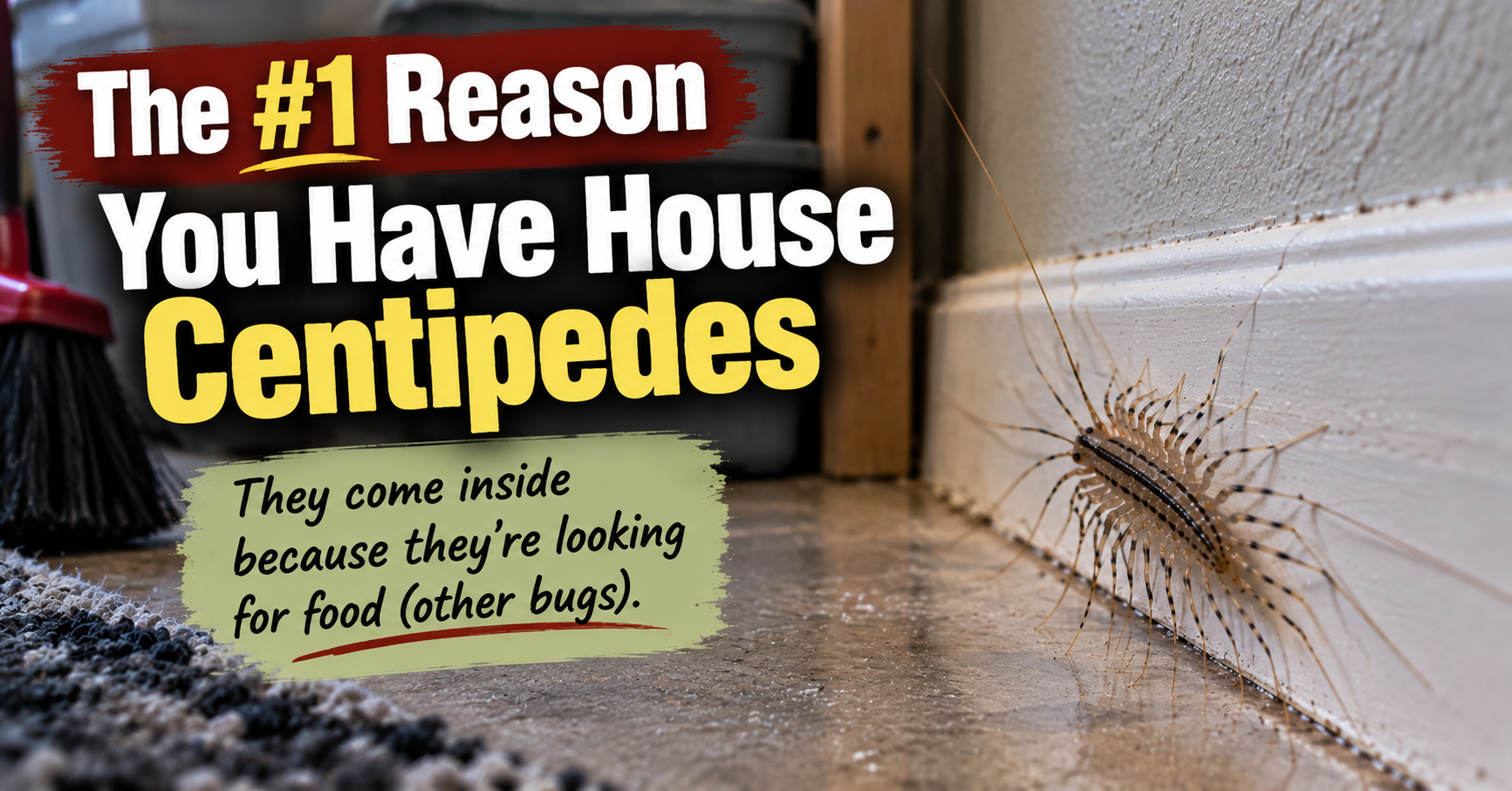
Seeing a house centipede race across the wall can make it feel like your house suddenly has a serious pest problem. Usually, though, house centipedes are not there because your home is dirty. They are there because they found three things they need: moisture, protected hiding places, and smaller bugs to eat. If the concern is safety rather than the cause of the sighting, whether house centipedes are dangerous explains what homeowners should know.
That last part matters. A house centipede is a predator. It does not eat your food, carpet, furniture, or wood. It is looking for insects and other small arthropods it can hunt. One centipede may have simply wandered inside, but repeated sightings are worth paying attention to because they can point to excess moisture, easy entry points, or other insects living out of sight.
Why Are House Centipedes in My House?
House centipedes come indoors looking for a stable place to hide and hunt. They like dark areas that stay damp enough for the small insects they feed on.
Basements, bathrooms, laundry rooms, crawl spaces, utility rooms, garages, and under-sink cabinets are common places to find them. These areas often have water pipes, floor drains, condensation, small cracks, cardboard boxes, and lower foot traffic.
If your house is dry and sealed up well, a house centipede has fewer reasons to stay. If it has damp corners, cracks to hide in, and insects moving around at night, it may settle in.
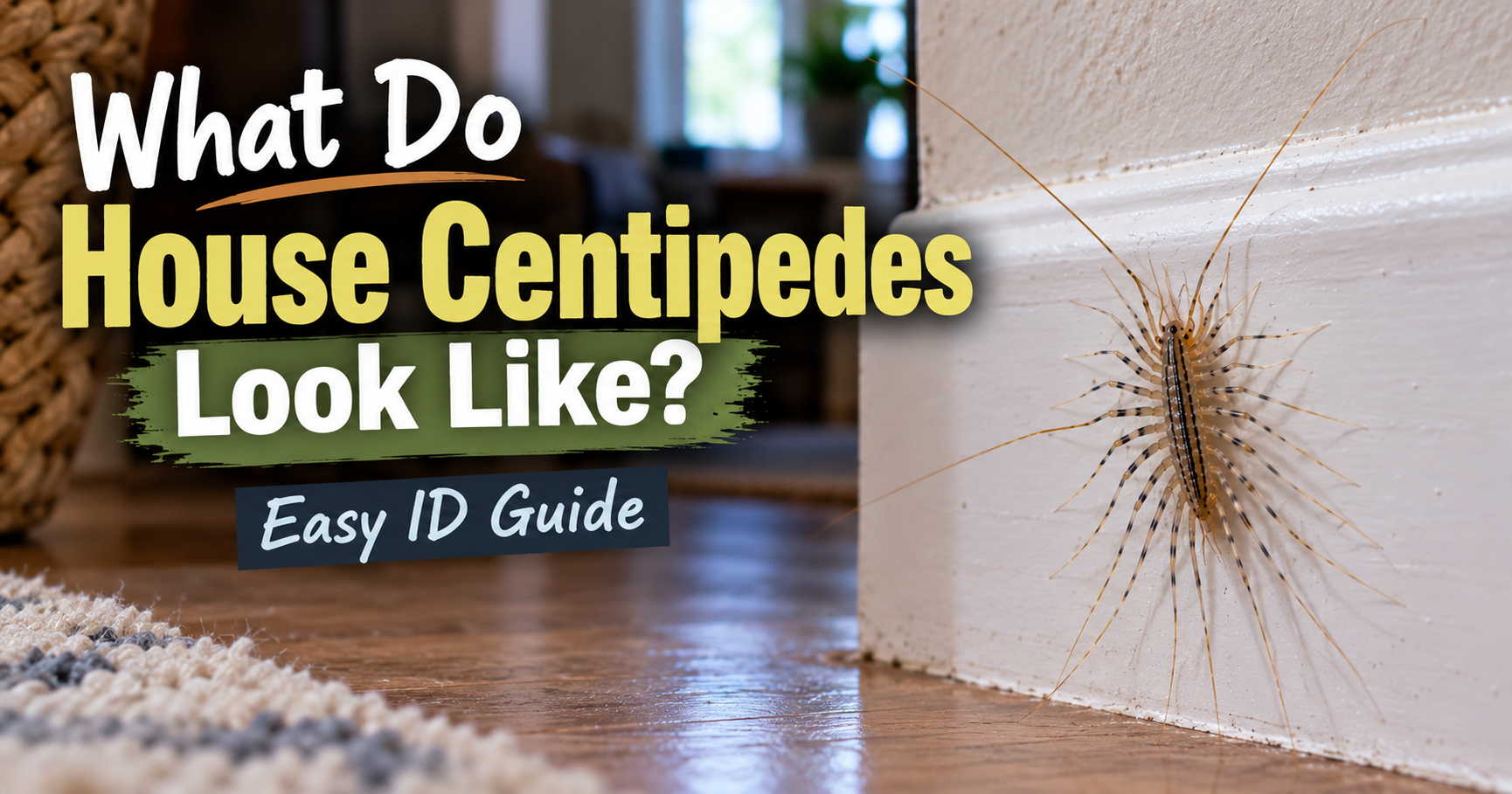
See how to recognize a true house centipede before treating every long-legged bug as the same thing. House centipedes have a narrow striped body and long legs extending from nearly every segment, which makes them very different from silverfish, earwigs, and millipedes.



They Are Usually Following Moisture
House centipedes need more moisture than most people realize. They can dry out in very dry environments, so they tend to favor places with humidity, condensation, leaks, or damp building materials.
A slow plumbing leak under a sink can be enough to support activity. So can a damp basement wall, a bathroom without enough ventilation, water around a floor drain, a wet crawl space, or a downspout that keeps the foundation area soaked.
I would not assume a visible leak is the only answer. Check for sweating pipes, wet cardboard, musty smells, stained baseboards, puddling around a water heater, loose toilet seals, and condensation on basement windows. A damp area can support more than just house centipedes.
House Centipedes Are Often Hunting Other Bugs
House centipedes are hunters. Their diet can include ants, roaches, silverfish, spiders, carpet beetle larvae, small flies, and other insects they can catch.
That means several house centipede sightings may be a clue that another food source is present. It does not automatically mean you have roaches or a major infestation, but it is worth checking the areas where you keep finding them.
Look closely under sinks, behind refrigerators, around pet-food storage, inside utility closets, along basement walls, and near floor drains. Tiny insects can be easy to miss, especially if they are active only at night.

If you have noticed slender silver bugs in the same damp areas, this silverfish guide can help you narrow it down. Silverfish and house centipedes can show up in similar places, but they point to different parts of the moisture-and-pest picture.
Why You Find Them in Bathrooms
Bathrooms are one of the most common places to find house centipedes. They offer humidity, water pipes, drains, dark cabinets, and plenty of gaps around plumbing.
The centipede may be hiding under the vanity, behind the toilet, near a shower wall, or in the small gap where flooring meets trim. It may also be following smaller insects that are using the same moisture source.
A bathroom centipede does not mean the room is filthy. It often means the room stays damp for too long after showers or there is a small gap that gives it easy access.
Use the exhaust fan during showers and leave it running long enough to clear humidity. Repair drips, keep wet towels from sitting on the floor, and check the vanity cabinet for pipe leaks. Those simple changes make the room less inviting without turning it into a pesticide project.


Why They Show Up in Basements
Basements are almost perfect house centipede habitat. They tend to be cooler, darker, less disturbed, and more humid than the rest of the house.
Foundation cracks, unfinished walls, stored boxes, floor drains, utility pipes, and damp concrete all create places to hide. Even a finished basement can have activity around the utility room, sump pump, storage area, or exterior walls.
If you regularly see centipedes in a basement, start by checking humidity. A basement that feels cool can still have enough moisture in the air to support pests.

A dehumidifier can make a real difference when humidity is part of the issue. This AEOCKY dehumidifier is a useful option for a larger basement or damp lower level, but I would still check for leaks and drainage problems instead of expecting any machine to solve water getting into the structure.
Clutter Gives Them Quiet Places to Hide
House centipedes do not need a filthy home, but they do benefit from clutter close to the floor. Cardboard boxes, stacked paper, stored clothing, unused bags, wood scraps, and items left against basement walls create dark pockets that are hard to inspect.
Those spaces can also shelter the bugs they are hunting. That is why cleanup matters even if you do not see centipedes directly inside the clutter.
You do not have to empty every room at once. Start in the places where you are actually seeing them. Pull stored items a few inches away from walls, replace damp cardboard with sealed plastic totes, and vacuum behind furniture, shelving, appliances, and storage bins.

Gaps Around Pipes and Doors Give Them a Way In
House centipedes can enter through very small cracks. Common entry points include gaps around water lines, dryer vents, utility pipes, door thresholds, basement windows, garage doors, damaged weatherstripping, and foundation cracks.
They may also move through unfinished areas inside the home. A centipede can travel from a crawl space, wall void, basement, or utility room into a bathroom or bedroom through gaps you never notice.
Sealing entry points helps, but use the right material for the size and location of the gap. Caulk is good for small stationary cracks. Door sweeps help at exterior doors. Larger gaps around pipes may need backing material before sealing.
The goal is not to make the house perfectly airtight overnight. It is to close the easiest paths in the areas where centipedes are already showing up.
Outdoor Conditions Can Push Them Inside
Heavy rain, drought, changing temperatures, and seasonal shifts can all increase centipede activity indoors.
After long rain, outdoor hiding places may become too wet or flooded. During dry weather, centipedes may seek moister areas around foundations, crawl spaces, and basements. In fall, they can move toward protected places as outdoor conditions become less dependable.
Look outside too. Thick mulch against the siding, wet leaf piles, stacked wood, dense ground cover, and poor drainage around the foundation can keep the exterior damp and full of insects.
Pull mulch and leaves back from the foundation. Keep firewood and stored materials away from the house. Make sure downspouts move water away from the home instead of dumping it beside the basement wall.


Why You May See Them at Night
House centipedes are mostly active at night. They avoid light and move out to hunt when the house is quiet.
That is why people often see one when they turn on a bathroom light late at night or walk into a basement in the morning. The centipede was likely already there, but it stayed hidden during the day.
Seeing one run after the lights come on can make it seem as if it came from nowhere. Usually, it was tucked into a crack, gap, drain area, or protected edge nearby.
One House Centipede Is Not Always a Problem
A single house centipede can be an occasional visitor. It may have entered through a crack, come in with stored items, or wandered from a basement or garage.
I would not spray an entire home because of one sighting. Remove it if you want to, then pay attention to whether you see another one in the same place.
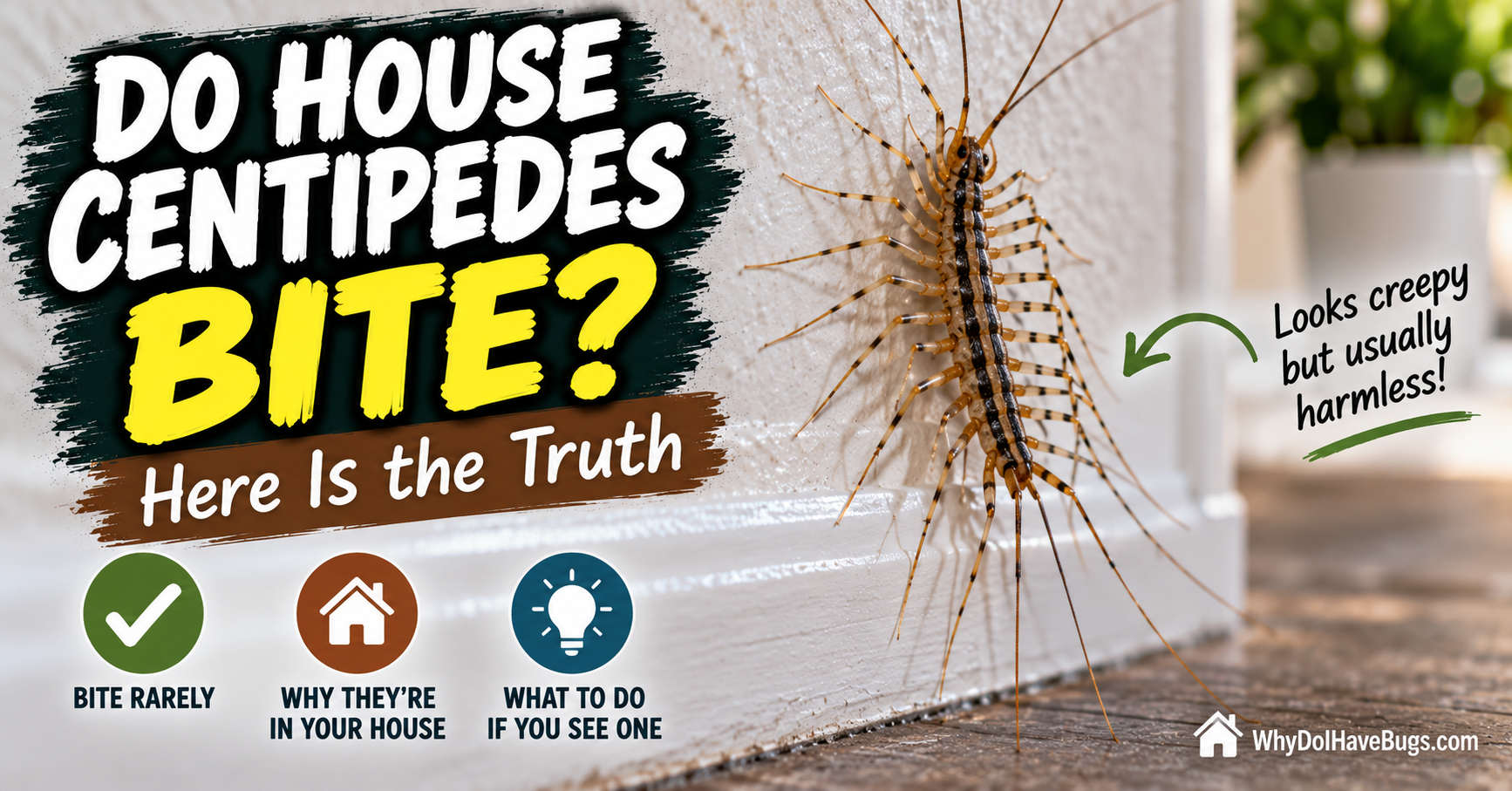
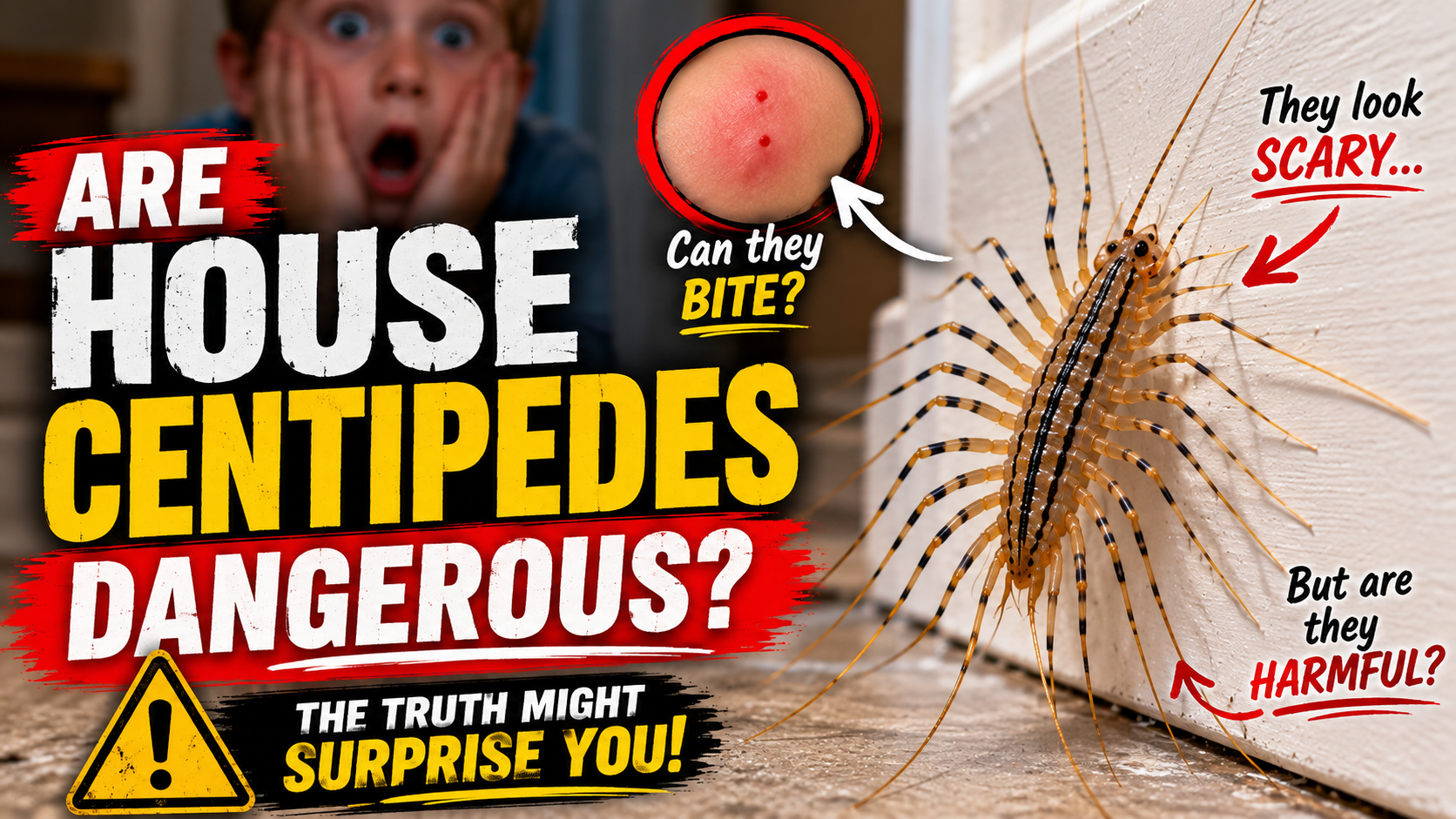
Repeated activity is different. If you see house centipedes several times a week, find several on sticky traps, or keep spotting them in one damp room, treat that as a reason to inspect more closely. If those sightings also make you worry about bites, repeated house centipede sightings explains what contact usually looks like and when it is most likely.

Indoor sticky traps like these Catchmaster boards are useful for finding where centipedes are traveling. Place them flat along walls, behind toilets, under sinks, near basement corners, and behind appliances, then check them regularly. They help you monitor activity and can also reveal ants, silverfish, roaches, or other crawling bugs that may be feeding the centipedes.
Do House Centipedes Mean You Have Roaches?
Not necessarily. House centipedes can eat roaches, but they also eat many other small bugs. One centipede does not prove you have a roach infestation.
Still, if you see house centipedes along with roach droppings, small roaches, egg cases, a musty odor, or activity around appliances and cabinets, inspect more carefully. A centipede may be feeding where other insects are already established.
The same idea applies to ants, silverfish, and carpet beetle larvae. House centipedes can be a signal to look, but they are not an automatic diagnosis.
How to Make Your Home Less Inviting to House Centipedes
The most dependable approach is to take away moisture, hiding places, food sources, and entry routes.
Start with the room where you see them most often. Dry it out, reduce clutter along walls, vacuum edges and cracks, and seal obvious openings around pipes or trim.
Next, inspect nearby rooms. A bathroom centipede may be coming from a basement below it. A centipede in a bedroom may be traveling from a crawl space, utility closet, or adjoining bathroom.
Finally, check the outside foundation area. Good drainage and less damp debris close to the house often reduce the pressure before the centipedes get indoors.
Should You Spray for House Centipedes?
Spray can kill a house centipede you see, but it does not correct the reason they are there. If moisture, gaps, and prey insects remain, more can keep showing up.

For regular activity, I would start with moisture control, exclusion, cleaning, and monitoring. A labeled perimeter product can be useful around approved exterior entry points if centipedes are consistently coming in from outside, but broad indoor spraying is rarely the best first move. If outdoor entry remains the main issue, this perimeter spray is one option to review alongside sealing and drainage improvements.
If you need to remove one quickly, vacuuming or trapping is usually simpler. Save heavier treatment for a pattern that persists after you have corrected the conditions attracting them.
Frequently Asked Questions
Are house centipedes a sign of a dirty house?
No. They are more strongly connected to moisture, hiding places, entry gaps, and other small bugs than cleanliness alone. A clean home can still have house centipedes, especially in a damp basement or bathroom.
Why do house centipedes suddenly appear?
Weather changes, humidity, rain, a new moisture issue, or a growing population of prey insects can make their activity more noticeable. They may have been hiding nearby before you ever saw one.
Why do I keep finding house centipedes in my bathroom?
Bathrooms provide humidity, water, plumbing gaps, and sheltered areas under cabinets and behind fixtures. Check for leaks, condensation, wet flooring, and gaps around pipes.
Do house centipedes come up through drains?
They can sometimes be found near drains because the area is damp and protected, but they are more often using gaps around plumbing, walls, or flooring than actively living in the drain itself.
Will getting rid of other bugs get rid of house centipedes?
It can help a lot. House centipedes need prey. Reducing ants, silverfish, roaches, and other small insects makes your home less useful as a hunting ground.
Can house centipedes live in walls?
They can hide in wall voids, foundation gaps, cracks around trim, and spaces around pipes. They prefer protected areas where they can stay hidden during the day and come out at night to hunt.
Daniel Brooks writes practical household pest guides for WhyDoIHaveBugs.com, helping homeowners identify what is drawing bugs indoors and fix the cause before reaching for a spray.