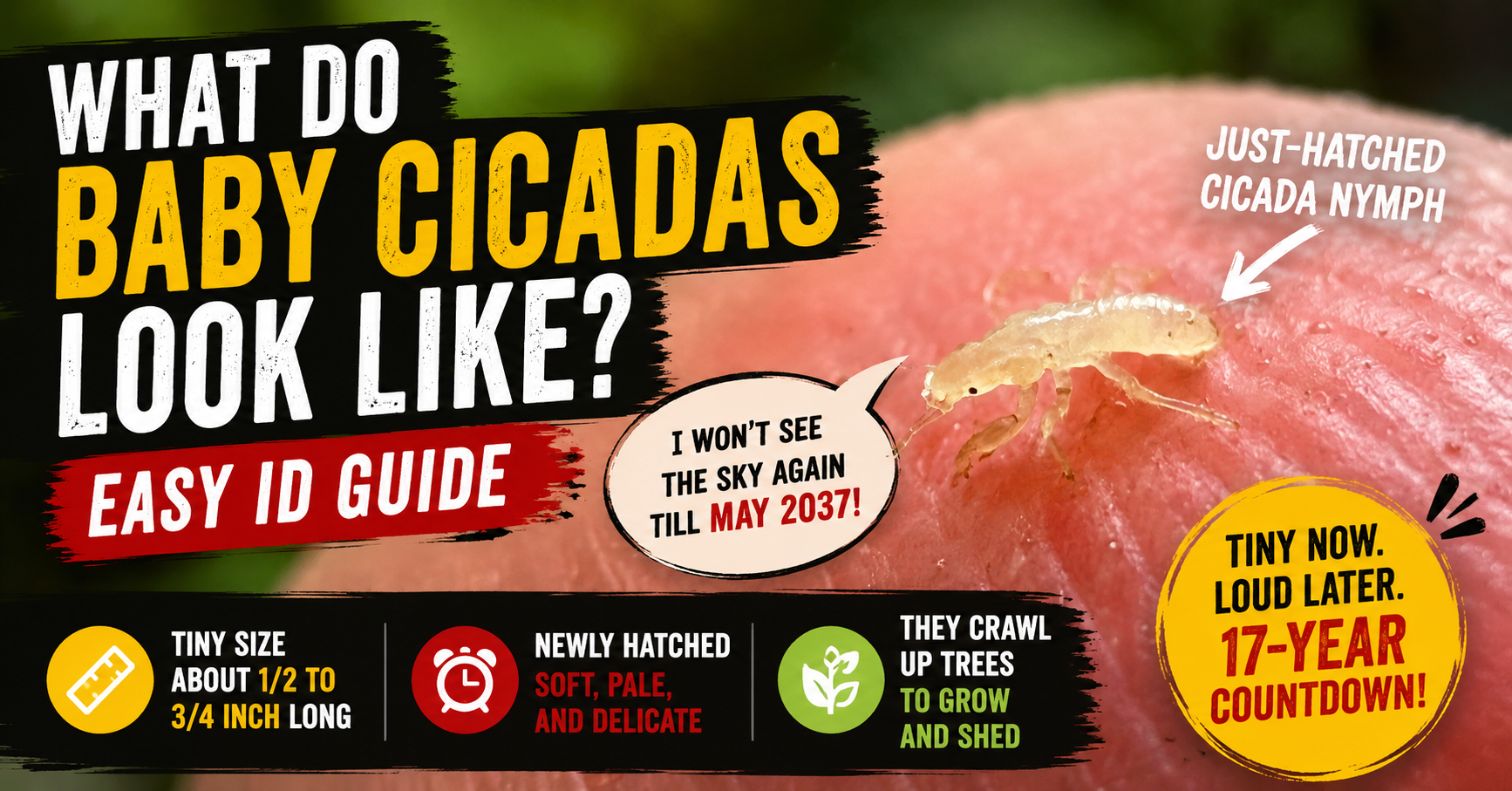
Baby cicadas look nothing like the large, loud, winged insects you see calling from trees in summer. Most people never see them at all because baby cicadas spend nearly their entire young life underground.
A baby cicada is called a nymph. It has no wings, a chunky pale brown body, strong digging legs, and front claws built for moving through soil. When the time comes to become an adult, it climbs out of the ground, sheds its outer skin, and leaves the familiar brown shell behind on a tree or fence post. Once the nymph becomes winged, an adult cicada identification guide can help you confirm the adult insect.
What Are Baby Cicadas Called?
Baby cicadas are called nymphs.
A nymph is the immature stage between the egg and adult stages. Unlike a butterfly, a cicada does not turn into a caterpillar or make a cocoon. It slowly grows underground, molting several times before it finally emerges as a winged adult.
The word “baby” is still useful because it is what most people search when they find a small cicada crawling out of the ground or an empty shell on a tree.



What Do Baby Cicadas Look Like?
A cicada nymph has a stout, segmented body that is usually pale brown, tan, or muddy gray. It has six legs, short antennae, obvious eyes, and a broad head.
Its front legs are the most noticeable feature. They are thick and claw-like, almost like tiny digging tools. Those legs help the nymph tunnel through soil and climb upward when it is ready to emerge.
Baby cicadas do not have full wings. Older nymphs may have small wing pads near the end of their underground stage, but they cannot fly until after their final molt.


How Big Are Baby Cicadas?
The size depends on the species and age of the nymph. A very young nymph can be tiny, while a fully grown nymph preparing to emerge can be close to the size of an adult cicada’s body.
The large nymphs people find on a sidewalk, driveway, or tree trunk during cicada season are usually not newly hatched babies. They are fully developed nymphs on their way to becoming adults.
Where Do Baby Cicadas Live?
Baby cicadas live underground.
After eggs hatch in tree twigs, the tiny nymphs drop to the ground and burrow into the soil. They settle near tree roots, where they feed on fluids from the roots as they grow.
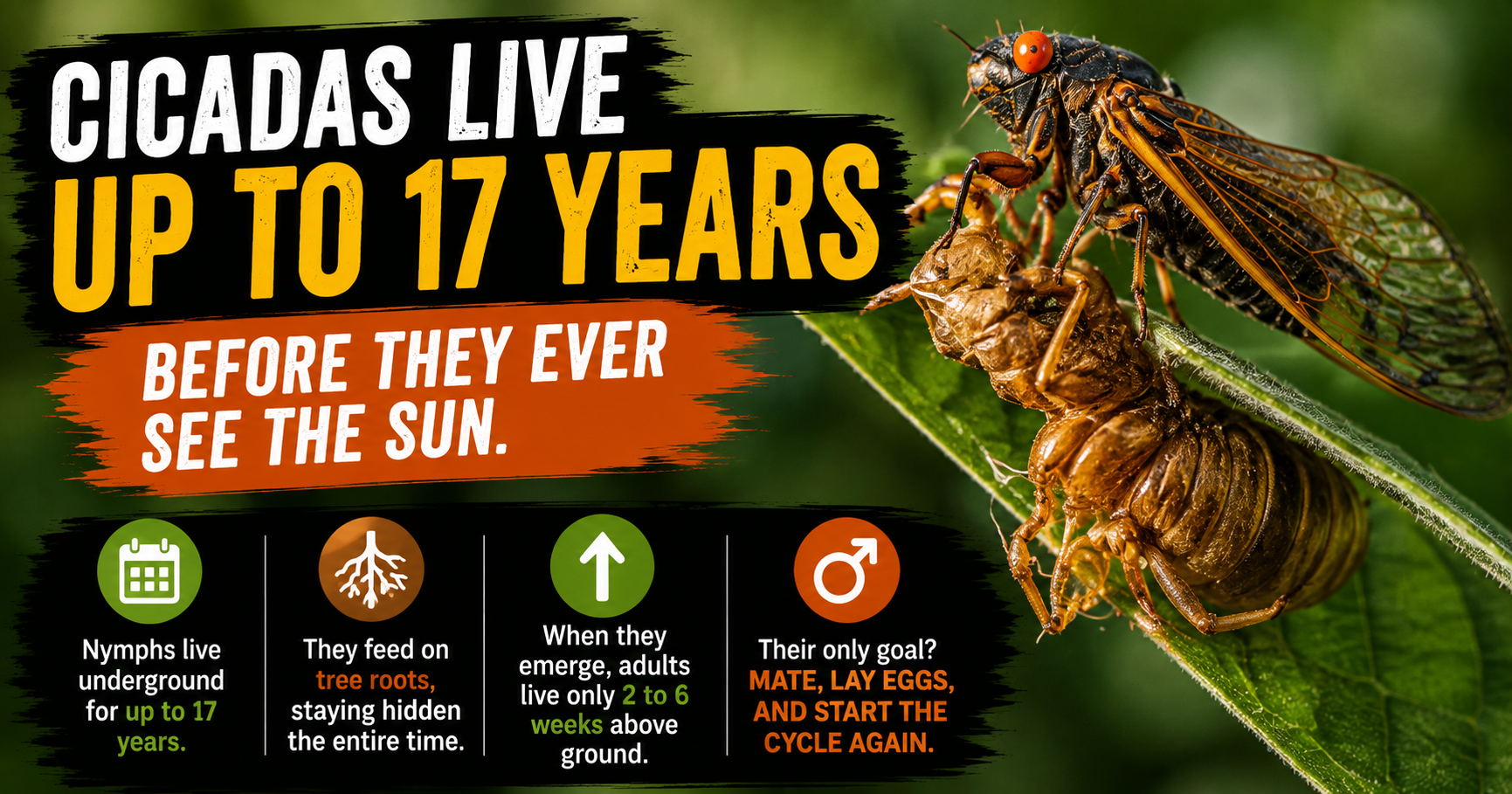
They can remain underground for years. Annual cicadas commonly spend several years developing below ground, while periodical cicadas may stay underground for 13 or 17 years before emerging. The how long cicadas develop underground also explains what cicadas are doing during this unusually long young stage.
That long hidden stage is why a cicada emergence can feel so sudden. The cicadas were there the whole time, but they were below the soil where nobody saw them.

Do Baby Cicadas Damage Tree Roots?
Cicada nymphs feed from tree roots, but this normally does not cause noticeable damage to healthy established trees. Cicadas have shared the landscape with native trees for a very long time.
The bigger concern for young trees happens after cicadas become adults. Females can cut slits in small twigs to lay eggs, which may kill the outer branch tip.

If you have a newly planted fruit tree or small ornamental tree during a heavy emergence, this young-tree cicada protection guide explains the simplest way to prevent that egg-laying injury.
When Do Baby Cicadas Come Out of the Ground?
Nymphs come out when the soil has warmed enough for their species. This often happens in late spring or early summer, usually after warm weather and rain.
They typically emerge after dark or in the early evening. That gives the soft newly emerging cicada time to climb a tree and expand its wings before birds and other daytime predators become active.
You may see nymphs crawling on the ground, climbing tree trunks, or gathering around the base of a fence post on a warm emergence night.



What Happens When a Baby Cicada Becomes an Adult?
A mature nymph climbs an upright surface, grips it tightly, and splits its skin open down the back. The soft adult cicada slowly pulls itself out.
At first, the new adult has pale coloring and small wrinkled wings. It pumps fluid into those wings until they expand to full size. Over the next several hours, its body darkens and hardens enough for normal flight.
The nymph’s empty skin stays attached to the bark. That is the brown cicada shell people find all over trees and porch posts during cicada season.

For a closer look at those empty skins and what they mean, see why cicada shells stick to trees.
Are Baby Cicadas Dangerous?
No. Cicada nymphs are harmless to people and pets.
They do not sting, and they are not looking for people to bite. Their strong front legs can feel scratchy if one crawls across your hand, but they are made for digging, not attacking.
A nymph may wiggle, crawl quickly, or grip your fingers if picked up. It is simply trying to find a stable surface and continue its emergence.


Can Baby Cicadas Fly?
No. Nymphs cannot fly.
Only adults have fully expanded wings. If you see a pale, wingless cicada climbing a tree, it is probably a nymph about to molt. If you see one with soft, unfolded wings, it has just emerged and is still becoming an adult.
Can You Keep a Baby Cicada?

It is best to leave a cicada nymph outdoors where you found it. A nymph close to emerging needs an upright surface, proper humidity, and time to complete its molt safely. If you must move one from danger, a Carson BugView magnifying catcher can help you handle it gently before releasing it outdoors.
Moving it too much can interrupt the process or damage its soft new wings. If one is in danger on a busy sidewalk or driveway, you can gently place it at the base of a nearby tree, then let it climb on its own.
What Eats Baby Cicadas?
Many animals eat cicada nymphs when they emerge. Birds, frogs, turtles, raccoons, skunks, snakes, fish, spiders, and other insects can all take advantage of an emergence.
Cicadas survive because so many come out at the same time. Predators may eat plenty, but there are still enough cicadas left to mate and lay eggs.
Do Baby Cicadas Make Noise?
No. The loud sound people associate with cicadas comes from adult males calling to attract females.
Nymphs live quietly underground. Once they become adults, males begin calling from trees, usually on warm sunny days. If your yard suddenly gets loud after a wave of nymphs emerges, that is the new adult males beginning their mating calls.
Frequently Asked Questions
Are baby cicadas white?
A cicada that has just emerged can look pale white, cream, or light green before its body hardens. Underground nymphs are more often tan, brown, or muddy gray.
Do baby cicadas live in the ground?
Yes. Cicada nymphs spend almost all of their young life underground near tree roots.
Why are baby cicadas crawling on my driveway?
They are likely mature nymphs emerging from the soil and looking for a tree, post, wall, or other upright surface to climb.
Can baby cicadas bite?
No. Cicada nymphs are not known for biting people. Their mouthparts are used to feed from plant roots.
What is the difference between a cicada nymph and a cicada shell?
A nymph is the live, wingless young cicada. A shell is the empty outer skin the nymph leaves behind after becoming an adult.
How long does it take a baby cicada to become an adult?
The final transformation from nymph to winged adult takes several hours. The full young stage underground lasts years.
Caleb Warren is a longtime gardener and backyard insect researcher who writes practical pest guides for WhyDoIHaveBugs.com, helping homeowners identify insects accurately before choosing a treatment.