
Finding a cockroach inside your home is unsettling enough.
One of the biggest mistakes I see homeowners make is assuming every cockroach is the same.
They’re not.
Different cockroach species behave differently, prefer different environments, reproduce at different rates, and often require different control strategies.
That’s why I always start by identifying the species before deciding what to do next.
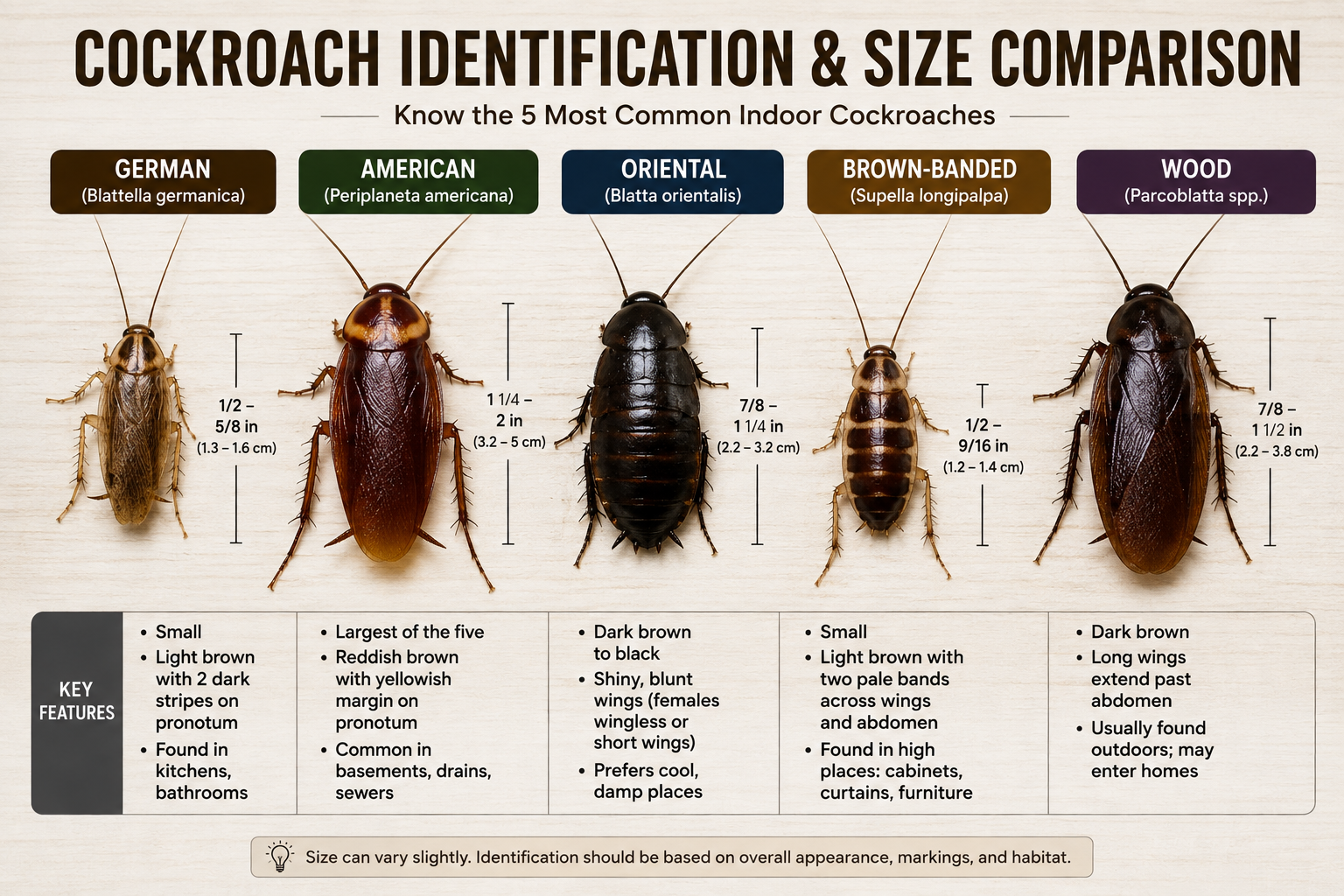
Over the years, I’ve found that most homeowners encounter one of five common cockroach species.
Once you understand the differences, identifying them becomes much easier.
Why Correct Identification Matters
Knowing which cockroach you’ve found isn’t just about satisfying your curiosity.
It can tell you a lot about why it’s there.
For example, a German cockroach inside your kitchen usually means something very different than a single wood cockroach that wandered through an open door.
Some cockroaches almost always indicate an indoor infestation.
Others are simply accidental visitors from outside.
Understanding the difference helps you focus on the actual problem instead of treating every cockroach the same way.

German Cockroach
German cockroaches are the species I take the most seriously.
They’re small, light brown, and easy to recognize by the two dark stripes running behind the head.
Unlike many other cockroach species, German cockroaches thrive indoors and reproduce incredibly quickly.
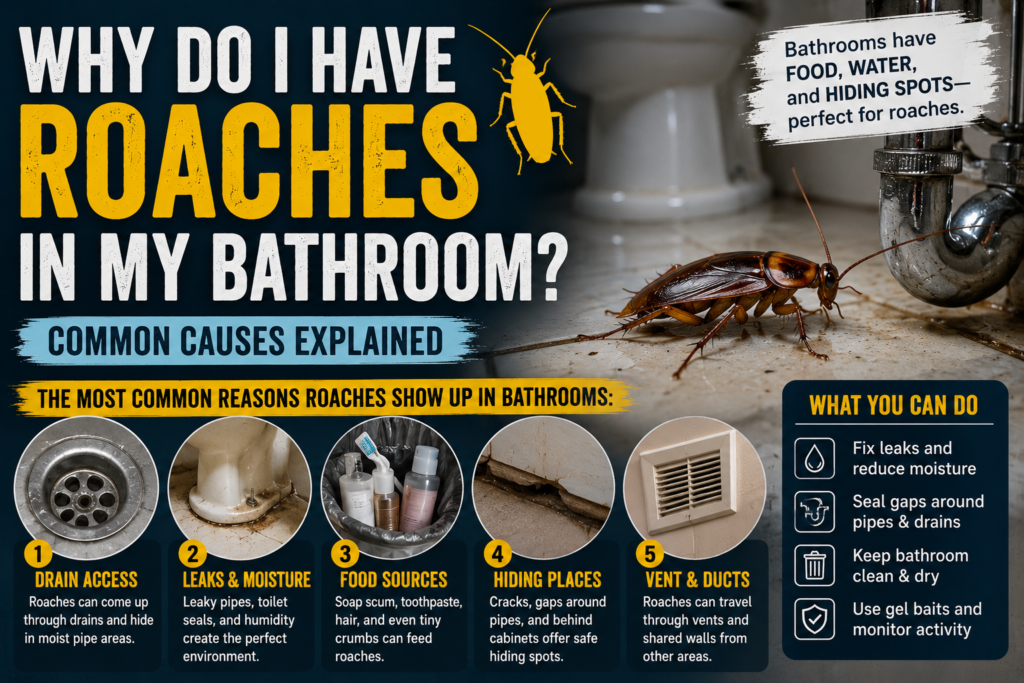
Most of the time I find them hiding in kitchens, bathrooms, and other warm, humid areas close to food and water.

If you think you’ve found one, I recommend reading What Do German Cockroaches Look Like? Easy Identification Guide for a closer look at the features I use to identify them.


American Cockroach
American cockroaches are much larger.
In fact, they’re one of the largest cockroaches commonly found around homes.
Their reddish-brown color and pale yellow marking behind the head make them fairly easy to recognize once you’ve seen one.
Unlike German cockroaches, they’re often associated with basements, crawl spaces, sewers, and utility areas rather than kitchen cabinets.
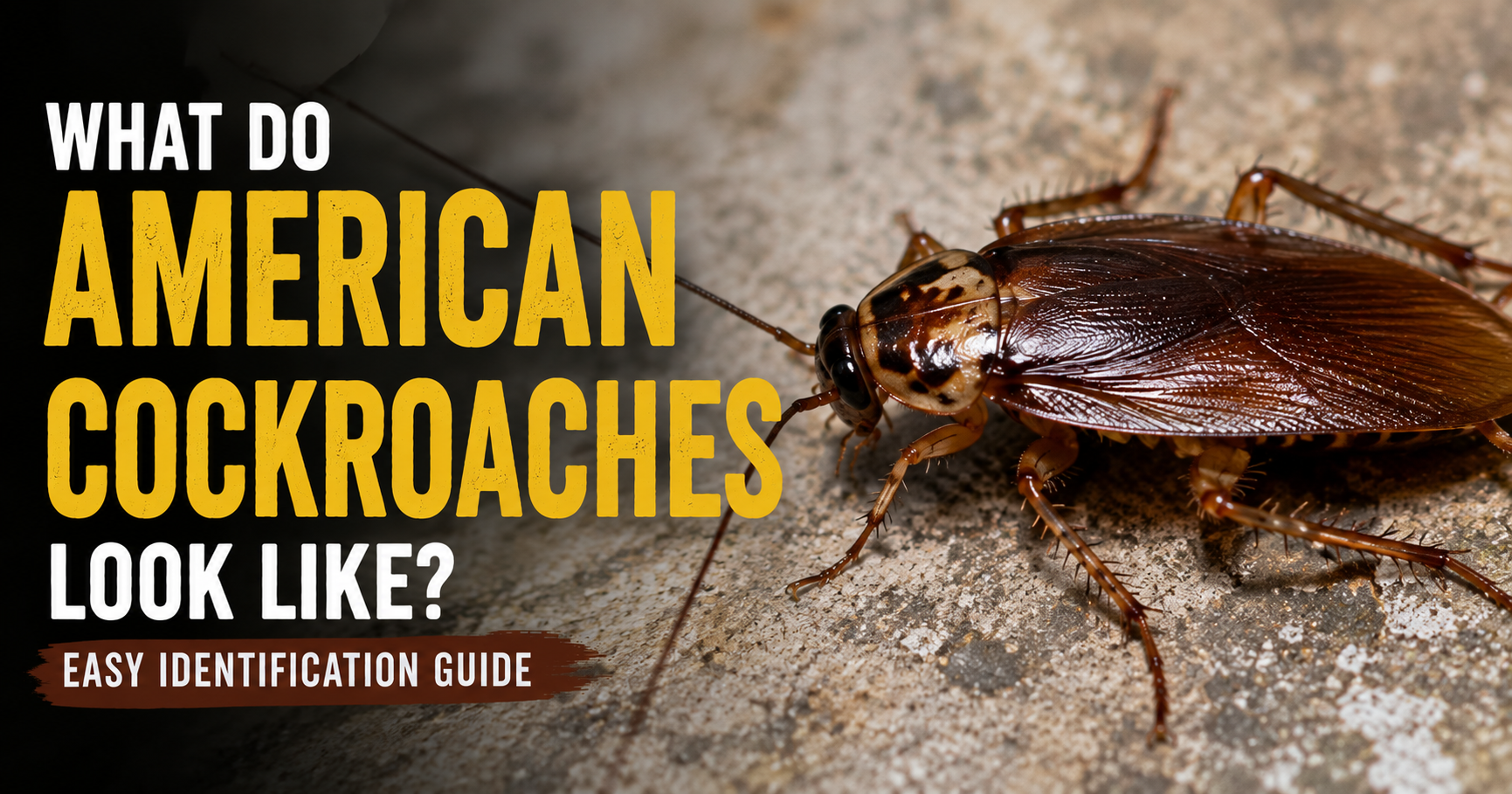
If you’d like to compare their size and markings in more detail, check out What Do American Cockroaches Look Like? Easy Identification Guide.
Oriental Cockroach
Oriental cockroaches are often mistaken for American cockroaches because both species are fairly large.
The biggest difference I notice is color.
Oriental cockroaches are usually very dark brown or almost black.
They also have a heavier, stockier appearance and are strongly associated with damp locations like basements, floor drains, and crawl spaces.
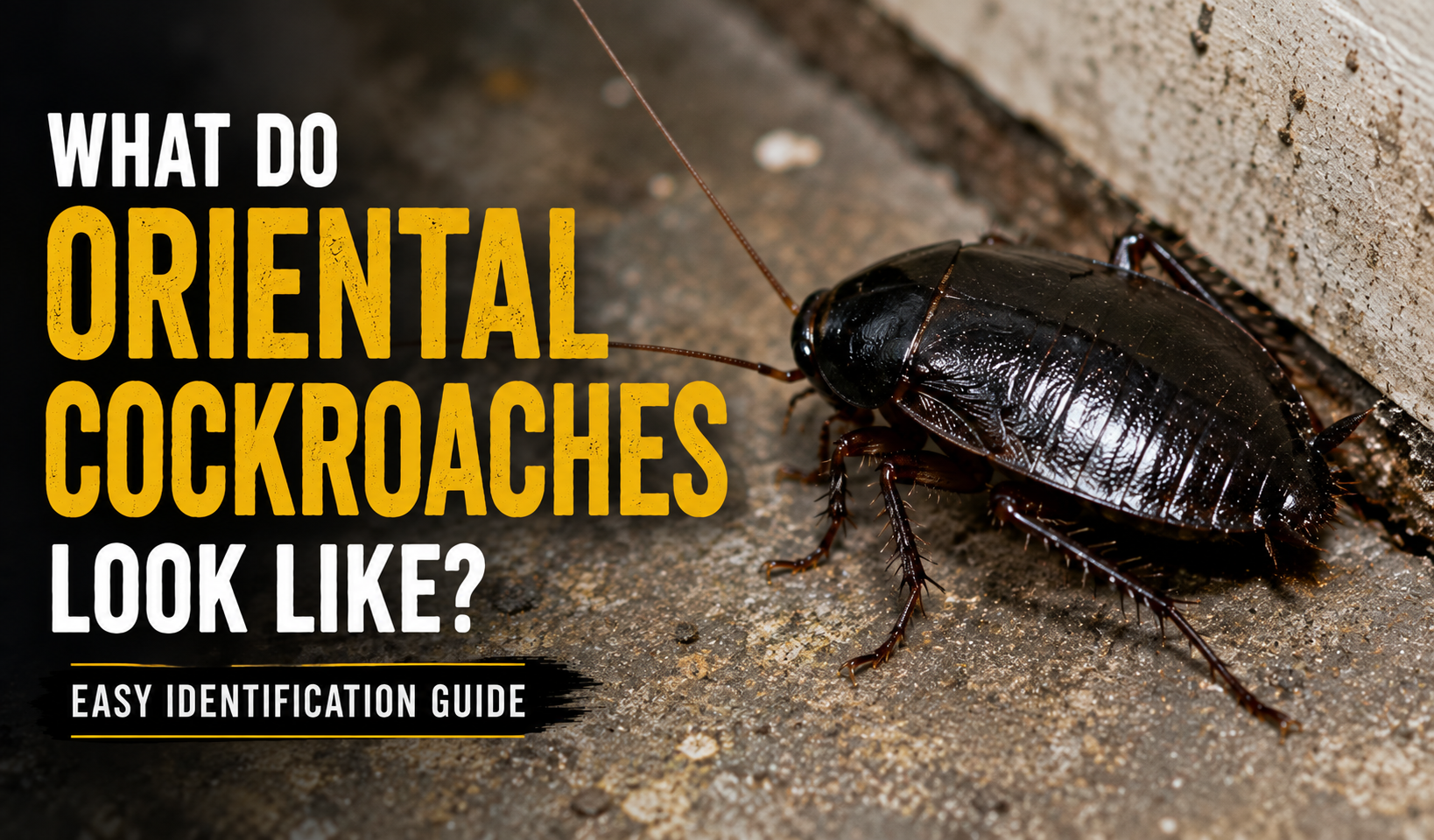
If you think you’ve found one, What Do Oriental Cockroaches Look Like? Easy Identification Guide explains the features I check first.
Brown-Banded Cockroach
Brown-banded cockroaches are about the same size as German cockroaches, but they’re much easier to confuse than most people realize.
Instead of the two dark stripes behind the head, they have light-colored bands running across the wings and abdomen.
They also prefer much drier parts of a home and are commonly found in bedrooms, closets, furniture, and upper cabinets.
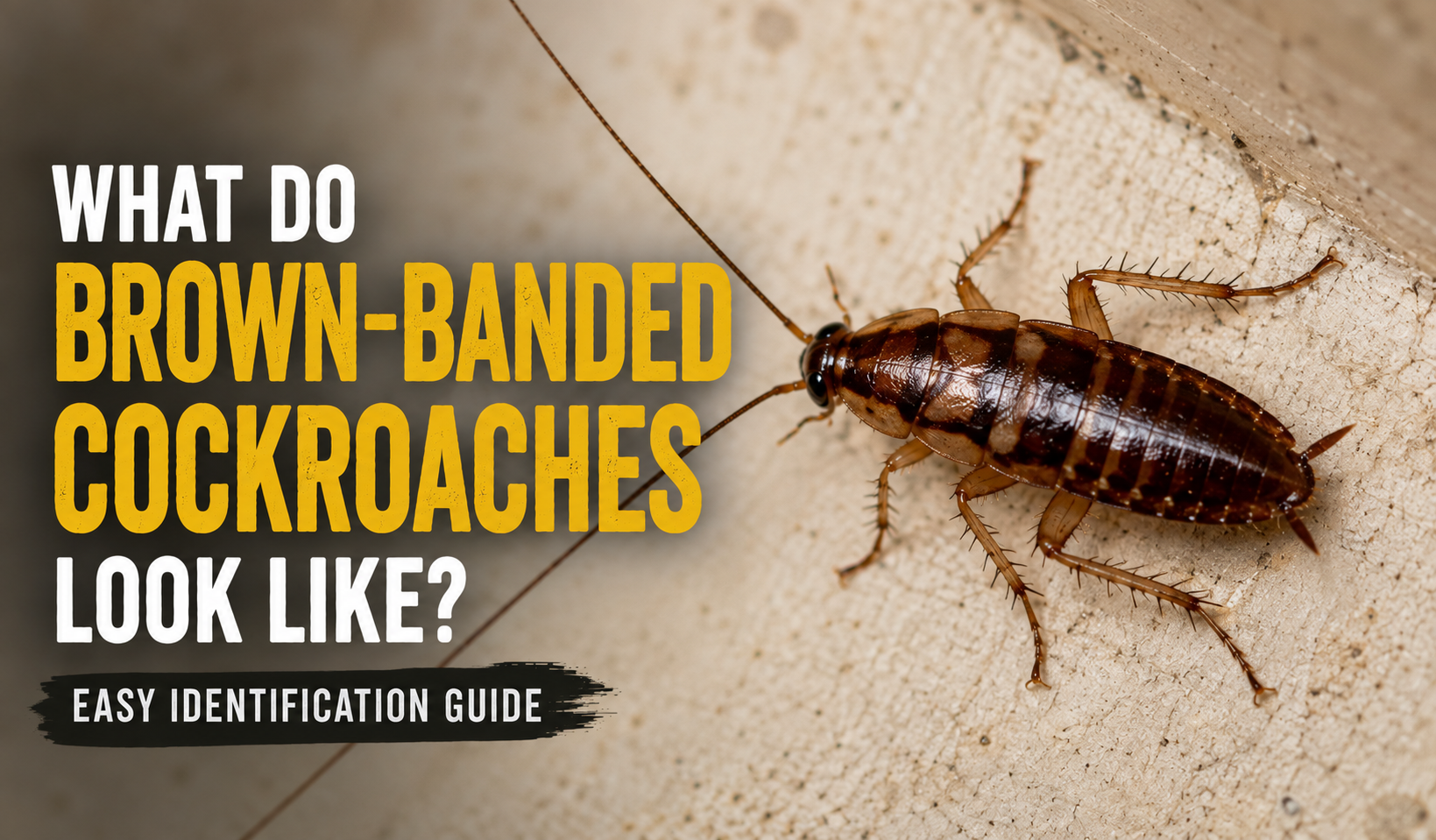
If you’d like a closer comparison, read What Do Brown-Banded Cockroaches Look Like? Easy Identification Guide.
Wood Cockroach
Wood cockroaches are very different from the species above.
Unlike German or American cockroaches, they usually don’t want to live inside your home.
Most live outdoors beneath logs, mulch, firewood, and leaf litter before accidentally wandering inside.
Finding a single wood cockroach doesn’t automatically mean you have an infestation.

I explain how I tell them apart from indoor species in What Do Wood Cockroaches Look Like? Easy Identification Guide.
| Cockroach Species | Average Size | Color | Most Common Location | Usually Indicates an Indoor Infestation? |
|---|---|---|---|---|
| German Cockroach | 1/2 to 5/8 inch | Light brown with two dark stripes | Kitchens and bathrooms | Usually yes |
| American Cockroach | 1½ to 2 inches | Reddish brown | Basements, garages, crawl spaces | Sometimes |
| Oriental Cockroach | 1 to 1¼ inches | Dark brown to black | Damp basements and drains | Sometimes |
| Brown-Banded Cockroach | About 1/2 inch | Light brown with pale bands | Bedrooms, closets, furniture | Usually yes |
| Wood Cockroach | 1/2 to 3/4 inch | Light brown to chestnut brown | Outdoors near wood and mulch | Rarely |

What’s the Easiest Way to Tell Them Apart?
Whenever I’m trying to identify a cockroach, I don’t focus on just one characteristic.
Instead, I ask myself a series of simple questions.
Is it large or small?
Is it light brown, reddish brown, or almost black?
Does it have stripes behind the head or light bands across the wings?
Where did I find it?
Was it in the kitchen, basement, bedroom, or just inside the front door?
Putting those clues together almost always leads me to the correct species much faster than relying on color or size alone.
One Cockroach Doesn’t Always Mean the Same Thing
One lesson I’ve learned over the years is that context matters.
A single wood cockroach near your front door after a summer evening is very different from finding multiple German cockroaches behind your refrigerator.
Some species accidentally wander indoors.
Others almost always indicate that more cockroaches are hiding nearby.
That’s another reason I always identify the species first before deciding on the next step.


Which Cockroach Is in My House? Here’s How I Tell Them Apart
Whenever someone sends me a photo of a cockroach, the first question is almost always the same.
“What kind of cockroach is this?”
That’s an important question because not every cockroach means the same thing.
Some species almost always indicate an indoor infestation.
Others simply wandered inside from outdoors and may never survive long enough to reproduce.
Over the years, I’ve found that most homeowners in the United States encounter one of five common cockroach species.
Learning how to tell them apart is one of the best things you can do before deciding how to treat the problem.
I Always Start With Size
The first thing I notice is how large the cockroach is.
Some species are only about half an inch long.
Others can grow close to two inches.
That one detail immediately eliminates several possibilities.
If I’m looking at a tiny tan cockroach, German or brown-banded cockroach immediately come to mind.
If it’s nearly two inches long, I’m thinking much more about American cockroaches.
Size isn’t enough by itself, but it’s always my starting point.


Then I Look at the Color
Color narrows things down even more.
German cockroaches are usually light tan with two dark stripes behind the head.
American cockroaches are glossy reddish brown.
Oriental cockroaches are much darker and often appear almost black.
Brown-banded cockroaches have lighter-colored bands crossing their bodies.
Wood cockroaches are generally light brown to chestnut brown and often resemble German cockroaches until you look more closely.
Once I combine size with color, the list of possibilities becomes much smaller.
Where I Found It Often Gives Me the Biggest Clue
One mistake I see people make is focusing only on what the insect looks like.
I also pay close attention to where it was found.
German cockroaches usually stay close to kitchens, bathrooms, and food sources.
American cockroaches often show up in basements, garages, crawl spaces, and utility rooms.
Oriental cockroaches prefer damp locations around drains, foundations, and crawl spaces.
Brown-banded cockroaches commonly hide inside furniture, closets, bedrooms, and upper cabinets.
Wood cockroaches usually come from outside and are often found near doors, windows, porches, firewood piles, or exterior lights.
The location frequently tells me just as much as the insect itself.
Sometimes One Cockroach Doesn’t Mean an Infestation
This is something I always remind homeowners.
Finding one cockroach doesn’t automatically mean hundreds more are hiding behind your walls.
If I identify a wood cockroach that wandered inside from the porch, my concern is much lower than if I find several German cockroaches behind the refrigerator.
That’s exactly why identification matters.
The species often tells the story before I even begin looking for additional evidence.
Learn More About Each Species
If you’re trying to identify the cockroach you’ve found, these detailed guides walk through the features I use during inspections.
- What Do German Cockroaches Look Like? Easy Identification Guide
- What Do American Cockroaches Look Like? Easy Identification Guide
- What Do Oriental Cockroaches Look Like? Easy Identification Guide
- What Do Brown-Banded Cockroaches Look Like? Easy Identification Guide
- What Do Wood Cockroaches Look Like? Easy Identification Guide
Quick Comparison of the Most Common Household Cockroaches
| Species | Size | Color | Best Identifying Feature | Most Common Location |
|---|---|---|---|---|
| German Cockroach | 1/2 to 5/8 inch | Light brown or tan | Two dark stripes behind the head | Kitchens and bathrooms |
| American Cockroach | 1½ to 2 inches | Reddish brown | Pale yellow marking behind the head | Basements, garages, crawl spaces |
| Oriental Cockroach | 1 to 1¼ inches | Dark brown to black | Very dark, stocky body with short wings | Damp basements, drains, crawl spaces |
| Brown-Banded Cockroach | About 1/2 inch | Light brown | Two light-colored bands across the body | Bedrooms, closets, furniture |
| Wood Cockroach | 1/2 to 3/4 inch | Light brown to chestnut brown | Outdoor species often attracted to lights | Porches, firewood, near doors and windows |
Don’t Rely on Just One Characteristic
One lesson I’ve learned over the years is that no single feature tells the whole story.
A cockroach’s size, color, markings, location, and behavior all work together to identify it.
Whenever I inspect one, I ask myself a few simple questions.
- How large is it?
- What color is it?
- Does it have stripes or bands?
- Where did I find it?
- Is it alone, or have I seen several?
Answering those questions almost always leads me to the correct species much faster than focusing on just one detail.
Why Identification Should Always Come First
Every cockroach doesn’t require the same response.
German cockroaches often demand immediate action because they reproduce rapidly indoors.
Wood cockroaches are usually accidental visitors that wandered in from outside.
American and Oriental cockroaches often point me toward moisture problems, crawl spaces, drains, or exterior entry points.
Taking a few extra minutes to identify the species can save a lot of time, money, and frustration because you’re solving the right problem instead of guessing.
Which Cockroach Is the Most Common?
If I had to pick one species that homeowners are most likely to encounter indoors, it would easily be the German cockroach.
They’re small, reproduce incredibly fast, and are experts at hiding in tight spaces around kitchens and bathrooms.
American cockroaches are also common, but I usually find them entering from basements, crawl spaces, garages, or sewer connections rather than living deep inside kitchen cabinets.
Oriental cockroaches almost always make me start looking for moisture problems.
Brown-banded cockroaches surprise people because they often avoid kitchens altogether and prefer drier rooms like bedrooms and living areas.
Wood cockroaches are completely different because they’re primarily outdoor insects that occasionally wander inside by accident.
Knowing which species is most likely helps me narrow things down much faster when I begin an inspection.
Common Mistakes I See During Identification
One thing I’ve learned is that homeowners often jump to conclusions after seeing only one feature.
For example, someone sees a large cockroach and immediately assumes it’s an American cockroach.
Another person sees a small tan cockroach and assumes it’s German.
Sometimes they’re right.
Sometimes they’re completely wrong.
Instead of relying on one characteristic, I always combine several observations.
I pay attention to the insect’s size, color, markings, location, behavior, and whether I’ve found more than one.
Putting those clues together gives me a much more reliable identification than any single feature ever could.
What I Do After Identifying the Species
Once I know which cockroach I’m dealing with, my next steps become much clearer.
If it’s a German cockroach, I immediately begin looking for signs of an indoor infestation behind appliances, inside cabinets, and around plumbing.
If it’s an American or Oriental cockroach, I inspect for moisture issues, foundation gaps, floor drains, crawl spaces, and other likely entry points.
If it’s a wood cockroach, I spend much more time looking outside the house at firewood piles, mulch beds, landscaping, and exterior lighting instead of assuming there’s an indoor infestation.
That’s one of the biggest reasons I always identify the species before reaching for insecticides.
The right identification usually points me toward the source of the problem.
Don’t Panic Until You Know What You’re Looking At
Seeing a cockroach can certainly be unsettling.
I’ve felt that same reaction myself.
But over the years, I’ve learned that the species often tells a much bigger story than the insect alone.
Some cockroaches almost always signal an established indoor population.
Others simply wandered inside while searching for shelter or were attracted to outdoor lights.
Taking a few minutes to identify the cockroach correctly helps me avoid unnecessary panic and focus on solving the actual problem instead of treating every cockroach the same way.
If you’re still unsure after comparing the species in this guide, I recommend reading the individual identification articles linked above. Looking at close-up photos and the detailed characteristics of each species usually makes the correct identification much easier.
Frequently Asked Questions
Which cockroach is most common inside homes?
In most parts of the United States, the German cockroach is the most common indoor cockroach. They’re especially common in kitchens, bathrooms, apartments, restaurants, and other buildings where food and moisture are readily available.
Which cockroach is the largest?
The American cockroach is one of the largest cockroach species commonly found around homes, with adults often reaching 1½ to 2 inches in length.
Which cockroach is almost black?
Oriental cockroaches are typically very dark brown or nearly black, making them one of the darkest common household cockroach species.
Which cockroach usually comes in from outside?
Wood cockroaches are primarily outdoor insects. They often wander into homes accidentally through open doors, windows, garages, or while hiding in firewood, but they rarely establish indoor infestations.
Why is it important to identify the type of cockroach?
Different cockroach species behave differently and often require different control strategies. Correct identification helps you understand where they’re coming from, why they’re there, and the most effective way to deal with them.
About the Author
Mark Sullivan has spent years helping homeowners identify and solve common household pest problems. He believes that correctly identifying a pest is the most important first step because it often reveals where the problem started and how to eliminate it effectively.