A cicada is one of those insects nearly every American recognizes by sound before they ever see one. You hear the loud summer buzz in the trees, find an empty shell stuck to the bark, or spot a big-winged insect resting on a porch screen. Cicadas can look intimidating up close, but they are not aggressive bugs and they are usually just passing through one short stage of a much longer life underground.
What Is a Cicada?
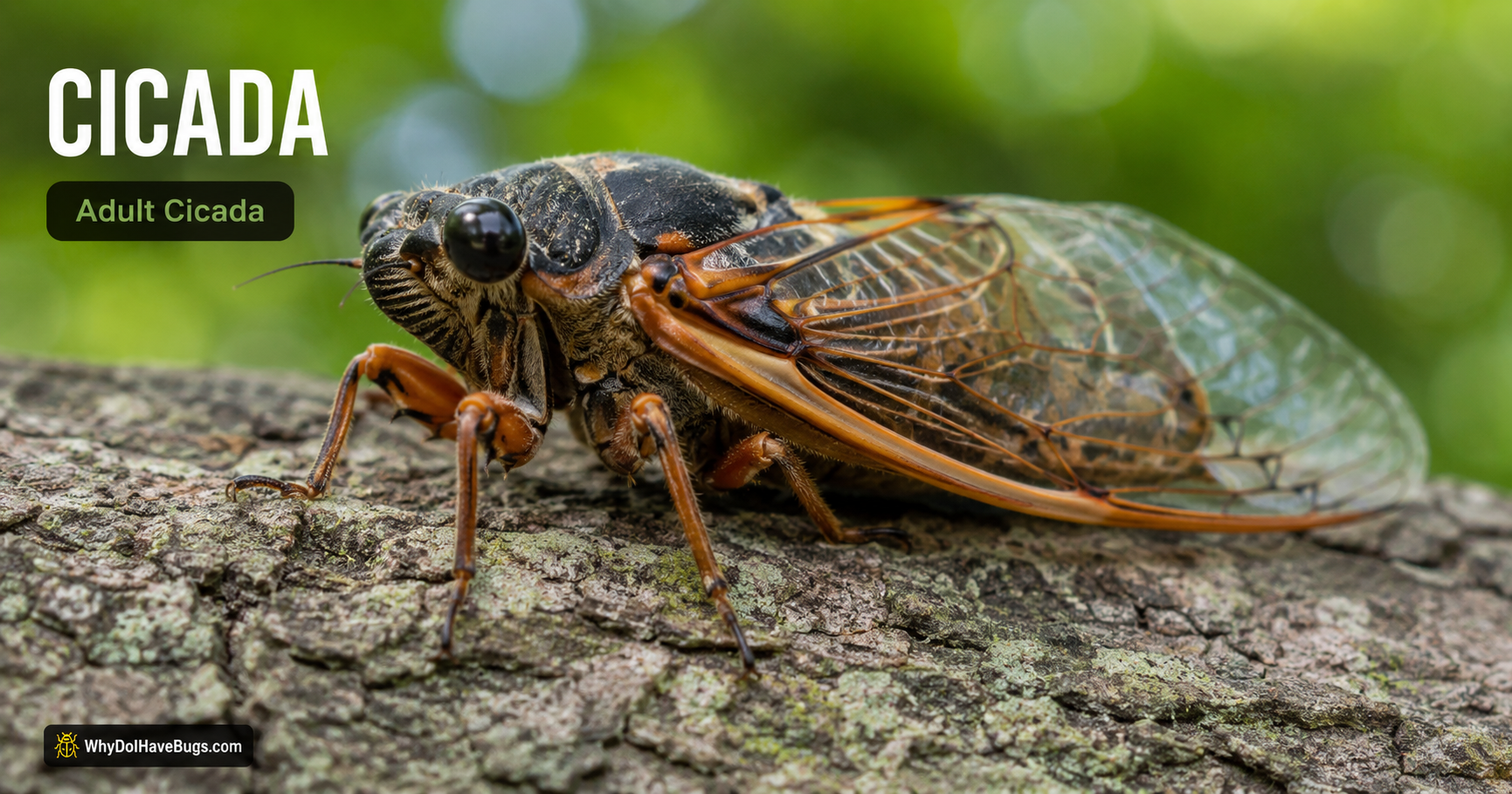
A cicada is a large, plant-feeding insect known for its loud calls, clear wings, wide-set eyes, and habit of leaving shed shells on tree trunks. Adult cicadas spend most of their short above-ground life in trees, where they mate, lay eggs, and eventually die.
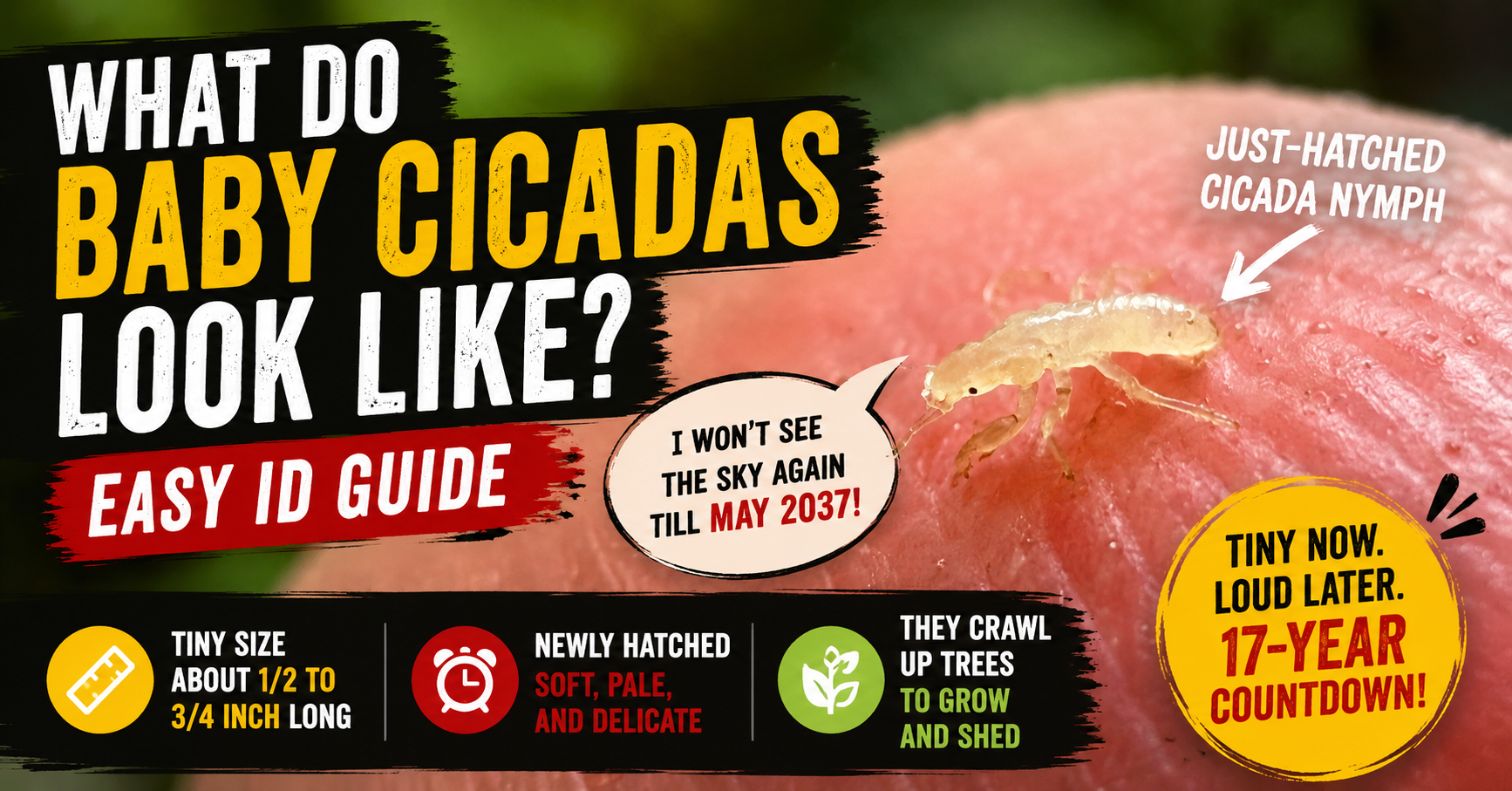
Most of a cicada’s life happens out of sight. After hatching, young cicadas drop to the ground, burrow into the soil, and feed from tree roots for years before emerging as adults.
Cicadas are not the same thing as crickets, grasshoppers, or locusts. They belong to their own insect group and have a very distinct look and life cycle.


What Does a Cicada Look Like?
An adult cicada has a stout body, broad head, large bulging eyes, short antennae, and four clear wings held like a roof over its body. Their wings usually have obvious dark veins and can look almost glass-like in the sunlight.
Many annual cicadas are green, brown, black, or a mix of those colors. Periodical cicadas are often black with bright red eyes and orange-veined wings.
Most adult cicadas are around one to two inches long, although their wings can make them look larger. They are much bulkier than a grasshopper and do not have the oversized jumping hind legs people associate with locusts.

The Easiest Ways to Identify a Cicada
I look for a combination of clues rather than color alone.
- A thick-bodied insect with wide-set eyes.
- Clear, veined wings that extend past the abdomen.
- A loud buzzing, whining, or pulsing call coming from trees.
- Empty brown shells attached to trunks, fence posts, and branches.
- Small round exit holes in the soil nearby.
A cicada may be loud, but it is not built to bite people, sting, or chew leaves.
Why Are Cicadas So Loud?
Male cicadas make the familiar summer sound to attract females. They use special sound-producing organs on the sides of their abdomen called tymbals. The sound can be incredibly loud when many males are calling from the same group of trees.
Different species make different calls. Some sound like a steady electric buzz, while others make clicking pulses, rising whines, or a loud chorus that seems to come from every direction.
The loudest cicada days are usually warm, sunny days. You may notice the sound slowing down in cooler weather or becoming quieter after sunset.

Where Do Cicadas Come From?
Cicadas emerge from the ground after living underground as nymphs. The nymphs feed on fluid from tree roots, slowly growing and molting beneath the soil.
When the time is right, they tunnel up, climb a nearby tree, shed their outer skin, and become winged adults. That empty skin is the crisp brown cicada shell many people find stuck to bark.
A cicada shell is not a dead cicada. It is simply the skin the insect left behind after becoming an adult.
Annual Cicadas vs. Periodical Cicadas
Most cicadas people hear each summer are annual cicadas. They appear every year because different groups have been developing underground on different schedules. Individual annual cicadas may spend several years underground, but enough emerge each year for people to hear them every summer.
Periodical cicadas are different. They emerge together in huge numbers on either a 13-year or 17-year schedule, depending on the brood and region. Their mass emergence is why some years bring an unusually loud cicada season.
Periodical cicadas are commonly recognized by their black bodies, red eyes, and orange wing veins. Annual cicadas are usually larger and more green or brown.



Are Cicadas Locusts?
No. Cicadas and locusts are completely different insects.
A true locust is a type of grasshopper that can gather in massive swarms and eat vegetation. Cicadas do not swarm through fields eating leaves, and they do not have the long jumping hind legs of a grasshopper.
People have called cicadas “locusts” in everyday conversation for generations, especially during big periodical cicada emergences. The nickname stuck, but it is not scientifically correct.
Do Cicadas Eat Leaves?
No. Cicadas do not chew holes in leaves or strip trees bare. Adult cicadas feed by inserting a straw-like mouthpart into small twigs and taking in plant fluids.
Their feeding is usually not a major concern for healthy trees. The bigger issue, especially for young fruit trees and nursery trees, can happen when females lay eggs in small twigs.


Can Cicadas Damage Trees?
Female cicadas can damage small branches when they cut slits in twigs to lay eggs. The portion of the twig beyond those cuts may wilt, turn brown, and hang from the branch with dead leaves still attached.
This is called flagging. It often looks alarming because the dead leaves stand out against the green canopy, but established trees usually recover well.
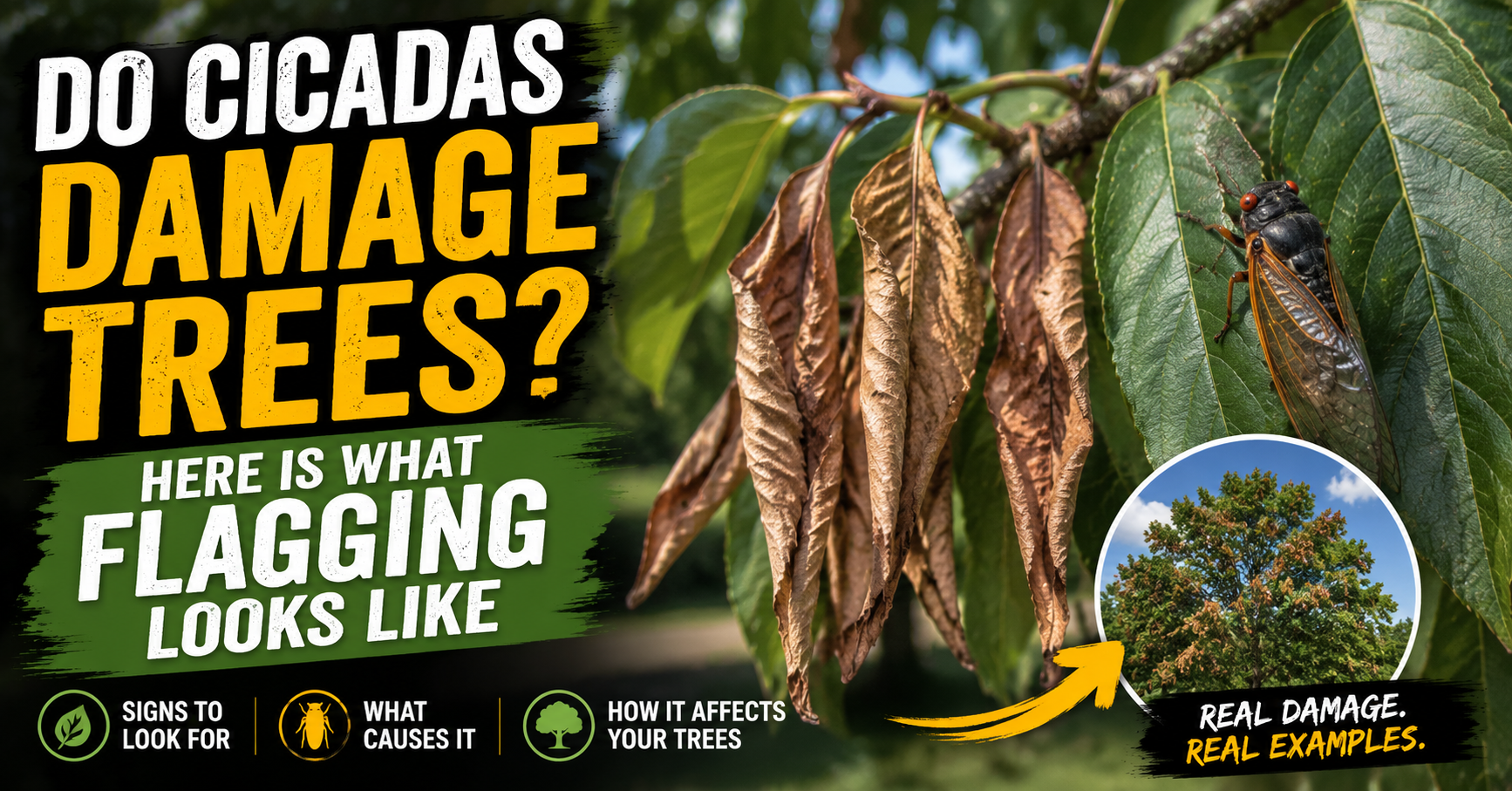
Young fruit trees, newly planted trees, shrubs, and grapevines deserve more protection because they have fewer branches to lose. You can compare your tree with this guide to cicada flagging and tree damage.
Are Cicadas Dangerous?
Cicadas are not dangerous to people, dogs, or cats. They do not sting, and they are not known for biting people in normal situations.
An adult may buzz loudly, fly clumsily into you, or grab briefly with its feet if handled, but that is usually just a startled insect trying to get away.
The noise is the part most people notice. Around a heavy emergence, a big group calling in the trees can be loud enough to make it hard to talk outside without raising your voice.



Do Cicadas Come Inside Houses?
Cicadas are outdoor insects. They may accidentally fly through an open door, land on a screen, or hitch a ride inside on a plant or outdoor item, but they do not infest homes.
If one gets inside, use a cup and paper to carry it outdoors. There is no need to spray your house or worry that more are hiding in walls.
How Long Do Cicadas Live?
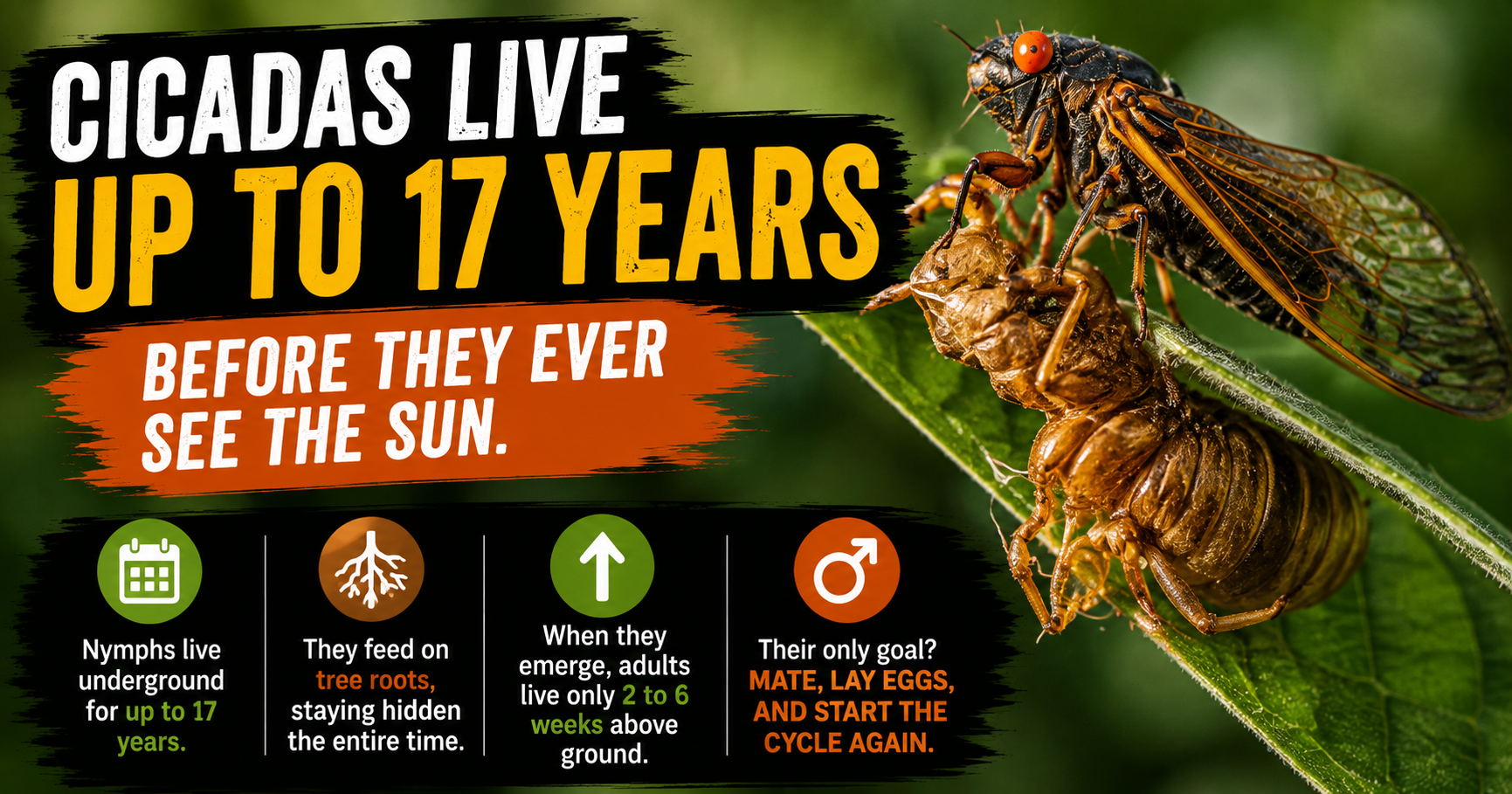
An adult cicada usually lives only a few weeks above ground. Its underground stage is much longer. The full story is easier to understand by looking at the cicada life cycle and lifespan, including the long nymph stage underground.
Annual cicada species commonly spend two to five years underground. Periodical cicadas spend either 13 or 17 years underground before emerging together.
That unusual life cycle is one reason cicadas are such memorable insects. You may only see a major periodical emergence once or twice in your lifetime, depending on where you live.
What Should You Do When You See Cicadas?
For most homeowners, the best move is simply to enjoy them. They are temporary, they do not infest homes, and they provide food for birds, wildlife, and plenty of curious pets.
If you have a newly planted fruit tree or a very young ornamental tree during a heavy emergence, fine mesh netting is the best protection before egg laying begins. Once branch tips have already browned, sprays will not repair the injury.
I would also avoid removing every cicada shell you find. The shells are harmless and are actually a neat sign that the insect completed its transformation successfully.
Frequently Asked Questions
Are cicadas bugs?
Yes. Cicadas are insects, which makes them bugs in the everyday sense of the word. They are part of the order Hemiptera, along with aphids, leafhoppers, and stink bugs.
Why do cicadas scream?
Male cicadas make loud calls to attract females. The sound is part of their mating behavior and is strongest on warm summer days.
Are cicadas good for anything?
Yes. Cicadas feed birds and other wildlife, add nutrients to the soil after they die, and their emergence is an important part of the local ecosystem.
Do cicadas bite people?
Cicadas are not known for biting people. Their mouthparts are made for feeding from plants, not for biting skin.
What is the brown shell left on a tree?
It is the shed skin of a cicada nymph. The adult cicada climbed out of that shell after emerging from the ground.
Why are there holes in the ground during cicada season?
Those are exit holes left by nymphs when they tunnel out of the soil to become adults.
How long will cicadas be around?
Adult cicadas are usually around for several weeks. Their numbers and timing depend on the species, local weather, and whether a periodical brood is emerging that year.
Caleb Warren is a longtime gardener and backyard insect researcher who writes practical pest guides for WhyDoIHaveBugs.com, helping homeowners identify insects accurately before choosing a treatment.