
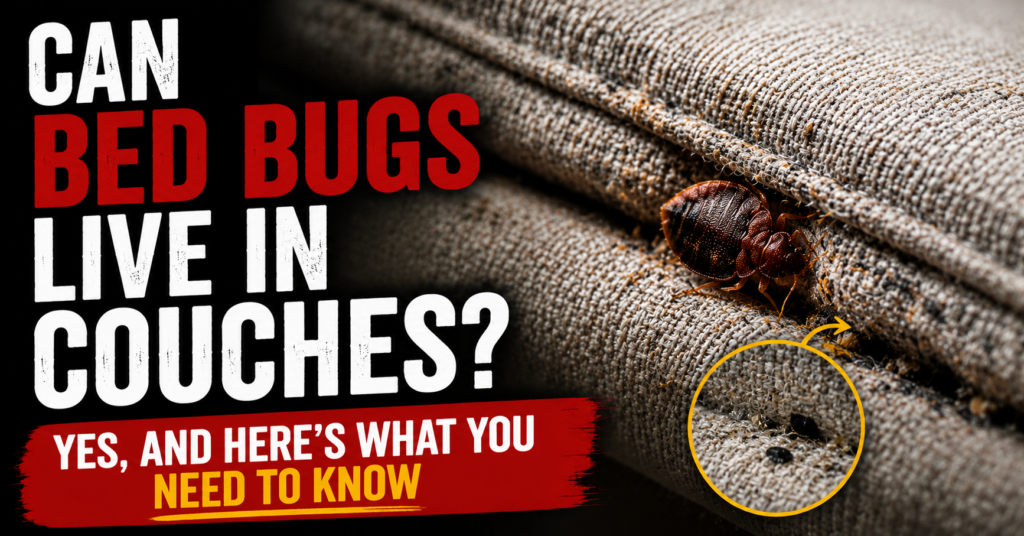
Most people think about their mattress first when they hear the words “bed bugs.”
The couch usually comes a few minutes later.
I’ve had homeowners tell me they stopped sitting in their living room because they were convinced the sofa was full of bed bugs.
The truth is that bed bugs can live in couches.
But just like mattresses, not every couch becomes infested.
Whether they choose your sofa depends on how it’s being used and whether it provides easy access to a person.
Understanding that difference can save you a lot of unnecessary worry. The How to Get Rid of Bed Bugs Fast: Step-by-Step Guide can help turn that inspection into an organized response if you find evidence on the sofa.
Sarah’s First Impression
When someone asks me if bed bugs are living in their couch, my first question is simple.
Does anyone regularly sleep there?
If the answer is yes, that immediately moves the couch much higher on my inspection list.
Bed bugs prefer to stay close to where people remain still for long periods.
That’s why recliners, sectional sofas, and couches used for overnight sleeping deserve extra attention.
Can You Get Bed Bugs From Sitting on a Couch?
Simply sitting on a couch does not mean bed bugs will get on you or come home with you.
There is more risk if the couch has an active infestation, especially when you spend a long time there, nap on it, or place clothing and bags in the seams. Bed bugs usually stay hidden near the person they feed on rather than living on people like lice.
If you’re concerned after sitting on a couch, change clothes when practical and inspect the couch seams, the underside of the cushions, and nearby sleeping areas. Avoid carrying loose blankets, bags, or clothing from the couch into another room until you know whether there is evidence of bed bugs.


Why Bed Bugs Sometimes Choose Couches
Bed bugs aren’t attracted to couches because of the fabric.
They’re attracted to people.
If someone regularly naps or sleeps on a couch, it can become just as attractive as a bed.
I’ve also seen bed bugs spread to couches after an infestation has grown beyond the bedroom.
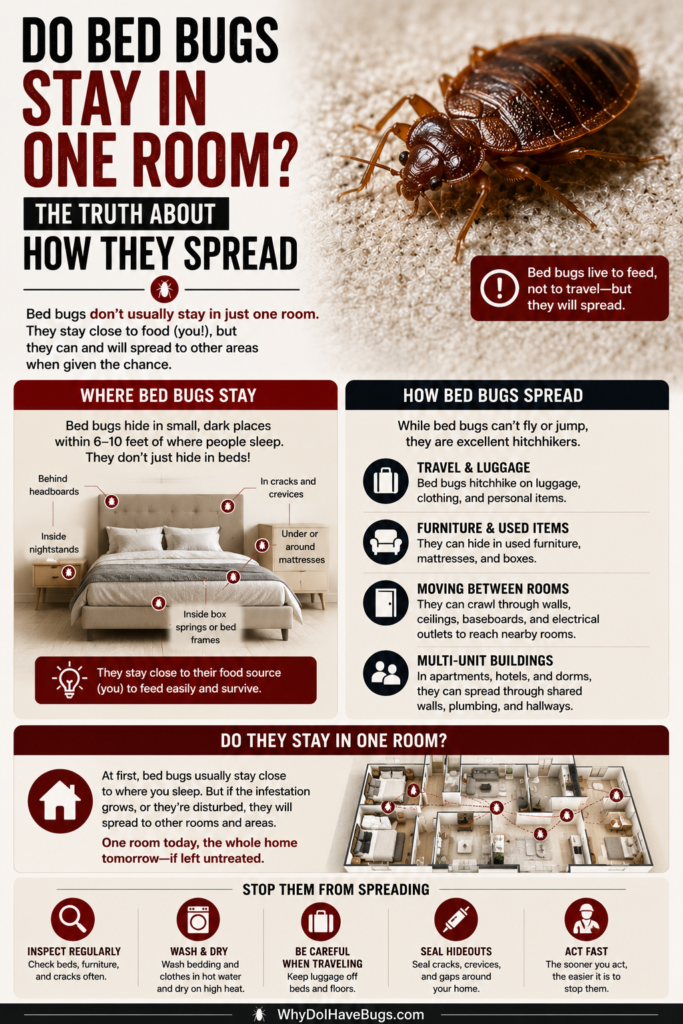
Our article on whether bed bugs stay in one room or spread through the house explains how that usually happens.
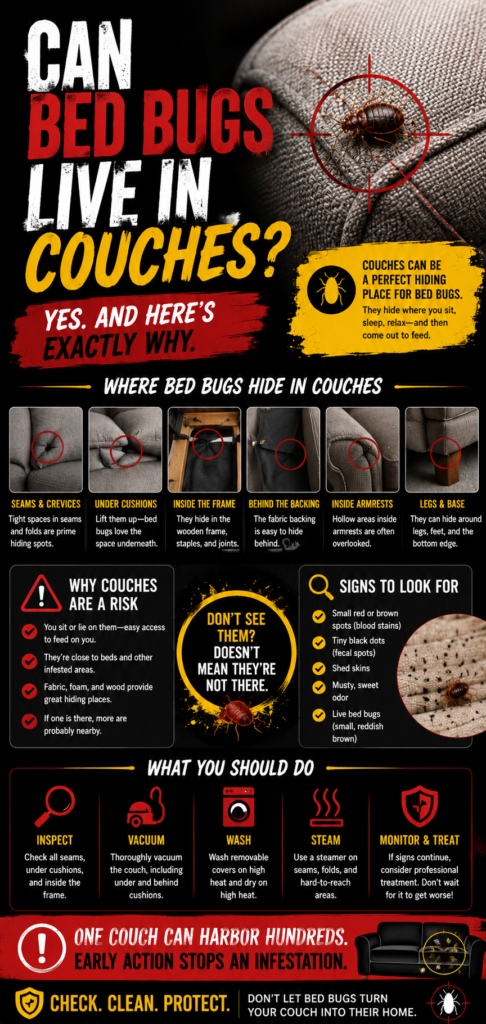
Where I Inspect a Couch First
I don’t start by looking across the cushions.
Instead, I focus on protected hiding places like:
- Cushion seams
- Zippers
- Fabric piping
- Under seat cushions
- The underside of the couch
- Wooden frame joints
- Stapled fabric underneath
- Recliner mechanisms
- Screw holes and brackets
These tight spaces provide the darkness and protection bed bugs prefer.
Can Bed Bugs Lay Eggs in Furniture?
Yes.
If bed bugs remain hidden inside a couch long enough, females may lay eggs in protected seams and cracks.
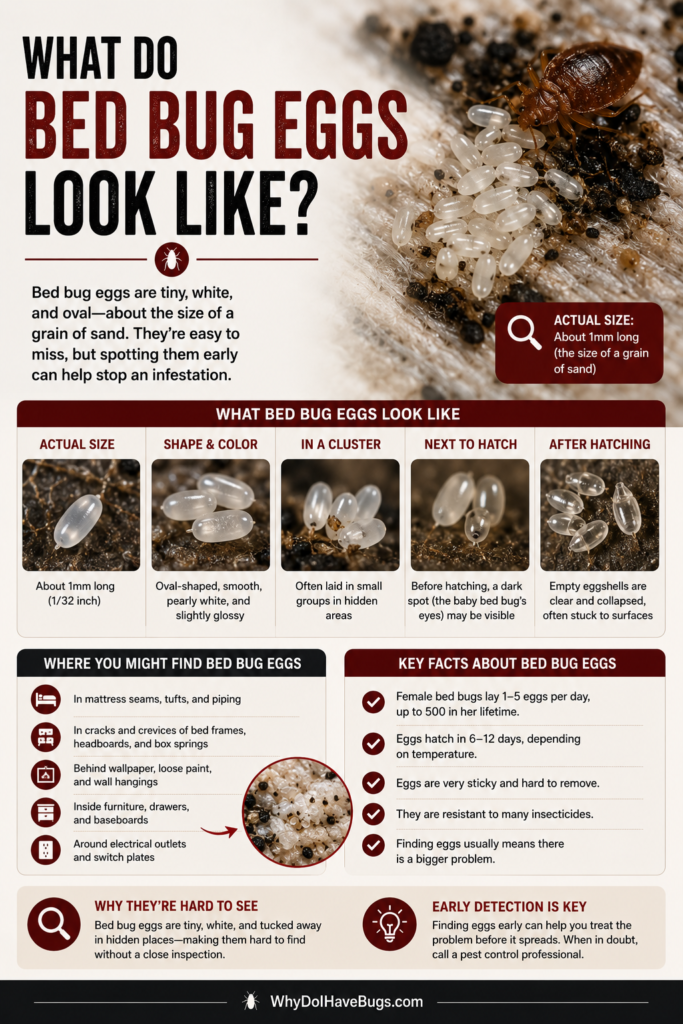
If you find tiny white objects while inspecting furniture, our guide on what bed bug eggs really look like can help you determine whether you’ve found eggs or ordinary household debris.
Could the Couch Be the Original Source?
Sometimes.
If someone regularly sleeps on the couch, it’s entirely possible for an infestation to begin there.
However, if everyone sleeps in bedrooms and rarely uses the couch for long periods, I usually inspect the beds first.
That’s simply where bed bugs are most likely to establish themselves.



What I’d Check Before Assuming the Couch Is Infested
If this were my house, I’d inspect in this order:
- Mattress.
- Box spring.
- Bed frame.
- Headboard.
- Couch seams.
- Under cushions.
- Underside of the couch.
- Nearby chairs.
The couch is important, but I still want to rule out the bedroom before assuming the infestation started in the living room.
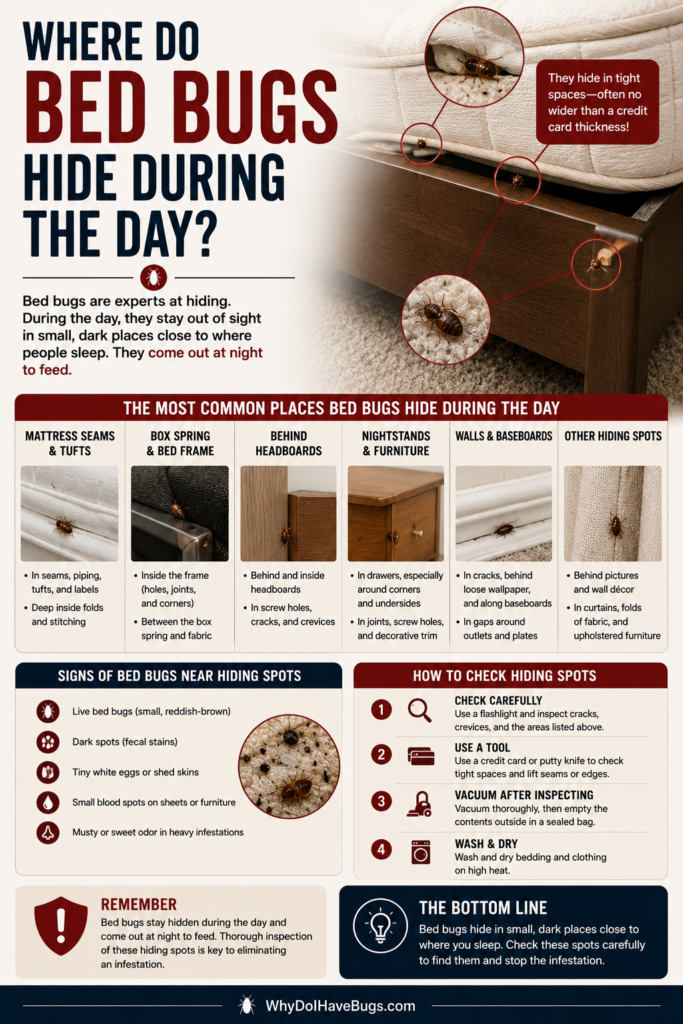
Our guide on where bed bugs hide during the day explains why I follow this inspection order.
What If You Found One Bed Bug on the Couch?
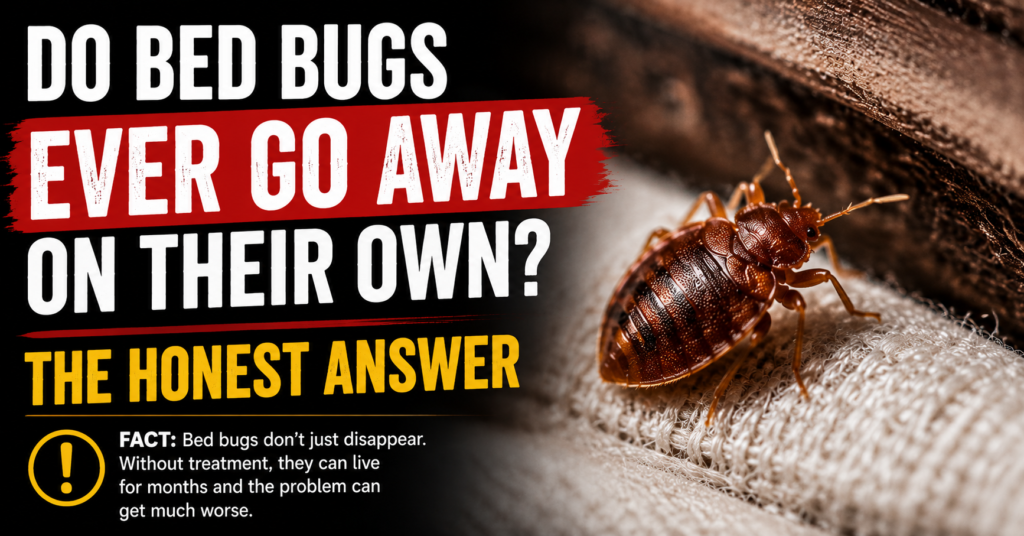
Finding one bed bug doesn’t automatically mean the couch is infested.
It may simply be traveling from another hiding place.
Whenever someone tells me they found one bug on a sofa, I inspect the surrounding furniture and nearby sleeping areas before drawing conclusions.
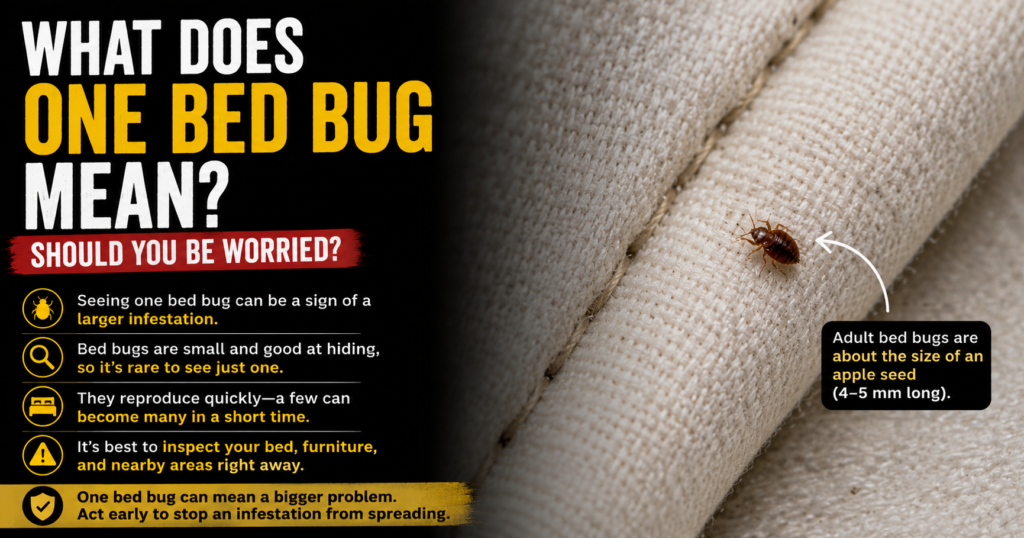
Our article on what finding one bed bug really means explains how I evaluate that situation.
Should You Throw the Couch Away?
Usually not.
Replacing furniture before confirming where bed bugs are hiding often wastes money.
Many infestations can be treated successfully without replacing the couch.
The decision should be based on the condition of the furniture and the severity of the infestation, not panic.
Products That Can Help
If bed bugs have been confirmed in your home, I usually recommend protecting the sleeping area first.

Many homeowners install a SureGuard Mattress Encasement to eliminate one of the insects’ favorite hiding places while making inspections much easier.
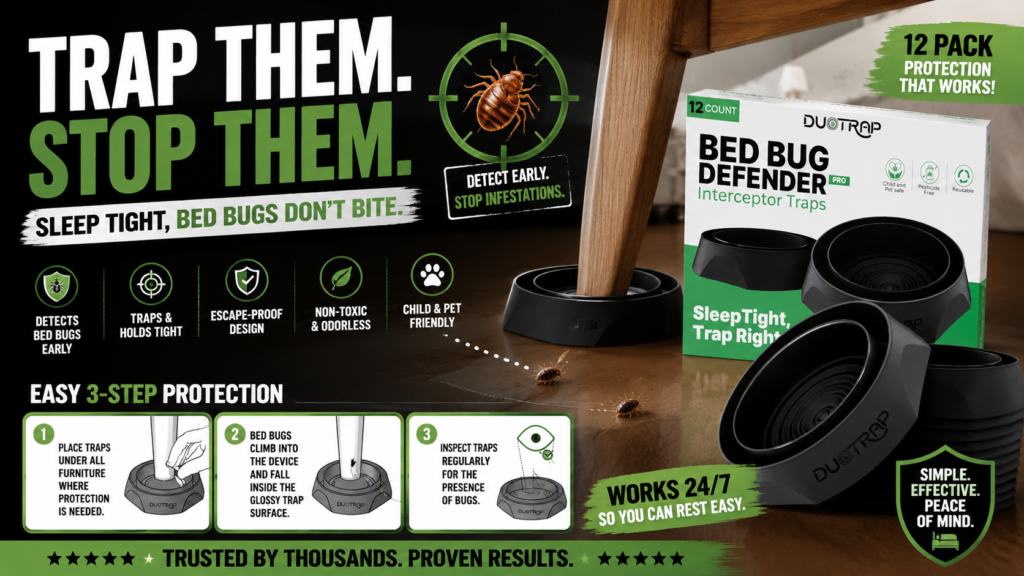
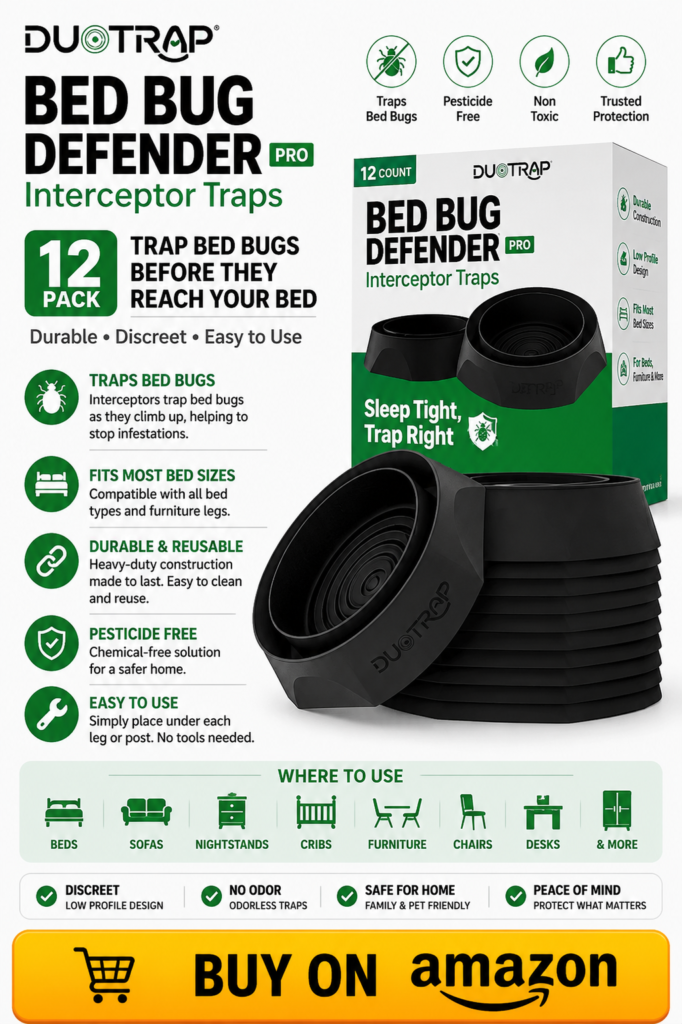
To monitor activity after treatment, many people also use bed bug interceptor cups. Our review of bed bug interceptor cups explains how they can help determine whether bed bugs are still active.


If treatment is necessary, many homeowners also use Harris Toughest Bed Bug Killer. Our review of Harris Toughest Bed Bug Killer explains where it fits into a complete treatment plan.


The Biggest Mistake I See
The biggest mistake I see is assuming every couch with a bed bug is the source of the infestation.
Often, it’s simply another place the bugs reached after the infestation had already become established elsewhere.
That’s why I always inspect the entire home before blaming one piece of furniture.
Frequently Asked Questions
Can bed bugs hide inside a couch?
Yes. They commonly hide in seams, folds, wooden frames, and underneath upholstered furniture.
Do leather couches get bed bugs?
Yes. While leather has fewer fabric folds, bed bugs can still hide in seams, stitching, and structural gaps.
Can I vacuum bed bugs out of a couch?
Vacuuming can remove some bed bugs and eggs, but it isn’t a complete treatment by itself.
Should I replace my couch if I have bed bugs?
Usually not. Many infestations can be addressed without replacing furniture.
Are couches a common hiding place?
They can be, especially if people regularly sleep or nap on them.
About the Author
Sarah Bennett researches bed bugs, household pests, and practical inspection methods. She specializes in helping homeowners locate hidden infestations, understand how bed bugs spread, and make informed treatment decisions without unnecessary expense.