You spot a tiny dark fly running across your kitchen counter. You go to swat it, but instead of immediately flying away, it darts across the surface, stops, changes direction, and runs again.
At first, you assume it’s a fruit fly. Maybe you even put out a bowl of vinegar hoping to catch it. But something doesn’t seem quite right.
You might be dealing with phorid flies.
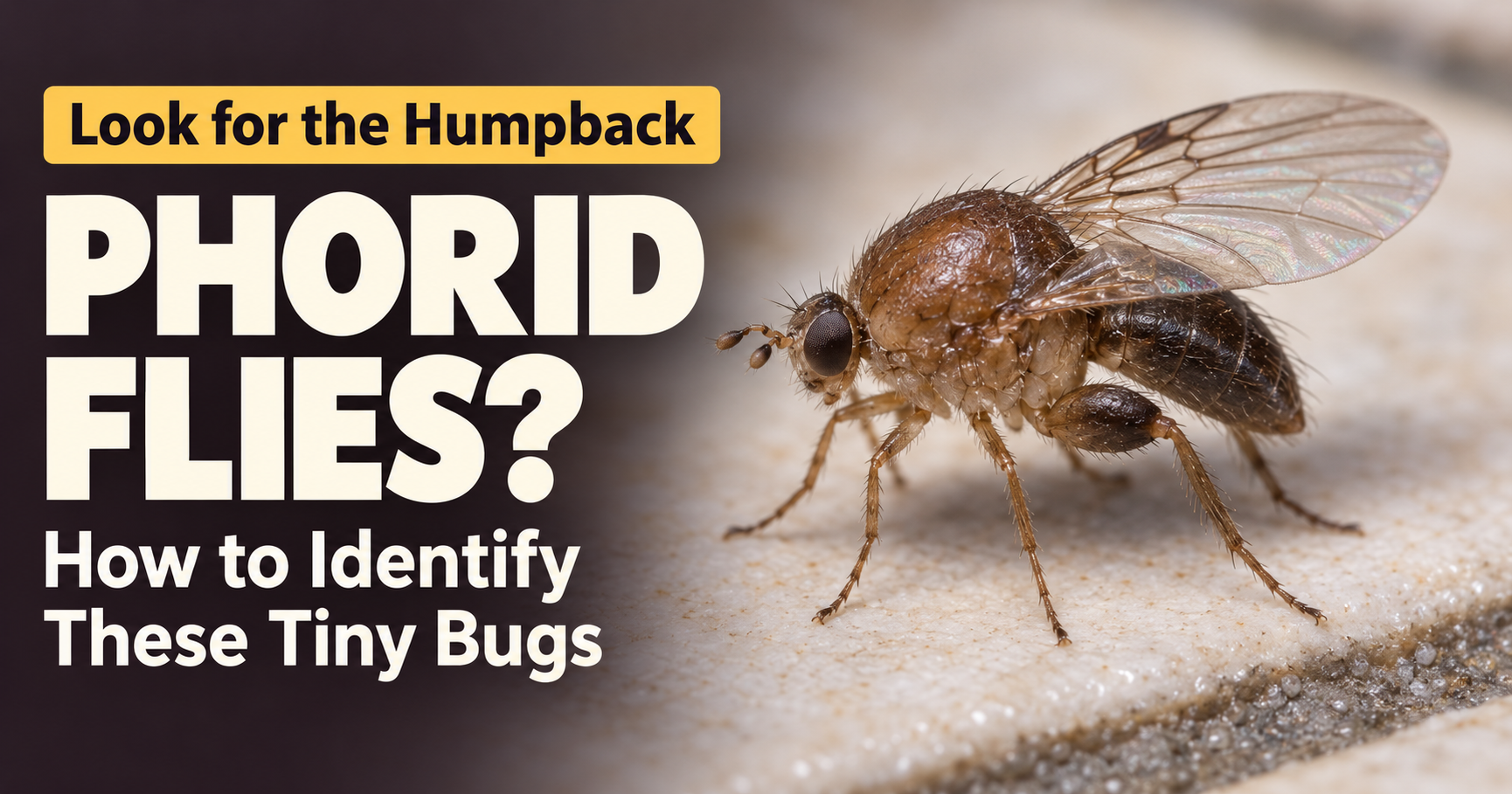
Phorid flies are tiny, humpbacked flies known for running in quick, jerky movements across countertops, walls, and other surfaces. They’re also called scuttle flies because of that unusual behavior.
They’re easy to confuse with fruit flies and fungus gnats, but their body shape, movement, and breeding habits can help you tell them apart.
And there’s a reason they’re worth identifying correctly. While fruit flies often point toward fermenting produce, phorid flies can develop in all kinds of hidden, moist, decaying material, including buildup inside drains. If the insect does appear to be a fruit fly, where fruit flies breed can help you track down the attraction inside your home.
What Are Phorid Flies?
Phorid flies belong to the insect family Phoridae, which includes thousands of species.
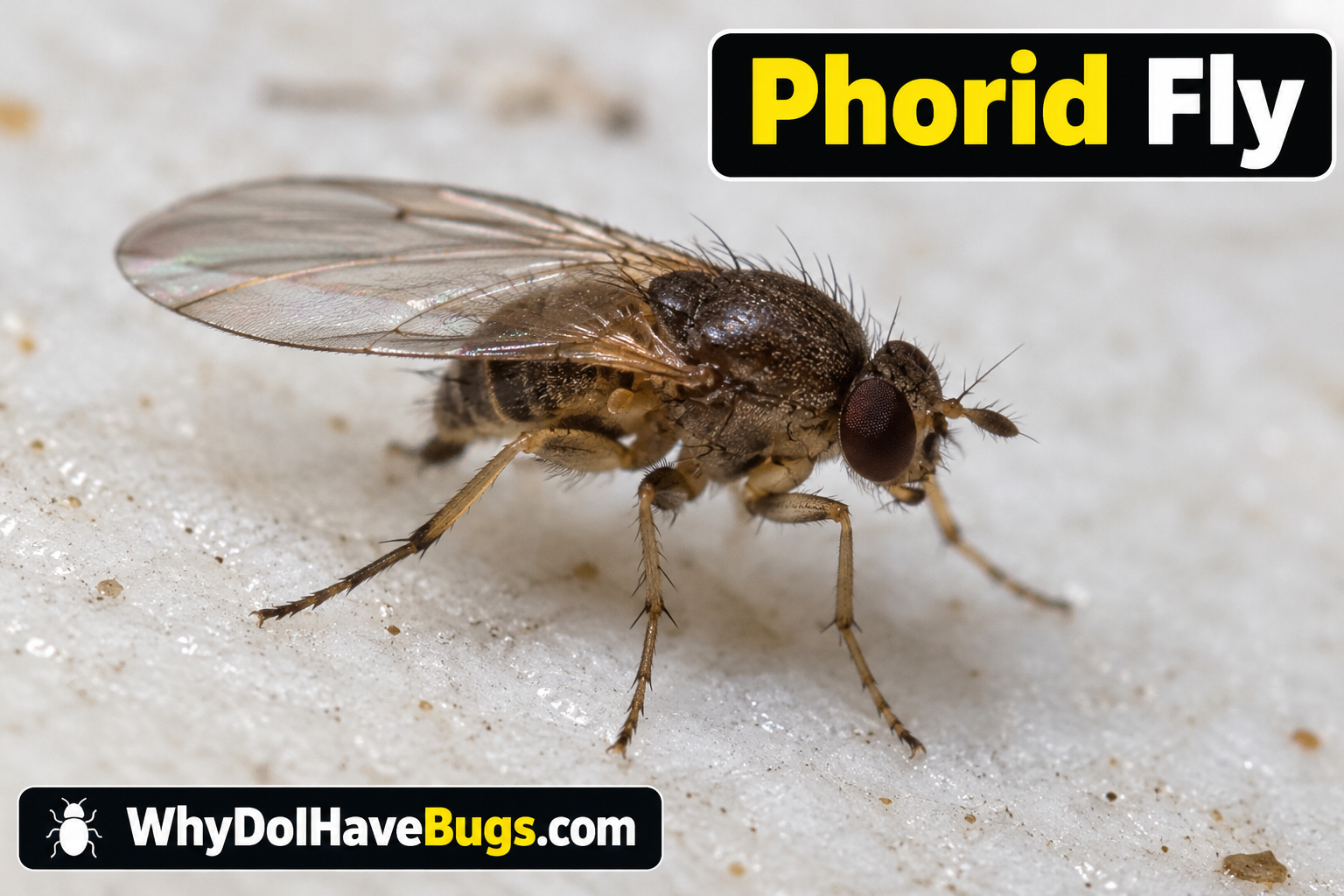
They’re small flies with a distinctive raised thorax that gives their bodies a humpbacked appearance when viewed from the side.
You may also hear people call them humpback flies, scuttle flies, or coffin flies.
That last name comes from the ability of certain species to develop in decomposing animal material, including remains associated with burial sites.
However, the phorid flies found inside ordinary American homes are more commonly associated with moist organic debris in places such as garbage containers, drains, or other neglected areas.
What Do Phorid Flies Look Like?
Most household phorid flies are tiny, commonly around 1/16 to 1/8 inch long, although sizes vary among species.
Their bodies may be tan, brown, dark brown, or almost black.
At a glance, they resemble little fruit flies, but a closer look reveals several distinguishing features.
The easiest characteristics to recognize are their:
- Humpbacked body: The thorax arches upward behind the head.
- Small head: Their heads can appear noticeably lower than the raised thorax.
- Long-looking legs: Their legs are often fairly prominent relative to their small bodies.
- Clear wings: Their wings generally have stronger veins concentrated toward the front edge.
- Jerky running behavior: They frequently run short distances, stop, and abruptly change direction.
That last characteristic can be especially helpful.
While many flies take off immediately when disturbed, phorid flies often run rapidly over a surface before flying.
It’s not a perfect identification test, but it’s one of the behaviors that makes them recognizable.


Why Are Phorid Flies Called Scuttle Flies?
Watch one walking across a counter and you’ll understand the name.
Instead of moving in a steady line, a phorid fly may run quickly, pause, and change direction.
Its movement can look almost nervous.
You might see one running across a sink, circling around a piece of debris, or darting along a windowsill.
This movement helps distinguish phorid flies from several other tiny indoor flies.
However, don’t assume every fast-running fly is a phorid fly.
For a stronger identification, combine the running behavior with the humpbacked appearance and the insect’s size.


How Big Are Phorid Flies?
Phorid flies are small enough that it’s easy to overlook the details of their bodies.
Many of the common household species measure around 1.5 to 3 millimeters long.
That’s approximately 1/16 to 1/8 inch.
Some species are smaller, while others can be somewhat larger.
If you see a tiny dark speck moving on your countertop, it may be difficult to determine what it is without magnification.
A close-up phone photograph can help, especially if you photograph the insect from the side.
That’s the angle where the humpbacked shape is often easiest to recognize.
Can You See Phorid Flies With the Naked Eye?
Yes.
You can generally see adult phorid flies without a microscope.
What you may not be able to see clearly are their finer identification features, including wing veins and small body hairs.
If you’re trying to distinguish a phorid fly from a fruit fly, a magnifying glass or macro photograph can make a real difference.
For a tiny insect, getting a sharp picture is often more useful than relying entirely on memory.
Are Phorid Flies Black or Brown?
Both colors are possible.
Many common indoor phorid flies are brown or tan, while others appear dark brown or nearly black.
Their appearance varies depending on the species, lighting, and viewing angle.
Some have darker markings across their abdomen.
This is one reason I wouldn’t identify a phorid fly solely by color.
A dark-colored fungus gnat or another small fly might appear almost identical until you examine its body shape.
Phorid flies generally have a more pronounced humpbacked appearance, while fungus gnats tend to have slender, mosquito-like bodies with long legs and antennae.

Phorid Flies vs. Fruit Flies: What’s the Difference?
This is probably one of the most common identification mistakes.
Both are small flies, and both can appear in kitchens.
But several details help separate them.
Phorid Flies
Phorid flies often have a strongly arched thorax and a small head.
They’re known for running rapidly across surfaces, and their eyes generally aren’t the conspicuous bright red associated with some common fruit fly species.
They may be associated with moist decaying material in drains, garbage, and hidden organic waste.
Fruit Flies
Common household fruit flies tend to have a different body profile, without the exaggerated humpbacked appearance.
Many familiar fruit fly species have reddish eyes, although eye color varies and isn’t a foolproof identification feature.
They’re frequently associated with fermenting produce, sugary liquids, and other decaying plant materials.
If you discover flies around overripe bananas, fruit flies are a reasonable possibility.
If the insects are repeatedly running across the counter and you can’t find any obvious produce-related source, phorid flies deserve consideration.

Our guide to what fruit flies look like can help you compare their appearance.
An important warning: both types can be associated with decaying food and organic matter. The location alone won’t always tell you which one you have.
Phorid Flies vs. Drain Flies
Another insect people confuse with phorid flies is the drain fly.
This distinction can be especially important if you’re finding little flies in a bathroom or around a kitchen sink.
Drain Flies Look Fuzzy
Typical household drain flies, sometimes called moth flies, have fuzzy-looking bodies and broad wings.
When resting, they often resemble tiny moths.
Their wings may have a rounded or somewhat triangular appearance.
Phorid Flies Look More Like Ordinary Flies
Phorid flies generally have clearer wings and a less fuzzy appearance.
Their bodies are more obviously humpbacked when viewed from the side.
They also tend to run or scuttle across surfaces.
Both insects can develop in moist organic buildup associated with drains, so seeing flies near your sink doesn’t automatically identify them.
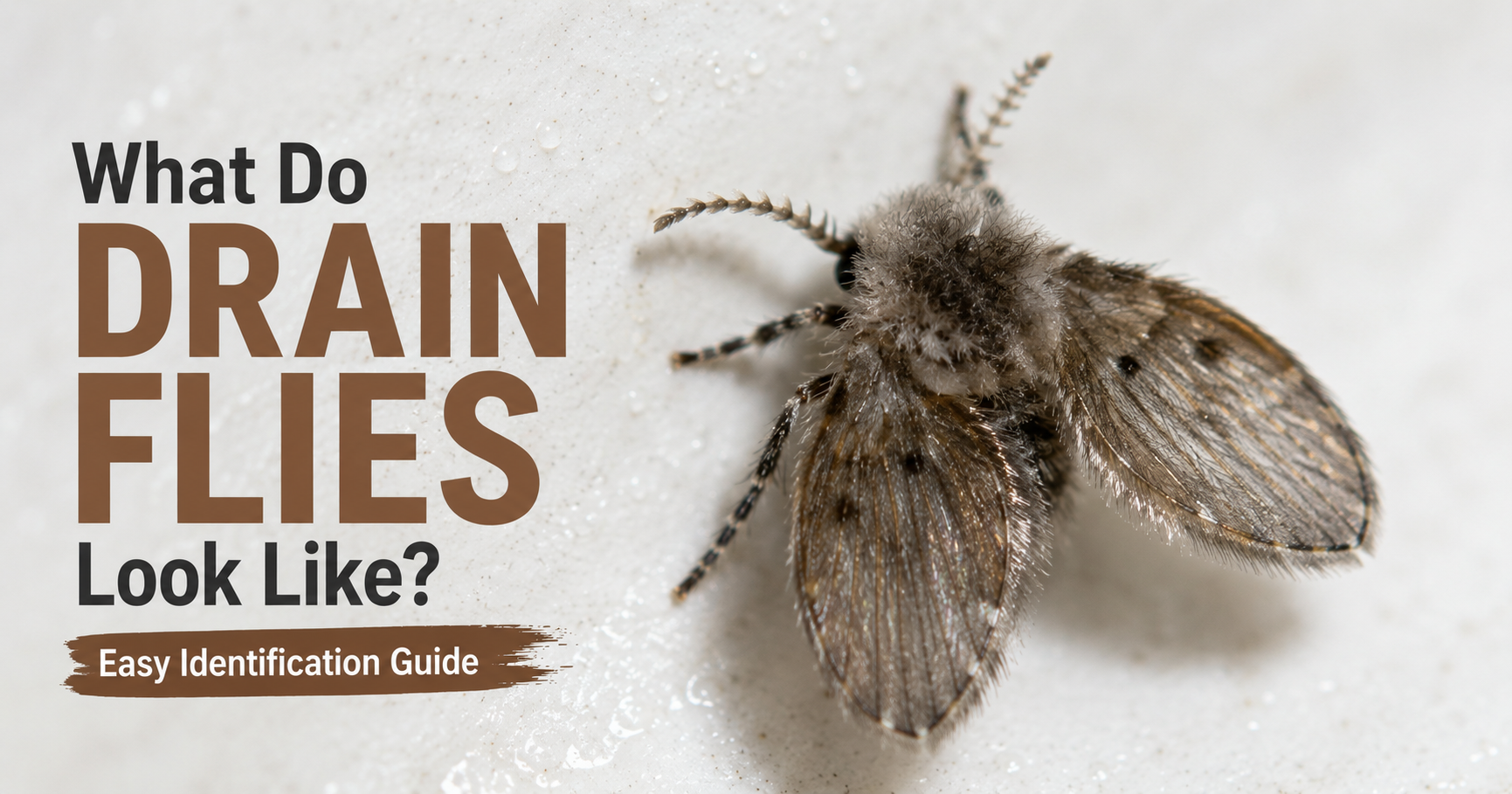
Our drain fly identification guide provides more details about their fuzzy bodies and distinctive wings.
Phorid Flies vs. Fungus Gnats
Fungus gnats are another common source of confusion.
They’re frequently associated with potted plants and damp potting soil.
Fungus gnats tend to have slender bodies, relatively long legs, and long antennae.
Many resemble miniature mosquitoes.
Phorid flies usually appear more compact and have the distinctive raised thorax.
Both can occur around moist organic material, and some phorid fly species can develop in wet potting soil containing decaying matter.
If you’re seeing tiny flies around your houseplants, don’t automatically assume they’re fungus gnats.

Use our fungus gnat identification guide to compare their body shapes and antennae.
Where Do Phorid Flies Come From?
This is where things get interesting.
Unlike insects that simply wander indoors looking for shelter, phorid flies can develop in moist, decomposing organic material.
Adult females lay eggs on or near suitable material, and the larvae feed as they grow.
The breeding source can be obvious, such as rotting food in a trash can.
But it can also be hidden.
Some common possibilities include:
- Organic buildup inside floor drains or garbage disposals.
- Rotting food beneath kitchen equipment.
- Wet trash or neglected garbage containers.
- Damp organic debris in hard-to-reach areas.
- Decaying material in overly wet potting soil.
- Animal waste or other decomposing animal material.
- Sewage-contaminated soil associated with damaged plumbing.
One important distinction is that not every phorid fly problem involves a broken sewer pipe.
That’s a possibility in certain persistent or unusually large infestations, but it’s far from the only explanation.
In many homes, the source is something much simpler.

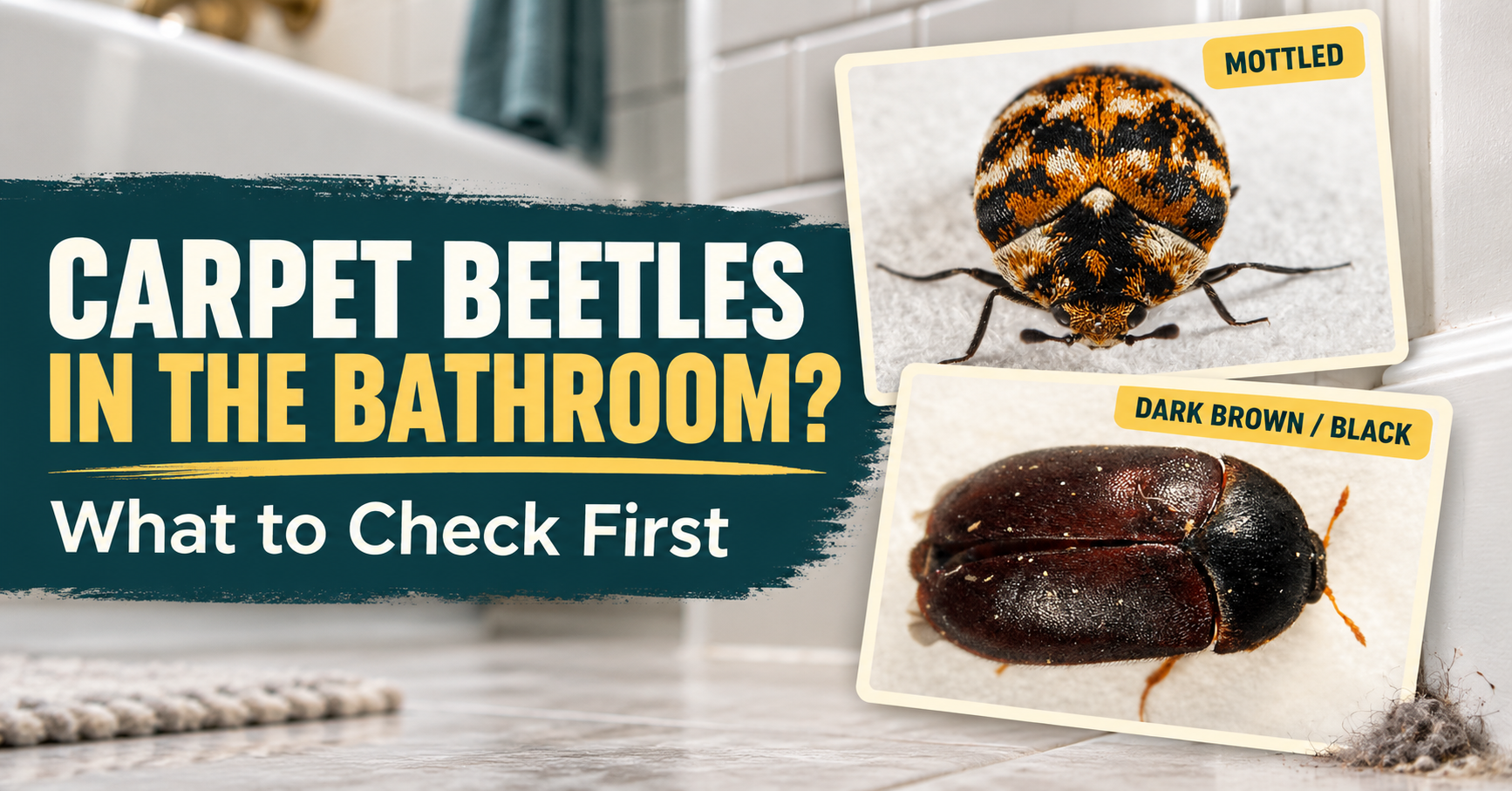
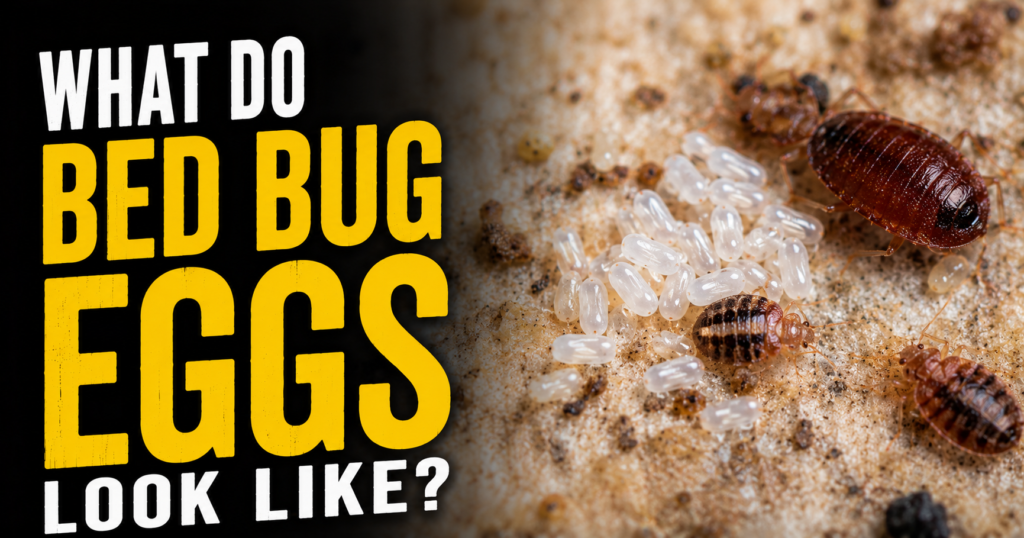
Why Are Phorid Flies in My Kitchen?
Kitchens contain plenty of places where moisture and organic material can collect.
Garbage disposals, drains, trash containers, and areas underneath appliances can all accumulate debris.
A small amount of food may become trapped under a refrigerator or dishwasher.
Over time, that material can begin decomposing.
If moisture is present, it may support insects that develop in rotting organic material.
Phorid flies can also appear around garbage cans that haven’t been thoroughly cleaned.
When you’re finding little flies in your kitchen, look beyond the fruit bowl.
Inspect accessible areas beneath appliances, around trash cans, and near drain openings.
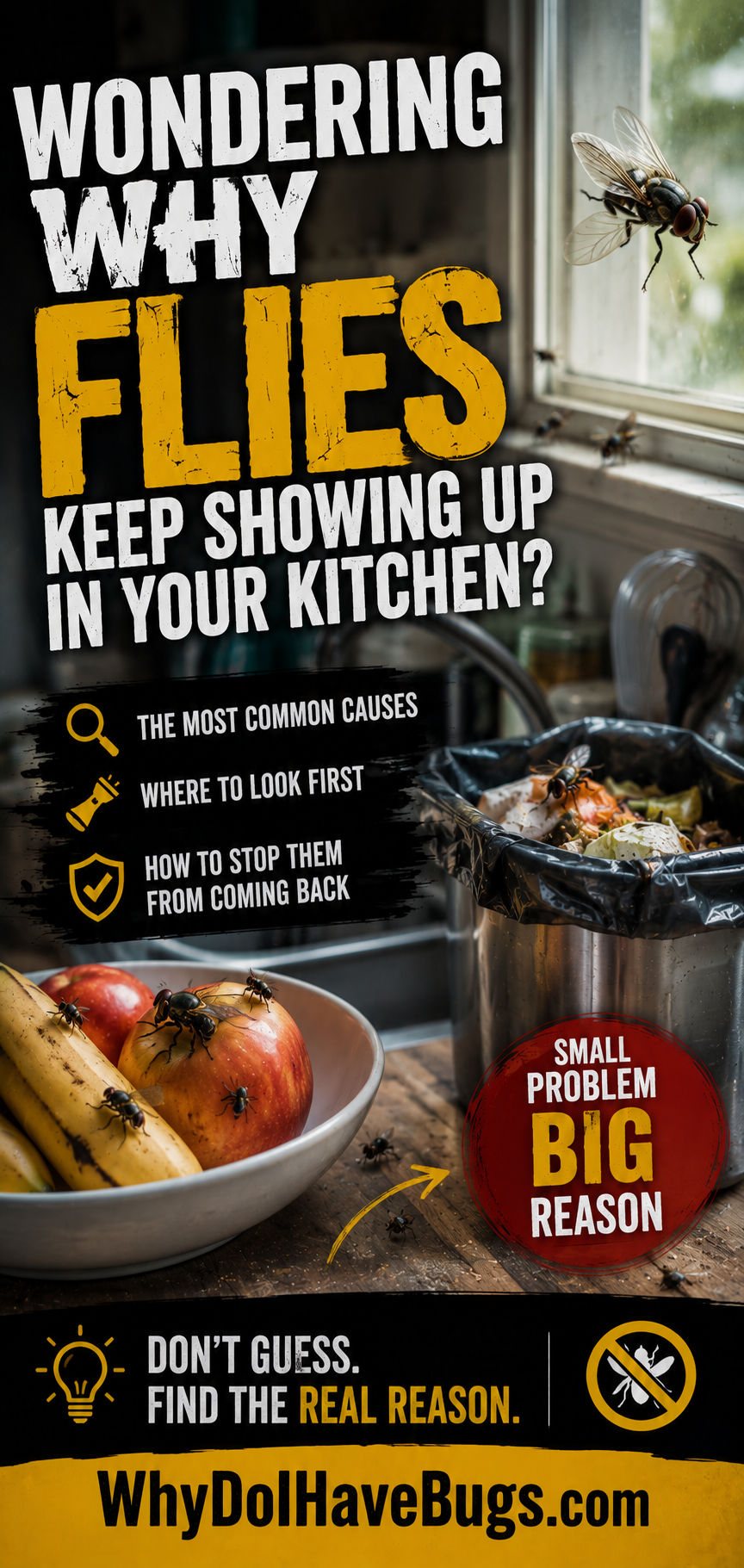
Our broader article about why flies appear in kitchens covers several other possible insects and sources.
Can Phorid Flies Come From Drains?
Yes, and this is one of their better-known breeding locations.
Organic residue can accumulate inside drains and nearby plumbing components.
Phorid flies may lay eggs in suitable moist material, allowing their larvae to develop there.
However, seeing a phorid fly near the sink doesn’t prove that the drain is the source.
Adults can move around the house after emerging.
If you’re repeatedly finding them near one particular fixture, the drain and surrounding plumbing are reasonable places to investigate.
You should also look for leaks, damaged seals, or moisture accumulating around nearby cabinets.
Avoid assuming that pouring bleach down the drain will solve the problem.
Effective control requires locating and removing the material where larvae are developing.
If the source is inside an inaccessible pipe or involves a plumbing defect, professional help may be necessary.
Why Do Phorid Flies Suddenly Appear in Large Numbers?

A sudden increase often means that suitable breeding material has been available long enough for a new generation of adult flies to emerge. That life-cycle explanation is also central to why flies keep coming back, which outlines how to stop new adults from replacing the ones removed.
Phorid flies undergo complete metamorphosis.
Their life cycle includes an egg, larval, pupal, and adult stage.
Depending on the species and environmental conditions, development can happen relatively quickly.
That means a source of damp, decaying material can support repeated generations if it remains in place.
You might see only a couple of flies at first.
Then, days or weeks later, you start noticing them regularly around windows, counters, or other indoor surfaces.
It’s tempting to assume they’re entering through an open door, but repeated indoor appearances can also indicate a breeding source somewhere inside the building.
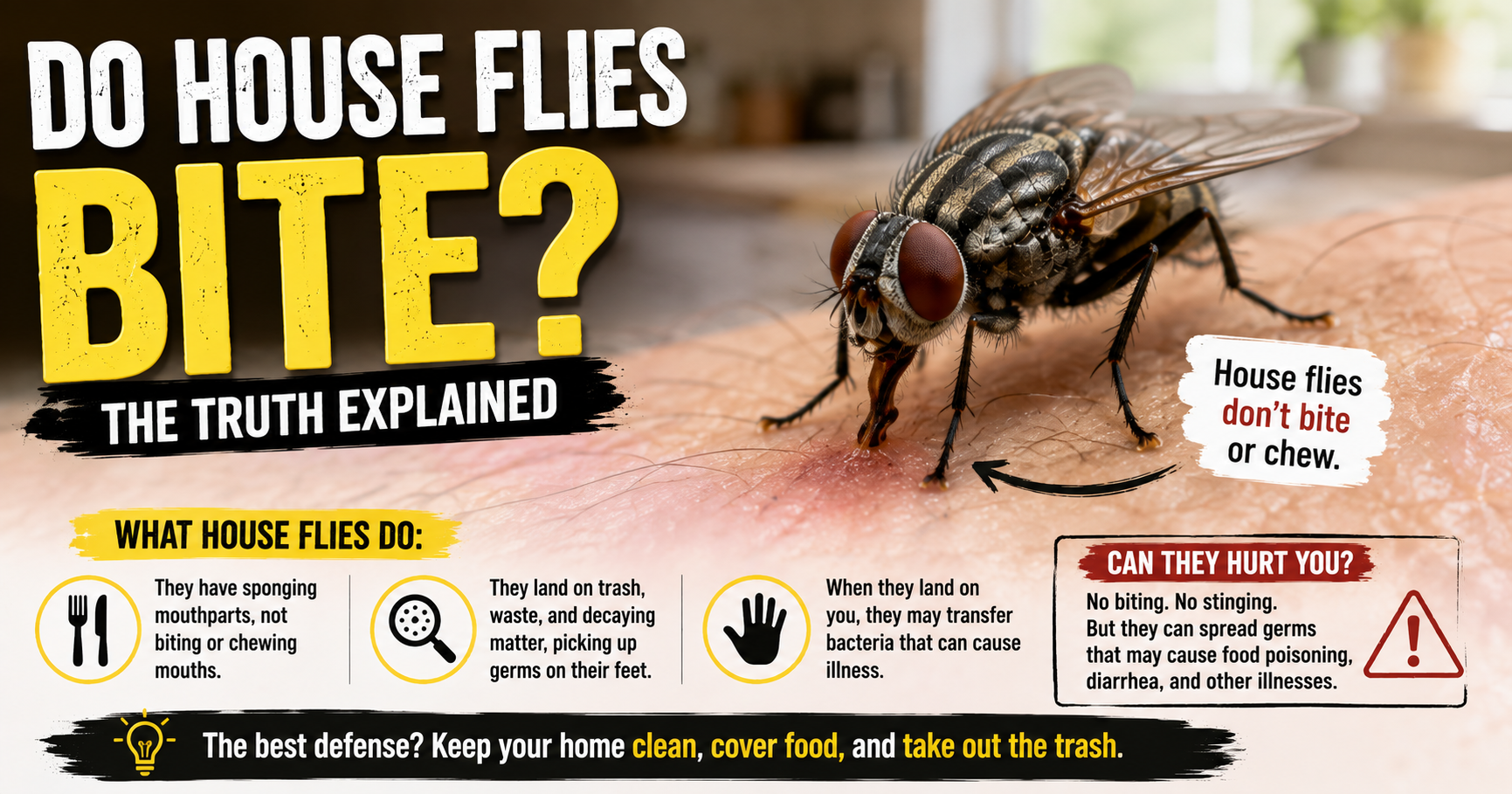
Do Phorid Flies Bite People?
Household nuisance phorid flies do not normally bite humans.
They aren’t blood-feeding pests like mosquitoes or biting midges.
Their biggest concern in a home is usually the sanitation issue associated with where certain species breed.
Flies that contact garbage, sewage, or other decaying material can potentially transfer microorganisms onto surfaces or food.
That doesn’t mean every phorid fly carries a dangerous disease.
However, finding large numbers around food preparation areas is a good reason to locate and eliminate the source.
If you’re experiencing unexplained skin bites, don’t automatically blame phorid flies.
Another insect or an unrelated skin condition may be responsible.
Are Phorid Flies Dangerous?
For most households, phorid flies are primarily a nuisance.
They don’t normally bite, sting, or damage building materials.
The concern is their association with decomposing organic matter.
Some breeding locations can be unsanitary, and flies may move between those locations and food preparation areas.
In certain situations, a large and persistent infestation can also point toward hidden moisture or plumbing problems.
For example, a damaged sewer line beneath a building may allow waste-contaminated soil to support phorid fly development.
That’s not something to assume from finding a few flies.
But if large numbers keep emerging and ordinary source inspections don’t reveal anything, a professional inspection may be appropriate.
Why Do Phorid Flies Run Instead of Flying?
One of the most recognizable phorid fly behaviors is their tendency to run in quick bursts.
They may move several steps, pause briefly, and suddenly change direction.
Phorid flies have strong legs relative to their body size, and running is a characteristic part of their behavior.
They can fly perfectly well, but they frequently use rapid movement across surfaces.
This is especially noticeable when they’re disturbed.
If a tiny fly repeatedly runs across your countertop rather than immediately taking off, that behavior is a useful clue.
Just remember that identification should also include the body shape and other physical features.
What Do Baby Phorid Flies Look Like?
Young phorid flies don’t look like miniature adults.
They’re fly larvae, commonly called maggots.
The larvae are small, pale, legless, and worm-like.
They generally develop inside the moist organic material that serves as their food source.
You might not notice them at all because their breeding material can be hidden inside drains, damp debris, or other sheltered places.
Once development is complete, the insects pupate and eventually emerge as winged adults.
The exact development time varies with the species, temperature, and conditions.
Finding pale larvae in rotting organic material isn’t enough by itself to identify phorid flies, since many other fly species have similar-looking maggots.
How Do You Know if You Have a Phorid Fly Infestation?
Seeing one or two phorid flies doesn’t necessarily mean there’s a major infestation.
Occasional adults may enter through doors or windows.
However, repeated sightings can indicate an indoor breeding source.
I’d pay attention to three particular clues.
You’re Finding Them in the Same Area Every Day
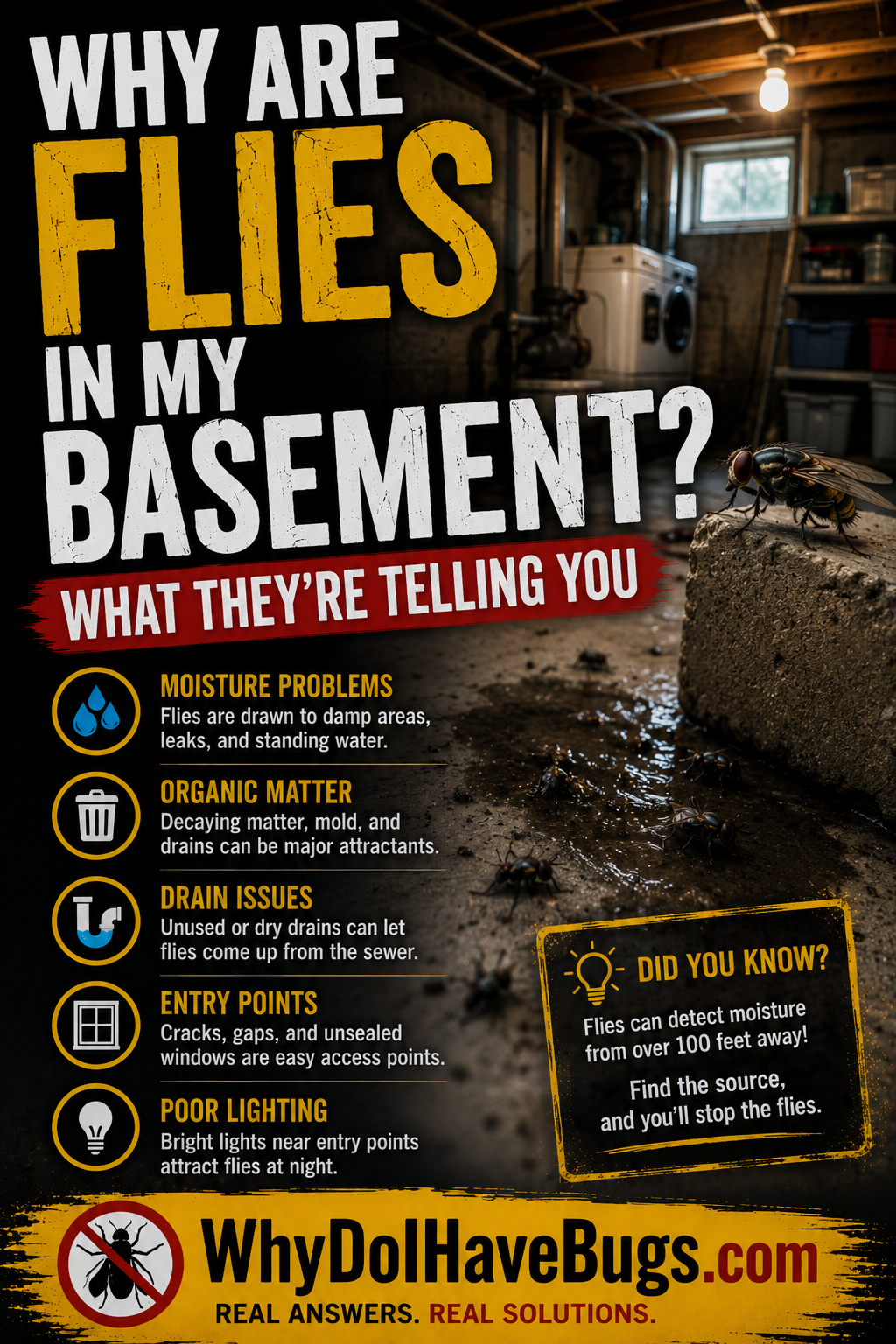
If phorid flies repeatedly appear near a particular kitchen sink, trash area, or basement floor drain, look for a source of damp organic material nearby. Basement fly activity can also point to moisture, drains, or hidden material, as explained in basement fly activity.
That doesn’t guarantee the source is directly underneath the flies.
But the pattern gives you somewhere to begin.
They Keep Appearing After You’ve Caught the Adults
Sticky traps and other fly traps can capture adult phorid flies.
However, trapping adults doesn’t eliminate eggs or larvae developing inside a hidden source.
If more flies continue appearing, something may still be supporting their reproduction.

We’ve reviewed several trapping options in our article about which indoor fly traps actually work.
Traps can help monitor activity, but identifying the breeding source is the more important part of long-term control.
You Can’t Find an Obvious Source
This is where phorid flies can become frustrating.
A homeowner may clean the trash can, remove old produce, and scrub the visible sink area but continue seeing flies.
Sometimes the source is behind an appliance, inside a neglected drain, or associated with a hidden leak.
Large, persistent populations may justify help from a pest-control professional or plumber, particularly if there are other signs of a wastewater leak.
What Should You Do if You Find Phorid Flies?
If you’ve positively identified phorid flies, start by looking for moisture combined with decaying organic material.
Don’t immediately spray every fly you see.
Instead, inspect the areas where adults repeatedly appear and look for possible breeding sources.
Remove rotting food, clean garbage containers, and check accessible drains and plumbing areas.
If you suspect a leak, investigate it promptly.
If you’re unsure whether you’re dealing with phorid flies, collect a specimen or take a clear photograph.
Correct identification can save you time because different small flies require different approaches to control.
We’ll cover the full removal process separately, including how to investigate drains, hidden leaks, and recurring infestations.
Frequently Asked Questions
What is another name for phorid flies?
Phorid flies are also called scuttle flies, humpbacked flies, and sometimes coffin flies. These names refer to their running behavior, body shape, and the breeding habits of certain species.
Are phorid flies the same as fruit flies?
No. They belong to different fly families. Although both are small and may occur in kitchens, phorid flies have a characteristic humpbacked appearance and often run across surfaces in quick, jerky movements.
Are phorid flies attracted to light?

Adult phorid flies may gather near windows and lighted areas, although their behavior varies. Finding them near a window doesn’t necessarily identify where they’re breeding.
Do phorid flies have red eyes?
Phorid flies generally lack the conspicuous bright red eyes associated with some familiar fruit fly species. Eye color alone isn’t enough to identify either insect.
Can phorid flies live in houseplants?
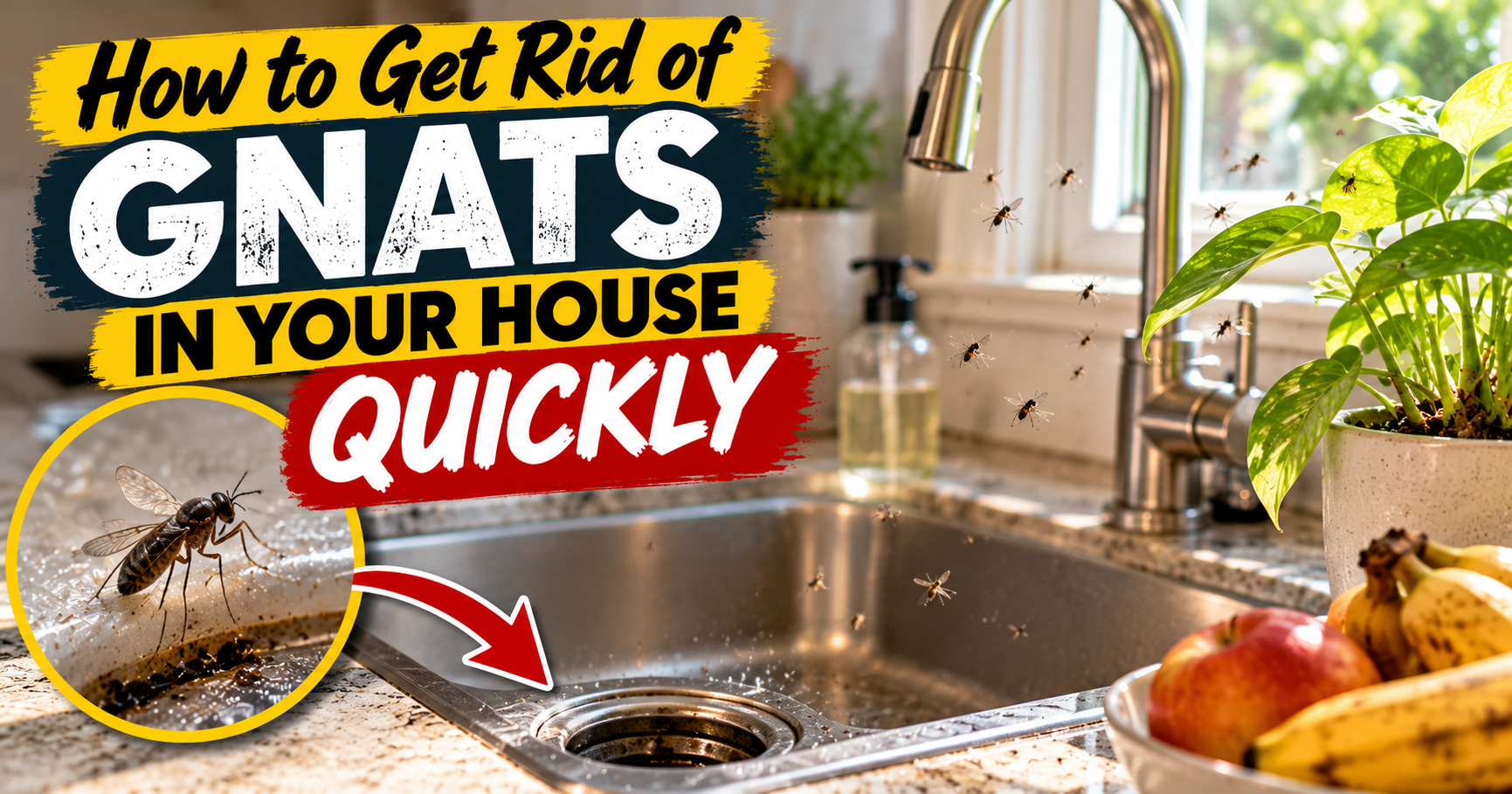
Some phorid fly species can develop in moist potting soil containing decaying organic matter. However, fungus gnats are also common around houseplants, so examine the insect carefully before deciding which pest you have. After comparing the insects, fungus gnat control steps outlines practical steps for dealing with fungus gnats and other tiny flies in the home.
Can phorid flies come from a dead mouse?
Yes. Certain phorid flies can breed in decomposing animal remains. However, their presence doesn’t automatically mean there’s a dead animal in your walls or another hidden space.
Do phorid flies mean you have a sewage leak?
Not necessarily. Phorid flies have many possible breeding sources. A damaged sewer line is one potential explanation for a persistent, unusually large infestation, but common sources such as drains and garbage should also be investigated.
Can phorid flies survive indoors during winter?
Yes. If an indoor environment provides suitable warmth, moisture, and decaying organic material, certain phorid fly species can continue developing even when temperatures are cold outside.
Are phorid flies hard to get rid of?
They can be difficult to eliminate when their breeding source is hidden. Catching the adults is usually easier than locating the moist decaying material supporting the larvae.
What is the easiest way to identify a phorid fly?
Look for a tiny brown or dark fly with an arched, humpbacked thorax and the habit of rapidly running and stopping across surfaces. A clear side-view photograph or specimen examined under magnification can help confirm the identification.
About the Author: The writers at Why Do I Have Bugs help homeowners identify unfamiliar insects, understand why they appear, and find practical ways to deal with common household pests.