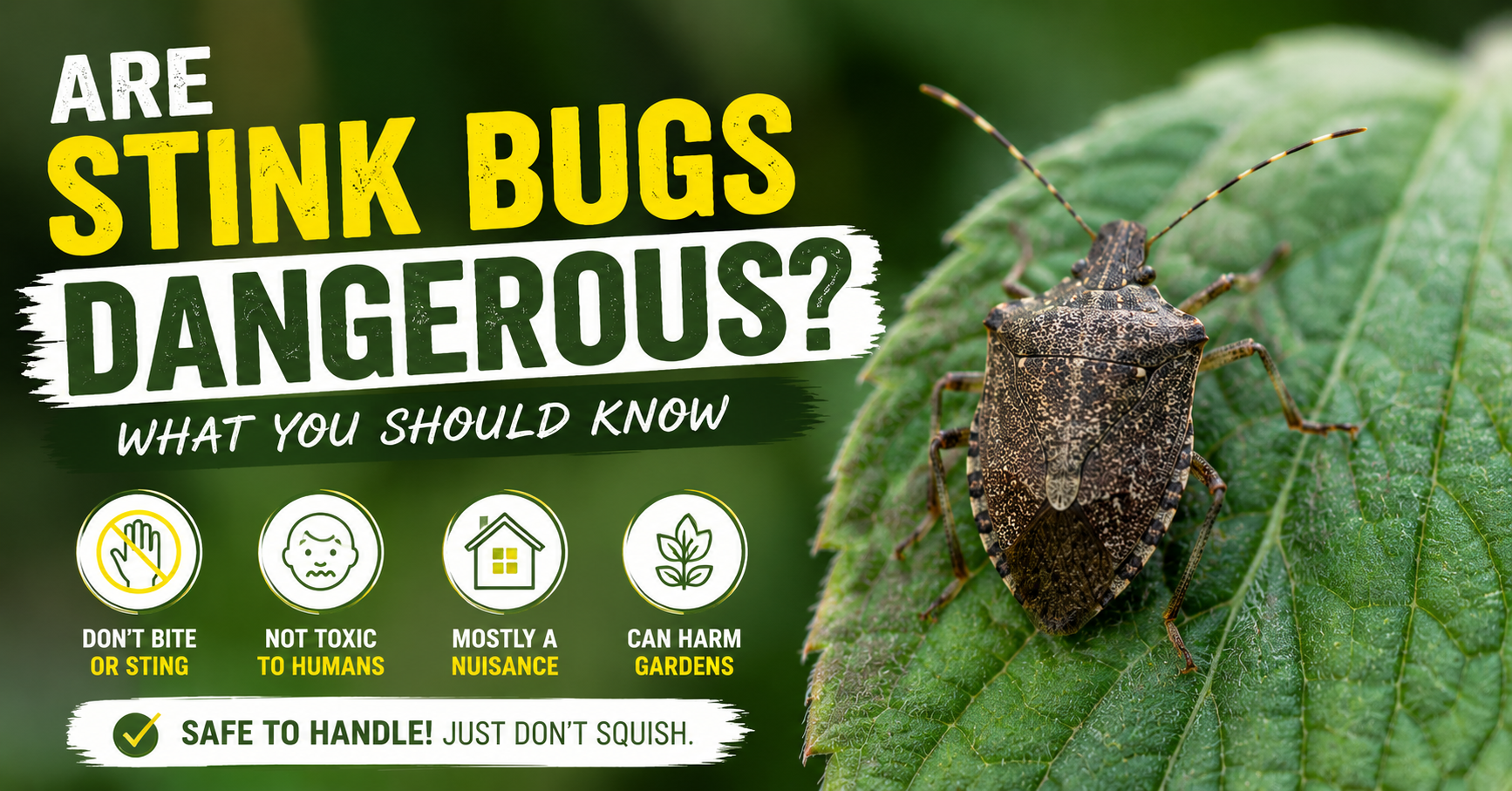
Stink bugs are not considered dangerous to people or pets. The common brown marmorated stink bug does not sting, is not venomous, and is not known to spread disease. It is mainly an annoying household visitor and a potential plant pest.
The defensive odor can cause problems for a small number of sensitive people. Direct contact with a crushed stink bug may irritate the skin or eyes, while a large indoor gathering may aggravate certain allergies.
For most homeowners, though, stink bugs are far more unpleasant than dangerous.
Are Stink Bugs Harmful to Humans?
The stink bugs commonly found inside American homes do not normally harm people.
Brown marmorated stink bugs enter buildings during fall while searching for winter shelter. They are not entering to feed on you, your pets, or anything inside the house.
They do not infest mattresses, drink blood, or spread through a home like bed bugs. They also do not contaminate stored food in the same way pantry pests can.
The main indoor concerns are:
- An unpleasant smell when the bugs are disturbed
- Possible skin or eye irritation from defensive secretions
- Allergy symptoms in sensitive individuals
- Stains from crushed insects or droppings
- The annoyance of insects crawling or flying indoors
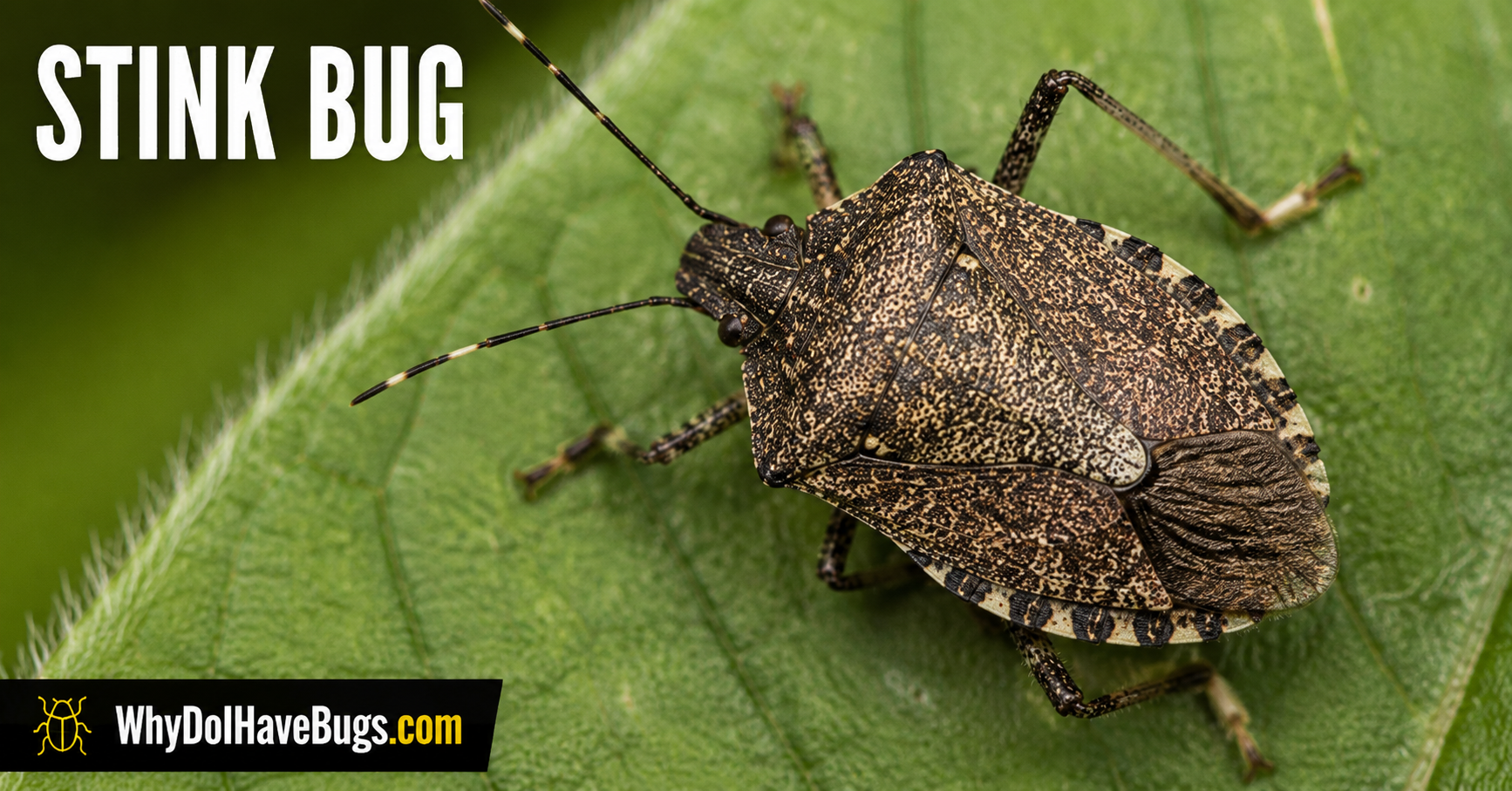
If you are not sure that the insect has been identified correctly, my easy guide to identifying stink bugs covers the body shape, colors, antenna markings, and common lookalikes.
Do Stink Bugs Bite?
Common plant-feeding stink bugs, including brown marmorated stink bugs, do not normally bite people.
They have piercing and sucking mouthparts, but those mouthparts are used to feed on plants. They are not blood-feeding insects and do not hunt people or animals.
A stink bug may crawl across your skin or land on you after flying through a room. That can be startling, but it is not an attack.
Other true bugs can bite defensively when handled. Assassin bugs and wheel bugs are important examples. If a shield-shaped insect caused a clearly painful bite, it may have been a different species.
I will cover this search question fully in the next article because people often confuse stink bugs with similar-looking insects that can deliver a painful jab.


Do Stink Bugs Sting?
Stink bugs cannot sting. They do not have a stinger like a bee, wasp, or hornet.
The pointed structure sometimes visible beneath the insect is its feeding mouthpart. It is not a stinger.
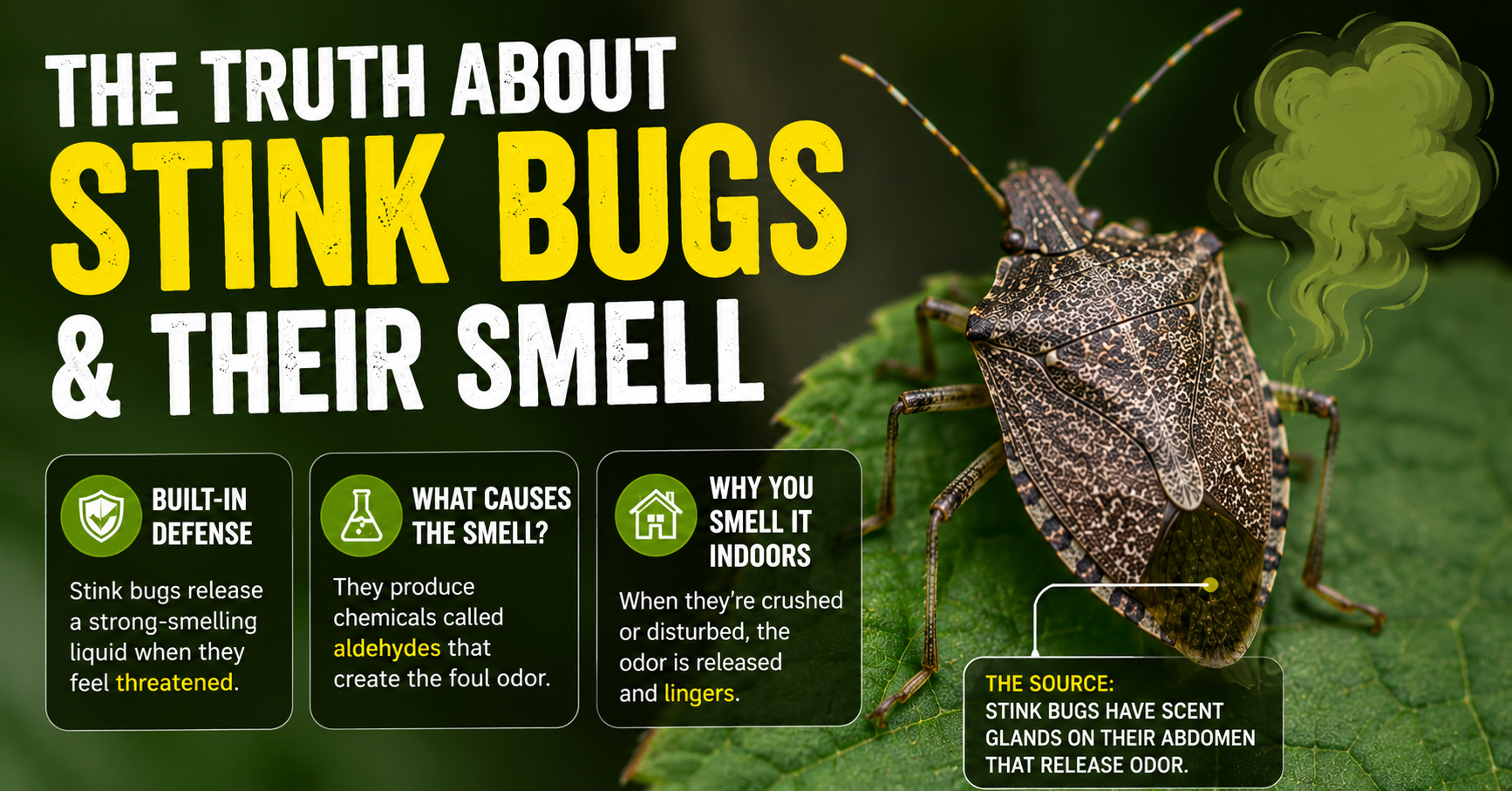
A stink bug’s main defense is releasing an unpleasant odor. Its first response is often to remain still, crawl away, fly, or produce defensive chemicals.
Are Stink Bugs Venomous?
Stink bugs are not venomous.
Venom is injected through a bite, sting, spine, or another specialized structure. A common stink bug does not inject venom into people or pets.
The insect does produce defensive chemicals, but that is different from being venomous. These chemicals are released as an odor rather than injected through a sting.
Calling stink bugs venomous can make them sound much more threatening than they really are.


Are Stink Bugs Poisonous?
Stink bugs are not generally considered dangerously poisonous to people.
That does not mean I would intentionally eat one or allow a child to play with several of them. Their defensive secretions taste unpleasant and may irritate the mouth, eyes, skin, or stomach.
Accidentally touching one is not usually a medical emergency. Wash your hands and avoid touching your eyes afterward.
If a person swallows a stink bug and develops persistent vomiting, breathing difficulty, swelling, or another serious reaction, contact a medical professional or Poison Control for case-specific guidance.
Can Stink Bug Smell Harm You?
The odor from one stink bug is unpleasant, but it is not normally dangerous.
The smell comes from defensive chemicals released when the insect feels threatened or is crushed. These chemicals help discourage predators.
A person who is especially sensitive may experience symptoms such as:
- A stuffy or runny nose
- Sneezing
- Watery or irritated eyes
- Coughing
- Throat irritation
- Headache or nausea triggered by the strong odor
- Worsening allergy or asthma-like symptoms
Penn State Extension reports that brown marmorated stink bug defensive chemicals can act as an airborne allergen for some people. Individuals sensitive to cockroach or lady beetle odors may be more likely to react.
Move away from the odor, ventilate the room, and remove the insects without crushing more of them. Anyone experiencing difficulty breathing, facial swelling, or a severe reaction should seek medical attention.
Can Stink Bugs Irritate Your Skin?
A crushed stink bug may release defensive material onto the skin. In a small percentage of people, this contact can cause localized irritation or dermatitis.
The affected area may become red, itchy, irritated, or uncomfortable.
If stink bug material gets on your skin:
- Wash the area gently with soap and water.
- Avoid rubbing or scratching it.
- Remove clothing contaminated with the secretion.
- Follow the clothing label when laundering affected fabric.
- Watch for increasing redness, swelling, blistering, or pain.
Seek medical advice if the irritation is severe, spreads, or does not improve.
Handling an intact stink bug gently is less likely to cause a reaction than squeezing or crushing it.
What Happens If Stink Bug Spray Gets in Your Eyes?
Stink bug defensive chemicals can irritate the eyes. A person may experience burning, redness, watering, or temporary discomfort.
If material from a stink bug enters your eye, rinse it gently with clean lukewarm water. Remove contact lenses if they come out easily during rinsing.
Do not rub the eye because rubbing can increase irritation.
Contact a medical professional or Poison Control if pain, vision changes, swelling, or redness continues after rinsing.

Can Stink Bugs Make You Sick?
Stink bugs are not known to spread illnesses to people.
They do not transmit disease through bites, and they are not considered disease vectors like mosquitoes, ticks, or certain species of kissing bugs.
A sensitive person may feel sick from the strong odor or experience allergy symptoms. Someone who accidentally eats a stink bug may develop temporary mouth or stomach irritation.
These situations are different from catching an infectious disease from the insect.
Are Stink Bugs Dangerous to Babies and Children?
Stink bugs do not normally bite or sting babies and children, but I would still remove the insects from rooms where young children spend time.
Small children may pick up a bug, crush it, put it in their mouth, or rub the defensive secretion into their eyes.
The best response is to collect visible stink bugs without smashing them. A cup and stiff piece of paper work well for individual insects.
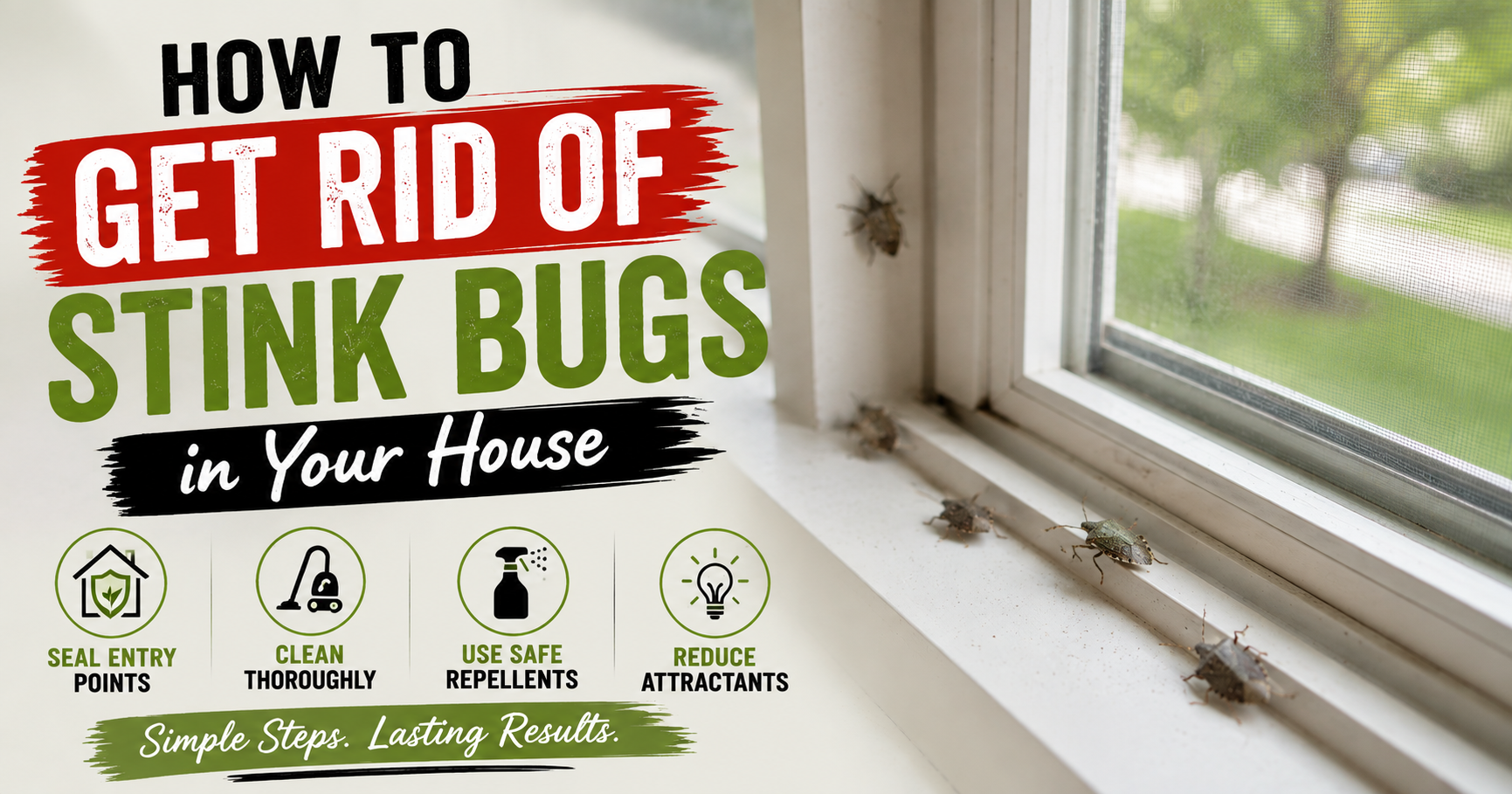
For recurring indoor activity, follow the safe steps for removing stink bugs from a house instead of allowing children to handle the insects.
Keep all pesticides locked away and follow the product label. Never spray a child’s bedding, toys, play surfaces, or clothing unless the specific label clearly allows that use. For the site's broader guidance on using pest products, visit our pesticide-use disclaimer.



Are Stink Bugs Dangerous to Dogs?
Stink bugs are not known for biting or stinging dogs.
A curious dog may chase, lick, mouth, or swallow one. The bug’s defensive taste can cause drooling, gagging, lip licking, vomiting, or temporary stomach irritation.
The hard outer body may also be difficult to digest, particularly if a dog eats several insects.
Remove any remaining bugs and offer access to fresh water. Do not force vomiting or give medication unless a veterinarian tells you to do so.
Contact your veterinarian if the dog develops repeated vomiting, trouble breathing, facial swelling, severe weakness, continued drooling, or unusual behavior.
Are Stink Bugs Dangerous to Cats?
Stink bugs do not normally bite or sting cats. However, their slow movement and noisy flight can trigger a cat’s hunting behavior.
A cat that bites or eats one may drool, paw at its mouth, gag, or vomit because of the unpleasant defensive chemicals.
One stink bug is unlikely to cause serious poisoning in an otherwise healthy cat, but symptoms should be watched carefully.
Contact a veterinarian if the cat has persistent vomiting, difficulty breathing, swelling, severe lethargy, or signs of significant discomfort.
Do not apply an insecticide to a surface accessible to a cat unless the label permits that location and all reentry instructions have been followed.
Are Dead Stink Bugs Dangerous to Pets?
A dead stink bug can still contain defensive chemicals. Dogs and cats may also find dead insects easier to eat.
Vacuum or collect dead stink bugs promptly. Empty the vacuum outdoors so pets cannot reach the contents.
The larger concern may be pesticide exposure if the stink bug was recently sprayed. Keep pets away from treated insects and surfaces according to the insecticide label.
If you believe a pet ate a pesticide-covered stink bug, contact a veterinarian or animal poison-control service with the product name and label information available.
Are Stink Bugs Dangerous Inside a Bedroom?
A stink bug inside a bedroom is usually a nuisance rather than a health threat.
It is not there to feed on a sleeping person and will not establish itself in a mattress. The insect likely emerged from a wall, attic, window frame, ceiling fixture, or another protected hiding place.
Its clumsy flight may cause it to land on a bed or person accidentally.
Capture it without crushing it and check nearby windows, vents, lights, and trim for possible emergence points.
Can Stink Bugs Live in Your Bed?
Stink bugs do not normally live in beds.
They may crawl across bedding or hide temporarily in a fold of fabric, particularly if they emerge nearby. However, they do not depend on beds for food or reproduction.
Finding one in a bed does not indicate a bed bug infestation. Stink bugs are much larger, broader, and shield-shaped.
Shake out the bedding, collect the insect, and wash the fabric if it released an odor or left a spot.
Can Stink Bugs Damage Your House?
Stink bugs do not damage the structure of a house.
They do not chew wood, drywall, wiring, insulation, flooring, or furniture. They also do not create nests or reproduce inside ordinary homes.
Their indoor impact is limited to nuisance activity, odor, droppings, and occasional staining.
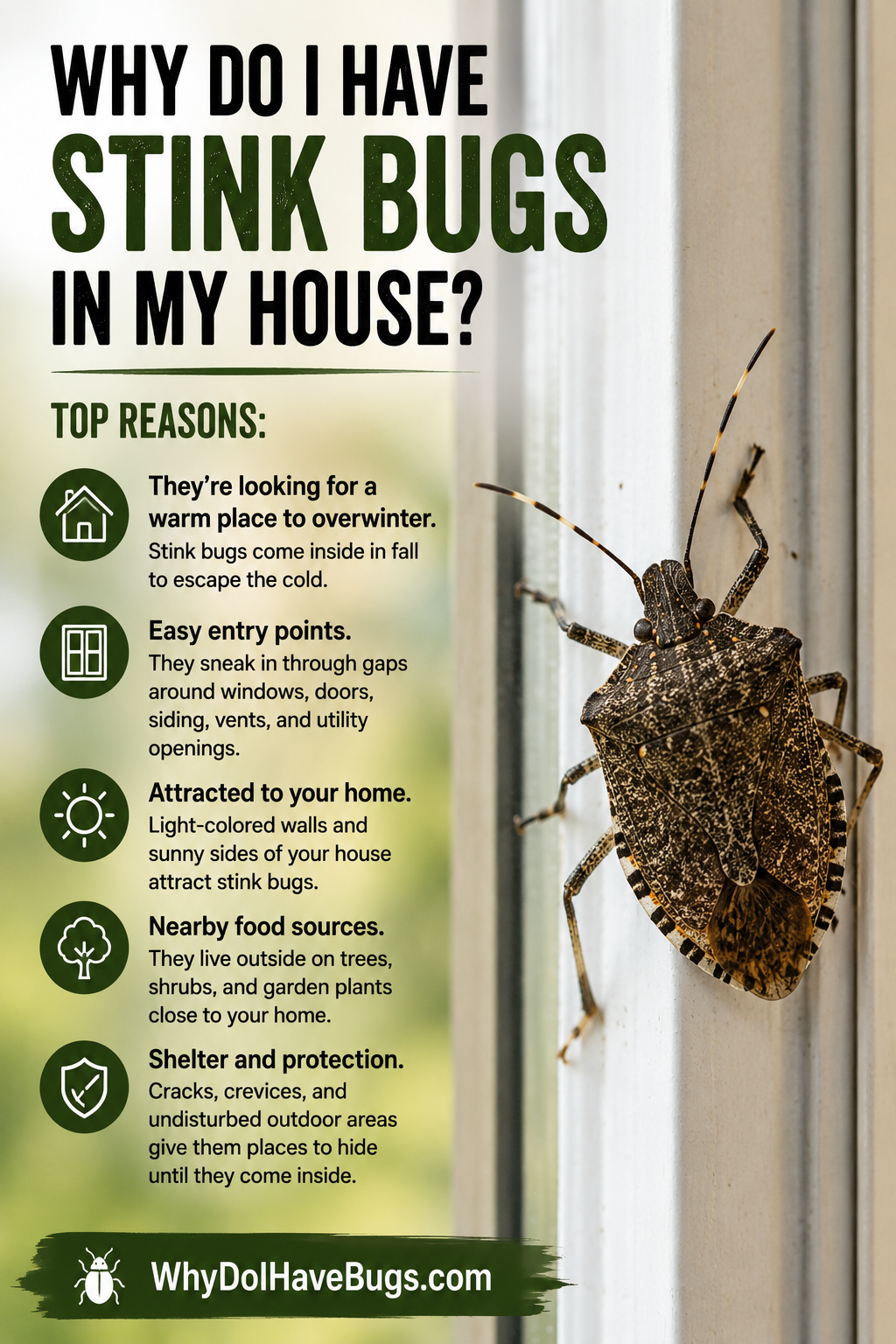
The reason they repeatedly appear is explained in my guide to why stink bugs move into houses for winter.
Can Stink Bugs Contaminate Food?
A stink bug may accidentally land on a countertop, plate, or piece of food. This is unpleasant, but the insect is not known for spreading disease to people.
I would discard uncovered food that a stink bug was crushed on or heavily contaminated with defensive secretion. Clean the surface with an appropriate household cleaner.
Do not spray insecticide near exposed food, dishes, utensils, or food-preparation surfaces unless the product label specifically permits it.
Stink bugs are not pantry pests and will not normally reproduce in flour, cereal, rice, pet food, or other stored products.
Are Stink Bugs Harmful to Indoor Plants?
A plant-feeding stink bug may feed on an indoor plant if it becomes active and finds one.
One feeding incident is unlikely to destroy a healthy plant, but repeated feeding can cause discolored spots, damaged tissue, or weakened growth.
Inspect the leaves and stems before assuming the plant has a serious problem. Remove the stink bug by hand and check for others.
Brown marmorated stink bugs hiding inside houses during winter usually remain inactive and do not establish a reproducing population on houseplants.
Are Stink Bugs Dangerous to Garden Plants?
This is where stink bugs can cause real damage.
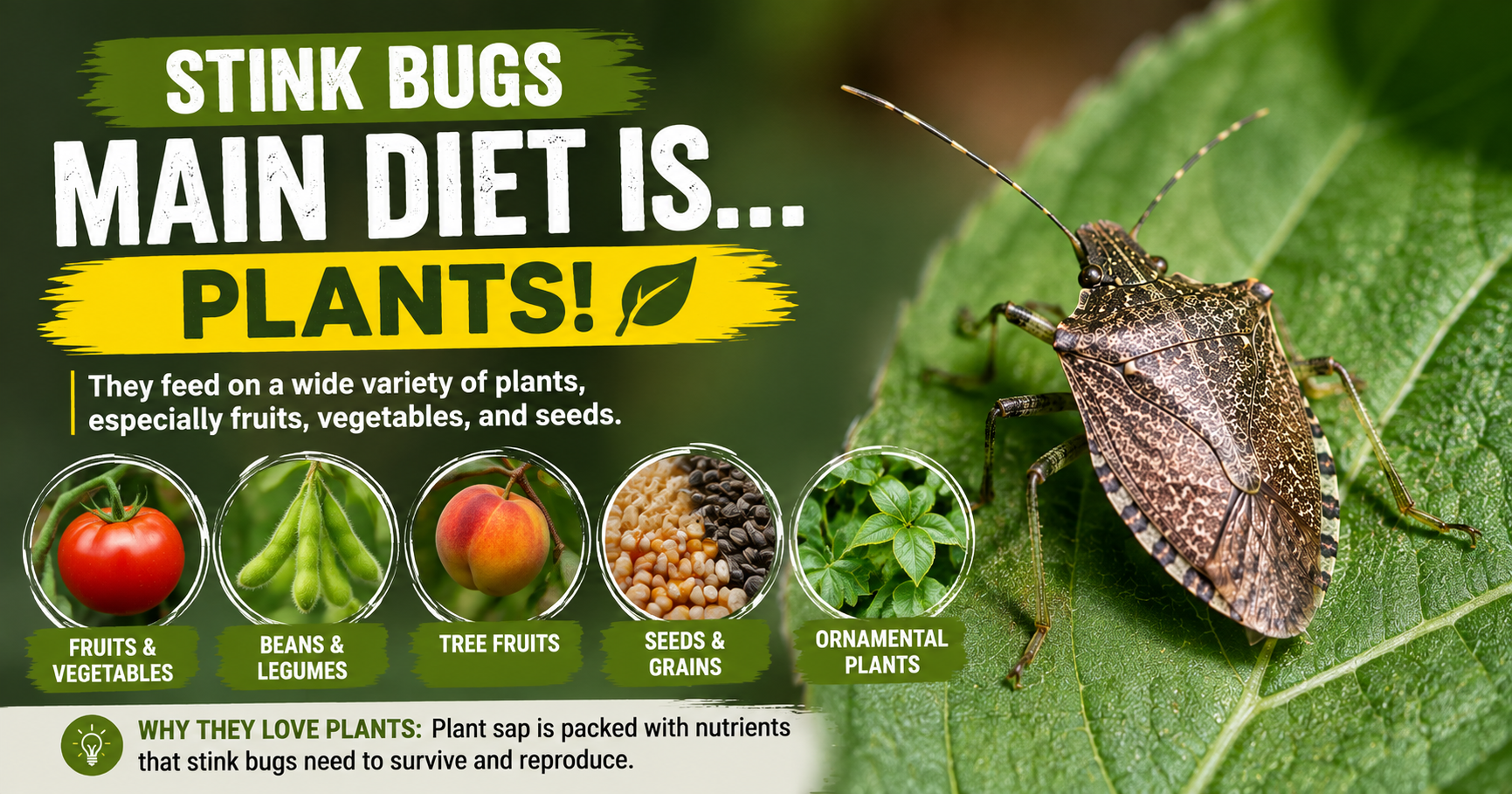
Plant-feeding species use piercing mouthparts to remove fluids from fruit, vegetables, seeds, and other plant tissue. Both adults and nymphs may feed on crops. The full list of foods stink bugs feed on includes common garden, orchard, and field crops.
Potential damage includes:
- Pale or cloudy spots
- Small puncture marks
- Pitting and scarring
- Misshapen fruit
- Corky tissue beneath the skin
- Shriveled seeds or kernels
- Uneven ripening
- Reduced fruit quality
Tomatoes, peppers, beans, corn, soybeans, apples, peaches, pears, cherries, grapes, and many other plants may be affected.
A stink bug is far more capable of harming a developing tomato than it is of harming the person growing it.
Are All Stink Bugs Bad for Plants?
Not every stink bug is a plant pest.
Predatory stink bugs feed on caterpillars, beetle larvae, and other insects. The spined soldier bug is one example that can be helpful in a garden.
This is why I identify the species before killing every shield-shaped insect I find on a plant.
The body markings used to recognize different stink bugs can help determine whether you have a common plant feeder or a potentially helpful predator.
Are Brown Marmorated Stink Bugs Dangerous?
Brown marmorated stink bugs are not dangerous to people, but they can become serious agricultural pests.
They feed on a wide range of fruit, vegetables, field crops, and ornamental plants. Their ability to use many host plants has helped them spread across much of the United States.
Inside houses, they are nuisance invaders. They do not bite, reproduce indoors, spread disease, or damage building materials.
A large indoor gathering can create odor and allergy concerns, particularly if the insects are crushed or collected in a vacuum.
Are Green Stink Bugs Dangerous?
Green stink bugs are not considered dangerous to people. They do not normally bite or sting.
They can damage garden plants and crops by piercing developing fruit, seeds, and other tissues.
Several species may be called green stink bugs, so color alone is not enough for exact identification.
They are generally more concerning on plants than inside homes.
Can Predatory Stink Bugs Hurt You?
Predatory stink bugs use strong piercing mouthparts to capture other insects. Some may jab defensively if trapped against the skin or handled roughly.
This is not normal feeding behavior toward people. They do not seek human blood.
Avoid picking up an unfamiliar true bug with bare fingers. Use a container or photograph it from a safe distance.
A painful defensive jab from a predatory species should not be treated as proof that all stink bugs commonly bite people.
Are Stink Bugs Dangerous When They Fly?
Flying stink bugs are not attacking.
Adult stink bugs have functional wings and may produce a noticeable buzzing sound. Their flight often appears awkward, especially indoors.
They can bump into walls, lamps, furniture, and people while moving toward light.
If one lands on you, remain calm and gently brush it onto a piece of paper or into a container. Swatting or squeezing it can trigger the odor.
Can Stink Bugs Crawl Into Your Ears?
Almost any small insect can accidentally enter an ear, but this is not typical stink bug behavior.
Stink bugs are not attracted to ears and do not seek people as hosts.
If an insect enters an ear, do not push tweezers, cotton swabs, or other objects into the ear canal. Seek medical guidance for safe removal, especially if there is pain, bleeding, hearing loss, or a possible eardrum problem.
Are Stink Bugs Dangerous After Being Sprayed?
A stink bug killed with insecticide may have pesticide residue on its body.
Keep children and pets away from sprayed insects and treated surfaces until the product label says the area can be reentered. Collect dead insects while following the label’s cleanup directions.
Do not allow a pet to eat freshly sprayed stink bugs.
If exposure occurs, save the product container or take a clear picture of the label. That information can help a doctor, veterinarian, or poison-control specialist give accurate advice.
Is It Safe to Vacuum Stink Bugs?
Vacuuming stink bugs is generally safe and is one of the easiest indoor removal methods.
The main drawback is odor. Disturbed insects may release defensive chemicals inside the hose, bag, filter, or collection chamber.
Empty the vacuum outdoors promptly and dispose of the contents in a sealed bag.
For a complete physical removal and exclusion plan, follow my step-by-step indoor stink bug removal guide.
Should You Pick Up a Stink Bug With Your Hands?
You can usually move an intact stink bug without being bitten, but I prefer using a cup and paper.
Handling it may cause the insect to release defensive chemicals onto your skin. It could also be a similar-looking predatory bug capable of jabbing defensively.
If you touch one, wash your hands before touching your eyes, mouth, food, or contact lenses.
Do not squeeze the insect.
When Should You Seek Medical Help?
Most encounters with stink bugs require no medical treatment.
Seek prompt medical care if someone develops:
- Difficulty breathing
- Facial, lip, tongue, or throat swelling
- Severe eye pain or changes in vision
- A spreading or blistering skin reaction
- Persistent vomiting
- Weakness, confusion, or loss of consciousness
- Symptoms that are severe or rapidly worsening
For suspected ingestion or chemical exposure in the United States, Poison Control can provide case-specific guidance at 1-800-222-1222 or through its official online service.
For pet symptoms, contact a veterinarian or animal poison-control service.
How to Handle Stink Bugs Safely
Stink bugs rarely require special protective equipment when only one or two are present.
I would use these basic precautions:
- Capture them with a cup or vacuum.
- Avoid crushing them.
- Wash your hands after contact.
- Keep them away from young children and pets.
- Ventilate the room if several release odor.
- Rinse exposed skin or eyes promptly.
- Follow pesticide labels exactly.
- Seal entry points before the next fall migration.
The goal is to remove the nuisance without turning a mostly harmless insect into an unnecessary chemical-exposure problem.
Frequently Asked Questions
Can a stink bug hurt you?
A common plant-feeding stink bug is unlikely to hurt you. It does not sting, is not venomous, and does not normally bite people.
Are stink bugs poisonous to touch?
Touching an intact stink bug is not normally dangerous. Defensive secretions from a crushed or stressed insect may irritate sensitive skin, so wash your hands afterward.
Can stink bugs make you sick from their smell?
Most people only find the smell unpleasant. Sensitive individuals may experience nasal, eye, throat, allergy, or asthma-like symptoms.
Do stink bugs carry diseases?
Stink bugs are not known to spread diseases to people or pets.
Are stink bugs dangerous to babies?
They do not normally bite or sting babies. However, keep them out of reach because a baby could put one in their mouth or rub defensive secretions into their eyes.
What happens if my dog eats a stink bug?
The bad taste may cause drooling, gagging, vomiting, or temporary stomach upset. Contact a veterinarian if symptoms are severe or persistent.
What happens if my cat eats a stink bug?
A cat may drool, gag, paw at its mouth, or vomit. Serious poisoning is not expected from one bug, but persistent or severe symptoms need veterinary attention.
Can stink bugs damage furniture?
Stink bugs do not eat furniture. A crushed insect may leave an odor or stain on upholstery or finished surfaces.
Is it dangerous to sleep in a room with stink bugs?
A stink bug in the room is not going to feed on you while you sleep. Remove it to prevent accidental crushing and odor.
Should I kill stink bugs?
Plant-feeding stink bugs may need control when they are damaging crops or entering a house in large numbers. Outdoors, identify them first because some stink bug species prey on other insects and can be beneficial.
Caleb Warren is a longtime gardener and backyard insect researcher who writes practical safety and identification guides for WhyDoIHaveBugs.com, helping homeowners understand which insects are truly dangerous and which are mainly a nuisance.