
Finding one dead carpet beetle usually isn’t enough to make most people worry.
Finding another one tomorrow…
…and another a few days later…
That’s when the questions start.
“Is my treatment working?”
“Are more hiding somewhere?”
“Why am I only finding dead ones?”
I wondered the same thing after learning more about carpet beetles.
The answer depends on where you’re finding them and how often they’re showing up.
Dead Carpet Beetles Can Actually Be a Good Sign
At first, finding dead insects feels like bad news.
In many situations, it can actually mean you’re making progress.
Adult carpet beetles don’t live very long.
If you’ve been vacuuming regularly, cleaning closets, washing stored fabrics, and removing the places where larvae develop, it’s normal to come across dead adults from time to time.
It doesn’t automatically mean the infestation is getting worse.

Sometimes you’re simply finding the beetles that have already completed their life cycle. If new beetles continue appearing, Why Do Carpet Beetles Keep Coming Back? Common Reasons Explained explains why the source may still be active.

They Often Die Near Windows
One pattern I see again and again is homeowners finding dead carpet beetles along windowsills.
That isn’t a coincidence.
Adult carpet beetles are naturally attracted to light.
After ending up indoors, they’ll often crawl or fly toward windows because they’re trying to get back outside.
If they can’t escape, they eventually die there.
That’s exactly why so many people notice them around sunny windows.

I explain that behavior in Why Are Carpet Beetles on My Windows? Here’s What It Usually Means.
Vacuuming Means You’ll Notice More of Them
Here’s something I didn’t think about until I started cleaning more thoroughly.
When you vacuum under furniture, along baseboards, and inside closets, you’re reaching places that probably haven’t been disturbed in a while.
That means you’re also more likely to uncover insects that died days or even weeks earlier.
In other words, you may not suddenly have more dead carpet beetles.
You’re simply finding ones that were already there.
Dead Adults Don’t Mean the Problem Is Gone
This is probably the biggest mistake I see people make.
They find several dead beetles and assume the infestation has completely ended.
Unfortunately, that’s not always true.
The adults you find are only one stage of the life cycle.
Larvae could still be hiding in:
- Closets
- Furniture
- Rugs
- Stored blankets
- Pet bedding
- Boxes of seasonal clothing
That’s why I always recommend looking beyond the insects you can see.


What If You’re Finding Them Every Day?
This is where I’d pay closer attention.
Finding one dead beetle every now and then isn’t unusual.
Finding several every day for weeks is different.
That may mean new adults are continuing to emerge somewhere inside your home.
Instead of focusing on the dead beetles, I’d start asking where the larvae are developing.
That’s usually where the real answer is hiding.
Sometimes They Die Naturally
Not every dead carpet beetle is the result of insecticide or cleaning.
Adult carpet beetles simply don’t live very long.
After emerging, mating, and laying eggs, they’ll eventually die whether you intervene or not.
That’s one reason you can occasionally find a dead adult even if you’ve never sprayed anything.
Understanding their life cycle makes this much less confusing.
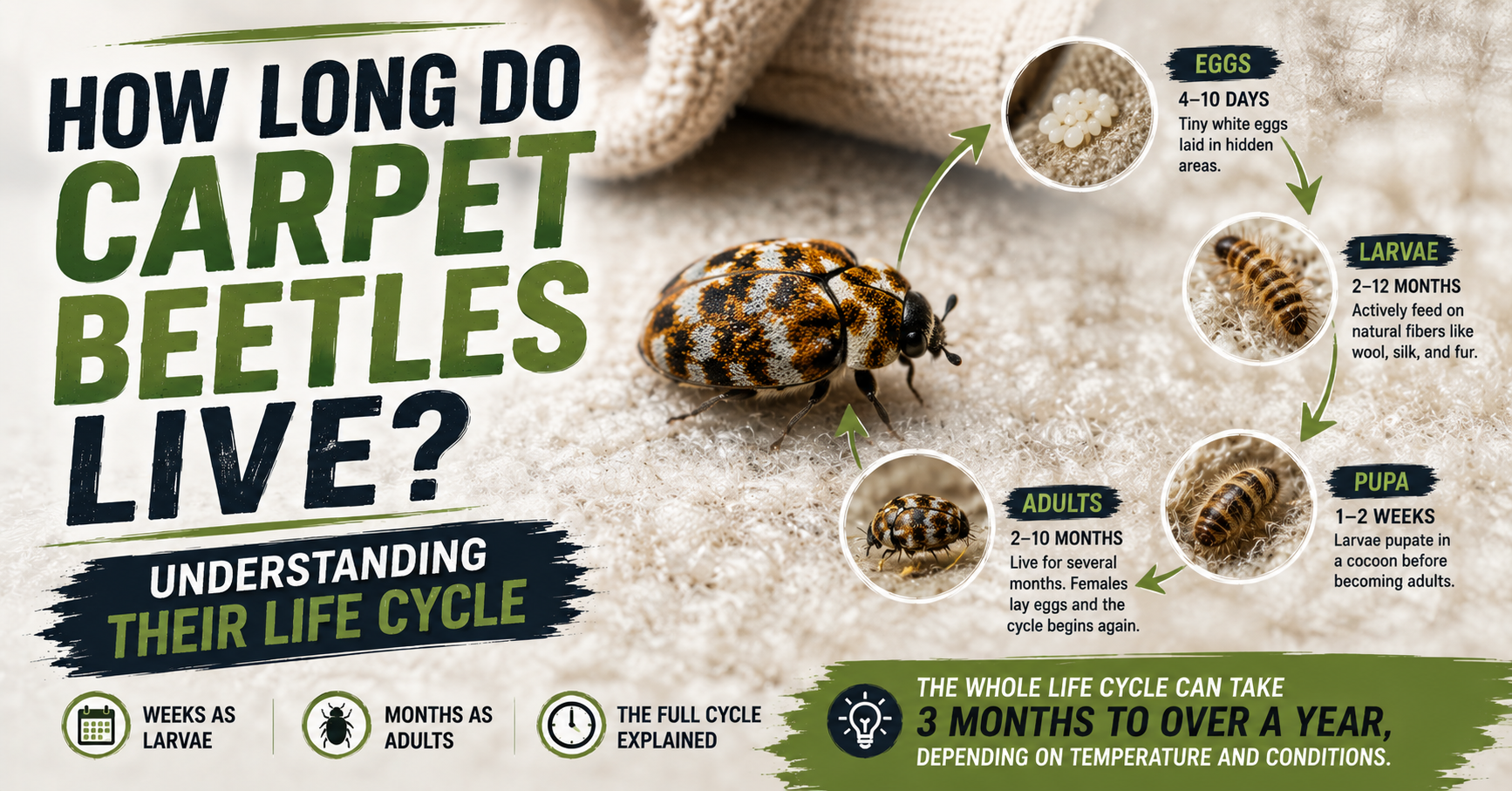
I talk more about that in How Long Do Carpet Beetles Live? Understanding Their Life Cycle.
Pay Attention to Where You’re Finding Them
The location often tells you more than the insect itself.
If I kept finding dead carpet beetles, I’d ask:
- Are they always on the same windowsill?
- Are they near one closet?
- Are they around stored clothing?
- Are they underneath one piece of furniture?
- Are they close to a pet bed?
Patterns like that can point you toward the part of the house that deserves a closer inspection.
Don’t Forget About Larvae
This is something I’d never ignore.
The dead adults you’re seeing aren’t the stage that damages clothing, rugs, blankets, or furniture.
That’s the larvae.
In fact, it’s possible to find several dead adult carpet beetles while larvae are still quietly feeding somewhere else in the house.
That’s why I’d spend more time looking for:
- Fuzzy carpet beetle larvae
- Shed skins
- Small holes in natural fabrics
- Hair, lint, or pet fur collecting in hidden areas
Those clues usually tell you much more than the dead adults themselves.
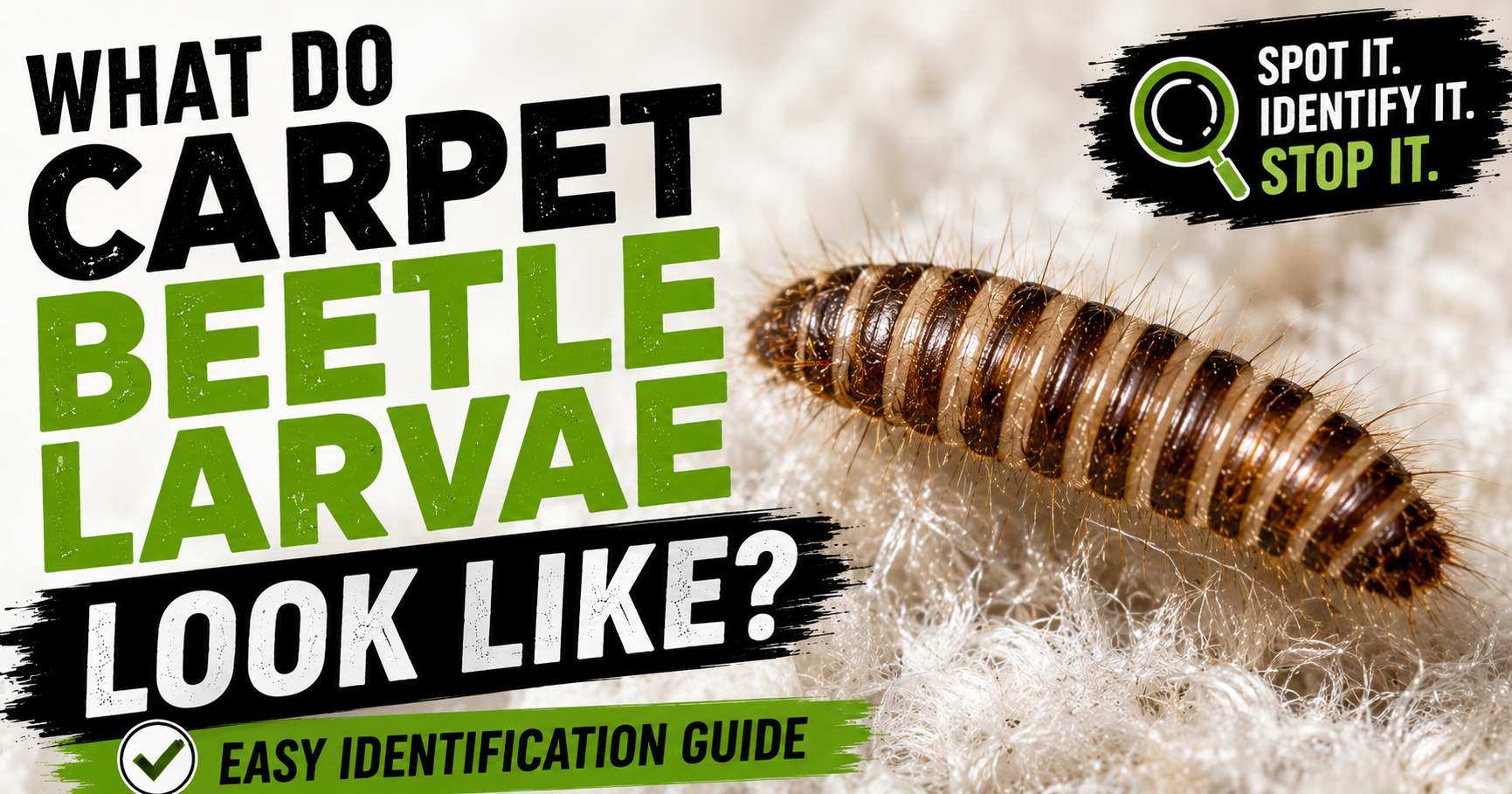
If you’re not sure what you’re looking for, my guide showing what carpet beetle larvae look like can help you identify them before they cause more damage.
Dead Carpet Beetles After Treatment Usually Mean It’s Working
If you’ve recently cleaned your home thoroughly or used a carpet beetle treatment, finding dead adults afterward is generally encouraging.
They’re often the beetles that came into contact with the treatment or simply reached the end of their life after the infestation was disrupted.
That said, I wouldn’t stop cleaning after finding a handful of dead beetles.
Carpet beetle eggs can still hatch later, and hidden larvae may survive if their food source hasn’t been removed.
The best results usually come from staying consistent for several weeks rather than assuming the problem is over after the first signs of progress.
Should You Be Concerned?
It really depends on what else you’re seeing.
I wouldn’t panic if I found an occasional dead carpet beetle near a window or while vacuuming under furniture.
I would become more concerned if I noticed things like:
- New fabric damage appearing.
- Fresh shed skins.
- Live larvae.
- Adult beetles showing up every day.
- Dead beetles appearing in the same area week after week.
Those signs suggest there’s still an active population developing somewhere nearby.



What I’d Do If I Kept Finding Dead Carpet Beetles
If this were happening in my own house, I wouldn’t spend all my time collecting the dead beetles.
I’d use them as clues.
I’d inspect the rooms where they’re appearing.
I’d vacuum thoroughly around those areas.
I’d wash or inspect nearby natural-fiber fabrics.
Most importantly, I’d try to locate the source rather than treating the dead insects as the problem themselves.
Once you eliminate the larvae and remove the materials they’re feeding on, the number of adult beetles—dead or alive—usually starts dropping over time.
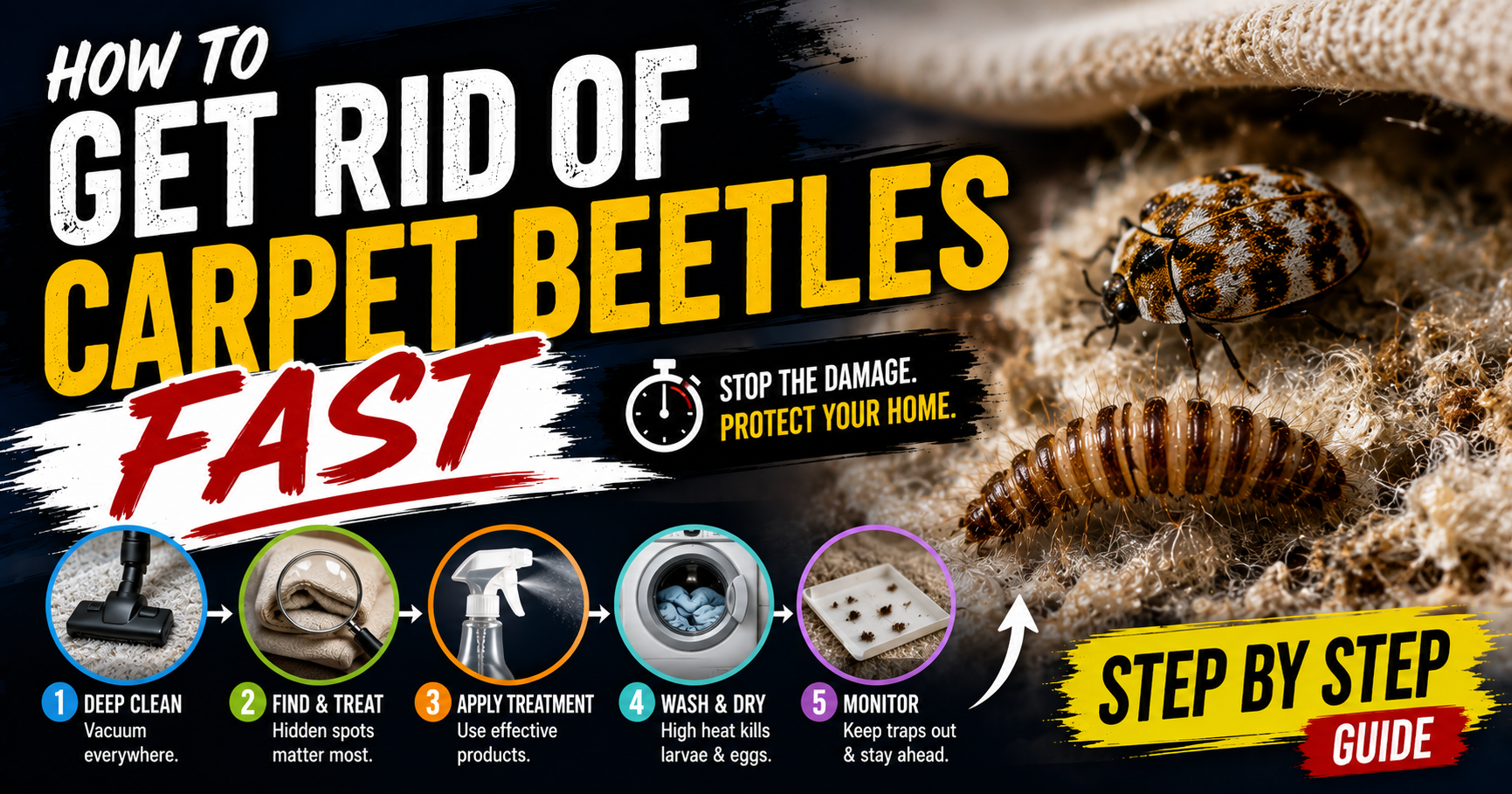
If you’re working through an active infestation, my step-by-step guide to getting rid of carpet beetles fast walks through the same process I’d follow from inspection all the way through prevention.
You can also explore our growing Carpet Beetles category for more practical guides on identifying, treating, and preventing carpet beetles.
Frequently Asked Questions
Is finding dead carpet beetles a good sign?
Often, yes. Dead adult carpet beetles can mean they’ve reached the end of their natural life or that your cleaning and treatment efforts are working. However, it’s still important to check for larvae and other signs of an active infestation.
Why do I only find dead carpet beetles near my windows?
Adult carpet beetles are attracted to light and often gather around windows while trying to get back outside. If they can’t escape, they commonly die on windowsills or nearby floors.
Can carpet beetles die on their own?
Yes. Adult carpet beetles have relatively short lives and eventually die naturally after mating and laying eggs, even if you haven’t treated your home.
Should I worry if I keep finding dead carpet beetles?
If it only happens occasionally, it’s usually not a reason to panic. But if you’re finding dead carpet beetles every day or also seeing larvae, shed skins, or new fabric damage, it’s worth doing a more thorough inspection.
Does finding dead carpet beetles mean the infestation is over?
Not necessarily. Dead adults don’t tell you whether eggs or larvae are still hiding elsewhere in your home. Continue inspecting, cleaning, and monitoring until you stop finding signs of activity.
About the Author
Ryan Mitchell researches household pests and writes practical guides that help homeowners understand what they’re seeing and what it actually means. His focus is on turning confusing pest problems into clear, realistic steps that anyone can follow without unnecessary fear.