Finding ants in your kitchen is frustrating.
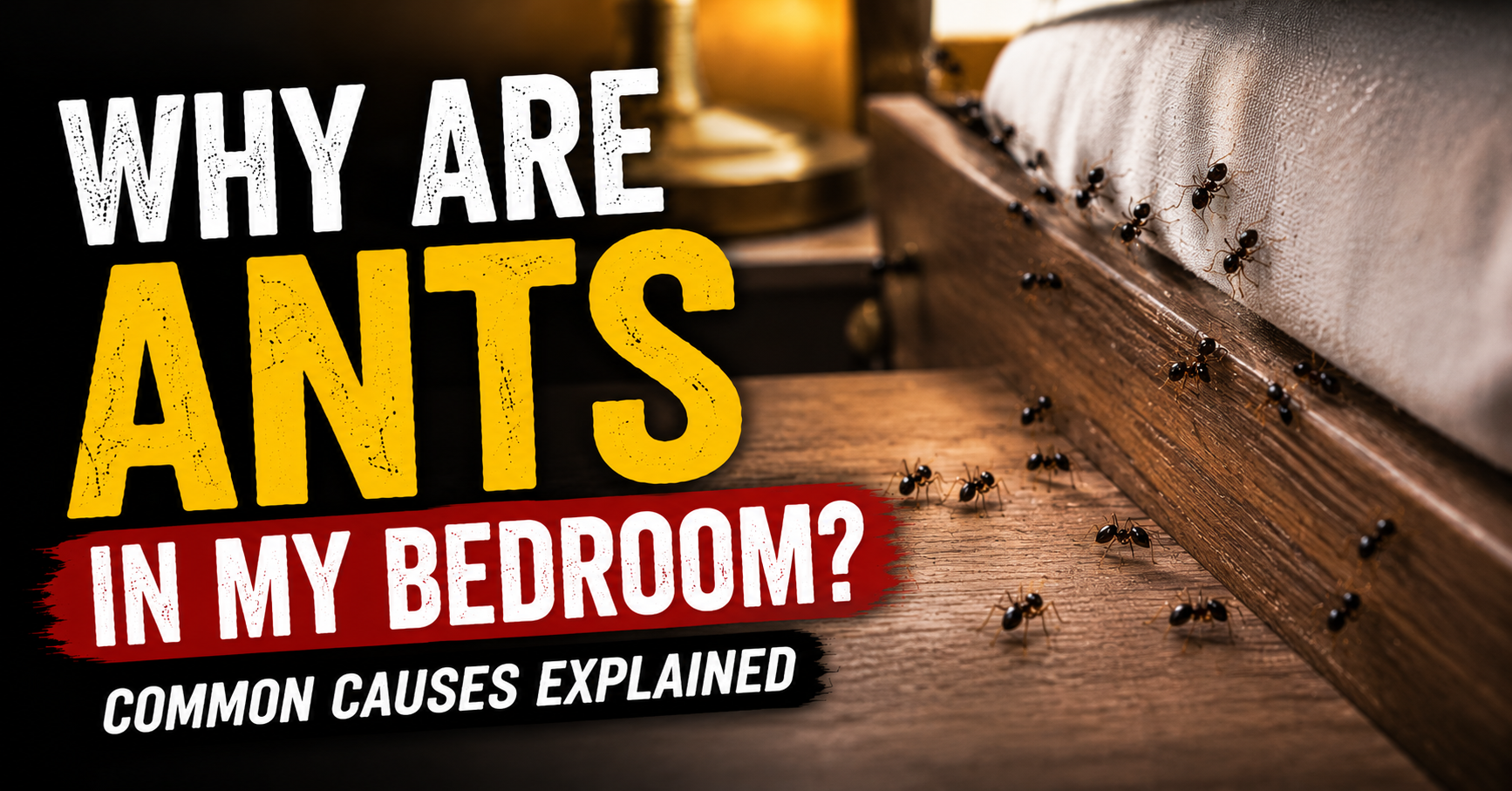
Finding them in your bedroom is unsettling.
I’ve talked with homeowners who woke up to a trail of ants crossing the floor near their bed and immediately assumed the worst.
Some wondered whether ants were attracted to people.
Others thought the ants had built a nest inside the mattress.
Fortunately, that’s rarely the case.
In most situations, ants aren’t interested in your bed. Tracing the route described in Where Do Ants Come From? How They Get Into Your House can help explain why ants are passing through a bedroom.
They’re simply using your bedroom as a pathway or searching for something the room provides.
The key is figuring out what they’re after.
My First Thought
When someone tells me they’ve found ants in the bedroom, I don’t immediately ask where the bed is.
Instead, I ask:
- Are they near a window?
- Along a baseboard?
- Around a dresser?
- Close to an exterior wall?
- Appearing every morning?
Those answers usually tell me where I should begin looking.
They’re Usually Looking for Food or Water
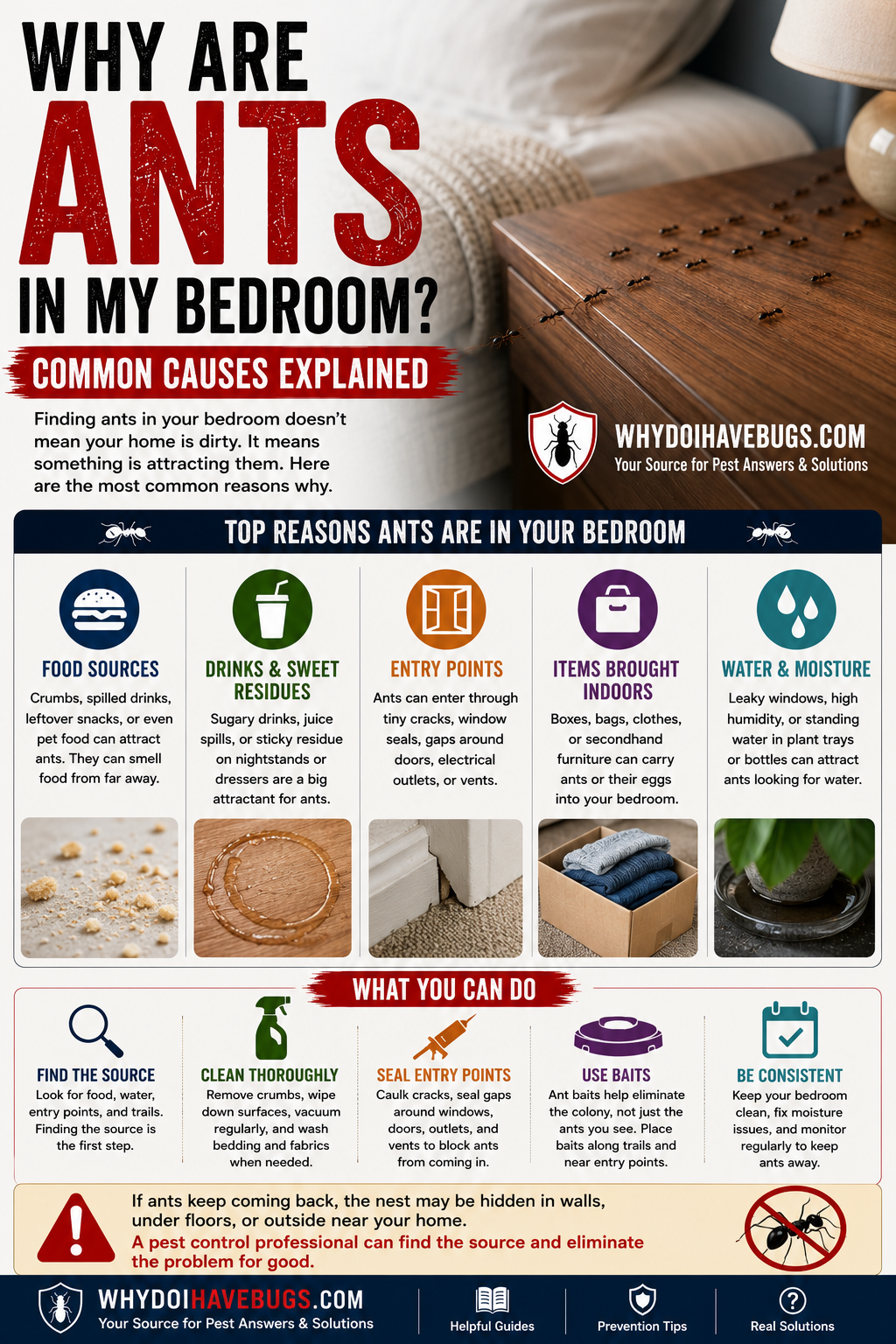
Even if you never eat in your bedroom, ants may still find reasons to visit.
Common attractions include:
- Water bottles left overnight
- Pet food in the room
- Candy wrappers
- Dirty dishes
- Houseplants
- Humidifiers
- Small plumbing leaks in adjoining walls
Sometimes the attraction isn’t in the bedroom itself.
The ants are simply traveling through it.

Bedrooms Make Great Travel Routes
One thing I often notice is that bedrooms sit along natural travel paths.
Ants may move:
- From an exterior wall
- Through baseboards
- Around door frames
- Beneath carpeting
- Along electrical wiring inside walls
You may only see a small portion of the trail.
The colony itself could be well outside the room.
Why They’re Around the Bed
Seeing ants near your bed can feel alarming.
Fortunately, beds themselves usually aren’t the attraction.

More often, ants are following baseboards, bed legs, or nearby furniture as part of an established trail. The behavior behind these routes is explained in Why Do Ants Follow Each Other? The Science Behind Ant Trails.
If you occasionally snack in bed, even tiny crumbs can encourage worker ants to investigate.


Could Moisture Be the Cause?
Absolutely.
Moisture isn’t only a bathroom issue.
Bedrooms may contain:
- Humidifiers
- Window condensation
- Roof leaks
- Damp exterior walls
- HVAC condensation
Ants need water just as much as they need food.
A hidden moisture source can keep them returning.
Why They Keep Coming Back
If the same trail appears every few days, the colony probably hasn’t been eliminated.
Sprays often remove the visible workers.
The queen and thousands of additional ants remain protected inside the nest.
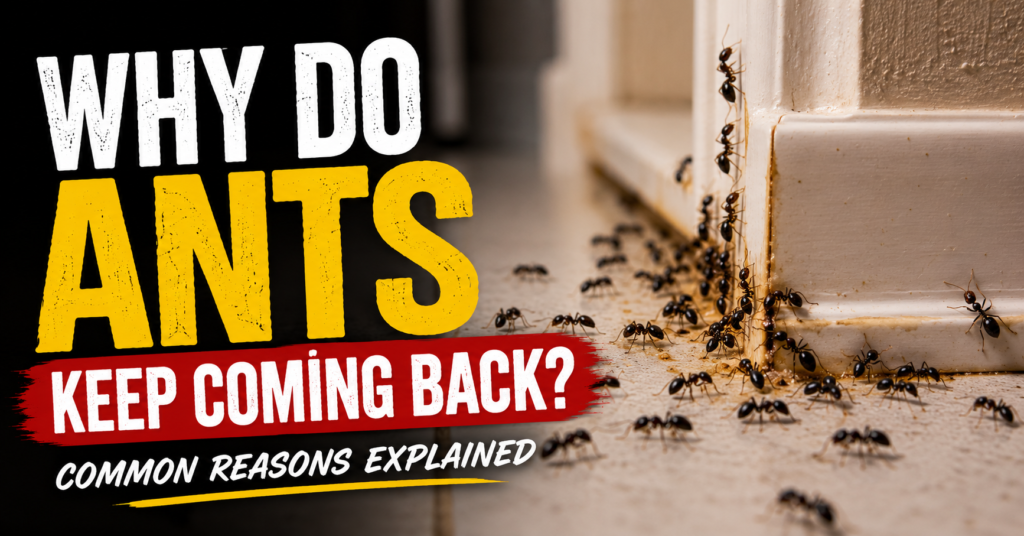
That’s why I encourage homeowners to read Why Do Ants Keep Coming Back? before continuing to spray the same trail over and over.
Could Flying Ants Be Related?
Sometimes.
If you’ve recently noticed winged ants elsewhere in the house, they may be coming from the same mature colony.
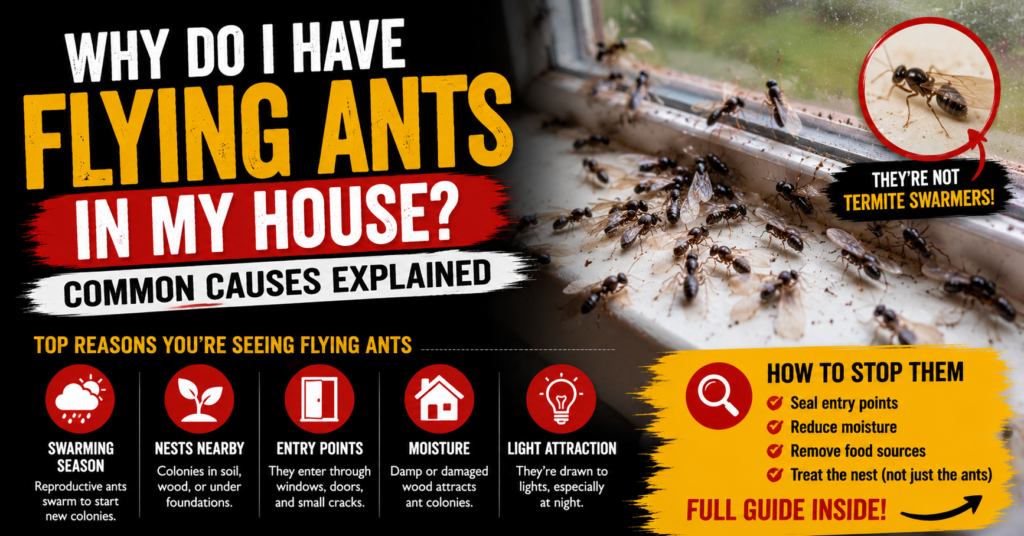
Our guide on Why Do I Have Flying Ants in My House? explains when flying ants are simply seasonal and when they deserve a closer inspection.
What I Would Do If This Were My House
If ants suddenly appeared in my bedroom, I wouldn’t start by moving furniture.
I’d spend time watching where the first few ants were traveling.
I’d inspect around the baseboards, windows, closets, and exterior walls.
Finding the trail usually leads me much closer to the source than simply killing the ants I can see.
Products That Can Help
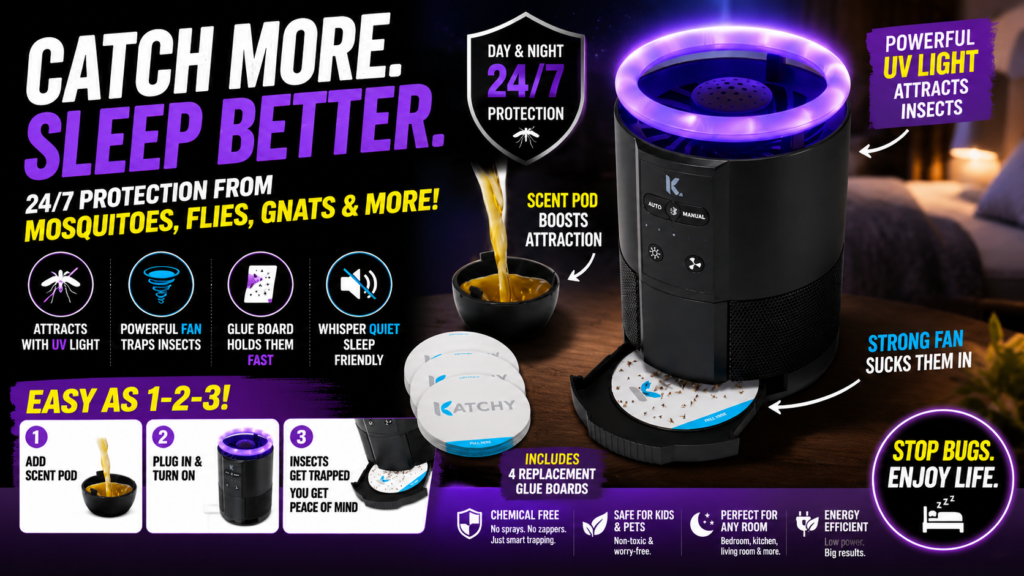
If you’ve confirmed an active ant infestation, I usually recommend targeting the colony instead of only the worker ants.

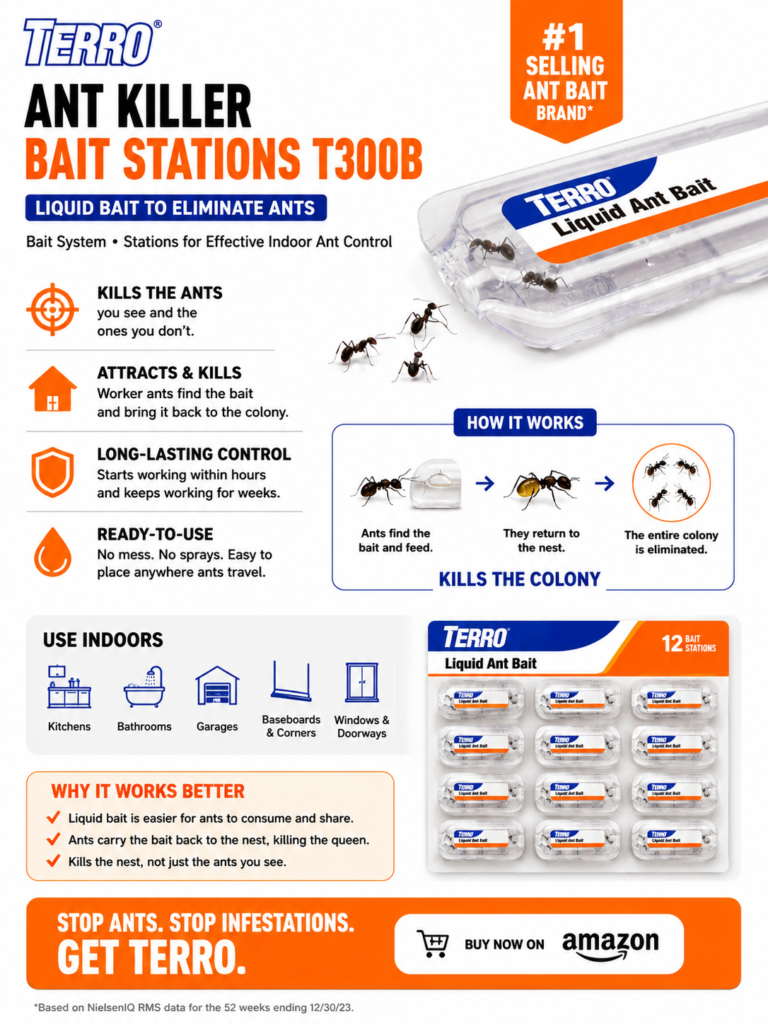
I’ve had good success with TERRO Liquid Ant Bait Stations because the bait is carried back to the nest. My TERRO Liquid Ant Bait Stations review explains how to get the best results.


For larger infestations, Ecoxall Boric Acid Fine Powder can also be useful when applied correctly. I explain where it fits into an overall treatment plan in my Boric Acid for Roaches and Ants review.
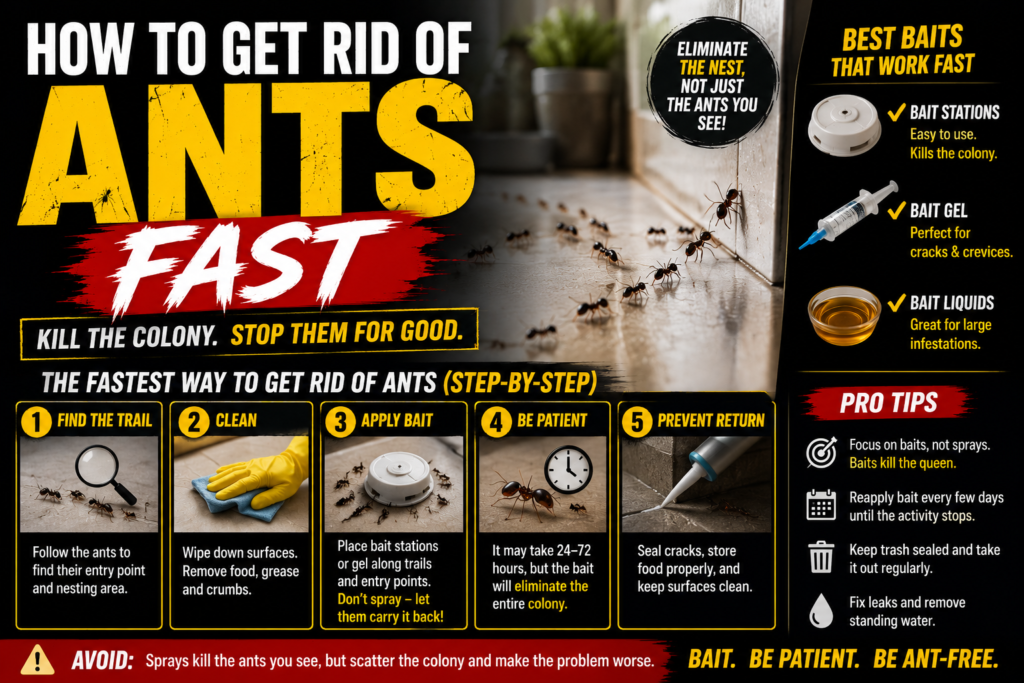
For a complete strategy, don’t miss Getting Rid of Ants Fast.
The Biggest Mistake I See
The biggest mistake I see is assuming ants are interested in the bed itself.
Most of the time, they’re simply following a route through the room or searching for water and occasional food sources.
Following the trail almost always teaches me more than focusing on where I first spotted the ants.


Frequently Asked Questions
Why are ants crawling near my bed?
They’re usually following a trail or searching for food or water nearby rather than being attracted to the bed itself.
Can ants live in a mattress?
It’s uncommon. Ants generally nest in wall voids, soil, damp wood, or other protected spaces rather than inside mattresses.
Why do ants appear in my bedroom even though I don’t eat there?
They may be traveling through the room, following moisture, or entering through nearby gaps around windows, doors, or baseboards.
Should I spray ants in my bedroom?
Spraying may kill the ants you see, but eliminating the colony is usually a more effective long-term solution.
Can houseplants attract ants to a bedroom?
Yes. Potted plants can sometimes provide moisture or attract insects that ants feed on, making them worth inspecting.
About the Author
Daniel Brooks is a pest management writer who focuses on practical, homeowner-friendly solutions for common household insect problems. He enjoys helping families understand why pests enter homes in the first place so they can solve the cause instead of constantly treating the symptoms.