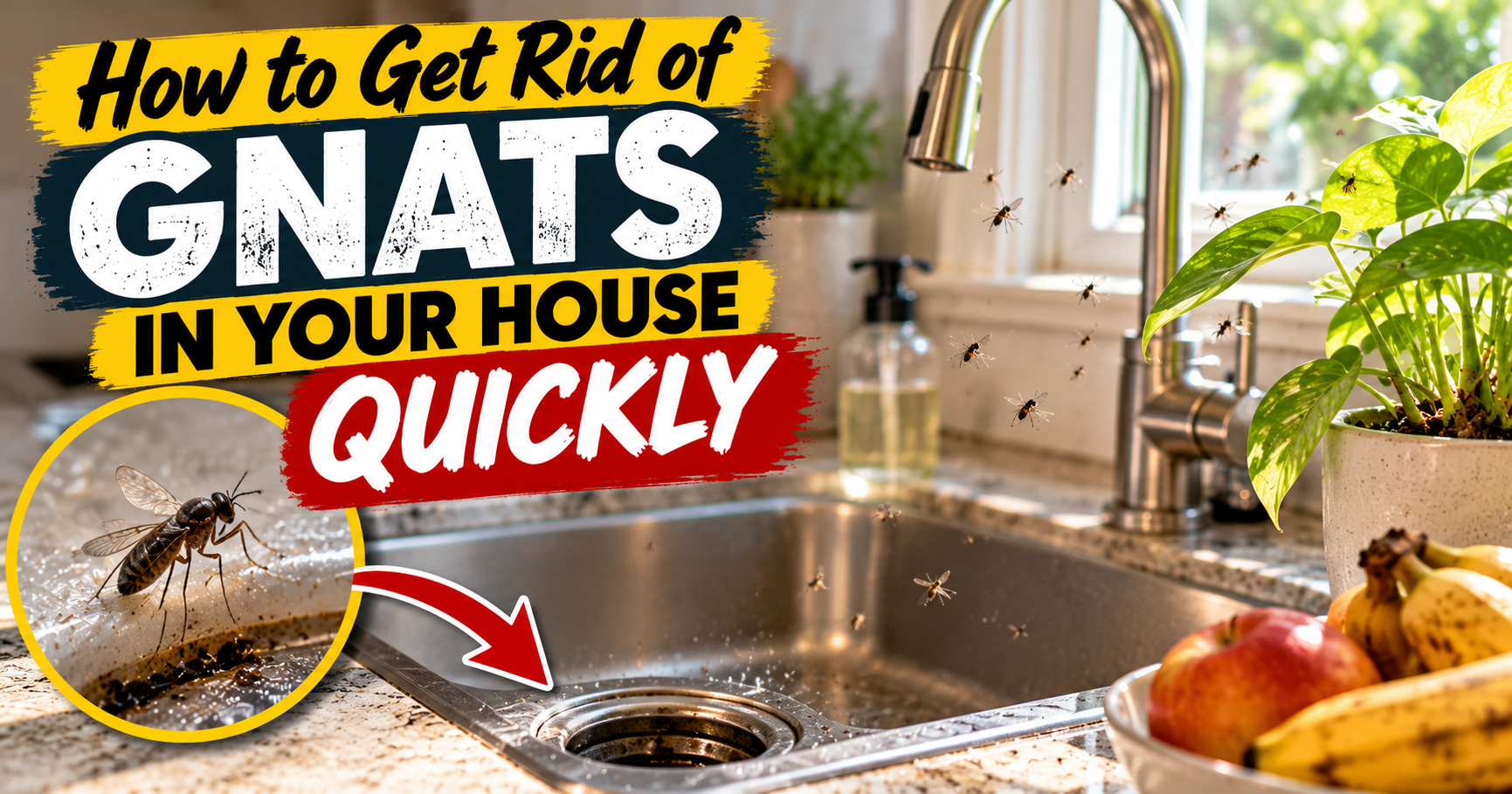
You walk into the kitchen and there are six tiny flies hovering around the sink. You get rid of them, go about your day, and somehow there are another ten by dinner. Then you notice them around the bathroom, near a window, and maybe even hovering over a houseplant.
Where in the world are they all coming from?
I’ve been dealing with a ridiculous invasion of these tiny flying insects myself. They appeared seemingly out of nowhere a few weeks ago, particularly around drains and damp areas. I’ve found a spray that knocks them out of the air remarkably fast, but I’ve also learned that killing the flying adults doesn’t necessarily stop more from appearing.
The quickest way to get rid of gnats in your house is to remove the adults you can see while identifying and eliminating the place where they’re breeding. Depending on the type of insect, that might mean cleaning up fermenting food, drying overly wet potting soil, removing organic buildup, or correcting a moisture problem. For the visible insects, the review of Raid for immediate knockdown explains where a contact spray can help without replacing source control.
The tricky part is that people call several different tiny flies “gnats.” And if you treat the wrong source, you can spend days catching insects while another generation develops somewhere else.
Here’s how I’d tackle the problem, starting with what you can do right now.
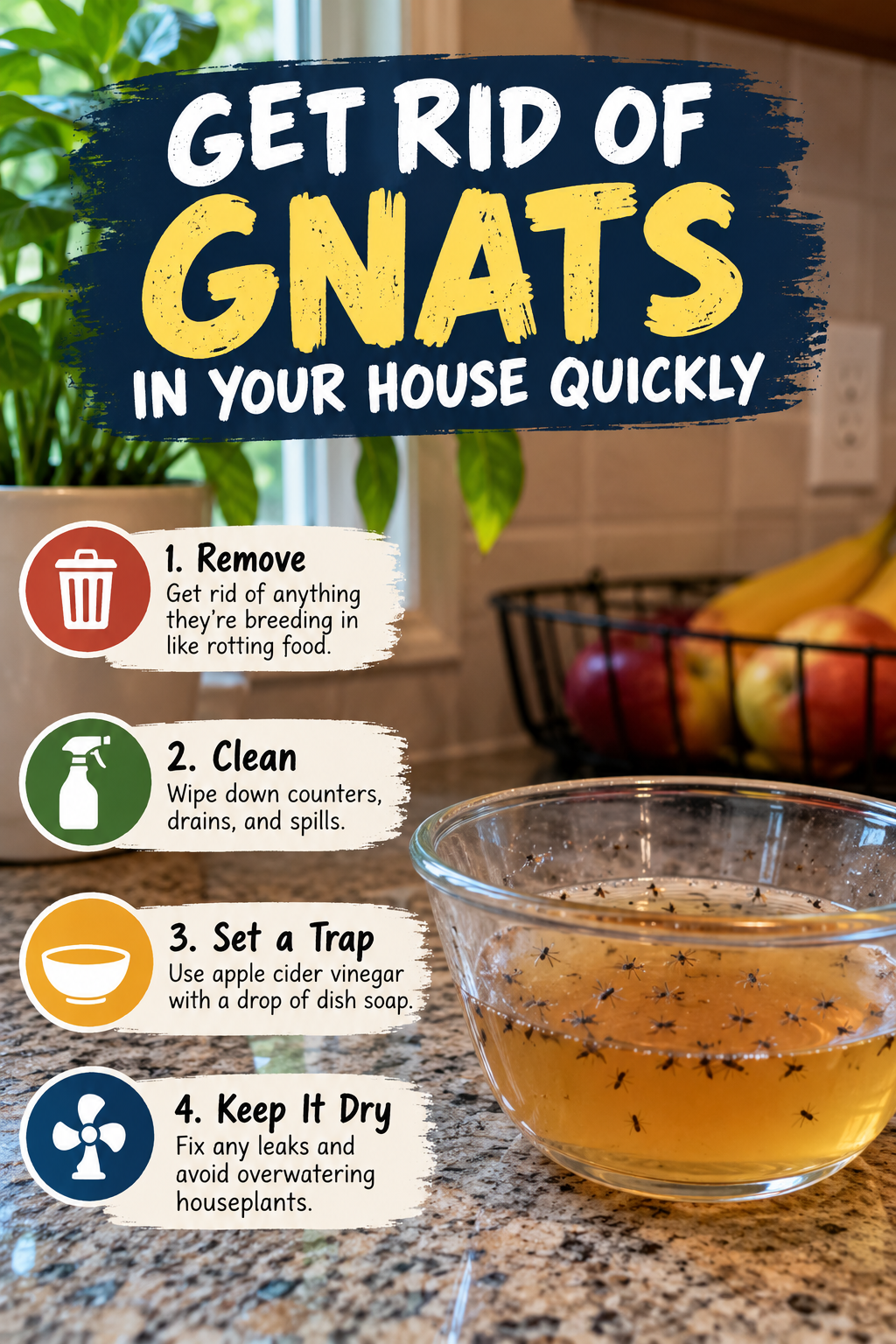
How to Get Rid of Gnats in Your House Quickly
If I walked into a house suddenly full of tiny flying insects, I’d focus on these seven steps before buying a bunch of different products.
- Remove obvious food sources. Throw away rotting produce, empty the trash, and remove sugary liquids or food residue.
- Check your houseplants. Damp potting soil is a common breeding location for fungus gnats.
- Inspect sinks and wet areas. Look for small flies around drains, garbage disposals, and damp organic debris.
- Use sticky traps to catch adults. Traps can immediately begin reducing the number of flying insects and help you determine where they’re most active.
- Consider an appropriately labeled flying-insect spray. An aerosol may knock down exposed adults quickly, but it won’t necessarily reach developing larvae.
- Find and remove the breeding source. This is what prevents more flies from appearing.
- Monitor the next several days. Continue checking the affected areas for new activity instead of assuming one treatment solved everything.
If you’re seeing gnats throughout the house, don’t limit your inspection to one room.
They may be gathering in the kitchen while developing somewhere else entirely.
First, Figure Out What Kind of Gnats You Have
Before getting too aggressive with treatments, take a closer look at the insects.
You don’t necessarily need to identify the exact species immediately, but knowing which group you’re dealing with will make the process easier.
Fruit Flies
Fruit flies are commonly associated with fermenting produce, sugary residue, and decaying food.
Many familiar household fruit flies have tan or yellowish-brown bodies with reddish eyes.
You may notice them hovering around bananas, tomatoes, garbage containers, or empty drink bottles.
If most of the insects are concentrated around produce or food residue, fruit flies are a reasonable possibility.
Fungus Gnats
Fungus gnats often look like tiny mosquitoes.
They have slender dark bodies, long legs, and relatively long antennae.
Their larvae commonly develop in moist potting soil, where they feed primarily on fungi and decomposing organic matter.
If little black flies appear whenever you water a houseplant, fungus gnats should be high on your list.

Our fungus gnat identification guide explains their appearance in more detail.
Phorid Flies
Phorid flies can be especially frustrating because their breeding sources aren’t always obvious.
They’re also called scuttle flies because they frequently run across surfaces in short, jerky movements.
Many have a noticeable humpbacked body.
They may develop in moist, decaying organic materials associated with garbage, drains, or other hidden sources.
I’ve been considering phorid flies as one possibility in my own ongoing infestation, although I haven’t positively identified the insects yet.
Drain Flies
Drain flies look a little different.
They have fuzzy bodies and broad, hairy wings that can make them resemble miniature moths.
Their larvae commonly develop in the organic film that accumulates inside certain drains.

If the flies resting on your bathroom walls look fuzzy or moth-like, investigate drain flies rather than assuming they’re ordinary gnats. A broader inspection of the room can help after bathroom fly identification points you toward drain flies.

What Can You Do in the First Hour?
You probably won’t eliminate every egg and larva in an hour.
But you can make meaningful progress toward reducing the adult insects and figuring out where they’re coming from.
Start by Removing the Easy Food Sources
Walk through the kitchen first.
Check the fruit bowl, potatoes, onions, trash can, recycling containers, and any food sitting out.
Remove spoiled produce and clean up spilled liquids.
Rinse containers that have held sugary drinks before storing them for recycling.
Look for food that may have rolled beneath a cabinet or appliance.
A single forgotten piece of rotting produce can support certain small fly populations.
Check Which Room Has the Most Activity
Instead of treating the entire house immediately, pay attention to where the insects seem most concentrated.
Are they gathering near a plant?
Around a trash can?
Next to a sink?
On a window?
Those patterns can help you identify possible breeding locations.
Keep in mind that adult flies can move away from where they developed, so these are clues rather than proof.
Catch the Adults You Can
An ordinary vacuum with an appropriate attachment can physically remove accessible adult flies.

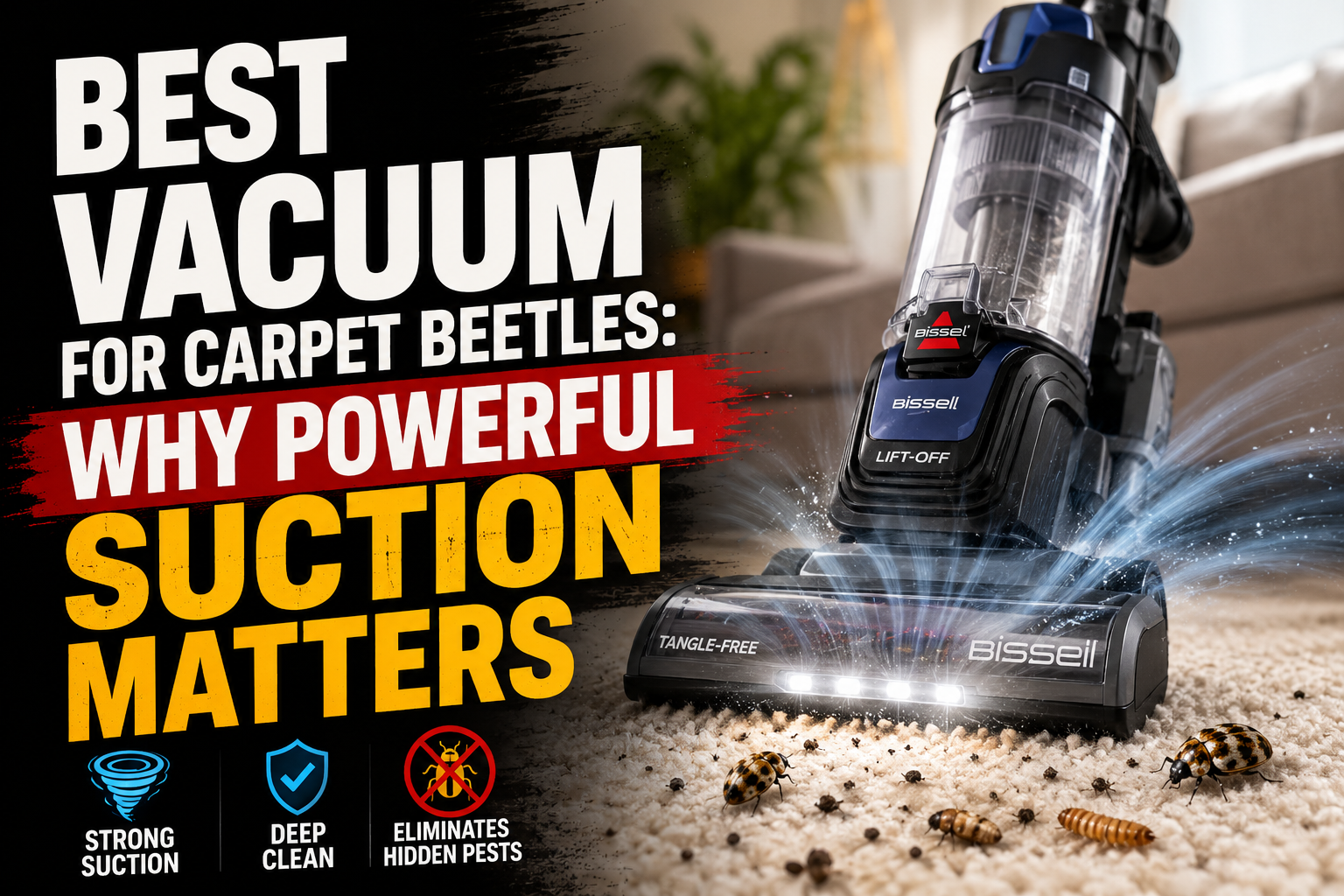
Sticky traps can also help capture insects over time. Readers considering that approach can compare it with this practical look at how fly strips perform.
If the insects are fruit flies, a suitable vinegar trap may attract some adults.
If they’re fungus gnats, yellow sticky traps placed near houseplants can be useful.
But if the insects are phorid flies or drain flies, a vinegar trap may perform poorly.
That’s why I’d avoid spending too much time experimenting with homemade traps before identifying the insects.
The Flying Insect Spray I’ve Been Using Lately
During my own recent battle with tiny flying insects, one product has stood out for quickly knocking down adults.
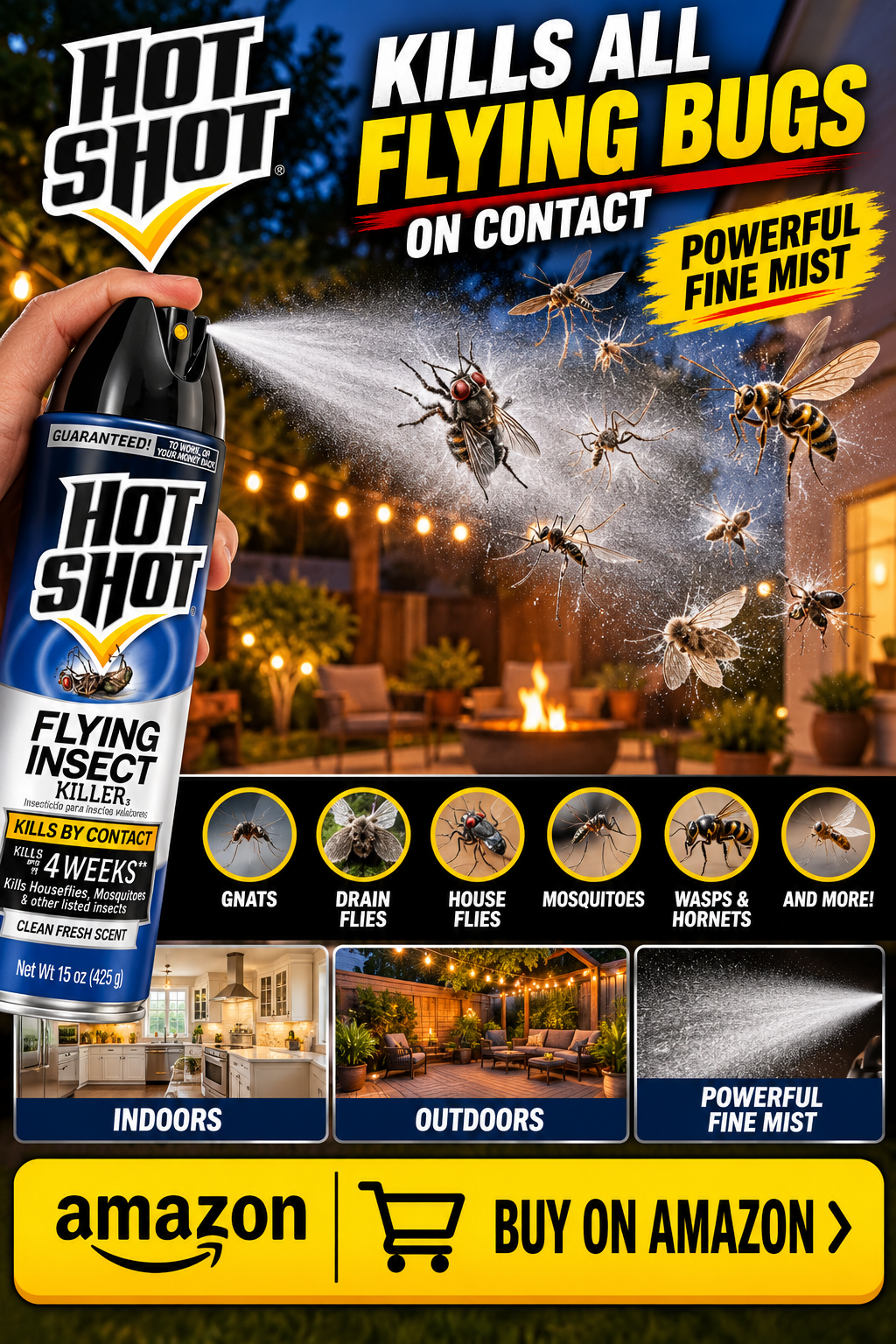
It’s Hot Shot Flying Insect Killer 3, Clean Fresh Scent, an aerosol insecticide sold in 15-ounce cans.
What impressed me most was the fine mist.
Some sprays release a heavy, concentrated stream. This one creates a powerful aerosol mist that provides much broader coverage when used according to its indoor space-spray directions.
I’ve watched the tiny flies I’ve been dealing with drop quickly after exposure.
Does It Actually Work on Gnats?
The manufacturer lists gnats, fruit flies, houseflies, mosquitoes, and certain other flying insects among its labeled targets.
In my own experience, the immediate knockdown has been excellent against the small flying insects invading my house.
But there’s a catch.
I’ve still noticed flies returning days after treatment.
That tells me I’m probably dealing with an ongoing source rather than just a few insects that wandered inside.
The spray helps reduce the adult population, but it doesn’t necessarily reach eggs or larvae developing in hidden organic material.
What I Don’t Like About the Spray
The smell is noticeable.
Despite the Clean Fresh Scent description, I wouldn’t want to sit around breathing it.
More importantly, the manufacturer’s instructions require people to leave immediately after indoor space-spray treatment, keep the room closed for at least 15 minutes, and ventilate afterward.
You also need to protect exposed food, utensils, and food preparation surfaces as directed.
Don’t remain in a treated room breathing the mist.
Never apply the product directly into drains or sewers.
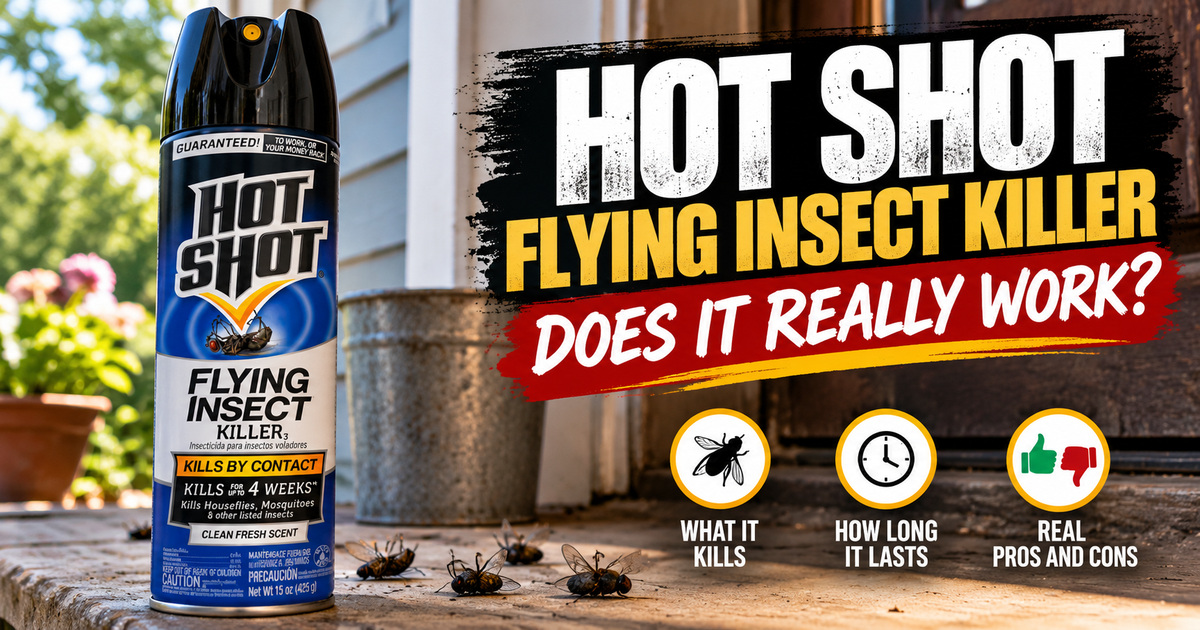
You can read my full Hot Shot Flying Insect Killer review and firsthand results for a more detailed look at the spray’s performance, odor, and limitations.
For me, it’s been useful for quick adult knockdown, but I wouldn’t call it a permanent gnat solution.

How to Get Rid of Gnats Around Houseplants
If the insects are appearing around your indoor plants, this is one of the easiest places to investigate.
Fungus gnats are strongly associated with damp potting soil.
Their larvae feed mainly on fungi and decomposing organic material in the soil, although they can also damage delicate roots under certain conditions.
Let the Soil Dry Appropriately
Overwatering creates favorable conditions for fungus gnats.
For plants that tolerate it, allowing the upper portion of the potting mix to dry between waterings can reduce those conditions.
However, not every plant has the same watering requirements.
Don’t let a moisture-loving plant dry out completely simply because you’ve found gnats.
Adjust watering according to the plant’s needs and make sure the container drains properly.
Use Yellow Sticky Traps
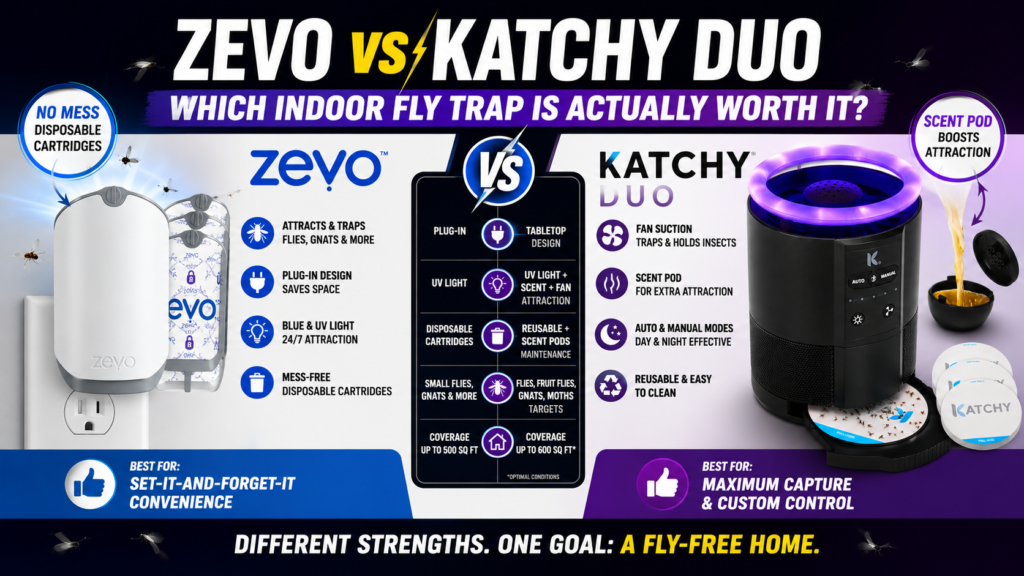
Yellow sticky traps placed near the soil can catch adult fungus gnats. If you want to compare powered alternatives, see how Zevo and KATCHY Duo traps handle indoor flying insects.
They’re useful for monitoring whether the number of adults is declining.
However, the traps don’t directly eliminate larvae in the soil.
You’ll still need to address the conditions supporting them.
Consider a Biological Larval Treatment
For confirmed fungus gnats, certain products containing Bacillus thuringiensis israelensis, commonly called Bti, can help control larvae.
Use only a product labeled for the intended application and follow its directions.
This is more targeted than repeatedly spraying adult gnats throughout the room.
If multiple plants are involved, inspect them all rather than treating just the one with the most visible insects.
How to Get Rid of Gnats in the Kitchen
Kitchen gnat problems can have several different causes.
The best solution depends on whether you’re dealing with fruit flies, phorid flies, drain flies, or another insect.
Clean Fermenting Food Residue
Fruit flies often develop around fermenting produce and sugary liquids.
Check under fruit bowls, inside trash containers, and around recycling bins.
Clean spills that may have collected beneath appliances or along cabinet edges.
Don’t Forget the Garbage Disposal
Food residue can collect inside or around garbage disposals.
If you suspect buildup, clean accessible components according to the appliance manufacturer’s directions.
Disconnect power before performing any maintenance that involves reaching or working near the disposal mechanism.
Never pour insecticide into the disposal.
Check Underneath Appliances
It’s easy to overlook food or moisture that accumulates beneath a refrigerator, dishwasher, or other kitchen appliance.
Use a flashlight to inspect accessible areas.
Avoid moving heavy appliances without help, especially when electrical, gas, or water connections are involved.
If you find damp debris or a hidden leak, correcting that problem may be more important than catching the adult flies.

What if the Gnats Are Around Your Bathroom or Sink?
If the insects keep appearing around wet areas, inspect for drain flies, phorid flies, or other small flies associated with moisture.
Organic buildup can collect inside drains, around stopper mechanisms, and in other sheltered plumbing areas.
Some fly larvae can develop in that material.
However, just seeing a fly beside a sink doesn’t prove it’s coming from the drain.
Check Whether the Drain Is Actually the Source
One monitoring approach is to place clear tape partly across a suspected drain opening when it isn’t in use.
Leave part of the opening unobstructed so emerging flies can reach the tape.
Check for trapped insects over time.
Repeated emergence from the drain provides better evidence than a few adults flying nearby.
If you confirm the source, physical removal of organic buildup is often important.
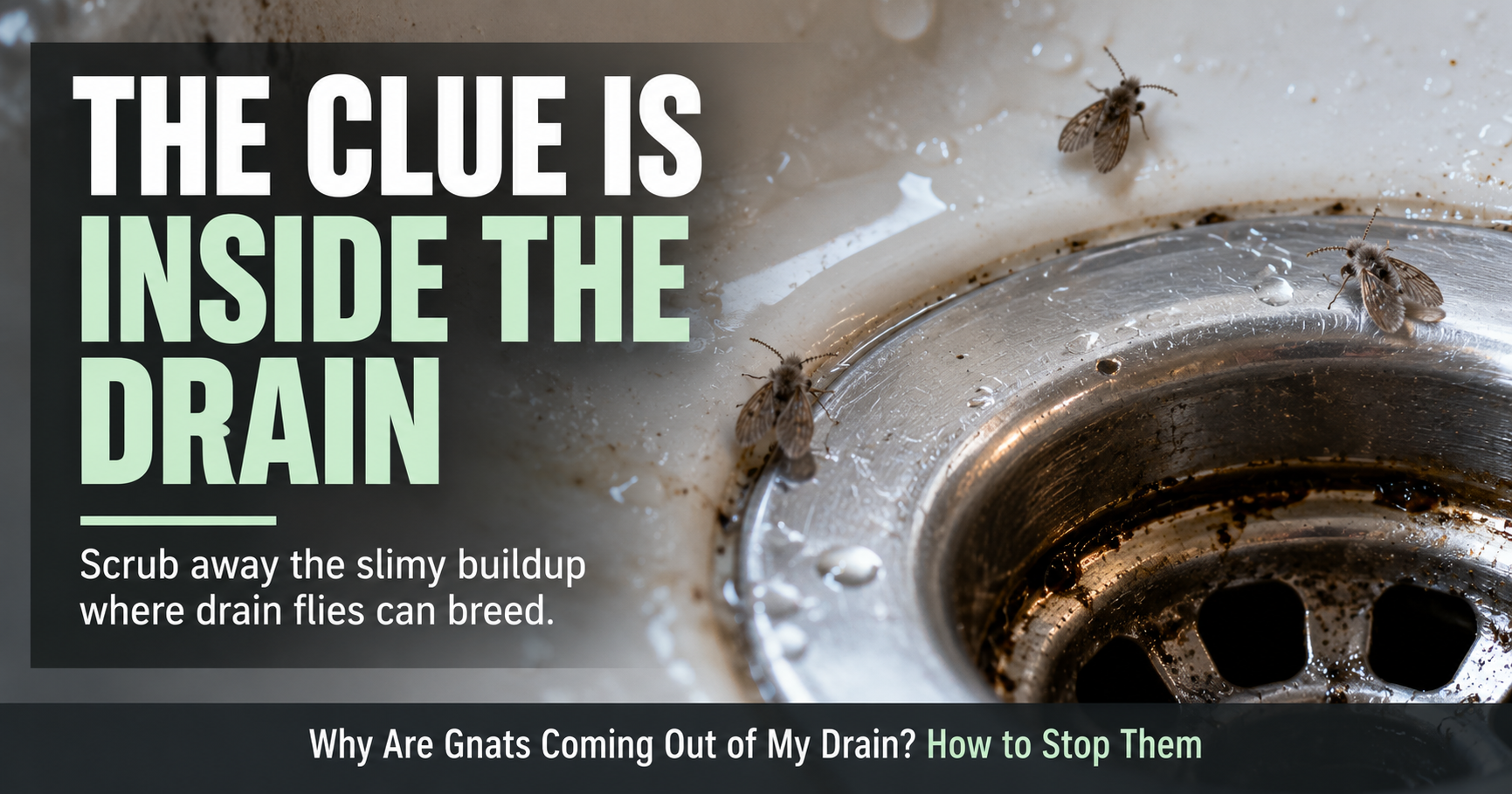
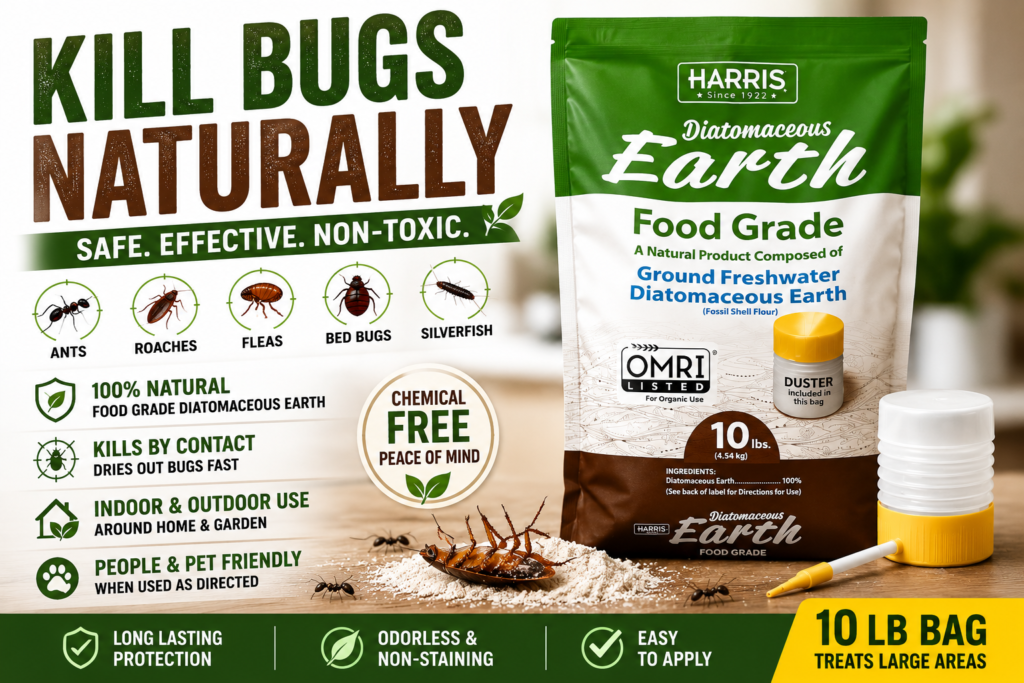
Our detailed article on why gnats come out of drains and how to stop them covers that specific investigation and cleaning process.
I wouldn’t try to solve a drain-related problem by pouring bleach, insecticide, or random chemical mixtures down the plumbing.
The important thing is removing the breeding material safely.
Do Apple Cider Vinegar Traps Really Work for Gnats?
Sometimes, but not for every species.
Apple cider vinegar traps are commonly used for certain fruit flies because fermentation odors can attract them.
A simple trap may capture adult fruit flies when appropriately prepared.
However, fungus gnats and phorid flies don’t necessarily respond to vinegar in the same way.
Why Your Vinegar Trap Might Catch Nothing
If you’ve set out vinegar and aren’t catching many flies, consider several possibilities.
You might have the wrong insect.
There may be more attractive material elsewhere.
Or the trap may not be positioned or prepared effectively.
A vinegar trap that doesn’t catch insects isn’t proof that no infestation exists.
And even a trap that catches dozens of adults doesn’t necessarily remove eggs or larvae from the breeding source.


What’s the Fastest Way to Get Rid of Gnats Without Spraying?
If you prefer avoiding aerosol insecticides, you still have several useful options.
For adults, try appropriate sticky traps or physically remove accessible insects with a vacuum.
For fruit flies, remove fermenting food and clean containers containing residue.
For fungus gnats, correct excessive soil moisture and consider labeled biological control when necessary.
For drain flies, locate and remove the organic film supporting larvae.
For phorid flies, investigate damp, decaying material and hidden breeding sources.
The fastest dependable long-term solution is the one that addresses the correct insect and its breeding environment.
There isn’t one homemade mixture that reliably eliminates every kind of tiny fly.
Why Do Gnats Suddenly Appear in Large Numbers?
This is something that makes gnat infestations particularly aggravating.
You might notice only a few at first.
Then, a week later, there seem to be dozens.
Many small flies have relatively short development periods under favorable conditions.
If a suitable breeding source remains available, successive generations can develop.
Warm temperatures, moisture, and suitable organic food can allow populations to build rapidly.
A sudden appearance may also happen when a group of adults emerges from material that was already infested.
It doesn’t necessarily mean dozens of insects flew into the house all at once.
Can You Get Rid of Gnats Overnight?
You may be able to reduce the number of flying adults considerably in a single evening.
But eliminating an established infestation overnight is less predictable.
The reason is simple.
Adult flies are only one stage of the life cycle.
Eggs, larvae, and pupae may still be developing somewhere in the house.
Even if you remove every visible adult, new ones can appear later.
That’s why I wouldn’t promise that one trap, spray, or homemade treatment will eliminate all gnats in 24 hours.
A realistic goal is to reduce the adult population quickly while identifying and removing the source.
Why Do Gnats Keep Coming Back After You Kill Them?
This has been the frustrating part of my own fly problem.
The Hot Shot aerosol has been excellent at knocking down the adults I see.
But more have appeared after several days.
There are several possible explanations.
The Eggs and Larvae Are Still Developing
An insecticide treatment aimed at flying adults may not reach the places where young insects are growing.
That means another group can eventually emerge.
You Haven’t Found the Actual Breeding Source
You might clean the kitchen sink while the insects are developing beneath an appliance, in potting soil, or somewhere else.
Adult flies can travel away from where they developed.
There Are Multiple Breeding Locations
It’s also possible to have more than one suitable source.
A home with overwatered plants, damp garbage residue, and organic buildup near plumbing could support different small fly populations.
They’re Entering From Outdoors

Some insects simply come inside through open doors, damaged screens, or other openings. When those entry points lead to recurring activity in one room, flies appearing in a bedroom offers a room-specific way to investigate the pattern.
If you’re only finding occasional adults and no evidence of indoor breeding, outside entry may be part of the explanation.
When Should You Call Pest Control or a Plumber?
Most ordinary gnat problems can be approached by identifying the insect and removing its breeding material.
However, some infestations deserve professional attention.
If you’ve thoroughly investigated accessible sources but continue seeing large numbers of phorid flies, a pest-control professional may help confirm the species and locate the source.
Certain persistent infestations can be associated with wastewater leaks or sewage-contaminated material.
That doesn’t mean every gnat problem indicates a broken sewer pipe.
But if you also notice sewage odors, repeated drain problems, unexplained dampness, or signs of wastewater leakage, contacting a qualified plumber is sensible.
Don’t begin expensive repairs based solely on seeing small flies.
Confirm the problem first.
How to Keep Gnats From Coming Back
Once you’ve identified and eliminated the source, prevention becomes much easier.
Keep fermenting food and sugary residues from accumulating.
Empty and clean trash containers before waste breaks down indoors.
Maintain appropriate watering practices for houseplants.
Inspect accessible drains and remove buildup when necessary.
Correct plumbing leaks rather than allowing moisture to collect.
Repair damaged window screens and other obvious entry points.
And if you’ve had a recurring problem, continue monitoring the area where the insects were developing.
The goal is to make the house unsuitable for another generation, not simply catch the occasional adult fly.
Frequently Asked Questions
What is the fastest way to get rid of gnats in the house?
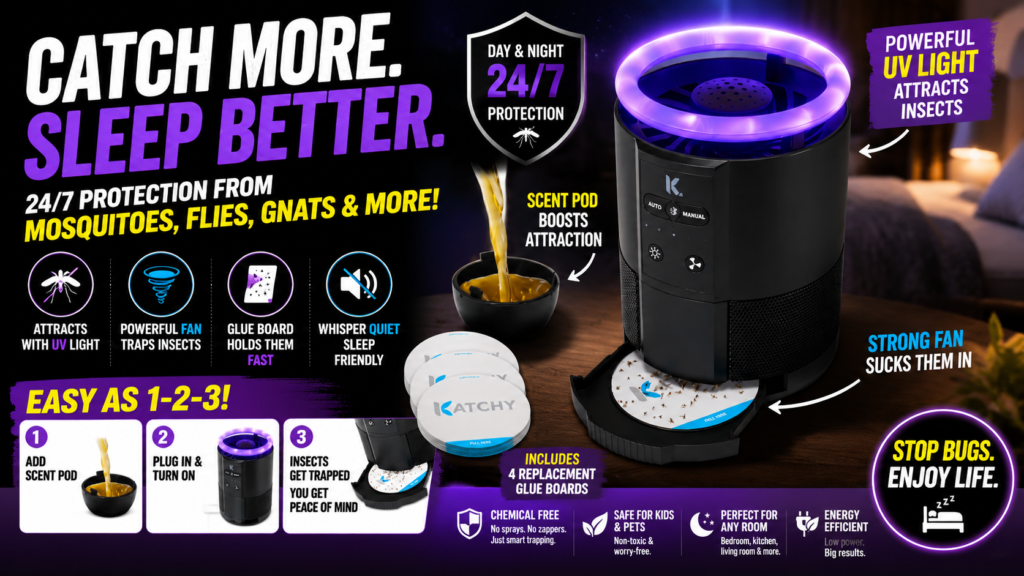
Remove visible adult flies with appropriate traps or a labeled control product while immediately investigating breeding sources such as fermenting food, damp plant soil, garbage, or organic buildup. Removing the correct source is essential for long-term control. For a continuously running option while you address the source, an indoor flying insect trap can help capture remaining adults.
What kills gnats instantly?
Certain appropriately labeled insecticide aerosols can rapidly knock down exposed adult gnats. Actual results vary by species and exposure. Traps and vacuums can also remove adults without dispersing insecticide.
How do I get rid of gnats in my house without vinegar?
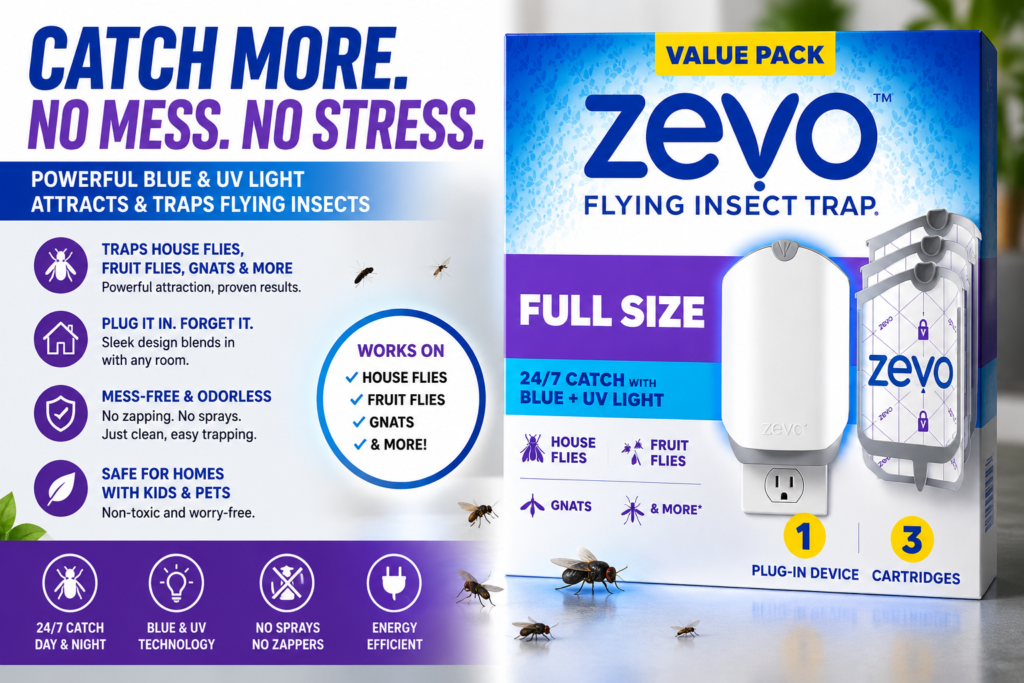
Use sticky traps, remove fermenting food, clean garbage containers, correct excessive plant-soil moisture, and inspect suspected breeding areas. Vinegar isn’t necessary for successful gnat control. For a no-spray way to capture flying adults, a trap designed for flying insects can complement those source-control steps.
Why are there suddenly so many gnats in my house?
A breeding source may have supported developing larvae long enough for numerous adults to emerge. Warm conditions, moisture, and available organic material can contribute to rapid population growth.
How long does it take to get rid of gnats completely?
That depends on the species and whether you’ve removed the breeding source. Adult activity may decline quickly, but developing insects can continue emerging if the source remains untreated.
Will gnats go away on their own?
Sometimes populations decline when their breeding material dries out or disappears. However, an ongoing source of moisture and organic matter can allow the insects to continue reproducing.
Does apple cider vinegar kill gnats?
Vinegar traps may attract and capture certain fruit flies, but they aren’t dependable against every kind of gnat. They’re also unlikely to eliminate an infestation if larvae continue developing elsewhere.
Can houseplants cause gnats throughout the house?
Yes. Fungus gnats can develop in overly moist potting soil and then fly into other rooms. Check houseplants if the insects look slender and mosquito-like.
Why are gnats in my bathroom when there’s no food?
Some small flies breed in organic buildup associated with drains or other damp material. Others may simply be gathering near moisture or light. Identifying the insect is the first step.
Can Hot Shot Flying Insect Killer kill gnats?
The product is labeled for gnats and several other flying pests. I’ve personally observed excellent immediate knockdown against small flying insects, although I haven’t confirmed their exact species. Follow the label’s indoor space-spray, ventilation, and exposure precautions.
Why are gnats still here after I sprayed?
The adults you treated may have been killed or immobilized, but larvae could still be developing in a hidden source. Additional adults can emerge later.
Is it better to use gnat traps or spray?
It depends on the problem. Sticky traps can capture and monitor adults without airborne insecticide, while an appropriately labeled aerosol may provide faster knockdown. Neither replaces removing the breeding source.
About the Author: The team at Why Do I Have Bugs combines firsthand experiences with household pests and researched identification and control guidance. We focus on practical solutions that help homeowners understand what they’re dealing with instead of wasting money on treatments that don’t address the actual problem.