I’ve been dealing with an absolutely ridiculous invasion of tiny flying bugs lately. They started showing up around drains and damp areas of the house, and what began as a few annoying little flies turned into a battle that’s lasted several weeks.
Every time I think I’m getting ahead of them, more seem to appear.
I’m still trying to determine exactly what species they are. They could be phorid flies, gnats, or another small fly associated with moisture and decaying organic material. Whatever they are, they keep showing up fast enough to make the problem frustrating.
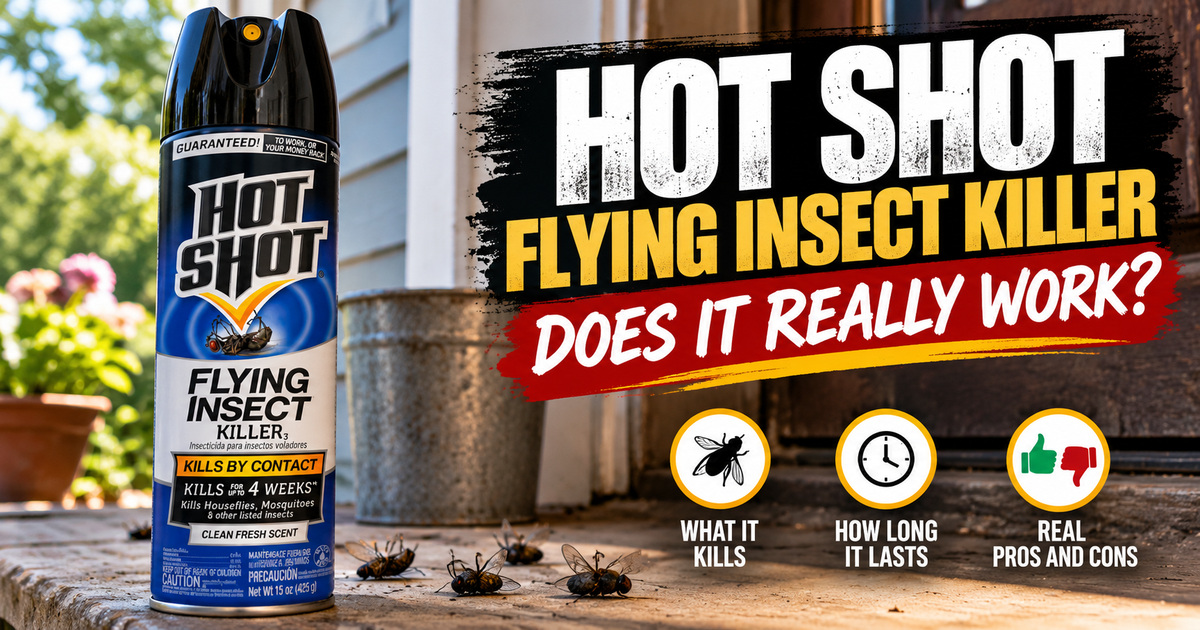
That’s what led me to try Hot Shot Flying Insect Killer 3, Clean Fresh Scent.
And I have to say, this spray has impressed me in one particular area.
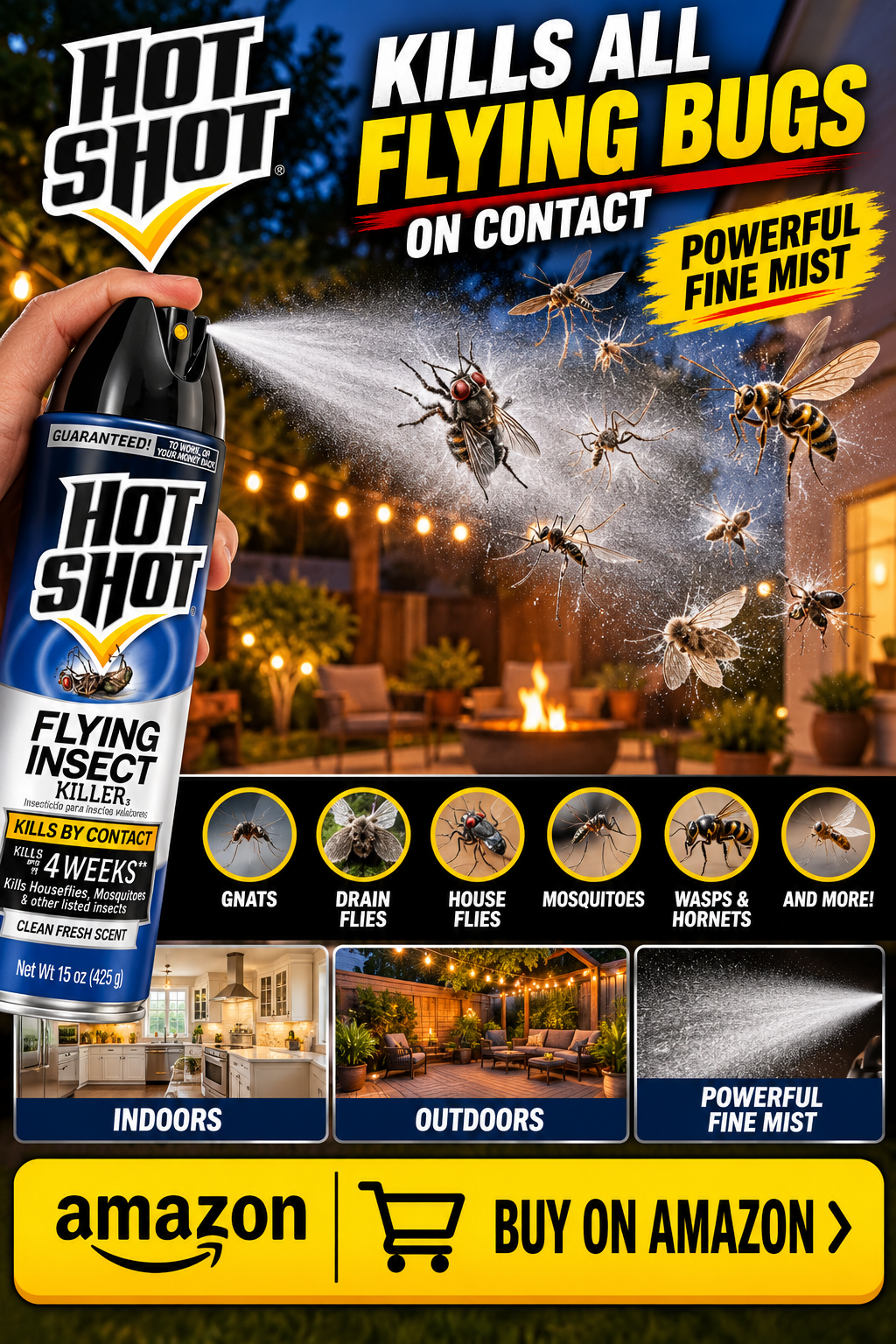
When those tiny flying insects come into contact with its fine aerosol mist, they drop out of the air incredibly quickly.
I’ve used bug sprays that shoot out a concentrated stream, but this one produces a powerful, fine mist that spreads through the air. That’s made a noticeable difference against the little flies I’ve been fighting.
But there’s another side to the story.
The smell is noticeable, you absolutely need to follow the directions about leaving the treated area, and I haven’t found that the spray keeps the insects away for days afterward.
So is Hot Shot Flying Insect Killer actually worth buying?
Here’s what I’ve experienced, what I like, what I don’t, and what you should know before using it.
Does Hot Shot Flying Insect Killer Really Work?
Yes. In my experience, Hot Shot Flying Insect Killer works very well for quickly knocking down small flying insects.
That’s the biggest strength I’ve noticed.
The insects I’ve been dealing with are tiny and difficult to target. They’ll fly across the room, disappear for a moment, and suddenly show up somewhere else.
When I use Hot Shot according to its labeled directions, the fine aerosol provides broad coverage.
I’ve watched these insects drop very quickly after coming into contact with it.
That immediate effect is impressive, especially after fighting a stubborn infestation for weeks.
However, I want to be clear about something.
Quickly killing or knocking down the adult flies doesn’t mean the entire infestation is gone.
I’ve still noticed insects returning several days later.
For me, Hot Shot has been much more effective at quickly reducing the visible adult population than providing a lasting solution to whatever is producing them.
The Fine Mist Is Easily My Favorite Feature
This is the feature that really separates Hot Shot from some of the other bug sprays I’ve used.
Some insect sprays come out in a heavy stream.
That can be useful for certain applications, but it isn’t always ideal when you’re trying to control little flying insects.
Hot Shot Flying Insect Killer releases a very fine aerosol mist.
It distributes the insecticide through the air rather than concentrating everything into a narrow stream.
Why the Mist Makes Such a Difference
Think about trying to target a tiny fly moving around your kitchen.
Those insects can change direction quickly, and getting a direct hit with a narrow stream can be difficult.
With the Hot Shot aerosol, I’ve found that the mist provides much better coverage during a properly directed room treatment.
The little flies I’ve encountered drop quickly when they’re exposed.
That has been particularly helpful while trying to reduce the population.
Of course, this same fine mist is also why you need to take the label’s breathing and ventilation precautions seriously.
You shouldn’t stand around inhaling aerosol insecticide.
The Exact Hot Shot Spray I’ve Been Using
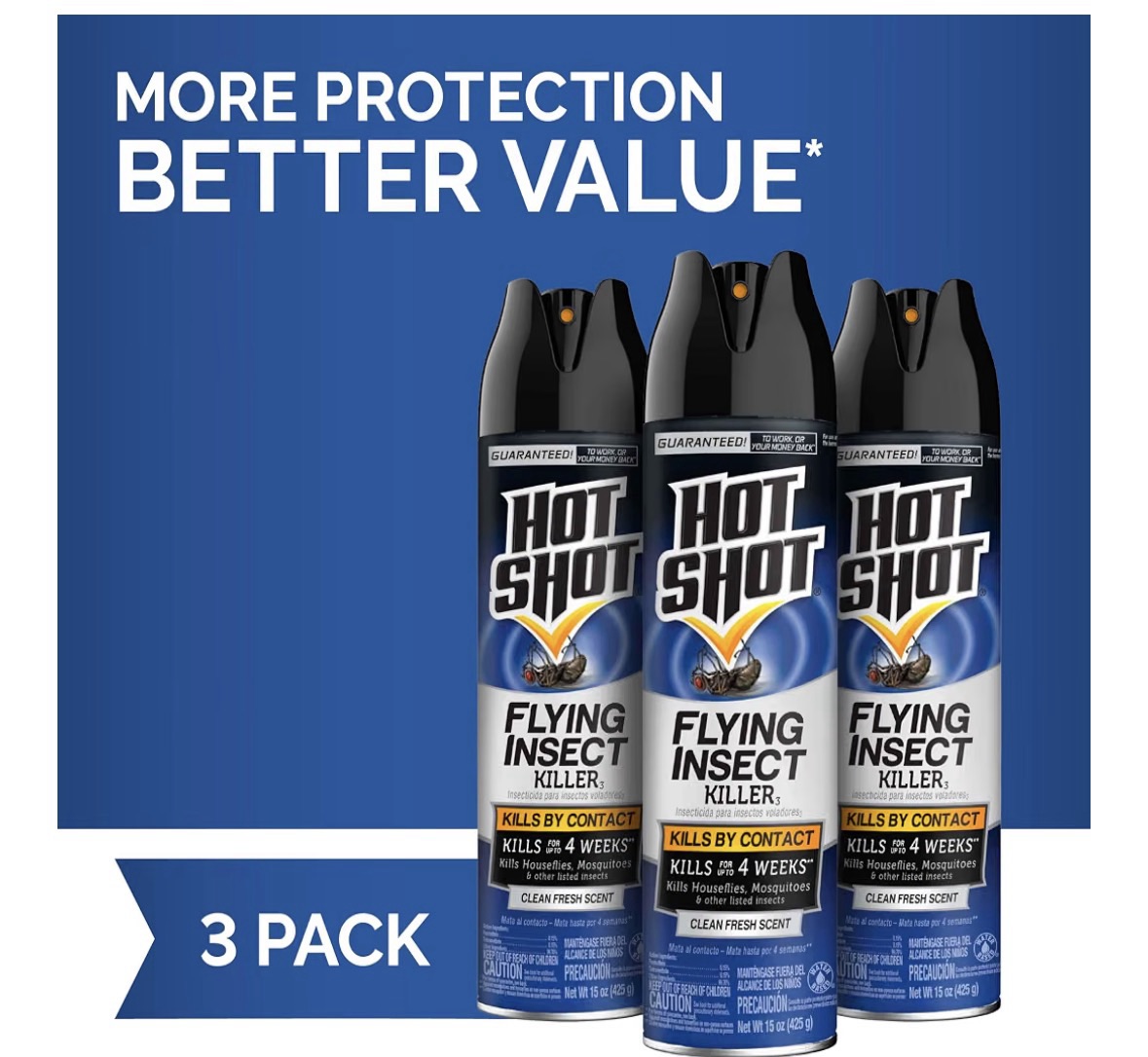
I’ve been using the 15-ounce Clean Fresh Scent aerosol, which is also sold in a three-pack.
The Hot Shot Flying Insect Killer 15 oz three-pack on Amazon is the specific product I’m talking about throughout this review.
I like that it produces a fine, powerful mist rather than the heavy, concentrated stream I’ve encountered with some other insect sprays.
For this particular fly problem, that has been one of its biggest advantages.
What Insects Does Hot Shot Flying Insect Killer Kill?
According to the manufacturer’s labeling, Hot Shot Flying Insect Killer 3 is designed for certain flying insects, including houseflies, mosquitoes, gnats, fruit flies, cluster flies, and flying moths.
The formulation contains two active ingredients:
- Permethrin, 0.15%.
- Tetramethrin, 0.15%.
Both are synthetic pyrethroid insecticides that affect the nervous systems of susceptible insects.
The product is designed for indoor and outdoor applications as specified by its label.
However, you shouldn’t assume every tiny flying insect is covered by the label.
Correct identification is still important.
Does Hot Shot Kill Gnats?
Gnats are among the listed insects the product is intended to control.
The little flies I’ve been fighting have responded very well to the aerosol.
However, I haven’t positively identified their species.
I’m not going to claim they’re definitely fungus gnats, phorid flies, or fruit flies when I haven’t confirmed that.
What About Phorid Flies?
Phorid flies are especially interesting because of where my insect problem has been occurring.
These small flies can develop in moist, decaying organic material. Certain species may be associated with buildup around drains or hidden plumbing problems.
They also have a distinctive humpbacked appearance and often run across surfaces in quick, jerky movements.
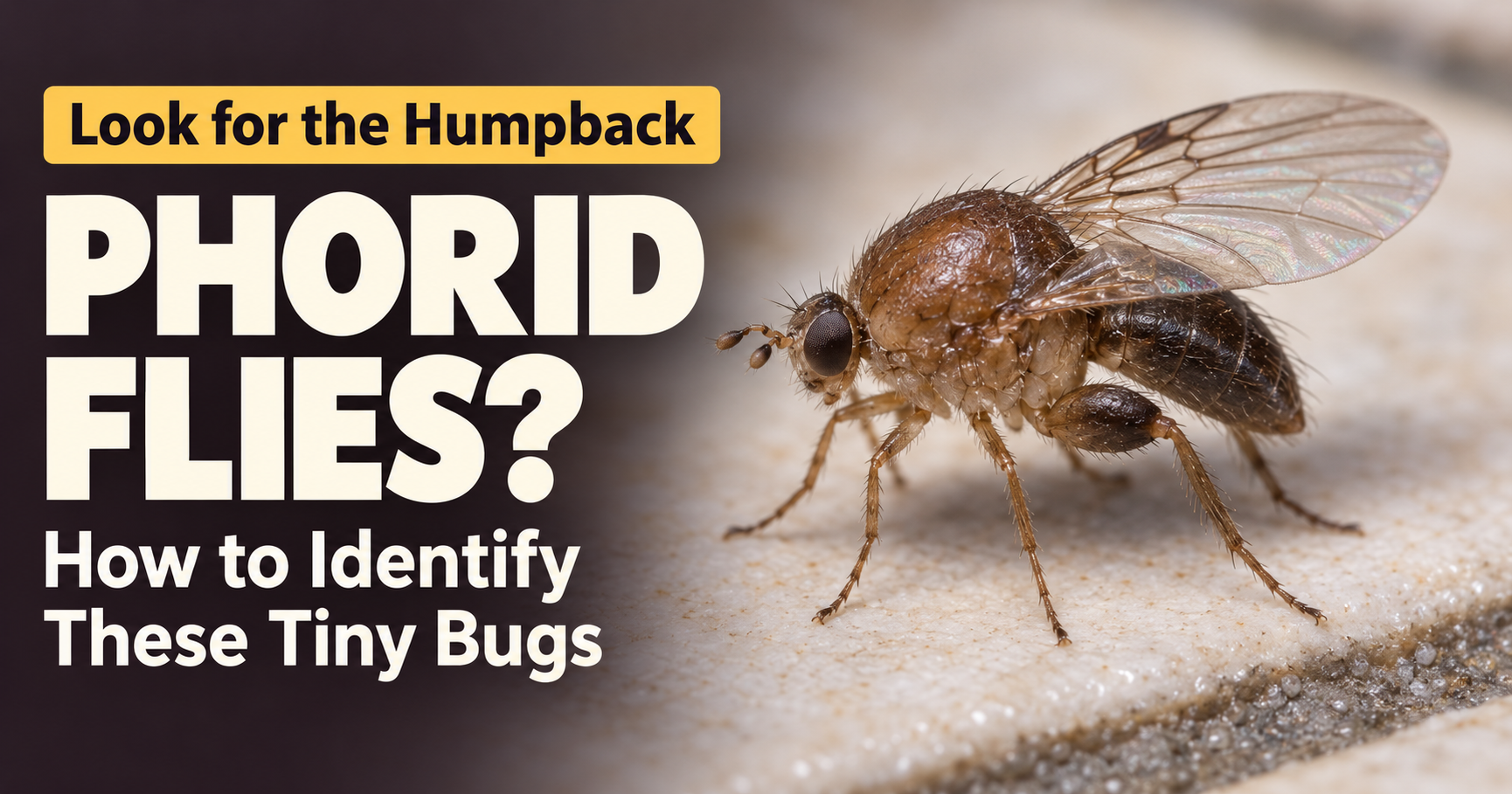
If you’re dealing with similar insects, take a look at our guide to identifying phorid flies around your home.
I haven’t verified that Hot Shot’s label specifically lists phorid flies, so I wouldn’t promise that result based on my unidentified insects alone.
Can Hot Shot Kill Fruit Flies?
Fruit flies are another listed target.
These insects often develop around fermenting produce, sugary residue, garbage containers, and other suitable organic material.
A labeled aerosol treatment may kill exposed adult fruit flies.
However, removing the material where they’re breeding is still necessary for lasting control.
How Fast Does Hot Shot Flying Insect Killer Work?
This is where the product has really stood out for me.
The knockdown has been extremely quick.
I’ve seen the tiny flying insects fall shortly after exposure to the mist.
When you’ve been battling what feels like an endless supply of little flies, watching their numbers drop that quickly is satisfying.
However, I haven’t timed individual insects or conducted controlled tests.
I also can’t guarantee that every insect that falls immediately is dead rather than temporarily immobilized.
What I can tell you is that the immediate knockdown has been excellent in my own experience.
That’s the main reason I like this spray.

Does Hot Shot Flying Insect Killer Last Four Weeks?
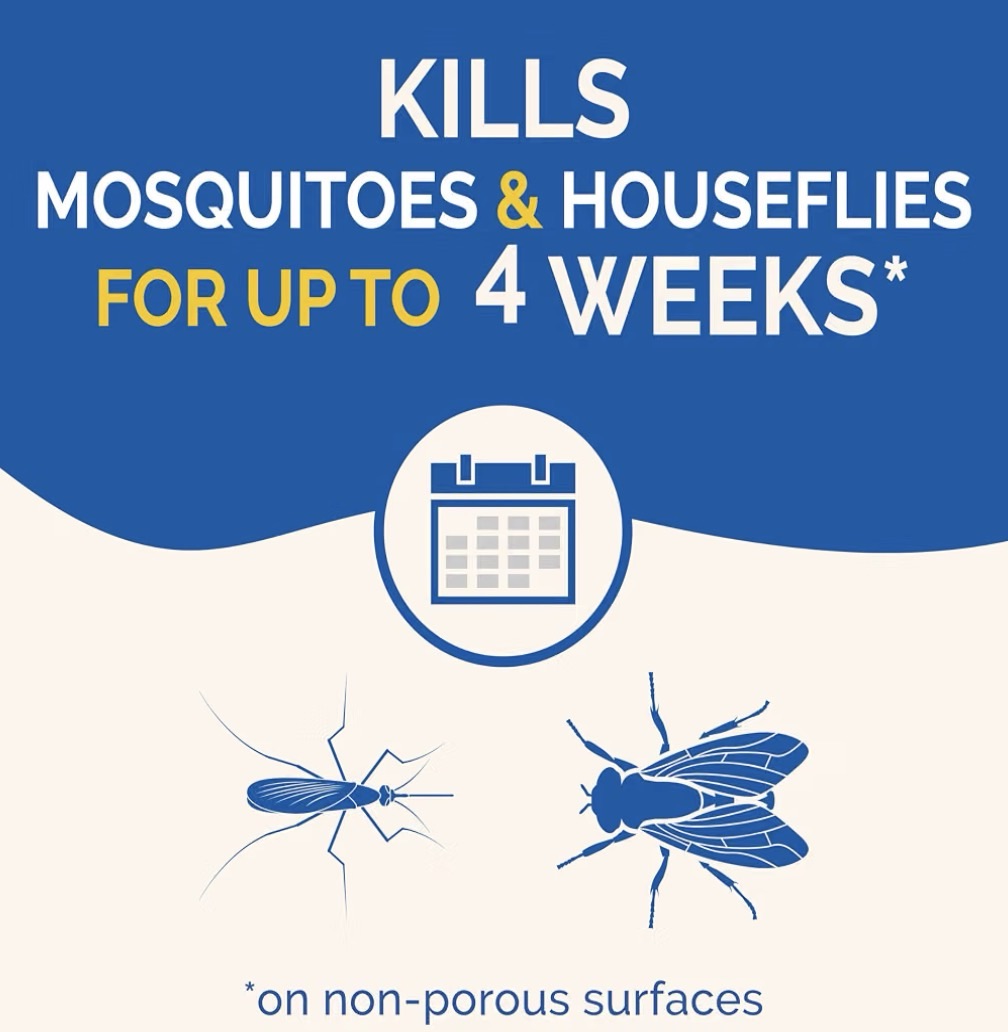
The can advertises insect control lasting up to four weeks.
That sounds pretty impressive.
But the details matter.
The manufacturer’s residual claim applies to mosquitoes and houseflies on nonporous surfaces.
It doesn’t guarantee four weeks of protection against every flying insect listed on the product.
And from my experience, I wouldn’t expect it to keep a stubborn gnat-like infestation under control for four weeks.
What I’ve Actually Noticed After Several Days
The initial treatment knocks down visible insects very well.
But several days afterward, I’ve still noticed more little flies appearing.
There may be some continuing effect, but nothing close to completely eliminating the problem for weeks.
That doesn’t necessarily mean the product isn’t working.
It could mean new insects are emerging from a breeding source that the spray never reached.
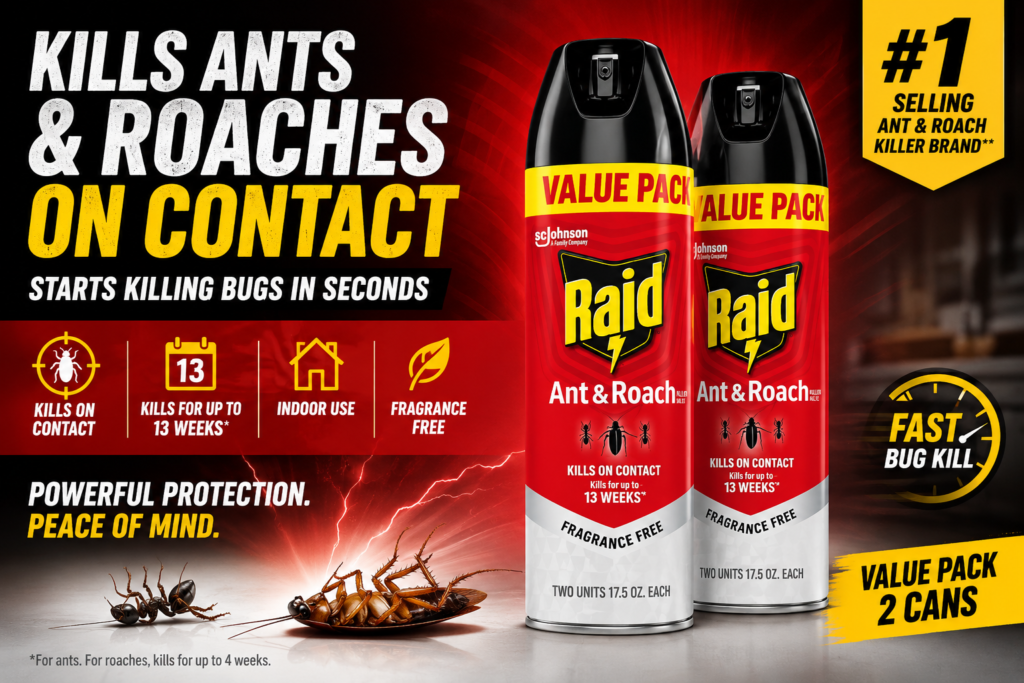
This is why I consider Hot Shot a strong tool for adult insect control, not a complete answer to every recurring infestation. That same distinction between quick knockdown and complete infestation control is discussed in the Raid immediate-response spray.
Does Hot Shot Flying Insect Killer Smell Bad?
This is one thing I definitely want people to know before buying it.
The product is labeled Clean Fresh Scent.
But in my experience, the odor is noticeable and isn’t something I’d want to sit around breathing.
It has a strong enough aerosol insecticide smell that I take leaving the treated area seriously.
And that’s not just a personal preference.
The manufacturer’s instructions require occupants to leave immediately after indoor space spraying.
How Long Should You Stay Out After Spraying?
For indoor space-spray use, the label instructs you to leave the treated room immediately, keep it closed for at least 15 minutes, and ventilate afterward.
The 15-minute period isn’t permission to immediately return to an unventilated room.
Follow the complete label directions, including ventilation and reentry requirements.
Keep children and pets away from the treated area as directed.
The manufacturer also provides precautions for protecting exposed food and food preparation surfaces.
Don’t Remain in the Room Breathing the Mist
Because the aerosol distributes through the air, you shouldn’t remain nearby deliberately inhaling it.
If you develop breathing difficulty or feel unwell after exposure, move to fresh air and seek appropriate medical or Poison Control advice.
In my experience, the strong odor is one of the main downsides.
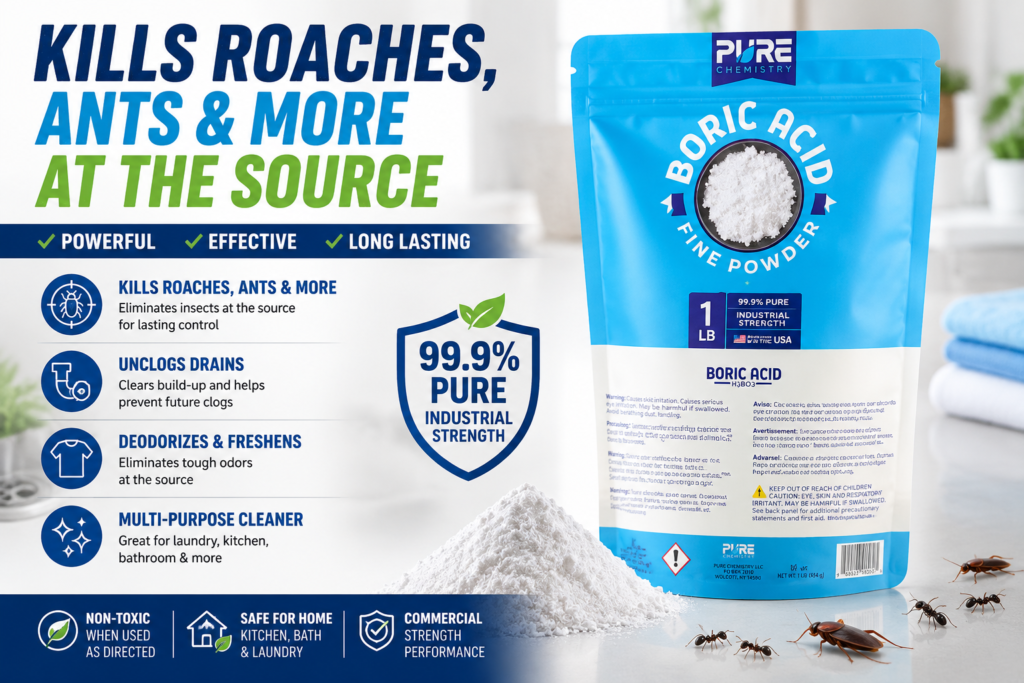
The product may work well against flying insects, but that doesn’t make exposure harmless. Readers should also review the site's pesticide-use disclaimer before using pest-control products.


Why My Tiny Flies Keep Coming Back
This has honestly been the most frustrating part of the infestation.
I’ve been fighting these insects for several weeks.
Hot Shot makes a noticeable difference in the number of adults flying around.
But more keep appearing.
That suggests there’s a continuing source somewhere.
The Breeding Source May Be Hidden
Many small flies develop in decaying organic material.
Depending on the species, they may lay eggs in garbage, drain buildup, fermenting food, damp debris, or other suitable locations.
Their larvae can remain protected in that material while the adults are flying around the house.
An aerosol treatment doesn’t necessarily reach those developing insects.
So you may knock down one group of adults only to see another group emerge later.
Why Drains Are Worth Investigating
Because my problem seems associated with wet areas and drains, those are places I’d investigate.
However, I wouldn’t assume the flies are breeding inside the plumbing simply because they’re nearby.
Some may be coming from trash, hidden spills, or another source of decomposing material.
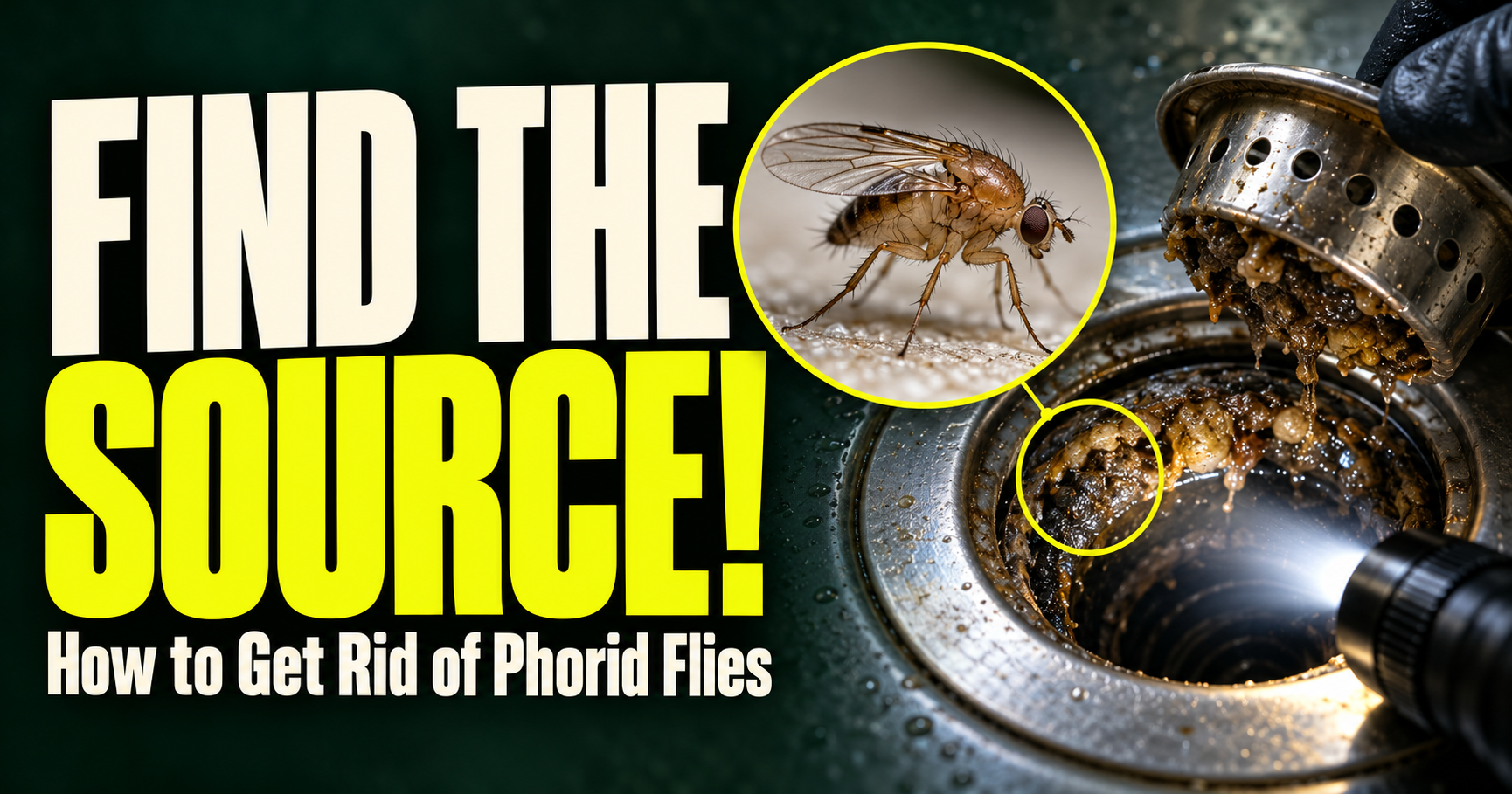
If the insects turn out to be phorid flies, our guide to finding the hidden source of a phorid fly infestation covers the different areas worth checking.
Spraying the adults is one part of managing the problem.
Finding their breeding source is what can prevent the next generation from appearing.
Can You Spray Hot Shot Directly Into Drains?
No.
The product labeling prohibits applying it directly into drains or sewers.
That matters because it’s tempting to spray insecticide into the sink when you keep seeing little flies nearby.
But an aerosol spray isn’t a substitute for properly cleaning a drain.
If insects are developing in organic buildup, that material needs to be removed using an appropriate method.
Never mix insecticides with bleach, drain cleaners, or other household chemicals.
Hot Shot Flying Insect Killer vs. Fly Traps
I’ve also looked into different indoor fly traps, and I think it’s worth understanding where an aerosol spray fits.
Hot Shot and sticky fly traps work in completely different ways.
Where Hot Shot Has the Advantage
The biggest advantage I’ve experienced is fast knockdown.
When applied according to the label, the aerosol can reduce the adult insects present during treatment.
That can be especially useful when the number of flying insects has become overwhelming.
Where Sticky Fly Traps Have an Advantage
Sticky traps can continue catching insects over time without requiring another aerosol application.
Some are useful for monitoring whether the population is increasing or declining.
They may also be a better fit when you want to reduce repeated insecticide use.
However, traps still won’t eliminate hidden breeding material.
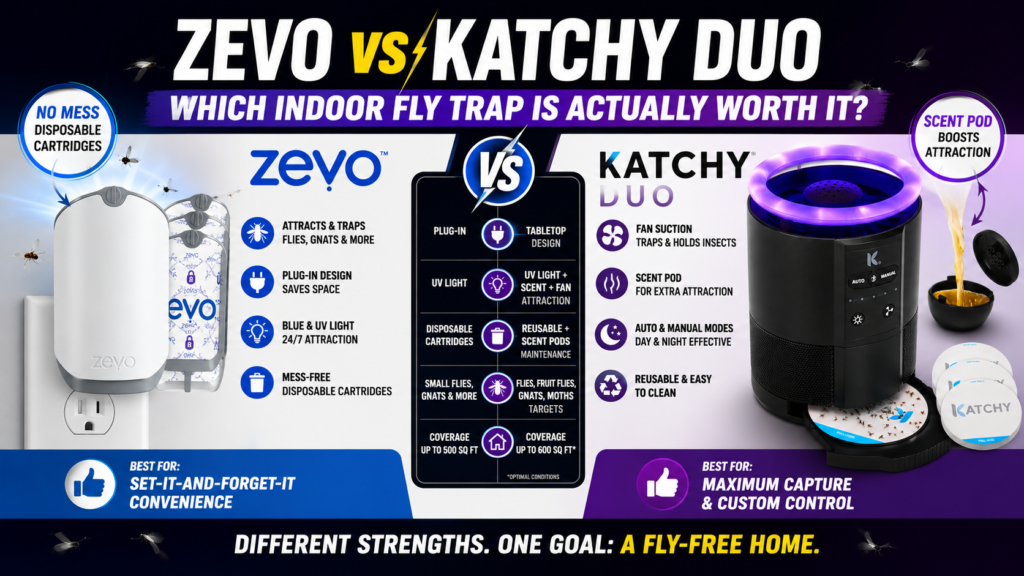
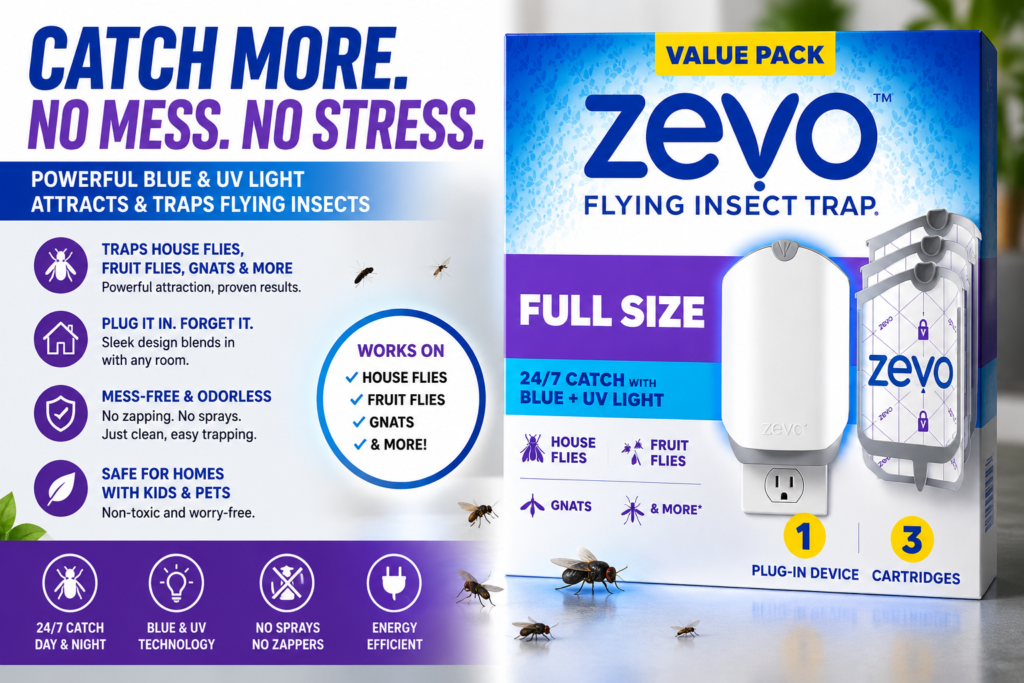
If you’re comparing indoor trapping options, our Zevo versus Katchy Duo fly trap review covers two different approaches.
What I Like About Hot Shot Flying Insect Killer
After using this product during my fly problem, several advantages stand out.
The Fine Aerosol Coverage
This is easily my favorite feature.
The spray produces a powerful, fine mist rather than a concentrated stream.
I’ve found it especially effective during labeled space-spray applications against tiny flying insects.
The Quick Knockdown
The insects I’ve encountered drop very quickly when exposed.
That immediate reduction in flying activity has been extremely helpful.
It’s Designed for Several Flying Pests
The product is labeled for multiple flying insect types.
That makes it relevant to several common indoor flying-insect problems, provided you follow the correct directions.
The Three-Pack Is Convenient
If you’re dealing with an ongoing flying-insect problem, purchasing multiple cans may be more convenient than buying them individually.
You can see the current product details and price for the Hot Shot Flying Insect Killer Clean Fresh Scent 3-pack on Amazon.
Just remember that having multiple cans doesn’t mean you should spray more frequently than the label permits.
What I Don’t Like About Hot Shot Flying Insect Killer
There are also some drawbacks that buyers should understand.
The Smell Is Noticeable
Despite the Clean Fresh Scent name, I don’t find the odor particularly pleasant.
And because it’s an insecticide aerosol, the label’s ventilation and reentry requirements are important.
It Doesn’t Eliminate the Breeding Source
This is my biggest complaint for the particular infestation I’m dealing with.
The spray knocks down adults quickly, but more insects can appear later.
That means it’s not a replacement for finding and removing whatever is supporting the larvae.
It Requires Preparation and Ventilation
You need to protect food and food-contact surfaces, keep occupants and pets out as directed, and ventilate after treatment.
It’s not something you should casually spray around the room while everyone continues sitting there.
You Can’t Use It Everywhere
The product has restrictions on where and how it can be applied.
For example, it shouldn’t be sprayed directly into drains or sewers.
Always check the current label rather than assuming indoor use means every surface is appropriate.
Is Hot Shot Flying Insect Killer Worth Buying?
Based on my own experience, I’d give Hot Shot Flying Insect Killer a positive review for how quickly it knocks down small flying insects.
The fine mist has been the standout feature.
It’s much more useful for broad aerosol coverage than a product that shoots a narrow, concentrated stream.
And watching those tiny insects drop quickly has made the battle more manageable.
But I wouldn’t tell anyone that one application will solve an ongoing infestation.
I’ve still had additional insects appear days after treatment.
The odor is noticeable, and the safety instructions need to be followed carefully.
For someone who needs a labeled aerosol product to reduce an adult flying-insect population, it’s worth considering.
For someone trying to permanently eliminate tiny flies breeding around a drain, finding the source remains essential.
The Hot Shot Flying Insect Killer 3 Clean Fresh Scent aerosol three-pack is the exact product I used for this review.
Frequently Asked Questions
Does Hot Shot Flying Insect Killer kill gnats?
Yes. Gnats are among the insects listed on the product label. I’ve personally experienced excellent knockdown against tiny flying insects, although I haven’t confirmed their exact species.
Does Hot Shot Flying Insect Killer kill phorid flies?
I haven’t verified that the product specifically lists phorid flies on its label. My experience is with unidentified tiny flies, so I wouldn’t guarantee control of phorid flies based on that alone.
How quickly does Hot Shot work?
The small flying insects I’ve encountered drop very quickly after contacting the mist. Actual kill times can vary by species and exposure.
Does Hot Shot Flying Insect Killer really last four weeks?
The four-week residual claim applies to mosquitoes and houseflies on nonporous surfaces. It doesn’t guarantee four weeks of control for all gnats or other small flies.
Does Hot Shot Flying Insect Killer smell strong?
I’ve found the odor noticeable despite the Clean Fresh Scent description. Follow the label’s instructions for leaving and ventilating the treated area.
How long should you stay out after spraying Hot Shot?
For indoor space-spray applications, the label calls for leaving immediately, keeping the room closed for at least 15 minutes, and ventilating afterward. Follow the full current label before reentry.
Is Hot Shot Flying Insect Killer safe to breathe?
You should avoid inhaling insecticide aerosol. Follow the label’s instructions for leaving the area, ventilation, and reentry.
Can I spray Hot Shot Flying Insect Killer down my sink?
No. The product labeling prohibits direct applications into drains and sewers.
Why do gnats come back after using Hot Shot?
New adults may emerge from larvae developing in hidden breeding material. Killing exposed adults doesn’t necessarily eliminate the source.
Does Hot Shot work better than sticky fly traps?
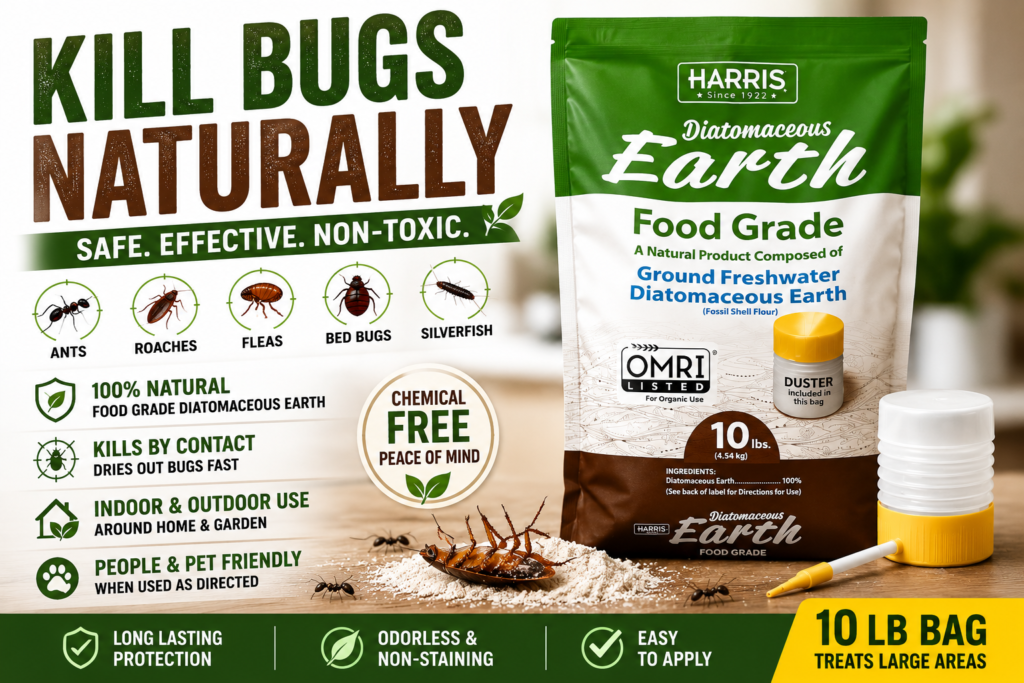
Hot Shot offers insecticide-based knockdown, while sticky traps capture adults over time. Which is more useful depends on the insect, environment, and your treatment goals. For crawling insects and dry hidden areas, nonchemical crawling-bug treatment offers a different kind of control from sprays and traps.
What are the active ingredients in Hot Shot Flying Insect Killer 3?
The formulation discussed here contains 0.15% permethrin and 0.15% tetramethrin. Always verify the ingredients on the exact product label.
About the Author: At Why Do I Have Bugs, we share practical experiences with common household insects alongside researched pest identification and prevention information. Our goal is to help homeowners find solutions that work without exaggerating product claims or overlooking important safety precautions.