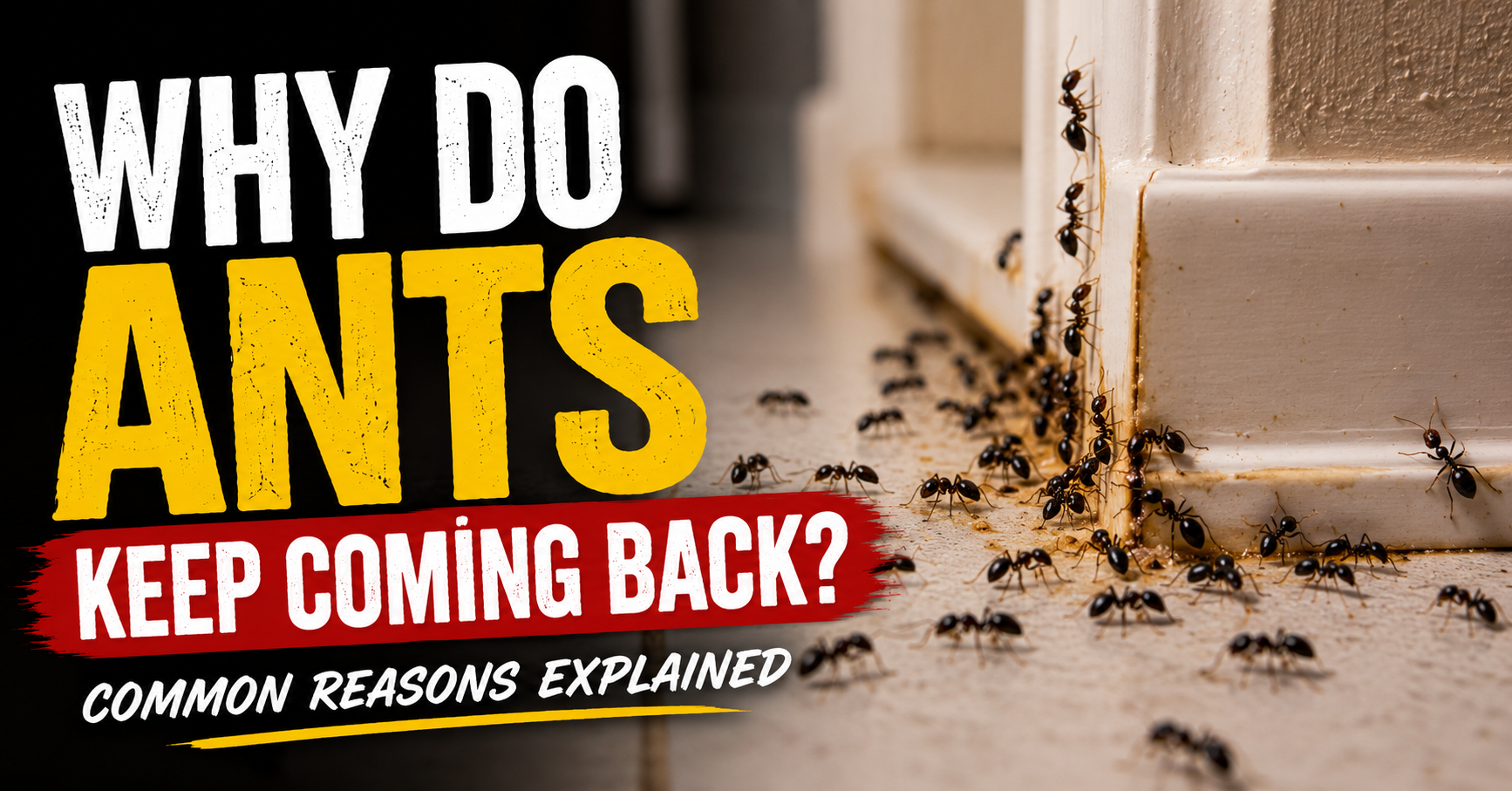
You spray the ants.
They disappear.
A few days later they’re back.
Maybe they’re coming through the same crack in the kitchen.
Maybe they’re crawling across the bathroom counter again.
Or maybe you’re wondering if the spray never worked in the first place.
If that sounds familiar, you’re definitely not alone.
One of the most common questions I hear is:
“Why do the ants keep coming back?”
The answer is usually much simpler than people expect.
Most homeowners aren’t actually getting rid of the colony. A practical treatment sequence for eliminating the colony appears in Getting Rid of Ants Fast: The Step-by-Step Guide That Works.
They’re only getting rid of the ants they can see.
If the colony is still alive, new worker ants simply replace the ones that died, making it seem like nothing changed.
Once I explain how ant colonies actually work, it becomes much easier to understand why so many ant problems seem impossible to solve.
What I Look For Right Away
Whenever someone tells me ants keep returning, I don’t immediately ask what spray they used.
Instead, I ask questions like:
- Where are you seeing the ants?
- Are they following the exact same trail?
- Are they showing up after rain?
- Are they appearing during a certain time of day?
- Have you noticed flying ants recently?
Those answers tell me far more than the brand of insecticide sitting in the garage.
The Colony Is Probably Still Alive
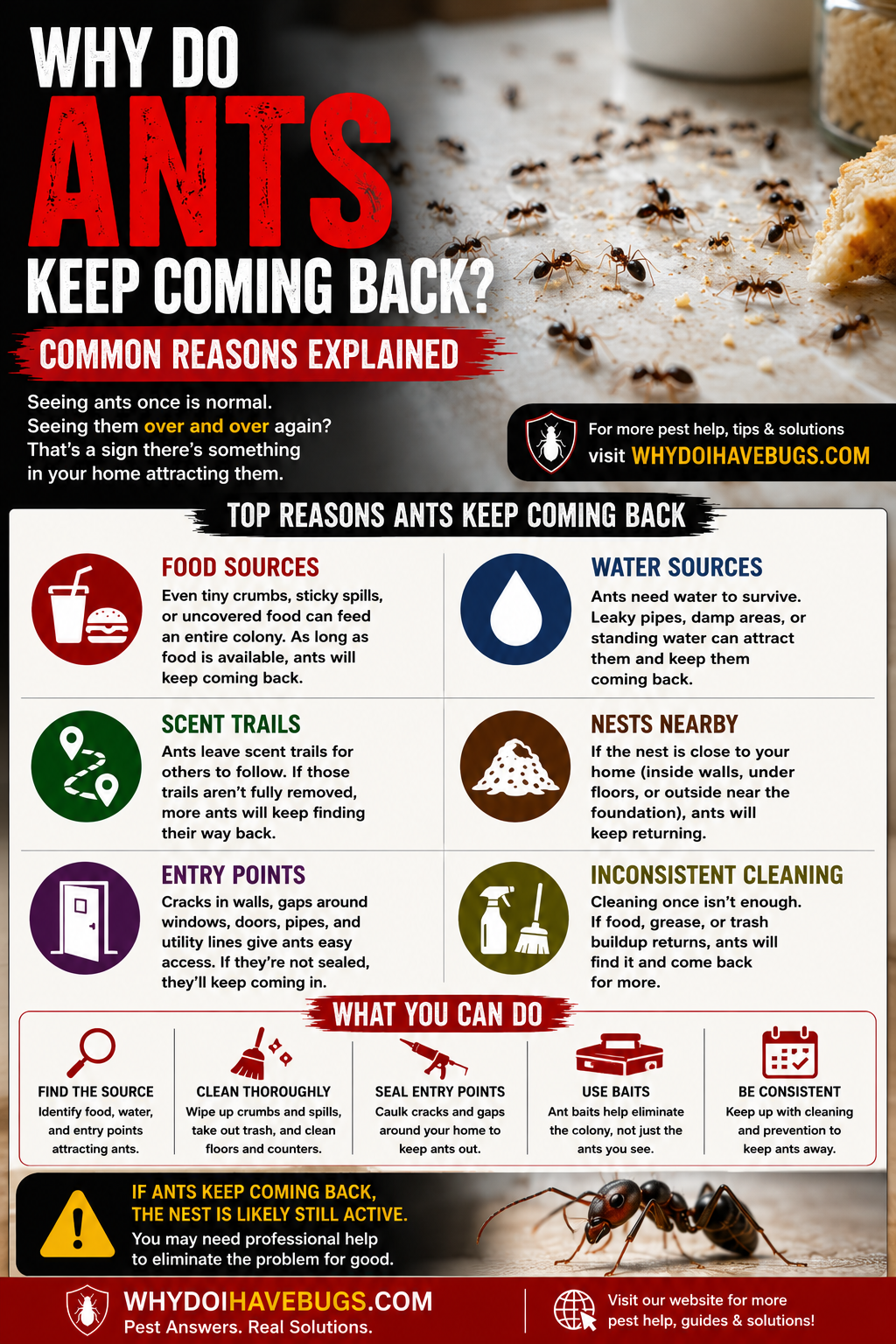
This is the biggest reason ants return.
Most sprays kill worker ants.
Worker ants make up only a small part of the colony.
Hidden somewhere nearby are:
- The queen
- Developing larvae
- Pupae
- Thousands of additional workers
As long as the queen remains healthy, the colony continues producing new ants.
That’s why killing dozens of ants on the kitchen counter often has very little impact on the overall infestation.
You’re Treating the Symptoms Instead of the Cause
Imagine pulling weeds but leaving the roots.
They’ll probably grow back.
Ant infestations work much the same way.
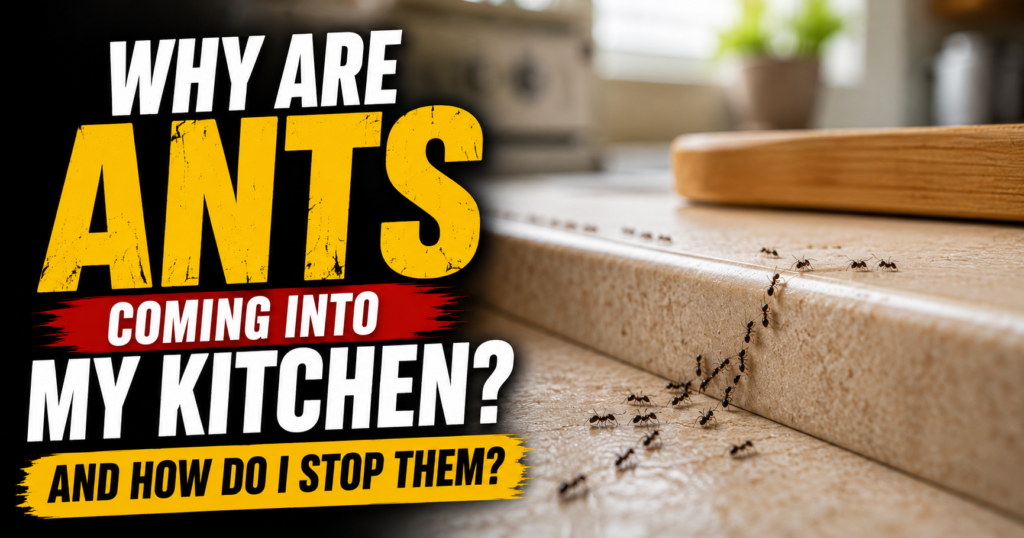
If you’re only killing the ants you see, you’re treating the symptom.
The real problem is the colony.
That’s why I usually prefer treatments that allow worker ants to carry bait back to the nest instead of simply dying where I find them.
Food Sources Keep Attracting Them
Ants don’t randomly wander through your home.
They’re searching for resources.
Some of the biggest attractants include:
- Sugar spills
- Syrup
- Honey
- Pet food
- Crumbs
- Grease
- Open trash cans
- Fruit left on counters
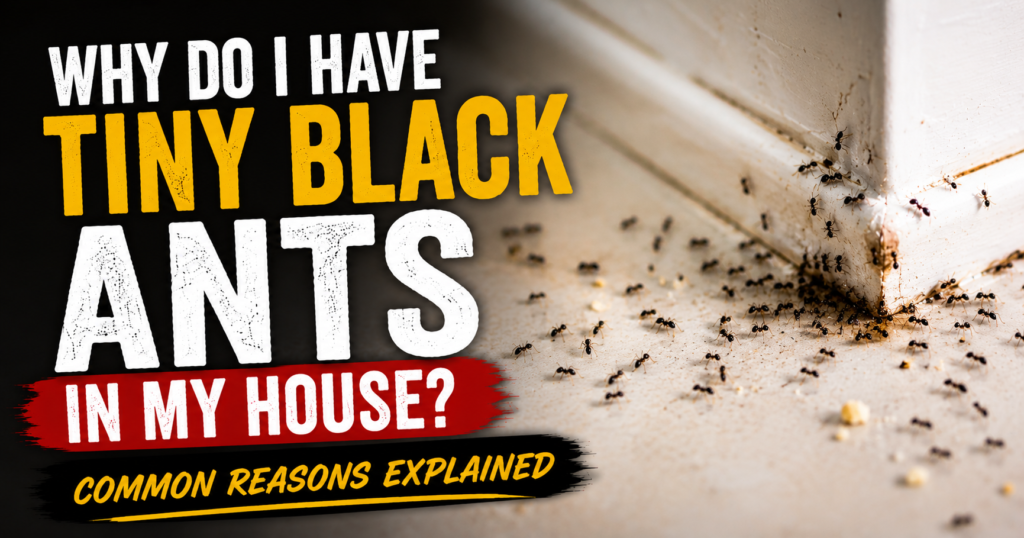
Even tiny amounts of food can keep an ant trail active.
I’ve seen colonies return for a few drops of soda that had dried behind a toaster.
Water Can Be Just As Important
Many homeowners focus only on food.
Water is just as important.
Ants frequently gather around:
- Leaking faucets
- Pet water bowls
- Condensation around pipes
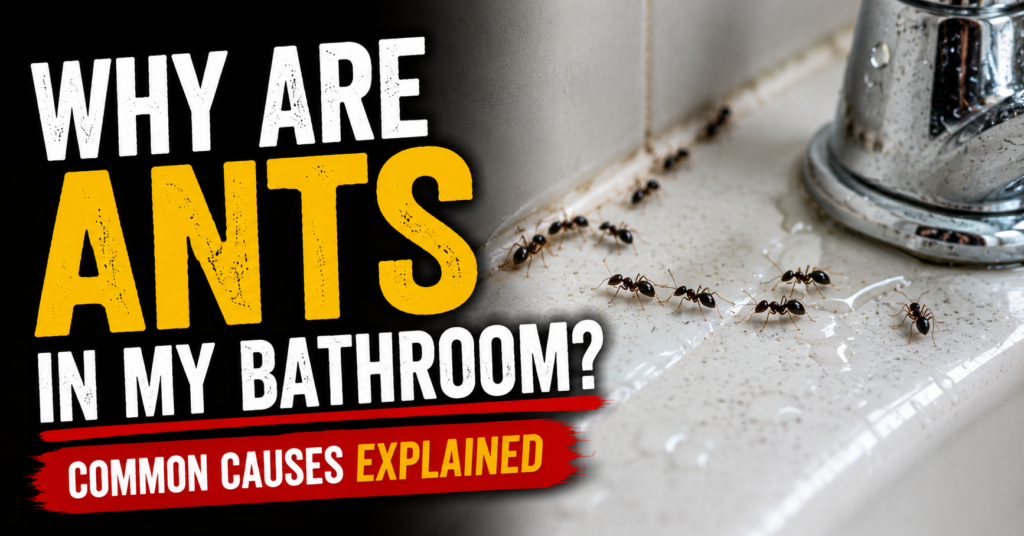
- Bathroom sinks
- Damp basements
If your infestation is centered around moisture instead of food, cleaning the kitchen won’t solve the problem.
That’s why I’ll be expanding this topic in an upcoming guide about ants in bathrooms.
The Entry Point Was Never Sealed
Sometimes homeowners eliminate the colony.
Then another colony finds the exact same opening.
Common entry points include:
- Window frames
- Door thresholds
- Utility lines
- Foundation cracks
- Garage doors
- Exterior vents
Finding where ants enter is just as important as treating the ants themselves.

They’re Following an Invisible Highway
One of the most fascinating things about ants is how they communicate.
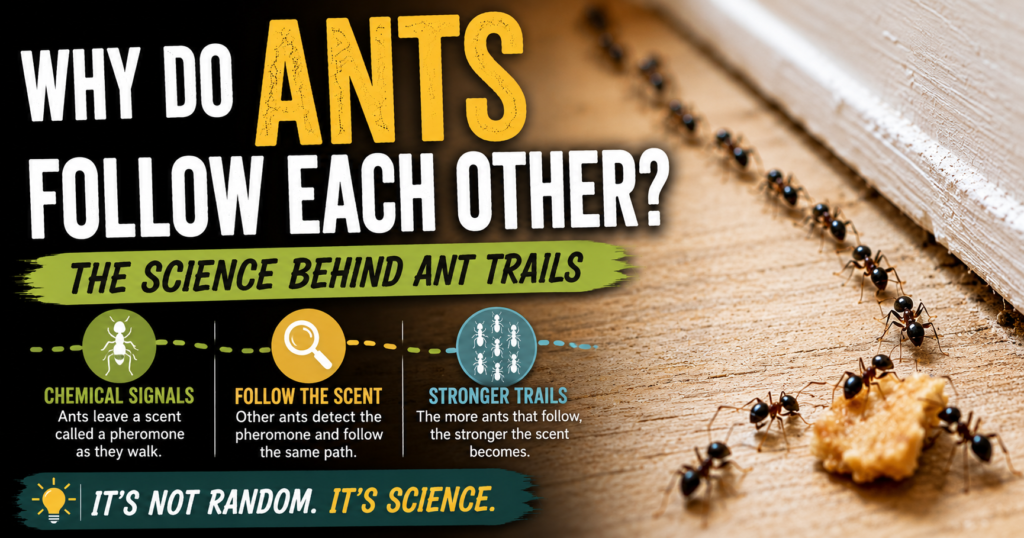
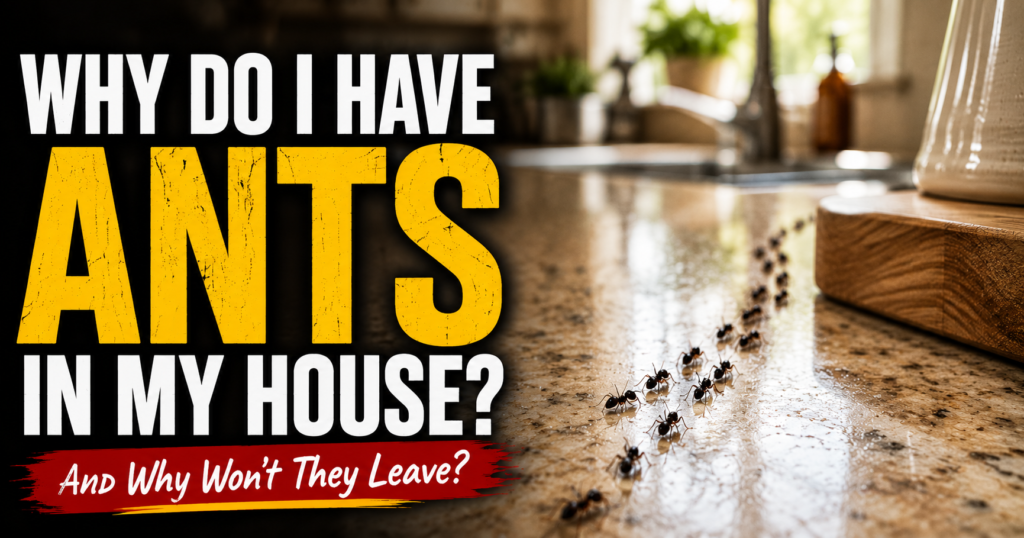
When worker ants find food, they leave behind a chemical trail called a pheromone trail.
Other workers follow that invisible path.
The result?
You suddenly have a long line of ants marching to exactly the same location.
Even after the ants are gone, that chemical trail can continue attracting more workers if it isn’t cleaned away.
Rain Can Trigger New Activity
One pattern I’ve noticed over the years is that many homeowners suddenly see ants after heavy rain.
That’s not a coincidence.
Rain can flood outdoor nests and force ants to search for:
- Higher ground
- Dry shelter
- Food
- Water
Your home may become the perfect place to relocate.
Seasonal Changes Matter
Ant activity isn’t the same all year.
Spring often brings increased foraging.
Summer colonies become larger.
Warm, humid conditions may trigger flying ants as mature colonies reproduce.
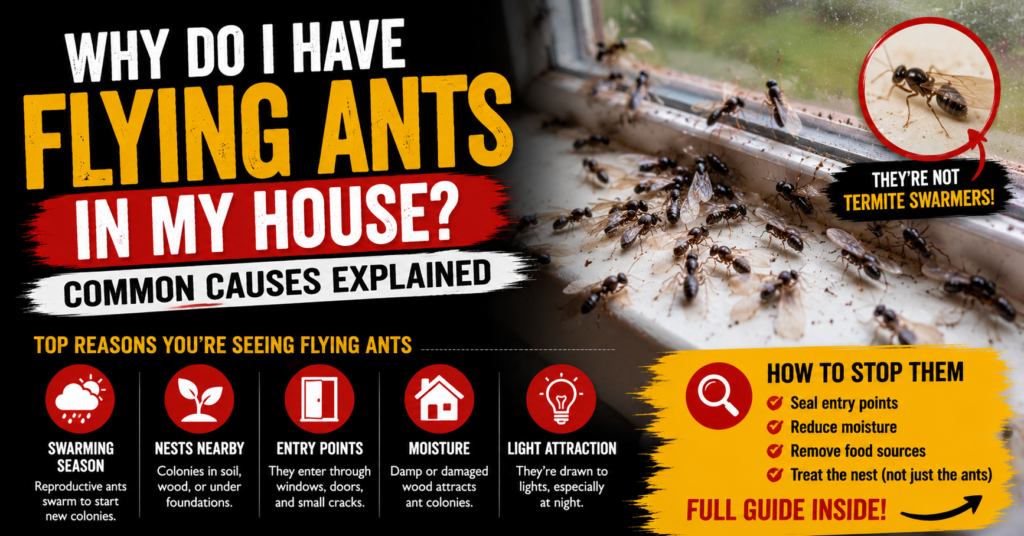
If you’ve recently noticed winged ants indoors, our guide on Why Do I Have Flying Ants in My House? explains why they suddenly appear and what they might mean.
Could You Have More Than One Colony?
Absolutely.
This surprises many homeowners.
You might eliminate one colony successfully…
Only to discover another colony living somewhere else on your property.
I’ve seen homes with several independent colonies nesting around landscaping, mulch beds, tree stumps, and foundations.
Each one may eventually find its way indoors.
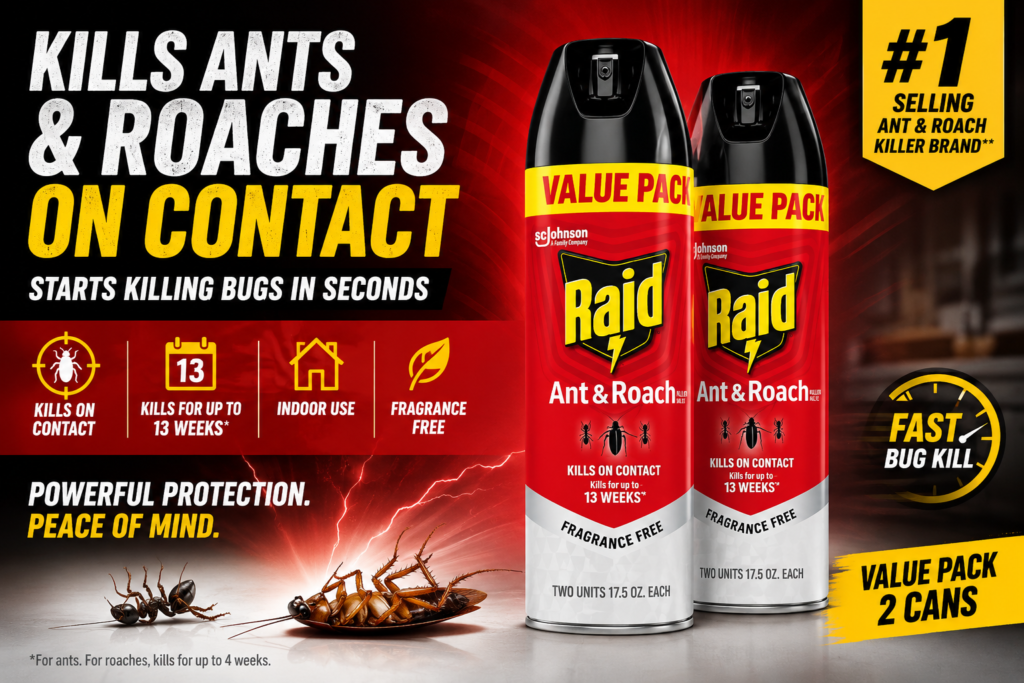
The Wrong Treatment Was Used
Not every ant product works the same way.
Contact sprays kill quickly.
Baits work differently.
Worker ants carry bait back to the nest where it can reach ants you never see.
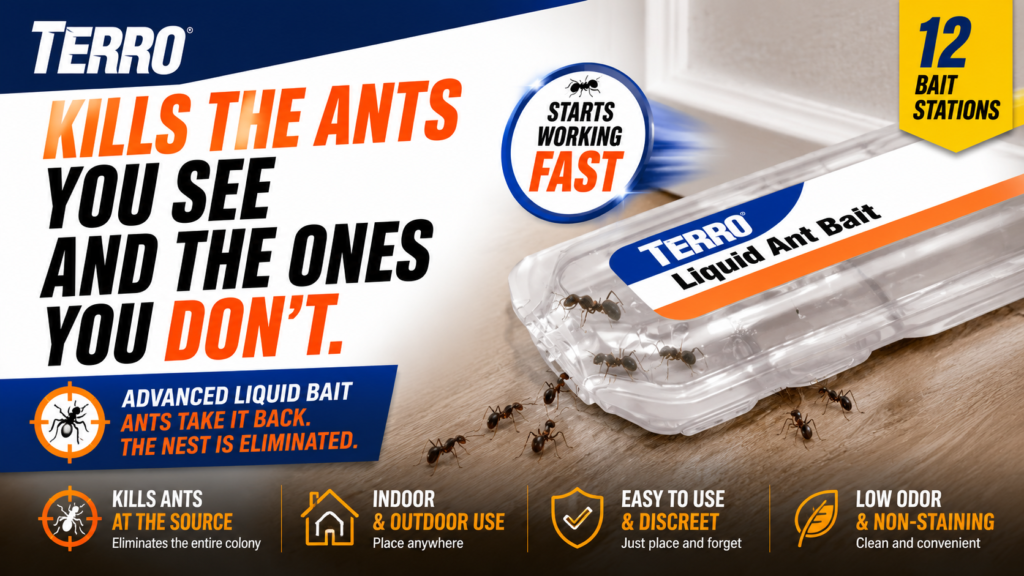
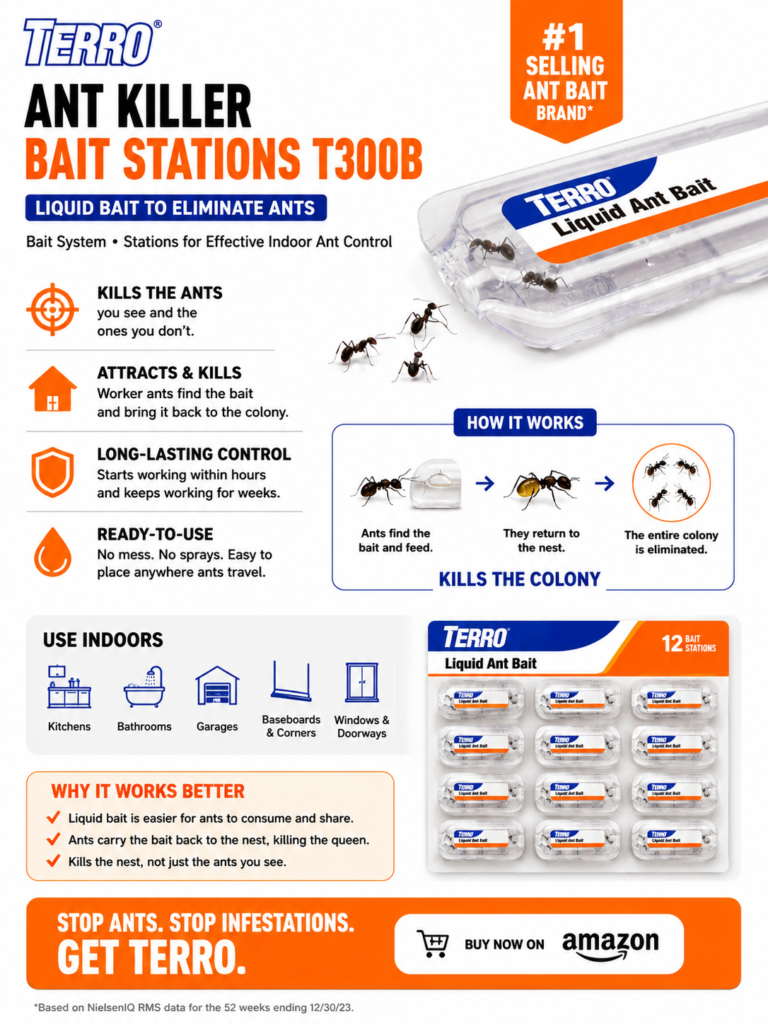
That’s why I’ve had good success using TERRO Liquid Ant Bait Stations for many common household ant problems. In my TERRO Liquid Ant Bait Stations review, I explain where they perform well and where homeowners sometimes make mistakes using them.
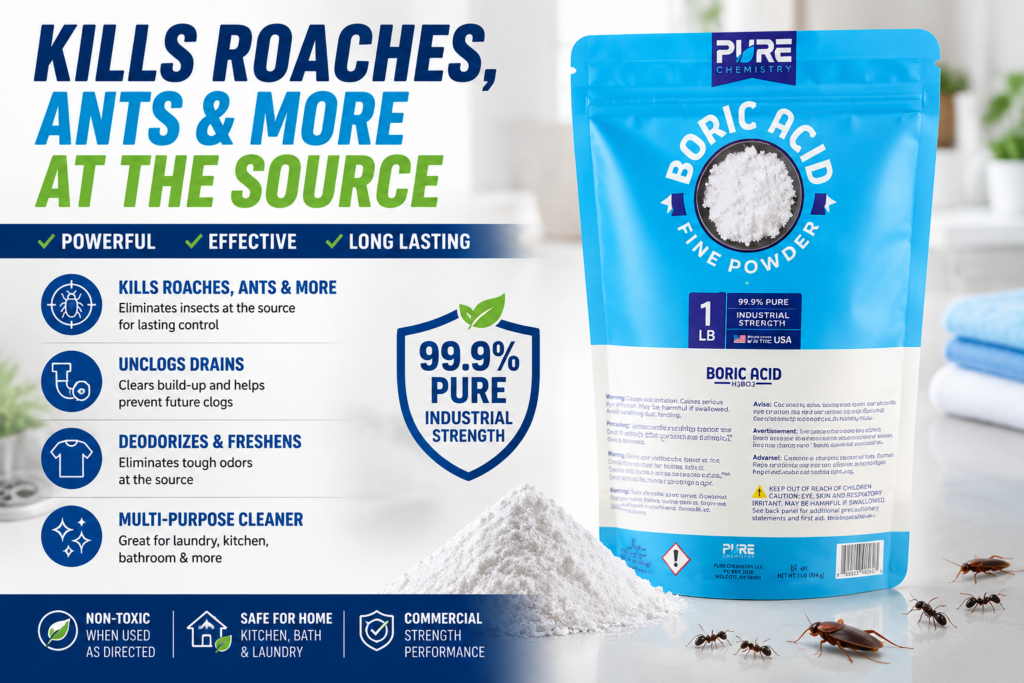
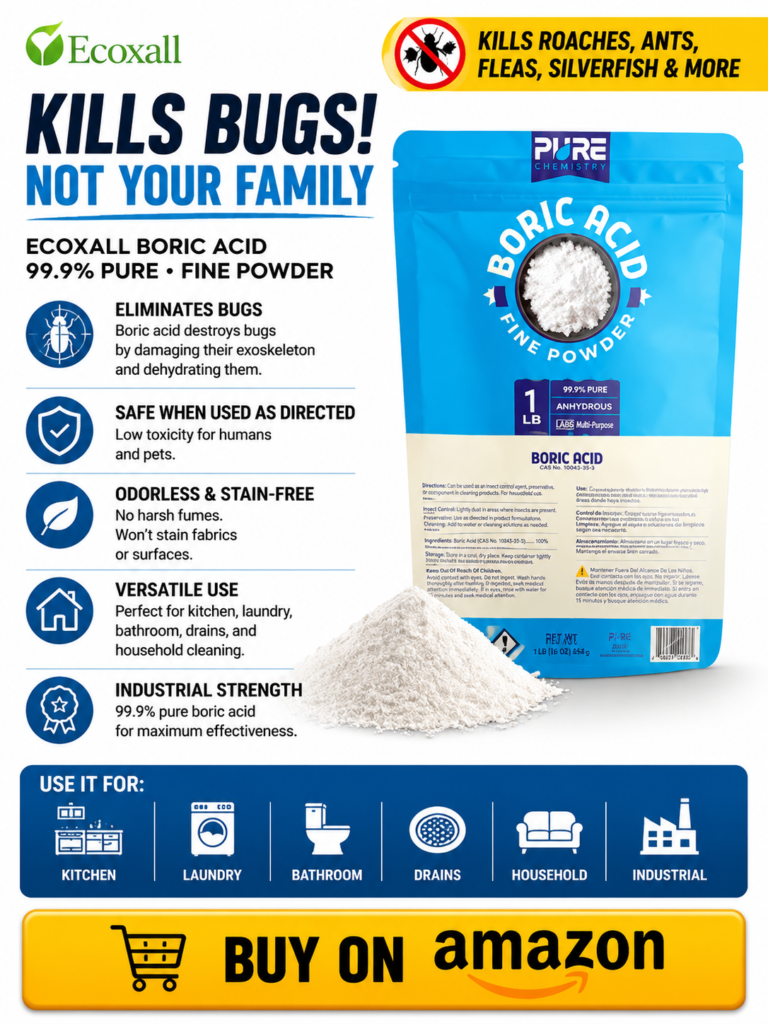
For larger infestations, Ecoxall Boric Acid Fine Powder can also play an important role when it’s used correctly. I cover the pros, cons, and best situations for using it in my review of Boric Acid for Roaches and Ants.
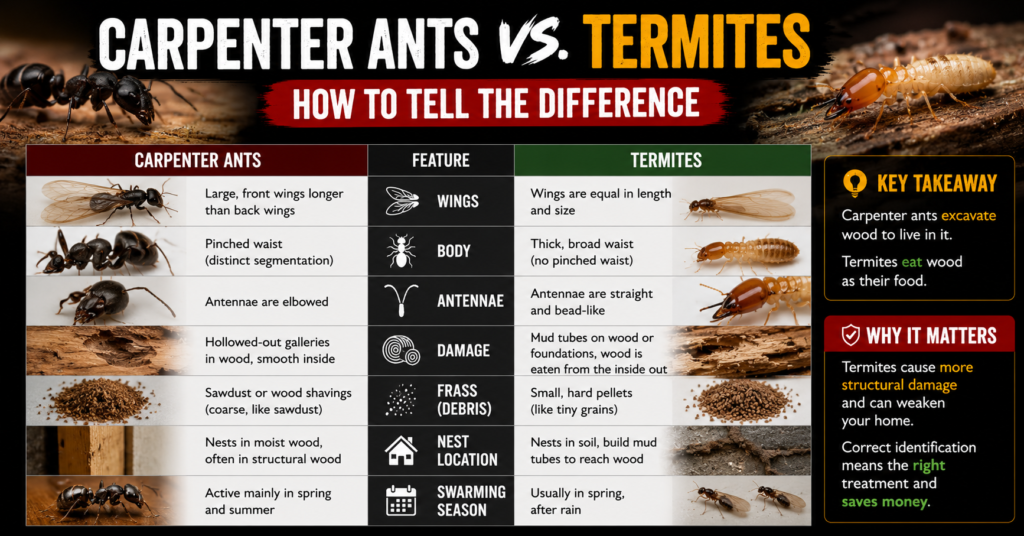
Are They Carpenter Ants?
If the ants are unusually large or you’re seeing winged ants around damaged wood, I start considering carpenter ants.
Unlike termites, carpenter ants don’t eat wood, but they do excavate it to build nests.
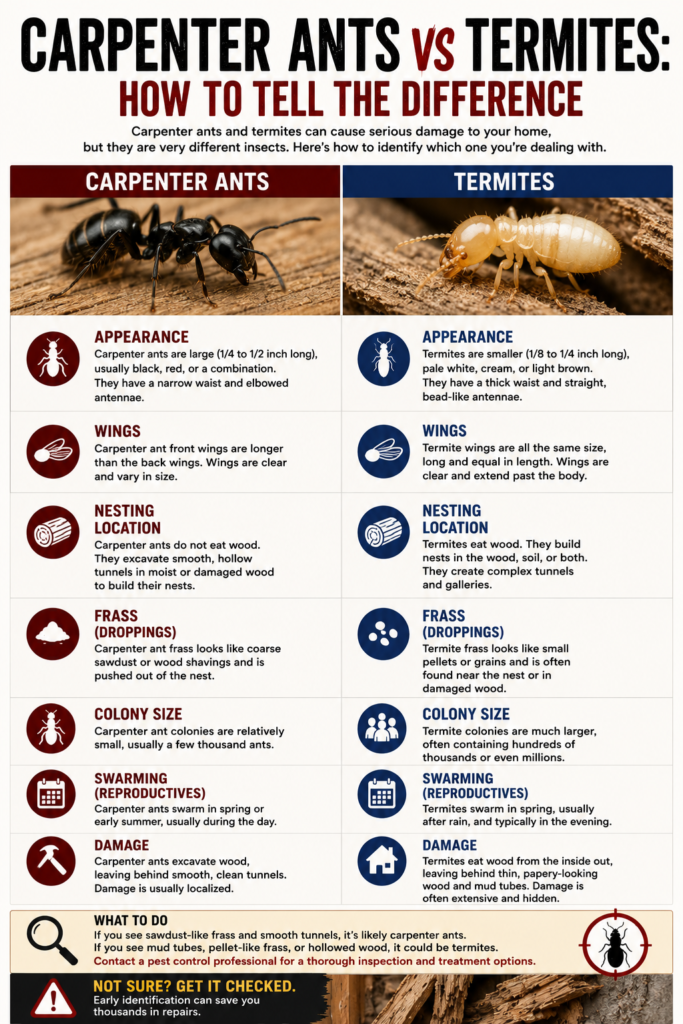
Our comparison guide on Carpenter Ants vs. Termites explains how I tell the difference and what signs concern me most.
What I Would Do If This Were My House
If ants kept returning after multiple treatments, I wouldn’t keep buying stronger sprays.
I’d slow down and investigate.
I’d identify:
- Where they’re entering.
- What they’re eating.
- Whether they’re following the same trail.
- Whether moisture is attracting them.
- Whether the colony has actually been eliminated.
Only after answering those questions would I decide what treatment made the most sense.
That approach almost always produces better long-term results than spraying every ant you see.
The Biggest Mistakes I See
Over the years, I’ve noticed the same mistakes happen again and again.
- Killing worker ants while ignoring the colony.
- Spraying directly on bait stations.
- Leaving food sources available.
- Ignoring water leaks.
- Treating indoors but forgetting the exterior.
- Giving up after only a few days.
- Assuming every ant belongs to the same colony.
- Never identifying the species.
Avoiding just a few of those mistakes can dramatically improve your chances of solving the problem.
Frequently Asked Questions
Why do ants come back after I spray them?
Most sprays kill only the ants you see. If the colony survives, new worker ants continue replacing them.
Why do ants keep following the same trail?
Worker ants leave pheromone trails that guide other ants to food and water sources until the trail is disrupted.
Can one colony keep sending ants into my house?
Yes. A healthy colony can produce thousands of worker ants, allowing activity to continue even after many ants have been killed.
Why do ants come back every spring?
Warmer temperatures increase ant activity, and growing colonies begin searching more aggressively for food and water.
How do I stop ants from coming back permanently?
The best long-term solution is identifying the colony, removing the conditions attracting ants, and using treatments that target the nest instead of only the visible workers.
About the Author
Michael Carter researches household ants, structural pests, and practical pest management strategies. He specializes in helping homeowners understand ant behavior, identify recurring infestations, and solve the source of the problem instead of repeatedly treating the symptoms.