
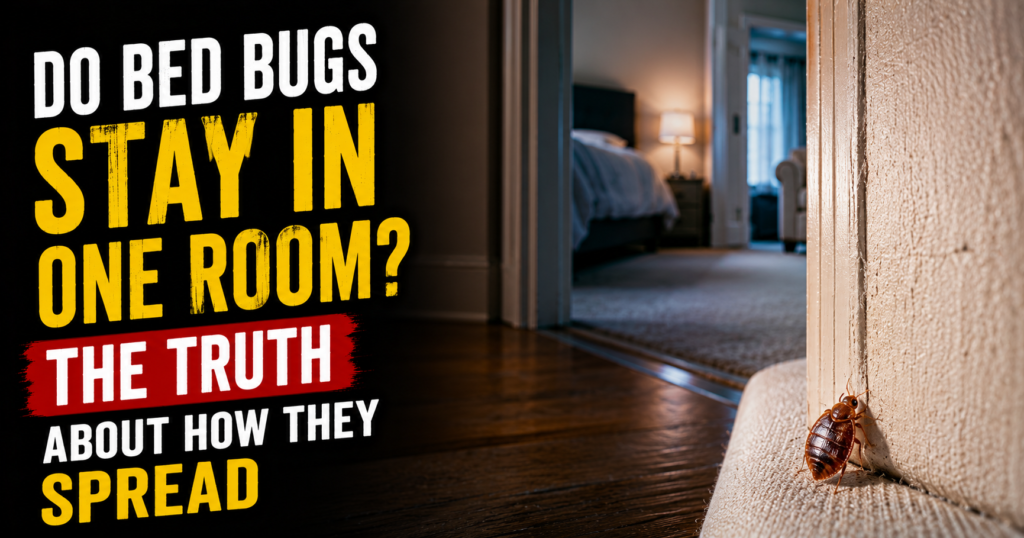
One of the first questions people ask me after finding bed bugs is, “Do I only have to worry about this room, or are they already everywhere?”
I completely understand why people ask.
Discovering bed bugs is stressful enough. The last thing anyone wants is to wonder whether every bedroom, couch, and chair in the house has already become infested.
The answer isn’t always as simple as yes or no.
In many cases, bed bugs begin in one room. Over time, though, they can spread if the infestation isn’t found and treated. The good news is that discovering bed bugs in one room doesn’t automatically mean your entire house is infested.
What matters most is how long they’ve been there, how large the infestation has become, and how easily they can move to other areas.
Sarah’s First Impression
When someone tells me they found bed bugs, the first thing I ask isn’t how many they saw.
I ask where they saw them.
Was it on the mattress?
Inside the box spring?

On a couch where someone sleeps? If the suspected starting point is a sofa, Can Bed Bugs Live in Couches? Here’s What to Check explains what to check there.
Or did they find a single bug crawling down a hallway?
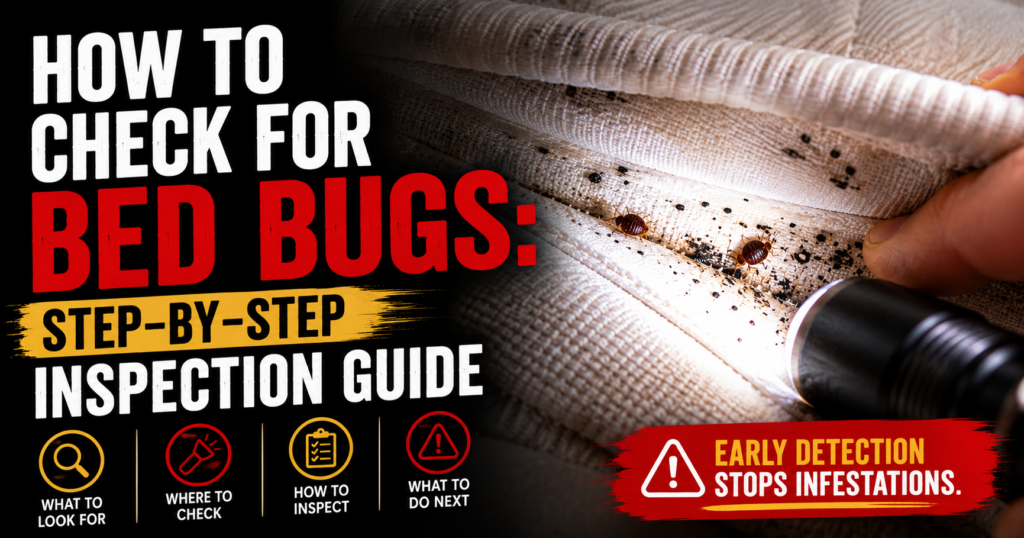
The location tells me much more than the number of bugs. Once you know where the problem may have started, the How to Check for Bed Bugs: Step-by-Step Inspection Guide can help you check nearby areas systematically.
Before assuming they’re everywhere, I always try to determine where the infestation likely started.
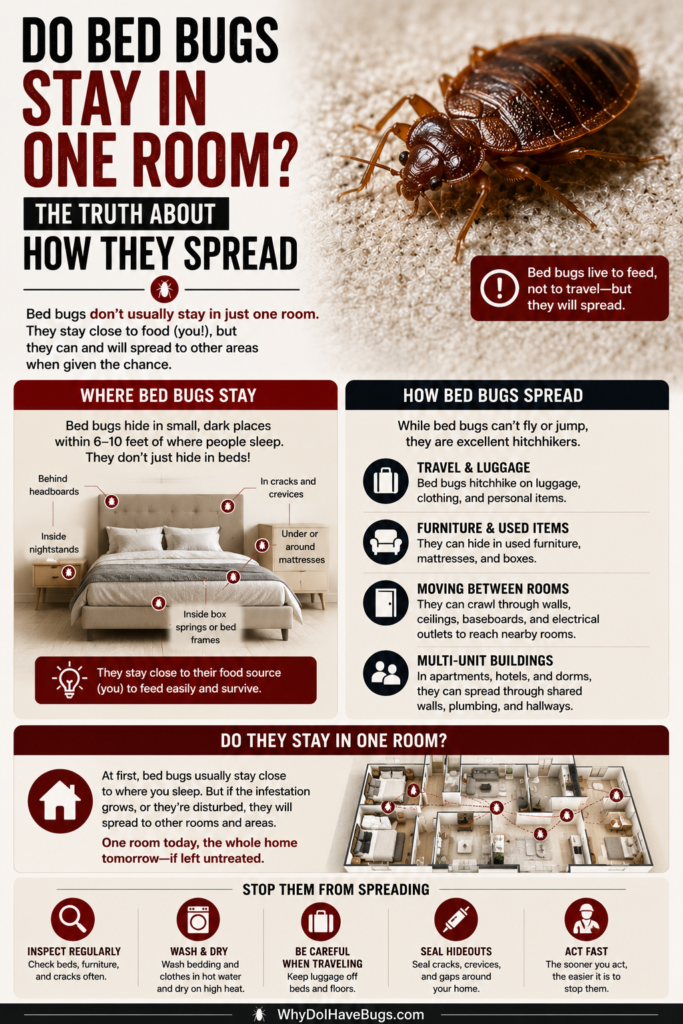
Bed Bugs Usually Start Close to Their Food Source
Unlike cockroaches, bed bugs aren’t searching your house for crumbs or water.
They’re looking for people.
That’s why they usually establish themselves close to where someone sleeps for long periods.
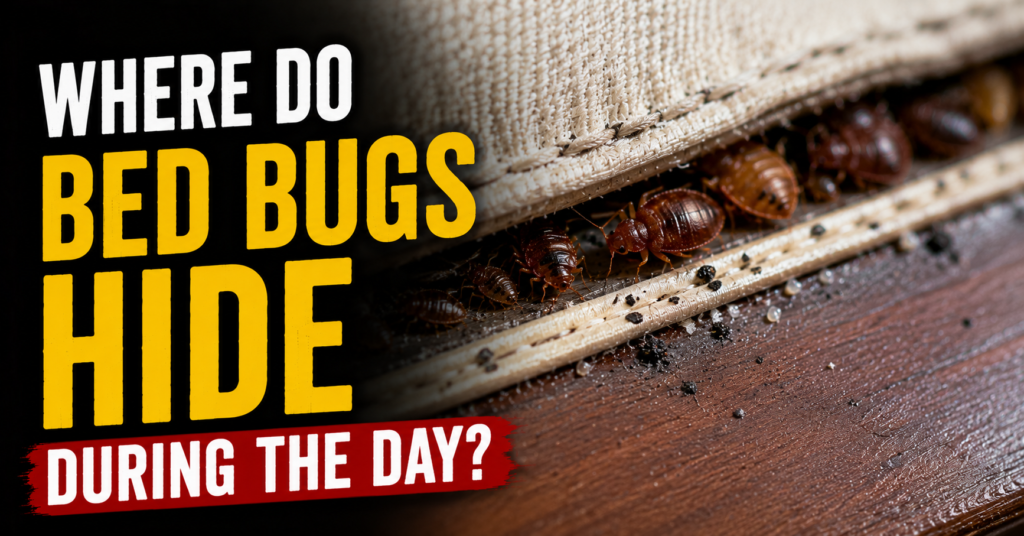
Common starting points include: Knowing the common bed bug hiding places can help you inspect the likely starting room more carefully through Where Do Bed Bugs Hide During the Day? Common Hiding Places.
- Mattresses
- Box springs
- Bed frames
- Headboards
- Recliners
- Sofas where people regularly nap
Early infestations are often concentrated within a few feet of the bed.



How Do Bed Bugs Spread to Other Rooms?
Bed bugs don’t normally march through the house looking for a new room.
Instead, they often spread because people accidentally move them.
I’ve seen bed bugs spread by:
- Luggage
- Laundry baskets
- Backpacks
- Clothing
- Blankets
- Used furniture
- Moving boxes
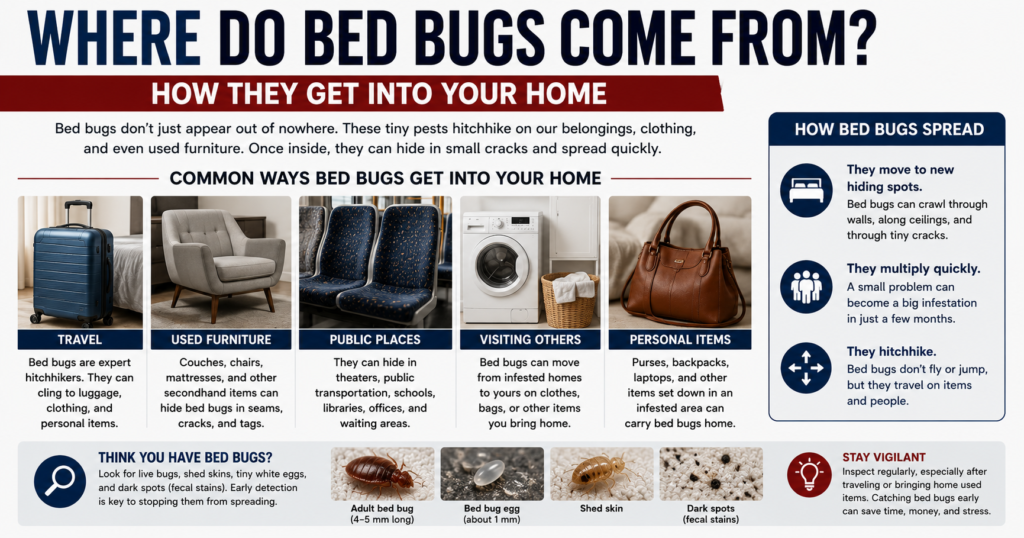
They can also crawl through wall voids, electrical outlets, and plumbing openings in apartments, duplexes, hotels, and other multi-unit buildings.
Can Bed Bugs Crawl From Bedroom to Bedroom?
Yes.
Bed bugs can crawl surprisingly well.
If an infestation continues growing, some bed bugs may eventually travel to nearby rooms while searching for new hiding places or additional hosts.
This process is usually gradual rather than immediate.
Finding bed bugs in one bedroom today doesn’t necessarily mean every bedroom is already affected.



Do Bed Bugs Stay on the Mattress?
Not usually.
This is one of the biggest misconceptions I hear.
People often assume bed bugs live inside the mattress.
In reality, they hide anywhere close to where people sleep.
That includes:
- Mattress seams
- Box springs
- Bed frames
- Headboards
- Nightstands
- Baseboards
- Wall cracks
- Upholstered furniture
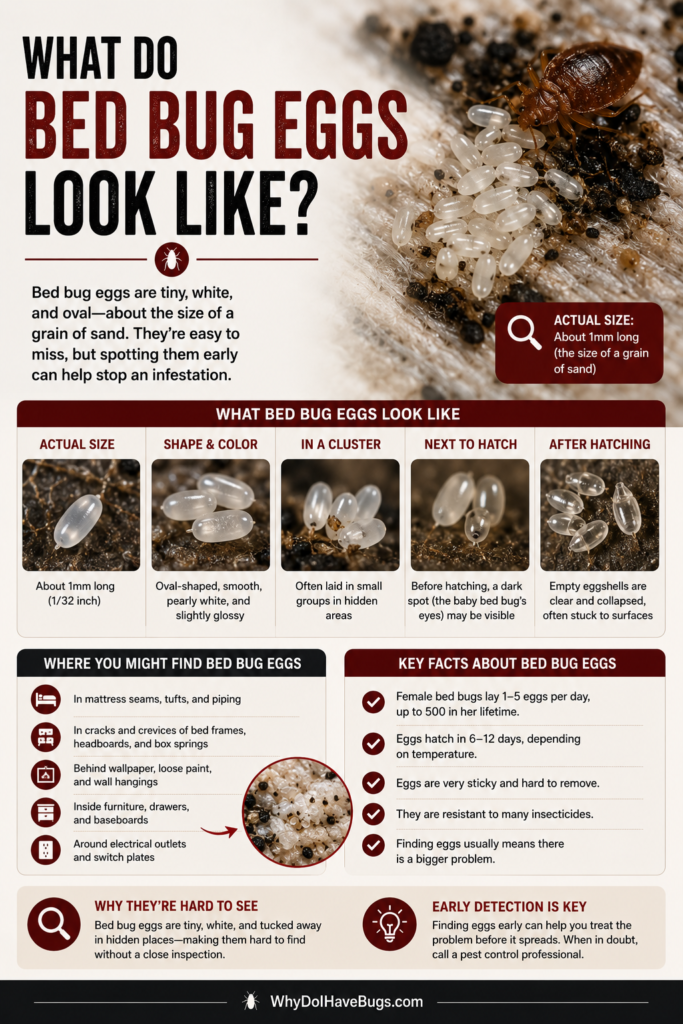
Our guide on what bed bug eggs really look like explains why inspecting these hiding places is just as important as checking the mattress itself.
What If I Only Found One Bed Bug?
A single bed bug doesn’t automatically mean you have a major infestation.
It also doesn’t guarantee that you don’t.

Whenever someone tells me they found one bug, I recommend slowing down and gathering more information before jumping to conclusions. A BugView insect catcher can help you safely preserve a specimen for closer identification before deciding what to do next.
Ask yourself:
- Have you noticed bites?
- Have you seen dark spots?
- Have you found shed skins?
- Have you discovered eggs?
- Has anyone recently traveled?
The answers help paint a much clearer picture.



How Long Does It Take Bed Bugs to Spread?
There’s no exact timeline.
A small infestation may remain concentrated around one bed for quite some time.
As populations grow, however, bed bugs begin searching for additional hiding places.
The larger the infestation becomes, the greater the chance they’ll spread into nearby rooms.
That’s one reason I always encourage homeowners to act early instead of waiting to see if the problem gets worse.
What I’d Check First
If you asked me to inspect your home today, here’s exactly where I’d start.
- Mattress seams and piping.
- Box spring corners.
- Behind the headboard.
- Bed frame joints and screw holes.
- Nightstands within a few feet of the bed.
- Baseboards behind the bed.
- Upholstered furniture in the same room.
Those areas consistently produce the most useful clues during an inspection.


Can Mattress Encasements Help Keep Bed Bugs Contained?
A quality mattress encasement won’t eliminate an infestation by itself.
However, it can play an important role.
By completely enclosing the mattress, it removes one of the most common hiding places and makes future inspections much easier.

Many homeowners choose the SureGuard Mattress Encasement for this reason.
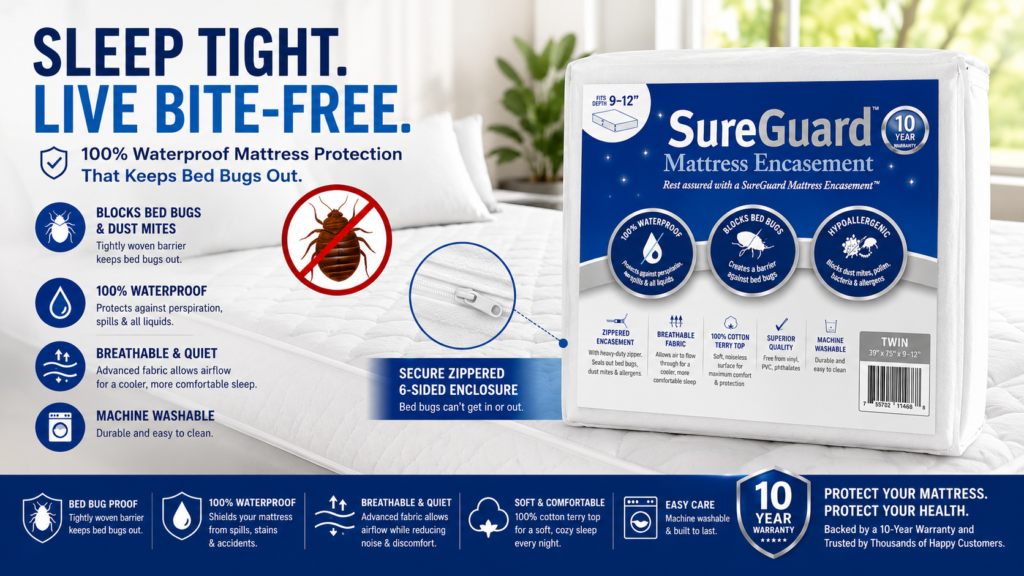
If you’re considering one, read our detailed guide on whether mattress encasements really work for bed bugs before making a decision.
How Do You Know If Bed Bugs Are Still Active?
One of my favorite monitoring tools is a bed bug interceptor.
These simple traps sit under bed legs and can help reveal whether bed bugs are still climbing onto the bed.
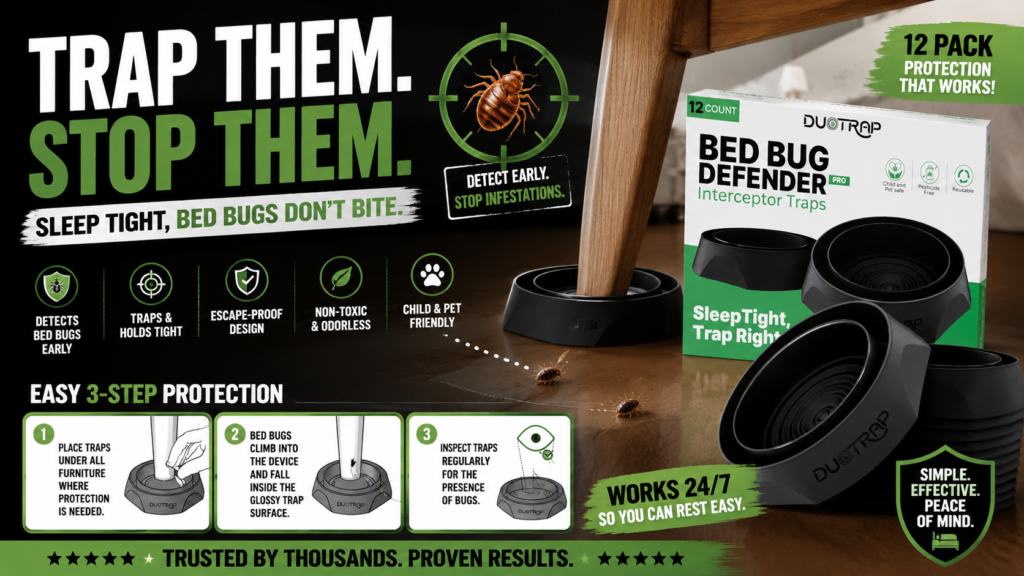
Our review of bed bug interceptor cups explains how they work and when they’re most useful.

If you’ve confirmed bed bugs are present, many homeowners also use Harris Toughest Bed Bug Killer as part of a larger treatment plan. Our review of Harris Toughest Bed Bug Killer covers where it works well and where you shouldn’t rely on it alone.



My Advice
One of the biggest mistakes I see is assuming bed bugs have already taken over the entire house.
Sometimes that’s true.
Often it isn’t.
The earlier you identify where they’re hiding, the better your chances of stopping them before they spread.
That’s why I always recommend doing a careful inspection before moving furniture, throwing away mattresses, or starting expensive treatments.
Frequently Asked Questions
Do bed bugs usually stay in one room?
Early infestations often remain concentrated in one room, especially around the primary sleeping area. As the infestation grows, bed bugs may spread to nearby rooms.
Can bed bugs crawl under doors?
Yes. Bed bugs can crawl under many interior doors if there’s enough space.
Will sleeping in another room make bed bugs spread?
It can. If you begin sleeping elsewhere, bed bugs may eventually follow their food source, potentially creating a second infestation.
How do I know if bed bugs have spread?
Inspect nearby bedrooms, furniture, and sleeping areas for live bugs, eggs, shed skins, and dark fecal spots.
Should I treat the whole house?
Not always. The right approach depends on the size of the infestation and whether there is evidence that bed bugs have spread beyond the original room.
About the Author
Sarah Bennett researches bed bugs, household pests, and practical home pest control strategies. She focuses on helping homeowners understand how infestations begin, how they spread, and what realistic steps can stop them before they become much larger problems.