Finding a tiny brown bug crawling across your bed, bedroom wall, or carpet can send you straight to Google looking for pictures of bed bugs. But there’s another household insect that gets mistaken for bed bugs surprisingly often: the carpet beetle.
Both insects are small enough to overlook, both can show up in bedrooms, and both can leave behind clues that make homeowners nervous. Fortunately, carpet beetles and bed bugs look quite different once you know what to examine.
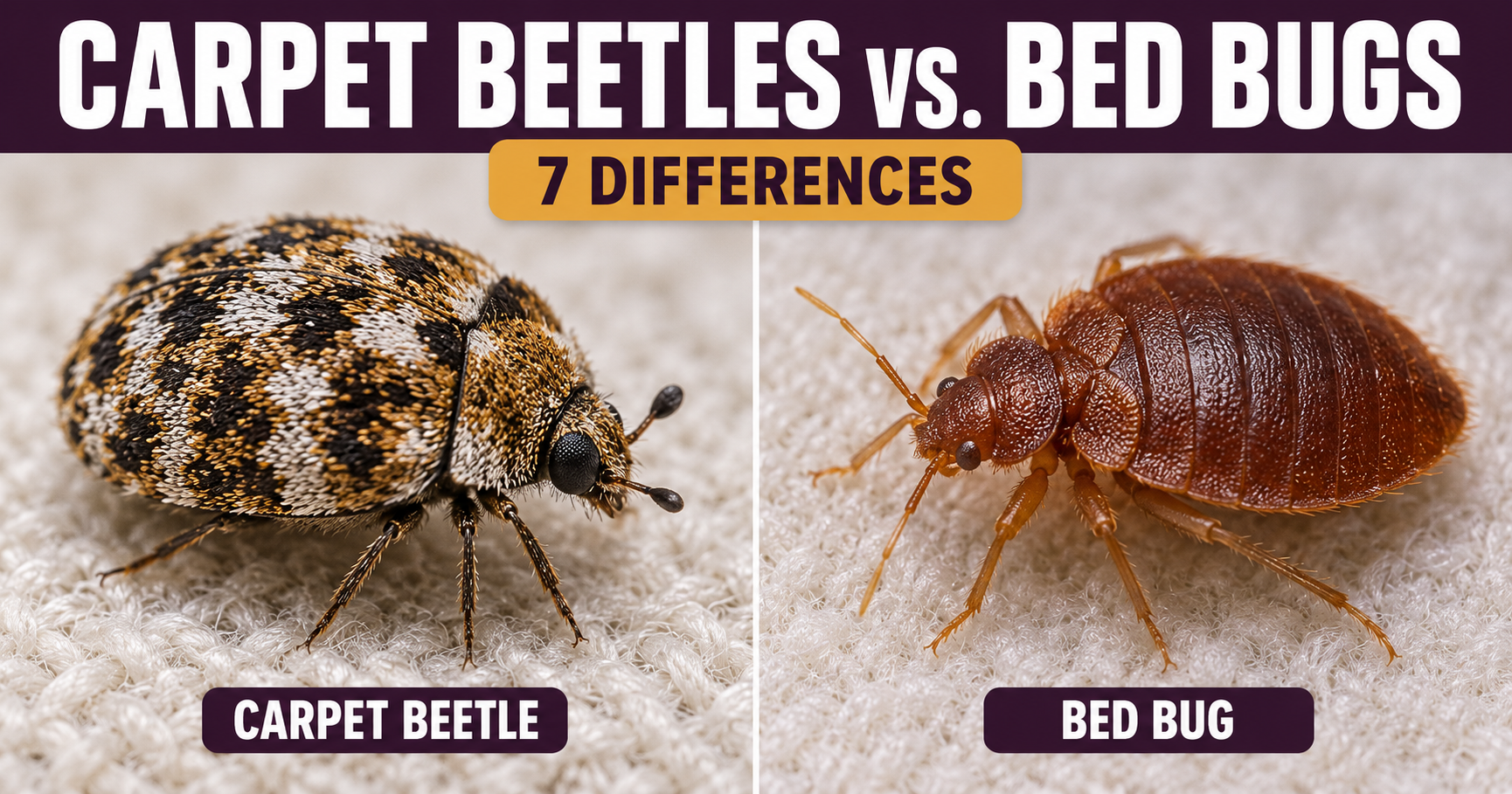
The easiest way to tell them apart is to look at their body shape. Adult bed bugs are flattened, reddish-brown insects with clearly visible body segments. Adult carpet beetles have a harder, rounded or oval beetle-shaped body, and some species have tiny patches of white, tan, and dark scales.
Their young are even easier to distinguish. Carpet beetle larvae are usually covered in noticeable bristles, while young bed bugs look like smaller, paler versions of adult bed bugs.
Let’s look at the differences that actually matter when you’re standing in your bedroom trying to identify a bug you’ve just found.
Carpet Beetle vs. Bed Bug: Quick Identification Chart
| Feature | Carpet Beetle | Bed Bug |
|---|---|---|
| Adult Body Shape | Rounded or oval, usually dome-shaped | Broad, oval, and flattened before feeding |
| Adult Color | Black, brown, or mottled white, tan, and dark colors | Brown to reddish-brown |
| Adult Size | Usually 1/16 to 3/16 inch, depending on species | About 3/16 to 1/4 inch |
| Young Insects | Hairy or bristly larvae | Smooth-looking, pale nymphs |
| Flying Ability | Adults can fly | Cannot fly |
| Food Source | Larvae eat animal-based materials; adults often feed on pollen | Blood from people or other animals |
| Common Locations | Windows, closets, carpets, and stored fabrics | Mattress seams, bed frames, and furniture cracks |
| Signs of Infestation | Fabric damage and bristly shed skins | Dark fecal spots, shed skins, and live bugs |
The biggest clue is usually the insect itself, not where you found it.
A carpet beetle can crawl across your mattress, and a bed bug can occasionally travel across a wall or floor. Finding an insect in a particular room doesn’t automatically identify it.


1. Carpet Beetles Have Rounded Bodies, While Bed Bugs Are Flat
This is the first thing I’d check when comparing the two.
An adult bed bug has a broad, somewhat flattened oval body. When viewed from above, you can often see the outline of its abdomen and the horizontal divisions between body segments.
Bed bugs become more swollen and elongated after feeding, so a recently fed bed bug won’t look quite as flat.
Adult carpet beetles look more like miniature beetles.
Their backs are rounded or dome-shaped, and their bodies have a firmer appearance. Some resemble tiny, colorful ladybugs without the familiar red coloring.
What Does an Adult Carpet Beetle Look Like?
The varied carpet beetle has one of the most distinctive appearances.
Its body is covered in small scales that can create a mottled pattern of white, brown, yellow, and dark colors.
Black carpet beetles are different. They’re generally darker, more elongated, and may look like a tiny black or dark brown beetle.
That distinction is important because not every carpet beetle has the colorful pattern you see in identification photographs.
What Does an Adult Bed Bug Look Like?
Adult bed bugs usually have a reddish-brown color, six legs, short antennae, and a visibly segmented abdomen.
They don’t have the hard wing covers or rounded beetle-like appearance of carpet beetles.
If the insect looks like a tiny, flattened apple seed with visible abdominal segments, bed bugs become a stronger possibility.

2. Carpet Beetle Larvae Are Hairy, but Baby Bed Bugs Are Not
This is one of the clearest differences between the insects.
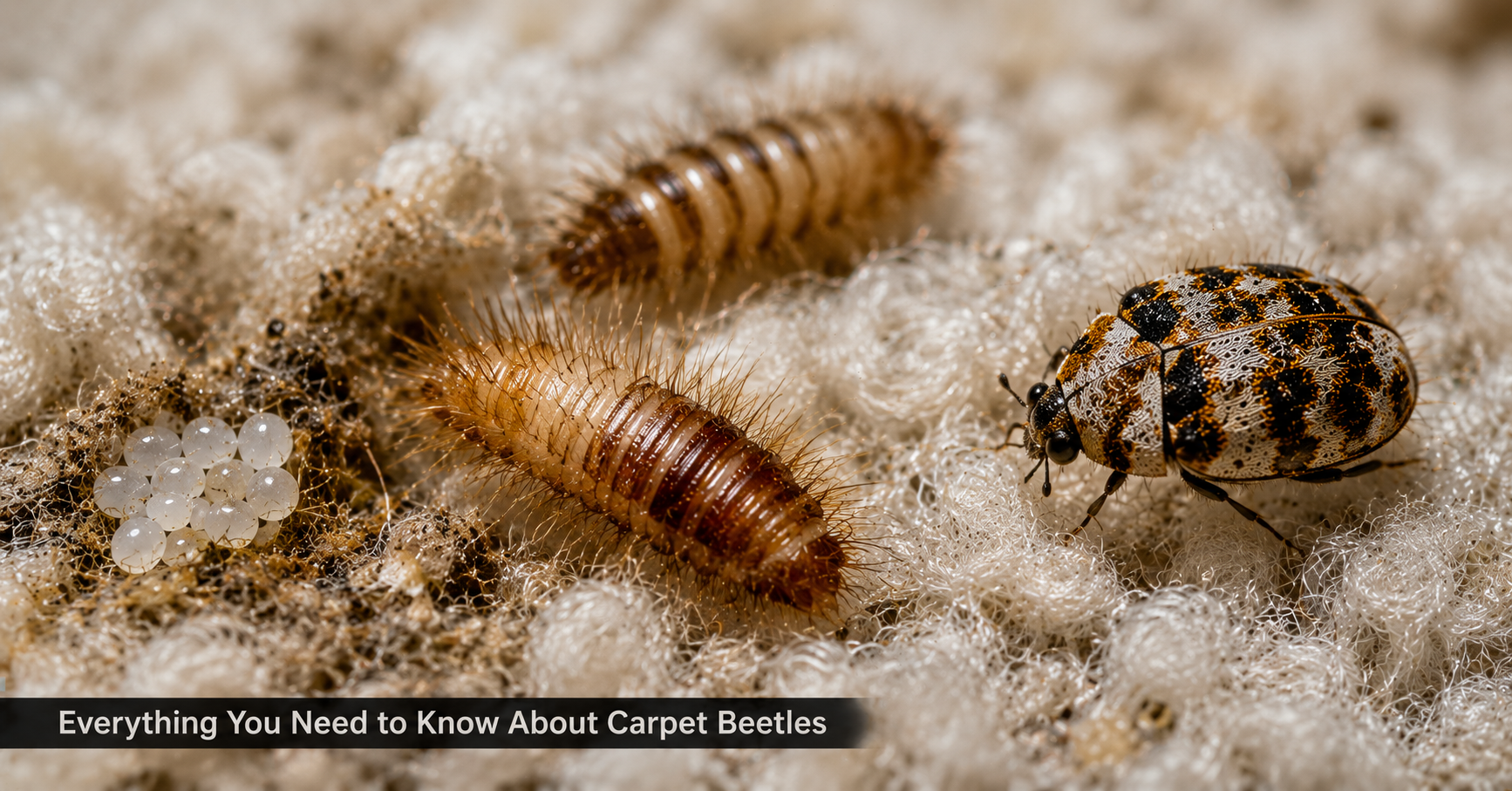
Carpet beetle larvae often look like tiny, brown, fuzzy caterpillars. Depending on the species, they may have a tapered body, lighter and darker bands, and tufts of stiff hairs near their rear end.

Some black carpet beetle larvae have a noticeably long tuft of hairs at the end of their bodies.
Young bed bugs, which are called nymphs, look completely different.
They have six legs and a flattened body resembling a smaller adult bed bug. Newly hatched nymphs can be pale yellowish or nearly translucent before feeding.
Comparing the Young Insects
If you’ve found a brown, fuzzy little insect near your baseboards or underneath furniture, there’s a reasonable chance you’re looking at a carpet beetle larva rather than a bed bug.
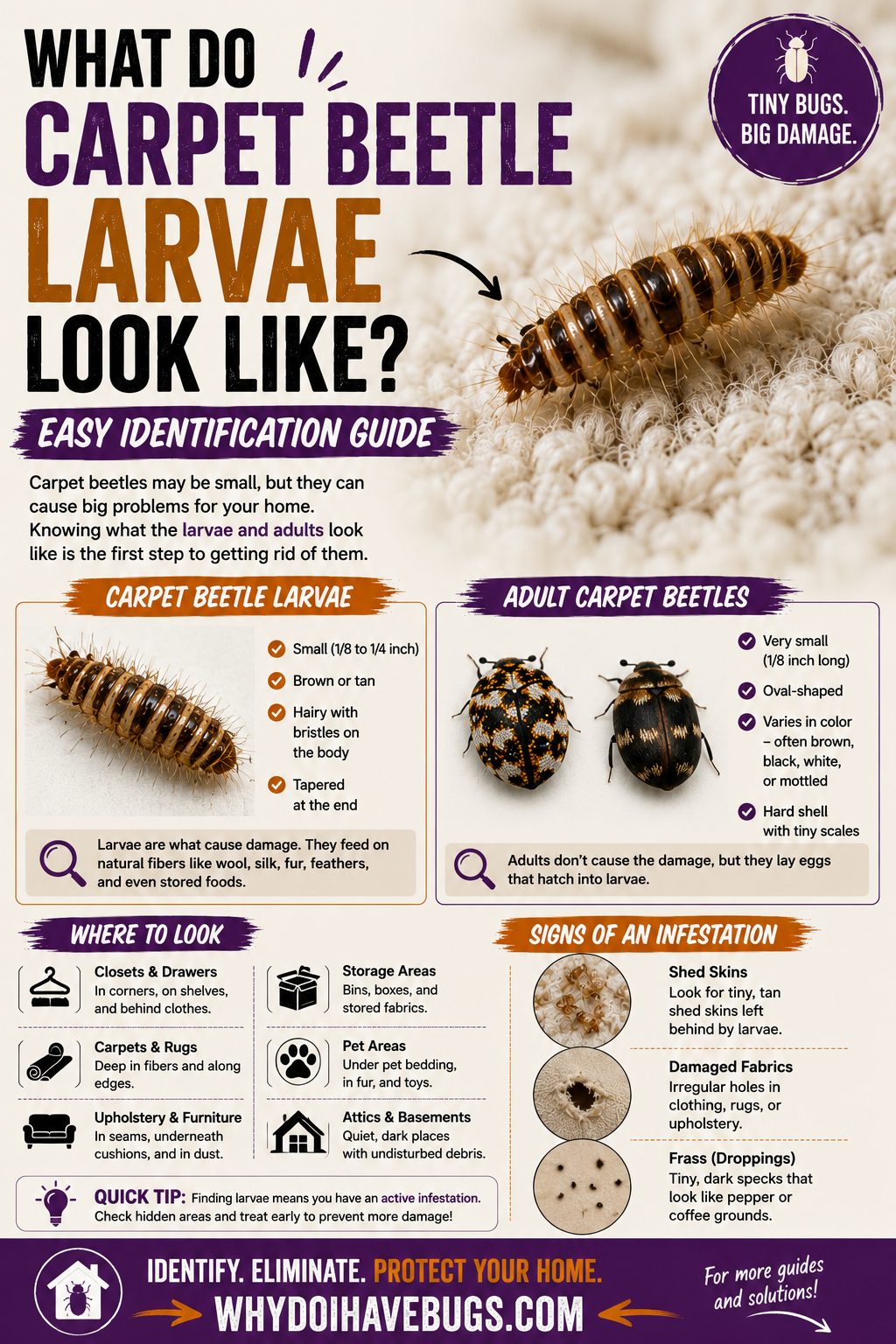
Our detailed guide to identifying carpet beetle larvae explains their shapes, colors, and common appearances in more detail.
One important detail: carpet beetle larvae aren’t actually caterpillars. They’re the immature stage of beetles, and they eventually develop into winged adults.
3. Bed Bugs Feed on Blood, but Carpet Beetles Do Not
Their feeding habits couldn’t be much more different.
Bed bugs are blood-feeding insects. They typically seek out sleeping people, feed for several minutes, and retreat to protected hiding places.
Although they prefer to feed at night, bed bugs can also feed during daylight under certain circumstances.
Carpet beetles don’t feed on human blood.
Adult carpet beetles commonly feed on pollen and nectar outdoors. Some adults don’t feed much at all.
The larvae, however, are a different story.
Carpet beetle larvae feed on susceptible materials containing animal proteins, particularly keratin. These can include wool, feathers, fur, hair, silk, and accumulated debris containing dead insects.
This explains why carpet beetles sometimes show up in places that have nothing to do with carpeting.
A closet containing wool clothing, an upholstered chair filled with animal-based materials, or an old bird nest near the house may provide a food source.
Can Carpet Beetles Bite Like Bed Bugs?
Carpet beetles do not bite people to feed on blood.
However, their larval hairs can irritate sensitive skin and sometimes trigger an itchy rash.
This is one reason the two insects get confused.
Someone might wake up with itchy red spots, discover a carpet beetle larva nearby, and assume they’ve found the insect that bit them.
Skin reactions alone can’t reliably establish which insect caused the problem.
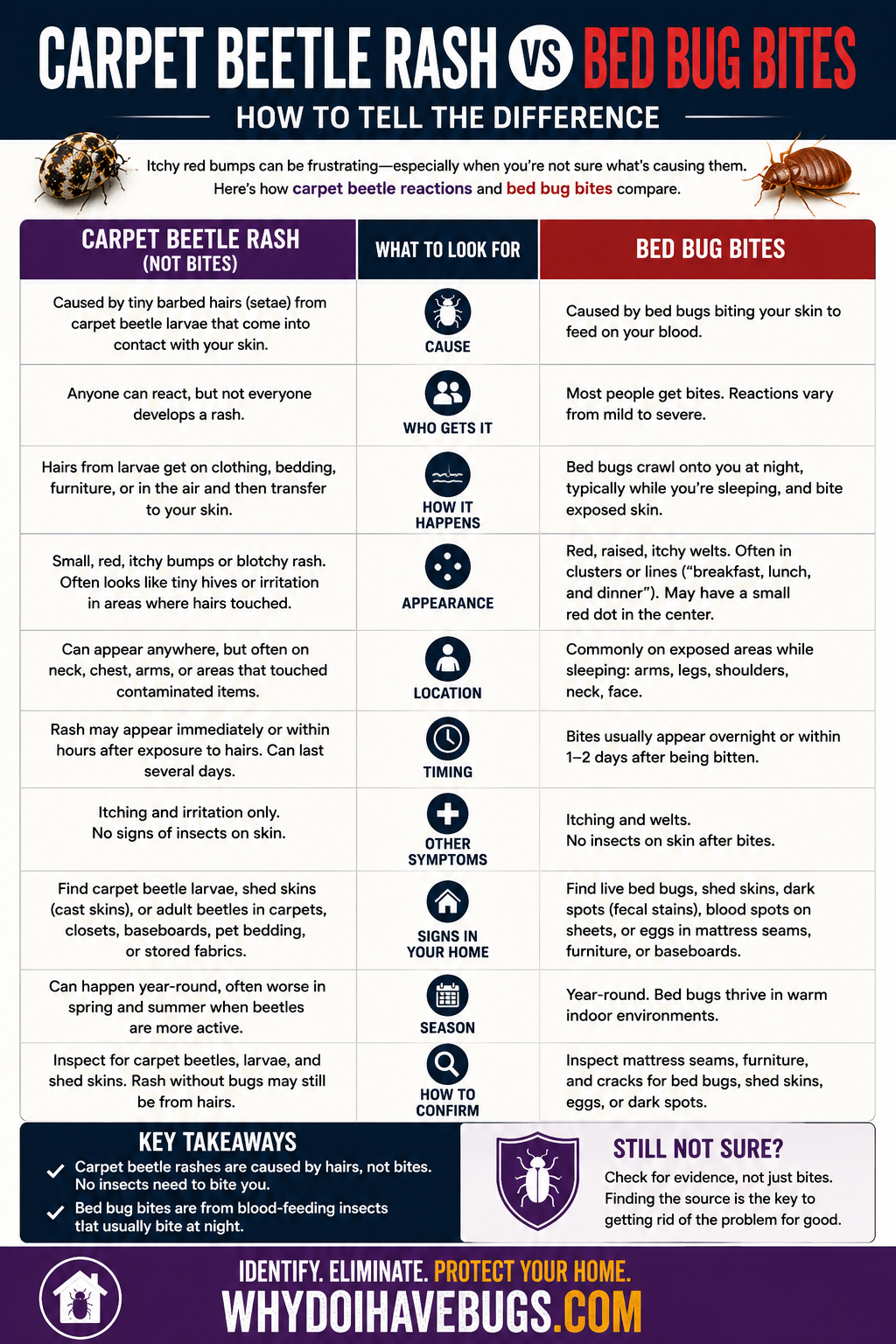
We’ve covered this particular issue separately in our guide to carpet beetle rashes compared with bed bug bites.
For identification purposes, it’s much better to find the insect or physical evidence of its activity than to rely on marks on your skin.



4. Adult Carpet Beetles Can Fly, but Bed Bugs Cannot
Another useful distinction is whether the adult insect can fly.
Adult carpet beetles have wings and can fly.
In fact, you may notice small carpet beetles around windows during spring or early summer because adults are attracted to light and often gather near windows.
Some may have flown indoors from outside.
Bed bugs cannot fly.
Their wings are reduced to small, nonfunctional structures, so they must crawl to move around.
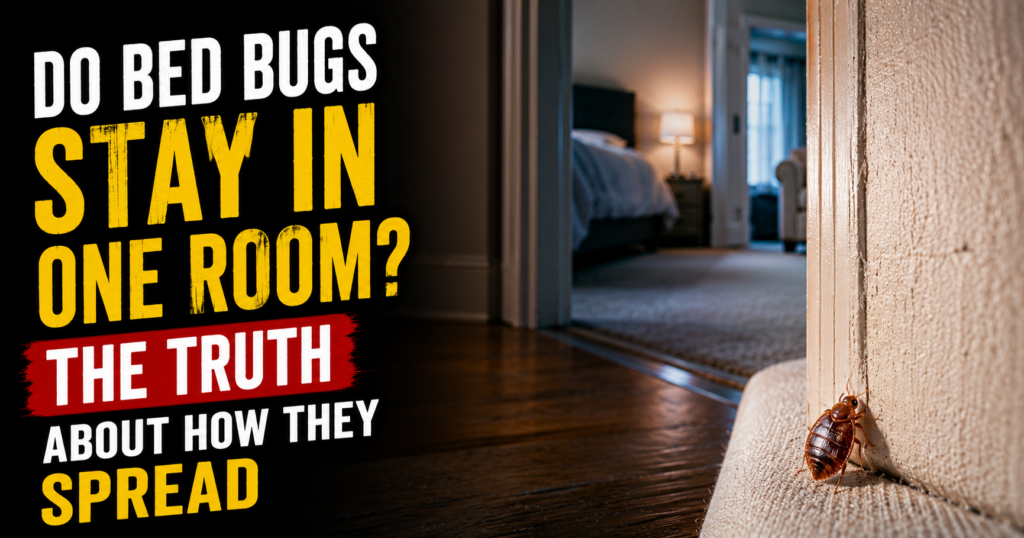
Bed bugs can still spread between rooms and locations. They can also hitchhike in luggage, belongings, and furniture.
But if you actually watch a small beetle fly across the room, you can rule out an ordinary bed bug.
Keep in mind that carpet beetle larvae cannot fly either. Only adults have fully developed wings.
5. Bed Bugs Hide Near Sleeping Areas, While Carpet Beetles Seek Food Sources
Both insects can be found in bedrooms, but their preferred hiding places reflect their feeding habits.
Bed bugs tend to gather in protected spaces near places where people sleep or rest.
These hiding places may include mattress seams, box springs, headboards, bed-frame joints, furniture crevices, and cracks near the bed.
Carpet beetle larvae are usually associated with places that contain suitable food materials.
You might discover them along baseboards, beneath furniture, in closets, under carpets or rugs, or around stored fabric items.
Adult carpet beetles are also commonly discovered near windows.
What If You Find One on Your Bed?
Don’t assume the insect is a bed bug simply because it’s on your mattress.
Carpet beetles and their larvae can occasionally be found on bedding, especially when animal-based fibers, hair, lint, or other suitable debris are present nearby.
The more important question is whether the insect has a rounded beetle-shaped body, a hairy larval body, or the flattened appearance of a bed bug.
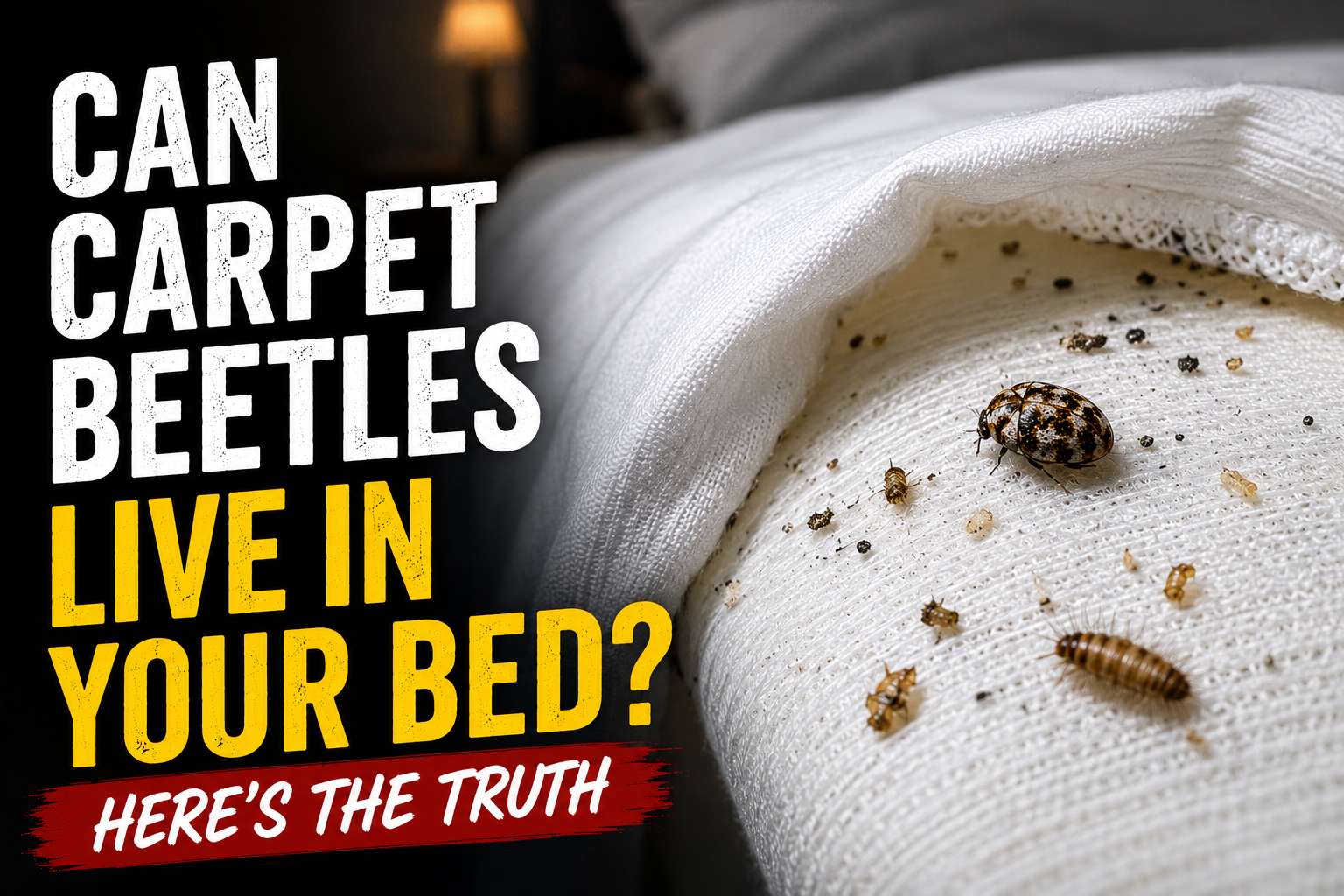
If your discovery happened in a bedroom, our article about why carpet beetles sometimes appear in beds covers that situation in greater detail.
6. Bed Bugs Leave Different Signs Than Carpet Beetles
Sometimes you can’t find the insect that caused the problem.
Instead, you find something suspicious while changing bedding, vacuuming, or moving furniture.
In those situations, the surrounding evidence can help.
Common Signs of Bed Bugs
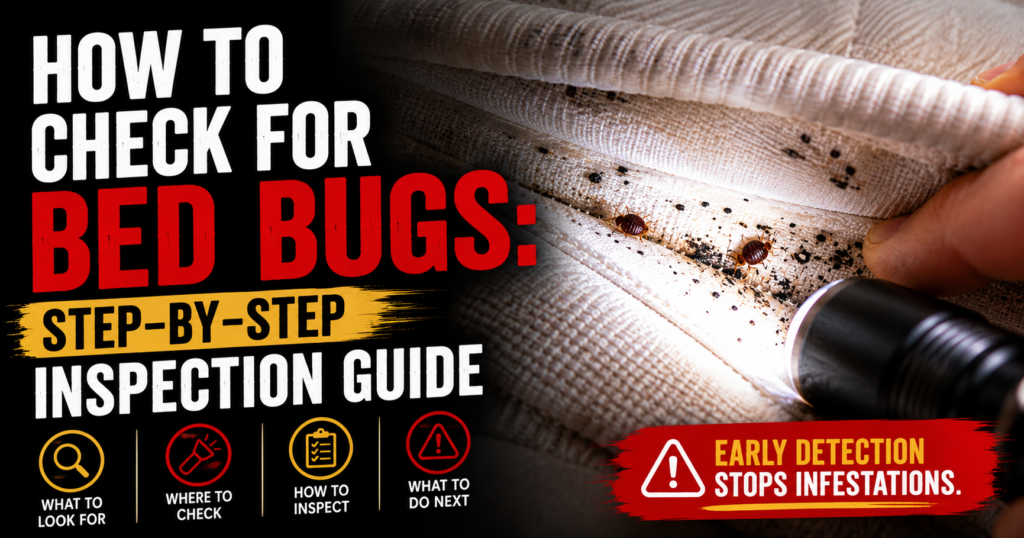
A bed bug infestation may leave dark fecal spots around mattress seams, furniture joints, and other hiding places.
You might also notice rusty or reddish stains on bedding, pale shed skins, small whitish eggs, or live bed bugs.
These signs deserve a careful inspection, particularly when several appear together in a concentrated area near where someone sleeps.
However, dark marks or red stains alone aren’t enough to prove bed bugs are present.
Common Signs of Carpet Beetles
Carpet beetles tend to leave a different kind of evidence.
The larvae may damage wool clothing, rugs, upholstery, and other materials made from susceptible natural fibers.
You might notice small irregular holes in clothing, damaged fabric in hidden areas, or empty, bristly larval skins.
Unlike the pale, flattened exoskeletons left by bed bug nymphs, carpet beetle larval skins are generally brownish and hairy.
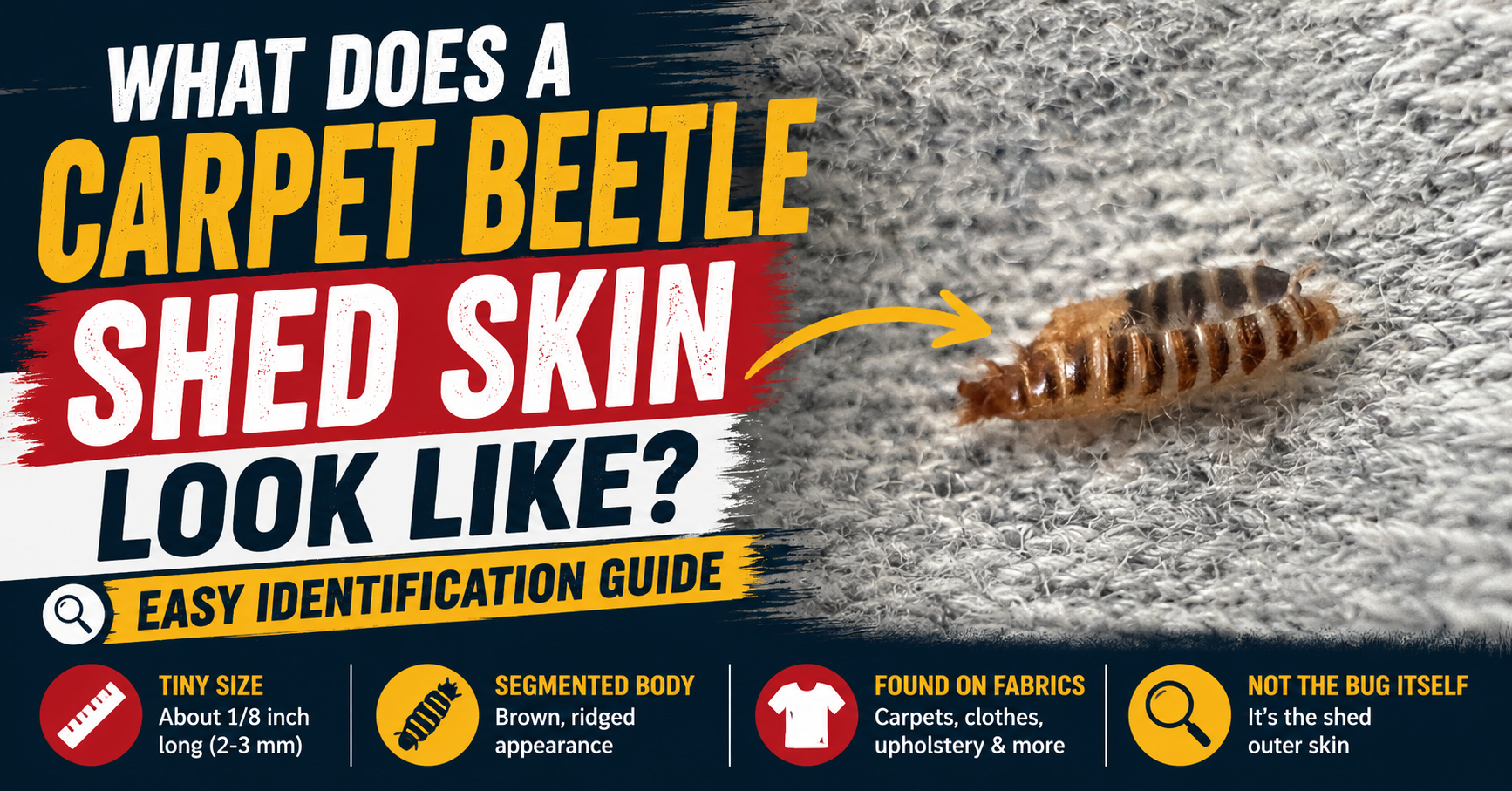
These empty skins can be particularly confusing because people often discover them long after the actual larva has moved away. A visual guide to carpet beetle shed skin identification can help distinguish an empty larval shell from other insect remains.
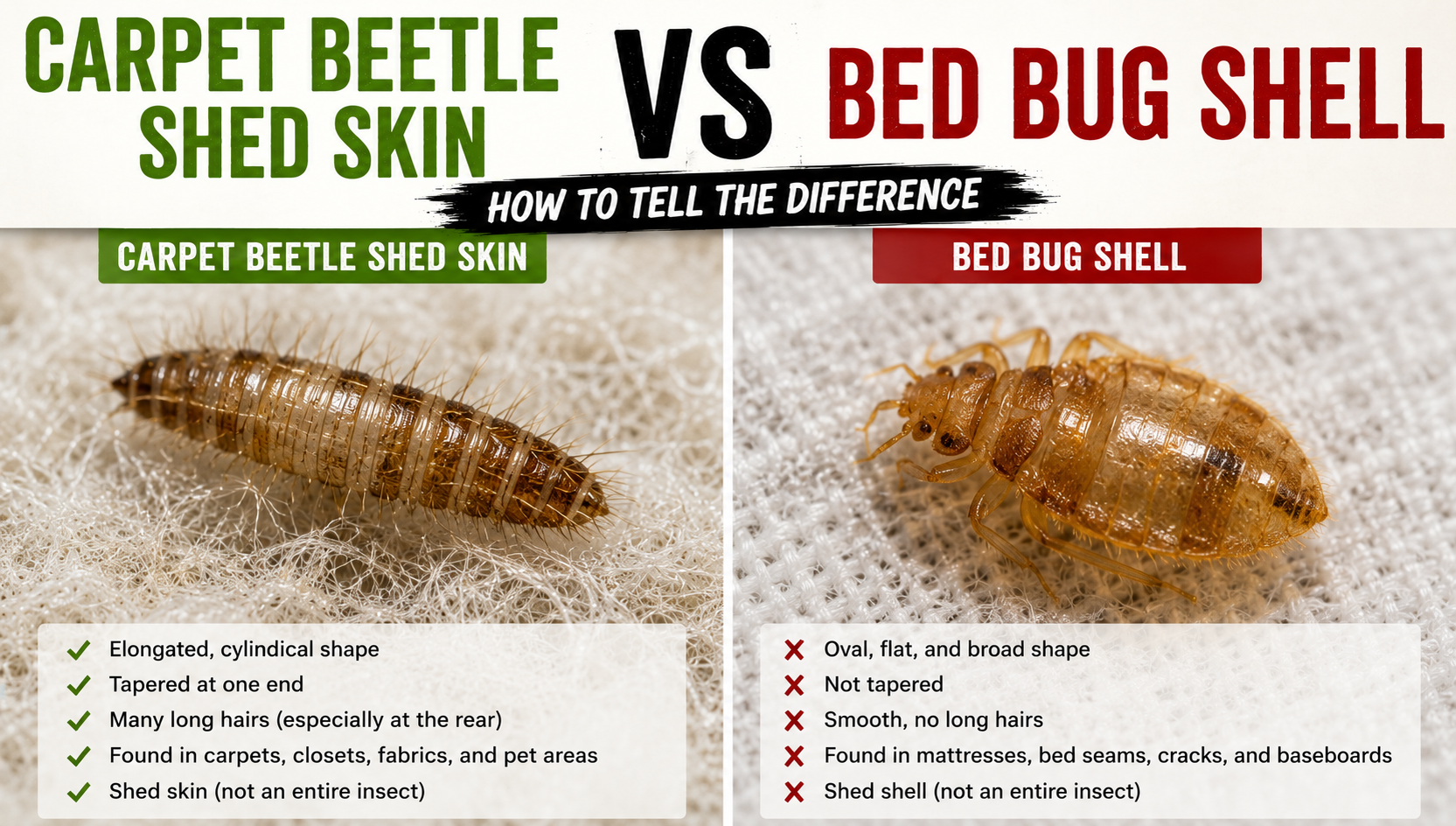
For a closer examination, see our guide comparing carpet beetle shed skins and bed bug shells.
7. Carpet Beetles and Bed Bugs Require Different Solutions
This is why correctly identifying the insect matters.
If you mistake carpet beetles for bed bugs, you could spend money on products and treatments that don’t address the actual problem.
If you mistake bed bugs for carpet beetles, you might delay dealing with an infestation that can spread through furniture and belongings.
What to Do If You Find Carpet Beetles
If you confirm carpet beetles, focus on locating the source of the larvae.
Inspect susceptible fabrics, stored clothing, upholstery, areas under furniture, pet hair accumulations, and other places where animal-based debris may collect.
Thorough vacuuming can remove larvae, shed skins, lint, and some food sources.
Wash or dry-clean affected fabrics according to their care labels. Properly store clean wool clothing and other vulnerable items in sealed containers.
Also check whether an old bird or rodent nest, inaccessible debris accumulation, or another hidden material source might be supporting the insects.
Spraying random areas of the bedroom without finding the source may do little to solve the underlying problem.
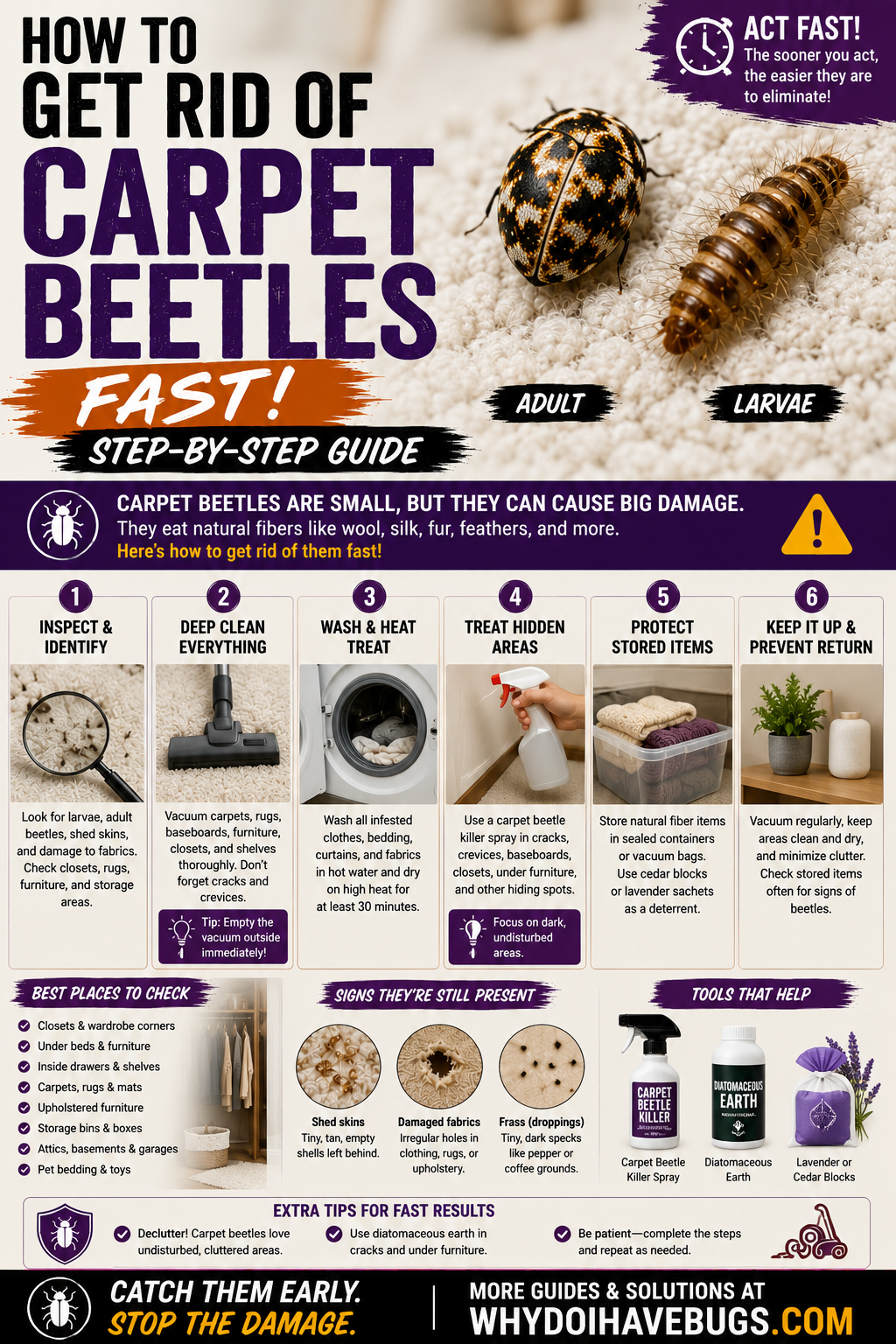
Our step-by-step carpet beetle removal guide goes into the complete inspection and treatment process.
What to Do If You Find Bed Bugs
If you suspect bed bugs, avoid immediately moving bedding, furniture, or belongings between rooms.
Careless movement can spread the insects.
Collect a specimen if possible and have it positively identified. A licensed pest-control professional or local extension service may be able to help.
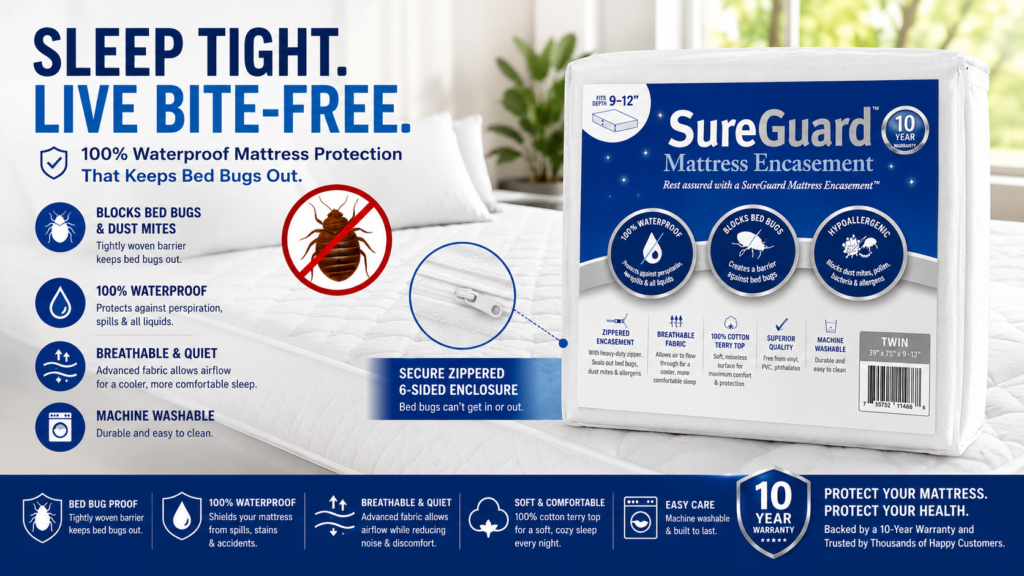
Once bed bugs are confirmed, use an integrated approach involving careful inspection, appropriate laundering and heat treatment, vacuuming, mattress encasements when suitable, monitoring, and professional treatment when necessary.
Do not apply pesticides to mattresses or bedding unless the product label specifically permits that use.
Bug bombs and random applications of household insecticides are not reliable substitutes for a proper bed bug treatment plan.

How to Tell Whether Your Tiny Brown Bug Is a Carpet Beetle or Bed Bug
If you have an unidentified insect in front of you, here’s how I’d examine it.
Start with a clear photograph. Place the insect against a light background if you can do so without losing it.
Use your phone’s close-up camera or a magnifying glass to inspect the body.
Then compare these seven details:
- Body shape: Is it rounded and beetle-like, or broad and flat?
- Body surface: Does it have a smooth-looking, segmented abdomen or a hard-looking beetle shell?
- Color: Is it reddish-brown, black, or covered in mottled scales?
- Hair: Is the insect a noticeably bristly larva?
- Wings: Did you actually see the adult insect fly?
- Location: Was it near a window, stored fabric, or a mattress seam?
- Other evidence: Are there fabric holes, bristly shed skins, fecal spots, or live insects in hiding places?
No single detail always gives you the answer.
A combination of body shape, life stage, and surrounding evidence is much more reliable.
If the insect is badly damaged or too small to examine clearly, don’t guess from a blurry photograph alone.
You can temporarily keep it in a small sealed container for closer examination or expert identification.
Frequently Asked Questions
Are carpet beetles commonly mistaken for bed bugs?
Yes. Both can appear in bedrooms, and people sometimes mistake carpet beetle larvae or adult beetles for bed bugs. Their physical differences are usually noticeable under magnification.
Are carpet beetles smaller than bed bugs?
Adult carpet beetles are often smaller than adult bed bugs, although sizes vary by carpet beetle species. Size alone isn’t a dependable way to identify either insect.
Do carpet beetles look like baby bed bugs?
Not usually. Carpet beetle larvae tend to have elongated, hairy bodies. Baby bed bugs, or nymphs, are flattened, six-legged insects that resemble miniature adults.
Can a carpet beetle look reddish-brown?
Yes. Some carpet beetles are predominantly brown or very dark, and their exact color depends on the species and condition of the insect. Look at body shape and other physical characteristics rather than color alone.
Do carpet beetles leave black spots like bed bugs?
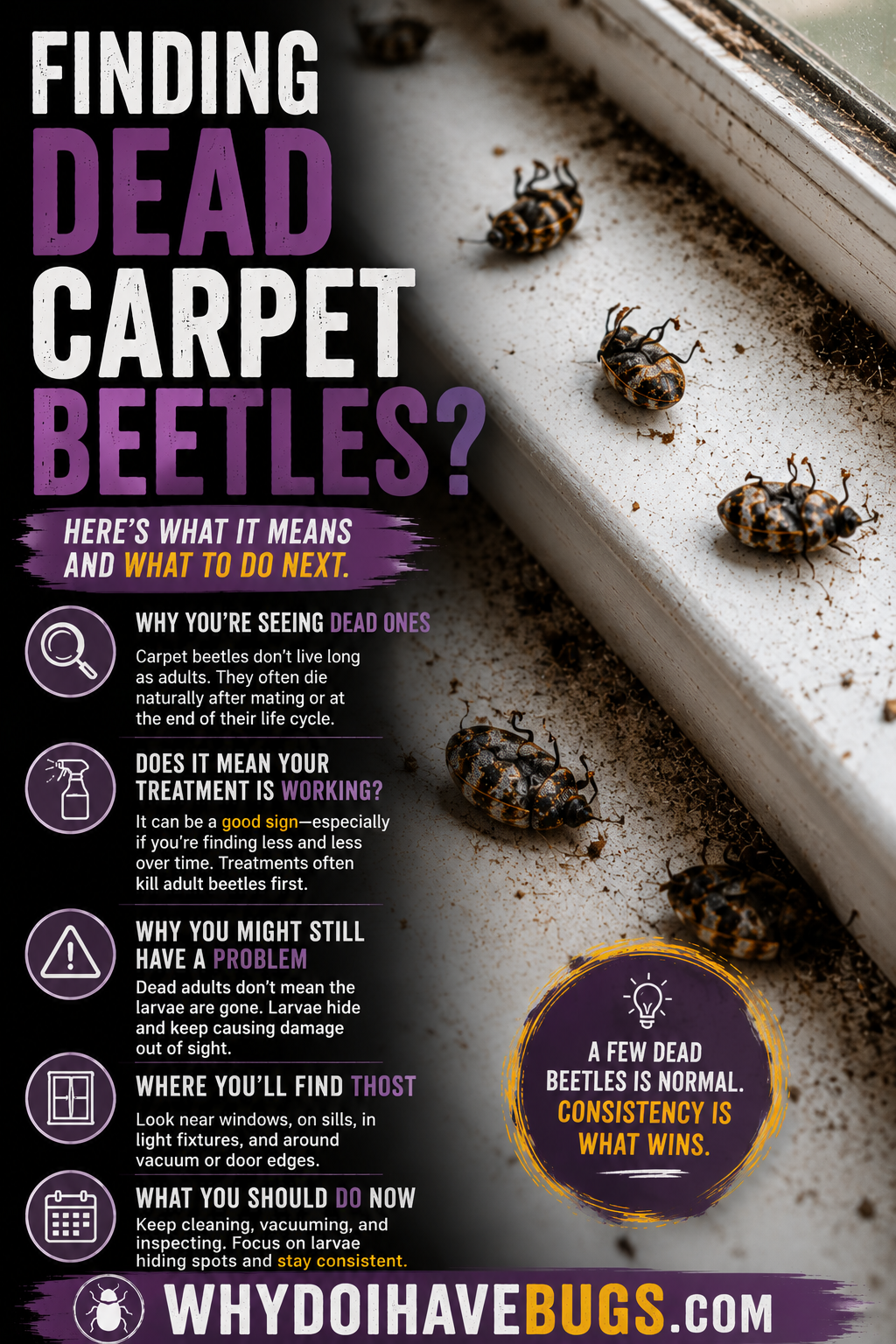
Carpet beetle larvae can leave tiny droppings around their feeding areas, but they don’t produce the characteristic blood-derived fecal spotting associated with bed bug harborages. Black spots alone aren’t proof of either insect. If you have identified carpet beetles rather than bed bugs, Carpet beetle larvae provides context for deciding whether dead adults signal continuing activity.
Can you have carpet beetles and bed bugs at the same time?
Yes. Having one insect doesn’t prevent the other from being present. If you’re seeing evidence that points to both, investigate each possibility separately.
Which is worse, carpet beetles or bed bugs?
Bed bugs are generally more difficult and disruptive to eliminate because they feed on blood and can establish infestations around sleeping areas. Carpet beetles are primarily pests of susceptible fabrics and other animal-based materials. A substantial carpet beetle infestation can still cause costly damage.
What’s the fastest way to know which bug I found?
Examine a clear, close-up image of the actual insect. A flattened, visibly segmented bed bug looks different from a rounded adult carpet beetle or a bristly carpet beetle larva. If identification remains uncertain, save a specimen and ask a qualified professional to identify it.
About the Author: Written by the pest identification team at Why Do I Have Bugs, where we help homeowners identify common insects, understand why they appear, and find practical ways to deal with them.