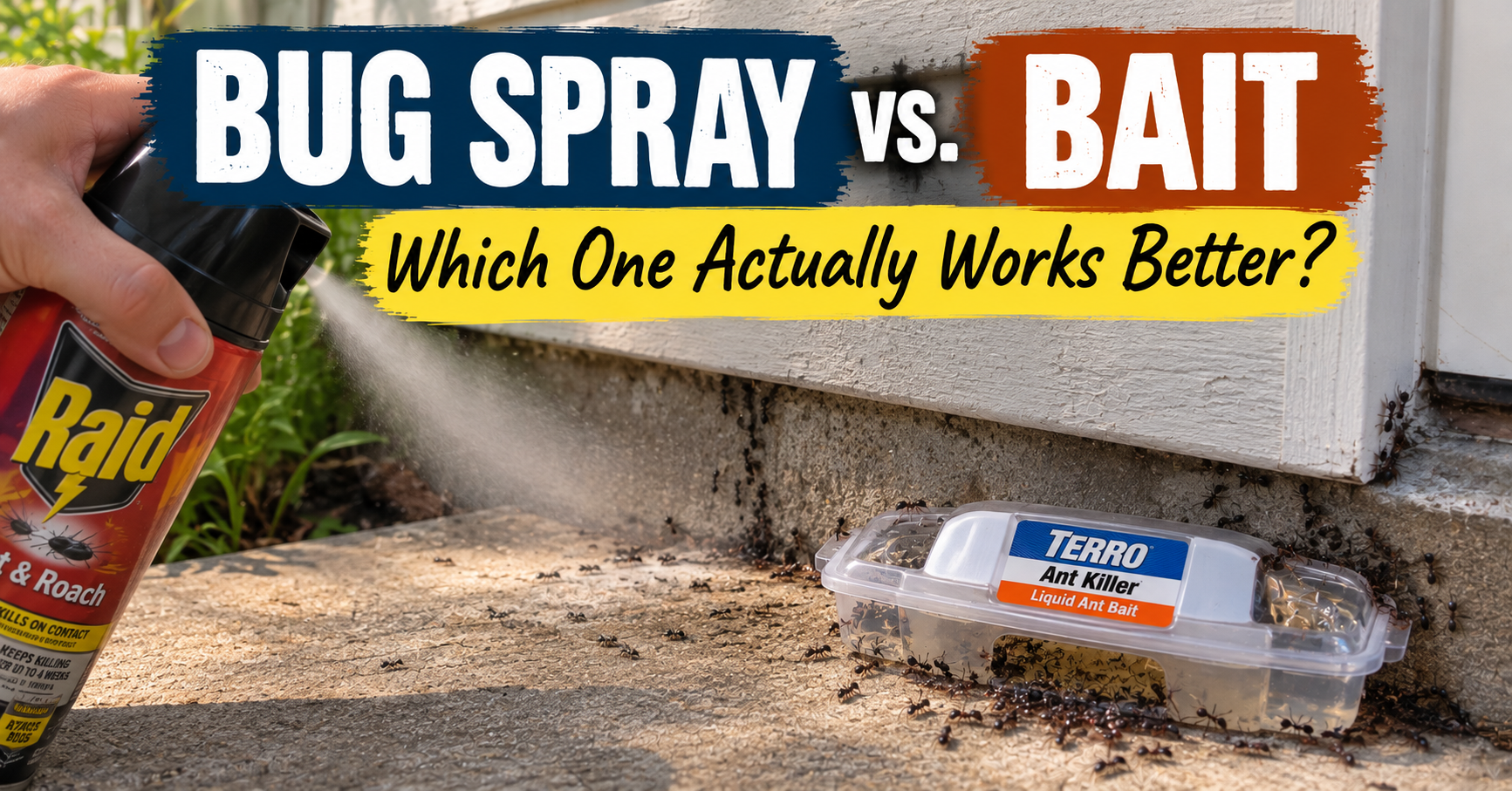
Bug spray feels like the obvious answer when you see insects in your house. You spot a line of ants, a roach under the sink, or a bug crossing the floor, and spraying gives you an instant result. The problem is that instant results are not always the same as actually getting rid of the problem.
Spray and bait have completely different jobs. Spray is usually best for insects you can see, bugs entering from outdoors, and quick targeted control. Bait is usually the better choice when ants or roaches are coming from a hidden nest, wall void, appliance gap, or other place you cannot reach. Once you understand that difference, you can stop buying products that only give you a few quiet days.
The Biggest Difference Between Bug Spray and Bait
Bug spray generally kills insects when it hits them or when they crawl across a treated surface. It is built for speed, direct control, and sometimes a residual barrier.
Bait is food mixed with an insecticide. The insect is supposed to eat it and return to the nest or hiding place before it dies. That delay is intentional. It gives the bait time to reach insects you never see.
If you only need to kill one bug in front of you, spray makes sense. If you need to affect a colony or hidden roach population, bait is usually the stronger long-term tool.


When Bug Spray Is the Better Choice
I use spray when the problem is occasional, visible, and clearly coming from outside. Spiders near a garage door, earwigs after rain, crickets in the basement, beetles by a window, and a large outdoor roach that wandered inside are good examples.
A labeled perimeter spray can also be useful around the outside of the home. Treating approved areas around doors, windows, the foundation, utility openings, garage edges, and cracks can reduce the number of crawling insects that get indoors in the first place.
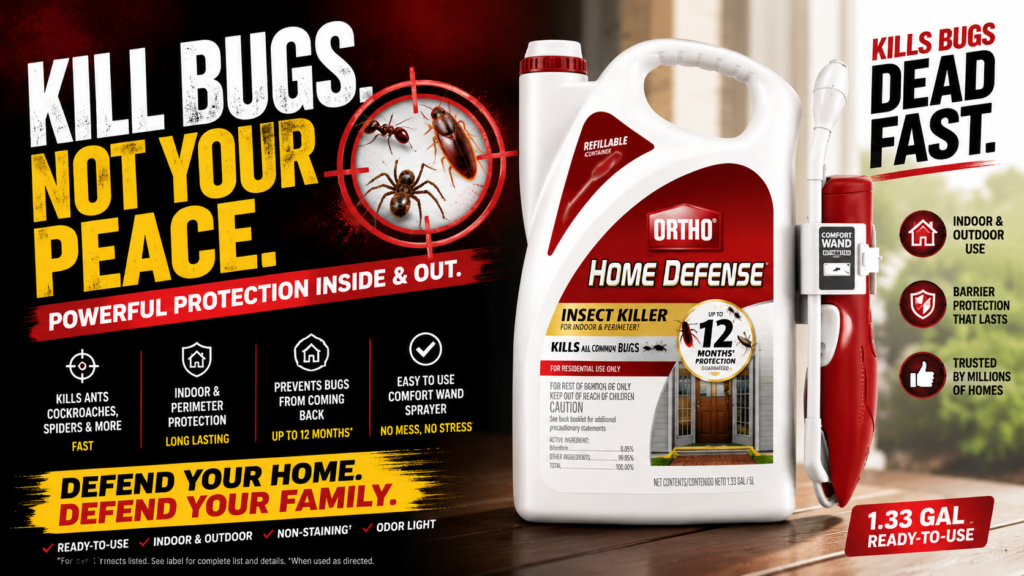
See where Ortho Home Defense fits into a home pest-control plan if your main issue is bugs coming in from around the exterior of the house.
Spray works best when it is targeted. I do not recommend coating every baseboard or spraying wide open areas just because you found one insect. Put the product only where the label permits and where the insect is actually traveling.


When Bait Is the Better Choice
Bait is the better choice when you are seeing the same pests over and over in the same room, especially ants and roaches.
Those pests are rarely just wandering around alone. Ants are connected to a colony. Roaches are usually traveling between food, water, and protected hiding places. Killing the few that come into view can reduce activity for a little while without affecting what is happening behind the scenes.
Bait lets the insect help carry the treatment to the problem. It is not dramatic, but it is often more effective than a quick spray when the source is hidden.
Why Ants Often Need Bait Instead of Spray
A trail of ants in the kitchen can make you want to spray every one of them immediately. That may kill the visible workers, but it often does not eliminate the colony.
Foraging ants travel back and forth between food and their nest. If you give them an attractive bait, they feed on it and carry it back. That gives the treatment a chance to reach the colony instead of only knocking down the workers you happen to see.
You may even notice more ants around bait during the first day or two. That can be a good sign because it means the workers found it and are recruiting others to the food source.
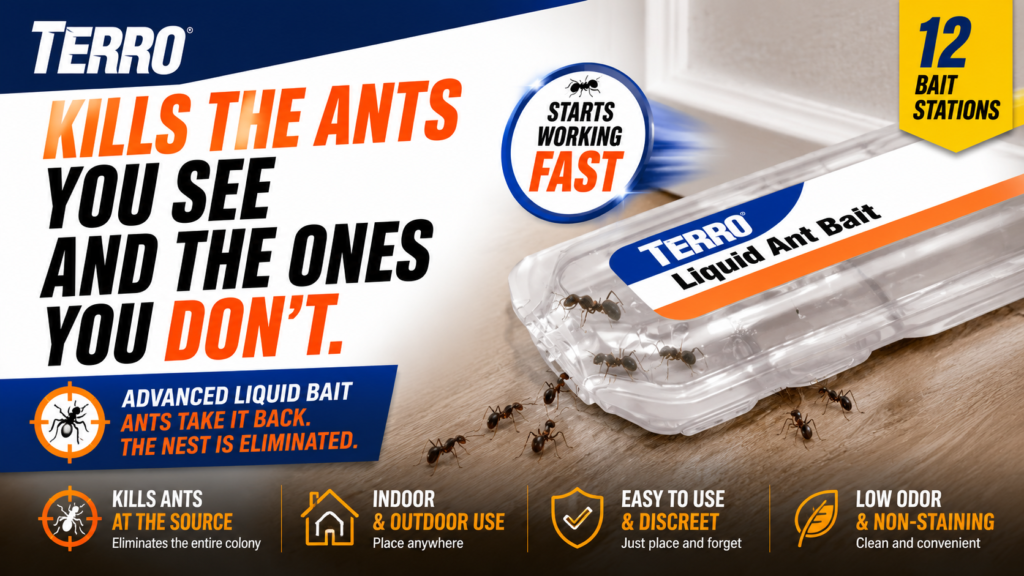
My Terro liquid bait station review explains what to expect if the activity at a bait station initially looks worse instead of better.
Keep the bait away from water and do not spray directly around it. Spraying the route can kill or repel the workers before they carry bait back, which works against the whole purpose of using it.

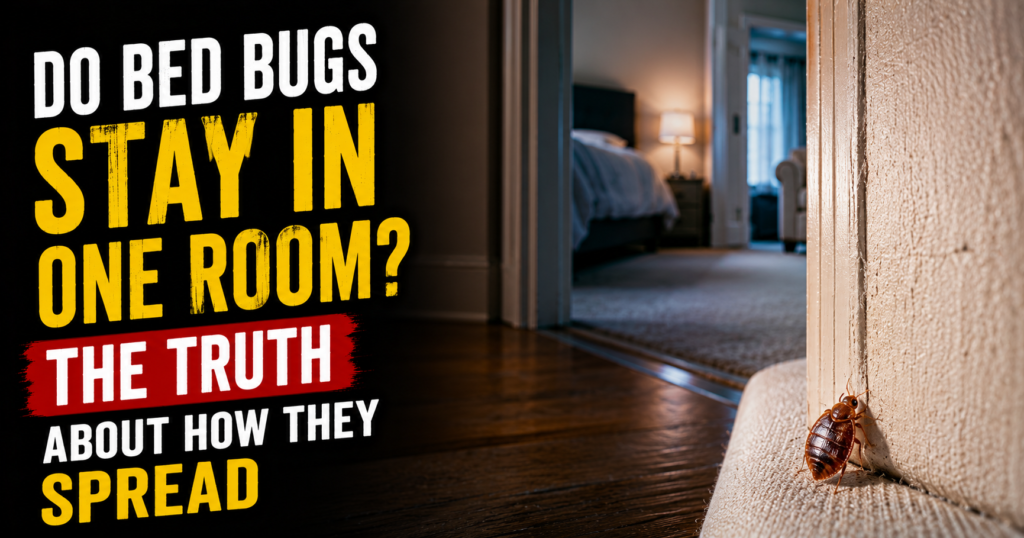

When Ant Spray Still Has a Place
Spray is still useful for an ant problem in the right situation. It can handle a few stray ants immediately, and a perimeter treatment can reduce ants that are entering through exterior gaps.
The better overall approach is to use bait for the active indoor trail while improving the outside conditions that keep drawing ants close to the home. Seal gaps around pipes and windows, keep food sealed, clean sticky spills, and trim plants that touch the siding.
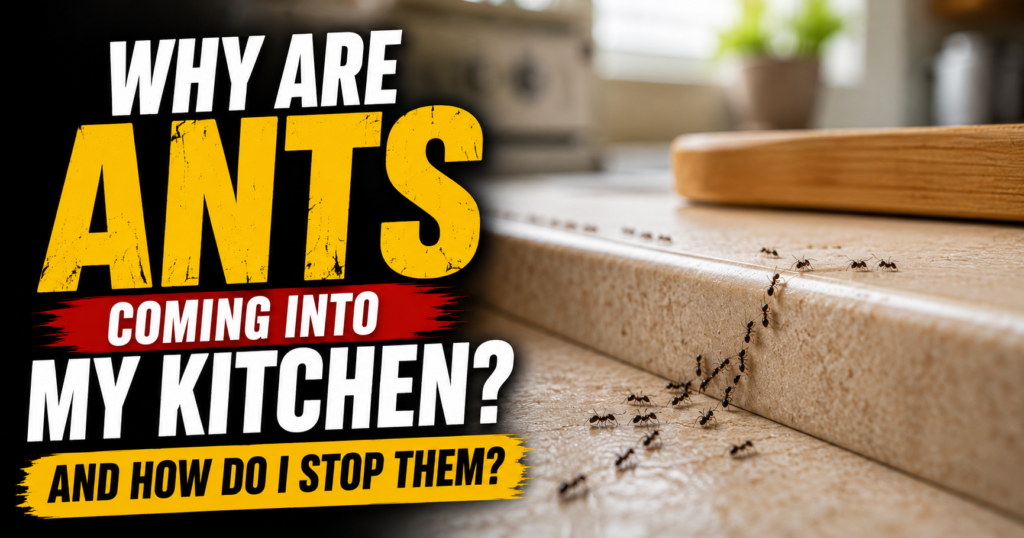
If ants keep appearing in the same kitchen area, the source may not be the countertop. Find the common reasons ants keep coming into kitchens before deciding the bait or spray has failed.
Why Roaches Often Need Gel Bait
Roaches are one of the clearest examples of why more spray is not always better. They hide in cracks behind cabinets, under appliances, around plumbing, inside hinges, and in wall voids. A spray can kill the roach crossing the floor, but it may never reach the group hidden nearby.
Gel bait is made to be placed in tiny amounts close to those hiding areas. Roaches feed on it, return to protected spaces, and can expose other roaches through normal feeding and contact behavior.
For repeated small roaches in a kitchen or bathroom, bait should usually do most of the work. Combine it with cleaning, fixing water leaks, sealing gaps, and getting rid of cardboard or clutter that gives roaches a protected place to hide.
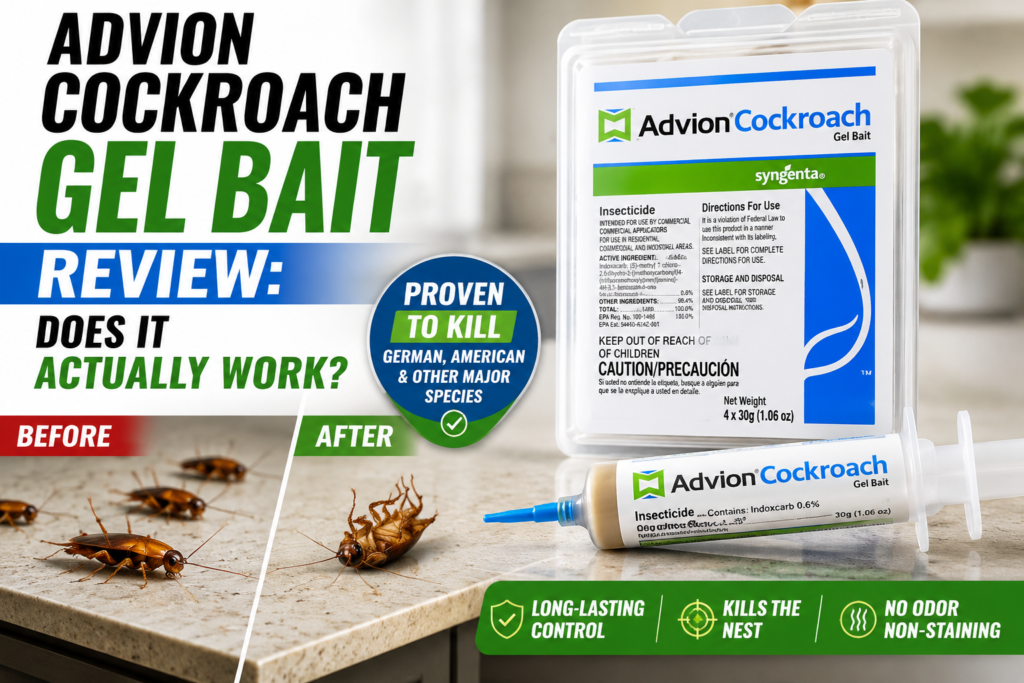
Read my honest take on Advion cockroach gel bait if you need a closer look at what gel bait can realistically do.
Should You Still Spray Roaches You See?
Yes, if you need to. Killing a roach you see does not hurt anything when it is done as a direct, limited treatment away from bait placements.
The mistake is relying on spray alone for a recurring roach problem. A roach you see may be one of many, and repeated broad spraying can drive roaches farther into protected cracks where they are harder to reach.
Use gel bait in the places roaches hide. Use a contact spray only for direct knockdown when needed. Keep food sealed, clean grease around appliances, dry sinks overnight, and remove unnecessary cardboard.
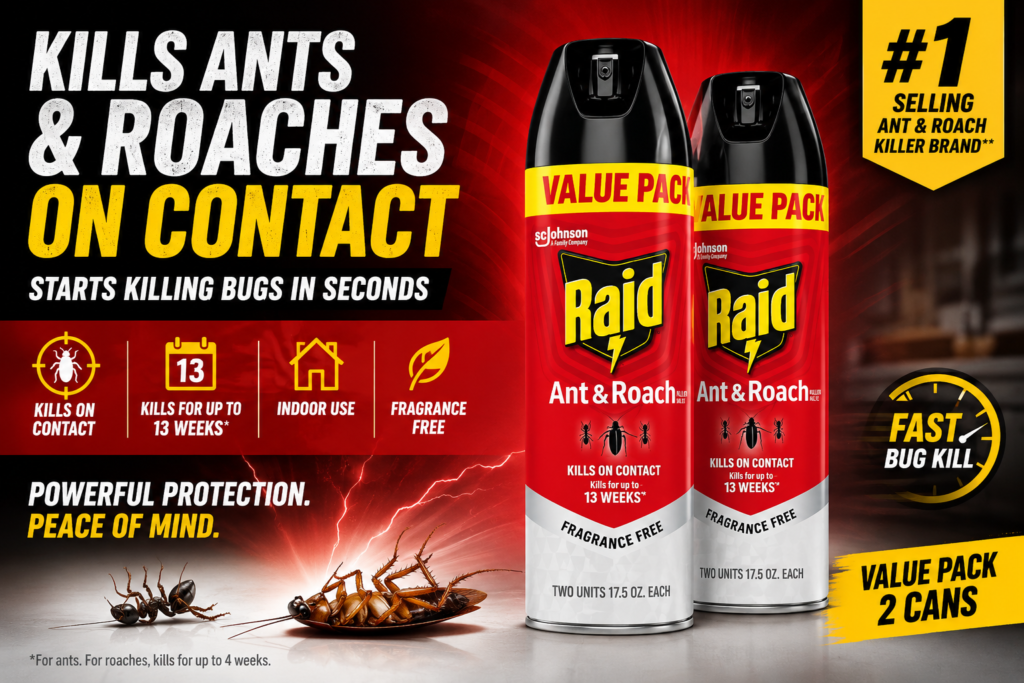
See what Raid Ant & Roach Killer can actually handle before expecting an aerosol can to solve a large indoor roach issue by itself.
Why You Should Not Spray Around Bait
Spray and bait can be part of the same overall plan, but they should not overlap in the same spot.
Ants and roaches need to find and feed on bait. If you spray the trail, the crack, or the surface right around the bait, you can kill them before they eat enough or make the area unpleasant enough that they avoid it.
Keep bait in protected places where pests are already traveling. Use spray separately at outdoor entry points, for a bug you see, or in other locations that are not part of the bait route.
Think of bait as the tool that works quietly in the background. Think of spray as the tool for immediate control and prevention around the home’s edges.

Spray Is Better for Occasional Invaders
Not every bug problem needs bait. Earwigs, centipedes, millipedes, crickets, silverfish, spiders, and many beetles are often occasional invaders. They may come in because of rain, damp conditions, outdoor lights, vegetation touching the house, or a gap around a door.
Those pests are often better managed with a combination of exclusion and a carefully applied perimeter treatment. Fix door sweeps, seal cracks around utility lines, repair window screens, clear leaves and mulch away from the foundation, and improve drainage if the area stays wet.
Bait does not solve every pest problem just because it works well for ants and roaches. Matching the product to the insect is what matters.
Spray Is Not the Best Answer for Bed Bugs
Bed bugs are a situation where a general household spray can make things worse by scattering bugs or missing their hiding places. They hide in mattress seams, bed frames, furniture joints, wall gaps, baseboards, and nearby clutter. Because mattresses are one of those hiding areas, bed bug mattress protection can complement careful inspection and targeted bed bug treatment.
They also do not feed on ordinary food bait. Their control requires careful identification, targeted treatment, inspection, monitoring, and often professional help for a large infestation.
Do not assume a product that works for a roach or an ant is a bed bug treatment. The label must specifically list bed bugs, and the product must be used exactly where its instructions allow.

Where Boric Acid Fits In
Boric acid is another option people often hear about for ants and roaches. It is not a spray, and it is not the same as ready-to-use bait.
It can be useful when placed in a very light, dry application in protected locations insects travel through. Thick piles are usually a mistake because insects may avoid them, and exposed powder is easier to disturb.
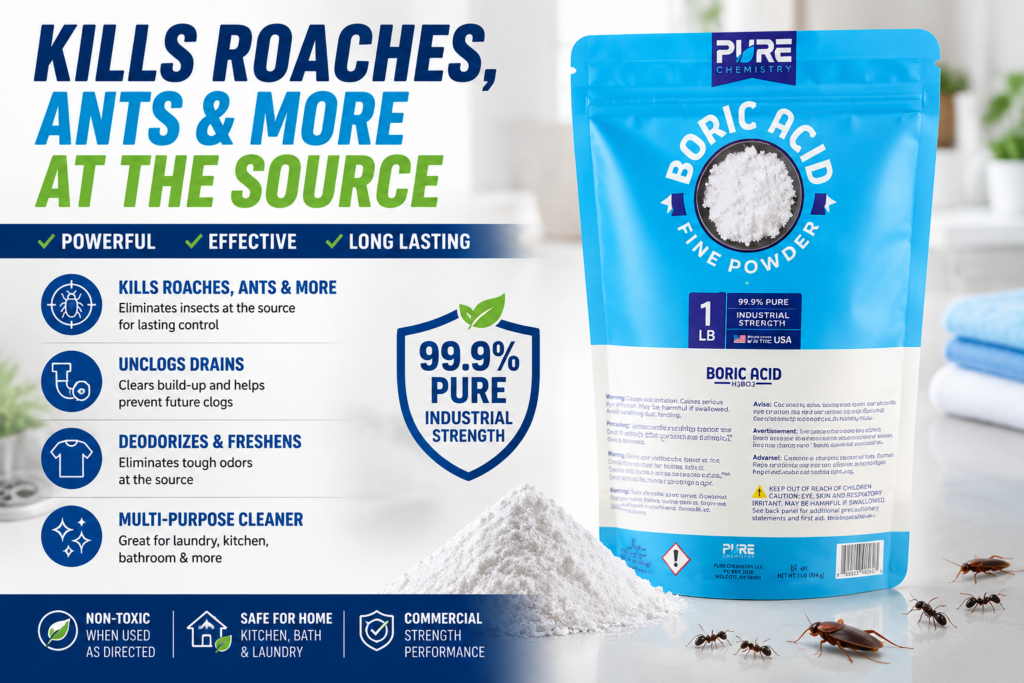
Boric acid should never be spread across counters, food areas, or open places where children or pets can reach it. Learn when boric acid is actually useful for ants and roaches before treating it like a catch-all home remedy.
A Simple Way to Choose the Right Product
If you see one bug and do not see a pattern, remove it and look for an entry point. You likely do not need to treat the entire house.
If bugs are getting in around doors, windows, a garage, or a basement, focus on sealing entry points and consider an exterior perimeter spray labeled for that use.
If ants are following an indoor trail, use bait and leave it alone long enough for workers to take it back.
If small roaches keep showing up near food, water, cabinets, or appliances, use gel bait and clean up the conditions that are helping them survive.
If you are unsure what insect you have, take a clear photo and identify it before buying anything. A pest-control product only works well when it is meant for the pest and the place you need to treat.
How Long Does Spray Take to Work?
A direct contact spray can work in minutes. Residual spray takes longer because an insect must walk across a treated surface and pick up enough product for it to work.
The result also depends on whether the product is still fresh, whether you applied it to an approved travel route, and whether rain, cleaning, or dust has reduced the treatment.
Fast knockdown is useful, but it is not proof that the entire problem is solved. Continue watching the area for new activity and address the source if bugs keep returning.
How Long Does Bait Take to Work?
Bait is slower than spray because it is supposed to be carried back to other insects. Ant bait may take several days to reduce a steady trail. Roach bait can take a week or more to make a major difference, especially when there are eggs or several hidden areas involved.
Give bait a fair chance before switching products. Replace it only as the label directs or when it has been eaten, dried out, contaminated, or left in place longer than recommended.
If there is no feeding at all, the insect may have another food source, the bait may not match what it wants right now, or you may be dealing with a different pest than you thought.
Common Mistakes That Make Both Products Seem Useless
Spraying directly around bait is a common mistake. It interrupts the insects that need to carry the bait back.
Changing products every day is another. A properly placed bait needs time, while a perimeter spray needs the insect to cross the treated area.
Leaving food, moisture, and hiding places in place can also overwhelm a treatment. Dirty dishes overnight, crumbs behind appliances, pet food left out, leaking plumbing, overfilled trash, and stacks of cardboard all give pests reasons to stay.
The last mistake is using too much. Pest control works better when products are targeted. Follow the label, treat the actual travel routes, and fix the conditions that helped the insects get comfortable in the first place.
Frequently Asked Questions
Is bug spray or bait better for ants?
Bait is usually better for a continuing indoor ant trail because workers can carry it back to the colony. Spray is more useful for isolated ants and labeled exterior entry-point treatment.
Is bug spray or bait better for roaches?
Gel bait is usually better for recurring indoor roaches because it reaches roaches hiding in cracks, cabinets, and appliance areas. Spray is useful for killing a roach you see but rarely solves an established problem by itself.
Can I use bug spray and bait at the same time?
Yes, but keep them separate. Do not spray on or around bait placements. Use bait where ants or roaches are feeding and use spray elsewhere for direct treatment or approved exterior prevention.
Why are there more ants after I put out bait?
More activity at first can mean the ants found the bait and are recruiting other workers to it. Leave the bait available and avoid spraying the trail while they are feeding.
Should I use a bug bomb instead of spray or bait?
Usually no. Foggers often do not reach pests hidden in cracks, appliances, furniture, or walls. Targeted bait, limited spray, cleaning, and sealing entry points are usually more useful.
What if bait is not working?
Make sure the bait is still fresh, protected from water, and placed close to the active route. Remove competing food sources and do not spray nearby. If activity continues, confirm the pest identification and inspect for the nest, moisture source, or hidden food source.
Caleb Warren writes practical pest-control guides for WhyDoIHaveBugs.com, helping homeowners choose the treatment that fits the real bug problem instead of just the bug they happen to see.