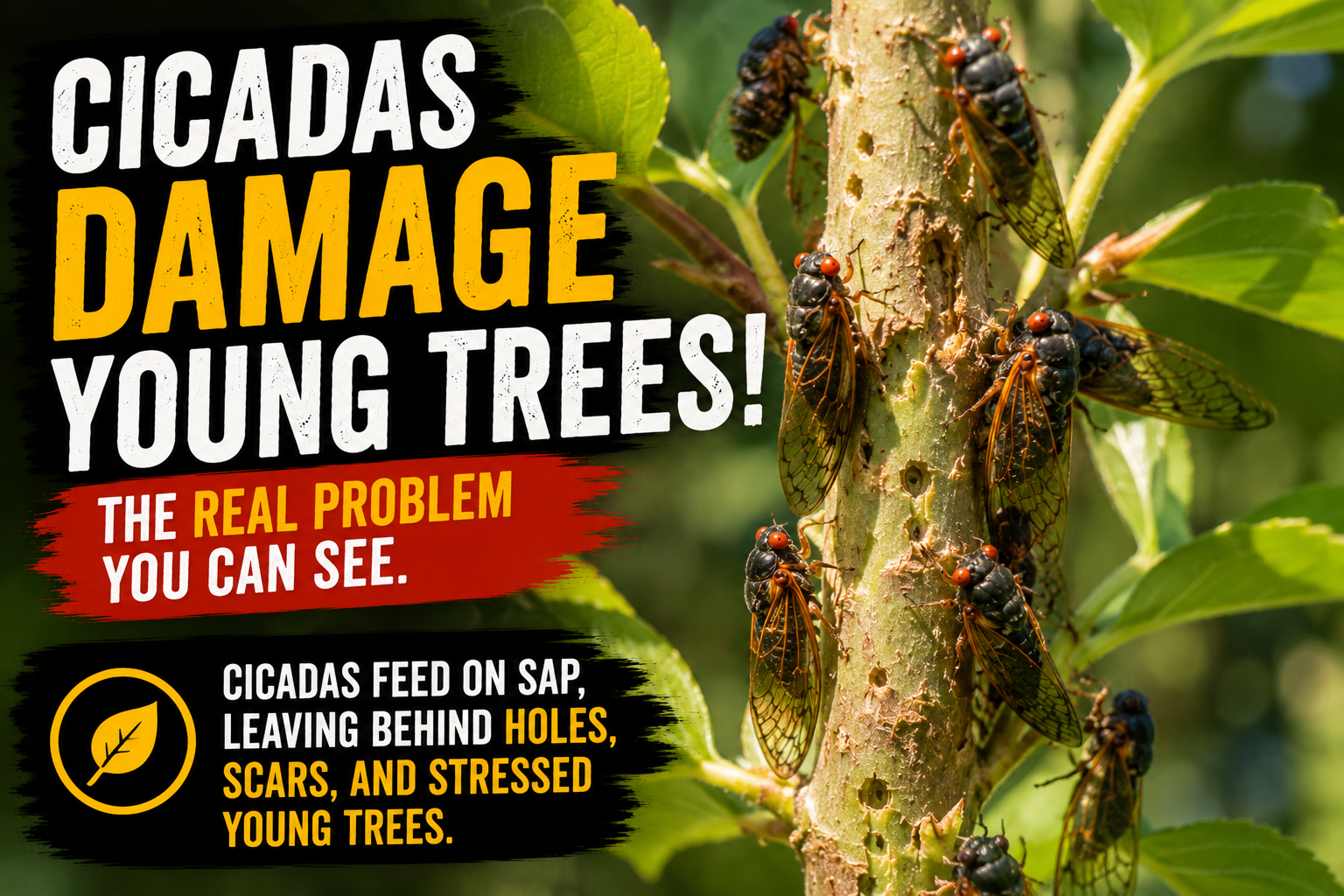
A mature shade tree can usually handle cicadas with little lasting trouble. A newly planted fruit tree is different. When cicadas are active in big numbers, females can lay eggs in enough small branches to weaken the tree, kill the top leader, or leave you with a rough-looking tree that needs corrective pruning later.
The good news is that young trees are easy to protect when you do it before cicadas start laying eggs. Fine netting over the entire canopy is the most dependable approach, and it works without spraying the tree or harming the helpful insects around it.
How Do Cicadas Damage Young Trees?
Cicadas do not chew leaves or eat a tree bare. The damage happens when a female cuts a row of small slits into a young twig and places eggs inside.
Those cuts can interrupt water flow to the outer portion of the twig. The leaves beyond the injury wilt, turn brown, and remain attached in a little dead cluster. This is called flagging.
On a mature tree, losing a few twig tips is usually not a major issue. A young fruit tree may only have a handful of important branches, though, so cicadas can have a much bigger effect on its shape and growth.


Which Trees Need Protection From Cicadas?
I would protect trees that are newly planted, small, or still developing their main structure. This is especially important during a large periodical cicada emergence.
The trees I would prioritize include:
- Apple, pear, peach, plum, cherry, and pawpaw trees.
- Newly planted shade trees.
- Young maples, redbuds, dogwoods, and ornamental trees.
- Nursery trees waiting to be planted or sold.
- Grapevines and woody shrubs with thin new growth.
- Trees with a trunk smaller than about two inches across.
A big established tree normally does not need protection. Covering a large mature tree is difficult, unnecessary, and likely to cause more trouble than the cicadas would.


When Should You Cover Young Trees?
Put netting on before females begin laying eggs. Cicadas usually emerge first, then spend time calling and mating before egg laying becomes heavy.
If you wait until brown branch tips are already showing up, the damage has already happened. Netting can still protect undamaged growth, but it cannot fix twigs that were already cut.
Watch for cicada calls, shed shells on trees, and adults gathering on branches. If you know a major emergence is expected in your area, have netting ready before cicadas begin appearing in large numbers.
Use Fine Mesh Netting, Not Bird Netting
The best cover is fine insect netting with openings smaller than one-quarter inch. The mesh needs to keep cicadas from getting through it while still allowing air, rain, and sunlight to reach the tree.
I would not use loose bird netting. The openings are usually large enough for cicadas to pass through, and birds can become tangled in it.
You can find fine insect netting sold as garden insect barrier fabric, mosquito netting, or orchard netting. Choose a piece large enough to drape over the whole canopy without pulling tightly against the branches.


How to Net a Young Tree for Cicada Protection
- Choose a calm day so the netting is easier to manage.
- Gently drape the net over the entire tree canopy.
- Leave enough slack that branch tips are not pressed tightly against the mesh.
- Pull the lower edge down around the trunk.
- Gather and secure the netting at the trunk with twine, soft rope, clips, or a reusable strap.
- Check that cicadas cannot crawl or fly through an opening at the bottom.
- Inspect the cover after strong wind, rain, or storms.
The netting does not need to be airtight. It simply needs to create a physical barrier between cicadas and the small twigs where they lay eggs.
Do Not Wrap Netting Tightly Around the Tree
A cover that is pulled tight against branch tips does not give much protection. Cicadas can still reach twigs through the mesh, and wind can rub the netting against tender leaves or bark.
Think of the netting as a loose tent over the tree. A simple frame made from tall stakes or lightweight PVC can help hold it away from the canopy if the tree is wide or the branches are delicate.
For a small upright fruit tree, a loose drape secured at the trunk is often enough.



How Long Should the Netting Stay On?
Keep netting on during the egg-laying period, then remove it once cicada activity has clearly dropped off. Depending on the species and weather, that may be several weeks.
Do not leave a net over the tree for the whole growing season. Extended covering can reduce airflow, make routine pruning and inspections harder, and interfere with pollination if the tree is still flowering.
Check the tree every few days. Once adult cicadas have mostly disappeared and you are no longer seeing fresh egg-laying activity, remove the cover and store it for the next emergence.
What if Your Fruit Tree Is Flowering?
A fruit tree needs pollinators to set fruit, so covering it tightly while it is in bloom can create another problem.
For most fruit trees, heavy cicada activity happens after spring bloom has finished. If your tree still has open flowers while cicadas are active, uncover it for short periods when pollinators are working or wait to net until fruit has set.
A small tree that needs serious protection is often better off losing a little fruit than losing the central leader or several major branches. The tree can make more fruit next year. Rebuilding a damaged young tree takes longer.

Do Insecticides Protect Trees From Cicadas?
I would not rely on insecticide sprays to protect young trees from cicadas.
Sprays only work if they reach the cicadas directly, and new adults can continue flying into the area. They can also harm bees, predatory insects, and other wildlife that uses the same tree.
Netting is more dependable, has no harvest or pollinator concern, and protects the tree without trying to kill every cicada in the yard.
What to Do if Cicadas Already Damaged Your Tree
Once a twig has been cut for egg laying, you cannot reverse the injury. The best response is to help the tree recover and avoid excessive pruning.
Remove a branch tip only when it is snapped, hanging, or clearly dead. Make a clean cut back to healthy wood, an outward-facing bud, or a healthy side branch.
If the top leader was damaged, choose one strong upright shoot below the injury to become the new leader. Remove competing upright shoots gradually as the replacement leader develops.
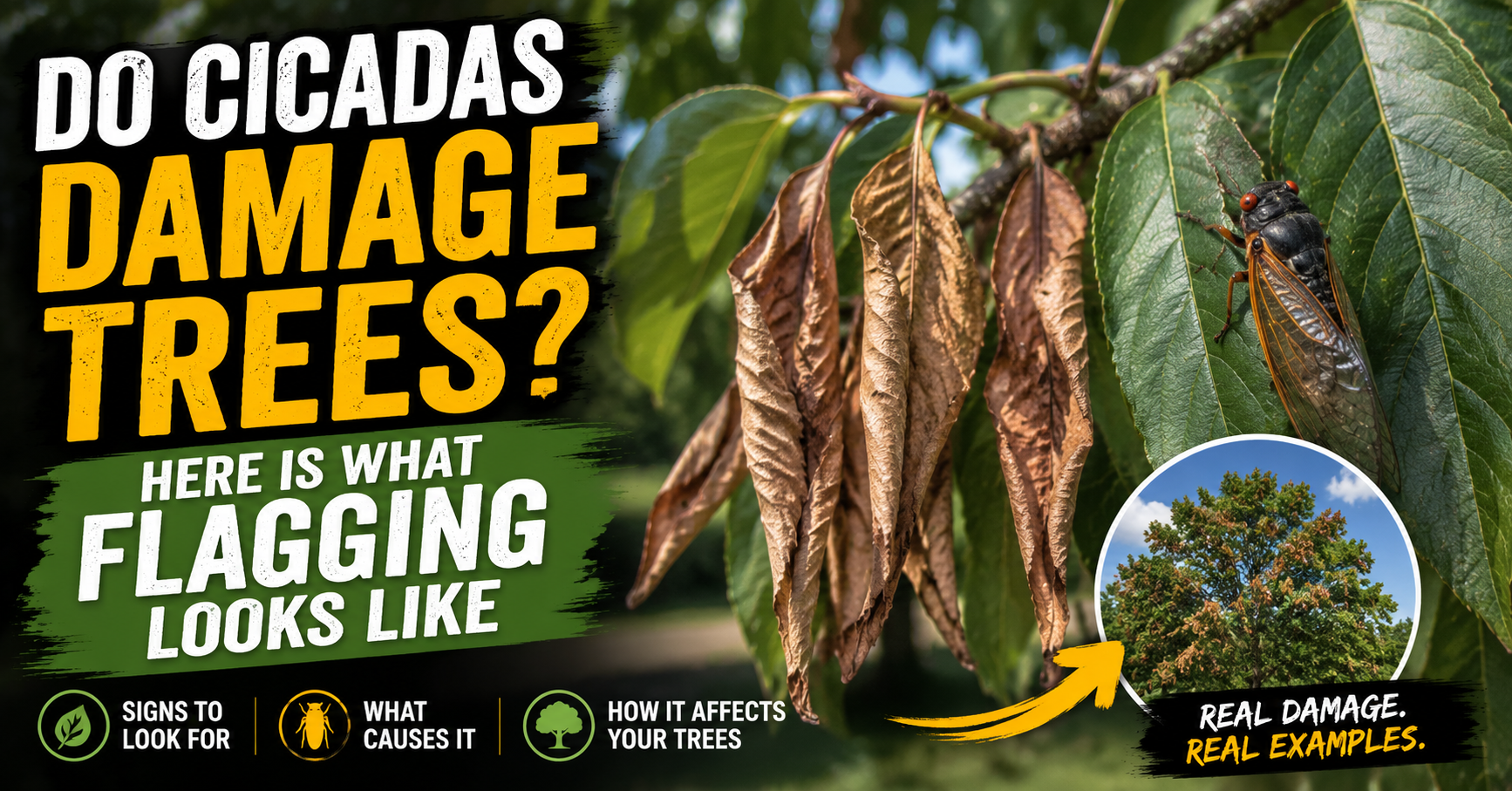
For help confirming whether the damage is actually from cicadas, compare your tree with this guide to cicada flagging.
Keep the Young Tree From Getting Stressed
A tree recovering from branch injury needs simple, steady care.
- Water deeply during dry weather.
- Keep grass and weeds from competing right against the trunk.
- Add a two- to three-inch mulch layer over the root zone.
- Keep mulch several inches away from the trunk.
- Avoid heavy fertilizer applications that push weak, fast growth.
- Protect the trunk from mower and weed-trimmer damage.
The goal is not to force the tree to grow quickly. It is to keep it healthy enough to replace damaged twigs naturally.
Do Cicadas Damage Tree Roots?
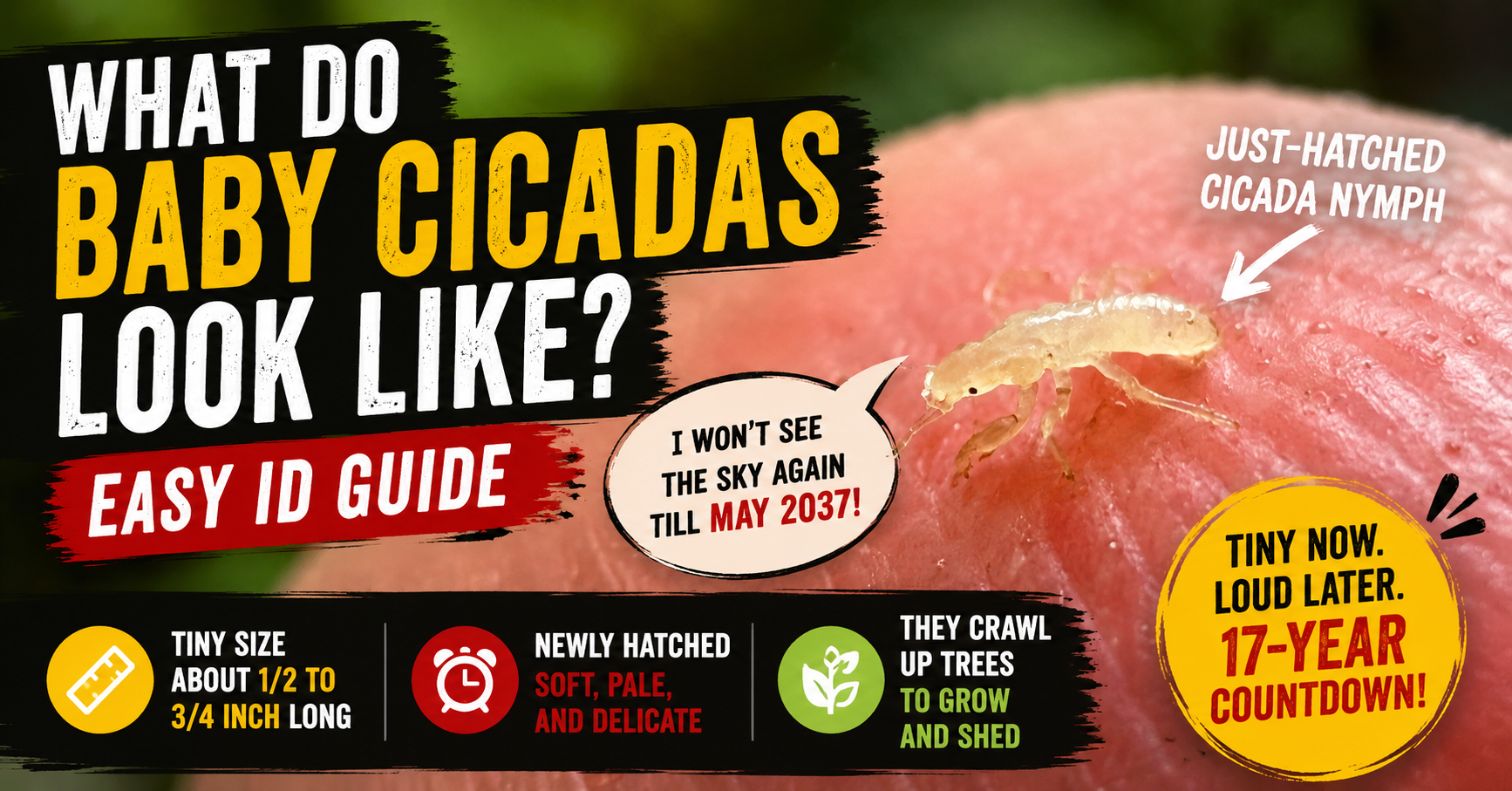
Cicada nymphs feed from roots underground, but this does not normally injure healthy trees. Cicadas have lived alongside native trees for a very long time. The cicada nymphs underground guide explains what these hidden young cicadas look like and how they eventually emerge.
The above-ground egg-laying damage is the part that matters most for young trees. A small tree with many pencil-sized branches gives female cicadas plenty of places to lay eggs, which is why physical protection is worthwhile.
Do You Need to Cover Every Tree?
No. Focus on the trees that would be hardest to replace or reshape if several branches were lost.
A mature oak, maple, or established orchard tree can generally be left alone. A new fruit tree, a young specimen tree, or a small tree with one important central leader is where netting gives you the most value.
Cicadas can look dramatic and sound overwhelming, but they are temporary. Most adults are gone within a few weeks, and the netting can come down as soon as the egg-laying period ends.
Frequently Asked Questions
What is the best way to protect a young tree from cicadas?
Fine insect netting over the entire canopy is the most dependable method. Secure the mesh around the trunk so cicadas cannot enter underneath.
Will bird netting stop cicadas?
Usually not. Bird netting often has openings large enough for cicadas to get through, and it can be hazardous for birds. Use fine insect netting instead.
When should I remove cicada netting?
Remove it after adult cicada activity and egg laying have clearly ended. Do not leave it over the tree longer than needed.
Can I spray my young tree for cicadas?
Spraying is not the best approach. It does not reliably stop new cicadas from arriving and can harm beneficial insects. Netting works better.
Will cicadas kill a newly planted fruit tree?
It is uncommon, but severe egg-laying damage can seriously set back a very small tree or kill important scaffold branches. Protecting young trees before damage starts is worthwhile.
Do cicadas damage mature trees?
Mature trees may show a few brown flagging tips, but they almost always recover without serious long-term injury.
Caleb Warren is a longtime gardener and backyard insect researcher who writes practical pest guides for WhyDoIHaveBugs.com, helping homeowners identify insects accurately before choosing a treatment.