
If you’ve been finding bugs in your basement, bathroom, crawl space, or laundry room, you may have heard someone recommend buying a dehumidifier.
It sounds almost too simple.
Can lowering the humidity really make bugs disappear?
The answer is yes…but only for certain insects.
A dehumidifier isn’t an insect killer, and it won’t instantly eliminate an infestation. What it can do is remove one of the biggest things many household pests need to survive: excess moisture. For insects that depend on damp environments, reducing humidity can make your home far less attractive and help prevent future infestations.

Over the years, I’ve found that homeowners often spend hundreds of dollars on sprays and traps while overlooking the real problem. In many cases, the bugs aren’t there because your house is dirty. For roaches specifically, why clean homes get roaches breaks down the structural and environmental reasons a tidy home can still have an infestation.
They’re there because it’s too damp.
The Short Answer
Yes, a dehumidifier can help reduce bug problems if excess humidity is attracting them.
It’s especially effective for pests that thrive in damp conditions, including:
- Silverfish
- Springtails
- Earwigs
- Booklice
- Millipedes
- Centipedes
- Sowbugs
- Pill bugs
- Some cockroaches
Lowering indoor humidity won’t kill every insect overnight, but it often removes one of the main reasons they stay inside your home.

Why Do Bugs Like Humid Houses?
Every insect has basic needs.
Food.
Shelter.
Water.
Many household pests don’t actually need standing water to survive.
Instead, they absorb moisture from the air or depend on damp environments to keep from drying out.
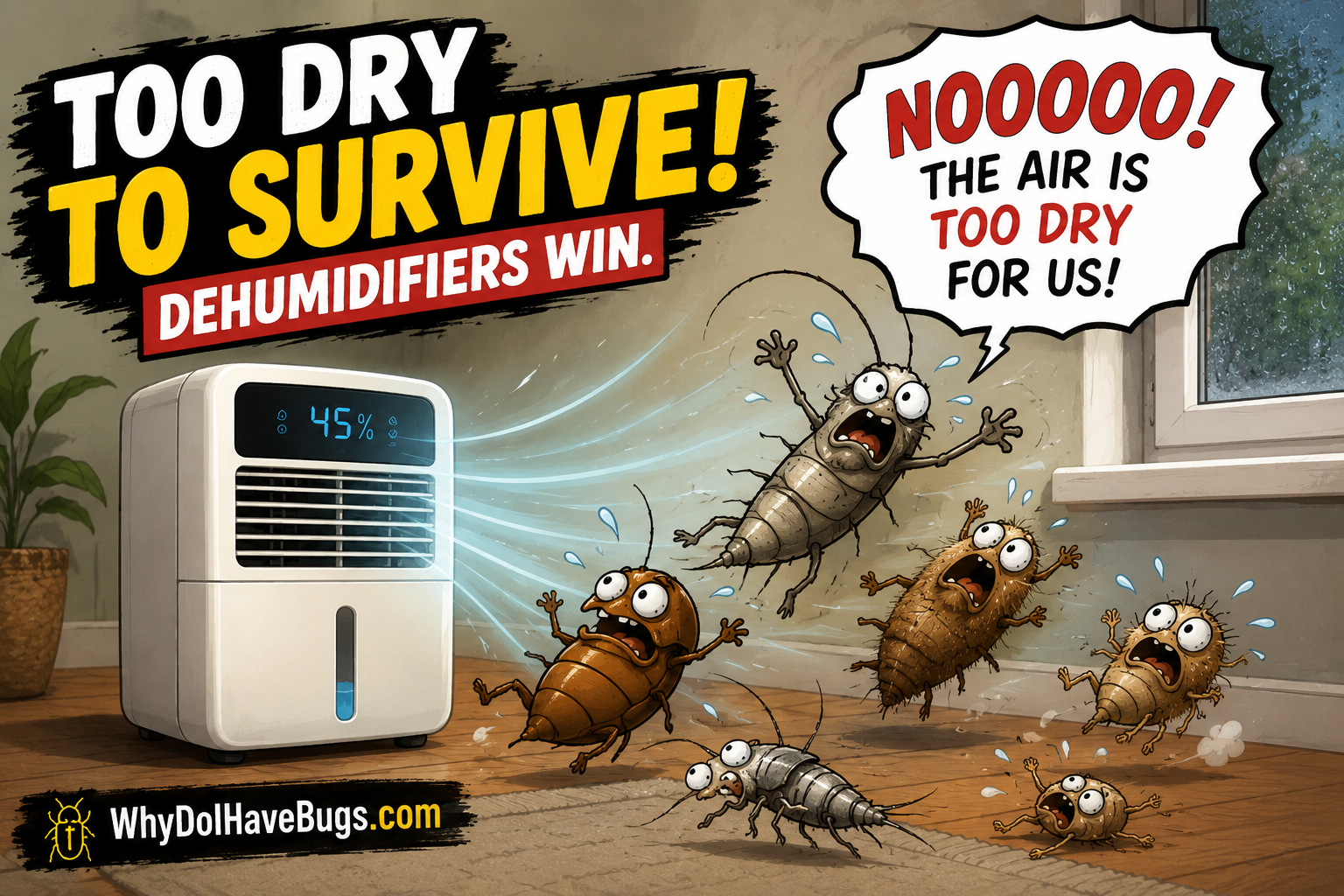
That’s why some bugs are almost always found in places like:
- Bathrooms
- Basements
- Crawl spaces
- Laundry rooms
- Utility rooms
- Under sinks
- Around leaking pipes
If those areas remain humid day after day, they become ideal places for moisture-loving insects to live and reproduce.

Which Bugs Benefit the Most From High Humidity?
One of the biggest misconceptions is that all bugs love moisture.
They don’t.
Some insects actually prefer dry environments.
Others practically depend on humidity.
Here are some of the most common examples.
Silverfish
Silverfish are one of the insects most closely associated with humid homes.
They’re commonly found in bathrooms, basements, laundry rooms, and other damp areas where humidity stays high.
If you’re dealing with silverfish, lowering humidity is one of the smartest long-term changes you can make.

For more on controlling them, check out my Everything You Need to Know About Silverfish guide.
Springtails
Springtails almost always indicate excess moisture.
They’re frequently found around leaking pipes, damp basements, houseplants, and crawl spaces.
Simply spraying them without correcting the moisture problem rarely works for long because the conditions attracting them never change.
Earwigs
Although earwigs normally live outdoors, they often wander indoors while searching for cool, damp places to hide.
That’s why bathrooms, garages, and basements are common places to find them.

If you’ve been seeing them regularly, my Everything You Need to Know About Earwigs explains exactly what attracts them and how to keep them out.
Booklice
Booklice may be tiny, but they absolutely love moisture.
They often appear in damp storage areas where mold begins growing on cardboard, paper, or wood.
Reducing humidity is usually one of the first recommendations because it limits the mold they feed on.
Millipedes and Sowbugs
These aren’t insects, but homeowners frequently include them when talking about bugs.
Like earwigs, they’re usually accidental indoor visitors searching for moisture rather than permanent indoor pests.
A consistently dry home makes them much less likely to stay.
A Dehumidifier Doesn’t Kill Bugs
This is an important point.
A dehumidifier isn’t an insecticide.
It doesn’t poison insects.
It doesn’t trap them.
It doesn’t repel them.
Instead, it changes the environment.
Think of it this way.
If someone removed all the water sources from your yard, many birds would simply leave.
The same principle applies to moisture-loving bugs.
When humidity drops, the environment becomes much less comfortable, causing many pests to move elsewhere or making it harder for them to survive and reproduce.
How Humid Is Too Humid?
Many experts recommend keeping indoor humidity between 30% and 50%.
Above that range, you may begin creating conditions that favor:
- Mold growth
- Dust mites
- Moisture-loving insects
- Condensation
- Musty odors
If your basement regularly sits above 60%, it’s worth investigating the cause before bug problems become worse.
Signs Your Home May Be Too Humid
Sometimes the bugs aren’t the first clue.
Watch for signs like:
- Condensation on windows.
- Musty smells.
- Damp basement walls.
- Mold or mildew.
- Peeling paint.
- Water stains.
- Persistent humidity after showers.
If you’re noticing several of these issues along with moisture-loving bugs, humidity may be the underlying problem rather than the insects themselves.
When Will a Dehumidifier Actually Help?
This is probably the most important question.
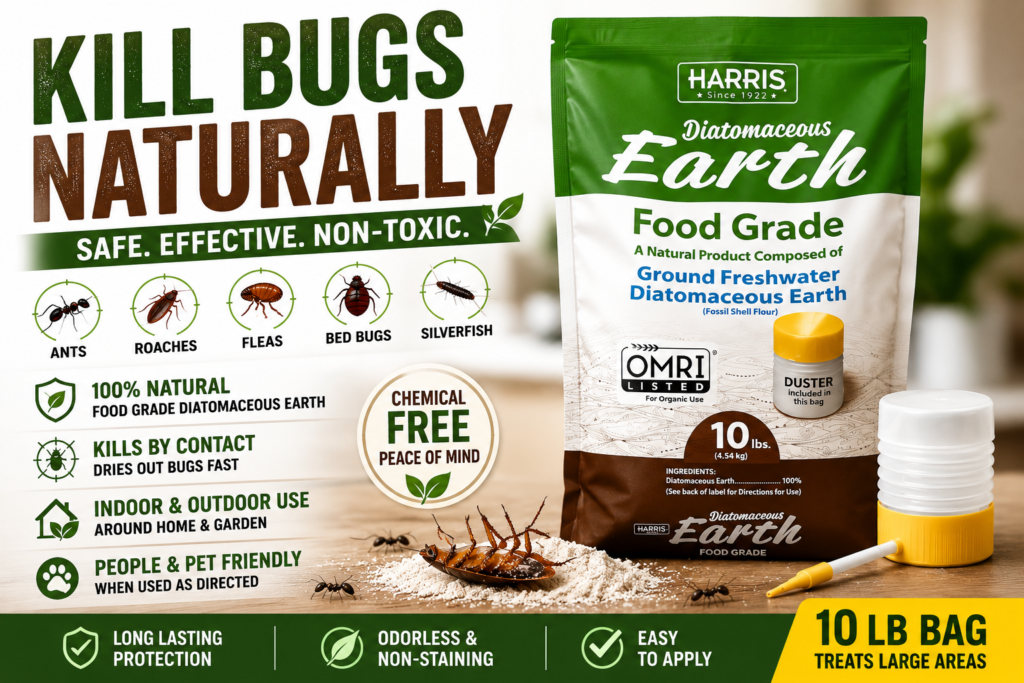
A dehumidifier works best when excess moisture is one of the main reasons bugs are sticking around. For dry areas where crawling insects remain active, the diatomaceous earth review explains how this powder-based treatment works and where it fits into a broader pest plan.
For example, it’s often very effective if you have:
- A damp basement.
- High humidity throughout the house.
- Poor bathroom ventilation.
- A humid crawl space.
- Condensation around windows.
- Moisture problems after heavy rain.
In situations like these, lowering the humidity removes one of the things many pests need to survive.
Over time, you’ll usually notice fewer moisture-loving bugs because your home simply becomes less inviting.
When a Dehumidifier Won’t Solve the Problem
A dehumidifier isn’t a cure-all.
If bugs are entering your home because of structural issues, reducing humidity alone won’t stop them.
For example, a dehumidifier won’t fix:
- Large cracks in the foundation.
- Gaps beneath exterior doors.
- Torn window screens.
- Firewood stacked against the house.
- Overgrown landscaping touching your home.
- Standing water outside.
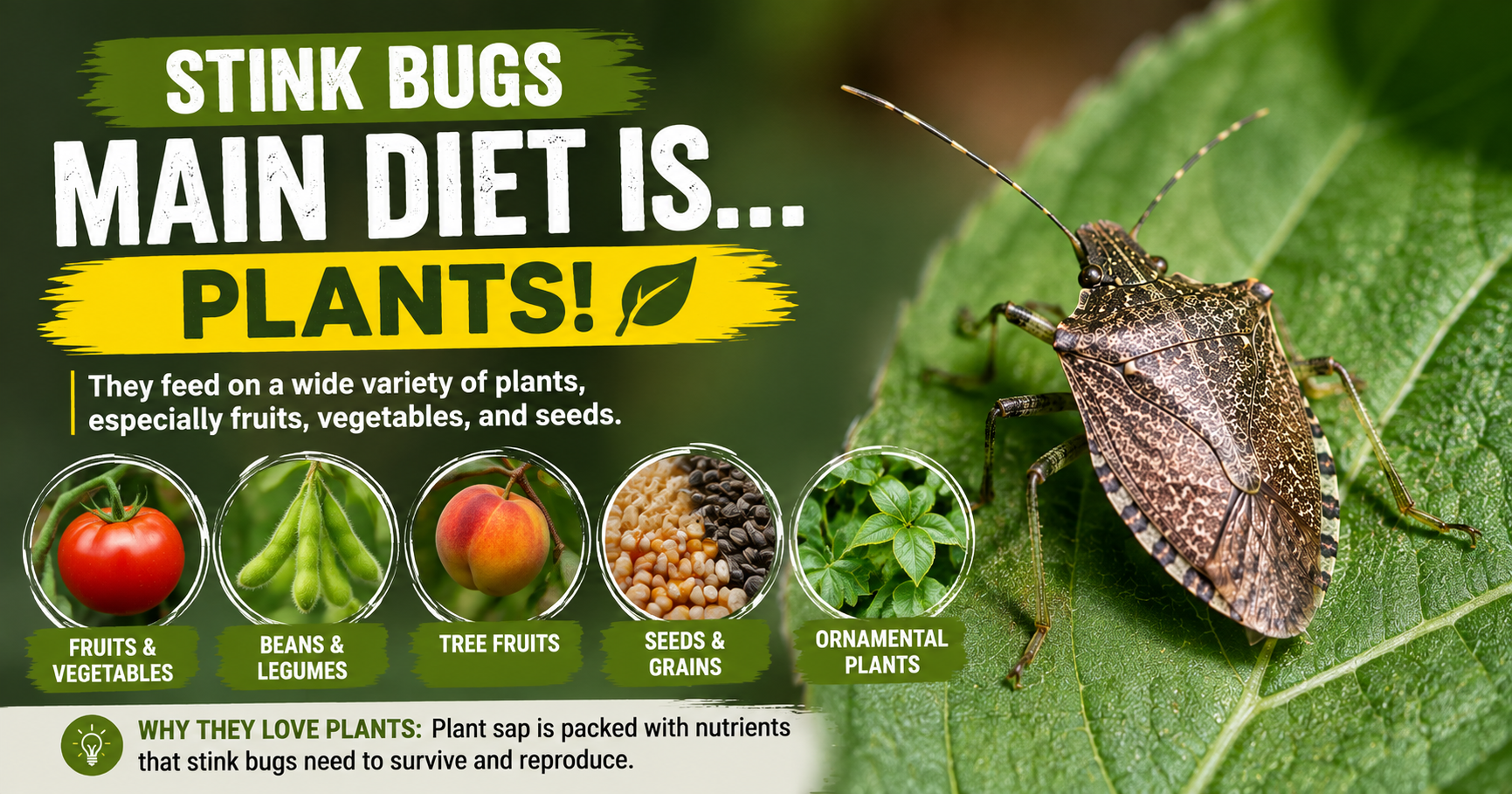
Likewise, it won’t eliminate pests that aren’t dependent on moisture, such as ants searching for food or stink bugs that accidentally wander indoors.
Think of a dehumidifier as one piece of a complete pest prevention plan rather than a replacement for good home maintenance.
Which Areas of the House Benefit the Most?
If you’re only planning to use one dehumidifier, place it where humidity stays highest.
The most common locations include:
- Basements.
- Crawl spaces.
- Laundry rooms.
- Finished lower levels.
- Utility rooms.
- Large bathrooms.
- Rooms with poor air circulation.
Reducing humidity in these areas often has a noticeable impact because they’re also where moisture-loving bugs are most commonly found.
The Dehumidifier I Recommend
After comparing a number of models, one I really like for homeowners dealing with moisture-related pest problems is the AEOCKY 5500 Sq. Ft. Energy Star Most Efficient 2025 Dehumidifier.
Here’s why I think it’s a great fit:
- Covers large basements and multiple rooms.
- Removes up to 80 pints of moisture per day (DOE rating varies by conditions).
- Built-in intelligent humidistat automatically maintains your desired humidity level.
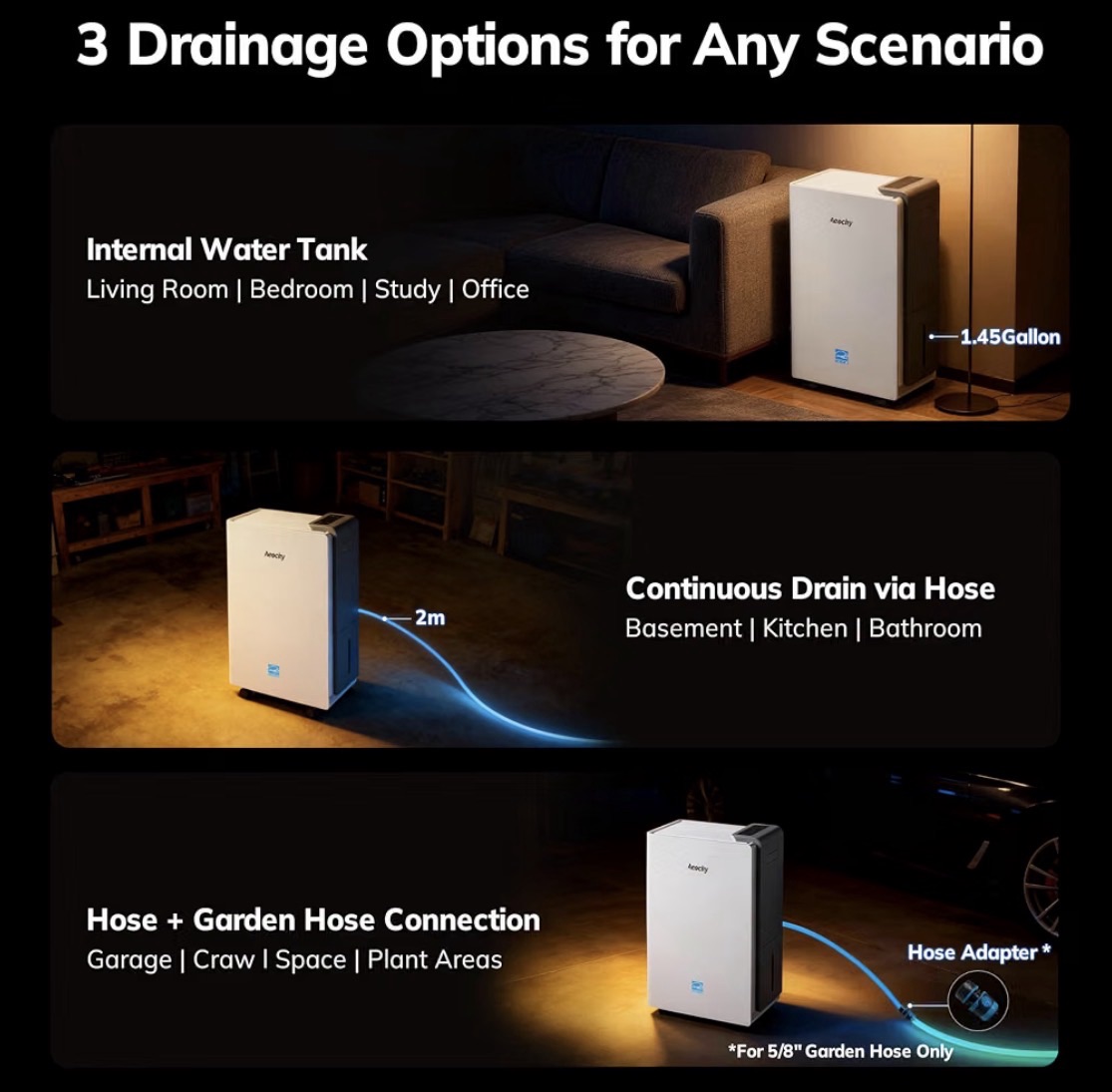
- Continuous drain hose option means you don’t have to keep emptying the bucket.
- Energy Star Most Efficient 2025 certified, helping reduce electricity costs compared to less efficient models.
For homeowners fighting recurring moisture issues, I believe investing in a quality dehumidifier like this addresses the root cause instead of repeatedly treating the symptoms.
Other Things You Should Do Along With a Dehumidifier
Lowering humidity works even better when combined with a few simple improvements around your home.
I recommend:
- Repair plumbing leaks promptly.
- Run bathroom exhaust fans during and after showers.
- Keep gutters clean so water drains away from the foundation.
- Extend downspouts away from the house.
- Seal cracks around doors, windows, and utility lines.
- Remove damp cardboard, leaf piles, and other moisture-holding debris near the foundation.
Together, these steps make your home much less attractive to moisture-loving pests.
My Experience
One mistake I see homeowners make over and over is treating the bugs instead of treating the environment.
If your basement constantly sits at 70% humidity, you can spray every insect you see, but new ones often keep showing up because the conditions haven’t changed.
I’ve found that once homeowners get humidity under control, many moisture-loving pests become far less common.
The insects weren’t choosing the house by accident.
The house was giving them exactly what they needed.
Frequently Asked Questions
Can a dehumidifier get rid of bugs completely?
Not by itself. A dehumidifier doesn’t kill insects, but it can make your home much less attractive to bugs that depend on high humidity, helping reduce their numbers over time.
What bugs does a dehumidifier help with?
Lower humidity can discourage silverfish, springtails, earwigs, booklice, millipedes, sowbugs, centipedes, and some cockroach species that prefer damp environments.
What humidity level helps prevent bugs?
For most homes, maintaining indoor humidity between 30% and 50% is a good target. This range helps discourage many moisture-loving pests while also reducing the risk of mold and mildew.
Should I run a dehumidifier all the time?
Not necessarily. Many modern units have a built-in humidistat that automatically turns the machine on and off to maintain your selected humidity level, making them more efficient than running continuously.
Is a dehumidifier better than bug spray?
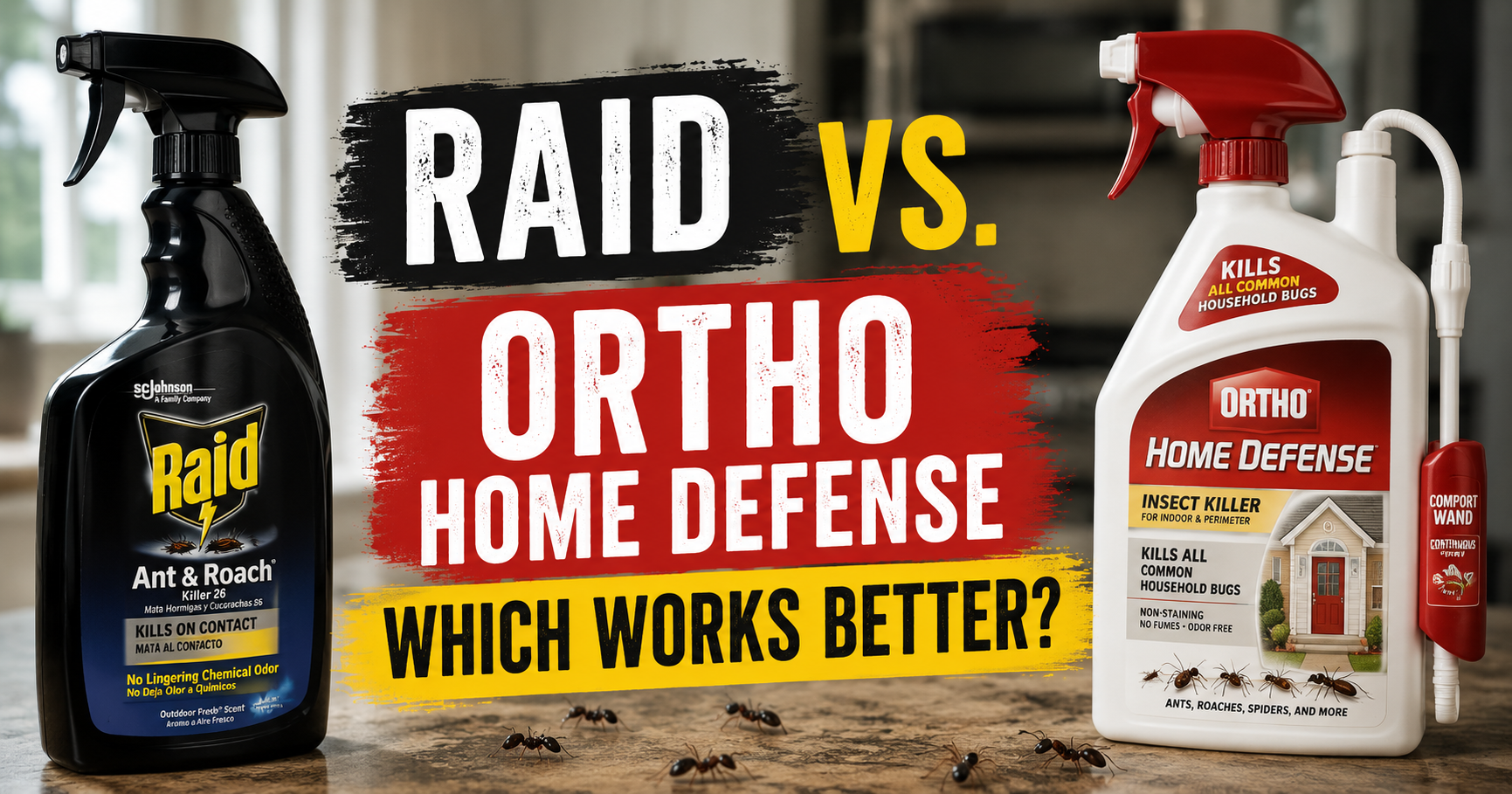
They serve different purposes. Bug sprays may reduce insects already present, while a dehumidifier helps remove one of the environmental conditions attracting many moisture-loving pests in the first place. For recurring humidity-related infestations, addressing the moisture problem often provides much better long-term results than relying on sprays alone. For situations where a spray is still appropriate, how Raid and Ortho differ separates quick knockdown from longer-term barrier use.
About the Author
Emily Carter is a home pest prevention specialist with more than 14 years of experience helping homeowners identify moisture-related pest problems. She focuses on practical, long-term solutions that address the conditions attracting insects, helping families create healthier, drier, and less pest-friendly homes. You can meet our pest prevention specialists and learn more about the practical approach behind these guides.