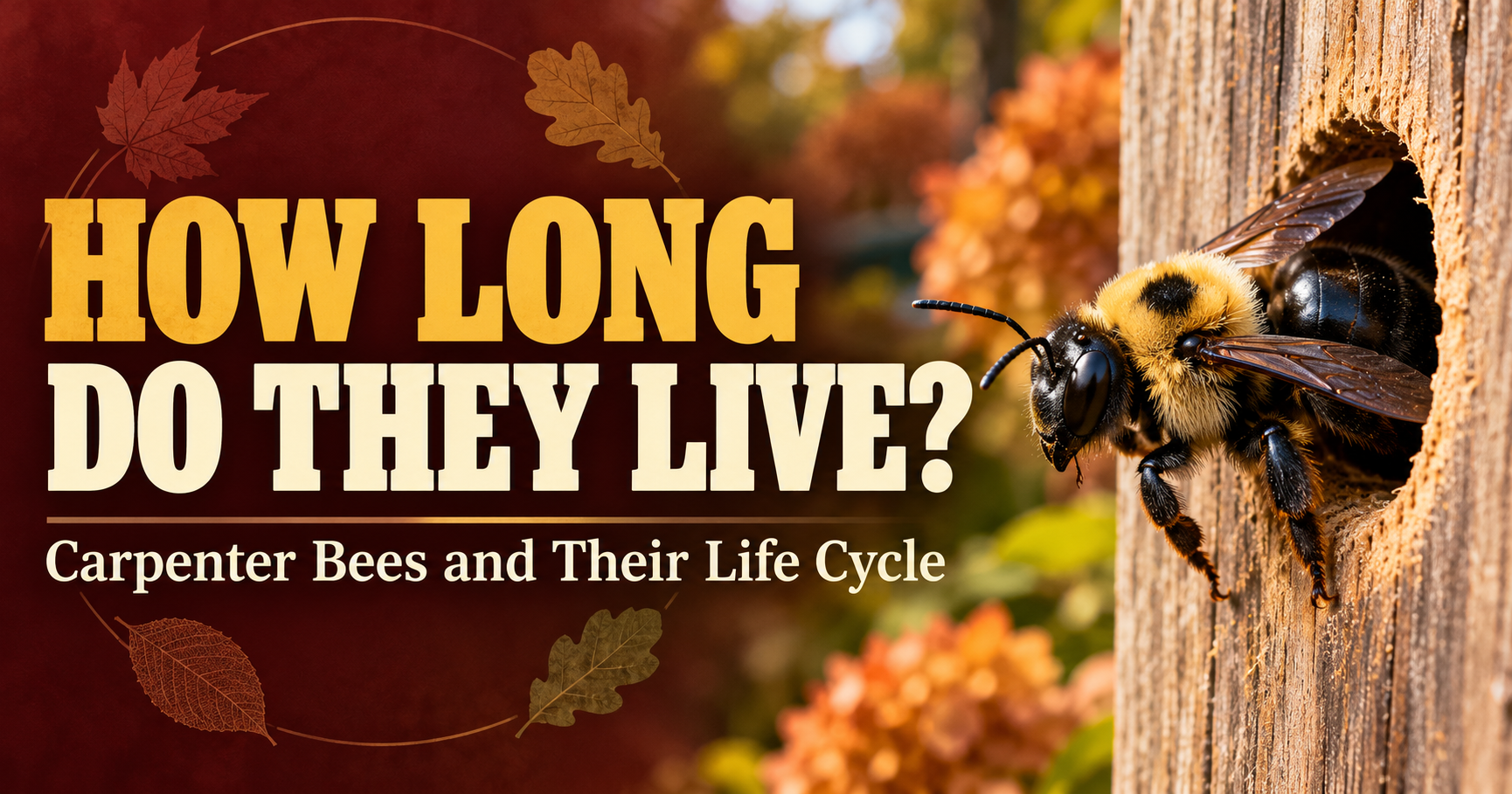
Every spring, the same big black-and-yellow bees seem to return to your porch. They’re hovering around the railings, investigating old holes, and sometimes drilling new ones into the wood.
It can make you wonder whether you’re seeing the exact same carpenter bees year after year or entirely new generations.
The answer is more interesting than you might expect.
Carpenter bees commonly follow a life cycle lasting about one year, although some individuals, particularly females, can survive longer. Unlike many insects that die when cold weather arrives, carpenter bees can spend the winter as adults sheltered inside wooden nesting tunnels.
When spring returns, they emerge, feed, mate, and begin producing the next generation.
Understanding this cycle explains why carpenter bees disappear during winter, why they suddenly become active around your porch in spring, and why the same wooden boards can attract them repeatedly.
How Long Do Carpenter Bees Live?
For eastern carpenter bees (Xylocopa virginica), which are common throughout Missouri and much of the eastern United States, a typical life cycle spans approximately one year.
A bee that develops during summer may emerge as an adult in late summer, survive through winter, and become reproductively active the following spring.
However, lifespan isn’t identical for every individual.
Males often die after the spring mating period, while females may survive longer. Some university extension resources report that individual carpenter bees can live for more than one year, with certain females potentially surviving several years.
Temperature, food availability, predators, disease, and other environmental conditions all influence survival.
Do Male Carpenter Bees Live as Long as Females?
Not always.
Male eastern carpenter bees usually become especially noticeable in spring when they’re patrolling territories and searching for females.
They may hover around porches, investigate moving objects, and chase competing males.
After mating season, many males die.
Females are responsible for establishing nests and provisioning chambers for their offspring. Some may survive beyond a single reproductive season.
This difference is one reason you may notice lots of territorial males early in the year but fewer later in summer.
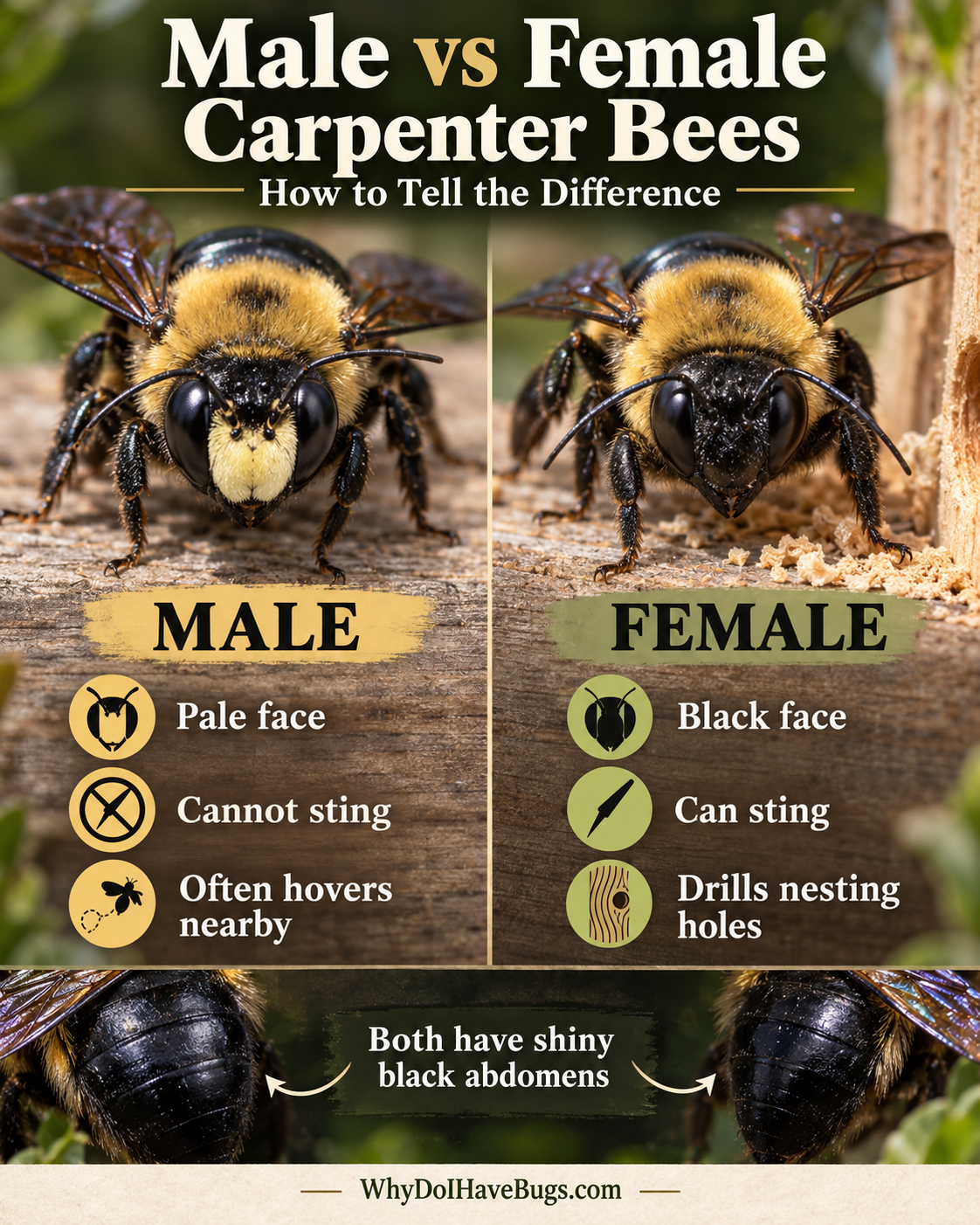
We’ve covered the physical and behavioral differences in our guide to male versus female carpenter bees.
The Carpenter Bee Life Cycle From Egg to Adult
Carpenter bees undergo complete metamorphosis.
That means they develop through four distinct stages:
- Egg: A female lays an egg in an individual nesting chamber.
- Larva: The young bee feeds on pollen and nectar provisions left by its mother.
- Pupa: The developing insect transforms into an adult.
- Adult: The mature bee eventually emerges, feeds, overwinters, and participates in reproduction.
The development from egg to adult generally takes several weeks to a few months, depending on the species and environmental conditions.
In many eastern carpenter bee populations, one new generation is produced each year.
Stage 1: Carpenter Bee Eggs
The life cycle begins when a female carpenter bee prepares a nesting gallery.
She may excavate a new tunnel inside suitable wood or reuse an existing one.
Within the gallery, she creates individual brood chambers.
Each chamber receives a food provision made from pollen and nectar.
The female then lays an egg and seals the chamber with a partition made partly from chewed wood material.
She repeats the process, creating a series of chambers along the tunnel.
Unlike honey bees, carpenter bees don’t raise their young in large wax combs maintained by thousands of workers.
Their nesting arrangements are much simpler.
Stage 2: Carpenter Bee Larvae
After an egg hatches, the larva begins feeding on the food stored inside its chamber.
It doesn’t need to leave the nest to search for food.
The mother has already provided what it needs.
This mixture of pollen and nectar supplies nutrients for development.
The larva grows through successive stages before preparing to pupate.
One important detail is that carpenter bee larvae don’t eat the surrounding wood.
The female creates the gallery, but the larvae depend on their stored food provisions.
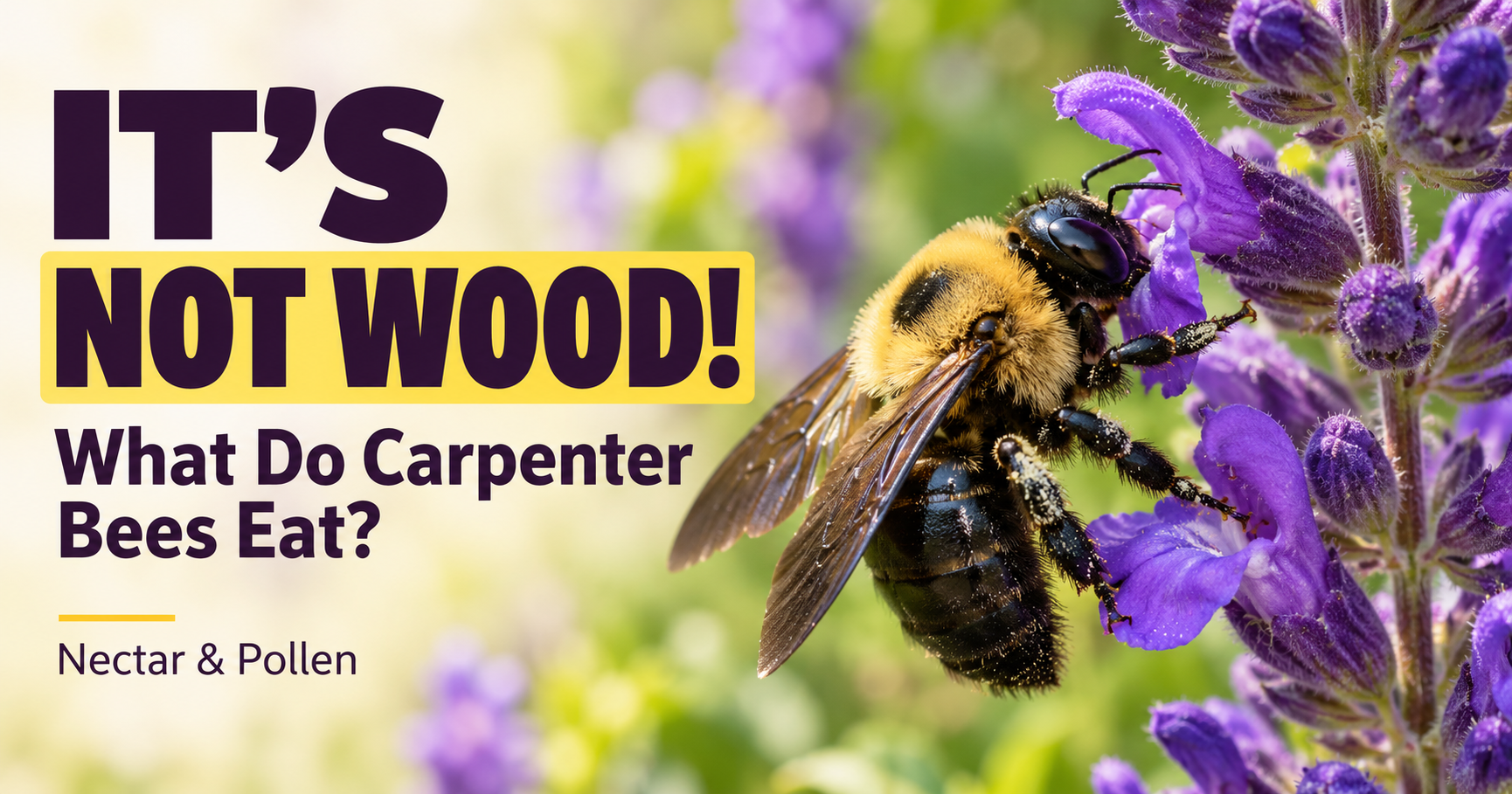
Our guide to what carpenter bees and their larvae eat explains that difference.
Stage 3: Carpenter Bee Pupae
Once a larva completes its feeding stage, it develops into a pupa.
This is when the insect undergoes the transformation from a worm-like larva into an adult bee.
Its adult body structures, including wings and legs, develop during this period.
The pupa remains protected inside the nesting chamber.
Eventually, a fully formed adult bee emerges.
Stage 4: Adult Carpenter Bees
New adult carpenter bees commonly emerge during late summer.
In Missouri and similar climates, you may notice activity during August or September.
These newly emerged adults visit flowers and feed before colder weather arrives.
Rather than immediately starting another full nesting cycle, many return to existing wooden galleries for winter shelter.
They become reproductively active the following spring.

When Do Carpenter Bees Come Out in Spring?
Carpenter bees usually become active when spring temperatures warm enough for regular flight.
In Missouri, activity often becomes noticeable during April and May, although the exact timing varies with the weather.
During an unusually warm spring, you may notice them earlier.
A colder spring can delay their appearance.
Why Do Carpenter Bees Suddenly Appear Around Porches?
Many of the bees you see in spring have been sheltering through winter in wooden galleries.
When temperatures rise, they begin emerging and looking for food and mates.
Males frequently become noticeable because of their territorial behavior.
They’re the large bees that hover around porches and sometimes dart toward people.
Despite the intimidating behavior, male carpenter bees cannot sting.
Females can sting in self-defense, but they’re generally reluctant to do so.

Our article explaining why carpenter bees chase people and when they can sting covers that behavior in more detail.
What Do Carpenter Bees Do During Summer?
Summer is an important time for carpenter bee development.
Females establish nesting galleries, lay eggs, and provide food for their offspring.
Inside the chambers, larvae grow and eventually pupate.
The young are protected within the wood while they develop.
Do Carpenter Bees Keep Drilling Holes All Summer?
Not necessarily.
Most of the excavation associated with nesting happens during the period when females are preparing and provisioning galleries.
Once a female finishes her nesting work, she doesn’t need to keep drilling indefinitely.
However, activity can vary among individuals and locations.
If you find fresh sawdust beneath an entrance during summer, a female may still be excavating or maintaining a gallery.
A hole without fresh sawdust may contain developing bees even when no adult is visible.
That’s why an apparently quiet tunnel shouldn’t automatically be considered empty.

When Do Baby Carpenter Bees Come Out?
New carpenter bee adults commonly begin emerging during late summer.
For eastern carpenter bees, this often happens around August or September.
The exact timing depends on local temperatures and development conditions.
What Happens When the Young Bees Emerge?
After completing development, the new adults leave their brood chambers.
They may spend time outside feeding on nectar and pollen.
Some return to old nesting galleries for shelter as the weather becomes cooler.
They generally don’t immediately repeat the entire mating and nesting cycle during the same late-summer period.
Instead, many overwinter as adults and mate the following spring.
This is why the carpenter bees you see in spring may actually have developed inside your porch during the previous summer.
Where Do Carpenter Bees Go in Winter?
Carpenter bees don’t simply disappear when the weather turns cold.
In temperate regions, adults commonly overwinter inside existing wooden nesting galleries.
These tunnels provide a sheltered place to survive cold weather.
Do Carpenter Bees Hibernate?
People commonly describe their winter inactivity as hibernation.
More precisely, carpenter bees enter a period of reduced activity while sheltering from cold conditions.
They aren’t gathering pollen or regularly flying around the yard during freezing weather.
Their metabolism and activity decrease as they survive using stored energy reserves.
When conditions warm in spring, they become active again.
Can Carpenter Bees Survive Freezing Temperatures?
Carpenter bees can survive winter conditions when they have suitable shelter.
The wooden galleries help buffer them from some environmental extremes.
However, not every bee survives.
Prolonged cold, moisture problems, predators, and other conditions can affect survival.
The ability to overwinter doesn’t make carpenter bees immune to harsh weather.
Do Carpenter Bees Stay in the Same Hole All Winter?
Some adults return to existing nesting galleries for shelter.
Several individuals may use the same general nesting area.
An old entrance may therefore contain overwintering adults even when you haven’t seen activity for months.
This is important for homeowners planning winter repairs.
A carpenter bee hole that looks abandoned in December may still contain living bees.


Why Do Carpenter Bees Return to the Same Wood Every Year?
Existing galleries offer ready-made shelter and nesting space.
Instead of excavating an entirely new tunnel, some females reuse or expand older galleries.
New generations may also investigate wood that has previously provided suitable nesting conditions.
This can make a porch or shed seem like a permanent carpenter bee destination.
Does That Mean It’s the Same Bee Every Year?
Sometimes an individual may survive into another year, but repeated sightings don’t prove you’re seeing the same bee.
You could be watching offspring that developed in the wood during the previous summer.
You might also be seeing unrelated carpenter bees investigating an attractive nesting location.
Without marking and tracking individual insects, there’s no dependable way to distinguish them just by watching.
Can Several Generations Use the Same Hole?
Yes.
Carpenter bee galleries can be reused and sometimes enlarged over successive generations.
This is why repeated nesting can cause more damage than a single isolated tunnel.
Over time, multiple galleries can develop inside the same wooden component.
Woodpeckers may also enlarge damaged areas while searching for developing bees.
Does a Carpenter Bee Die After Laying Eggs?
Carpenter bees aren’t like honey bee workers that may die after stinging a person.
Their reproductive life cycle is different.
Many females die after completing their reproductive period, but not every female necessarily dies immediately after laying eggs.
Research and extension guidance indicate that some females can survive into additional seasons.
This is one reason a fixed one-year lifespan doesn’t describe every individual carpenter bee.



Can Carpenter Bees Live for Three Years?
Some extension resources report that individual carpenter bees may live as long as three years.
However, this is not the typical lifespan of every carpenter bee.
A lifespan around one annual cycle is a useful general expectation for eastern carpenter bees, while longer-lived individuals are possible.
Differences among species, environmental conditions, and reproductive roles also matter.
If someone claims that all carpenter bees die after exactly twelve months, that’s too absolute.
Likewise, saying every carpenter bee lives three years would be misleading.
When Is the Best Time to Repair Carpenter Bee Holes?
Understanding the carpenter bee life cycle can help you avoid damaging occupied nests.
Spring and early summer are commonly associated with mating, gallery preparation, and egg laying.
During summer, the wood may contain developing larvae and pupae.
In late summer, new adults emerge.
During fall and winter, adults may be sheltering inside existing galleries.
This means there isn’t a calendar date that automatically guarantees every carpenter bee hole is empty.
What if You Want to Protect Your Porch?
Start by determining whether the gallery is occupied.
If you’re uncertain, avoid permanently sealing the entrance until its status can be established.
Repair confirmed unoccupied holes using suitable materials.
For important structural wood, inspect for extensive tunneling before attempting a cosmetic repair.
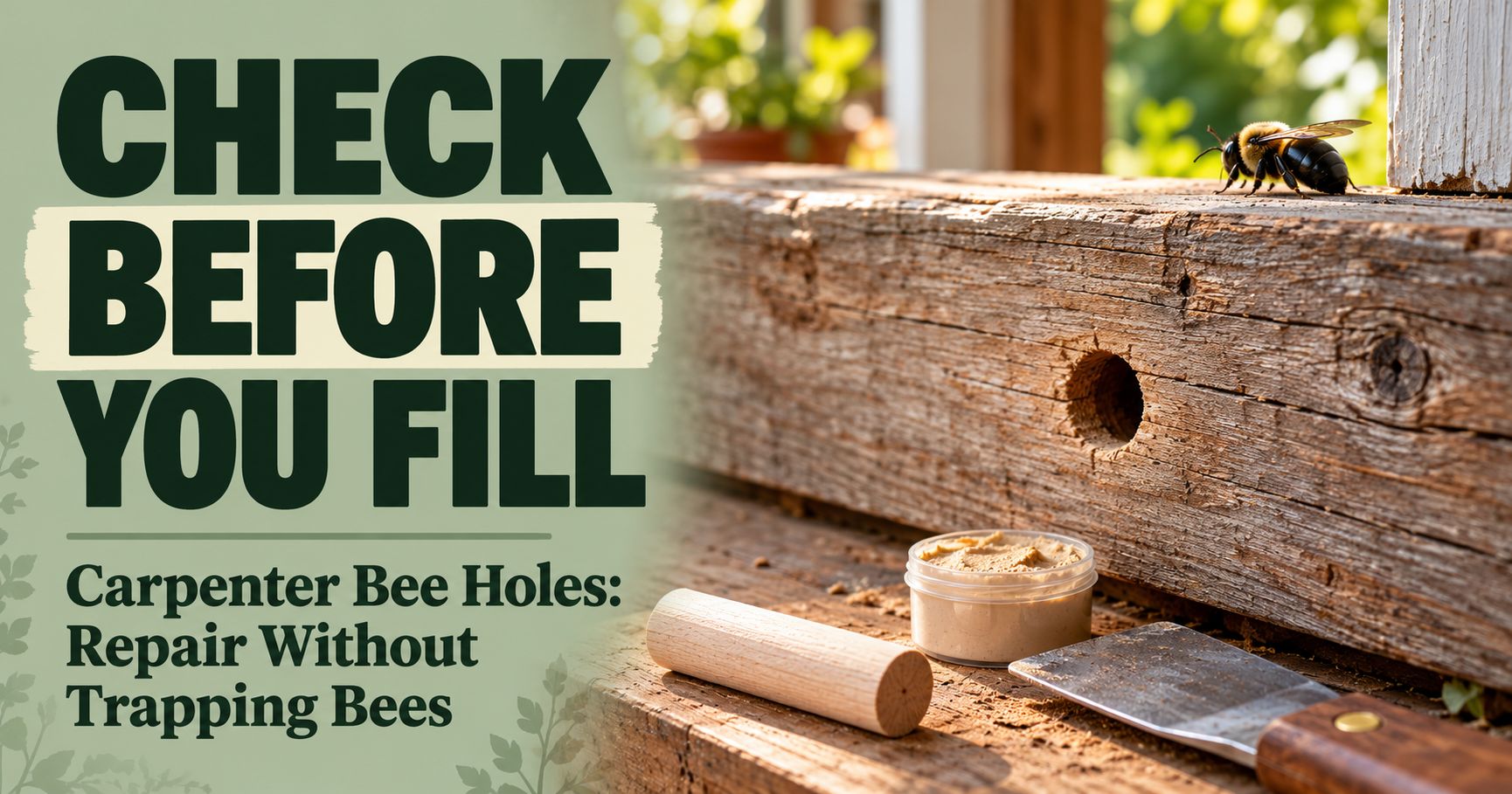
We explain the repair process in our guide to filling carpenter bee holes without trapping bees inside.
Can You Prevent Carpenter Bees From Nesting Next Spring?
Yes, you can take steps to make your wood less attractive.
Carpenter bees generally prefer exposed, unfinished, or weathered wood.
Maintaining an appropriate paint finish is one of the more reliable preventive approaches.
Some homeowners also consider purpose-made deterrents for outdoor wooden surfaces.

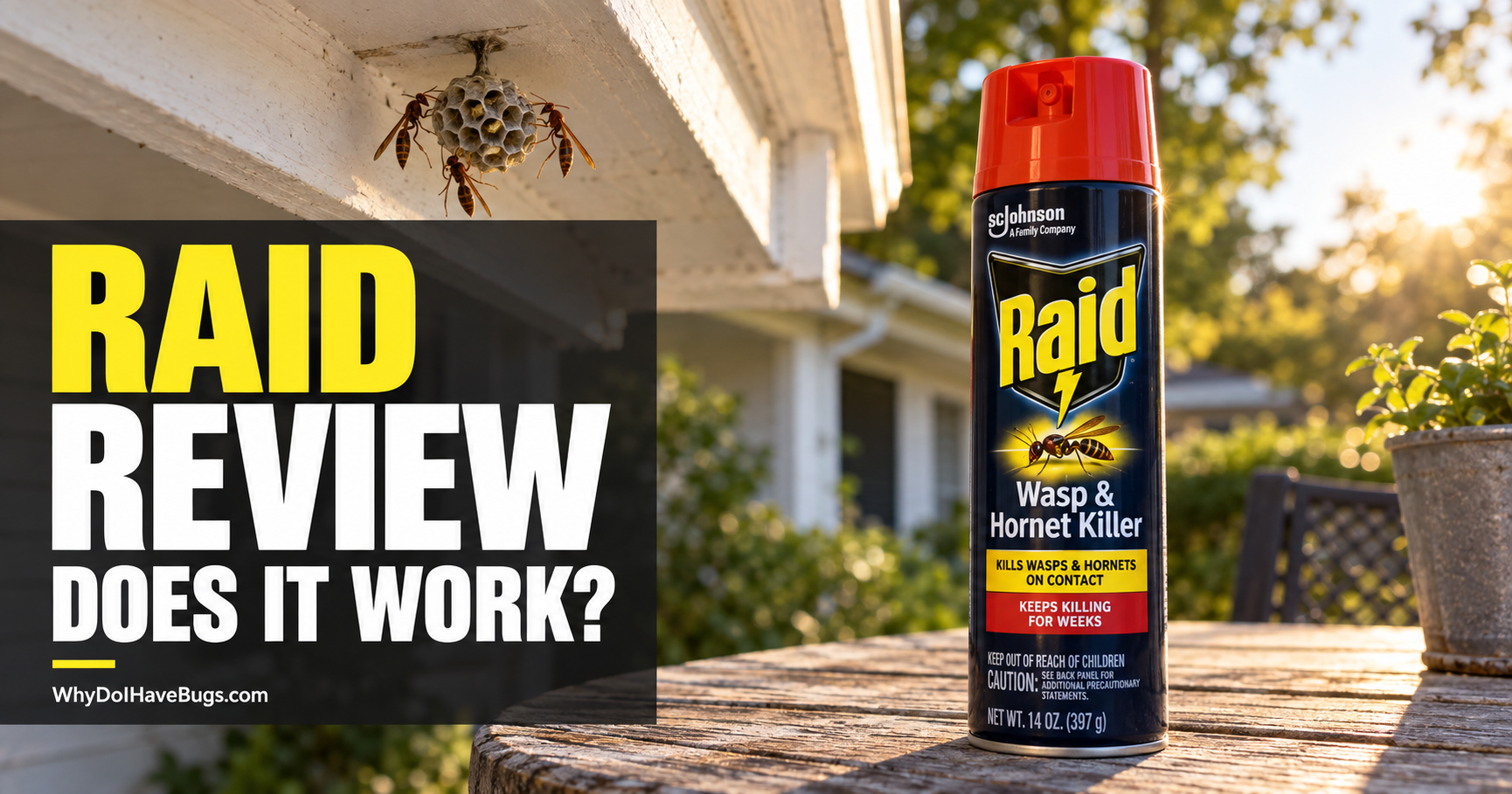
One example is Best Bee Brothers Citrus Carpenter Bee Repellent Spray on Amazon , which contains lemongrass and citronella oils and is marketed for discouraging new nesting.
The effectiveness of this specific product hasn’t been independently established here, and it shouldn’t be used as a substitute for maintaining the wood or as a guaranteed way to remove bees from occupied tunnels.
Follow the product’s current instructions and use it only on appropriate surfaces.
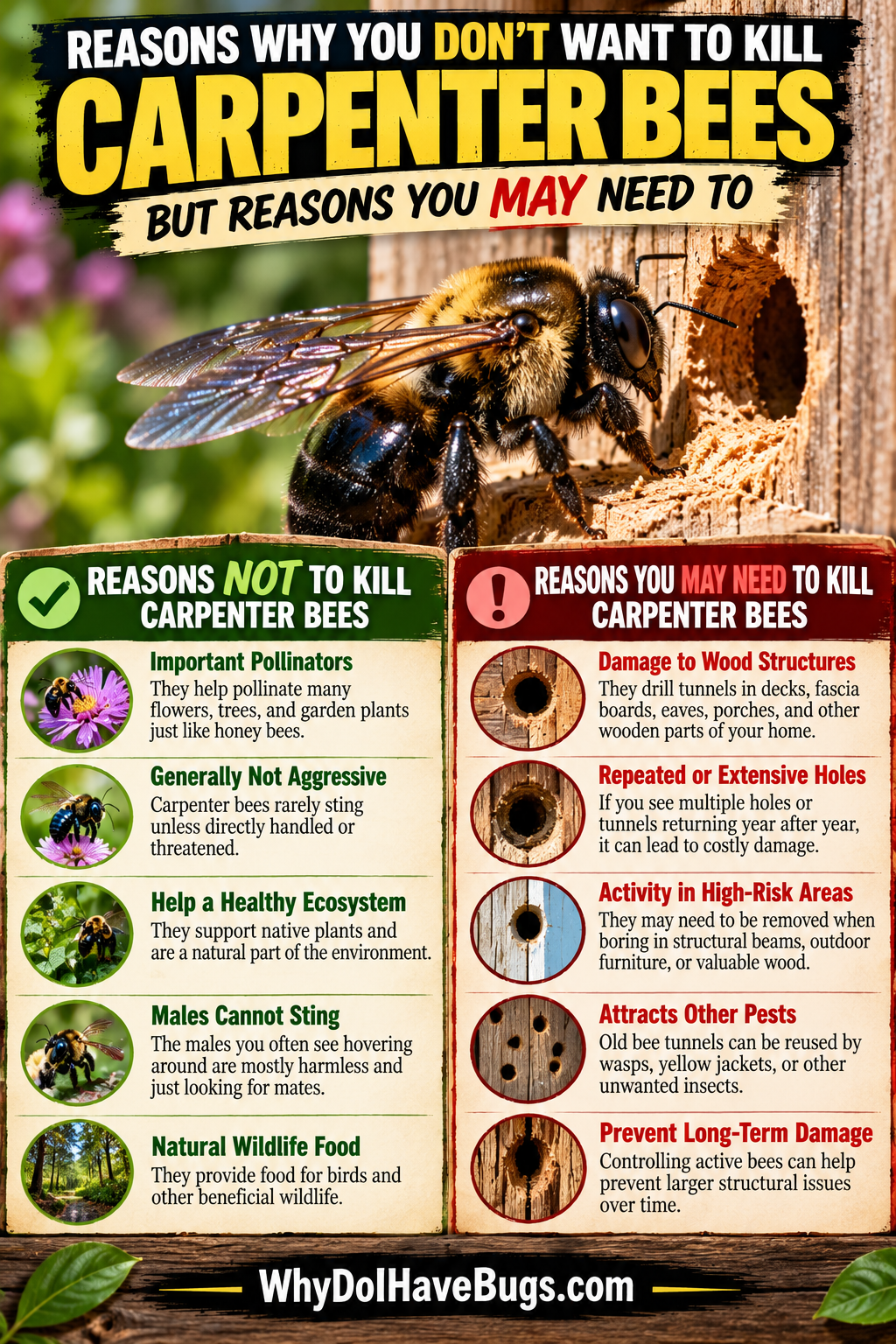
For the complete prevention approach, see our article on discouraging carpenter bees without killing them.
Why Carpenter Bees Are Worth Keeping Around
Even though carpenter bees can damage wooden structures, they’re also valuable native pollinators.
They visit flowers for nectar and pollen and help plants reproduce.
Some perform buzz pollination, vibrating flowers to release pollen.
This benefits certain garden plants and native flowering species.
If carpenter bees are nesting in an old stump or harmless deadwood away from important structures, there’s usually no reason to interfere with them.
It’s possible to appreciate these bees while still protecting your porch, deck, and siding.
The best approach is to prevent nesting where it causes damage rather than trying to eliminate carpenter bees from your yard entirely.
Frequently Asked Questions
How many years does a carpenter bee live?
Eastern carpenter bees commonly follow a life cycle of approximately one year. However, some individuals, especially females, may survive longer, and certain extension references report lifespans of up to three years.
Do carpenter bees die in the winter?
Not necessarily. Adult carpenter bees can overwinter inside existing wooden nesting galleries and become active again when spring temperatures rise.
What month do carpenter bees come out?
In Missouri and much of the eastern United States, carpenter bees commonly become noticeable during April and May. Timing varies with seasonal temperatures.
How long does it take a carpenter bee to grow up?
Development from egg to adult generally takes several weeks to a few months, depending on the species and conditions.
How long do carpenter bee eggs take to hatch?
Egg development depends on temperature and species. The egg stage is relatively short compared with the entire development period, but there isn’t one universal hatching time for every carpenter bee.
When do baby carpenter bees leave the nest?
New adults commonly emerge during late summer, often around August or September in eastern populations.
Do carpenter bees use the same nest every year?
They can. Existing galleries may be reused or expanded, and successive generations may occupy the same general nesting locations.
Do carpenter bees sleep in their holes?
Carpenter bees use galleries for nesting and shelter. Adults may also rest in them and overwinter there during cold weather.
Do male carpenter bees live longer than females?
Typically, males have shorter reproductive lives, often dying after mating season. Some females may survive longer and potentially reproduce in more than one season.
Are carpenter bees active at night?
They’re primarily active during daylight when conditions are suitable for flying and foraging. They commonly shelter during darkness and unfavorable weather.
Can carpenter bees survive without flowers?
Adults depend on floral food resources during active periods, although they may survive temporarily using stored energy reserves. During winter inactivity, they generally aren’t foraging.
Why do carpenter bees disappear in summer?
Many of the adults active during spring decline after mating and nesting. Meanwhile, the next generation may still be developing inside wooden galleries, so visible activity can decrease before new adults emerge in late summer.
About the Author: The writers at Why Do I Have Bugs help homeowners identify insects, understand their life cycles, and find practical ways to protect their homes while respecting beneficial pollinators.