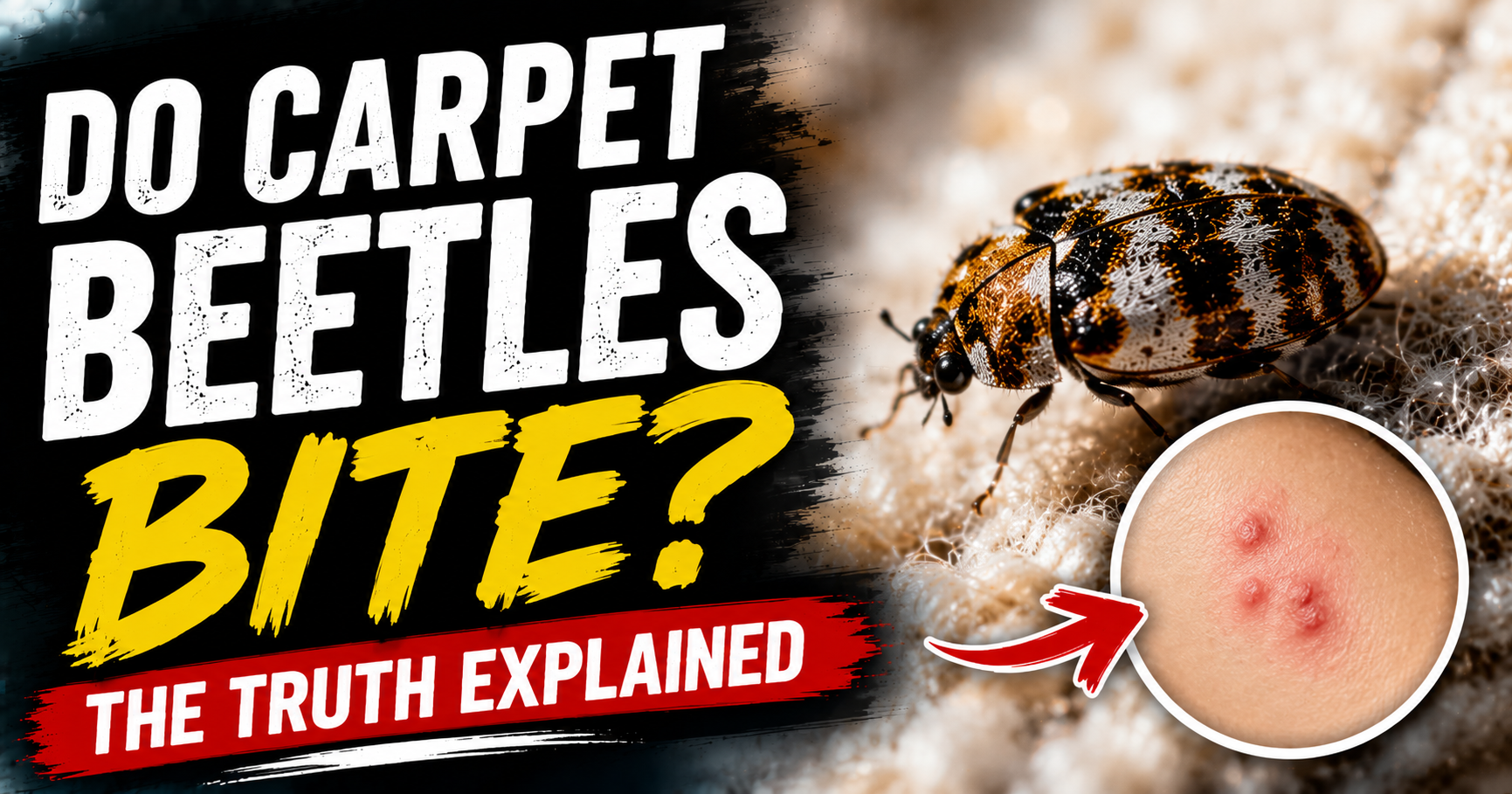
If you’ve discovered carpet beetles in your home and suddenly started noticing itchy red spots on your skin, you’re probably asking one question.
Do carpet beetles bite?
It’s a fair question.
Many homeowners immediately assume the beetles are responsible for every itchy bump they find.
I understand why.
When I first started learning about carpet beetles after finding a shed skin inside a shoe that had been stored in our attic, I wondered the same thing. If these insects could damage clothing and other fabrics, could they bite people too?
The short answer is no.
Carpet beetles don’t bite people.
However, that doesn’t mean they’re completely harmless.
Some people develop skin irritation from the tiny hairs covering the larvae, and that reaction can easily be mistaken for insect bites. Comparing the symptoms and evidence side by side can help distinguish a carpet beetle rash from bed bug bites in Carpet Beetle Rash vs Bed Bug Bites: How to Tell the Difference.
My First Thought
Whenever someone tells me carpet beetles are biting them, I don’t immediately assume they’re wrong.
Instead, I ask another question.
Have you actually seen the insect that caused the irritation?
Most of the time, the answer is no.
That’s because skin reactions can have many different causes, and carpet beetle larvae are often blamed for symptoms they didn’t directly create.
Carpet Beetles Don’t Have Mouthparts That Bite People
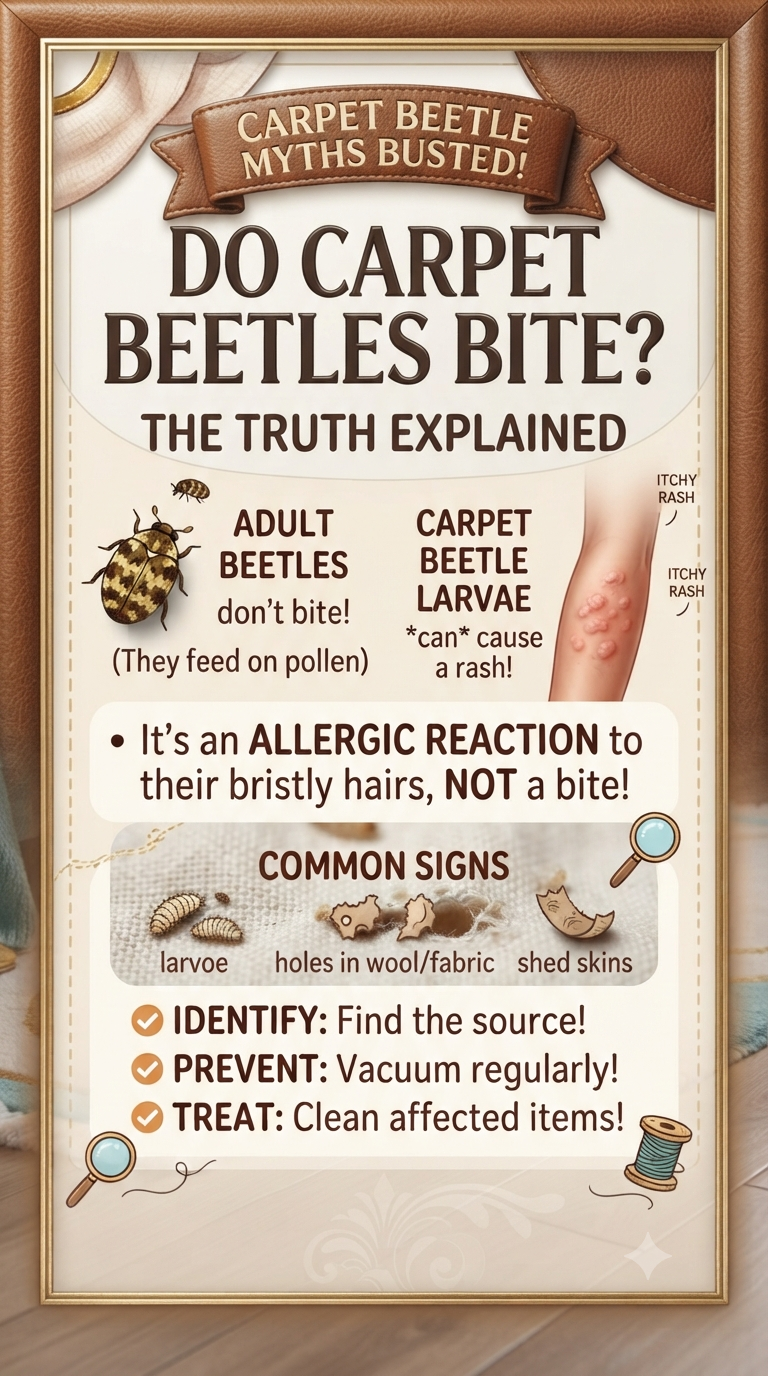
Adult carpet beetles feed primarily on pollen and nectar outdoors.
They aren’t interested in feeding on people or pets.
The larvae are the stage that causes damage inside homes, but even they aren’t feeding on human skin.
Instead, they’re feeding on natural materials like wool, feathers, pet hair, leather, silk, and other animal-based fibers.
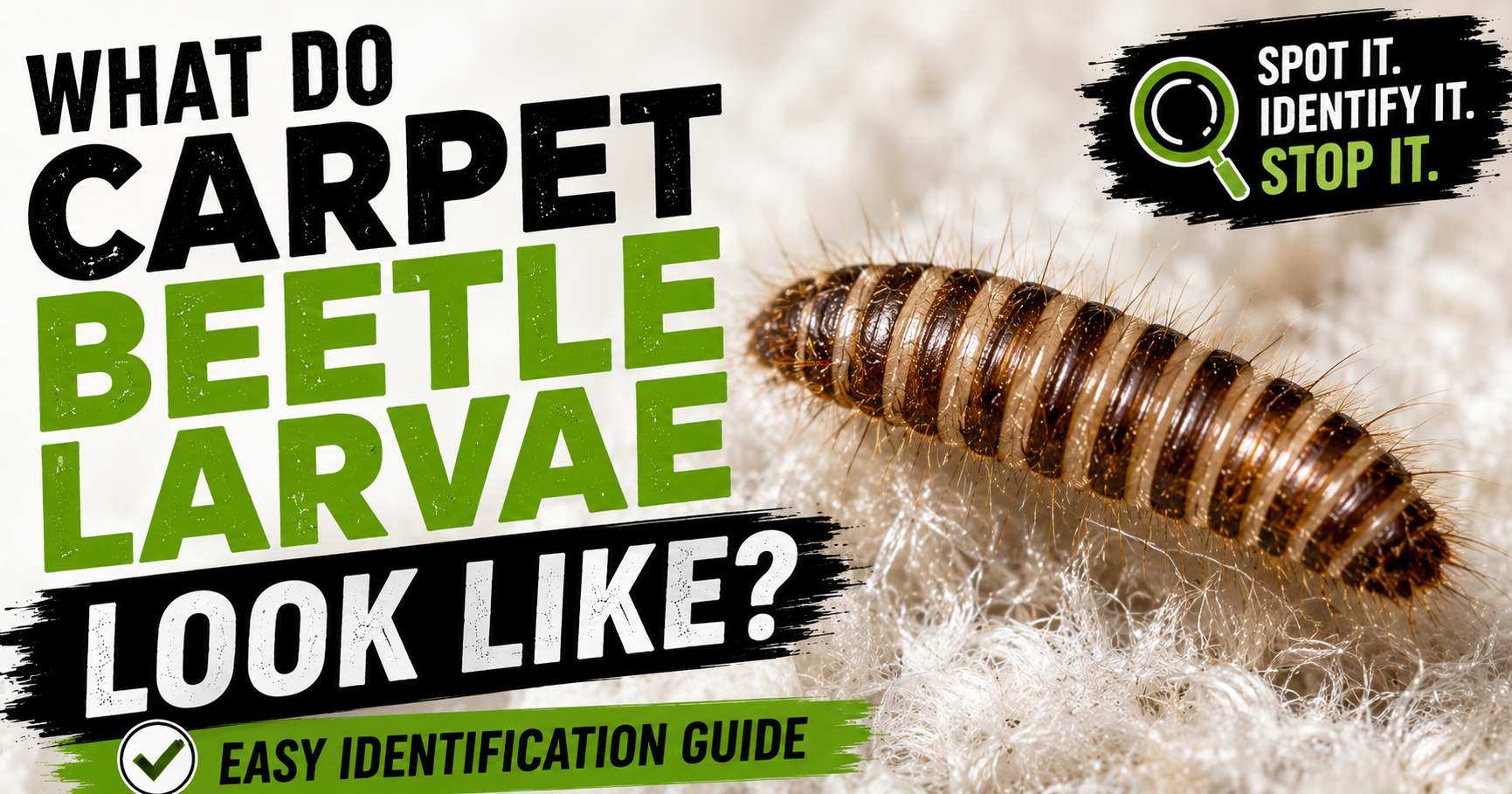
If you’re still trying to identify the insect itself, my guide on what carpet beetle larvae look like can help you recognize the stage that most homeowners never notice.
So Why Do Some People Get an Itchy Rash?
This is where much of the confusion begins.
Carpet beetle larvae are covered with tiny hairs called setae.
In some people, those hairs can trigger an allergic skin reaction after coming into contact with clothing, bedding, furniture, or other materials where the larvae have been living.
That reaction isn’t a bite.
It’s your skin responding to the tiny hairs.
Some people experience no reaction at all.
Others develop itchy, irritated patches that look very similar to insect bites.
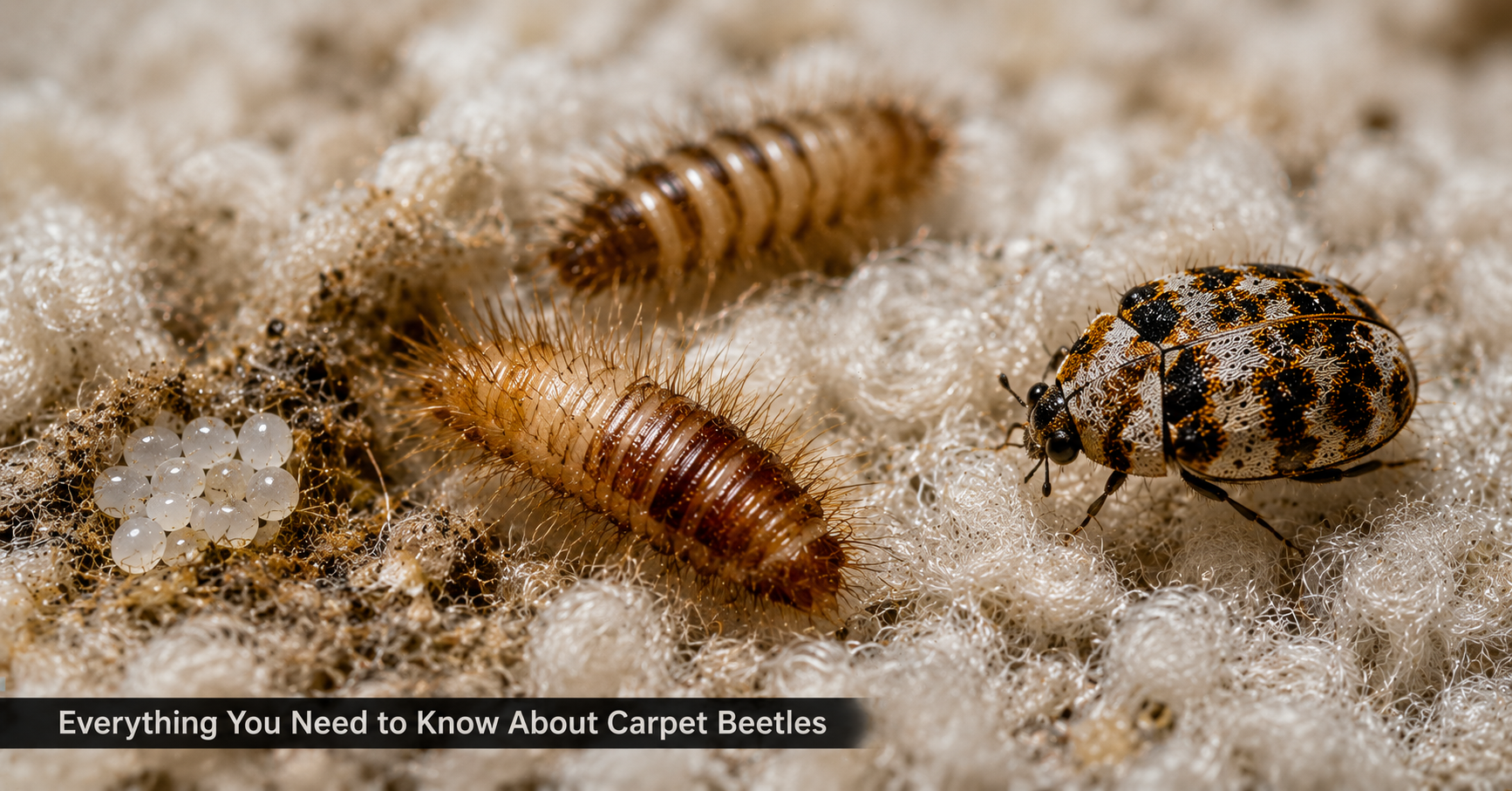
If you’re looking for a broader overview, my Everything You Need to Know About Carpet Beetles guide brings together everything I’ve learned about identifying, preventing, and getting rid of carpet beetles in one place.
What Does a Carpet Beetle Rash Look Like?
A carpet beetle rash can vary from person to person.
Some people notice:
- Small red bumps.
- Itchy patches.
- Raised areas of irritated skin.
- Dry or inflamed spots.
Because these symptoms vary so much, it’s impossible to diagnose a carpet beetle reaction based on appearance alone.
That’s one reason I always encourage people to inspect their home for actual evidence before assuming carpet beetles are responsible.


Don’t Confuse a Rash With a Bite
One mistake I see fairly often is homeowners using the words “bite” and “rash” interchangeably.
They’re different.
A bite happens when an insect pierces the skin.
A carpet beetle rash happens because your skin reacts to the hairs left behind by larvae.
Understanding that difference changes how I approach the problem.
Instead of searching for biting insects, I start looking for carpet beetle larvae and the places they’re hiding.
One of the First Clues Isn’t the Larva
Interestingly, many homeowners never find a live larva.
Instead, they discover the empty skin it leaves behind after molting.
That was exactly what happened to me.
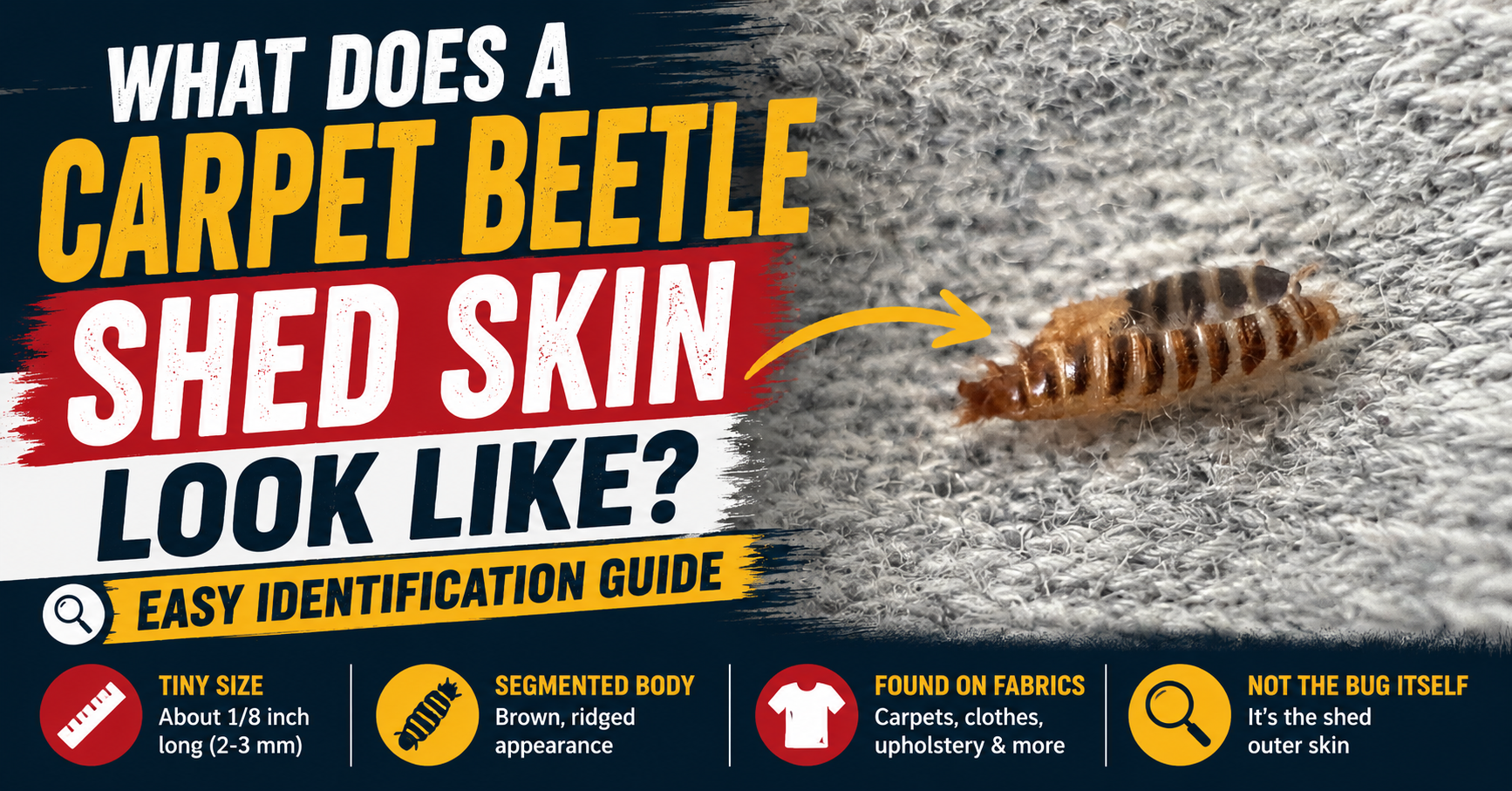
If you’ve found one of those tiny brown shells, my guide showing what a carpet beetle shed skin looks like can help you determine whether carpet beetles are actually present.


Where Contact Usually Happens
People often assume the larvae have to crawl on them.
That’s not always true.
Skin irritation can occur after handling items where larvae have been feeding.
That might include:
- Stored clothing.
- Wool blankets.
- Upholstered furniture.
- Closets.
- Pet bedding.
- Rugs.
Those are also some of the places I inspect first whenever I suspect carpet beetles.
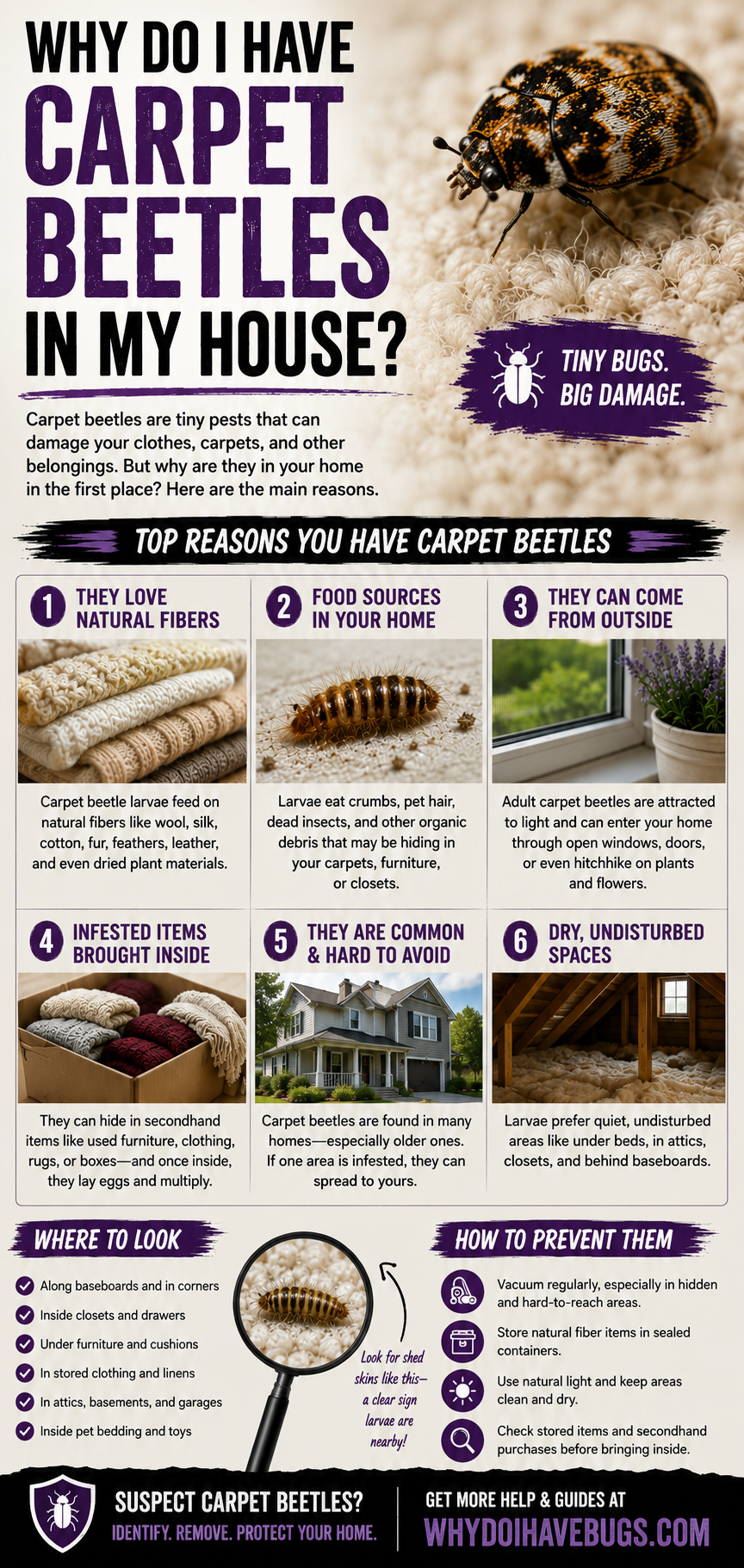
If you’re wondering where to begin looking, my guide on where carpet beetle larvae hide explains the most common hiding places I’ve found.
Why Carpet Beetles End Up Indoors
One thing I think many homeowners overlook is that carpet beetles don’t simply appear out of nowhere.
Something attracted them.
Usually it’s a combination of food sources and quiet places where larvae can develop.
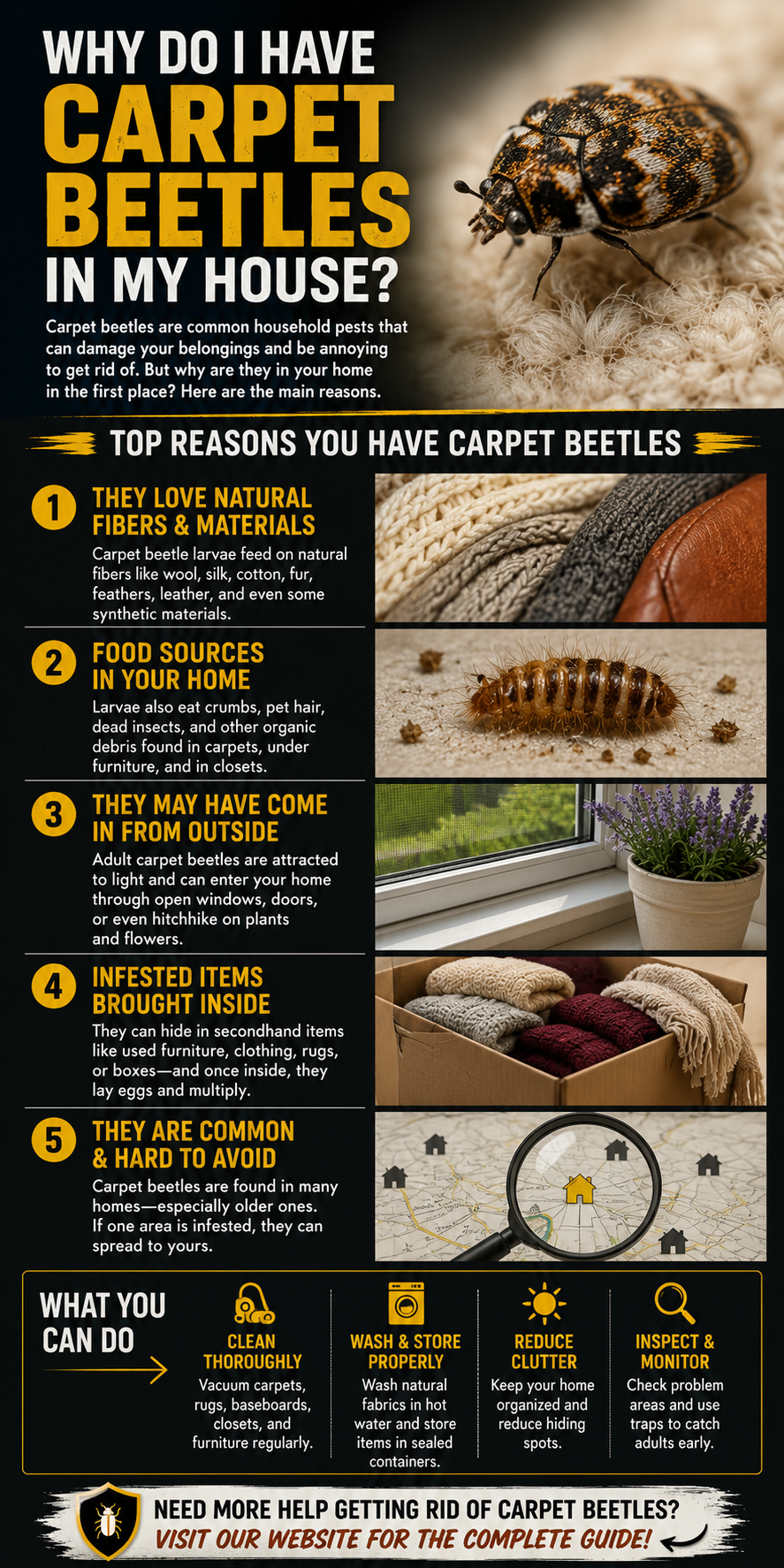
Understanding why carpet beetles are in your house often makes eliminating them much easier because it helps you remove the conditions that allowed them to become established.
What I Would Do If This Were My House
If I developed an itchy rash and suspected carpet beetles, I wouldn’t immediately assume they were responsible.
I’d investigate.
I’d inspect closets.
I’d check blankets and stored clothing.
I’d look for larvae, shed skins, and signs of fabric damage.
The more evidence I found, the more confident I’d feel about what was actually causing the irritation.
How I Would Handle a Carpet Beetle Problem
If I confirmed carpet beetles were active, my focus would be on removing the infestation rather than treating the rash alone.
Vacuuming, cleaning, inspecting natural fibers, and eliminating larvae are the steps that solve the source of the problem.
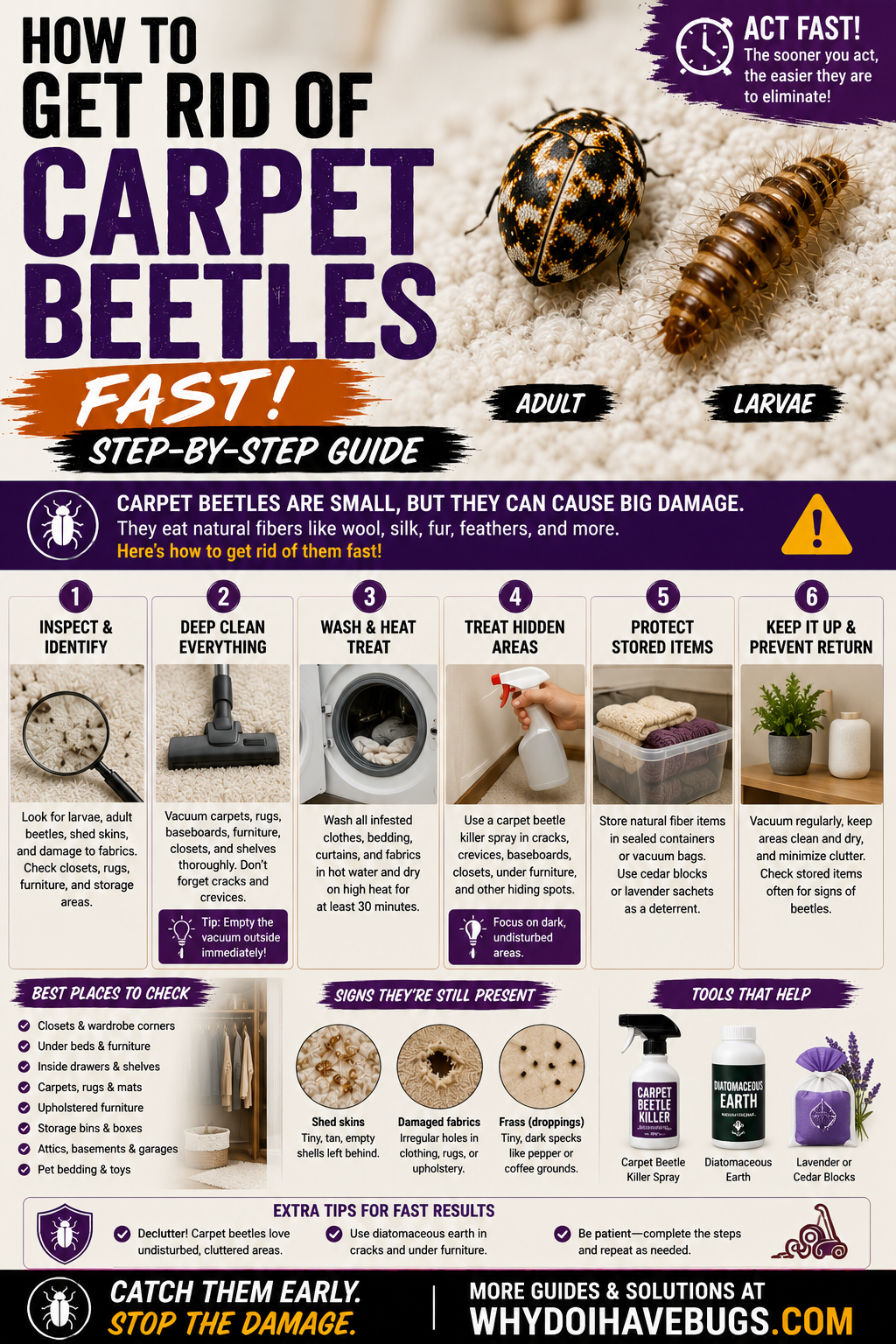
If you’re ready to tackle the infestation, my step-by-step guide to getting rid of carpet beetles fast walks through the exact process I’d follow.

If you decide an insecticide is appropriate after locating the infestation, I also explain whether carpet beetle killer spray actually works and where I think it fits into an overall treatment plan. If you decide to use one, the Carpet Beetle Killer Spray for Indoor Use is designed to target both adult carpet beetles and larvae when used according to the product label.


The Biggest Mistake I See
The biggest mistake I see is assuming every itchy spot is caused by an insect bite.
Sometimes that’s true.
Sometimes it isn’t.
With carpet beetles, the irritation often comes from the larval hairs rather than an actual bite.
That’s why identifying the insect before beginning treatment is so important.
For more identification guides and practical advice on beetles commonly found around the home, visit our growing Beetles resource center.
Frequently Asked Questions
Do carpet beetles bite humans?
No. Carpet beetles don’t bite people. However, the hairs on carpet beetle larvae can cause skin irritation or allergic reactions in some individuals.
Can carpet beetle larvae bite?
No. Carpet beetle larvae don’t bite, but their tiny hairs may trigger an itchy rash after contact.
Why do I have itchy bumps if carpet beetles don’t bite?
Some people develop an allergic reaction to the hairs on carpet beetle larvae, while others may have another unrelated skin condition. It’s important to inspect your home before assuming carpet beetles are responsible.
Are carpet beetles dangerous?
Carpet beetles aren’t considered dangerous to people, but their larvae can damage clothing, rugs, upholstery, and other materials made from natural fibers.
Should I get rid of carpet beetles if they’re causing skin irritation?
Yes. If you’ve confirmed carpet beetles are present, eliminating the infestation is the best way to reduce ongoing exposure to larval hairs and prevent additional damage to your belongings.
About the Author
Ryan Mitchell is a home pest researcher who specializes in identifying household insects through firsthand observations and practical inspections. He enjoys helping homeowners understand why pests appear, how to identify them correctly, and the most effective ways to eliminate them before they become larger problems.