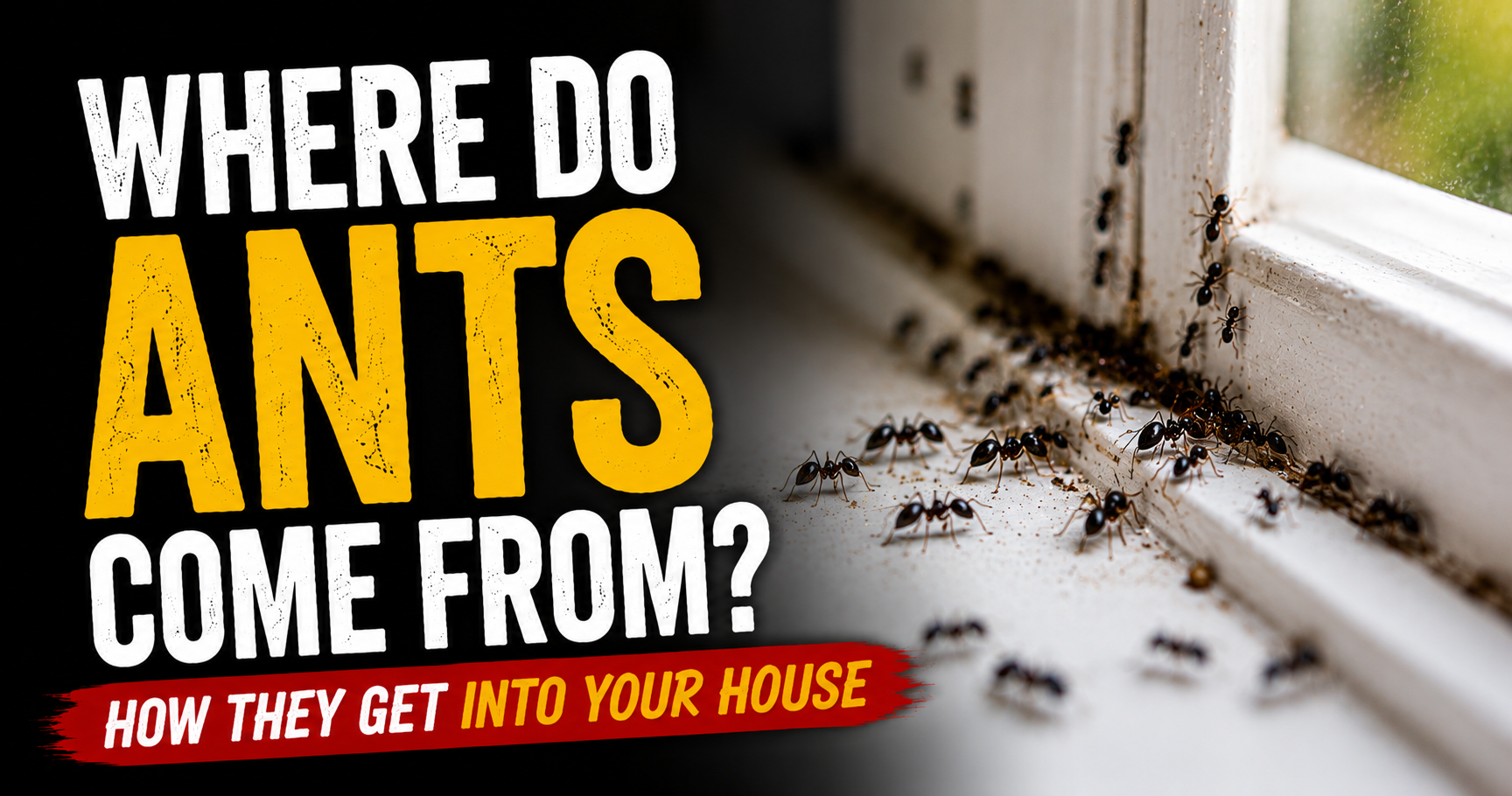
You’re sitting in your living room one evening and notice a single ant crawling across the floor.
The next day there are five.
A few days later there’s an entire trail moving across the kitchen counter.
That’s usually when people ask me the question I hear all the time:
“Where are these ants coming from?”
It feels like they appeared overnight.
In reality, they almost never do.
By the time you notice ants inside your home, there’s usually been activity happening behind the scenes for days or even weeks. Worker ants spend a lot of time exploring before they establish the well-defined trails that homeowners eventually notice.
The good news is that ants don’t magically appear. Changes in weather, moisture, food, and entry points can explain that sudden activity in Why Are Ants Suddenly in My House — And How Do I Stop Them?.
They’re coming from somewhere.
If you can figure out where they’re entering and why they chose your home in the first place, you’re much more likely to solve the problem instead of fighting the same battle over and over. For a room-by-room look at attractants and common entry points, use Why Are Ants Coming Into My Kitchen and How Do I Stop Them?.
My First Thought
Whenever someone tells me ants “came out of nowhere,” I almost always smile.
Not because I don’t believe them.
Because I’ve heard it hundreds of times.
The reality is that ants are incredibly good at staying hidden until enough worker ants begin using the same route.
My first goal isn’t killing the ants.
It’s figuring out where that invisible highway begins.

Most Ants Start Outside
One of the biggest misconceptions I hear is that ants suddenly decide to live inside a house.
For most species, that’s not what happens.
Many common household ants have nests outdoors in places like:
- Soil
- Mulch beds
- Flower gardens
- Beneath rocks
- Under sidewalks
- Around tree roots
- Rotting logs
- Landscape timbers
Your home simply becomes part of their search for food and water.
Tiny Cracks Are Bigger Than You Think
Homeowners often search for a huge hole where ants are entering.
Most of the time, they won’t find one.
Ants can squeeze through incredibly small openings around:
- Window frames
- Door thresholds
- Utility lines
- Foundation cracks
- Dryer vents
- Plumbing pipes
- Electrical penetrations
- Garage doors
Some of these gaps are barely noticeable until you know where to look.
Food Is a Powerful Invitation
Ants don’t usually wander inside for no reason.
Worker ants are constantly searching for food to bring back to the colony.
Some of the biggest attractants include:
- Sugar
- Honey
- Syrup
- Crumbs
- Pet food
- Grease
- Fruit
- Uncovered trash
One successful trip is often all it takes.

Once a worker finds food, it leaves behind a pheromone trail that guides more ants to the same location. That behavior is explained in more detail in Why Do Ants Follow Each Other? The Science Behind Ant Trails, including how pheromones guide workers along the same route.

Water Can Attract Ants Too
Many homeowners focus entirely on food.
I’ve found that water is often just as important.
A slow plumbing leak.
Condensation under a sink.
A dripping faucet.
Even moisture around a window air conditioner.
Those small water sources can keep worker ants returning day after day.
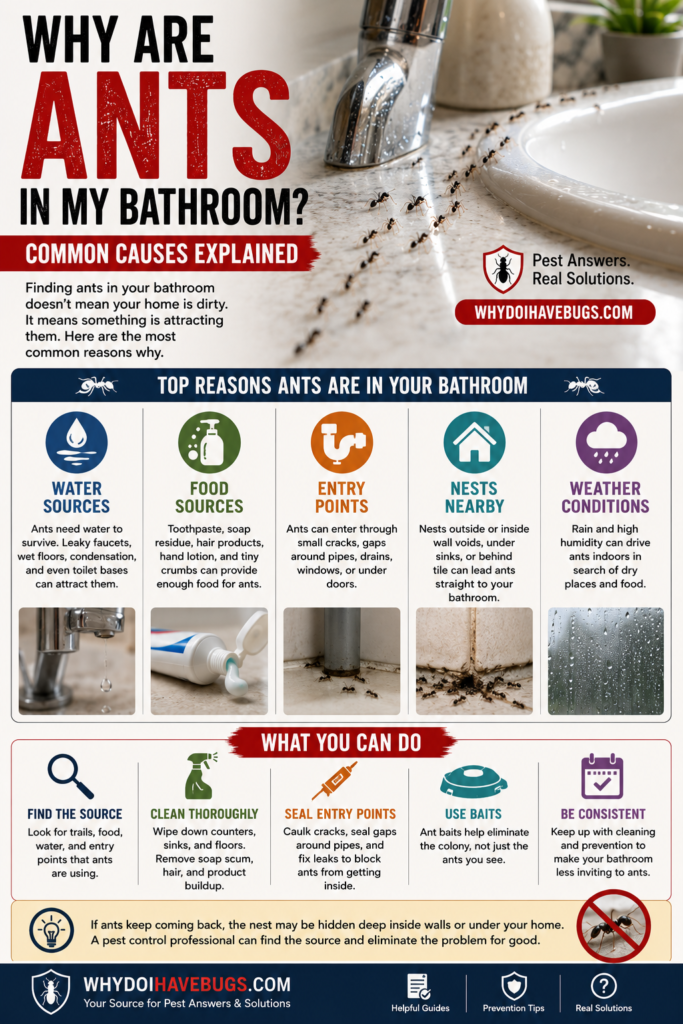
If your ant problem is centered around a bathroom, our guide on Why Are Ants in My Bathroom? explains why moisture is often the real attraction.
Why I Watch the First Five Ants Instead of Killing Them
This is probably the habit that’s helped me solve more ant problems than anything else.
When I see the first few ants, I don’t immediately grab bug spray.
I watch them.
Where are they coming from?
Where are they going?
Do they disappear beneath the dishwasher?
Are they climbing up from a basement wall?
Do they vanish behind the trim next to a window?
Those first few ants usually tell me more about the infestation than the next hundred ever will.
Following their trail often leads me directly to the entry point or at least narrows down where the colony is operating.
Once I understand their route, my chances of solving the problem permanently go way up.


Could Ants Be Living Inside the Walls?
Yes.
Some species establish nests inside wall voids, particularly if they find moisture or damaged wood.
Others simply use wall spaces as protected travel routes while nesting outdoors.
That’s why I don’t automatically assume an indoor colony just because ants are emerging from an electrical outlet or baseboard.
They’re often using the walls like a protected highway.
Why Rain Brings Ants Indoors
I’ve noticed a pattern over the years.
Every time we have several days of heavy rain, more homeowners start asking why ants suddenly appeared.
There’s a good reason.
Heavy rain can flood outdoor nests.
When that happens, colonies begin searching for:
- Dry shelter
- Reliable food
- Fresh water
Your home suddenly looks like a much better place to explore.
If your infestation seems to begin after storms, that timing is probably more than a coincidence.


Why They Keep Coming Back
One thing I remind homeowners is that ants are persistent.
If the colony is still healthy, worker ants continue exploring.
Even if you kill today’s trail, more workers may appear tomorrow.
That’s why recurring infestations are so common.
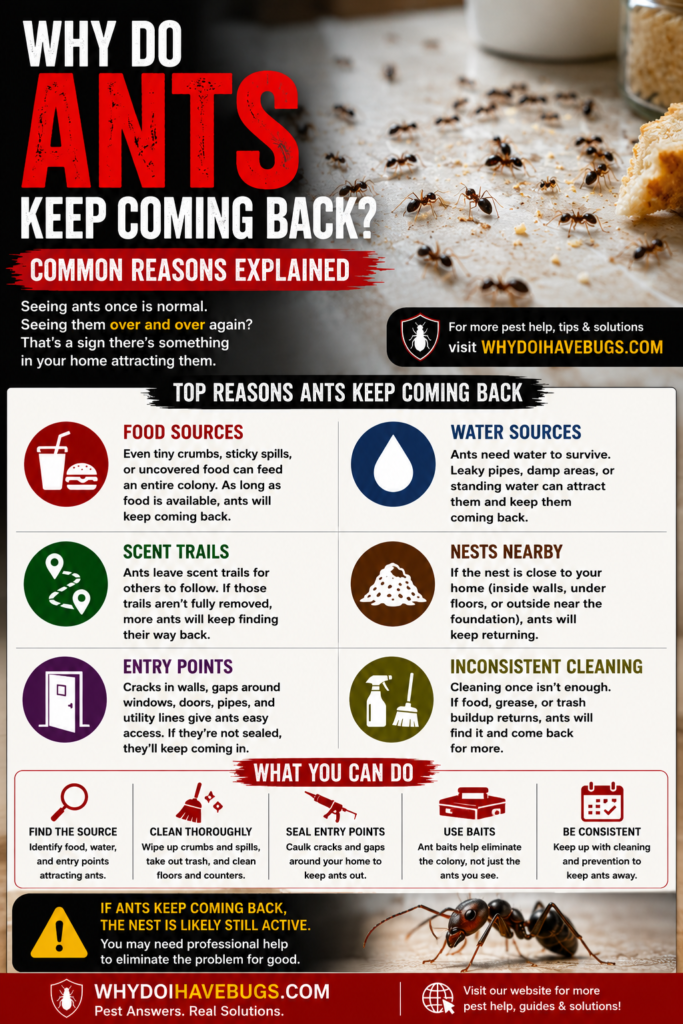
Our guide on Why Do Ants Keep Coming Back? explains why the colony usually survives long after the visible ants disappear.
Could Flying Ants Mean the Colony Is Nearby?
Sometimes.
Flying ants are reproductive ants produced by mature colonies.
Finding a few indoors doesn’t always mean they’re nesting inside your home.
However, repeated swarms deserve a closer look.
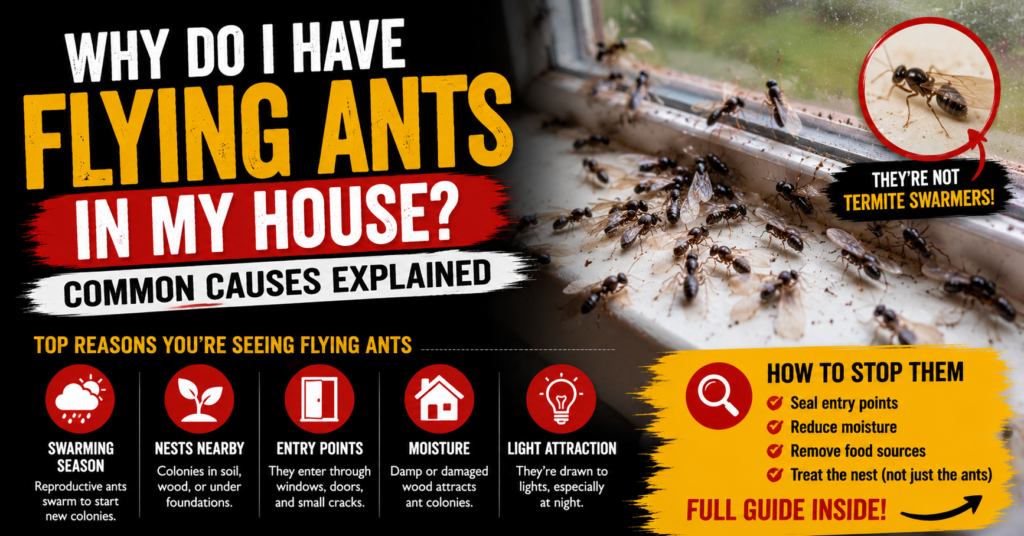
Our guide on Why Do I Have Flying Ants in My House? explains when I become more concerned.
What If They’re Tiny Black Ants?
This is probably the description I hear most often.
People rarely know the exact species.
They simply say they have “tiny black ants.”
Whether they’re little black ants, odorous house ants, or another common species, the solution still starts with finding the entry point and understanding what attracted them.
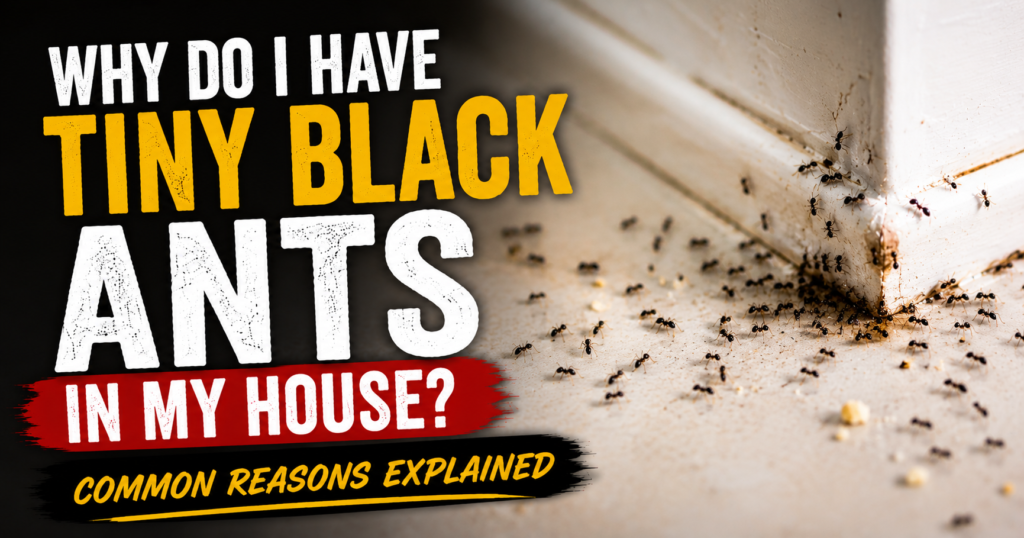
Our guide on Why Do I Have Tiny Black Ants in My House? explains why these tiny invaders are so common.
What I Would Do If This Were My House
If ants suddenly appeared in my home today, I wouldn’t start spraying random corners.
I’d grab a flashlight.
I’d follow the trail.
I’d inspect windows, doors, plumbing penetrations, and the exterior foundation.
I’d look for moisture problems.
I’d pay attention to where the ants disappeared instead of where they first caught my attention.
Understanding where they came from would help me choose the right solution instead of simply treating the symptoms.
Products That Can Help
Once I understand where ants are entering, I prefer treatments that target the colony rather than simply killing the workers I can see.
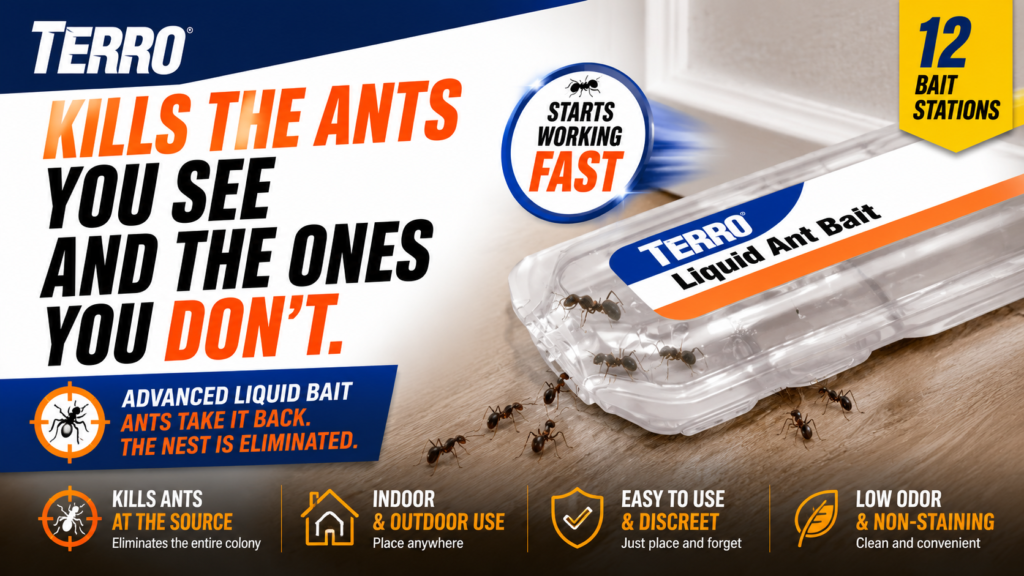
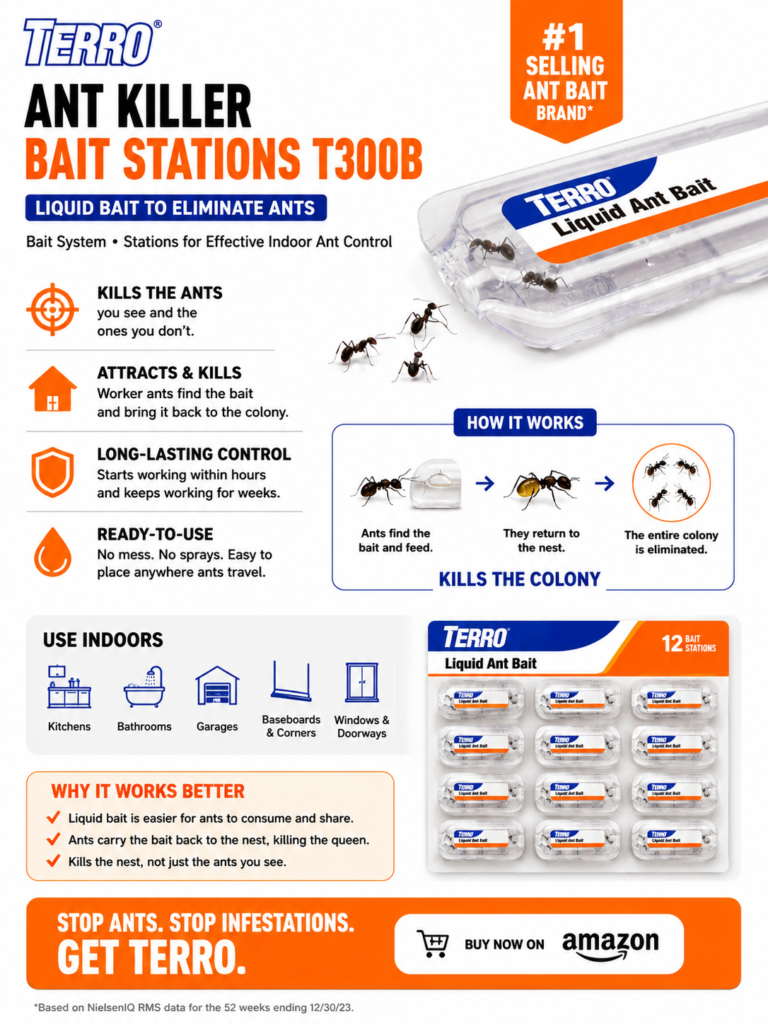
I’ve had good results using TERRO Liquid Ant Bait Stations because the worker ants carry the bait back to the nest. If you’re thinking about using them, my TERRO Liquid Ant Bait Stations review explains where I place them, how long they usually take to work, and the common mistakes to avoid.


For recurring infestations, Ecoxall Boric Acid Fine Powder can also be an effective tool when used properly. I explain where it fits into an overall treatment strategy in my Boric Acid for Roaches and Ants review.
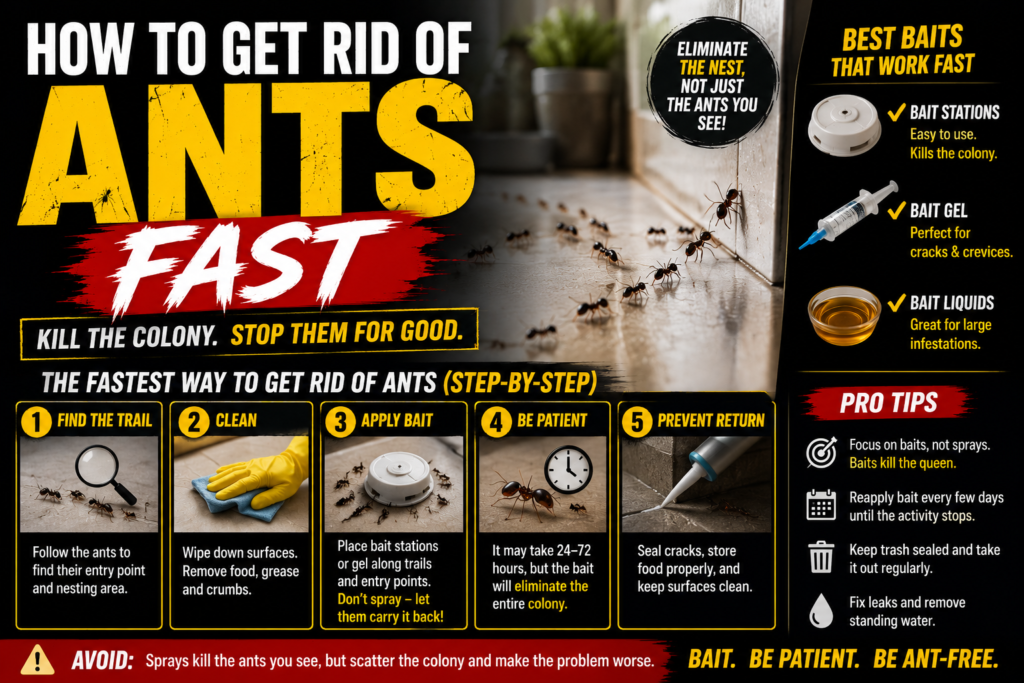
If you’re ready for a complete plan, don’t miss my guide on Getting Rid of Ants Fast, where I walk through the process I’d follow from start to finish.
The Biggest Mistake I See
The biggest mistake I see is homeowners focusing on where they first spotted an ant instead of where the ants are actually coming from.
The ant on your countertop isn’t the real problem.
The trail, the entry point, and the colony are.
Once you understand that, solving an ant infestation becomes much more straightforward.
Frequently Asked Questions
Where do ants usually come from?
Most household ants originate from outdoor colonies and enter homes while searching for food, water, or shelter.
Can ants live inside walls?
Yes. Some species nest inside wall voids, while others simply travel through them on the way to food and water.
Why did ants suddenly appear overnight?
Worker ants may spend days exploring before establishing a pheromone trail that brings many more ants into the same area.
Does finding one ant mean there’s a colony?
Not necessarily, but a single worker often indicates that a colony is exploring nearby.
What’s the best way to stop ants from coming inside?
The most effective approach is identifying where they’re entering, removing food and moisture sources, and treating the colony instead of only the visible workers.
About the Author
Ryan Mitchell is a home pest researcher who enjoys studying ant behavior, seasonal insect activity, and practical pest prevention. He focuses on helping homeowners understand why ants enter homes and how to stop infestations by finding the source rather than chasing individual worker ants.