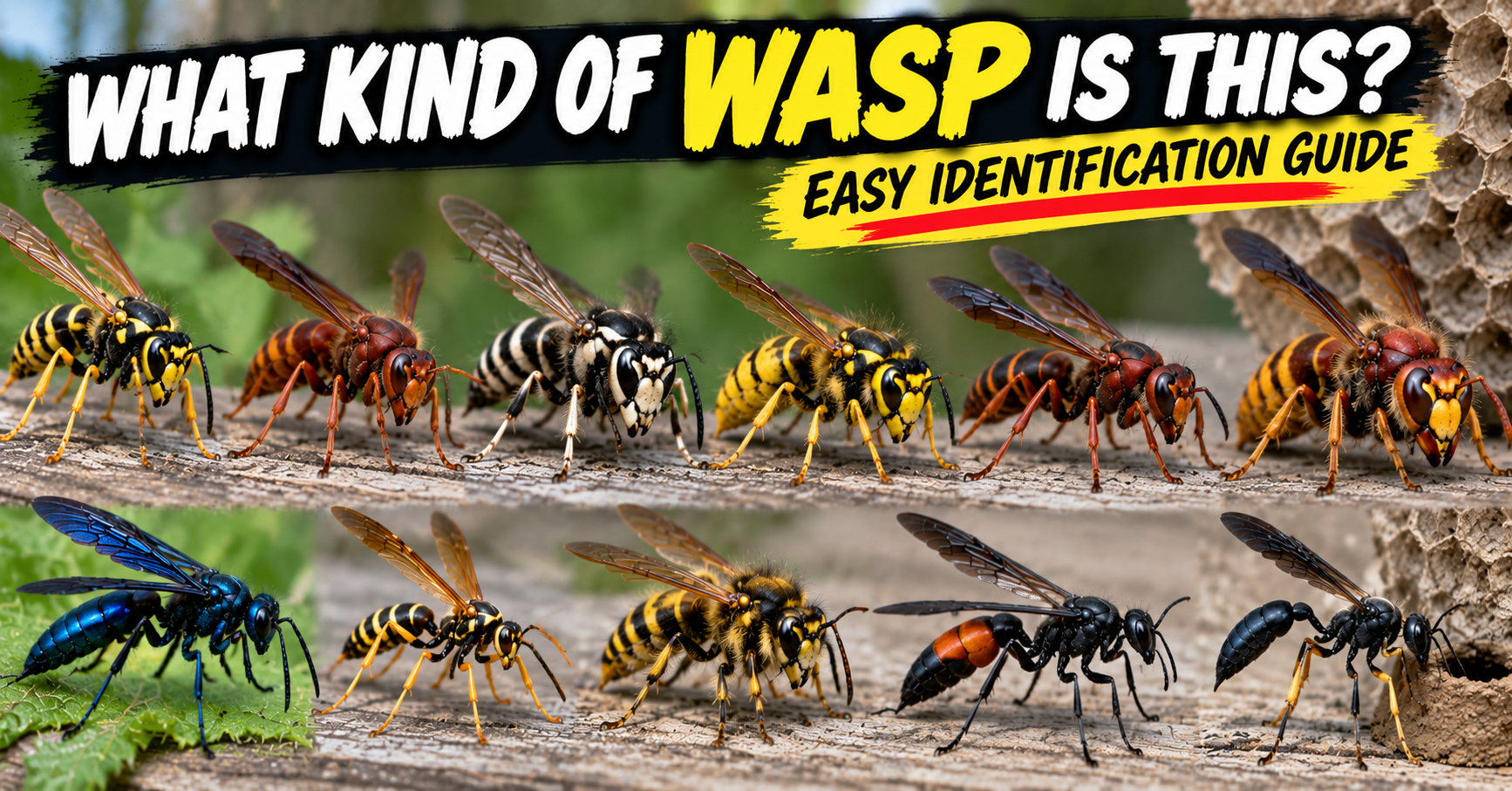
Most people do not care about the exact kind of wasp until one starts circling their porch, building under an eave, or flying in and out of a hole near the house. Then it matters fast.
The good news is that the nest, body shape, color, and behavior usually tell you a lot. You do not need to get close enough to risk a sting. In fact, staying back and watching where the wasp goes is often the safest and most useful way to identify it.
Start With the Nest, Not the Wasp
A wasp can move too fast to identify from a quick look. The nest often gives you a much clearer answer.
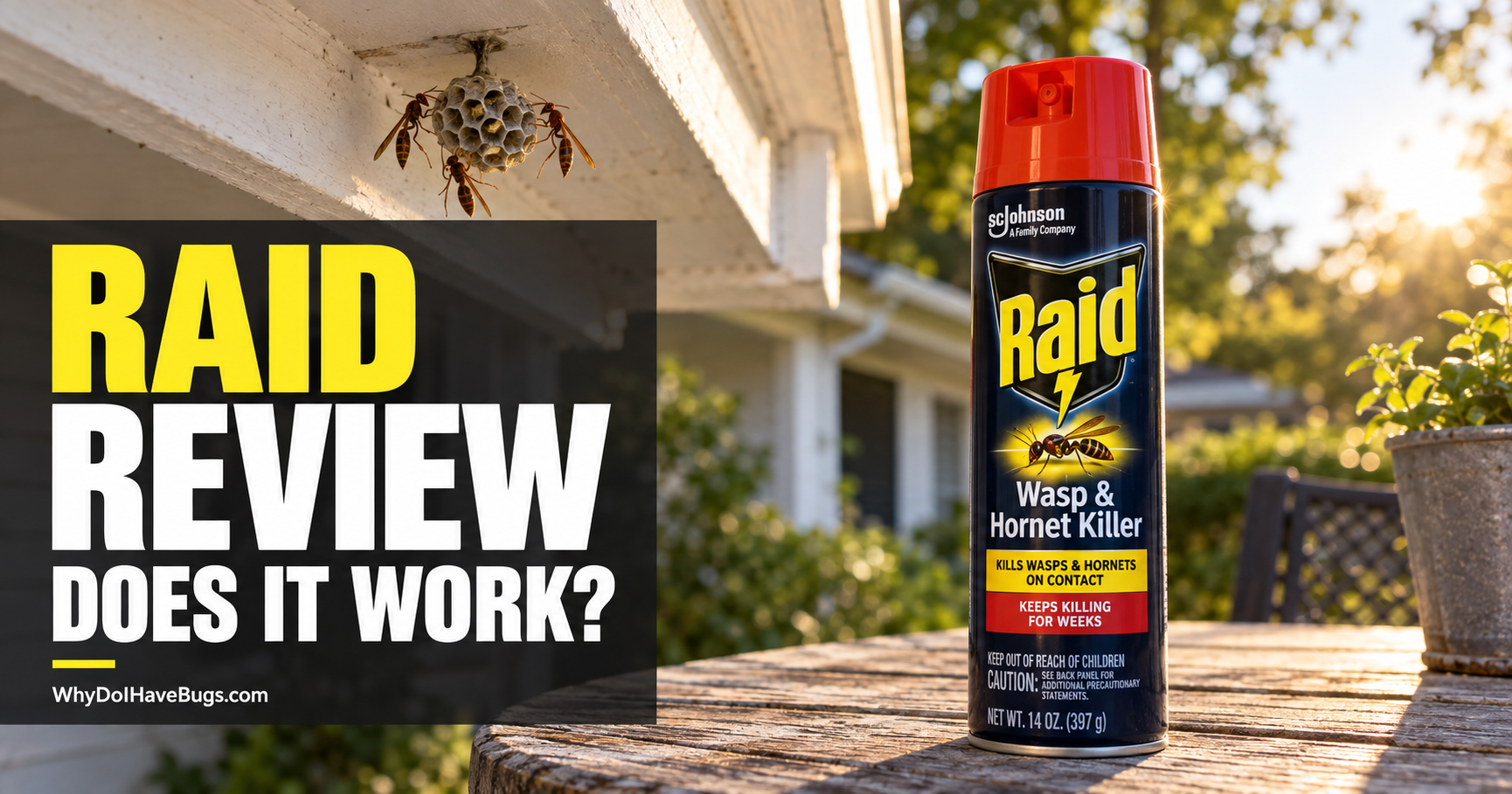
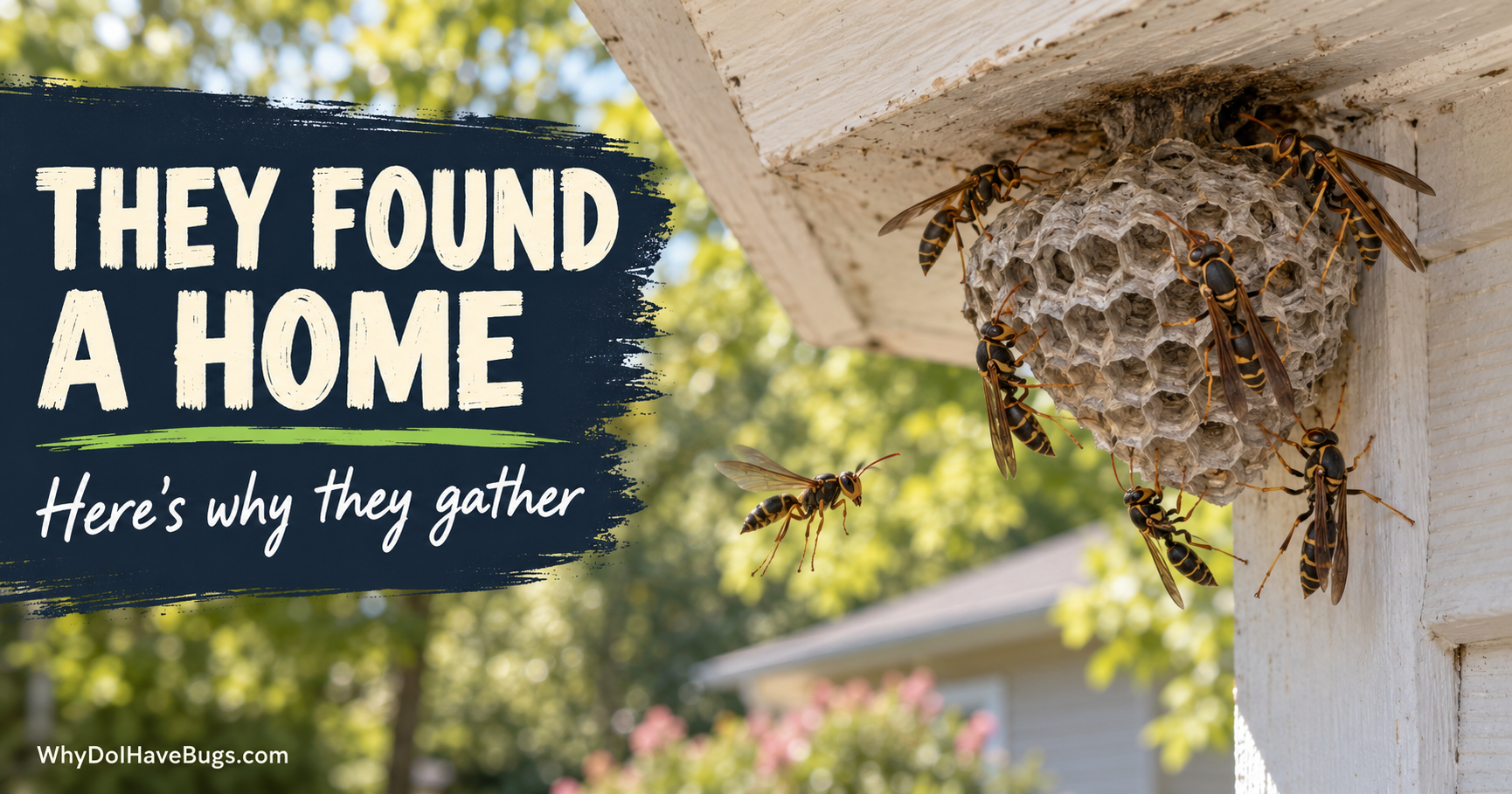
An open paper nest hanging under an eave, porch ceiling, shed roof, or deck railing usually points to paper wasps. A busy stream of yellow-and-black wasps flying into a small hole in the ground, wall, soffit, or siding often points to yellowjackets. For an exposed paper-wasp nest, the open paper nest review explains when a spray may be appropriate and when it is not.
A large gray paper nest that looks like it is wrapped in layers of paper is more likely a hornet or yellowjacket nest. Small tube-like mud nests stuck to a wall, ceiling, or shed are usually from mud daubers.
Before you knock down, spray, or disturb anything, watch from a safe distance. Pay attention to how many wasps are coming and going, where they enter, and whether the nest is open or enclosed.
Paper Wasps
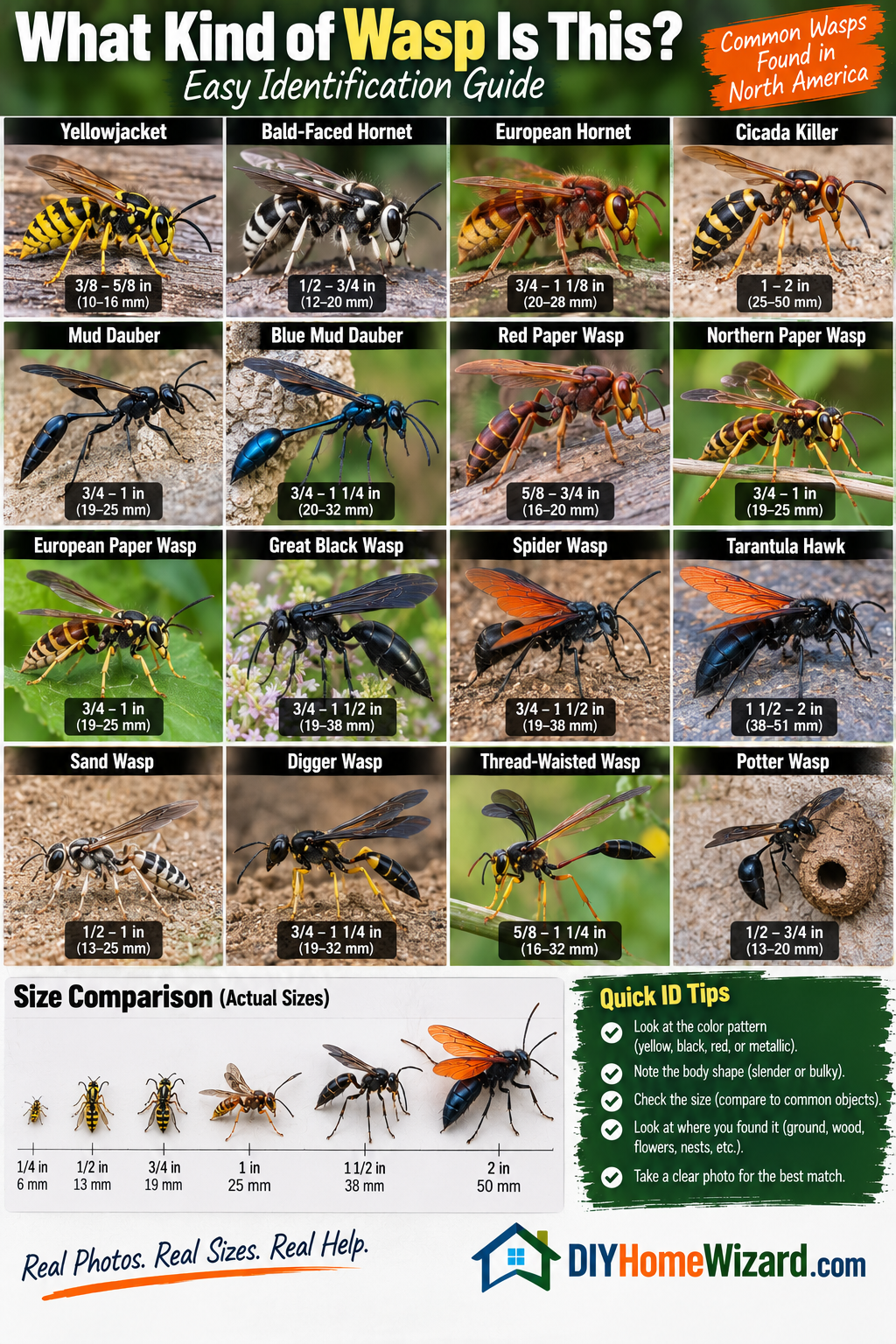
Paper wasps are one of the most common wasps homeowners find around porches, sheds, barns, decks, outdoor lights, and roof overhangs. They have narrow bodies, long legs that often hang down while they fly, and colors that may be brown, reddish brown, black, yellow, or a mix of those shades.
Their nests are open on the bottom. You can often see the individual paper-like cells that hold the developing wasps. A small stalk attaches the nest to the surface above it.
Paper wasps usually build in protected spots where rain does not hit the nest directly. That is why they show up under almost everything around a rural property: eaves, barn rafters, lawn furniture, grill covers, equipment, birdhouses, gates, and the underside of decks.
They can sting if they feel their nest is threatened, but they are often less aggressive away from it. The mistake is getting too close without seeing the nest first.
Yellowjackets
Yellowjackets are the wasps most likely to surprise you because many species nest in hidden places. They are usually bright yellow and black, compact, and fast-moving. They look more like a sleek, narrow-waisted version of a bee than the long-legged paper wasps you see hanging around eaves.
Many yellowjackets nest underground in old rodent holes, gaps beside landscaping, woodpiles, retaining walls, or spots along a foundation. Others can nest inside wall voids, attics, soffits, sheds, and other enclosed spaces.
A yellowjacket nest can seem quiet until someone mows over it, steps near the entrance, moves a board above it, or starts trimming nearby weeds. Then several wasps may come out quickly to defend it.
If you see a steady line of wasps flying in and out of one opening, do not plug the hole while the nest is active. Blocking an entrance can make the wasps search for another way out, which may be inside a wall or closer to your living area.
Hornets
In everyday conversation, people often call every big wasp a hornet. True hornets are larger types of social wasps, while many of the insects called “hornets” around homes are actually yellowjackets or bald-faced hornets.
Bald-faced hornets are common in many parts of the United States. They are black with bold white markings rather than yellow. Their nests are enclosed, gray, papery, and often football-shaped or pear-shaped.
You may find a bald-faced hornet nest in a shrub, small tree, under a roof edge, on an outbuilding, or attached to a structure. A mature nest can become surprisingly large, and the wasps defend it aggressively if people get too close.
Do not try to identify a hornet nest by climbing a ladder or walking underneath it. Watch from the ground with binoculars or use your phone camera zoom from a safe location.

Mud Daubers
Mud daubers look intimidating because they are wasps, but they are usually among the least troublesome wasps around a house. They are slender, often black or metallic blue-black, and have a long thin waist that makes their body look stretched out.
Their nests are made from mud. You may find a row of little mud tubes or lumpy mud cells on a porch ceiling, garage wall, shed, barn beam, or under an overhang.
Mud daubers are solitary wasps. They do not have a large colony defending one nest, which is a big reason they are usually much calmer than paper wasps or yellowjackets.
They hunt spiders to stock their nests for their young. If a mud dauber nest is high up and out of the way, leaving it alone is often the easiest option. If it is on a doorway, patio ceiling, or equipment you use often, remove it only when there is no active wasp on it.
Cicada Killers
Cicada killers are big enough to make people think they have found a dangerous giant hornet. They are large, heavy-bodied wasps with reddish brown and yellow markings, and they appear during the warm part of summer when cicadas are active.
Female cicada killers dig burrows in loose, sandy, sunny soil. You may see piles of freshly moved dirt with a round entrance hole nearby. Common places include bare patches in lawns, garden edges, gravel areas, dry banks, and sandy spots around driveways.
They look scary, but they are usually not aggressive toward people. Males may fly around their burrow area and act territorial, but they do not have stingers. Females can sting, but they usually focus on digging and hunting cicadas instead of bothering people.
A cicada killer problem is different from a yellowjacket nest. Yellowjackets often have many workers using one concealed entrance. Cicada killers tend to have individual burrows spread across a sunny patch of ground.


What About Red Wasps?
“Red wasp” is a common name people use for several reddish paper wasp species. They have the same general paper wasp look: narrow body, long legs, and an open paper nest with visible cells.
Red wasps can be more noticeable because their color stands out against siding, porch ceilings, and barn walls. Like other paper wasps, they are most likely to sting when their nest is disturbed or when they feel trapped.
Treat them the same way you would treat any active paper wasp nest. Give the nest plenty of space, avoid sudden movements near it, and do not try to swat individual wasps around the nest area.
Wasp or Bee? The Quick Difference
Bees are usually hairier and thicker-bodied than wasps. Many bees also look softer or fuzzier because of the hairs that collect pollen.
Wasps tend to have smoother bodies, a more obvious narrow waist, and longer legs. Yellowjackets and paper wasps often look sleek and shiny compared with a honey bee or bumblebee.
This matters because bees are important pollinators, and many species are not looking to build a large defensive colony on your house. If you see a hairy insect visiting flowers, moving pollen, and coming and going from a spot away from the house, take a moment before assuming it is a wasp.


Wasp or Fly? The Easy Check
Some flies mimic wasps and bees so well that they can fool people at first glance. Hoverflies, for example, may have yellow-and-black markings but cannot sting.
A true wasp has four wings, though they can be hard to count while it flies. Flies have two wings and often hover in place more smoothly. Wasps also have the narrow waist that separates the thorax from the abdomen.
If the insect keeps visiting flowers, hovers in place, and has no visible nest nearby, it may be a harmless fly mimic rather than a wasp.
Why So Many Wasps Build Around Houses
Houses, sheds, barns, decks, and outdoor equipment offer protected places that feel a lot like natural shelter. Eaves and overhangs keep rain off paper nests. Wall voids and ground cracks offer hidden space for yellowjackets. Porches and rafters provide easy attachment points for mud daubers.
Food can bring them around too. Wasps are attracted to garbage, ripe fruit, sweet drinks, hummingbird feeders, pet food, outdoor meals, and insects they hunt for protein. The same food sources can explain why wasps seem especially numerous around a home, as this guide to what attracts wasps to your property explains.
Late summer often feels like the worst time because social wasp colonies are larger and workers are actively hunting for food. A nest that was tiny and easy to miss in early summer can become a much bigger issue by August.
For the broader list of places they like to settle around homes, keep an eye on the Wasps and Hornets category as this guide series grows.
How to Identify a Wasp Nest Safely
Never stand directly below an active nest or put your face close enough to inspect it. A phone camera with zoom, binoculars, or a view from across the yard is safer.
Look for the following clues:
- An open umbrella-shaped paper nest points toward paper wasps.
- A large enclosed gray paper nest points toward bald-faced hornets or yellowjackets.
- A busy hole in the ground or wall usually points toward yellowjackets.
- Small mud tubes or clumps on a structure point toward mud daubers.
- Individual burrows in loose sunny soil may point toward cicada killers.
- A single wasp repeatedly flying beneath an eave may be starting a small paper wasp nest.
The way wasps enter and leave matters more than the exact color you catch in one blurry photo.
Do Not Assume Every Wasp Is Aggressive
Wasps do not sting for fun, but a nest can be defended quickly when wasps feel it is threatened. The risk changes a lot based on the species, the time of year, how close you are to the nest, and whether you are blocking their flight path.
A mud dauber on the side of a shed is usually very different from yellowjackets nesting in the ground beside a place where your kids, pets, mower, or equipment pass.
The safest move is to give any unknown active nest space until you know what it is. Do not mow, weed-eat, pressure wash, climb a ladder, or move stored items around a nest entrance.
When to Remove a Wasp Nest
A nest that is far from doors, play areas, animal pens, walkways, and work spaces may not need immediate action. Small mud dauber nests and distant paper wasp nests are often easy to leave alone if nobody needs to be near them.
Removal makes more sense when a nest is beside an entrance, under a deck you use, in a kids’ play area, near livestock, above equipment, or close to an outdoor work area. Yellowjackets in the ground are especially worth taking seriously if you cannot avoid the entrance.
Large nests, nests inside walls, nests in attics, or nests near anyone with a known severe sting allergy are usually better handled by a pest professional. A home spray is not always the safest or smartest answer when wasps have multiple escape routes or a hard-to-reach nest.
Frequently Asked Questions
What is the most aggressive kind of wasp around a house?
Yellowjackets are often the biggest concern because they commonly nest in hidden places and may defend the nest quickly. Bald-faced hornets can also be very defensive around an active nest.
How can I tell if I have yellowjackets or paper wasps?
Paper wasps usually build open nests with visible cells under eaves and covered areas. Yellowjackets often fly into hidden wall, ground, or soffit openings and build enclosed nests.
Are big red wasps dangerous?
Red paper wasps can sting if their nest is disturbed, but they are not usually hunting people. Give the nest space and avoid trying to swat them.
What are the wasps digging holes in my yard?
Large wasps digging individual burrows in dry, sunny soil may be cicada killers. They look intimidating but are generally less aggressive than yellowjackets.
What kind of wasp builds mud nests?
Mud daubers build small nests from mud on walls, beams, porch ceilings, and sheds. They are solitary wasps and are usually not aggressive.
Can I identify a wasp by its nest?
Often, yes. The nest style and location can be more helpful than the wasp’s color, especially when you are watching from a safe distance.
Should I spray a wasp nest at night?
Nighttime is when many wasps are back at the nest, which can make a large active nest riskier rather than easier for a homeowner. If the nest is large, enclosed, hard to reach, or near a doorway, professional removal is often the safer call.
Caleb Warren writes practical home and garden pest guides for WhyDoIHaveBugs.com, helping homeowners identify what they are dealing with before choosing a treatment.