Cicadas make a lot of noise, leave shells on trees, and can show up by the hundreds, so it is easy to assume they are eating everything in sight. They are not. Cicadas do not chew leaves, strip gardens, or devour crops like grasshoppers and true locusts.
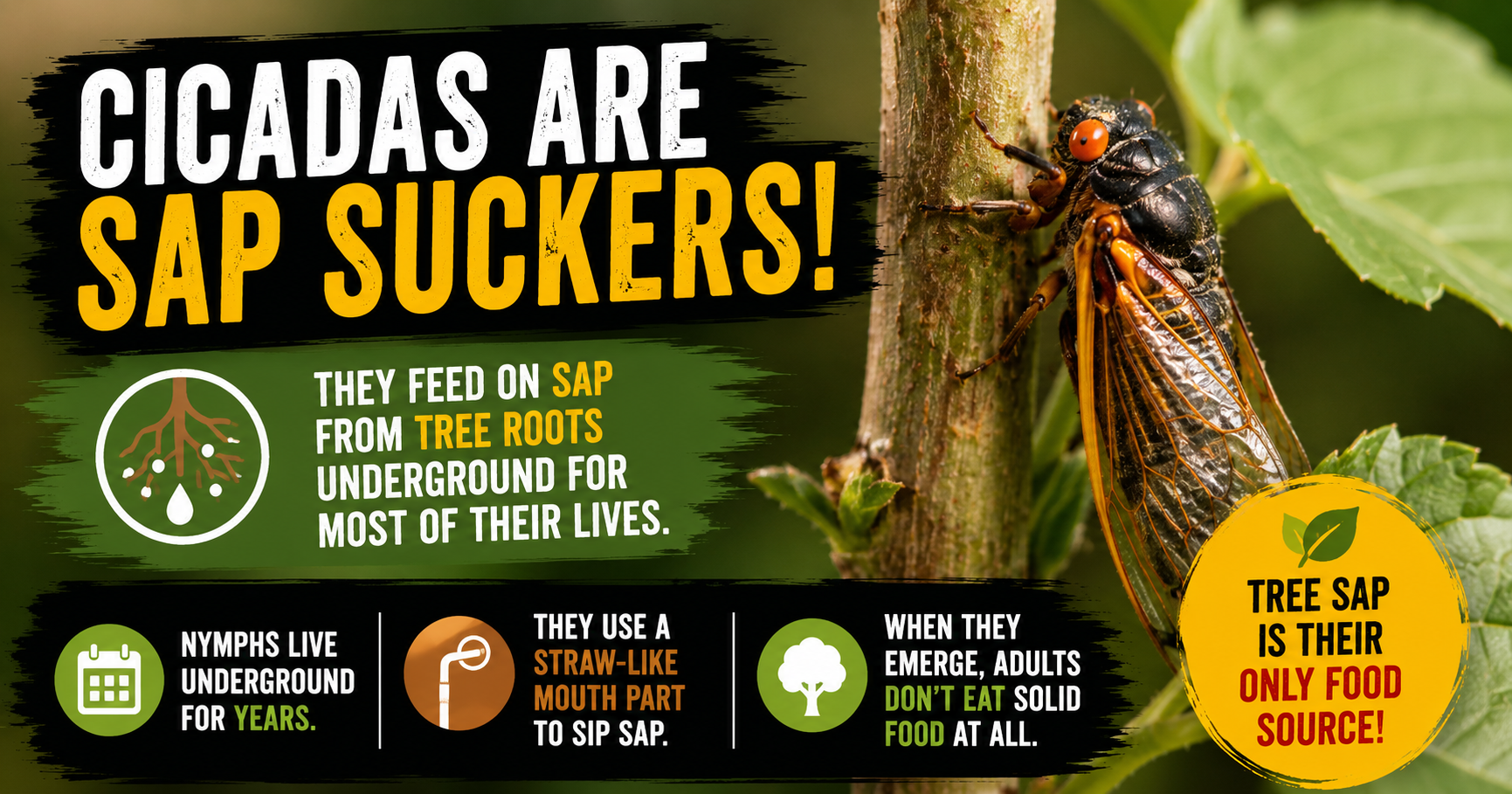
Instead, cicadas drink fluids from plants. Young cicadas feed underground from tree roots, while adult cicadas feed from small twigs and branches. Their diet is simple, and it is one reason established trees usually handle cicada season just fine.
What Do Cicadas Eat?
Cicadas feed on fluids from plants.
They use a long, straw-like mouthpart called a rostrum to pierce plant tissue and draw out watery fluids. They do not have chewing jaws, so they cannot make holes in leaves or eat chunks from fruit and vegetables.
Their food source changes depending on their stage of life:
- Cicada nymphs feed from tree roots underground.
- Adult cicadas feed from small twigs and branches above ground.
Cicadas may use many tree species, including oak, maple, hickory, elm, willow, fruit trees, and other woody plants.



What Do Baby Cicadas Eat?
Baby cicadas, called nymphs, feed from roots underground.
After hatching from eggs in a tree twig, tiny nymphs drop to the soil and burrow down to find roots. They stay underground for years, slowly growing and molting while feeding on fluids from those roots.
This does not usually hurt healthy mature trees. Cicadas have been using tree roots this way for a very long time, and established trees are built to handle it.
Nymphs do not eat soil, worms, other insects, or decaying wood. Their diet is plant fluids from living roots.
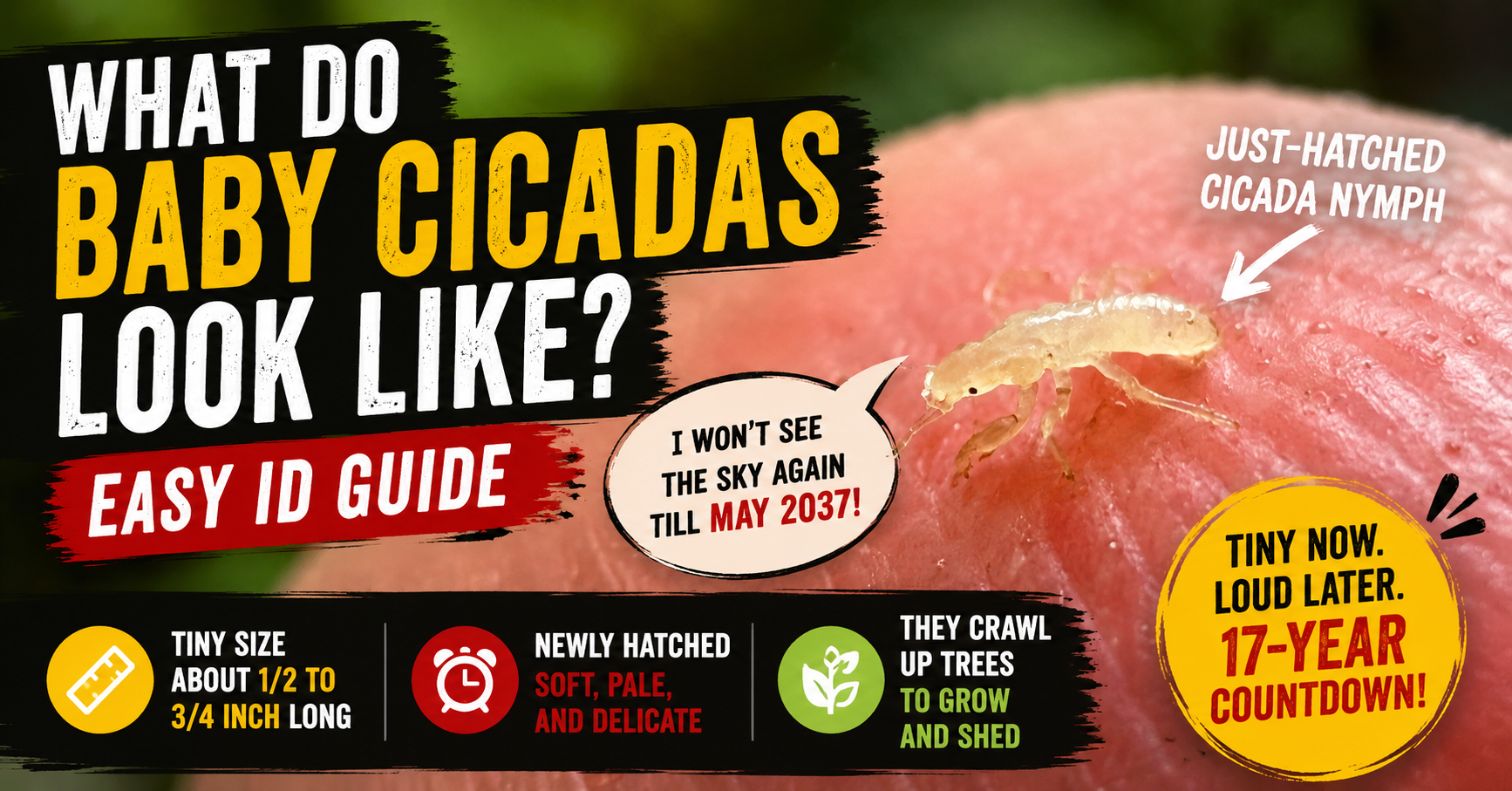
For more on the young underground stage, see what baby cicadas really look like.
What Do Adult Cicadas Eat?
Adult cicadas feed from small twigs, branches, and tender woody growth.
They insert their rostrum into plant tissue and drink xylem fluid, which is mostly water and dissolved minerals moving upward through the plant. This food is watery and low in nutrients, so cicadas need to process a lot of it.
Adult cicadas do not normally feed on tomatoes, corn, lettuce, flowers, or other soft garden crops the way a chewing insect would. You may find one resting on a vegetable plant, but that does not mean it is eating the leaves.
Do Cicadas Eat Leaves?
No. Cicadas do not chew leaves.
If you see ragged holes, missing edges, or leaves stripped down to veins, another insect is responsible. Grasshoppers, caterpillars, Japanese beetles, beetles, and sawfly larvae are much more likely to cause that kind of injury.
Cicadas can make a tree look damaged in a different way. Females cut narrow slits into small twigs when they lay eggs. The part of the twig beyond those cuts can wilt and turn brown, leaving clumps of dead leaves hanging at the branch tips.
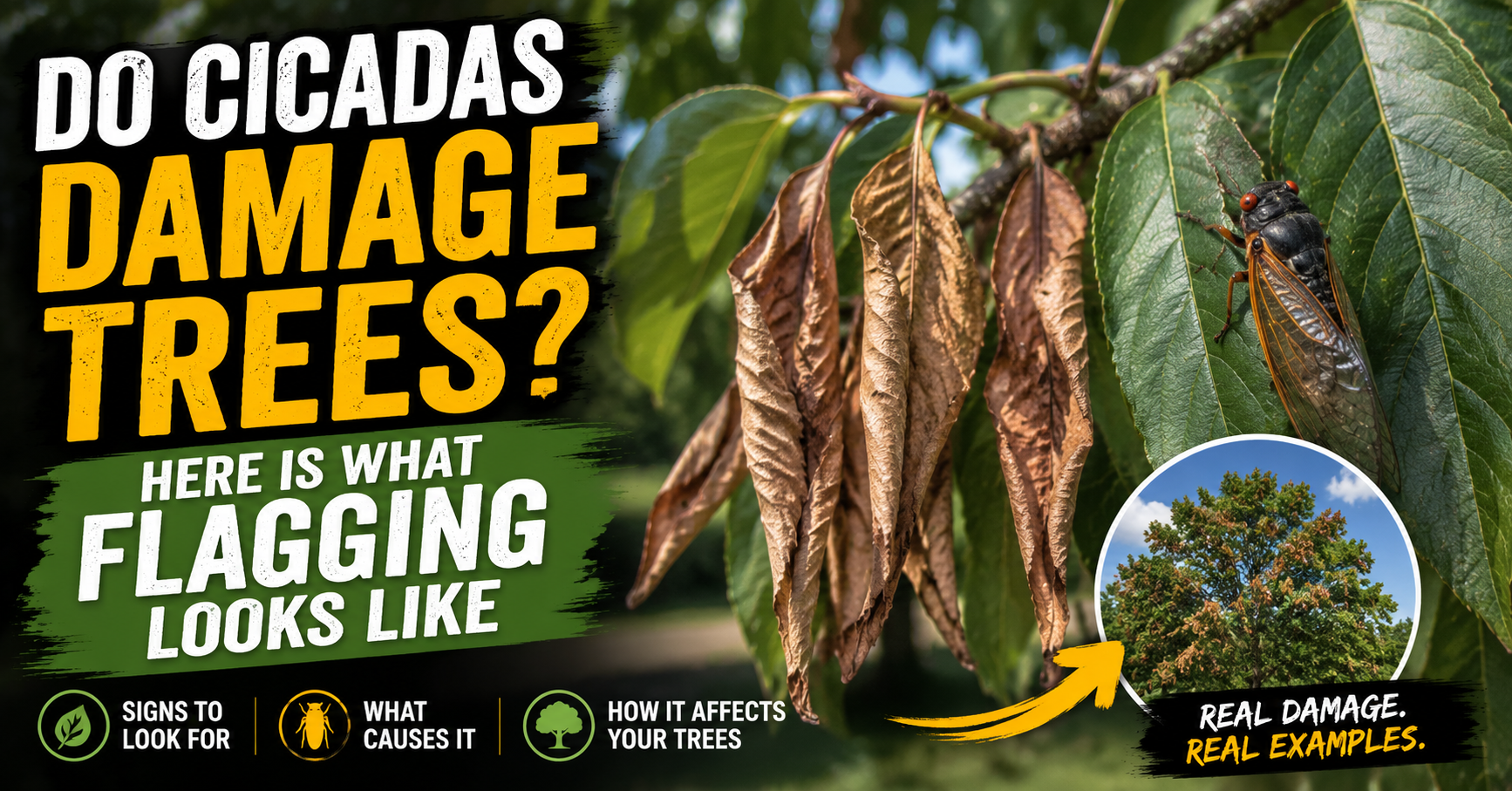
That symptom is called flagging, and it is not leaf feeding. Here is how to recognize cicada flagging on trees.
Do Cicadas Eat Gardens?
Cicadas do not normally eat gardens.
They do not chew vegetable foliage, burrow into tomatoes, eat flower petals, or strip herbs. Their diet is tied to woody plants, especially roots and twigs.
A large cicada emergence can still make a garden feel busy and messy, especially when adults land on plants or shed shells collect around beds. But those cicadas are not there to consume the garden.
Young trees and woody shrubs are the plants worth watching because of egg-laying damage, not because cicadas are eating them.
Do Cicadas Eat Fruit?
Cicadas do not chew or bore into fruit.
They are not responsible for holes in apples, peaches, tomatoes, peppers, berries, or other garden produce. If fruit is chewed, cracked open, or hollowed out, look for caterpillars, beetles, birds, squirrels, raccoons, or another culprit.
Female cicadas can lay eggs in the small twigs of fruit trees. That may kill a branch tip, but it does not mean they are feeding on the fruit itself.

Are Cicadas Like Locusts?
No. Cicadas and true locusts have very different diets.
Locusts are a type of grasshopper. They have chewing mouthparts and can eat leaves, stems, grains, crops, and other vegetation. Cicadas drink plant fluids and do not strip plants bare.
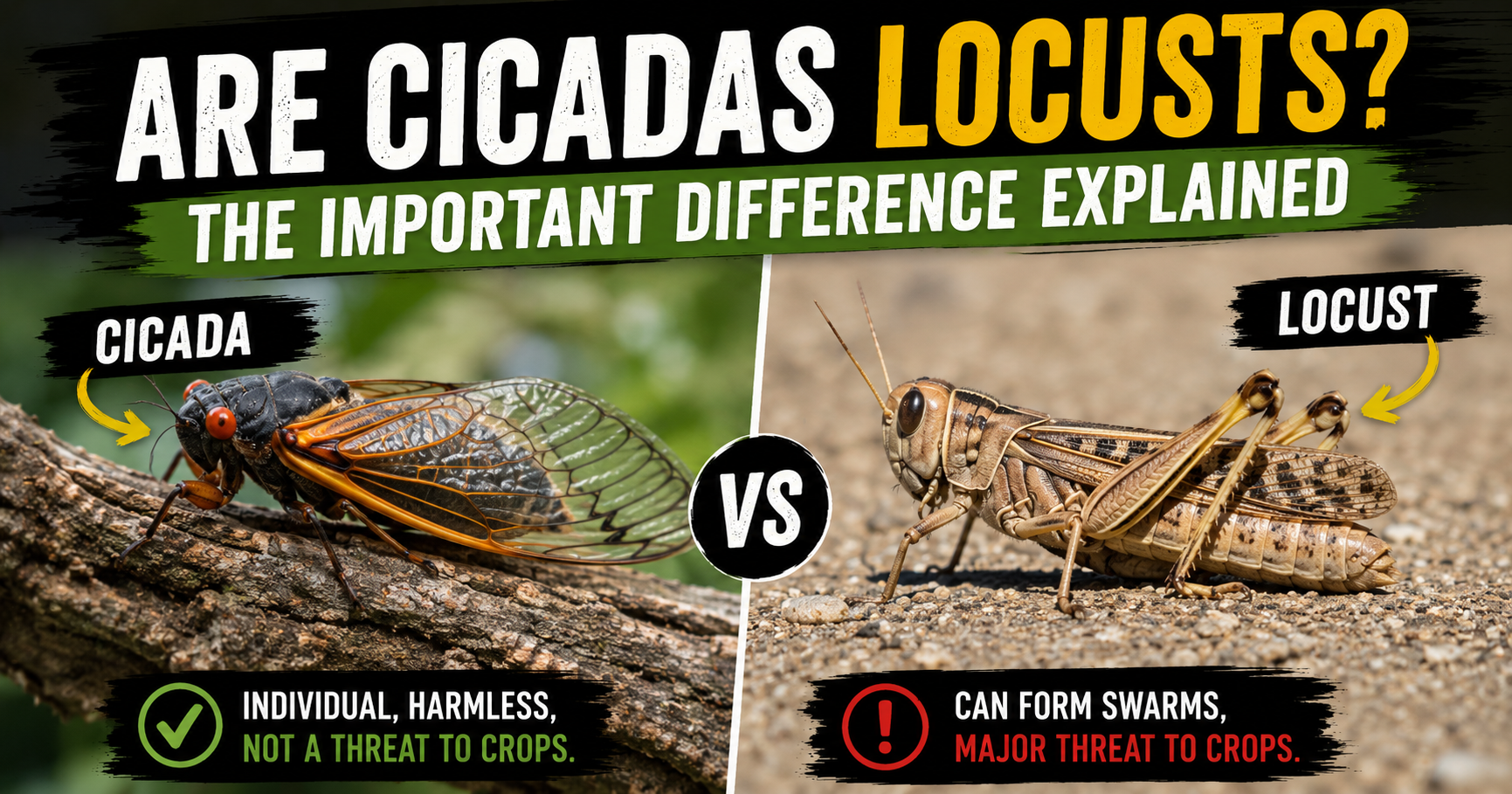
The confusion is common because cicadas can emerge in huge numbers, especially periodical cicadas. The massive numbers make people think of a locust swarm, but their behavior is completely different. This cicada versus locust explanation breaks down the difference.
Do Cicadas Drink Water?
Cicadas get most of the moisture they need from the plant fluids they drink. You may occasionally see one sitting near a wet surface, but they do not need a birdbath or open water source to survive.
Because xylem fluid is mostly water, cicadas process a huge amount of it. The liquid waste they release is sometimes called “cicada rain” when a large group is feeding overhead.
It may feel like a light drip under a tree full of cicadas, especially during a heavy emergence. It is mostly excess water from the tree fluid they consumed.

Do Cicadas Eat Other Bugs?
No. Cicadas are not predators.
They do not eat mosquitoes, flies, ants, caterpillars, or other insects. They are also not decomposers, so they do not feed on dead insects, garbage, rotting food, or household items.
A cicada’s diet stays focused on plant fluids throughout its life.
Are Cicadas Bad for Trees Because They Feed on Them?
Usually, no. Healthy mature trees can tolerate cicadas feeding from roots and twigs.
The main tree concern is egg laying on young branches, especially during a big emergence. Female cicadas can damage pencil-sized twigs, and very small trees may lose important branches or their central leader.
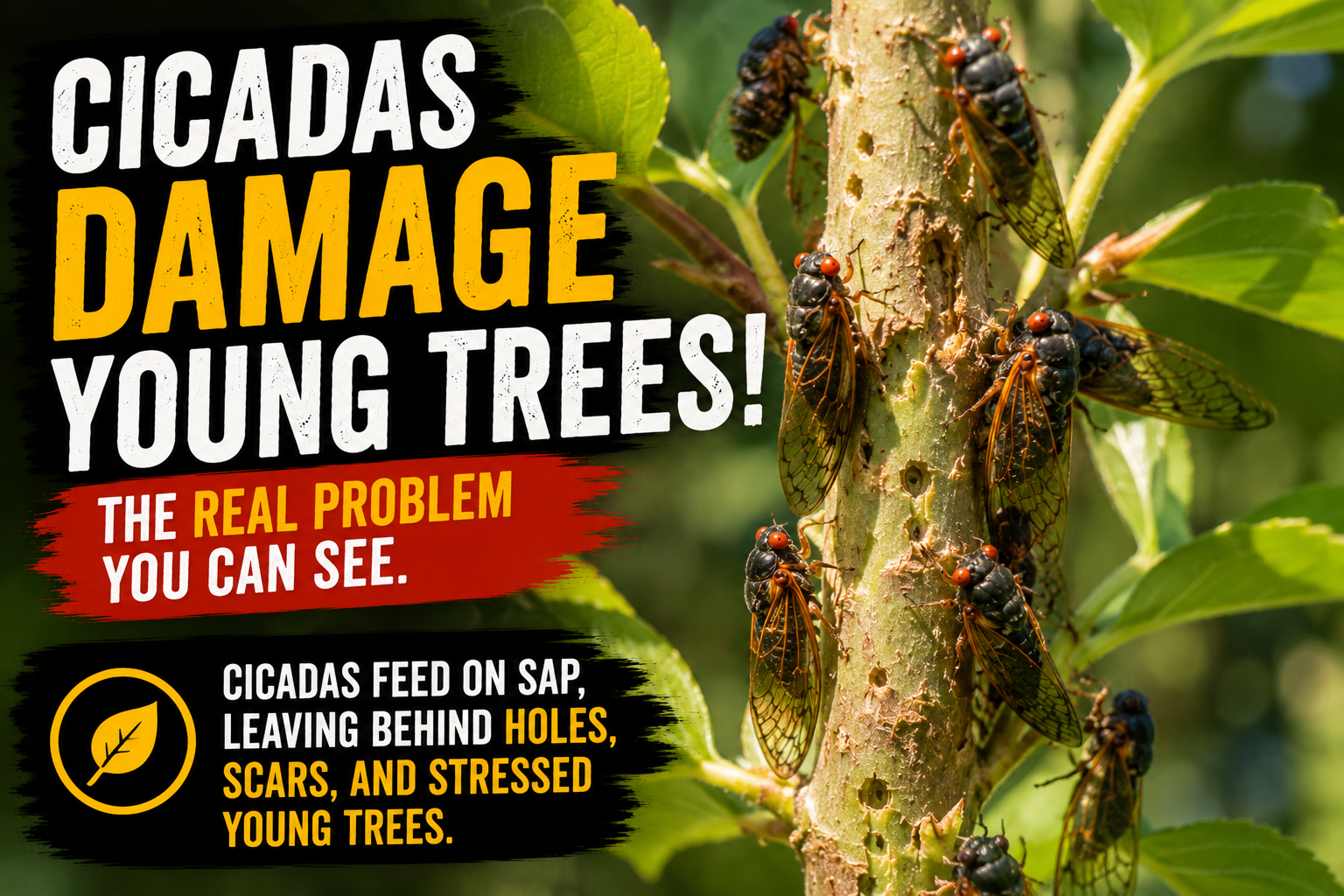
If you have a newly planted fruit tree, nursery tree, or small ornamental tree, the most useful step is protecting it before egg laying begins. This young-tree cicada protection guide shows how fine mesh netting prevents females from reaching those twigs.

Why Do Cicadas Need Trees?
Trees provide almost everything cicadas need.
Tree roots feed nymphs underground. Tree trunks give emerging nymphs something to climb. Adult cicadas feed from twigs, call from branches, mate in the canopy, and lay eggs in small woody growth.
That is why cicadas are most common around wooded areas, mature neighborhoods with plenty of trees, orchards, shelterbelts, and forest edges.
What Happens When Cicadas Die?
After adult cicadas die, their bodies fall to the ground and break down. They become food for scavengers and return nutrients to the soil.
Cicadas are also important food for birds, turtles, fish, frogs, spiders, raccoons, skunks, and many other animals. A big emergence provides a short-term feast for wildlife.
Their role in the food chain is much bigger than their simple diet might suggest.
Frequently Asked Questions
Do cicadas eat tomato plants?
No. Cicadas do not chew tomato leaves or eat tomatoes. They feed on fluids from woody roots and twigs.
Do cicadas eat tree leaves?
No. Cicadas cannot chew leaves. Their feeding mouthpart is made for drinking plant fluids.
Do cicadas eat mosquitoes?
No. Cicadas are not predators and do not eat mosquitoes or other insects.
Do cicadas eat wood?
No. Cicadas do not eat wood. Nymphs feed from living tree roots, and adults feed from small twigs.
Why does it feel like cicadas are raining from trees?
A large group of cicadas may release excess liquid after feeding on watery tree fluids. This is sometimes called cicada rain.
Do cicadas harm fruit trees?
Established fruit trees usually handle cicadas well. Very young fruit trees can be damaged when females lay eggs in small twigs, not because cicadas eat the fruit or leaves.
Caleb Warren is a longtime gardener and backyard insect researcher who writes practical pest guides for WhyDoIHaveBugs.com, helping homeowners identify insects accurately before choosing a treatment.