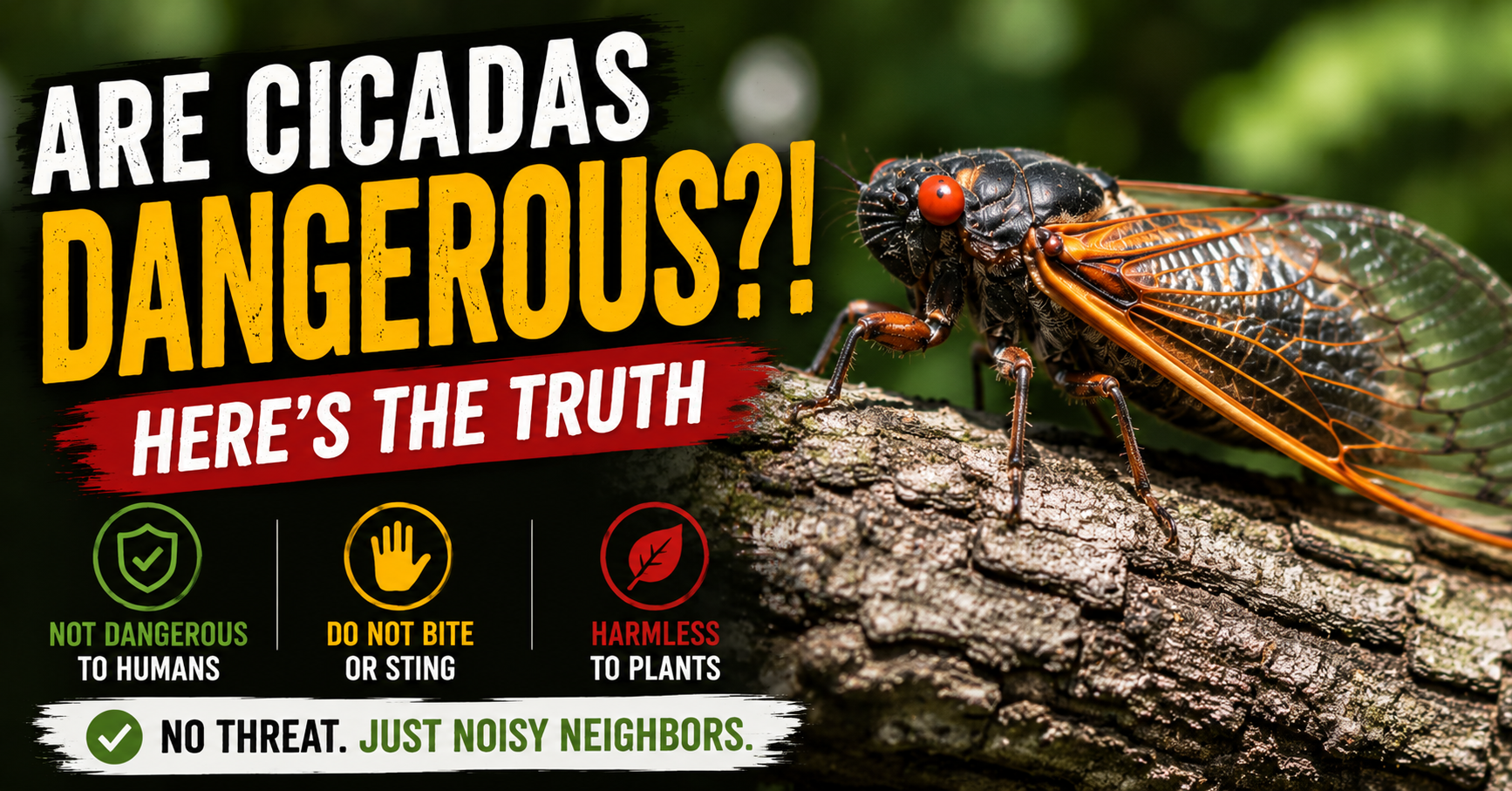
Cicadas can make a yard feel wild for a few weeks. They are loud, big, clumsy in flight, and sometimes show up by the dozens on trees, porch screens, and sidewalks. Even so, cicadas are not dangerous to people, and most homeowners do not need to do anything more than wait for the season to pass. For homeowners who are unsure what they are seeing, this easy guide to identifying adult cicadas covers the insect’s main identifying traits.
The one place I pay closer attention is around very young trees. Cicadas do not chew leaves, but females can damage small twigs while laying eggs. That is a real concern for newly planted fruit trees, nursery stock, and small ornamental trees during a heavy emergence.
Are Cicadas Dangerous?
Cicadas are not dangerous to people, dogs, cats, or homes. They do not sting, do not infest houses, do not feed on blood, and are not known for spreading disease to people.
Their size and loud sound can make them seem more threatening than they are. An adult cicada is focused on mating, laying eggs, and surviving its short life above ground.
Most adult cicadas only remain active for a few weeks.


Are Cicadas Dangerous to People?
No. Cicadas are not dangerous to people.
They may fly into you by accident, land on your shirt, or grip your hand if you pick one up. That can be startling, especially when the cicada suddenly buzzes its wings, but it is not an attack.
Cicadas do not have venom, and they are not aggressive insects. Their mouthparts are made to feed from plant tissue, not to bite people.
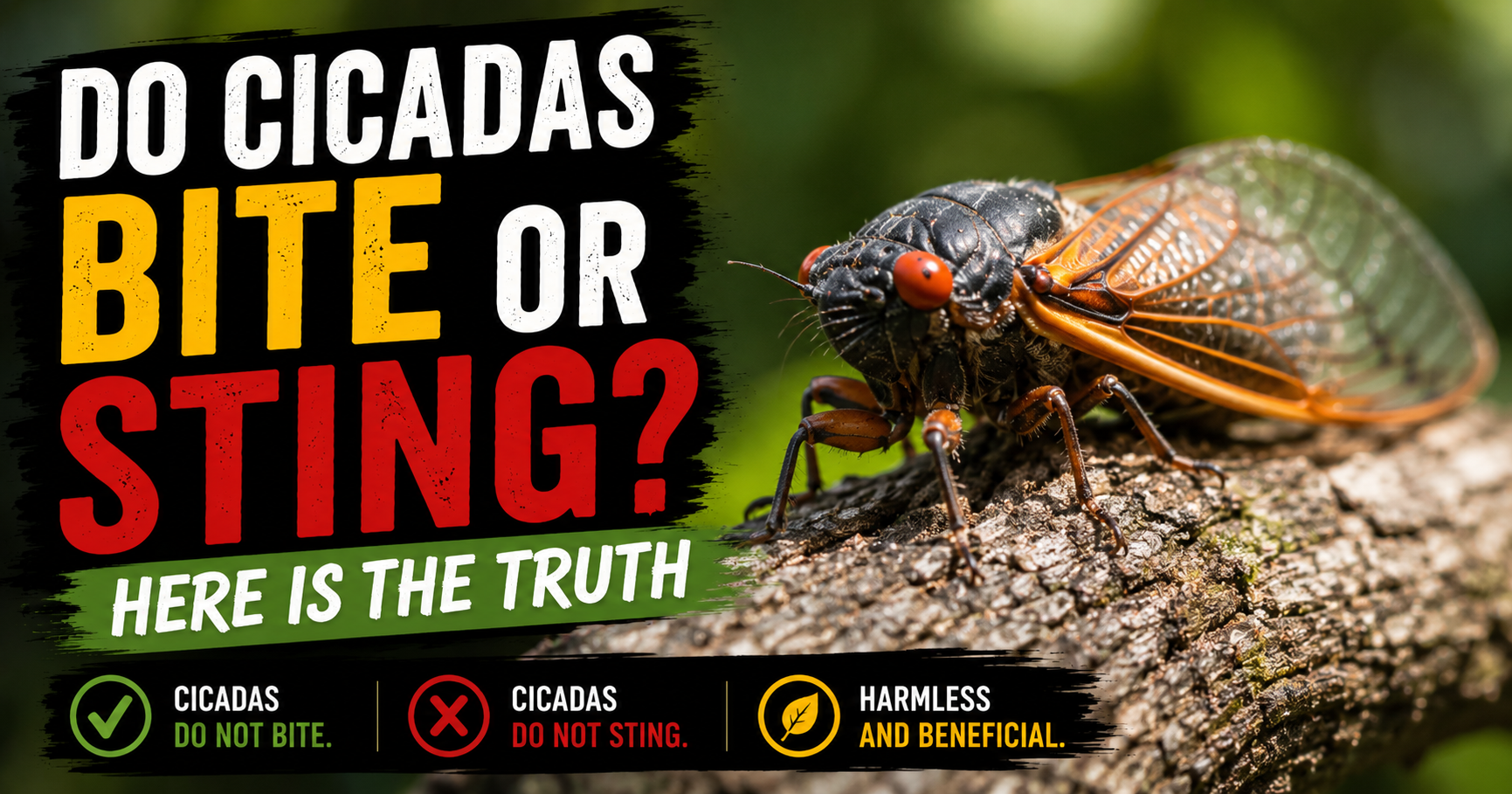
For the direct answer on close encounters, see whether cicadas bite or sting people.
Are Cicadas Dangerous to Dogs and Cats?
A cicada is usually not dangerous if a dog or cat catches one. Pets may chase them, paw at them, or eat one because the buzzing makes them irresistible.
The concern is how many are eaten. A pet that eats a large number of cicadas may develop vomiting, diarrhea, or stomach discomfort from the insects’ tough outer shells.
I would discourage dogs from eating cicadas when they are everywhere, especially smaller dogs or dogs with a sensitive stomach. Contact your veterinarian if your pet eats a large amount or seems sick afterward.
Are Cicadas Poisonous?
No. Cicadas are not poisonous or venomous.
They do not inject venom, and they are not a normal poisoning risk for people or pets. A pet can still have digestive trouble after eating too many, but that is different from poisoning.
If a dog or cat seems seriously ill after eating insects, it is always smart to call your veterinarian because something else, such as a pesticide-treated lawn or another insect, could be involved.

Do Cicadas Carry Diseases?
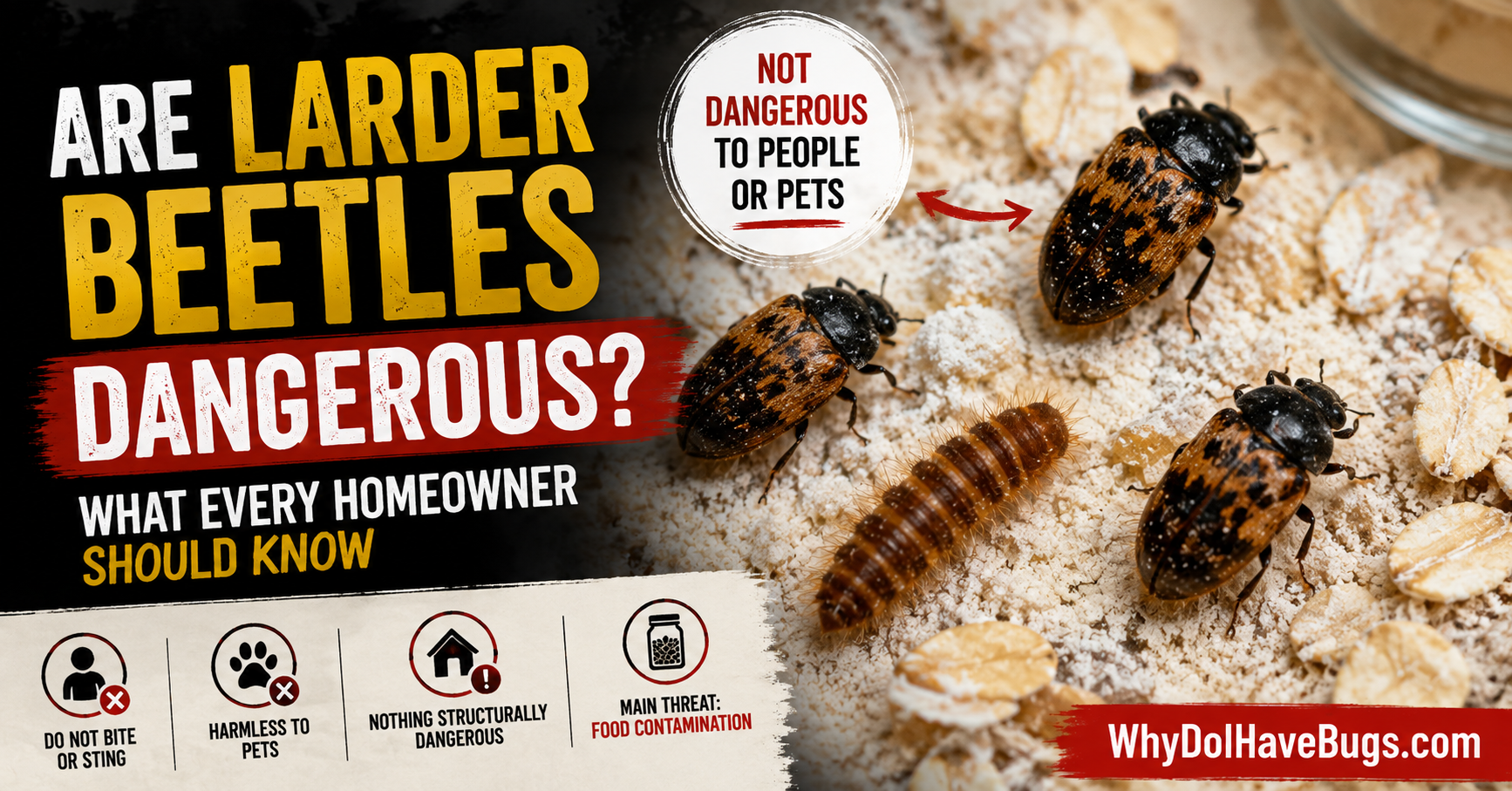
Cicadas are not known for spreading disease to humans like mosquitoes, ticks, fleas, or some flies.
They do not feed on blood. They feed on plant fluids, and they spend most of their lives underground or in trees. You do not need to worry about catching a disease because a cicada landed on you or because your child handled a shed shell.
Washing hands after handling outdoor insects is still a good everyday habit.
Are Cicadas Dangerous to Your House?
No. Cicadas do not infest homes.
They may accidentally fly through an open door or land on windows and screens, but they do not move into wall voids, reproduce indoors, eat wood, or damage insulation. They are looking for outdoor plants and trees, not shelter inside a home.
A cicada that gets indoors can be caught with a cup and released outside. You do not need indoor sprays, bug bombs, or pest control service for a few wandering cicadas.



Are Cicadas Dangerous to Gardens?
Cicadas are not like grasshoppers or true locusts. They do not chew vegetable leaves, strip garden plants, or devour crops.
They feed by taking fluids from plants with a straw-like mouthpart. Healthy established trees and shrubs usually tolerate this with little trouble.
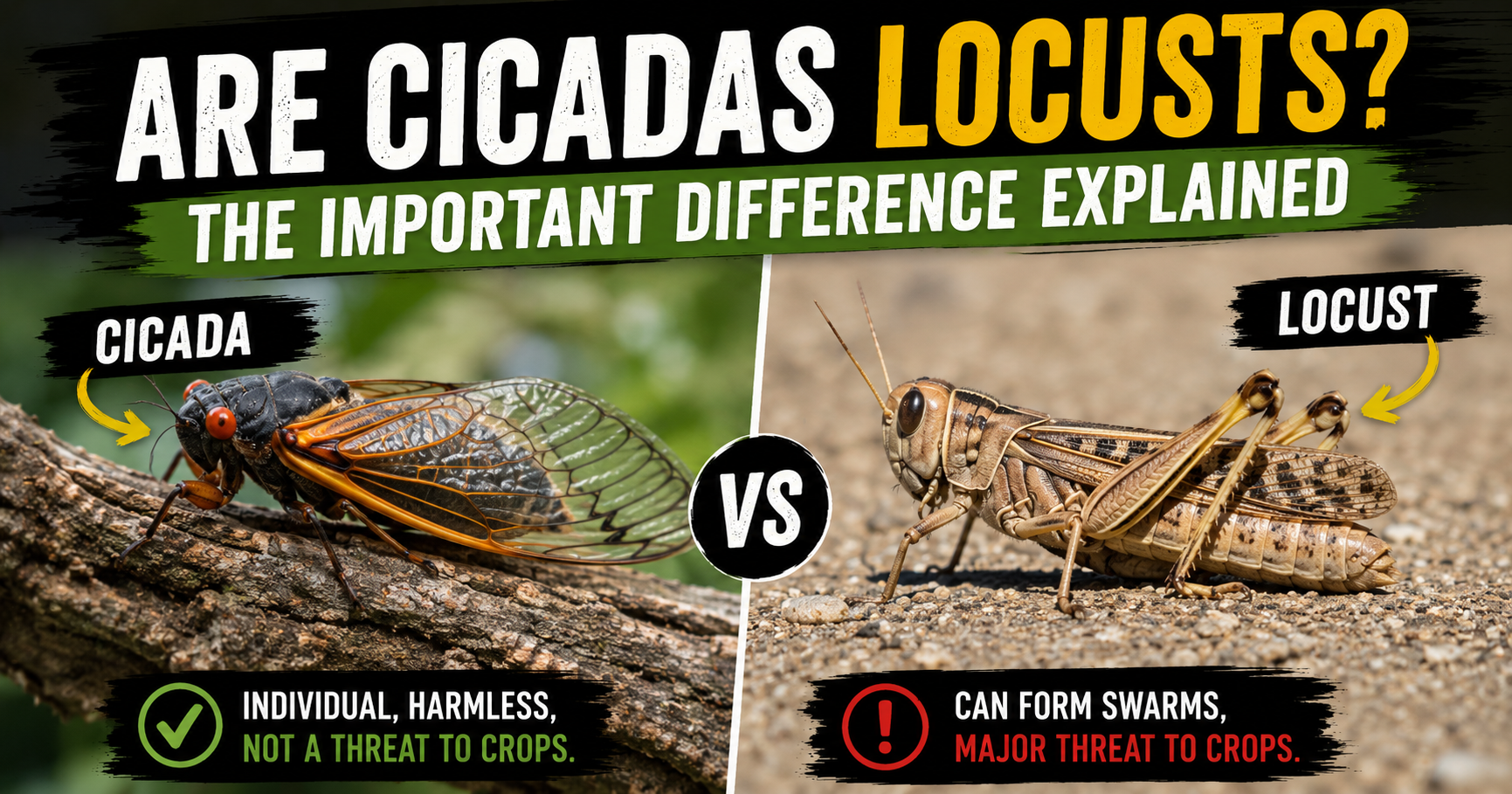
Cicadas are also often confused with locusts because both can appear in large numbers. The difference matters because true locusts are grasshoppers that chew foliage, while cicadas are loud tree-dwelling insects with clear wings. Here is why cicadas are not actually locusts.
Can Cicadas Hurt Trees?
They can hurt small twigs on young trees when females lay eggs. A female cuts a row of narrow slits into a pencil-sized branch and places eggs inside. The twig beyond that injury may wilt, turn brown, and remain attached to the tree.
This symptom is called flagging because the dead leaves look like little brown flags hanging at branch tips.
Mature trees usually recover without lasting harm. Young fruit trees, grapevines, newly planted trees, and nursery trees are more vulnerable because losing several small branches can affect their shape and growth.
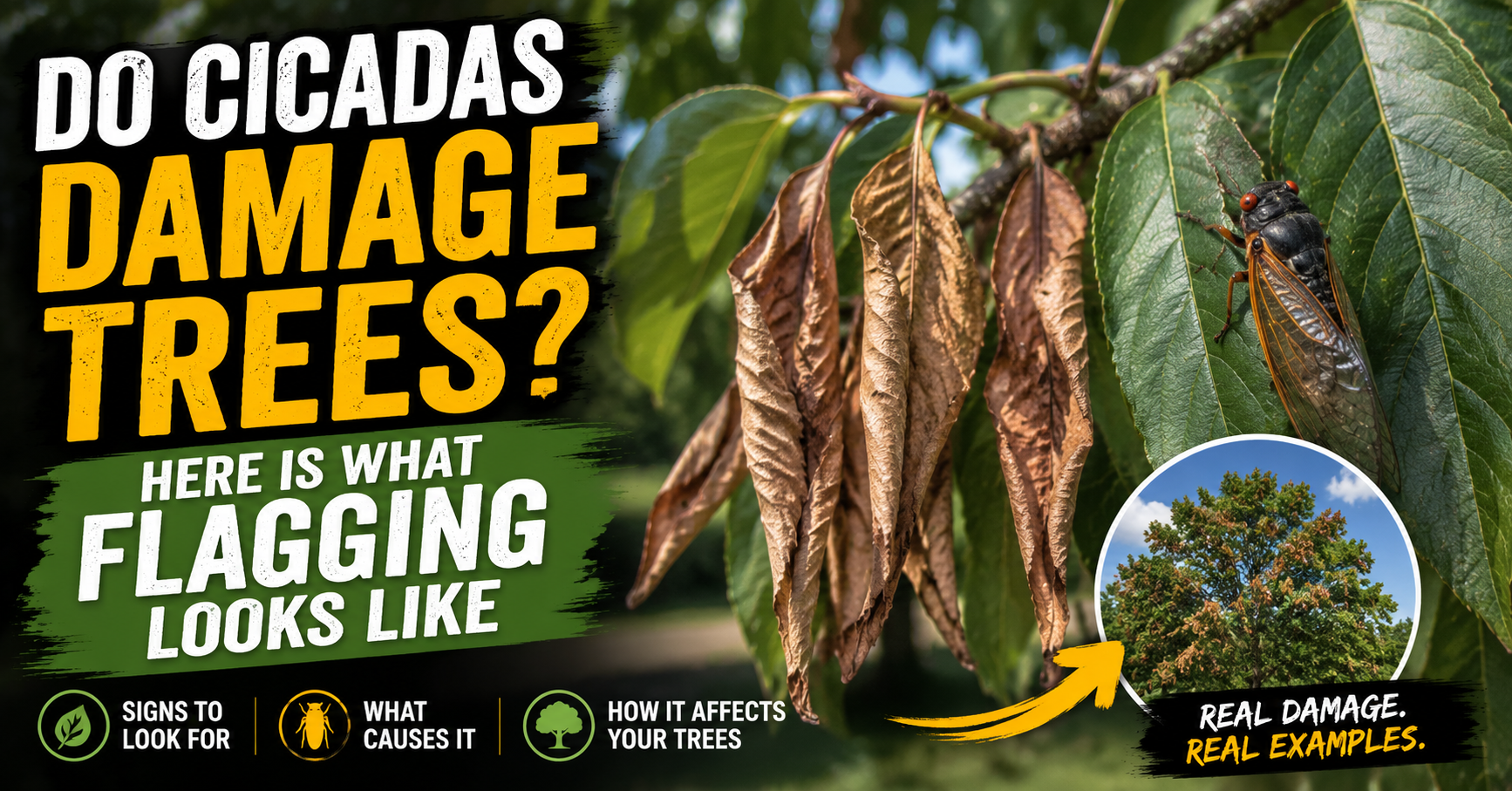
If you have brown leaf clusters still hanging from otherwise green branches, compare them with these examples of cicada damage on tree tips.
Are Cicadas Dangerous During a Big Emergence?
A huge periodical cicada emergence can be annoying, noisy, and messy, but it is not dangerous in the usual sense.
The main issues people notice are:
- Loud calling from the trees.
- Cicadas flying around porches, vehicles, and people.
- Shed shells collecting on trees, decks, and outdoor furniture.
- Dead adult cicadas on sidewalks and driveways.
- Extra attention from dogs that want to eat them.
- Egg-laying damage on very young trees.
The adults disappear quickly once their short mating season ends.
Should You Kill Cicadas?
For most yards, no. Cicadas are a temporary native part of the outdoor ecosystem. They become food for birds, turtles, fish, mammals, and other wildlife. Their bodies also return nutrients to the soil after they die.
I would focus on protecting vulnerable young trees instead of trying to kill cicadas across the yard. Fine mesh netting over the canopy is much more useful than spraying when egg laying is active.
There is no practical reason to treat mature trees just because cicadas are calling in them.


When Should You Actually Take Action?
Most cicada situations do not need treatment. I would only take simple action in a few situations.
- Cover newly planted trees with fine mesh netting during a heavy emergence.
- Keep dogs from eating piles of cicadas.
- Sweep shed shells or dead cicadas from walkways if they become slippery or unpleasant.
- Remove broken branch tips cleanly if cicada egg-laying damage causes them to hang or snap.
- Release accidental indoor cicadas outdoors.
The goal is to manage the small real inconveniences without treating cicadas like a dangerous infestation.
Frequently Asked Questions
Can cicadas hurt you if they land on you?
No. A cicada may cling with its feet or buzz loudly, but it cannot sting you and is not trying to attack.
Are cicadas bad for babies or children?
No. Cicadas are not dangerous to children. Young children should still be supervised around insects and should wash their hands after handling shed shells or outdoor bugs.
Can cicadas hurt my dog?
One or two cicadas usually are not a concern. A large number can upset a dog’s stomach because the hard shells are difficult to digest.
Do cicadas damage lawns?
No. Cicadas emerge from small holes in the soil, but they do not usually cause meaningful lawn damage.
Are cicadas bad for trees?
They are usually not a serious problem for mature trees. Their egg-laying can damage small twigs on very young trees, especially fruit trees and nursery stock.
Do cicadas come into houses?
They can wander inside accidentally, but they do not infest homes or live indoors.
Caleb Warren is a longtime gardener and backyard insect researcher who writes practical pest guides for WhyDoIHaveBugs.com, helping homeowners identify insects accurately before choosing a treatment.