Finding winged insects inside your home can be alarming.
For many homeowners, the first thought is, “I hope these aren’t termites.”
The problem is that carpenter ants and termites can look surprisingly similar at first glance, especially during swarming season.
I’ve spoken with homeowners who paid for termite treatments when they actually had carpenter ants. I’ve also seen people ignore termites because they assumed they were only looking at harmless flying ants.
The good news is that there are several reliable ways to tell them apart.
If this were my house, I wouldn’t panic after seeing one winged insect.
I’d start identifying exactly what I was looking at before making any decisions.
What I Notice First
Whenever I’m comparing carpenter ants and termites, I don’t focus on size first.
Instead, I look at three features that usually tell the story much faster:
- The antennae
- The waist
- The wings
Those three characteristics are often enough to point me in the right direction before I even think about treatment.
Carpenter Ants Have a Narrow Waist
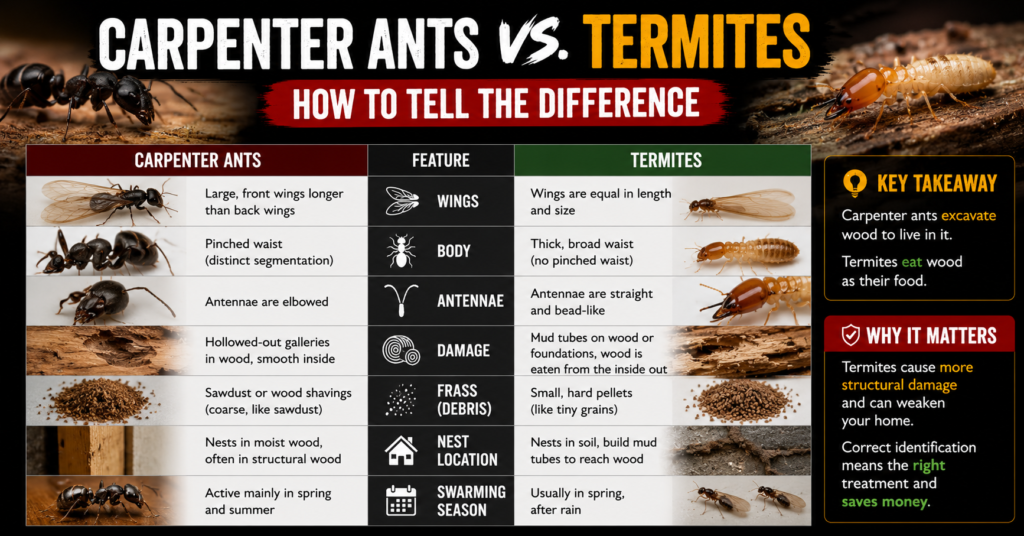
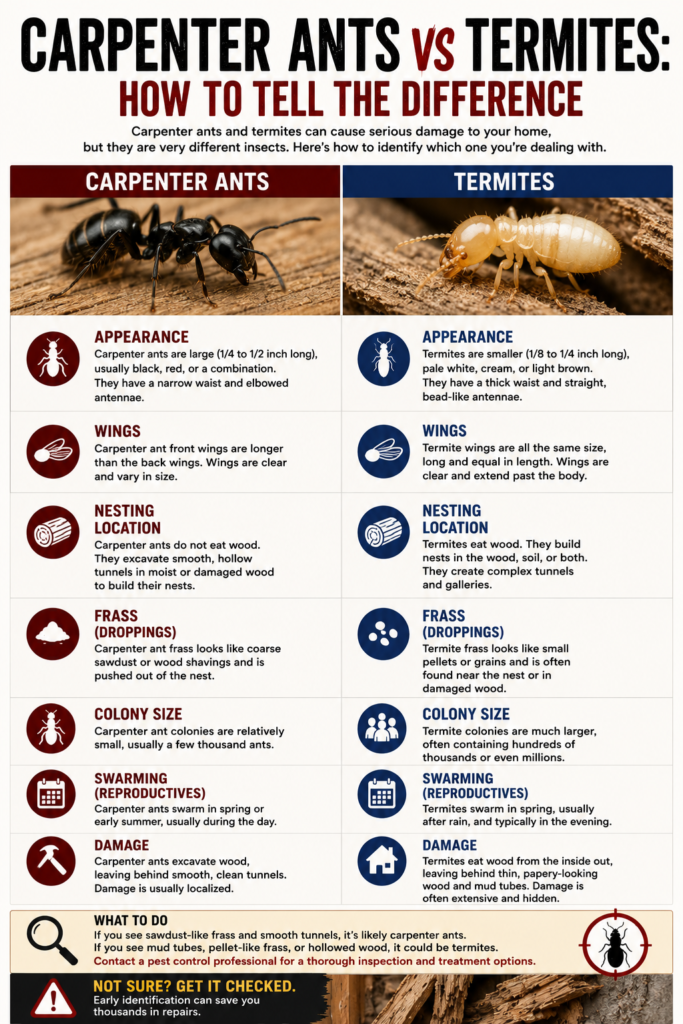
Carpenter ants have the classic ant appearance.
You’ll usually notice:
- A narrow, pinched waist
- Elbowed (bent) antennae
- Front wings that are noticeably longer than the back wings
Their bodies look segmented, making the waist easy to spot with a close look.
Termites Have a Thick Waist
Termites look much different.
Instead of a narrow waist, termites have a broad, almost straight body from front to back.
They also have:
- Straight antennae
- Four wings that are nearly equal in length
- A softer-looking body
When I compare the two side by side, the body shape is often the first thing I notice.
Which One Causes More Damage?
Both insects can damage wood, but they do it differently.
Termites eat wood as food.
Carpenter ants don’t.
Instead, carpenter ants excavate wood to create galleries where they live.
That means finding carpenter ants doesn’t automatically mean your home has severe structural damage.
However, it does mean I’d inspect carefully because they often prefer damp or decaying wood.


Where I Would Start Inspecting
If I suspected carpenter ants, I’d begin looking around:
- Window frames
- Door frames
- Decks
- Porches
- Crawl spaces
- Damp wood
- Tree stumps near the house
If I suspected termites, I’d pay close attention to:
- Foundation walls
- Basement framing
- Crawl spaces
- Mud tubes on concrete or masonry
- Wooden structural members
The evidence surrounding the insects often tells me more than the insects themselves.
Flying Ants Don’t Always Mean Carpenter Ants
This is another misconception I hear often.
Not every flying ant is a carpenter ant.
Many ant species produce winged reproductive ants during certain times of the year.
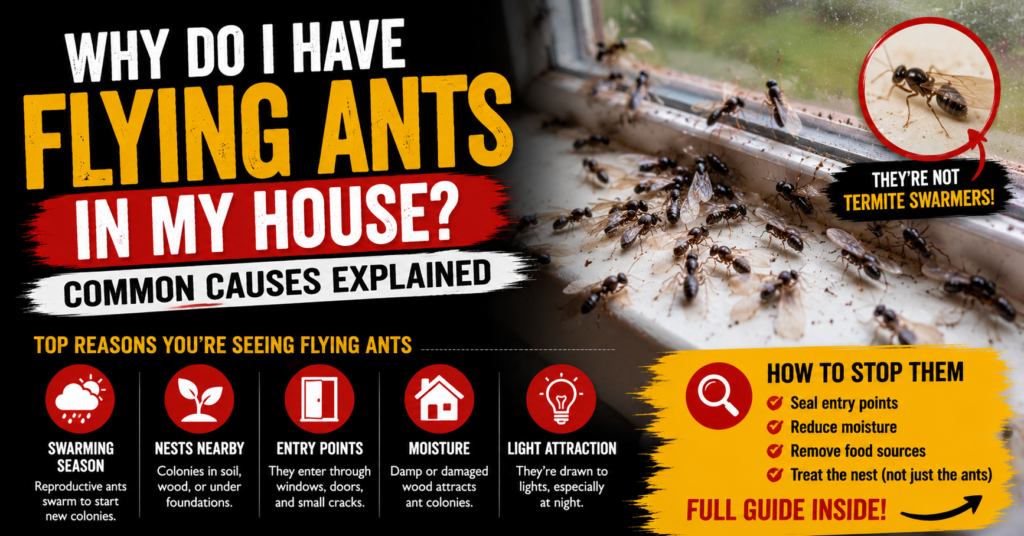
Our guide on Why Do I Have Flying Ants in My House? explains why flying ants suddenly appear and when it’s time to investigate further.
Could They Just Be Ordinary Ants?
Absolutely.
If you’ve been seeing worker ants in your kitchen or bathroom, the winged ants you notice later may simply be reproductive ants from the same colony.
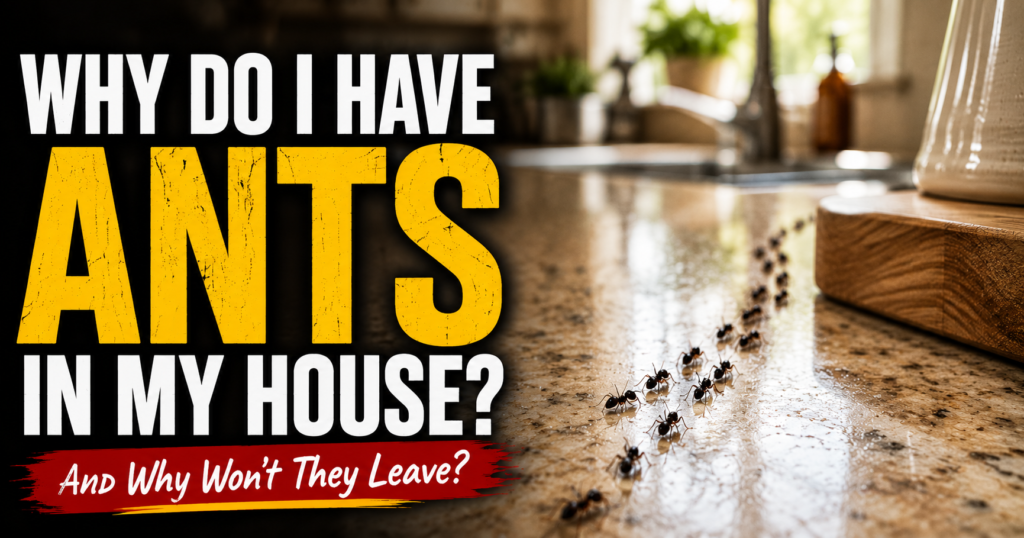
Our article on Why Are Ants Suddenly in My House? explains why colonies often become much more noticeable during certain times of the year.
What I Would Do If This Were My House
If I found winged insects around my windows tomorrow, I wouldn’t assume the worst.
I’d collect one or two specimens if possible.
I’d compare the antennae, waist, and wing size.
Then I’d inspect the surrounding area for additional evidence like damaged wood, sawdust-like material, mud tubes, or worker insects.
That information would tell me far more than simply guessing.
Products That Can Help
If you’ve confirmed you’re dealing with ants rather than termites, eliminating the colony should be your priority.
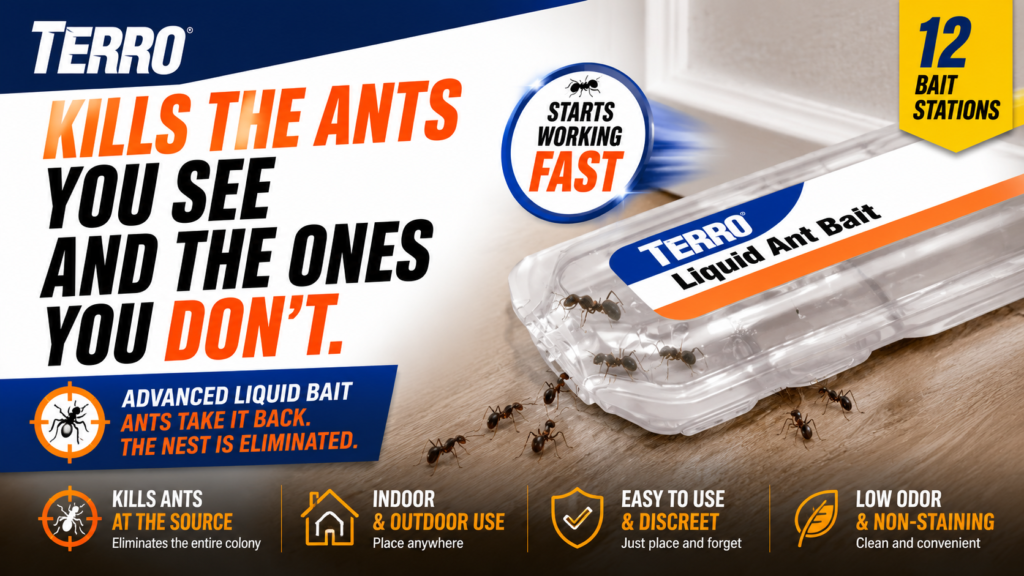
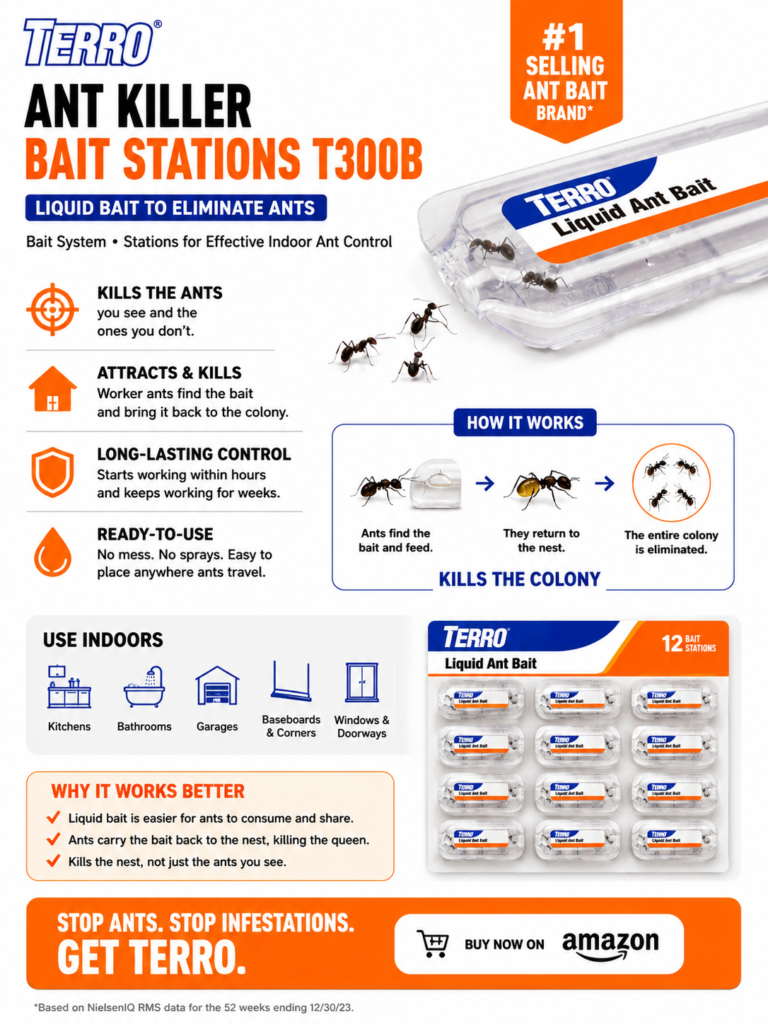
I’ve had good results with TERRO Liquid Ant Bait Stations because they allow worker ants to carry bait back to the colony instead of only killing the ants you see. You can read my full TERRO Liquid Ant Bait Stations review to see when they work best.
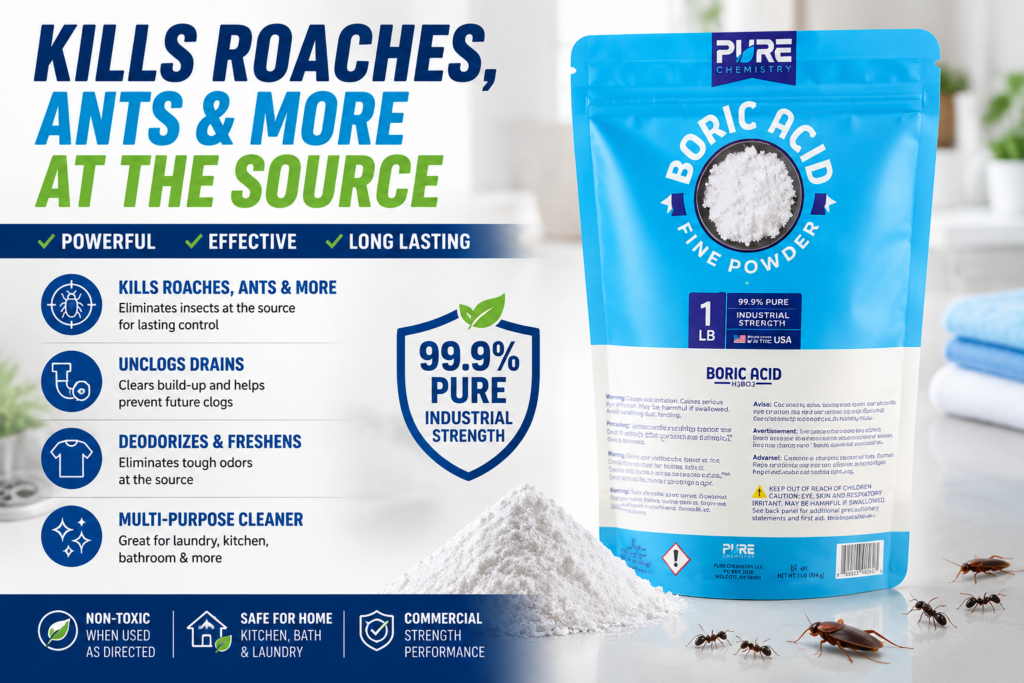

For certain situations, Ecoxall Boric Acid Fine Powder can also be part of an effective ant control plan. I cover its strengths, limitations, and best uses in my Boric Acid for Roaches and Ants review.
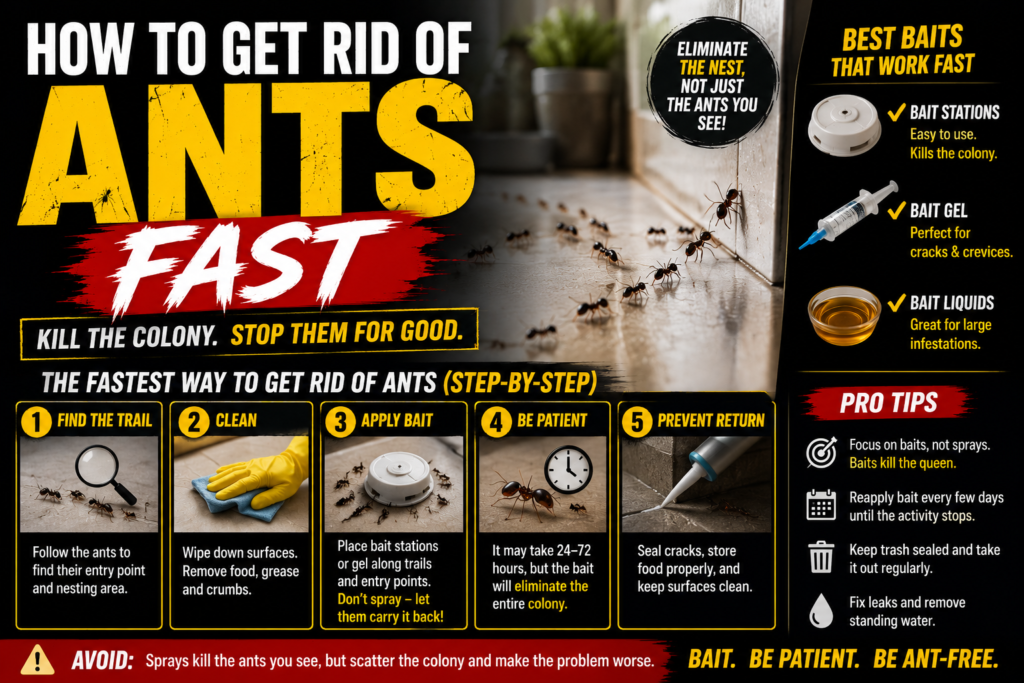
If you’ve already identified an ant infestation, my guide on Getting Rid of Ants Fast walks through the step-by-step process I recommend.
The Biggest Mistake I See
The biggest mistake I see is homeowners assuming every winged insect is a termite.
Many flying ants appear during the same seasons, and from a distance they can look remarkably similar.
Taking a few extra minutes to identify the insect correctly can save a lot of unnecessary worry and potentially a lot of money.


Frequently Asked Questions
Are carpenter ants worse than termites?
Both can become serious problems, but termites generally cause damage by eating wood, while carpenter ants excavate wood to build nests.
Do carpenter ants have wings?
Yes. Reproductive carpenter ants develop wings during swarming season.
How can I tell flying ants from termites?
The easiest clues are the antennae, waist, and wing size. Flying ants have bent antennae, a narrow waist, and front wings that are longer than the back wings.
Should I worry if I find one flying ant?
Not necessarily. A single flying ant may have wandered indoors from an outdoor colony. Repeated sightings or large numbers deserve a closer inspection.
Can carpenter ants be treated with ant bait?
Many carpenter ant infestations can be managed with appropriate bait products, although the best approach depends on the location and size of the colony.
About the Author
Michael Carter researches household ants, structural pests, and practical pest management strategies. He specializes in helping homeowners identify ant species correctly, understand insect behavior, and solve infestations by targeting the source instead of just the insects they see.