Boric acid has been killing bugs in homes for over a century. It predates most of the sprays and gels on the market today, and it’s still being used because it still works. If you’ve been researching roach or ant control for more than ten minutes you’ve seen it recommended — but most people have no idea how to actually use it correctly, which is why a lot of them try it and give up thinking it doesn’t work.
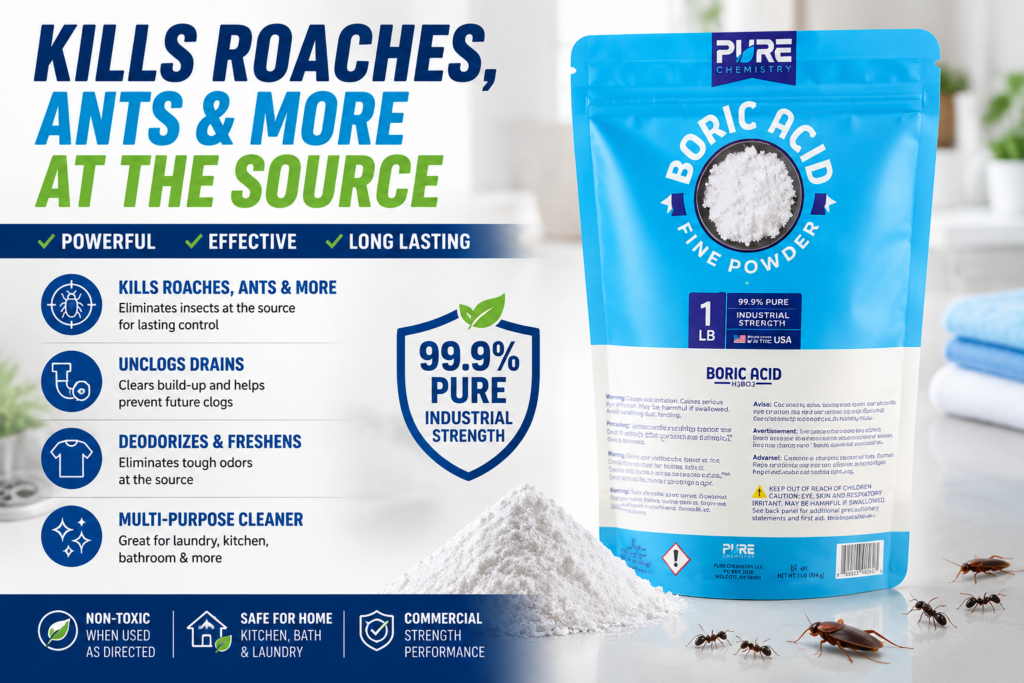
This review covers what boric acid is, how it kills bugs, where it works, where it doesn’t, and whether the Ecoxall 99.9% pure powder is the right product to have in your pest control toolkit.
The Short Answer
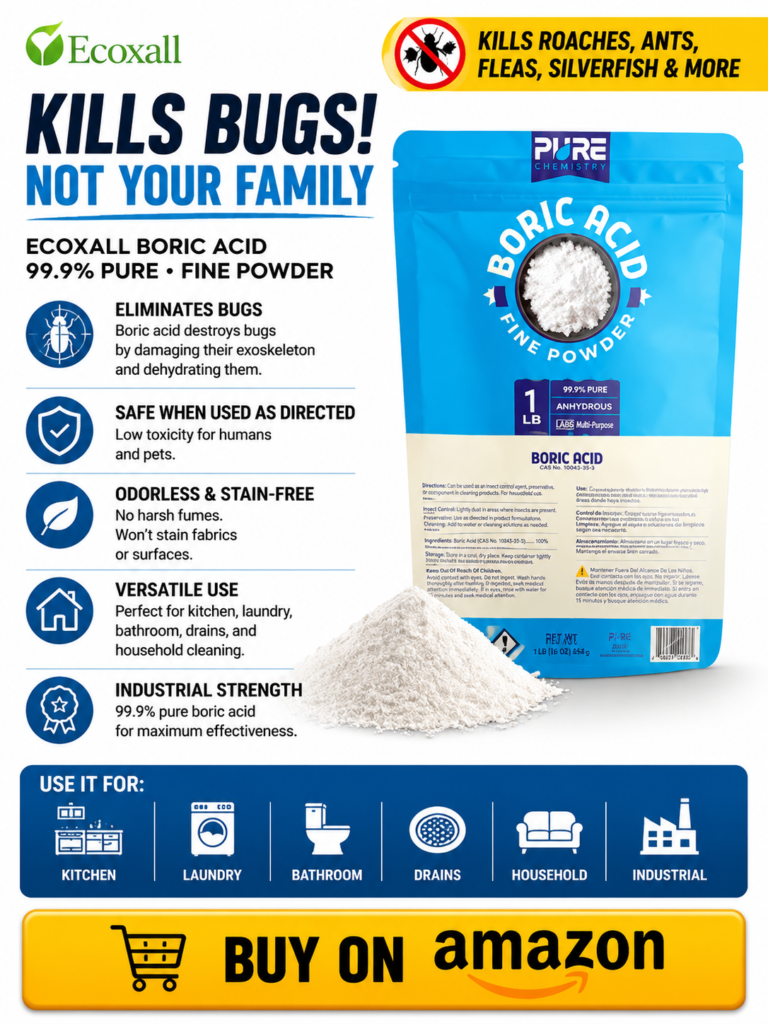
Yes, boric acid works — and it’s one of the most effective long-term bug killers available for roaches, ants, silverfish, and other crawling insects. The key word is long-term. It’s not a fast knockdown solution. Applied correctly in the right locations, it creates a permanent residual barrier that keeps killing bugs indefinitely without reapplication. The Ecoxall fine powder at 99.9% purity is a solid bulk option that gives you enough product to treat your whole home thoroughly.
What Is Boric Acid?
Boric acid is a naturally occurring compound derived from boron, a mineral found in soil and water. It’s been used as a pest control agent since the 1940s and as an antiseptic and cleaning agent long before that. The pest control application and the cleaning application are the same product — which is why you’ll see it marketed for both uses.
The Ecoxall version is 99.9% pure fine powder, which matters for pest control. Impure or coarsely ground boric acid doesn’t distribute as well and is less effective in the thin-layer applications that actually work on bugs. Fine powder spreads further, gets into tighter spaces, and coats surfaces more evenly.
It’s worth understanding the difference between boric acid and borax since they’re often confused. Borax is a salt of boric acid — it’s what TERRO ant bait uses. Boric acid is the more refined form and is slightly more potent as a direct insecticide. Both work. Boric acid is the right choice for direct application as a powder treatment.
→ Check the current price on Ecoxall Boric Acid Fine Powder on Amazon — bulk quantity means you can treat your whole home thoroughly without rationing.
How Does Boric Acid Kill Bugs?
Boric acid kills insects through two mechanisms, and both matter for understanding how to use it correctly.
Physical abrasion. Like diatomaceous earth, the fine particles of boric acid damage the waxy outer coating of an insect’s exoskeleton when they walk through it. This disrupts the bug’s ability to retain moisture.
Toxic ingestion. When a bug walks through boric acid, it gets the powder on its legs and body. When it grooms itself — which roaches and ants do regularly — it ingests the boric acid. Once inside, boric acid disrupts the bug’s digestive system and metabolism, causing death.
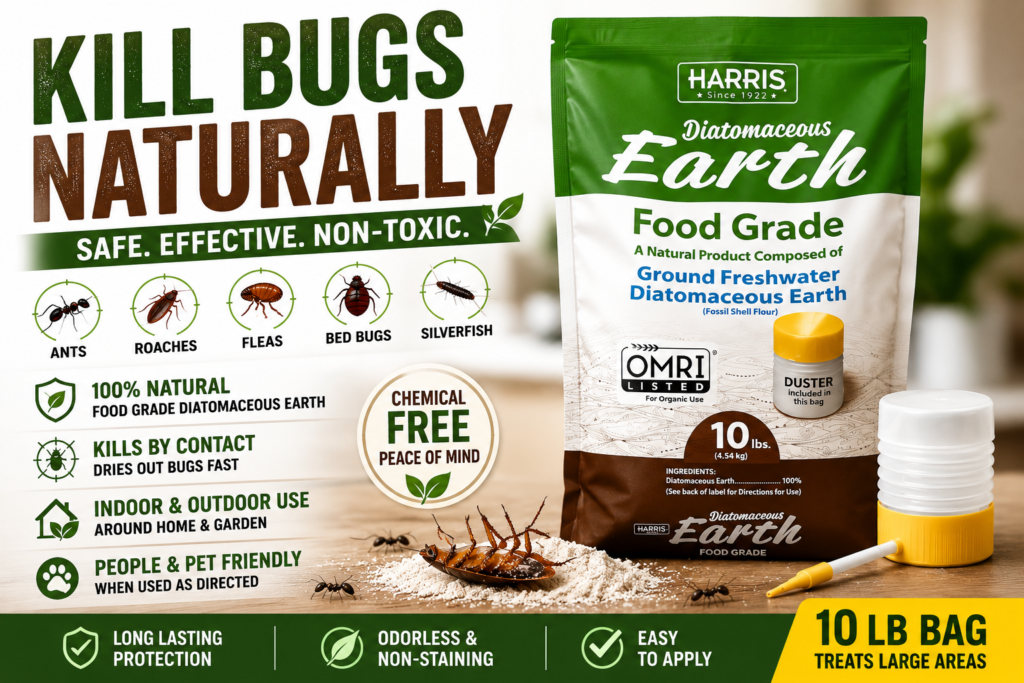
The combination of those two mechanisms makes boric acid more lethal than diatomaceous earth alone. Diatomaceous earth works primarily through physical damage. Boric acid adds a toxic ingestion component that accelerates the kill.
Like DE, boric acid is a slow kill — death typically occurs within 72 hours of exposure. And like DE, that slow kill is partly what makes it effective. The bug doesn’t die immediately at the treatment site. It returns to the harborage area, contacts other bugs, and the effect spreads through the population.
What Bugs Does It Work On?
Boric acid is most effective on:
- Cockroaches — this is its strongest application, particularly German roaches in kitchens
- Ants — effective on most common indoor ant species
- Silverfish — one of the best treatments available for silverfish in walls and closets
- Fleas — effective in carpets and along baseboards
- Beetles — useful against stored product beetles in pantries
- Crickets — works in basements and along foundation entry areas
It is not effective on flying insects since they don’t walk through treated surfaces. It’s also less useful against bed bugs compared to other options — bed bugs are treated more effectively with heat or purpose-formulated sprays. For bed bug treatment, boric acid is not the primary tool.


The Most Important Thing to Know About Application
This is where most people go wrong, and it’s why so many people try boric acid and conclude it doesn’t work.
Thin layers. Hidden locations. Undisturbed. Those three things determine whether boric acid works or doesn’t.
A thick pile of boric acid repels bugs — they detect it and walk around it. A thin, barely visible dusting that coats a surface without piling up is what bugs walk through without detecting. If you can see a white layer of powder, you’ve used too much in that spot. You want just enough to lightly coat the surface — almost like a fine mist of powder rather than a visible layer.
It also needs to stay dry. Boric acid loses effectiveness when it gets wet and clumps. Apply it in dry hidden locations and it lasts indefinitely. Apply it somewhere that gets wet or disturbed regularly and you’ll need to reapply constantly.
And it needs to stay undisturbed. If you apply it along a baseboard that gets mopped weekly, you’re wasting product. The best placements are spots that never get cleaned — inside wall voids, behind appliances, under equipment, inside outlet boxes.
Where to Apply It for Maximum Effect
For Cockroaches
Roaches are the strongest use case for boric acid and the application locations matter enormously.
Best locations:
- Inside electrical outlet and switch boxes — roaches love the warmth and boric acid in there is deadly and undisturbed
- Under and behind the refrigerator — especially in the motor compartment
- Under the stove and behind the oven drawer
- Along the back wall inside under-sink cabinets
- Inside cabinet voids — the hollow spaces inside cabinet framing accessible through small gaps
- Along the gap where the floor meets the wall behind appliances
- In any wall void accessible through gaps around pipes
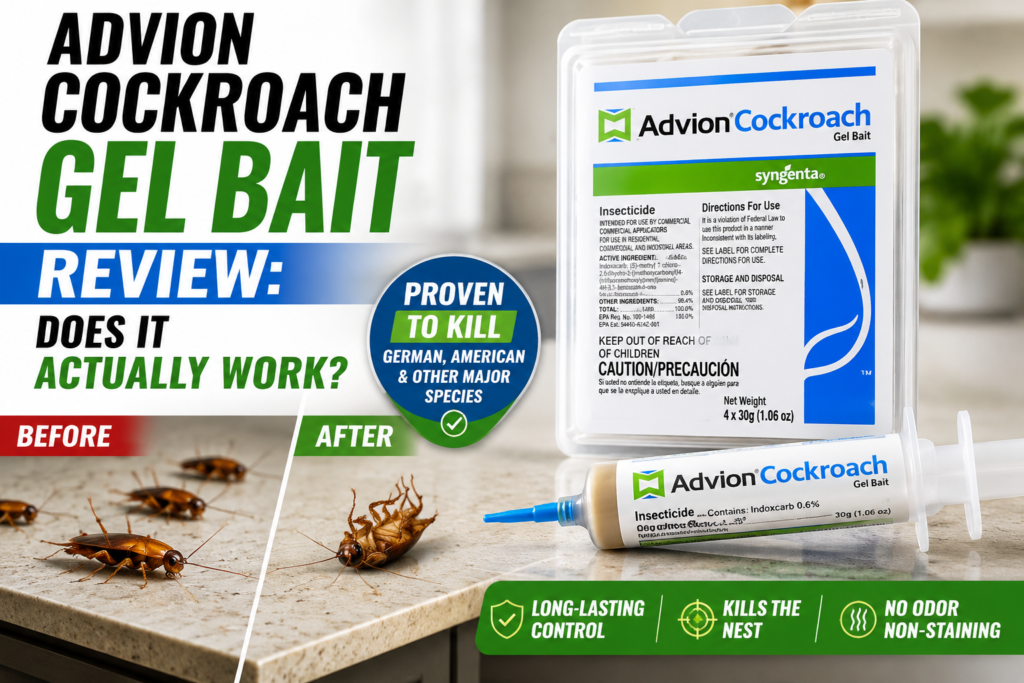
For roaches, boric acid works best as part of a combined approach. Use Advion gel bait in cracks and crevices where roaches feed, and boric acid in the hidden voids and pathways around them. The bait kills the colony via cascade. The boric acid handles survivors and maintains a long-term barrier in harborage zones.
For Ants
Apply along baseboards in active areas, around window frames, and at confirmed entry points. For kitchen ants, the gap where the base cabinet meets the floor and the back wall of under-sink cabinets are prime spots.
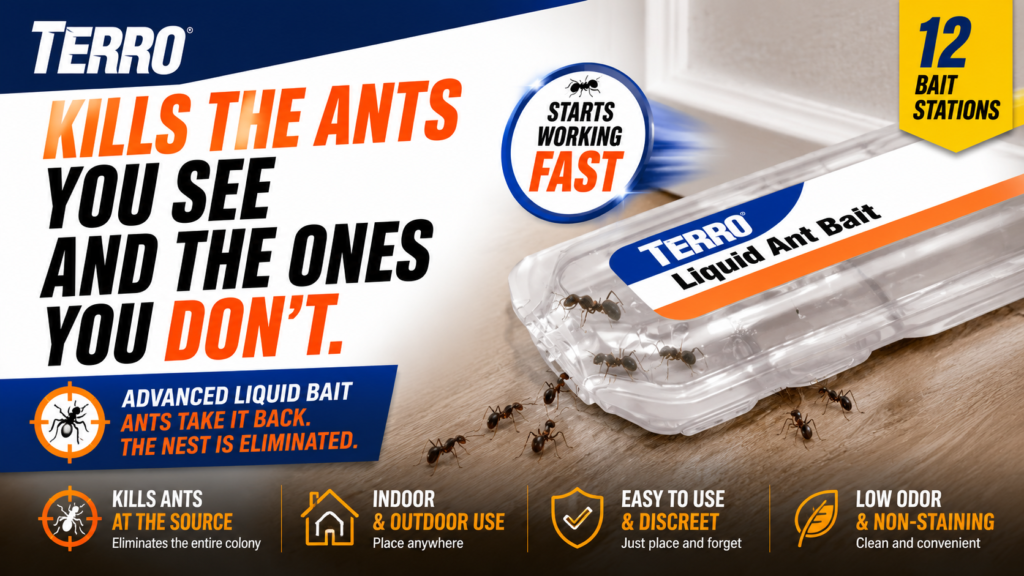
As with roaches, boric acid pairs well with bait rather than replacing it. TERRO liquid bait collapses the colony. Boric acid powder at entry points and harborage zones catches what the bait misses and prevents re-establishment.
For Silverfish
Silverfish live in exactly the conditions where boric acid excels — dark, dry, undisturbed spaces. Apply in closet corners, along the back of shelves, inside bathroom cabinet voids, in attic insulation edges, and anywhere you’ve seen silverfish activity. This is one of the most effective silverfish treatments available. See our full silverfish guide for complete treatment guidance.
For Fleas and Beetles
Work boric acid into carpet fibers in areas with flea activity — along baseboards and under furniture. For stored product beetles, a light dusting along pantry shelf edges and in the corners of storage areas where product bags sit creates an effective barrier. See our flea guide and beetle guide for full treatment approaches.
Is Boric Acid Safe Around Kids and Pets?
Boric acid has low toxicity to mammals at the concentrations and application methods used for pest control. The EPA considers it low-risk when used as directed. It’s been used safely in homes for decades.
That said, it’s not zero risk and it’s not food. Don’t apply it anywhere a child or pet can directly access it — open floor areas, low shelves within reach, pet feeding stations. Apply it in the hidden locations described above and direct exposure becomes essentially a non-issue during normal household activity.
The main practical caution is inhalation during application. Fine powder of any kind isn’t something you want to breathe in volume. Use a dust applicator for precise low-volume application, and consider a simple dust mask if you’re doing a large treatment in an enclosed space like a wall void or attic.
Warning: Keep boric acid away from food prep surfaces and any area where children or pets directly interact. It’s not acutely toxic in small amounts but it’s not a product to leave accessible. Apply it in hidden pest zones only.
How to Apply It — Tools and Technique
A dedicated powder duster gives you the most control and the most effective application. Squeeze bottles with a narrow tip also work for getting powder into tight spaces like outlet boxes and pipe gaps.
For wall voids and outlet boxes: remove the outlet cover, puff a small amount of powder inside, replace the cover. The powder distributes inside the void and creates a treated zone roaches and other bugs travel through constantly.
For under-appliance areas: slide the powder duster nozzle into the gap and puff a small amount. You shouldn’t see a visible white pile when you’re done — just a light coating on surfaces in the dark area beneath.
Tip: If you don’t have a duster, a clean ketchup-style squeeze bottle works well for getting boric acid into tight spaces. Fill it halfway, cap it, and use the tip to direct powder precisely where you need it.


Boric Acid vs. Diatomaceous Earth — Which Should You Use?
Both are slow-kill powder treatments applied in hidden locations. Here’s how to think about which to reach for:
Use boric acid when you want the strongest long-term residual treatment in permanently dry hidden zones — wall voids, outlet boxes, under appliances. The dual kill mechanism makes it more lethal than DE for most crawling insects, especially roaches.
Use diatomaceous earth when you want a completely chemical-free option, or for bed bug treatment where DE has particularly strong evidence. Also useful in areas where boric acid’s ingestion mechanism is less relevant — like surface pathways rather than hidden voids.
Use both together for comprehensive coverage — boric acid in the deep hidden zones, DE along surface pathways and in areas bugs cross regularly. They don’t interfere with each other and cover different aspects of the same problem.
Boric Acid vs. Chemical Sprays
Chemical sprays kill fast and need reapplication as the residual breaks down — typically weeks to months depending on the product and conditions. Boric acid applied correctly in dry hidden locations lasts indefinitely. It doesn’t evaporate, doesn’t break down chemically, and doesn’t lose potency sitting in a wall void for years.
That permanence is boric acid’s biggest advantage. One thorough application in the right spots creates a long-term defense you don’t have to maintain. For the visible, immediate problem you still want a contact spray or bait. But for building lasting protection into your home’s structure, boric acid is hard to beat.
How to Keep Bugs From Coming Back
Boric acid does its best work as a preventive long-term layer rather than a reactive treatment. Here’s how to build it into a pest defense that actually holds.
Treat the permanent hidden zones first. Outlet boxes, wall voids around pipes, under appliance motor compartments. These are spots bugs travel constantly and your powder will never get disturbed. Apply once and it’s there working indefinitely.
Seal what you can. Boric acid at an entry point slows bugs down. A sealed entry point stops them. Caulk pipe gaps, seal cracks in baseboards, weatherstrip doors. Apply boric acid around the sealed areas as a secondary barrier.
Layer your approach. Boric acid handles the long-term harborage zones. Bait handles active colony elimination. Contact spray handles immediate visible bugs and entry point treatment. Each tool does a different job. Using all three correctly covers every angle of a household bug problem.
Reapply after disturbance. After plumbing work, after moving appliances for cleaning, after any renovation — check your treated zones and reapply where the powder has been disturbed or removed.
Bugs are persistent but so is boric acid. Applied correctly in the right places, it keeps working long after you’ve stopped thinking about it. Grab the Ecoxall Boric Acid Fine Powder on Amazon and get it into the hidden zones bugs use before the next infestation gives you a reason to wish you had.