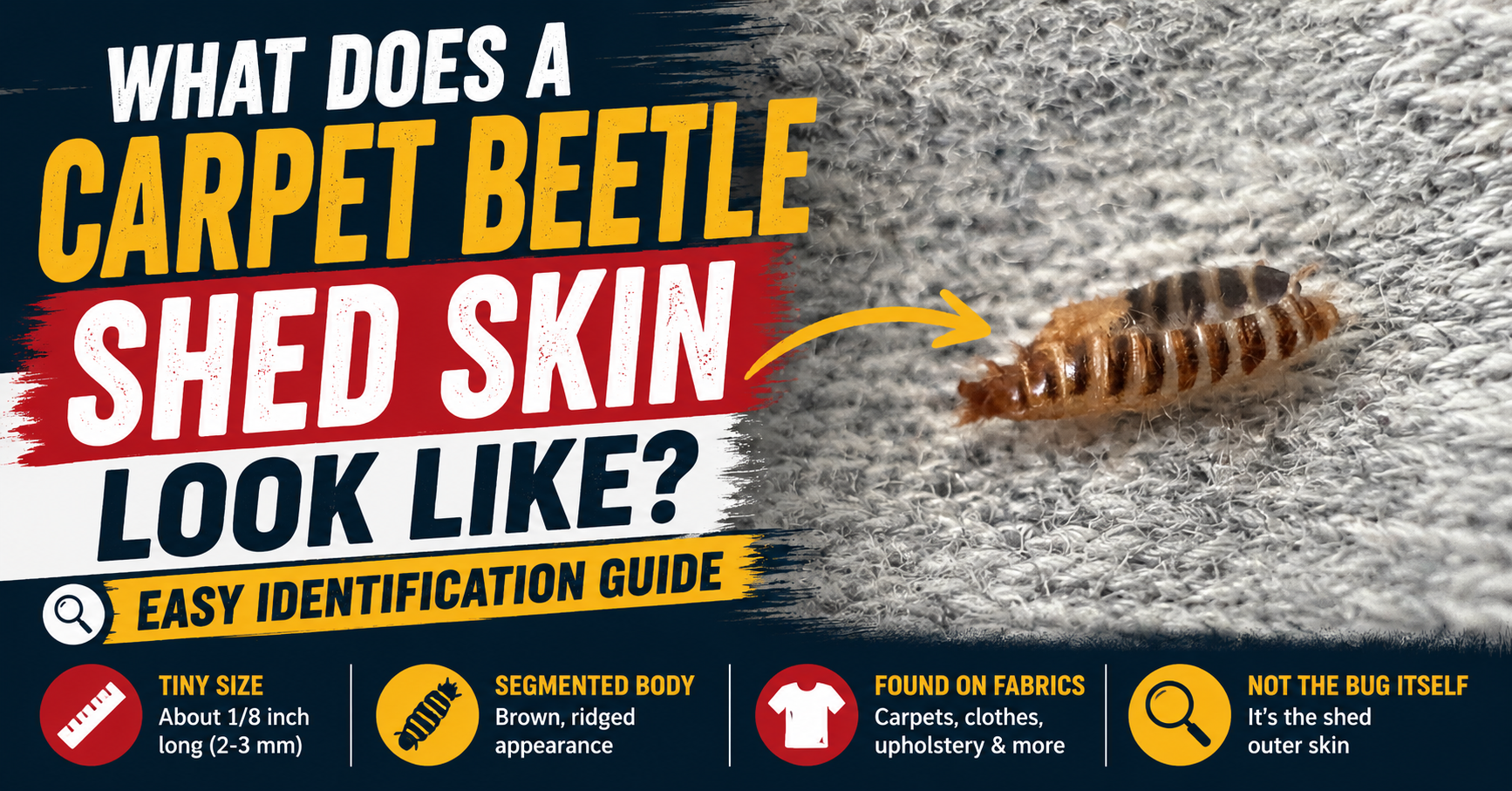
Carpet Beetle Shed Skin: How to Identify It Correctly
I recently found something inside a pair of shoes that had been sitting in our attic for quite a while.
At first, I had no idea what I was looking at.
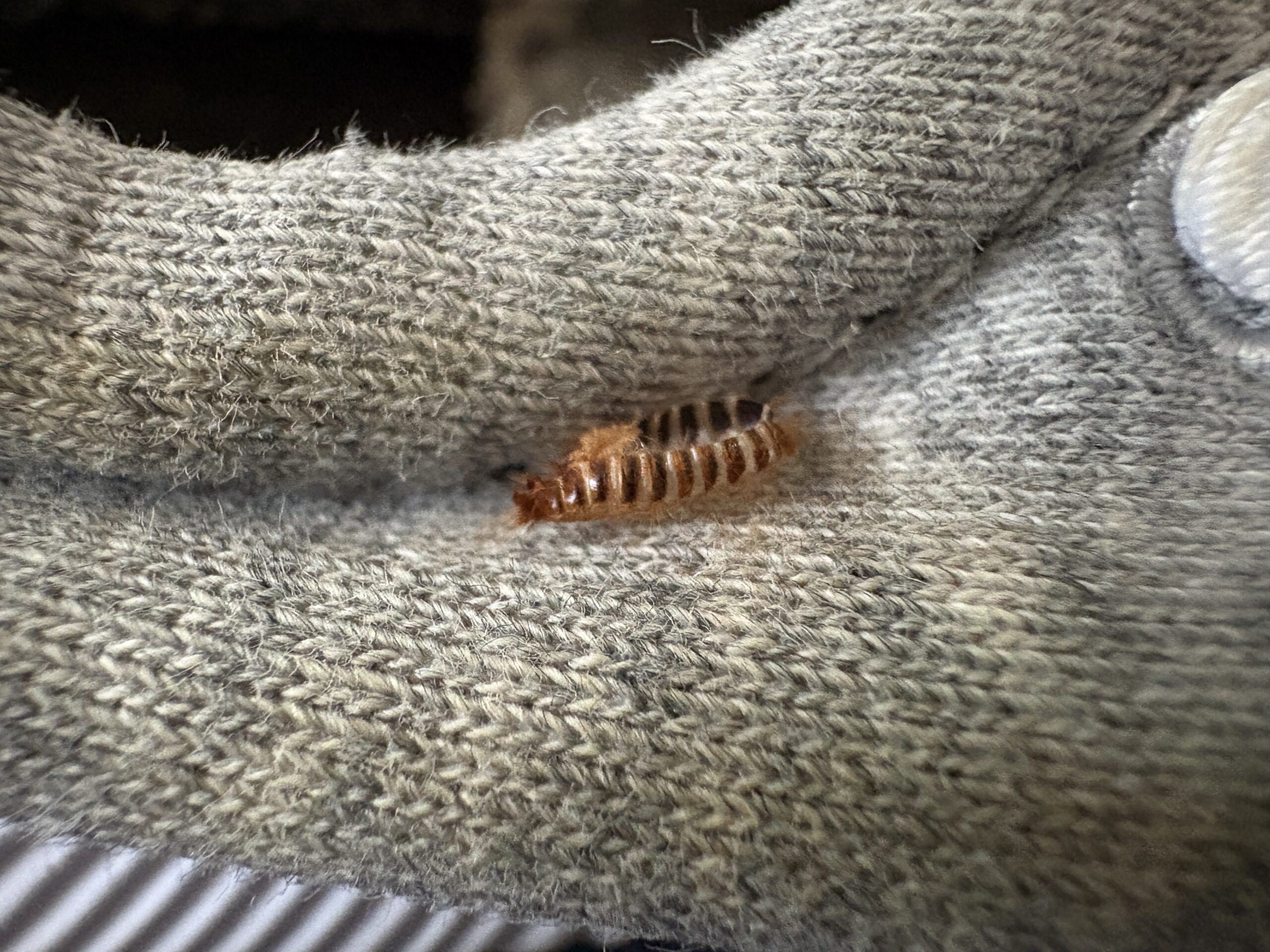
It looked like a tiny brown insect shell. My first thought was that it could have come from a bed bug, a cockroach, or maybe another beetle. The more I looked at it, though, the more I realized it was actually a carpet beetle shed skin.
Finding it made me realize just how confusing these little shells can be. Most homeowners don’t discover live carpet beetle larvae first. They find the empty skin the larva leaves behind and immediately start searching online trying to identify it.
If that’s what brought you here, you’re in the right place.
Before we dive in, if you’re trying to identify any type of beetle you’ve found around your home, I recommend browsing our Beetles resource center where we’re continually adding new identification guides and practical advice.
The First Thing I Notice
Whenever someone emails me a picture asking if they’ve found a carpet beetle, I don’t immediately focus on the color.
Instead, I study the shape.
Over the years I’ve learned that body shape usually tells the story much faster than color alone.
With carpet beetle shed skins, there are several characteristics that stand out almost immediately.
The body is usually long instead of round.
It has obvious body segments.
The rear end often narrows slightly.
Most importantly, you’ll usually notice tiny hairs covering parts of the shell.
Those little hairs are one of the easiest ways I separate carpet beetle shed skins from many other household insects.
What Is a Carpet Beetle Shed Skin?
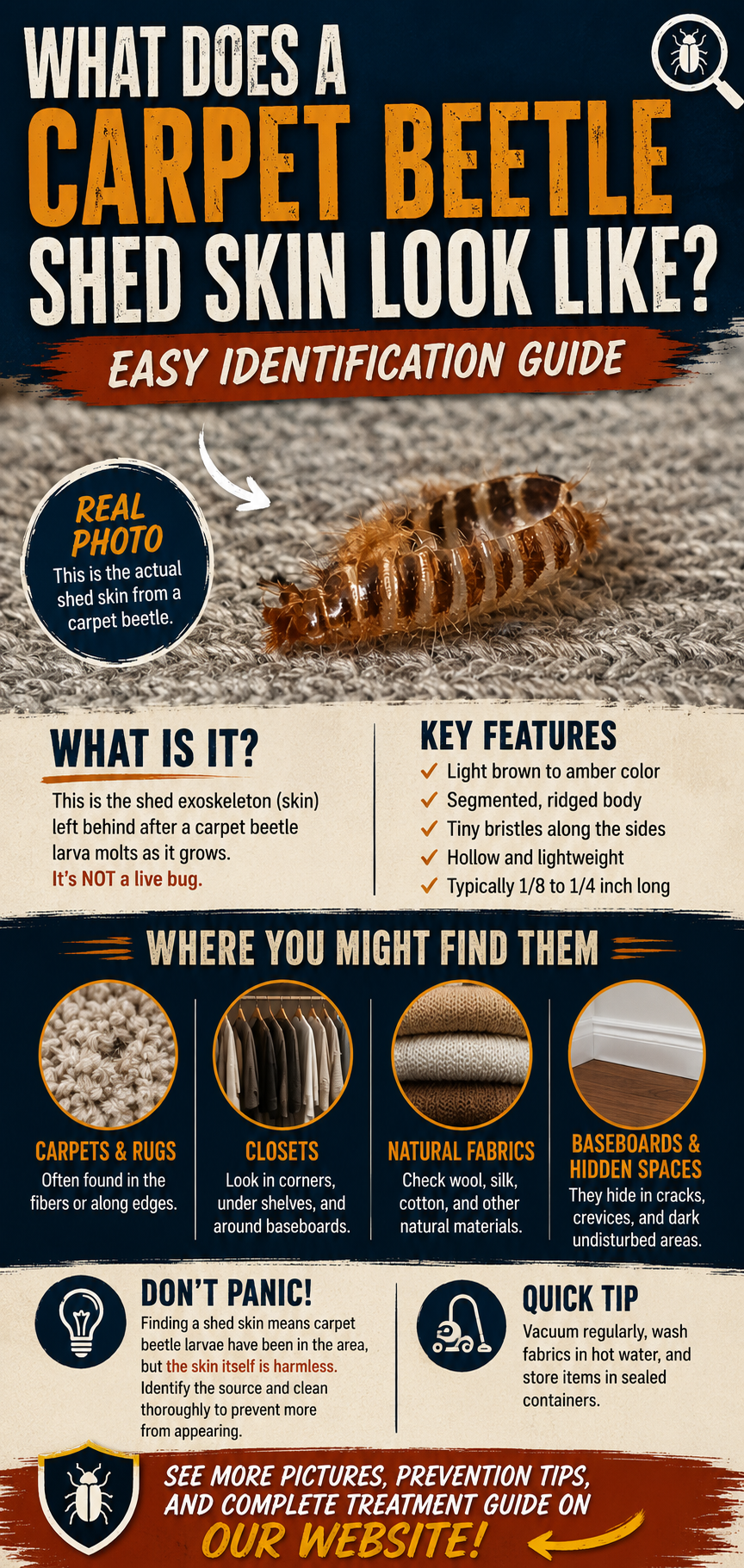
A carpet beetle shed skin is exactly what it sounds like.
As carpet beetle larvae grow, they periodically shed their outer covering through a process called molting.
Instead of stretching as they grow, they leave the old outer skin behind and continue growing inside a new one.
The result is a hollow shell that looks almost identical to the larva that produced it.
Many homeowners mistake these empty shells for dead bugs because they keep their shape remarkably well.
In reality, the larva that left it behind has usually crawled away long before you ever find the shed skin.
What Does a Carpet Beetle Shed Skin Look Like?
Although different carpet beetle species vary slightly, most shed skins have several things in common.
They’re usually:
- Light brown to dark brown.
- Clearly segmented.
- Longer than they are wide.
- Covered with tiny hairs or bristles.
- Slightly tapered toward one end.
- Hollow when viewed closely.
One thing I noticed about the shed skin I found was just how detailed it still looked.
Even though the larva had long since moved on, the shell still showed the body’s segments and fuzzy appearance.
That’s one reason they’re so commonly mistaken for actual insects.
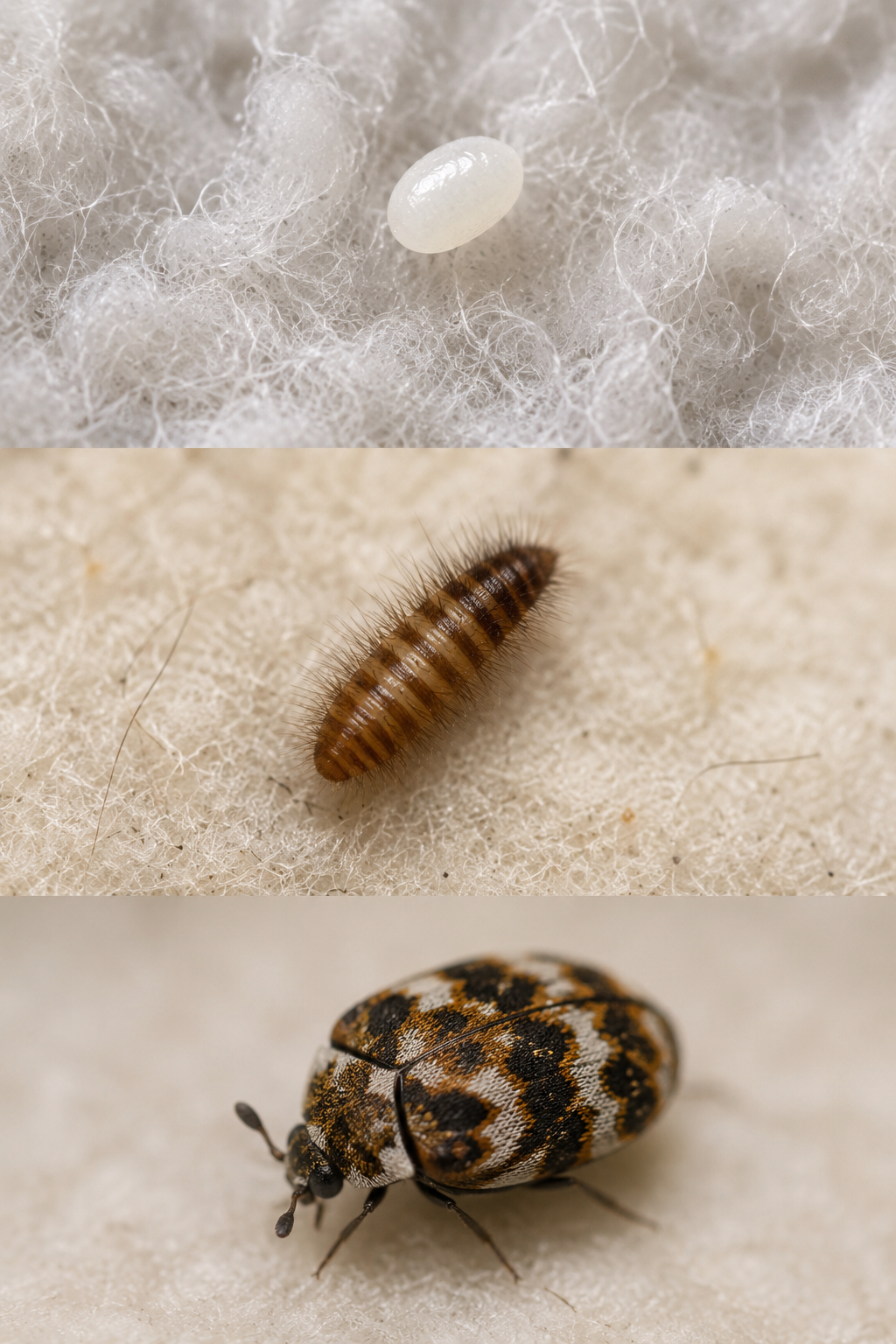
For a complete overview of carpet beetles from identification to treatment, take a look at my Everything You Need to Know About Carpet Beetles guide.
Why Most People Think It’s Something Else
When homeowners discover a carpet beetle shed skin, they rarely think “carpet beetle.”
Instead, I hear questions like:
“Is this a bed bug?”
“Did a roach leave this behind?”
“Is this some kind of worm?”
Honestly, I understand why.
Until you’ve seen one before, it’s an unusual-looking little shell.
That’s why proper identification matters before spending money on treatments.
If you’re worried you may actually be dealing with another household pest, our growing collection of identification guides inside the Why Do I Have Bugs homepage can help narrow things down.
Why I Knew This Wasn’t a Bed Bug Shell
One of the biggest identification mistakes I see is confusing carpet beetle shed skins with bed bug shed skins.
The two really don’t look alike once you know what to watch for.
Bed bug shed skins are much flatter.
They’re smoother.
They’re almost hairless.
They also have a much wider, oval-shaped body.
A carpet beetle shed skin is usually much longer and has visible hairs sticking out from different parts of the body.
That fuzzy appearance immediately pointed me toward carpet beetles instead of bed bugs.
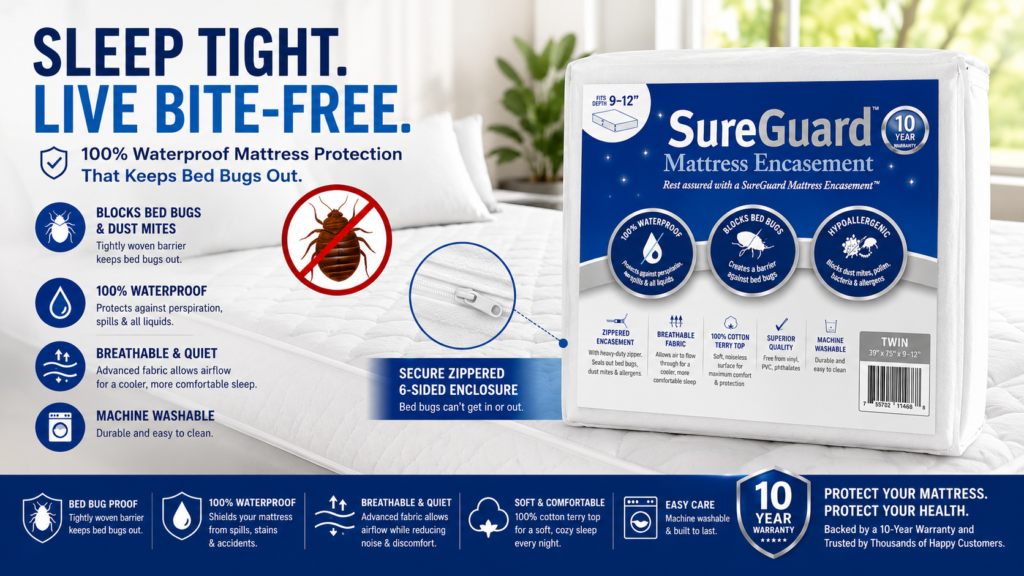
If you’re specifically worried about bed bugs, you can also browse our Bed Bugs resource center for additional identification guides and inspection articles before deciding what pest you’re dealing with.


Why You Usually Find the Shell Instead of the Larva
One thing that surprises many people is that carpet beetle larvae are excellent at staying hidden.
They spend much of their lives tucked away inside places most of us rarely inspect.
As they continue growing, they leave behind multiple shed skins.
Those empty shells remain exactly where they were left.
The living larva, however, keeps moving in search of more food.
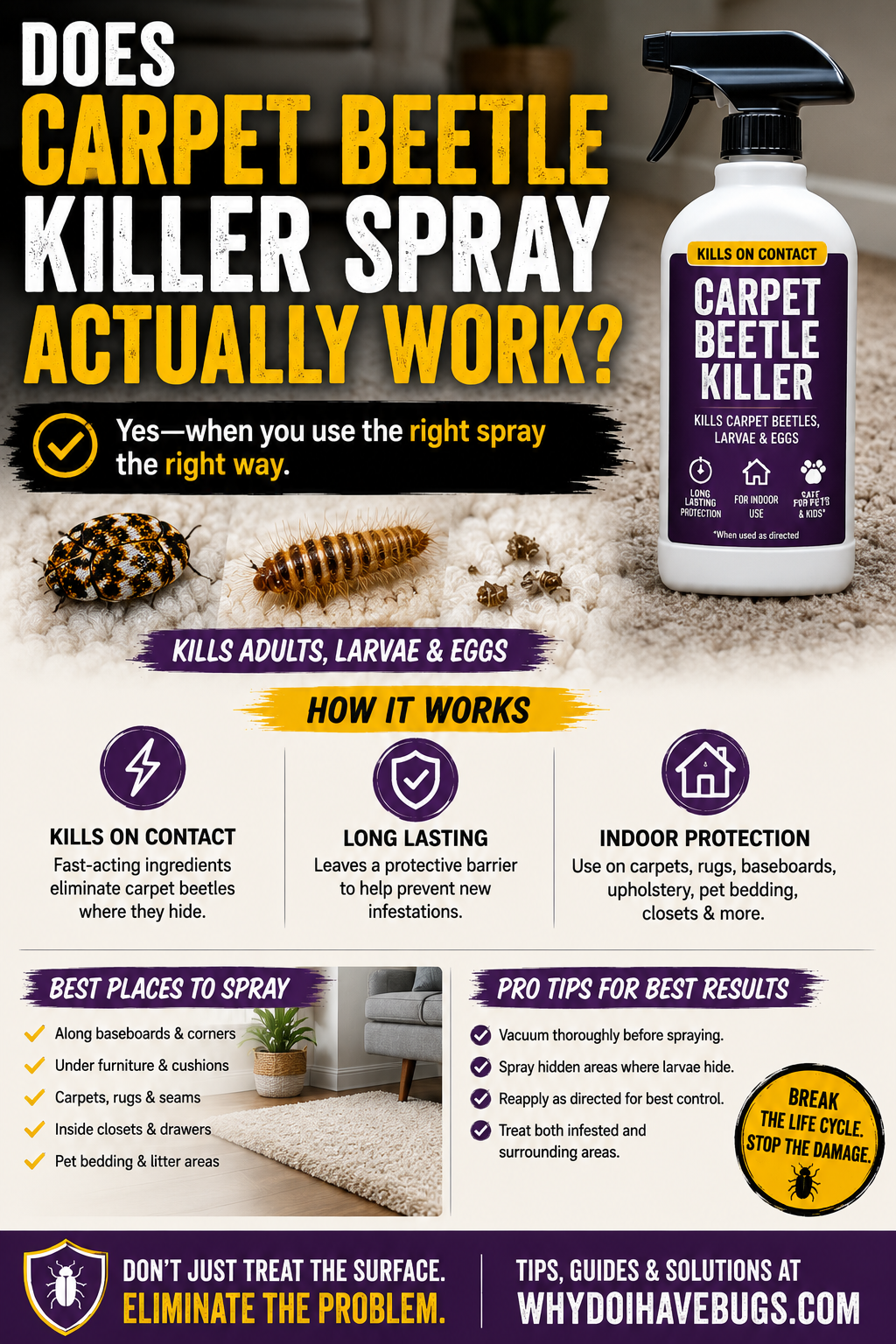
Curious what you can use to kill carpet beetles? We answer that question in this article.
That’s why homeowners often discover several shed skins without ever finding a live larva.
In many cases, the shed skin becomes the first clue that carpet beetles have been active for quite some time.
Where I Usually Find Carpet Beetle Shed Skins
One pattern I’ve noticed is that carpet beetle larvae love quiet places that don’t get disturbed very often.
I’ve seen shed skins found inside:
- Closets.
- Storage bins.
- Attics.
- Blankets.
- Sweaters.
- Wool rugs.
- Pet bedding.
- Boxes.
- Shoes.
- Behind furniture.
The common theme is that these areas often collect lint, hair, natural fibers, and dead insects, which become food for developing larvae.
In my case, the attic shoe had probably been sitting untouched long enough to become a perfect hiding place.
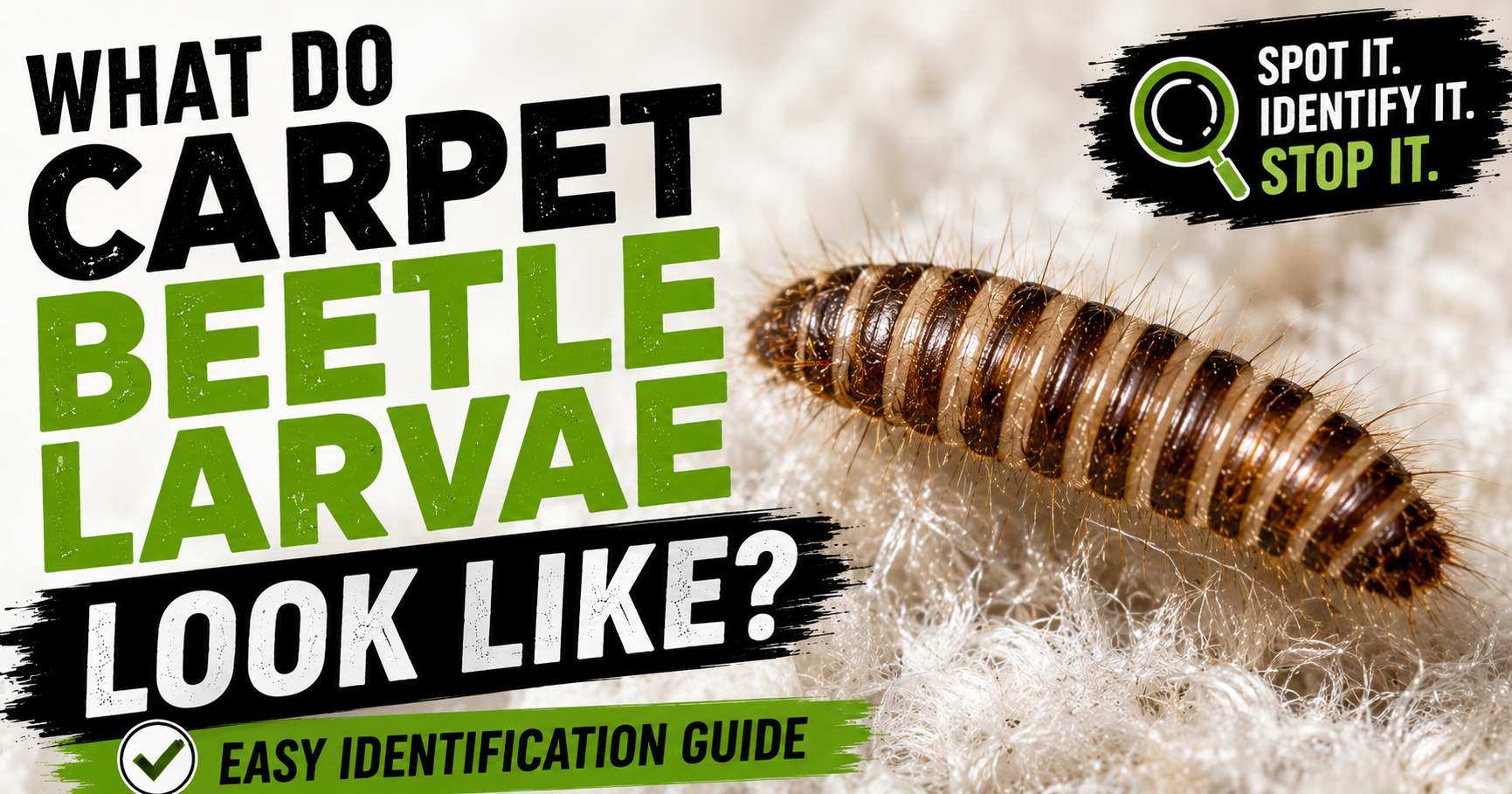
This is what carpet beetle larvae looks like! Creepy little things!
Why Stored Items Are So Attractive
People often ask me why carpet beetles seem to target stored belongings instead of items they use every day.
I think the answer is fairly simple.
Stored items remain undisturbed.
Dust builds up.
Pet hair settles.
Tiny dead insects collect.
Natural fibers sit untouched for months.
From a carpet beetle larva’s perspective, it’s an ideal place to grow without much disturbance.
That’s why I always recommend checking seasonal clothing, blankets, and boxes whenever a shed skin turns up nearby.
What Carpet Beetle Larvae Actually Eat
Despite their name, carpet beetles don’t survive on carpet alone.
It’s the larvae that cause nearly all the damage.
They’re attracted to materials made from natural animal proteins.
Some of their favorite food sources include:
- Wool.
- Leather.
- Fur.
- Silk.
- Feathers.
- Hair.
- Pet fur.
- Dead insects.
That’s one reason carpet beetle problems often develop quietly before anyone notices them.
Many homeowners don’t realize anything is wrong until they find a shed skin like the one in the photo above or discover damage to stored fabrics.


Does Finding One Carpet Beetle Shed Skin Mean You Have an Infestation?
This is probably the question I hear most after someone identifies the shell correctly.
The honest answer is…
Not necessarily.
Finding one carpet beetle shed skin doesn’t automatically mean your house is overrun with carpet beetles.
Insects wander.
Larvae move around while searching for food.
Sometimes you’ll find a single shed skin that was left behind weeks or even months ago.
That said, I also wouldn’t ignore it.
Whenever I find a carpet beetle shed skin, I use it as a reason to inspect the surrounding area more carefully.
If I start finding multiple shed skins in different locations, damaged fabrics, or live larvae, then I know I have a much stronger indication that carpet beetles are actively developing somewhere nearby.
Where I’d Start Looking Next
If this happened in my house, I wouldn’t immediately buy insect spray.
I’d spend my time looking for more evidence.
The areas I’d inspect first include:
- The surrounding shelves.
- Other stored shoes.
- Seasonal clothing.
- Wool blankets.
- Boxes that haven’t been opened in months.
- Baseboards nearby.
- Under furniture.
- Closet corners.
- Pet bedding.
Carpet beetle larvae usually don’t wander very far from reliable food sources, so finding one shed skin often means there could be additional evidence somewhere close by.
Why Carpet Beetles Love Quiet Storage Areas
One thing I’ve noticed over the years is that carpet beetles seem to love places people forget about.
Think about it.
An attic.
A storage closet.
A box of holiday decorations.
A blanket stored all summer.
A pair of shoes that hasn’t been worn in months.
Those places usually stay dark, undisturbed, and collect lint, dust, pet hair, and dead insects over time.
To a carpet beetle larva, that’s a buffet.
That’s one reason I always tell homeowners to inspect nearby stored items whenever they find a shed skin.
The Shed Skin Isn’t What’s Causing Damage
This is another common misunderstanding.
The shed skin isn’t damaging anything.
It’s simply evidence.
The real damage comes from the living larva before it molts.
Larvae feed on materials containing natural animal proteins.
That includes:
- Wool rugs.
- Sweaters.
- Leather goods.
- Fur.
- Silk.
- Feathers.
- Taxidermy.
- Pet hair.
- Dead insects.
The empty shell is simply proof that a larva was once feeding nearby.
Why Vacuuming Is Usually My First Recommendation
People are often surprised when I recommend the vacuum before insecticides.
But it makes sense.
Vacuuming removes:
- Shed skins.
- Live larvae.
- Hair.
- Lint.
- Dead insects.
- Eggs hiding in cracks.
- Organic debris that larvae feed on.
A thorough cleaning often removes a large portion of the problem before you ever consider using a pesticide.
If I’m dealing with closets or stored clothing, I also inspect every natural-fiber item individually instead of assuming everything is fine because it “looks clean.”
What I Would Do If This Were My House
If I found another carpet beetle shed skin tomorrow, here’s exactly how I’d approach it.
First, I’d inspect everything within a few feet of where I found it.
Next, I’d vacuum thoroughly, paying close attention to cracks, baseboards, closet corners, and storage shelves.
After that, I’d inspect clothing, blankets, shoes, and anything made from natural fibers.
If I continued finding additional shed skins or live larvae, then I’d move on to a larger cleaning and treatment plan.
The important thing is not to panic over one shell.
Use it as information.
It’s your home’s way of telling you it’s worth taking a closer look.
Why Correct Identification Saves Time
I’ve seen homeowners spend money treating for bed bugs…
…only to discover they actually had carpet beetles.
I’ve seen people worry about cockroaches when the evidence pointed somewhere completely different.
That’s why I always recommend identifying the insect before buying products.
Correct identification saves money.
It saves time.
And most importantly, it helps you choose a solution that actually addresses the real problem instead of the wrong one.
As I continue expanding our Beetles resource center, I’ll be adding more guides to help homeowners confidently identify carpet beetles, larvae, and other beetles commonly found around the home.
The Biggest Mistake I See
The biggest mistake I see isn’t finding the shed skin.
It’s throwing it away without asking why it was there.
That little shell is evidence.
It tells you a carpet beetle larva successfully lived in that area long enough to molt.
Instead of immediately tossing it in the trash, use it as a clue.
Inspect the surrounding area.
Look for additional shed skins.
Check nearby natural fabrics.
The sooner you understand why it was there, the easier it becomes to stop a small problem from becoming a much larger one.
If you’re still trying to identify another household pest after inspecting the area, you can also browse the Why Do I Have Bugs? homepage for more identification guides covering common insects found inside homes.
Frequently Asked Questions
Are carpet beetle shed skins dangerous?
The shed skins themselves aren’t dangerous, but the tiny hairs covering them can irritate the skin of some sensitive individuals.
Does finding one carpet beetle shed skin mean I have an infestation?
Not always. A single shed skin may simply indicate that one larva developed nearby. Finding multiple shed skins or live larvae is a stronger sign of an active infestation.
Can carpet beetle shed skins be mistaken for bed bugs?
Absolutely. It’s one of the most common misidentifications I see. Carpet beetle shed skins are usually longer, more segmented, and noticeably hairier than bed bug shed skins.
How often do carpet beetle larvae shed their skin?
Carpet beetle larvae molt several times as they grow, leaving behind multiple shed skins before becoming adult beetles.
Should I keep the shed skin?
If you’re trying to identify the insect, keeping it until you’re confident about what it is can be helpful. A clear photo is often enough if you don’t want to save the actual shell.
About the Author
Ryan Mitchell is a home pest researcher who focuses on helping homeowners identify insects through real-world observations rather than guesswork. His work emphasizes practical inspections, accurate identification, and solving the source of household pest problems before they become larger infestations.